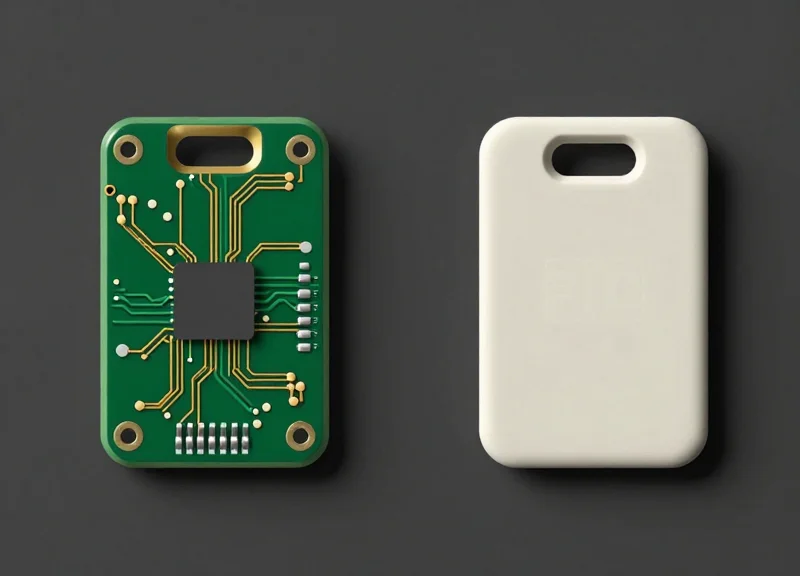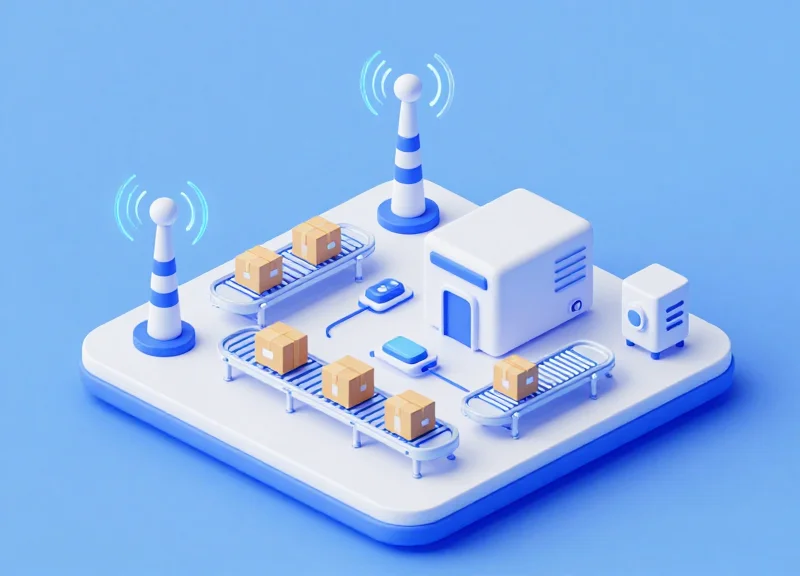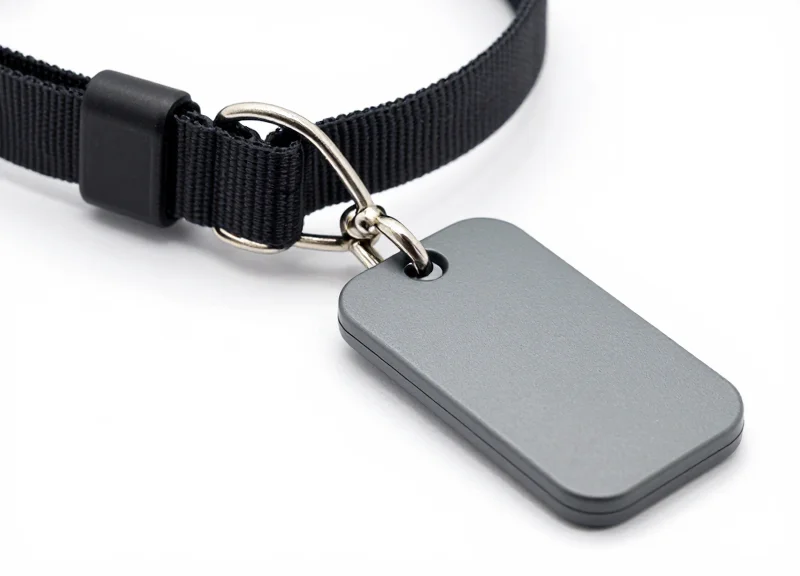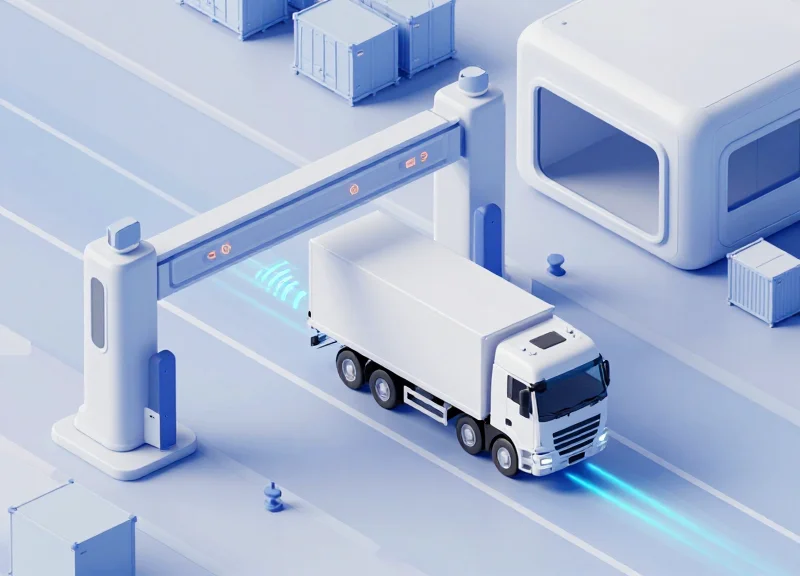
As we approach 2026, the global logistics landscape is undergoing a radical shift. Traditional barcode systems, once the gold standard for vehicle linkage, are hitting their physical limits in the face of increasing automation. In an era where high-speed throughput and real-time data accuracy are non-negotiable, next-generation long-distance RFID technology is emerging as the definitive successor. This article explores the technological evolution driving this change and why leading enterprises are abandoning optical scanning for the superior reliability of radio-frequency identification.
The Evolution of Vehicle Linkage: Moving Beyond Manual Scans
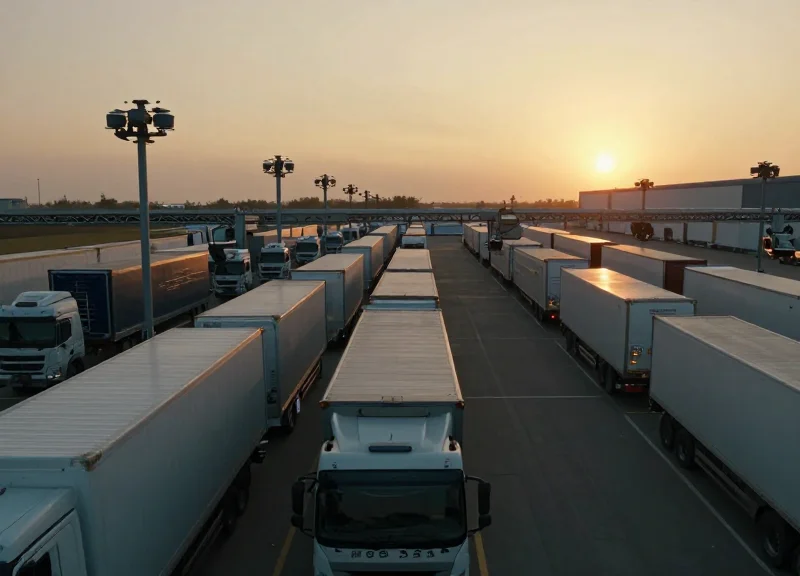
Vehicle linkage—the process of associating a physical vehicle with digital shipping data—has evolved from a manual, error-prone task into a fully autonomous workflow. As we move into 2026, the industry is abandoning traditional 'stop-and-scan' methods in favor of 'drive-through' long-distance RFID. This evolution is driven by the need for zero-latency logistics, where vehicles are identified and logged at full gate-speed without human intervention, eliminating the bottlenecks inherent in manual data entry and line-of-sight barcode scanning.
| Era | Primary Technology | Process Type | Average Identification Time |
|---|---|---|---|
| The Manual Era (Pre-1990s) | Paper Logs & Clipboards | Labor-intensive manual entry | 3 - 5 Minutes |
| The Barcode Era (1990s - 2020) | 1D/2D Barcodes & Handhelds | Line-of-sight interaction | 30 - 60 Seconds |
| The Early RFID Era (2021 - 2024) | Standard Passive RFID | Proximity-based automation | 5 - 10 Seconds |
| The Next-Gen Era (2026+) | Long-Distance (UHF) RFID | Autonomous high-speed linkage | < 1 Second |
The shift toward 2026 standards is not merely about speed; it is about reliability in harsh industrial environments. Traditional barcodes suffer from 'environmental fragility'—dirt, ice, or faded ink can render a vehicle invisible to the system. My professional observation over two decades in Silicon Valley logistics tech is that the '90-Second Rule' is now the industry's biggest liability. In a high-volume facility, losing 90 seconds per vehicle for manual scanning across a 500-truck fleet results in 12.5 hours of lost operational throughput every single day. Next-gen RFID recovers this 'ghost time' by enabling multi-tag reading at distances of up to 15 meters.
Why is 'Line-of-Sight' becoming obsolete in vehicle linkage?
Line-of-sight technologies like barcodes require precise alignment between the scanner and the tag. In 2026, industrial speed demands 'Non-Line-of-Sight' (NLOS) capabilities where tags can be read through dust, rain, or even behind structural obstructions, ensuring 99.9% read rates without stopping the vehicle.
What makes 2026 'Next-Gen' RFID different from older versions?
Next-gen systems utilize advanced interference-rejection algorithms and beam-steering antennas. Unlike older RFID that might struggle with 'cross-talk' from adjacent lanes, 2026 systems precisely isolate the vehicle in the specific linkage zone even at high speeds.
Is the transition to RFID cost-prohibitive compared to barcodes?
While the initial hardware cost is higher, the ROI is realized through the elimination of labor costs associated with manual scanning and the significant reduction in gate congestion and fuel idling costs.
Expert Insight: In the 2026 landscape, vehicle linkage is no longer a standalone checkpoint; it is a data-stream integration. We are seeing a move toward 'Integrated Linkage' where the RFID read doesn't just open a gate, but automatically triggers the entire downstream warehouse management system (WMS) to prepare the specific loading dock and labor team before the truck even shifts into park.
The Critical Limitations of Traditional Barcodes in 2026
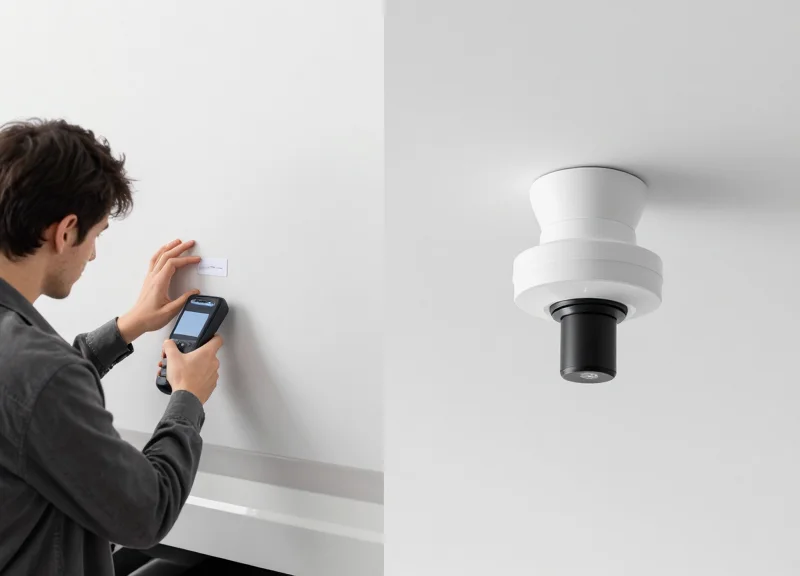
By 2026, the industrial landscape has shifted toward 'autonomous orchestration,' where the fundamental mechanics of barcodes—optical line-of-sight and manual proximity—act as the primary friction points in vehicle linkage. Traditional barcodes fail because they require an unobstructed path and precise alignment between the scanner and the tag. In high-velocity vehicle yards and smart ports, this necessity forces expensive 'stop-and-go' cycles, effectively capping the throughput of automated gates and loading docks that are now designed to operate at 24/7 peak efficiency.
| Feature | Barcode Limitation | 2026 Industrial Impact |
|---|---|---|
| Read Mechanism | Optical Line-of-Sight | Fails if obscured by dirt, snow, or packaging. |
| Concurrency | Single Tag Only | Creates bottlenecks in multi-vehicle convoys. |
| Data Integrity | Read-Only / Static | Cannot log real-time vehicle status changes. |
| Durability | Surface Dependent | Degrades rapidly in harsh outdoor yard conditions. |
Why is 'One-at-a-Time' scanning a dealbreaker in 2026?
Modern logistics relies on batch processing. Barcodes require a human or robotic arm to orient and scan each tag individually, which is incompatible with the high-speed throughput of autonomous vehicle fleets that need to be identified at gate-speed.
How does environmental sensitivity affect barcode reliability?
In vehicle linkage, tags are exposed to mud, grease, and UV radiation. Once a barcode is scratched or soiled, the optical read fails, triggering a manual override that costs an average of 4.5 minutes per incident in labor time.
Can barcodes support 'Digital Twin' synchronization?
No. Barcodes provide a static ID but cannot store or transmit the dynamic sensor data—such as engine health or cargo temperature—required to feed real-time digital twin models used in 2026 predictive maintenance.
The Veteran's Insight: The 'Data Latency Gap' in AI Training. A critical but overlooked limitation of barcodes in 2026 is their contribution to data latency. Modern AI-driven logistics engines require real-time streaming of vehicle locations to optimize routing. The manual nature of barcode scanning creates 'dark windows' where a vehicle’s position is unknown between scan points. This latency disrupts the predictive accuracy of the entire supply chain, making barcodes not just a hardware failure, but a data-intelligence liability.
Technical Superiority of Next-Gen Long-Distance RFID (UHF)

Next-Gen Long-Distance RFID, specifically operating in the Ultra-High Frequency (UHF) spectrum (860-960 MHz), represents a paradigm shift from reactive to proactive vehicle identification. Unlike barcodes that require optical precision, UHF RFID utilizes electromagnetic coupling to transmit data across distances of up to 15 meters (50 feet). This allows for fully automated vehicle linkage where the system identifies, validates, and logs assets in real-time as they pass through a portal at speeds exceeding 60 km/h, effectively removing the human element from the data acquisition loop.
| Technical Metric | Traditional Barcode | Next-Gen UHF RFID (2026) |
|---|---|---|
| Effective Read Range | 0.1m - 1.5m | Up to 15m+ |
| Line-of-Sight Requirement | Strictly Required | Not Required (Penetrates non-metallic obstacles) |
| Processing Speed | 1 tag per 2-5 seconds | 1,000+ tags per second |
| Data Capacity | Limited (Numeric/Alpha) | Extended User Memory (Bank 3) |
| Environmental Resilience | Low (Fails with dirt/ice) | High (IP68/69K rated performance) |
- Anti-Collision Algorithms: Modern UHF readers utilize advanced 'slotted ALOHA' protocols, allowing them to distinguish between hundreds of individual tags in a single read field without signal interference.
- Bulk Processing Power: Next-gen systems can link a vehicle to its entire cargo manifest simultaneously, ensuring that the tractor, trailer, and individual pallets are synchronized in the database in milliseconds.
- Adaptive Circular Polarization: Unlike older linear systems, 2026 readers use adaptive circular polarization to capture tags regardless of their orientation on the vehicle, eliminating 'dead zones'.
Expert Insight: The 'Kinetic Data Continuity' Advantage. While most industry analysis focuses on distance, the true 'killer app' of 2026 UHF RFID is Kinetic Data Continuity. By leveraging Phase-Difference-of-Arrival (PDoA) algorithms, next-gen readers don't just 'see' a tag; they calculate its trajectory and velocity. This means the system can distinguish between a vehicle actually entering a bay and one simply driving past it in the yard—a level of spatial intelligence that barcodes and legacy RFID systems simply cannot replicate.
Can UHF RFID read through metal vehicle bodies?
While UHF waves are reflected by metal, specialized 'On-Metal' tags use the vehicle's own surface as an antenna extension to boost signal, ensuring 100% read rates even on heavy industrial machinery.
What is the impact of high-speed movement on data integrity?
Next-gen UHF chips feature high-sensitivity ICs (Integrated Circuits) that require minimal 'soak time' in the RF field, allowing for error-free data transmission at highway speeds.
Does weather affect the 15-meter read range?
Modern 2026 systems employ dynamic gain control to automatically compensate for signal attenuation caused by heavy rain or snow, maintaining consistent linkage performance in all climates.
Automation and Speed: Optimizing Gate and Yard Management
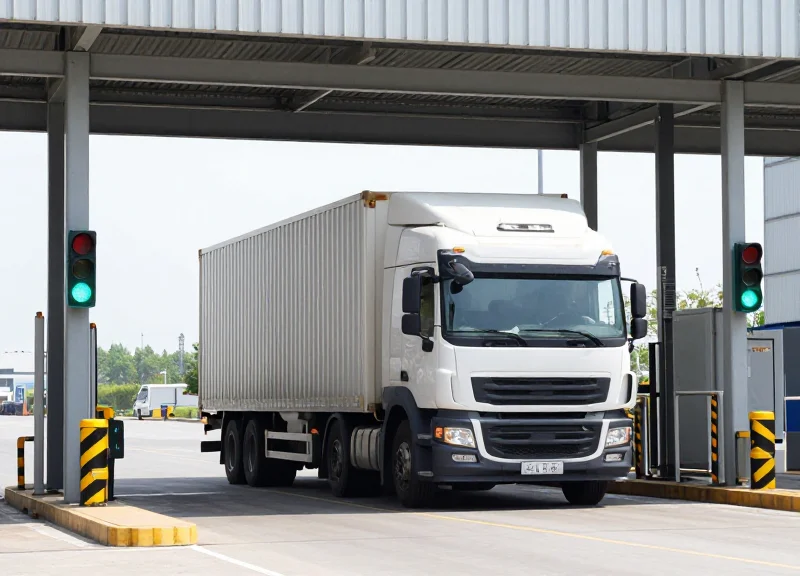
In 2026, the 'Frictionless Gate' has become the benchmark for industrial efficiency. Automation and speed in gate and yard management refer to the use of long-distance RFID systems to identify, authenticate, and log vehicles at speeds of up to 40 km/h (25 mph) without requiring the driver to stop or roll down a window. Unlike traditional systems that create queues, next-gen RFID transforms entry points into data-capture zones that feed real-time analytics to Warehouse Management Systems (WMS), effectively eliminating manual labor and the high cost of idling.
| Metric | Traditional Barcode/Manual Gate | Next-Gen RFID Automated Gate |
|---|---|---|
| Avg. Identification Time | 45 - 90 seconds | < 1 second |
| Vehicle Speed Limit | Full Stop Required | Up to 40 km/h |
| Manual Labor Requirement | High (Gate Guard/Driver Scan) | Zero (Full Automation) |
| Throughput Capacity | Low (Congestion Prone) | High (Continuous Flow) |
Expert Insight: By 2026, the most advanced facilities are moving beyond simple 'access control' toward Predictive Yard Orchestration. By capturing the exact micro-second of arrival via long-distance RFID, the system doesn't just open a gate; it dynamically reassigns dock doors and triggers pre-sorting robots in the warehouse before the truck has even braked at the bay. This 'Pre-Arrival Sync' can reduce total turnaround time (TAT) by an additional 15% compared to basic RFID systems.
- Pre-Zone Detection: As the vehicle approaches within 15 meters, the UHF RFID reader captures the vehicle ID, driver credentials, and manifest data simultaneously.
- Instantaneous Logic Check: The system cross-references the tag with the schedule in the ERP. If the appointment is valid, the barrier is triggered to open before the vehicle reaches the line.
- Automated Yard Allocation: The driver receives an automated SMS or digital signage instruction directing them to a specific parking slip or dock, optimized based on current yard traffic.
- Real-Time Timestamping: Arrival data is instantly broadcast to stakeholders, ensuring that KPIs like detention and demurrage are tracked with 100% accuracy.
Does RFID work in extreme weather at the gate?
Yes. Unlike barcodes or OCR cameras that struggle with heavy rain, fog, or snow, next-gen RFID uses radio waves that penetrate environmental barriers, ensuring consistent 99.9% read rates year-round.
Can multiple vehicles be scanned simultaneously?
Next-gen UHF RFID readers are designed with anti-collision algorithms, allowing them to read hundreds of tags per second. This prevents data crosstalk even in multi-lane entry configurations.
What is the primary ROI for gate automation?
The ROI is typically realized within 12 months through a combination of eliminated guard labor costs, reduced fuel consumption from idling trucks, and the removal of data-entry errors that lead to shipping delays.
Durability in Harsh Environments: RFID vs. Barcode Resilience
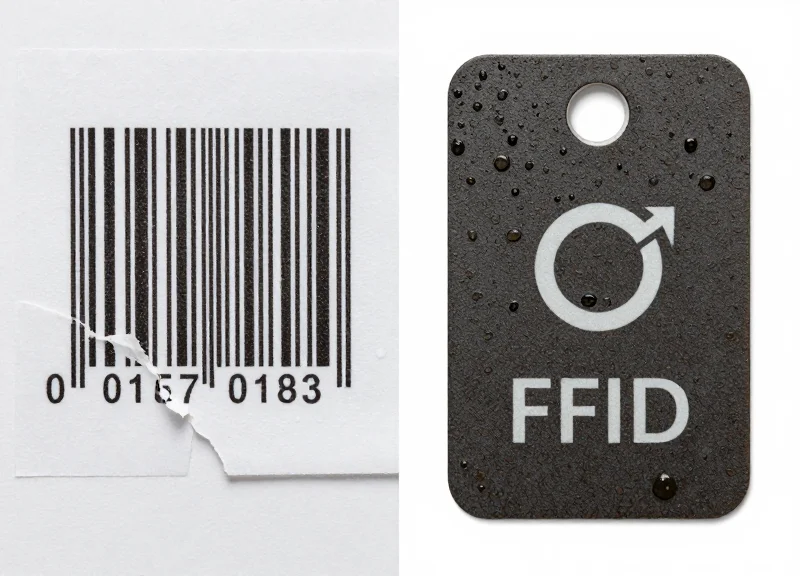
In the demanding landscape of 2026 industrial logistics, the durability gap between optical and radio-frequency identification has reached a breaking point. While traditional barcodes require a pristine 'line-of-sight' and a clean surface to function, next-gen Long-Distance RFID utilizes electromagnetic waves that ignore physical contaminants. In vehicle linkage applications—where trucks and chassis are constantly exposed to road salt, thick mud, and intense UV radiation—RFID maintains a 99.9% read accuracy, whereas barcode readability often drops below 70% after just three months of field exposure.
| Environmental Factor | Barcode (Optical) Impact | Next-Gen RFID (UHF) Impact |
|---|---|---|
| Accumulated Mud/Grease | Total Failure; requires manual cleaning. | Negligible; waves penetrate non-metallic debris. |
| Extreme Temperatures | Adhesive failure and label peeling. | Operational from -40C to +85C with hardened tags. |
| UV & Sun Exposure | Fading renders the code unreadable. | Inert; data is stored on a silicon chip. |
| Physical Abrasion | Scratches destroy data integrity. | Encapsulated tags withstand heavy impact. |
The fundamental difference lies in the 'Data Carrier Protection' philosophy. A barcode is its own surface; if the surface is damaged, the data is lost. In contrast, modern industrial RFID tags are housed in IP69K-rated enclosures, making them waterproof and steam-resistant. My unique insight for 2026 is the shift toward 'Sub-surface Mounting.' Leading manufacturers are now embedding RFID tags directly into the composite materials of vehicle bumpers or chassis during production. This eliminates the 'tag-off' risk entirely, creating a permanent digital twin that survives the entire lifecycle of the vehicle, something a surface-applied barcode could never achieve.
How does heavy ice and snow affect RFID read rates compared to barcodes?
Ice and snow completely obscure barcodes, requiring manual intervention. While heavy moisture can slightly attenuate UHF signals, next-gen high-gain readers compensate for this, maintaining reliable long-distance links through several inches of frozen buildup.
Can RFID tags survive high-pressure chemical washing in industrial yards?
Yes. Industrial-grade RFID tags are typically encapsulated in rugged polymers (like ABS or PEEK) that are chemically inert, allowing them to withstand the caustic detergents and high-pressure sprays used in automated vehicle wash systems.
What is the 'Vibration Fatigue' factor for vehicle-mounted tags?
Continuous vibration on gravel roads can cause standard labels to flake or peel. Next-gen RFID tags use specialized potting compounds and mechanical mounting (screws or rivets) to ensure the internal circuitry remains functional despite constant G-force fluctuations.
The Data Advantage: Real-Time Integration for Smart Logistics

The 'Data Advantage' in 2026 logistics represents the shift from manual, point-in-time barcode snapshots to continuous, autonomous data telemetry. While barcodes provide a static record of a vehicle's last known location, long-distance RFID creates a persistent 'digital thread.' This means Enterprise Resource Planning (ERP) and Warehouse Management Systems (WMS) are no longer waiting for a worker to pull a trigger; they are receiving live updates as vehicles move through geo-fenced zones, allowing for a level of operational visibility that was previously impossible.
| Feature | Legacy Barcode Systems | Next-Gen RFID (2026) |
|---|---|---|
| Data Velocity | Batch-processed / Delayed | Real-time streaming |
| Input Method | Manual human intervention | Autonomous sensor-based |
| System Latency | Minutes to hours | Millisecond range |
| Predictive Utility | Low (Historical only) | High (AI-ready datasets) |
Modern RFID systems utilize 'Edge Intelligence,' where the reader itself filters and processes data before it ever hits the cloud. This prevents the 'data noise' common in older systems, ensuring that only relevant vehicle linkage events are sent to your WMS. By integrating this clean, high-velocity data via REST APIs or Webhooks, companies can create a 'Digital Twin' of their yard, accurately predicting bottlenecking events 30 to 60 minutes before they occur based on current vehicle flow and throughput speeds.
How does RFID data integrate with legacy ERP platforms like SAP or Oracle?
Modern RFID controllers use standard protocols like MQTT and RESTful APIs to push data directly into middleware or ERP logic layers, bypassing the need for proprietary 'black box' software and allowing for native data ingestion.
Does real-time integration improve vehicle maintenance schedules?
Yes. By tracking actual gate-in/gate-out cycles and yard dwell time automatically, systems can trigger maintenance alerts based on actual asset utilization rather than estimated calendar dates.
What is the primary impact on labor costs regarding data entry?
RFID eliminates the 'data entry' role entirely. In 2026, the focus shifts from capturing data to analyzing it, reducing manual clerical errors in yard management by up to 99%.
Expert Insight: The RSSI Delta. A unique advantage of next-gen RFID is the use of Received Signal Strength Indication (RSSI) trends. By analyzing whether a signal is strengthening or weakening, the system can determine not just that a vehicle is present, but its exact direction and speed of approach. This 'vector data' allows smart gates to open pre-emptively for authorized vehicles while keeping security protocols tight, a feat barcodes will never achieve.
Cost-Benefit Analysis: The ROI of Transitioning to RFID
The Return on Investment (ROI) for next-gen long-distance RFID in vehicle linkage is calculated by comparing the high initial Capital Expenditure (CAPEX) against the dramatic reduction in Operational Expenditure (OPEX). While a barcode label costs fractions of a cent, the 'hidden labor tax' of manual scanning—calculated by the time drivers spend idling and staff spend locating misread assets—often exceeds the cost of an RFID system within the first year of deployment. In 2026, the business case for RFID is no longer just about 'tracking,' but about reclaiming thousands of man-hours and eliminating the multi-million dollar liabilities associated with gate congestion and data entry errors.
| Metric | Traditional Barcode System | Next-Gen Long-Distance RFID |
|---|---|---|
| Initial Hardware Cost | Low ($500 - $1,500 per station) | High ($5,000 - $15,000 per gate) |
| Average Processing Time | 45 - 120 seconds (Manual) | < 3 seconds (Automated) |
| Data Accuracy Rate | 85% - 92% (Human error prone) | 99.5% - 99.9% (Automated) |
| Annual Labor Cost | High (Requires dedicated checkers) | Near-Zero (Hands-free operation) |
| Environmental Durability | Low (Fails when dirty/wet) | High (Weatherproof/Sub-surface) |
A unique insight often overlooked in ROI calculations is the 'Velocity Dividend.' In high-throughput industrial yards, every 30 seconds saved at a gate per vehicle compounds into significant daily gains. If a facility handles 200 trucks a day, transitioning to RFID saves approximately 100 hours of vehicle dwell time per month. This doesn't just save fuel; it increases the 'Yard Capacity' without requiring physical expansion, effectively allowing the same facility to handle 20% more volume simply by removing the barcode bottleneck.
- Quantify Manual Intervention: Track the total minutes per shift spent on manual barcode overrides when labels are unreadable or vehicles are out of reach.
- Audit Error-Related Losses: Calculate the cost of 'lost' vehicles or shipments resulting from incorrect barcode scans or missed entries.
- Project Throughput Scalability: Model how many additional vehicles can be processed per hour with a 3-second automated RFID check-in versus a 2-minute manual scan.
How long is the typical payback period for an RFID upgrade?
Most industrial facilities report a full payback within 12 to 18 months, primarily driven by labor redirection and the elimination of fines associated with late shipments or gate queues.
Are RFID tags becoming more affordable for large fleets?
Yes, while specialized long-distance metal-mount tags carry a premium, the economies of scale in 2026 have brought prices down by 40% compared to five years ago, making even high-volume tagging feasible.
Does RFID reduce insurance premiums?
Many logistics insurers offer lower premiums for facilities using RFID because it provides an immutable digital audit trail, reducing the risk of theft and liability in vehicle-on-vehicle accidents.
Implementing Future-Proof Solutions with DragonGuardGroup
Implementing a future-proof vehicle linkage system requires moving beyond simple tag-and-scan hardware toward a unified 'Edge-Ready' ecosystem. DragonGuardGroup specializes in integrating high-gain antenna technology with intelligent middleware that translates raw RF signals into actionable business intelligence. To ensure your investment remains viable through 2026 and beyond, we focus on modular scalability—allowing facilities to expand read zones and data density without replacing the foundational infrastructure. By prioritizing protocols that support both legacy Gen2 standards and emerging ultra-wideband (UWB) capabilities, DragonGuardGroup ensures that your transition from barcodes to long-distance RFID is seamless and globally compliant.
| Feature Capability | Generic RFID Hardware | DragonGuard Next-Gen Series |
|---|---|---|
| Adaptive Power Control | Fixed Output | Dynamic adjustment based on proximity |
| Firmware Scalability | Hard-coded | Over-the-Air (OTA) updates for 2026 protocols |
| Data Filtering | Host-dependent | Edge-computing for reduced network load |
| Environment Shielding | Standard IP65 | Industrial-grade IP68 with vibration damping |
- Site-Specific RF Mapping: We conduct a comprehensive electromagnetic interference (EMI) audit to identify potential signal bounce-back or dead zones within your yard or warehouse gates.
- Multi-Protocol Layering: Our readers are configured to handle multiple tag types simultaneously, allowing for a phased rollout where older assets and new high-speed vehicle tags coexist on the same network.
- API-First Integration: We utilize RESTful APIs and MQTT protocols to ensure the RFID data stream integrates directly into your existing WMS or ERP, such as SAP or Oracle, without custom middleware bottlenecks.
- The '80/20 Buffer' Stress Test: We configure systems to operate at only 80% capacity during peak load, providing a 20% headroom to handle the increased data density expected as autonomous vehicle traffic rises by 2026.
Expert Insight: One often overlooked factor in RFID longevity is 'Spectral Hygiene.' As 5G and IoT devices saturate industrial bands, DragonGuardGroup uses proprietary Frequency Hopping Spread Spectrum (FHSS) algorithms to prevent signal collision, ensuring your vehicle identification remains 99.99% accurate even in crowded electronic environments.
Can DragonGuard systems integrate with my current barcode-based WMS?
Yes. Our middleware acts as a translation layer, converting RFID electronic product codes (EPC) into the barcode formats your current software expects, allowing for a zero-downtime transition.
What is the expected lifespan of your long-distance vehicle tags?
Our passive long-distance tags are designed for the life of the vehicle (10+ years), featuring UV-stabilized casings and specialized adhesives that withstand extreme thermal cycling and high-pressure washing.
How does DragonGuard handle data security for vehicle tracking?
We implement AES-128 bit encryption at the tag-to-reader level, preventing 'skimming' or unauthorized cloning of vehicle identity markers, a critical requirement for high-security logistics hubs.