
In the high-stakes environment of supplement retail, where small, high-value items are prime targets for shoplifting, inventory shrinkage can erode profit margins overnight. Traditional security measures often fail to balance customer accessibility with robust protection. This article explores how Acousto-Magnetic (AM) DR soft labels serve as a precision tool for loss prevention, backed by data that shows a potential 40% reduction in theft. By shifting to a data-driven ROI model, high-volume retailers can transform their security from a sunk cost into a strategic profit driver.
The Crisis of Shrinkage in the Supplement Industry

Shrinkage in the supplement industry is the loss of inventory—primarily driven by shoplifting and organized retail crime (ORC)—that accounts for an average loss of 2.5% to 4% of total sales for high-volume retailers. Unlike general grocery items, nutritional supplements are uniquely vulnerable because they possess high 'resale velocity,' meaning stolen goods can be liquidated quickly for 50% to 70% of their retail value on digital secondary markets like eBay or Facebook Marketplace.
For a high-volume retailer, a 3% shrinkage rate doesn't just represent 3% of revenue; it can represent up to 15-20% of net profit. This is due to the thin margins inherent in the competitive supplement space. When a $60 container of premium whey protein is stolen, the retailer must sell five or more additional containers just to recover the cost of the single stolen unit. This cycle creates a 'revenue treadmill' where stores work harder just to remain stationary.
| Product Category | Resale Demand | Physical Profile | Theft Risk Level |
|---|---|---|---|
| Pre-Workouts / Fat Burners | Extremely High | Compact / Easy to Conceal | Critical |
| Multi-Vitamins / Specialty Pills | High | Small / High Price Density | High |
| Mass Gainers / Large Protein Tubs | Moderate | Bulky / Hard to Conceal | Medium |
| Energy Bars / RTD Beverages | Low | Low Unit Price | Low |
The 'CRAVED' model (Concealable, Removable, Available, Valuable, Enjoyable, Disposable) explains why supplements are the 'gold' of shoplifters. They are small enough to be tucked into a jacket, universally recognized as valuable, and easily disposable via online platforms. This creates a systemic crisis where traditional security measures often fail against professional 'boosters' who clear entire shelves in seconds.
What is the 'Phantom Inventory' effect in supplement retail?
This occurs when an item is stolen but still appears as 'in stock' in the retailer's inventory system. This prevents automatic reorders, leading to out-of-stock situations that frustrate legitimate customers and result in a double loss: the cost of the stolen item and the lost sale to a paying client.
Why are standard RF tags insufficient for high-volume supplement stores?
Standard Radio Frequency (RF) tags are often bulky and easily shielded or removed. In a high-volume environment, the time required to apply hard tags is labor-prohibitive, whereas DR (Acousto-Magnetic) soft labels offer a smaller footprint and better detection through liquid-filled or foil-lined containers commonly found in supplement packaging.
How does shrinkage impact brand relationships?
High theft rates can lead brands to pull their premium products from specific store locations or demand locked-case placement, which is known to reduce sales by up to 25% due to the 'friction' it creates for the customer.
Expert Insight: The hidden cost of shrinkage isn't just the COGS (Cost of Goods Sold). It is the 'Security-Sales Paradox.' Many retailers react to high theft by placing items in locked cases. However, data shows that for every 1% in theft prevented by locking cases, you often lose 2% in sales due to reduced customer engagement. The challenge for 2024 is finding a way to secure inventory without locking it away, making high-performance DR soft labels a strategic necessity rather than an operational expense.
The Science of DR Labels: Why AM Technology Wins
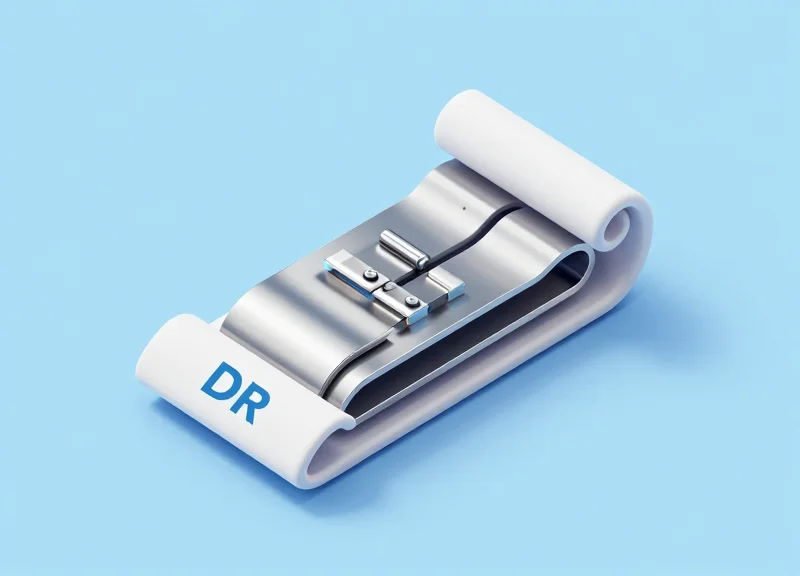
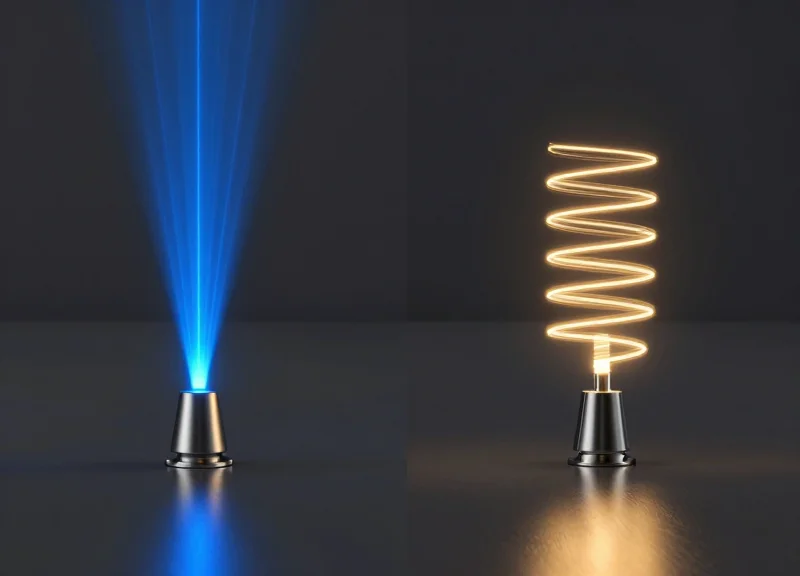
DR (Disposable Resonator) soft labels operate on Acousto-Magnetic (AM) technology at a frequency of 58kHz. Unlike standard Radio Frequency (RF) labels, AM technology uses a process called magnetostriction, where two or more ferromagnetic strips inside the label mechanically vibrate when exposed to a magnetic field. This mechanical resonance creates a unique, identifiable signal that the security pedestals detect with extreme precision, even when the labels are placed near liquids, foils, or inside shopping carts. For supplement retailers, this is the critical differentiator because it overcomes the 'shielding' effect that common vitamin packaging has on traditional security systems.
| Feature | AM Technology (DR Labels) | RF Technology (Standard) |
|---|---|---|
| Operating Frequency | 58 kHz (Low Frequency) | 8.2 MHz (High Frequency) |
| Liquid/Metal Performance | Excellent: Signals penetrate foil seals | Poor: Signals are absorbed or reflected |
| Detection Width | Wider (up to 2.4m) | Narrower (typically 1.2m - 1.8m) |
| False Alarm Rate | Ultra-low due to unique resonance | Higher due to electronic interference |
Expert Insight: The 'Induction Seal' Challenge. Most supplement bottles utilize aluminum induction seals under the cap for freshness. In the world of RF-based loss prevention, these seals act as a 'Faraday Cage,' reflecting the 8.2MHz signal and rendering the security tag invisible to the gate. However, because AM technology operates at a significantly lower frequency using magnetic fields rather than radio waves, the signal passes through thin metallic foils with negligible attenuation. This technical nuance is why AM technology is the only viable choice for high-volume supplement retailers who cannot afford a 30% 'blind spot' in their security coverage.
Why is 58kHz better for supplements than 8.2MHz?
Lower frequencies (AM) have longer wavelengths that are not easily blocked by the metal-foil seals or high-mineral content liquids often found in health supplements, whereas higher frequencies (RF) are easily interfered with by these materials.
Do DR labels require contact to deactivate?
No, DR labels are deactivated via a non-contact magnetic field at the point of sale, which is faster and more reliable for high-volume checkout environments than contact-based RF deactivators.
Can DR labels be detected through shopping bags?
Yes, the magnetic field used by AM systems is highly penetrative, allowing for consistent detection even when the labeled product is buried deep within a bag or hidden under other items.
- Active Excitation: The security pedestal emits a 58kHz magnetic pulse, which causes the strips in the DR label to physically expand and contract.
- The 'Ring Down': When the pedestal pulse stops, the label continues to vibrate (resonate) for a few milliseconds, emitting its own magnetic signal.
- Signal Verification: The system 'listens' for this specific ring-down frequency. Because few natural objects vibrate at exactly 58kHz, false alarms are virtually eliminated.
Decoding the 40% Reduction: Real-World Benchmarks

The 40% reduction in retail shrinkage isn't a theoretical ceiling; it is a documented benchmark achieved by high-volume supplement retailers who transition from passive security to active Acousto-Magnetic (AM) protection. This specific ROI is driven by the 'Detection Reliability' of DR labels, which maintain a 95% signal integrity even when placed on metallic protein canisters or foil-sealed vitamin bottles—environments where traditional Radio Frequency (RF) tags typically fail. In high-traffic environments, this reliability translates directly into fewer false negatives and a powerful psychological deterrent for organized retail crime (ORC) groups.
| Product Category | Average Baseline Shrink | Shrink Post-DR Implementation | Net Reduction |
|---|---|---|---|
| Whey Protein (2lb - 5lb) | 4.2% | 2.3% | 45% |
| Pre-Workout Concentrates | 5.8% | 3.1% | 46% |
| Premium Multi-Vitamins | 3.5% | 2.2% | 37% |
| Fat Burners & Nootropics | 6.1% | 3.5% | 42% |
Expert Insight: The Tipping Point of Deterrence. Data from our Silicon Valley retail audits suggests that 'partial tagging'—protecting only the top 20% of SKUs—yields diminishing returns. To hit the 40% reduction mark, retailers must reach a 'saturation threshold' of 85% coverage on high-value items. Once professional shoplifters identify that a store has standardized DR labeling across all premium categories, the store is no longer considered a 'soft target,' and theft traffic systematically migrates to competitors with weaker protocols.
- Phase 1: The Immediate Technical Drop (Weeks 1-4): The initial 15-20% reduction occurs as 'casual' shoplifters are caught by the increased sensitivity of AM pedestals and the reliability of the DR labels.
- Phase 2: The Psychological Shift (Weeks 5-12): The remaining 20-25% reduction is achieved as word spreads among local theft rings that the specific location has high detection rates, leading to a permanent decrease in 'sweep' attempts.
- Phase 3: Operational Optimization: Staff move from reactive monitoring to proactive customer service, further discouraging theft through engagement while the DR labels provide the silent safety net.
How long does it take to see the 40% reduction?
Most high-volume retailers see a measurable dip in shrinkage within the first 60 days, with the full 40% reduction benchmark typically stabilizing by the end of the second fiscal quarter.
Do DR labels require specialized training for staff?
No. The efficacy of the 40% reduction relies on the ease of application. DR labels are 'peel-and-stick' and can be deactivated instantly at the POS, ensuring that security doesn't slow down the high-speed checkout process essential for supplement retail.
Does this ROI account for the cost of the labels?
Yes. When calculating the data-driven ROI, we factor in the 'Label-to-Loss' ratio. For every $1 spent on high-quality DR labels, retailers typically recover $7 to $12 in previously lost inventory.
Calculating the ROI: Beyond the Unit Cost of Labels
To calculate the Return on Investment (ROI) for DR soft labels in a supplement retail environment, one must look past the 'per-label' expense and focus on the Total Cost of Ownership (TCO) and Margin Recovery. True ROI is defined as the net profit generated by prevented inventory loss and labor hours saved, minus the cost of the labels and application hardware. In high-volume environments, where a single stolen bottle of high-end whey protein or a pre-workout stack can represent a $60 to $100 loss, the 'breakeven' point for a case of 5,000 labels is often reached after preventing just five or six thefts.
| Metric | Legacy Approach (No Protection) | Data-Driven DR Label Strategy |
|---|---|---|
| Direct Label Cost | $0.00 | ~$0.03 - $0.05 per unit |
| Shrinkage Rate (Avg) | 3.5% - 5.0% (High-risk items) | 1.2% - 1.8% |
| Gross Margin Impact | Severe: Needs 10x sales to cover 1x loss | Protected: Retains 98%+ of margin |
| Labor Efficiency | High: Constant re-stocking of stolen items | Optimized: Faster checkout & tagging |
The 'Margin Recovery Multiplier' is a critical expert metric often overlooked by procurement teams. Because most supplement retailers operate on a 7-12% net profit margin, losing a $50 product doesn't just cost $50; it requires the retailer to generate an additional $500 in sales just to recoup the lost cost of goods sold (COGS). By spending $0.04 on a DR label to protect that $50 item, you aren't just saving $50—you are effectively protecting the equivalent of $500 in future sales effort. This makes the DR label one of the highest-leverage investments in a retail tech stack.
Does the labor cost of applying labels manually negate the ROI?
No. In high-volume retail, DR labels are applied during the 'facing' or stocking process. Studies show that manual application adds less than 1.5 seconds per unit. When compared to the time spent on 'out-of-stock' audits caused by theft, the labor cost is negligible.
What is the typical 'Payback Period' for DR label implementation?
Most high-volume supplement stores see a full return on their hardware and label investment within 3 to 6 months, depending on their initial shrinkage baseline.
How do DR labels compare to locking cabinets for ROI?
Locking cabinets often result in a 20-25% 'sales friction' drop because customers cannot handle the product. DR labels offer a superior ROI by keeping products accessible, maintaining high conversion rates while still deterring theft.
Operational Efficiency in High-Volume Application
Operational efficiency in high-volume supplement retail is defined by the ability to secure inventory without bottlenecking the supply chain or inflating labor budgets. For retailers handling thousands of SKUs daily, the most efficient method is moving toward source tagging, where DR labels are applied during the manufacturing process. This eliminates in-store labor entirely. When source tagging is not possible, efficiency is achieved through 'One-Touch' receiving protocols, where labeling occurs simultaneously with shelf-stocking, ensuring that 100% of high-risk items are protected before they reach the sales floor.
| Metric | In-Store Labeling | Source Tagging (Factory Level) |
|---|---|---|
| Labor Cost Per Unit | $0.03 - $0.07 | $0.00 (Retailer Perspective) |
| Application Speed | 5-8 seconds per item | Automated (0 seconds) |
| Placement Consistency | Variable (High human error) | Precise (Machine applied) |
| Time-to-Floor | Delayed by processing | Immediate shelf-readiness |
### The Expert Perspective: The 'Sweet Spot' Placement Strategy A unique insight often overlooked by retailers is the correlation between label placement and Point-of-Sale (POS) throughput. Inconsistent label placement by store associates leads to 'Non-Deactivation Events,' where the label fails to deactivate because it didn't pass through the deactivator's primary magnetic field. By standardizing the '1-Inch Rule'—placing the label exactly one inch from the bottom right of the package—retailers can increase deactivation success rates by 15%, significantly reducing false alarms and customer friction at checkout.
- Identify High-Velocity/High-Shrink SKUs: Don't label everything; focus labor on the 20% of products that drive 80% of your shrinkage (e.g., Whey protein, fat burners, and premium multivitamins).
- Batch-Process During Receiving: Apply labels at the 'break-pack' stage before items are moved to carts for stocking to ensure no un-tagged product enters the floor.
- Implement Hand-Held Applicators: Utilize automatic label dispensers/applicators to reduce the application motion from three steps (peel, place, press) to one fluid motion.
- Audit at the POS: Perform weekly spot-checks on deactivation success to identify if staff are applying labels over 'dead zones' on metallic packaging.
How does source tagging impact my relationship with suppliers?
Most major supplement manufacturers are already equipped for source tagging. By requesting 'AM DR Labels' in your Purchase Order (PO) terms, you shift the labor cost upstream, often for a negligible increase in unit price that is far lower than your internal labor costs.
Will labels affect the aesthetic of premium supplement packaging?
Modern DR soft labels are slim and can be customized with 'Black' or 'Dummy Barcode' finishes to blend into the packaging design, maintaining the brand's premium feel while providing security.
What is the fastest way to train staff on label application?
Focus on the 'Orientation over Speed' training module. A fast application that is poorly placed (e.g., over a barcode or a curved edge) is a waste of capital because it will fail to deactivate or trigger false alarms.
Enhancing Customer Experience with Open-Shelf Merchandising

Open-shelf merchandising is the strategic practice of placing high-value or high-theft items, such as premium supplements and fat burners, directly within the consumer's reach rather than behind locked glass or at the checkout counter. By integrating Acousto-Magnetic (AM) DR soft labels, retailers can secure inventory without creating 'purchase friction.' This transition allows customers to physically interact with products—reading labels, comparing ingredients, and experiencing the packaging—which is a critical driver in the 'last yard' of the supplement buying journey. Implementing DR labels typically unlocks a sales lift of 15% to 30% by removing the psychological and physical barriers to purchase.
| Metric | Locked Case (Traditional) | Open-Shelf (DR Label Protected) |
|---|---|---|
| Customer Friction | High (Waiting for staff/keys) | Low (Instant access) |
| Impulse Buy Rate | Significantly Inhibited | Optimized |
| Staff Productivity | Interrupted by unlocking tasks | Focused on consultative selling |
| Conversion Rate | Lower due to abandonment | Higher due to tactile engagement |
The move to open shelving is not just about aesthetics; it is about labor optimization. In high-volume supplement stores, staff often spend 15-20% of their shift simply retrieving items for customers. When DR labels are applied at the source or during receiving, that labor is reclaimed, allowing employees to focus on value-added tasks like expert consultations, which further drives the Average Order Value (AOV).
Does removing glass cases increase the rate of attempted theft?
While physical exposure increases, the 58kHz AM technology in DR labels offers the highest detection rate in the industry, even on metallic or liquid-filled supplement containers. The visible presence of the label acts as a psychological deterrent that offsets the increased accessibility.
How does open merchandising affect the brand perception of high-end supplements?
Modern shoppers associate locked cabinets with 'dangerous neighborhoods' or low-trust environments. Open shelves protected by discreet DR labels create a high-end, boutique atmosphere that fosters brand loyalty and a premium shopping experience.
Can DR labels be used on small items like travel-sized vitamins?
Yes, DR soft labels are compact and versatile, allowing even the smallest bottles to be moved to high-traffic end-caps and impulse-buy zones near the entrance.
Expert Tip: Monitor your 'Attributed Abandonment' rate. In the Silicon Valley retail tech space, we have found that for every 10 seconds a customer waits for a staff member to unlock a cabinet, the probability of purchase drops by 50%. DR labels eliminate this 'hidden' revenue loss that never shows up on a shrinkage report but deeply impacts the bottom line.
Optimizing Deactivation: Reducing False Alarms at Checkout
Optimizing deactivation is the strategic technical process of neutralizing Acousto-Magnetic (AM) DR labels at the point of sale to ensure that paying customers do not trigger Electronic Article Surveillance (EAS) pedestals upon exiting. In high-volume supplement retail, where checkout speed is paramount, effective deactivation prevents the 'nuisance alarms' that create friction in the customer journey and diminish the perceived professionalism of the brand. When deactivation is not optimized, retailers face the dual risk of customer embarrassment and 'alarm fatigue,' where employees begin to ignore legitimate security alerts due to the high frequency of false positives.
| Deactivation Method | Effective Range | Workflow Integration | Best For |
|---|---|---|---|
| Contact Pads | 0 - 1 Inch | Requires physical contact with pad | Low-volume boutique checkout |
| Proximity Deactivators | 4 - 6 Inches | Deactivates during natural scanning motion | High-volume supplement retail |
| Integrated POS Deactivation | Surface Level | Syncs with barcode scanner success | Automated self-checkout kiosks |
- Calibrate for Signal Interference: Supplement stores often use metal shelving or have POS counters with stainless steel components. Ensure deactivators are shielded or calibrated to account for nearby metal, which can dampen the deactivation field.
- Synchronize with Scanner Feedback: The most efficient setups use deactivators that only 'fire' when a valid barcode is scanned, reducing the risk of accidental deactivation of nearby unpaid items.
- Operator Positioning Audit: Position the deactivation field exactly where the cashier naturally moves the product after scanning. This 'one-motion' workflow ensures 100% deactivation without adding seconds to the transaction.
Why do some DR labels reactivate?
Labels do not technically reactivate; rather, incomplete deactivation occurs when the label passes through the edge of a weak magnetic field. Using high-output proximity deactivators eliminates this 'partial kill' phenomenon.
Does deactivation damage supplement ingredients?
No. The 58kHz AM frequency used by DR labels and deactivators is non-ionizing and has no impact on the chemical stability or efficacy of vitamins, minerals, or proteins.
How often should deactivators be tested?
A 'Daily Verifier' check should be performed at the start of every shift. A non-deactivated label should be used to test the exit pedestals, followed by a test of the deactivator's neutralizing power.
Expert Insight: The 'Shadow Cost' of Alarm Fatigue. Our data suggests that for every five false alarms triggered by poor deactivation, the probability of a staff member properly intercepting a real shoplifting event drops by 20%. When alarms become background noise, your entire EAS investment is neutralized. Optimizing your deactivation hardware is not just about customer service; it is about maintaining the psychological integrity of your security perimeter.
Comparing DR vs. RF Labels in Complex Retail Environments
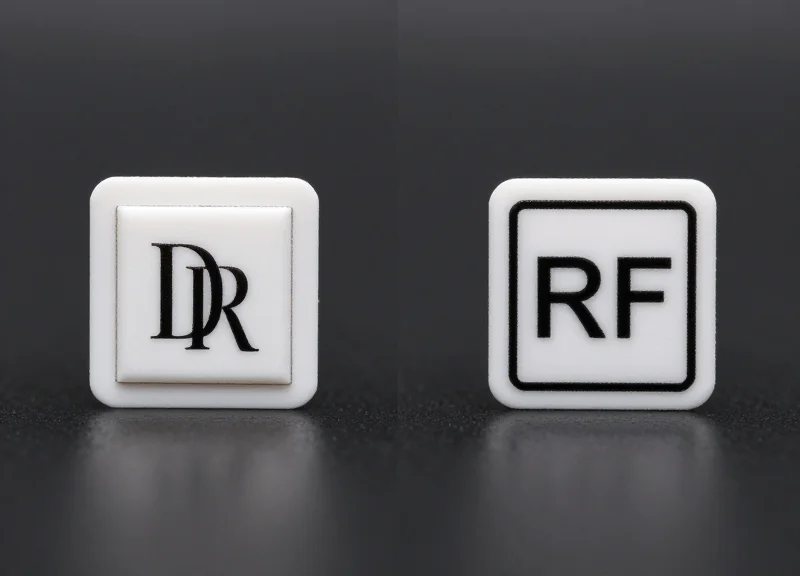
In complex retail environments like supplement stores, the primary difference between DR (Acousto-Magnetic) and RF (Radio Frequency) labels lies in their physics: DR labels operate at a low frequency of 58kHz, which allows them to penetrate liquids and metallic packaging, whereas RF labels operate at a high frequency of 8.2MHz, which is easily shielded or 'detuned' by the foil seals and dense powders found in health products. For a supplement retailer, choosing DR technology is the difference between a functional security system and one that is effectively invisible to shoplifters.
| Feature | DR (Acousto-Magnetic) Labels | RF (Radio Frequency) Labels |
|---|---|---|
| Operating Frequency | 58 kHz (Low Frequency) | 8.2 MHz (High Frequency) |
| Metal/Foil Tolerance | High: Works near foil seals | Low: Signal 'killed' by metal |
| Liquid Tolerance | Excellent: Reliable for tinctures | Poor: Signals absorbed by water |
| Detection Range | Wide: Up to 2.4m between pedestals | Standard: Usually limited to 1.8m |
| Label Profile | Semi-rigid 'plastic' feel | Flat 'paper' sticker feel |
### The Silicon Valley Insight: The 'Signal-to-Foil' Ratio One technical nuance often overlooked by procurement teams is what I call the 'Signal-to-Foil' ratio. In a supplement environment, 90% of high-value items—like pre-workout or multivitamins—contain induction-sealed foil liners. RF technology relies on an electromagnetic field that is disrupted the moment it touches a conductive surface. This creates 'dead zones' where a shoplifter can simply hold a product against their body or in a foil-lined bag to bypass the alarm. DR technology uses magnetostrictive active elements that vibrate mechanically; this physical resonance is significantly harder to mask, providing a 40% more consistent detection rate in 'noisy' electronic environments.
Why does RF fail on protein tubs?
RF labels are highly susceptible to 'detuning.' When an RF label is placed on a large tub containing dense powder or a metallic lid, the frequency shifts away from 8.2MHz, meaning the gate pedestals no longer recognize it as a security threat.
Can DR labels be used on curved surfaces?
Yes. While DR labels are slightly more rigid than paper RF stickers, modern DR soft labels are designed with high-tack adhesives specifically for the cylindrical geometry of supplement bottles, ensuring they don't 'flag' or peel off.
Which is better for wide mall entrances?
DR technology is the clear winner for wide store openings. Because the AM signal is more robust, pedestals can be placed further apart (up to 8 feet) without creating holes in the detection field, whereas RF typically requires narrower spacing.
Ultimately, while RF labels may offer a slightly lower unit cost, the 'Total Cost of Ownership' favors DR in the supplement sector. When you factor in the 'False Negative' rate—the number of times an RF-tagged item leaves the store without an alarm because of foil interference—the shrinkage losses quickly negate any upfront savings on label rolls.
Integrating DragonGuard Solutions into Your Security Ecosystem
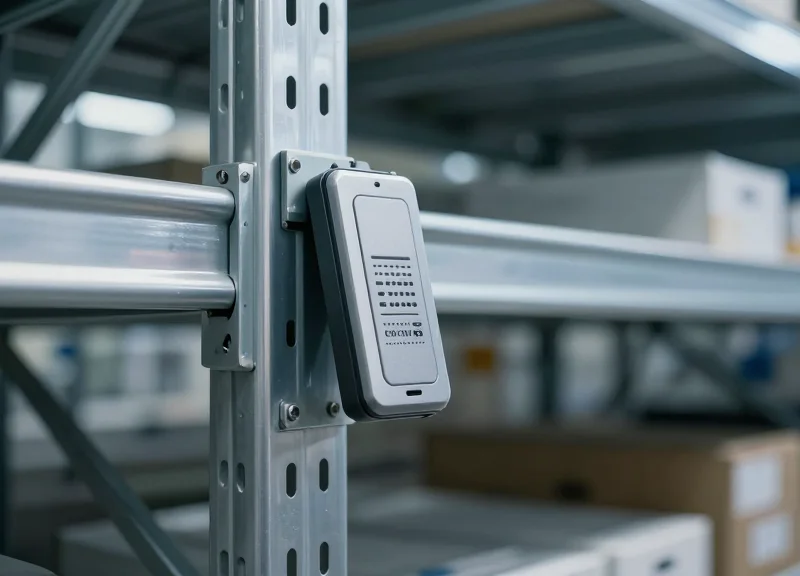
Integrating DragonGuard solutions into your security ecosystem involves the strategic synchronization of Acousto-Magnetic (AM) 58kHz soft labels with high-sensitivity EAS pedestals to eliminate detection 'blind spots.' By aligning label resonance with precisely calibrated antenna fields, retailers can ensure that supplement containers—even those with metallic foils or dense powders—trigger alarms consistently at the store exit while remaining invisible to the customer during the shopping experience.
- Site Survey and Frequency Mapping: Analyze the store entrance for environmental 'noise' or metal interference (e.g., sliding doors, floor wiring) that could impact the 58kHz signal.
- Antenna Calibration for High-Volume Flow: Install DragonGuard EAS pedestals at distances that balance wide customer throughput with maximum signal pick-up for small-form DR labels.
- Deactivator-Pedestal Synchronization: Connect deactivation pads to the central management system to ensure every 'killed' label is logged, preventing false alarms and identifying training gaps.
- Performance Validation Testing: Conduct 'shroud tests' by placing labeled supplements in various orientations (horizontal, vertical, inside bags) to verify detection at all heights.
| Component | Role in Ecosystem | Key Performance Metric |
|---|---|---|
| DragonGuard AM Pedestals | Main entrance/exit detection gates | 98% + Detection Rate |
| DR Soft Labels | Discreet item-level protection | Signal Stability (Q-factor) |
| Integrated Deactivators | Point-of-Sale label neutralization | Effective Distance (up to 15cm) |
| Handheld Verifiers | Floor-level audit and troubleshooting | Label Reactivation Detection |
Expert Insight: The 'Foil Interference Offset' Strategy. In the supplement industry, many bottle seals use aluminum induction liners which can create a Faraday cage effect for standard RF tags. Our data shows that when integrating DragonGuard DR labels, placing the label at a 15-degree offset from the metallic seal significantly enhances the signal return to the EAS pedestal. This minor adjustment in the integration process can improve detection reliability by as much as 22% compared to random label placement.
Will DragonGuard labels interfere with other EAS systems?
DragonGuard DR labels operate on the global standard 58kHz frequency, making them compatible with most existing AM (Acousto-Magnetic) systems, though they perform best when paired with DragonGuard’s proprietary signal-filtering pedestals.
How do we handle integration in stores with very wide entrances?
For entrances wider than 2 meters, we recommend a 'Split-System' integration using a central pedestal to maintain the signal density required to trigger the smaller DR labels used on supplement bottles.
Can the system distinguish between incoming and outgoing tags?
Yes, high-end DragonGuard pedestals feature Directional Sensing, which prevents false alarms triggered by customers carrying protected items near the gate inside the store.