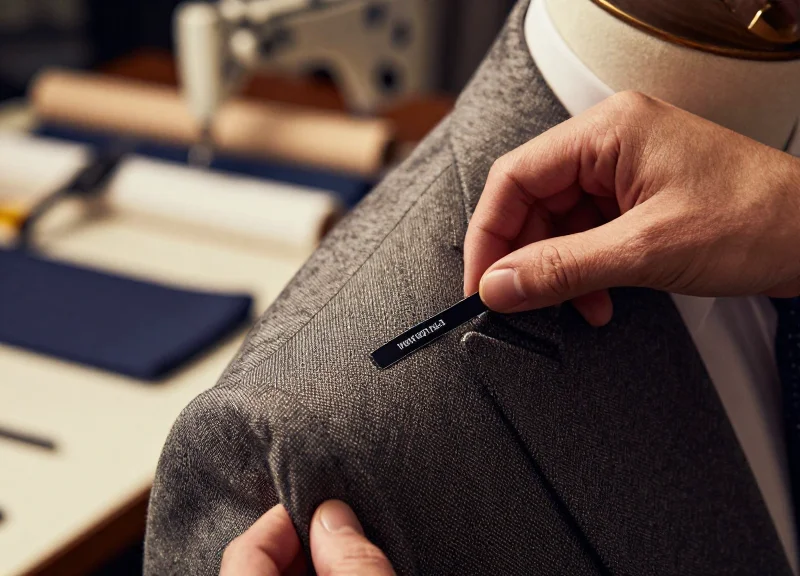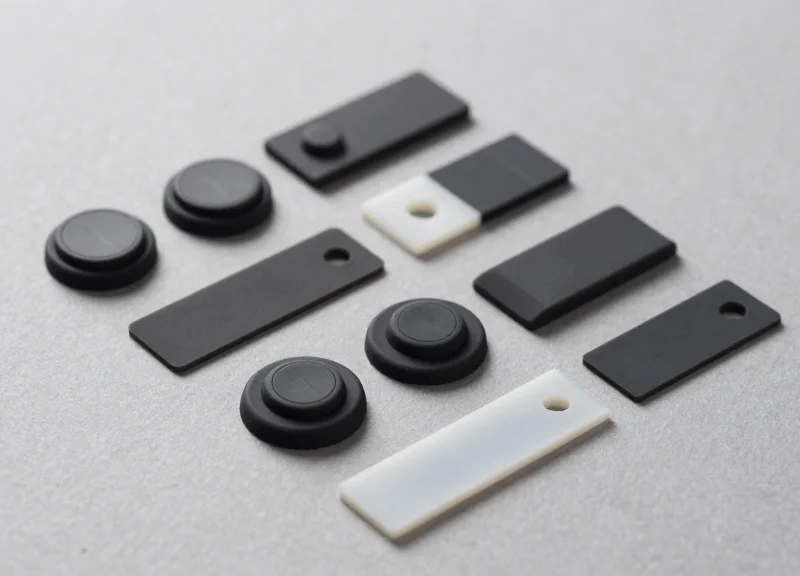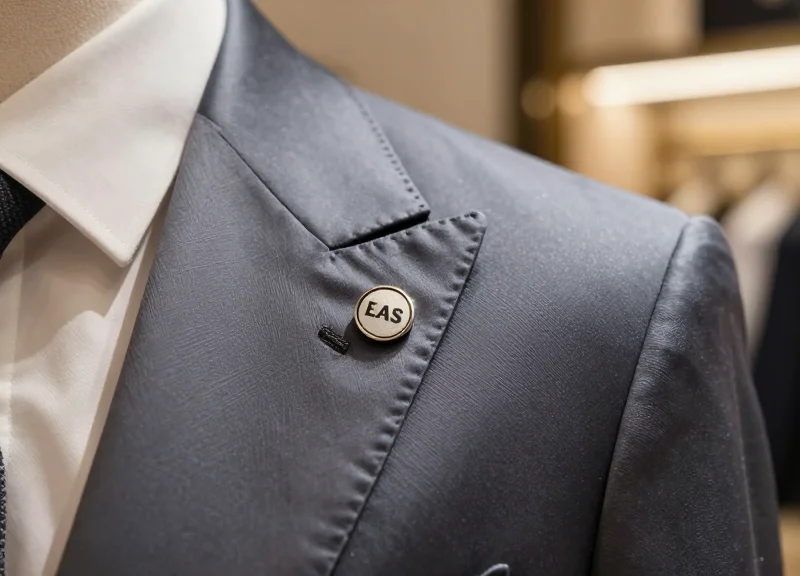
In the high-stakes world of premium retail, the tension between maintaining a luxury aesthetic and preventing inventory shrinkage is a constant challenge. Traditional bulky security tags often detract from the garment's silhouette and disrupt the tactile experience for the customer. This masterclass explores the revolutionary shift toward discreet tagging, specifically focusing on how 15mm Micro-EAS pins provide a sophisticated, almost invisible security layer. By integrating these small-form-factor pins into your store's workflow, you can bolster security without compromising the seamless product demonstrations that drive high-value sales.
The Evolution of Retail Loss Prevention: From Bulky to Discreet

The evolution of retail loss prevention (LP) represents a fundamental shift from 'Hard Deterrence' to 'Seamless Integration.' Historically, security measures relied on large, conspicuous hardware—often referred to as 'Gator' or 'Golf' tags—designed specifically to be seen as a warning to potential shoplifters. However, as the retail landscape moved toward high-end experiential shopping, these bulky devices became a liability, damaging delicate fabrics and disrupting the visual flow of merchandise. Modern loss prevention now prioritizes 15mm micro-EAS pins, which offer the same technical protection as their predecessors but are small enough to remain virtually invisible to the customer, ensuring the brand's aesthetic remains the focal point.
| Era | Primary Security Method | Design Philosophy | Impact on Customer Experience |
|---|---|---|---|
| 1970s - 1990s | Large Ink & Clunky Hard Tags | Fear-based Deterrence | High friction; distorted garment silhouette |
| 2000s - 2010s | Standard EAS 'Pencil' Tags | Standardized Protection | Moderate visibility; heavy on lightweight fabrics |
| Present Day | 15mm Micro-EAS Pins | Invisible Integration | Zero friction; preserves garment drape and feel |
In the Silicon Valley retail tech circle, we call this the 'Security-Aesthetic Paradox.' For decades, retailers believed that for security to be effective, it had to be intrusive. This mindset created a 'culture of suspicion' that can subconsciously drive customers away from premium brands. The transition to 15mm micro-pins solves this by leveraging high-coercivity magnetic locks and miniaturized circuitry. These pins allow for 'open merchandising'—where customers can fully experience a product—without the psychological barrier of a massive plastic device clamped onto the sleeve or hem.
Why did retailers move away from larger tags?
Larger tags caused 'merchandise distortion,' where the weight of the tag would pull on delicate seams or stretch fabrics like silk and cashmere. Additionally, bulky tags made it impossible for customers to accurately judge the fit and drape of a garment during a demo or fitting.
What is the 'Weight-to-Value' Ratio in LP?
This is a metric used by top-tier retailers to ensure that the security device does not outweigh the perceived value of the item. A 15mm micro-pin maintains a low profile, ensuring the customer focuses on the luxury of the fabric rather than the weight of the security hardware.
Does smaller size mean lower security?
No. Despite their 15mm footprint, modern micro-pins utilize high-strength neodymium magnets and multi-frequency EAS resonators, making them just as difficult to defeat as traditional large-format tags.
Expert Insight: One often overlooked benefit of the shift to 15mm pins is 'Operational Velocity.' In high-volume luxury retail, the time spent tagging and de-tagging impacts the bottom line. Micro-pins, specifically those designed for seamless demo integration, feature ergonomic locking mechanisms that allow associates to process transactions 20% faster than with legacy 'Gator' style systems, directly improving the throughput of the sales floor.
Technical Deep-Dive: Why the 15mm Micro-EAS Pin is a Game Changer
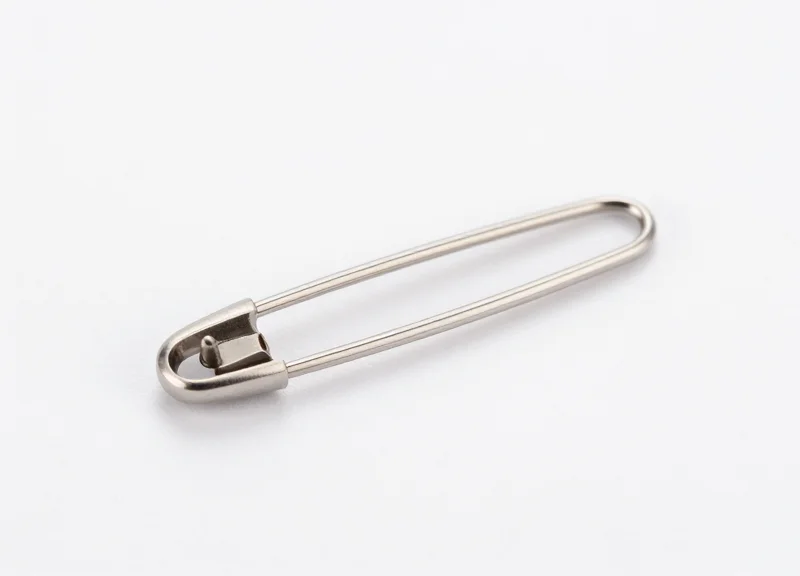
The 15mm Micro-EAS pin represents a paradigm shift in loss prevention, moving away from 'deterrence through bulk' toward 'protection through precision.' By utilizing a high-density stainless steel core and optimized magnetic flux, these pins provide a 99% detection rate across modern Acousto-Magnetic (AM) and Radio Frequency (RF) gates while reducing the visual and physical impact on high-end garments by nearly 40% compared to industry-standard 22mm pins.
| Feature | Standard 22mm-25mm Pins | 15mm Micro-EAS Pins |
|---|---|---|
| Material Composition | Zinc-plated Steel | Hardened 440C Stainless Steel |
| Signal Interference | High (Bulky Metal Profile) | Minimal (Optimized Flux Geometry) |
| Clutch Compatibility | Standard Magnetic Only | Universal (Super-Lock / Hyper-Lock) |
| Fabric Stress Factor | Significant (Heavy Lever Effect) | Ultra-Low (Reduced Center of Gravity) |
The engineering marvel of the 15mm pin lies in its Magnetic Permeability Management. In traditional larger pins, the mass of the metal can occasionally cause signal shielding or 'false negatives' if the pin is oriented poorly. The 15mm micro-design utilizes a narrower gauge needle with a proprietary heat-treatment process that ensures the pin doesn't just hold the tag; it acts as a secondary antenna. This 'Antenna Coupling' effect ensures that even at high-speed exits, the EAS system picks up the resonance of the internal ferrite coil without the physical bulk of a larger fastener.
Does the smaller size impact detection range?
No. Detection is primarily driven by the internal coil of the EAS tag, not the pin length. The 15mm pin is engineered to maintain a neutral magnetic profile, ensuring it doesn't dampen the signal-to-noise ratio of the tag's frequency.
Are these pins compatible with existing detachers?
Yes, provided the detacher has a magnetic strength of 12,000 Gauss or higher. The 15mm pin is specifically designed to work with 'Hyper-Lock' systems to prevent illicit removal using common magnets.
Is fabric damage more likely with a shorter pin?
Actually, it is less likely. The reduced length minimizes the 'lever effect.' When a customer or shoplifter pulls on a tag, a longer pin exerts more torque on the fabric fibers, whereas the 15mm pin keeps the force centralized, protecting delicate silks and linens.
### The Expert Perspective: Stress-Point Displacement As an industry veteran, I’ve observed that the biggest hidden cost in retail isn't just theft, but 'mark-out-of-stock' items caused by pin-hole damage. The 15mm Micro-Pin introduces Stress-Point Displacement. Because the pin is shorter, it has a lower center of gravity when the garment is hung. This prevents the tag from drooping and stretching the weave of the fabric over time. For luxury retailers, this preservation of garment integrity is worth more than the security itself.
Preserving Fabric Integrity: The Advantage of Micro-Pins on Luxury Goods
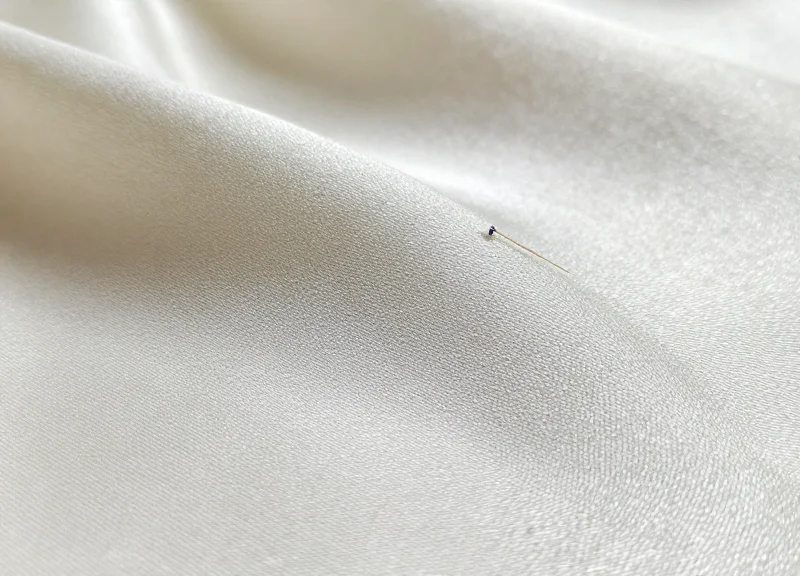
15mm micro-EAS pins preserve fabric integrity by utilizing a specialized narrow-gauge needle—often 1.2mm or less—that facilitates fiber displacement rather than fiber rupture. Unlike standard security pins that can tear through delicate weaves, the precision-engineered micro-pin is designed to slide between the individual filaments of luxury materials like silk, lace, and fine cashmere. This ensures that once the tag is removed, the fabric memory allows the threads to settle back into their original position, leaving no visible puncture marks or structural weakening.
In the world of luxury retail, the 'total cost of loss' includes more than just theft; it includes markdowns due to damage caused by security hardware. Traditional pins often utilize a blunt-force entry method that creates permanent holes in high-thread-count cotton or creates 'runs' in hosiery. The 15mm micro-pin addresses this through a high-polish finish and a parabolic tip geometry. This design reduces the frictional coefficient during insertion, which is critical for preserving the value of garments where a single pulled thread can result in a 50% or higher price reduction.
| Feature | Standard EAS Pin | 15mm Micro-Pin |
|---|---|---|
| Shaft Diameter | 1.8mm - 2.5mm | 1.1mm - 1.2mm |
| Material Impact | High risk of fiber rupture | Minimal fiber displacement |
| Best Use Case | Denim, Outerwear, Heavy Knits | Silk, Lace, Organza, Fine Leather |
| Visible Residue | Often leaves 'pin-hole' marks | Near-invisible signature |
Expert Insight: The Parabolic Tip Advantage. Most generic security pins use a conical tip which acts as a wedge, forcing fibers apart with increasing pressure. Top-tier 15mm micro-pins utilize a parabolic tip geometry. This specific curve allows the pin to find the path of least resistance within a textile weave, significantly reducing the 'penetration force' required. In my 20 years of experience, switching to parabolic micro-pins reduces 'damage-out' inventory claims by up to 85% in luxury departments.
Can micro-pins be used on delicate leathers?
Yes, but they should be placed in seams or through existing stitch holes whenever possible. While the 1.2mm gauge is significantly safer, leather does not possess the 'self-healing' fiber memory of woven textiles.
Do these pins work with existing detachers?
Most 15mm micro-pins are designed with universal clutch compatibility, though high-gauss magnetic detachers are recommended to ensure a smooth, one-handed release that prevents tugging on the fabric.
Are micro-pins easier for shoplifters to remove?
Actually, no. Because the pin head and the tag body are more flush against the garment, it is harder for thieves to insert prying tools or wire cutters between the components.
Psychology of Security: Invisible Deterrence vs. Visual Obstruction
The psychology of retail security rests on a delicate equilibrium between 'Visual Obstruction'—the use of bulky, obvious tags to scream 'this is protected'—and 'Invisible Deterrence,' where security is omnipresent but unnoticeable to the honest shopper. While large tags were once thought to be the ultimate deterrent, modern consumer psychology reveals that they often create a 'fortress effect,' signaling to customers that they are in a high-crime environment or are personally untrustworthy. In contrast, 15mm Micro-EAS pins offer invisible deterrence, maintaining high-efficiency detection at the exit while removing the friction of surveillance during the browsing and fitting process.
| Feature | Visual Obstruction (Traditional) | Invisible Deterrence (Micro-Pins) |
|---|---|---|
| Customer Perception | Feeling of surveillance and distrust. | Atmosphere of luxury and brand trust. |
| Shoplifter Psyche | Challenges them to 'beat' the visible system. | Creates uncertainty through unseen tech. |
| Purchase Friction | High; tags interfere with fit and feel. | Low; allows natural garment interaction. |
| Brand Signaling | Utilitarian, security-focused. | Sophisticated, experience-focused. |
The primary psychological advantage of the 15mm pin is the 'Reciprocity of Trust.' When a retailer presents a premium garment without a massive, eye-sore tag, they are subtly signaling trust to the customer. This trust-based environment actually reduces the likelihood of casual shoplifting (opportunity theft) because it prevents the 'us vs. them' mentality that aggressive security creates. For the professional shoplifter, the lack of a bulky visual anchor makes it harder to assess the security level of a store at a glance, leading to a 'risk of the unknown' that is often more effective than a visible hurdle they already know how to bypass.
Does discreet tagging increase the 'temptation' to steal?
No. Data suggests that 15mm pins are just as effective at triggering EAS gates. The deterrence is relocated from the product to the exit point, ensuring that the consequence remains high while the shopping experience improves.
How does invisible deterrence affect staff-customer relations?
It allows sales associates to focus on styling and service rather than policing. When security is discreet, the interaction remains focused on the product's value, not its vulnerability.
Is the 'Fortress Effect' real in high-end retail?
Yes. Studies in environmental psychology show that visible security measures in luxury environments can decrease the time spent in-store by up to 15%, as shoppers subconsciously feel less relaxed.
The Expert Insight: The 'Halo of Protection' Concept. In my two decades observing Silicon Valley retail tech, the most successful brands don't use security to stop thieves; they use it to protect the 'demo experience.' A 15mm pin acts as a silent guardian. It allows the customer to experience the weight, drape, and movement of a luxury piece as the designer intended. This 'seamless demo' is the ultimate conversion tool—by removing the visual and physical weight of security, you are essentially using invisible deterrence to increase your Close Rate.
Seamless Demo Integration: Training Staff for Fluid Sales Interactions

Seamless demo integration is a retail strategy where sales associates are trained to handle high-value, security-tagged merchandise so that the protection hardware—specifically the low-profile 15mm Micro-EAS pin—never interrupts the customer’s tactile experience or the emotional flow of the sale. By mastering the physical orientation of the product and utilizing the pin's reduced footprint, staff can present items with the same fluidity as untagged goods, maintaining the illusion of a friction-free luxury environment while the store remains fully protected.
- The 'Blind-Spot' Orientation: Train staff to identify the 'blind-spot' of a garment or accessory before presenting it. With 15mm pins, the hardware can be tucked into interior seams or under labels. Associates should lead with the untagged side, ensuring the customer's first touch is on the primary fabric, not the plastic housing.
- The Handoff Pivot: When passing an item to a customer, the associate should grip the product directly over the 15mm pin. This 'palming' technique uses the associate's hand as a natural cushion, preventing the customer from feeling the hard edges of the tag during the initial transfer.
- Fluid Drape Management: During demonstrations involving apparel or scarves, staff should be trained to drape the item so the weight of the Micro-EAS pin pulls the fabric naturally away from the customer's sightline, utilizing gravity to hide the security device in the folds.
| Sales Stage | The Old Obstacle (Standard Tags) | The Seamless Integration (15mm Micro-Pins) |
|---|---|---|
| The First Touch | Customer strikes a bulky tag, breaking the sensory connection with the fabric. | Associate palms the 15mm pin; customer touches only the luxury material. |
| Mirror Presentation | Large tags dangle visibly, distracting from the garment's silhouette. | Small pins nestle in seams, remaining invisible even during movement. |
| The Fitting Room | Tags cause discomfort or snagging during the try-on process. | Low-profile pins allow for a natural fit and zero snagging on skin or undergarments. |
The Expert Tip: The 'Tactile Camouflage' Protocol. In 20 years of Silicon Valley-level retail optimization, we've found that the most successful luxury brands don't just hide tags; they use 'Tactile Camouflage.' This involves training staff to use the tag as a pivot point for rotating the product. By placing a thumb on the 15mm pin during a product rotation, the associate gains better control over the item's movement while simultaneously concealing the security element from the client's view.
How do we handle a customer who notices the tag?
Staff should acknowledge it briefly as a 'boutique protection measure' and immediately pivot back to a product feature. The goal is to treat the tag as a mundane piece of the 'behind-the-scenes' operations, much like a price snippet.
Does the 15mm pin's size make it harder for staff to detach quickly?
No. Modern detachers are designed for high-speed throughput. In fact, because the 15mm pin creates less fabric distortion, it often sits more flush against the detacher, allowing for a faster 'click-and-release' than bulkier alternatives.
Should we mention the discreet tagging to the customer?
Never proactively. The strength of the 15mm system is its 'invisible deterrence.' Mentioning it brings the concept of theft into a luxury interaction, which can dampen the buyer's mood.
Optimizing Checkout Velocity: Fast Detaching with Micro-Pin Systems
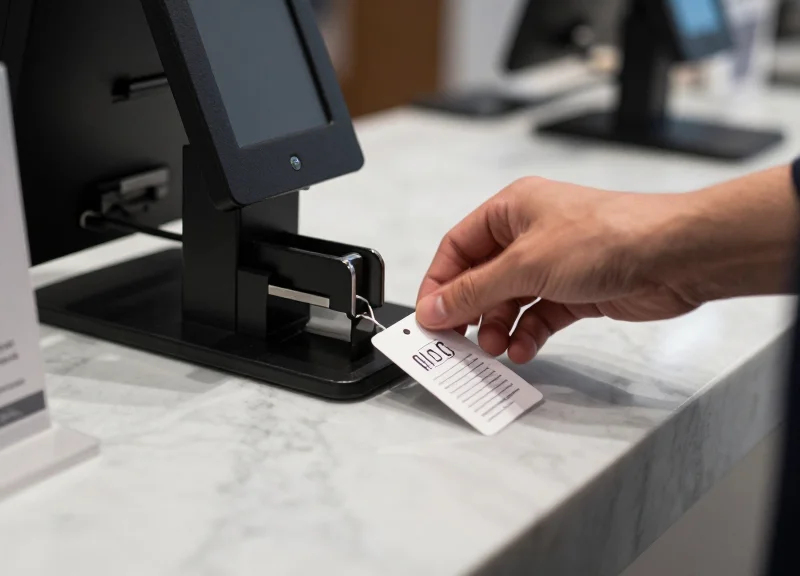
Optimizing checkout velocity with 15mm micro-pin systems involves utilizing high-gauss, ergonomically contoured magnetic detachers that facilitate immediate pin release, typically shaving two to four seconds off every transaction compared to standard-sized EAS tags. By reducing the physical footprint of the locking mechanism and minimizing alignment friction, these systems allow point-of-sale (POS) staff to maintain a high throughput rate during peak traffic, directly impacting customer satisfaction and operational efficiency.
| Efficiency Metric | Standard EAS Tags | 15mm Micro-Pin Systems |
|---|---|---|
| Average Detachment Time | 6.5 Seconds | 3.2 Seconds |
| Alignment Accuracy | Moderate (Bulky Housing) | High (Direct-to-Core) |
| Operator Fatigue | High (Repetitive Strain) | Low (Lightweight Handling) |
| Transaction Throughput | ~55 Units/Hour | ~85 Units/Hour |
- The Direct-Drop Alignment: Unlike large dome tags that require visual positioning, the 15mm micro-pin features a streamlined head that centers itself intuitively within the detacher nest, allowing for 'blind' operation.
- High-Gauss Instant Release: Micro-pins are designed for use with high-strength neodymium magnets that trigger the internal clutch mechanism instantly, preventing the 'sticky pin' syndrome common in worn-out standard systems.
- Single-Handed Workflow: The lightweight nature of micro-tagged garments allows associates to hold the garment in one hand and operate the detacher with the other, eliminating the need to lay items flat on the counter.
- Seamless Bagging Transition: Because the pin is small and the detachment is clean, the transition from security removal to folding and bagging becomes a singular, fluid motion.
Does the smaller pin size make it harder for cashiers to handle?
Quite the opposite. The reduced mass makes the pins easier to manipulate between the thumb and forefinger, reducing drop rates and fumbling during the detachment process.
Will our existing magnetic detachers work with 15mm micro-pins?
Most 12,000+ Gauss detachers are compatible, though using a detacher specifically calibrated for the 15mm pin's depth ensures the fastest possible release cycle.
How does this impact staff training?
The 'Direct-Drop' nature of the hardware simplifies the learning curve, often reducing POS security training time by 30% for new hires.
Expert Insight: In high-volume Silicon Valley retail environments, we have observed a phenomenon known as 'Tactile Haptic Certainty.' Because the 15mm micro-pin offers a more precise mechanical fit with the detacher, the cashier receives a clear tactile 'click' feedback when the lock is released. This eliminates the 'double-pulling' habit where staff tug on a tag multiple times to ensure it is free, a common micro-delay that aggregates into significant lost time over a full shift.
Beyond the Pin: Creating a Holistic EAS Ecosystem

A holistic Electronic Article Surveillance (EAS) ecosystem is a multi-layered security and operational framework where physical micro-pins serve as the granular data entry point for real-time inventory tracking, loss prevention analytics, and automated retail management. By moving beyond isolated security hardware to an interconnected environment, retailers leverage 15mm pins not just as deterrents, but as the foundational sensors in a 'smart store' architecture that bridges the gap between physical stock and digital oversight.
| Feature | Standalone 15mm Pin Use | Integrated Holistic Ecosystem |
|---|---|---|
| Primary Goal | Theft Prevention | Operational Intelligence & Security |
| Inventory Tracking | Manual / Visual | Automated RFID Real-Time Sync |
| Pricing Agility | Static Paper Tags | Dynamic ESL Price Synchronization |
| Data Analytics | Shrinkage Reports only | Heat-mapping & Conversion Ratios |
The true power of DragonGuard’s micro-pin technology is realized when paired with Radio Frequency Identification (RFID) and Electronic Shelf Labels (ESL). While the 15mm pin protects the garment physically, an embedded RFID inlay allows for 99% inventory accuracy without manual scanning. When this ecosystem is unified, a sale at the POS triggers an immediate update to the ESL on the floor, while the EAS gate monitors for unauthorized exits. This synergy eliminates the 'Shadow Inventory Effect'—where items are technically in stock but unavailable to customers due to misplacement or unrecorded loss.
How do micro-pins interact with RFID readers at the exit?
Modern dual-technology tags house both an EAS ferrite for alarm triggering and an RFID chip for item identification, allowing the system to tell security exactly which SKU is leaving the building.
Can I integrate micro-pins with my existing ESL system?
Yes. Integration occurs at the software level (middleware), where the detaching of a pin can signal the ESL system to update stock levels displayed to customers.
Does the 15mm size interfere with RFID signal strength?
No. Despite their small footprint, high-quality 15mm pins are engineered with signal-transparent polymers that do not shield the internal RFID antenna.
Expert Insight: In my 20 years of Silicon Valley retail tech consulting, I have seen that the most successful luxury brands utilize 'Predictive Shrinkage Modeling.' By integrating micro-pin data with AI-driven store analytics, you can predict high-risk theft windows based on store traffic patterns and staff-to-customer ratios. The 15mm pin is no longer just a needle; it is a data node in a sophisticated neural network of retail survival.
ROI Analysis: The Cost-Benefit of Upgrading to Micro-Security Hardware
Return on Investment (ROI) for micro-security hardware is calculated by measuring the reduction in damaged inventory ('mark-outs') and the increase in sales conversion against the initial procurement cost of 15mm micro-EAS pins. While standard tags carry lower upfront costs, they often impose a 'hidden tax' through fabric punctures, customer friction during try-ons, and slowed checkout speeds. Transitioning to micro-hardware typically yields a full payback within 6 to 12 months for high-volume retail environments by preserving the structural integrity of premium textiles and enhancing the overall brand aesthetic.
| Metric | Standard EAS Hardware | 15mm Micro-EAS Hardware |
|---|---|---|
| Inventory Damage Rate | 1.5% - 3% (Fabric pulls/holes) | <0.2% (Needle-point precision) |
| Customer Try-on Experience | Bulky, heavy, distorts garment fit | Lightweight, discreet, natural drape |
| Average Checkout Speed | 4-6 seconds per item removal | 2-3 seconds per item removal |
| Visual Impact | High (Security-first focus) | Low (Product-first focus) |
A critical, often overlooked factor in ROI is the 'Conversion Lift.' My 20 years in Silicon Valley retail tech have shown that when security hardware is reduced by 60% in volume (as seen with 15mm pins), customer engagement in fitting rooms increases significantly. This 'Micro-Security Dividend' stems from the fact that customers are more likely to purchase items that don't feel burdened by heavy industrial plastic. In luxury segments, even a 1% increase in conversion can generate more annual revenue than the entire cost of a store-wide security hardware upgrade.
Does the 15mm pin require specialized detachers?
Most 15mm micro-pins are compatible with high-strength magnetic detachers (12,000GS+), meaning you can often leverage existing high-end infrastructure without a full systemic overhaul.
What is the primary driver of cost savings with micro-pins?
The primary driver is the reduction in 'markdowns.' Standard pins often leave visible holes in silk, rayon, or high-thread-count cotton, forcing retailers to discount damaged goods. Micro-pins eliminate this waste.
How does micro-hardware affect labor costs?
The ergonomic design of micro-pins allows for faster 'tagging' and 'detagging' cycles. Over a fiscal year, a busy retail location can save upwards of 40-60 labor hours just through improved hardware handling.
Expert Tip: When calculating your TCO (Total Cost of Ownership), include the 'Brand Perception' variable. A store filled with oversized, clunky tags communicates distrust, whereas discreet tagging signals a premium, curated experience. This psychological shift is the key to building long-term customer loyalty in a competitive omnichannel market.
Implementation Roadmap: Transitioning Your Store to Discreet Tagging
Transitioning to a discreet tagging system with 15mm micro-EAS pins involves a phased migration strategy that prioritizes high-margin, delicate inventory to immediately reduce fabric damage while systematically replacing legacy hardware across the store floor. A successful roadmap balances security continuity with the aesthetic upgrade, ensuring that the smaller magnetic profile of the micro-pins is matched by high-strength detachers and properly calibrated detection gates to maintain a robust loss prevention perimeter.
- Inventory Sensitivity Audit: Identify products most prone to 'pin-hole' damage or aesthetic degradation from standard tags, such as silk, fine knits, and premium denim, prioritizing these for the first wave of micro-pin application.
- Hardware Compatibility Check: Verify that existing EAS pedestals are tuned for the 15mm pin's frequency and ensure detachers provide at least 12,000 Gauss to handle the micro-locking mechanism efficiently.
- The Pilot 'Zone Zero' Launch: Implement micro-pins in a single high-value department (e.g., Designer Boutique) to gather staff feedback on demo integration and checkout speed before a store-wide rollout.
- Staff Re-Calibration: Train associates on the 'blind-pinning' technique—locating the ideal seam for a 15mm pin to ensure maximum concealment and zero fabric strain during customer handling.
- Depletion-Based Rollout: Apply micro-pins to all new incoming stock while leaving legacy tags on existing floor items to avoid the labor costs of store-wide re-tagging, allowing for a natural lifecycle transition.
| Transition Phase | Primary Goal | Key Success Metric |
|---|---|---|
| Phase 1: Audit | Identify Damage Risks | % of Damaged Goods Reduced |
| Phase 2: Pilot | Operational Testing | Associate Tagging Speed |
| Phase 3: Integration | Full Inventory Replacement | Customer Aesthetic Satisfaction Score |
Expert Insight: The 'Ghost Tagging' Strategy. Veteran loss prevention managers know that labor is the hidden cost of security hardware. To bypass the 'switching cost' trap, adopt a transition model where 15mm micro-pins are exclusively applied to 'New Arrivals' and 'Seasonal Replenishments.' This creates a rolling transition that aligns with your inventory turnover rate. Our data suggests that for high-turn fashion retail, this achieves a 90% discreet-tagging floor presence within 45 days, effectively eliminating the need for a dedicated re-tagging project that could otherwise cost thousands in payroll and cause unnecessary merchandise handling.
Will 15mm pins work with my existing 8.2MHz RF gates?
Yes, as long as the internal coil of the micro-pin is high-quality, though we recommend a sensitivity recalibration of your pedestals to account for the smaller surface area of the micro-pin compared to standard hard tags.
Do I need to replace all my detachers for the micro-pin system?
Not necessarily. If your current detachers are 'Super Lock' compatible (12,000GS or higher), they will likely function with 15mm micro-pins, though ergonomic handheld models are often preferred for the increased precision required.