For music retailers, every instrument in the showroom is a masterpiece of craftsmanship and a significant financial investment. In 2026, the challenge of loss prevention has evolved: security is no longer just about stopping theft, but about doing so without compromising the physical integrity, delicate finishes, or acoustic soul of the instrument. Standard retail tags are no longer sufficient for high-end violins, vintage guitars, or artisan brass. This guide provides an authoritative look at the selection criteria necessary to defend your inventory with specialized, non-damaging EAS (Electronic Article Surveillance) technology.
The Evolution of Music Store Security: Why 2026 Demands Change
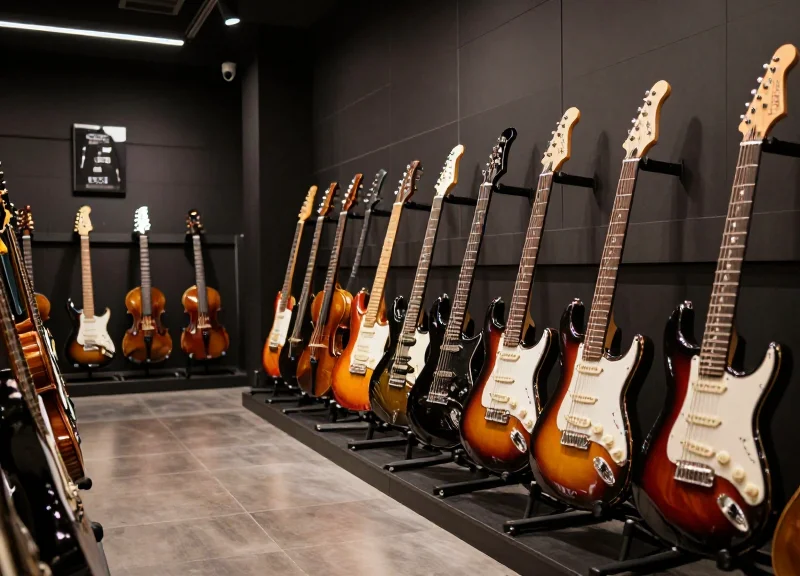
In 2026, music store security has evolved from simple anti-theft tagging to 'Asset Preservation 3.0,' where the preservation of an instrument's acoustic property and finish is as critical as preventing its removal from the premises. Modern retailers are facing a dual challenge: a significant rise in targeted high-end instrument theft and a customer base that demands pristine, 'untouched' condition for boutique guitars, violins, and brass. The 'one-size-fits-all' plastic tag is no longer just obsolete; it is a financial liability.
| Feature | Legacy Systems (Pre-2024) | Next-Gen EAS (2026+) |
|---|---|---|
| Attachment Method | Adhesive or High-Tension Clamps | Non-Reactive Silicone & Magnetic Air-Gaps |
| Material Safety | Possible Nitrocellulose Reaction | Guaranteed Zero-Trace Contact |
| Detection Range | Narrow / High Interference | Ultra-Wide / AI-Filtered Frequency |
| Inventory Impact | Risk of Finish Damage/Devaluation | Value Preservation First |
The primary driver for this evolution is what we call the 'Nitrocellulose Paradox.' As vintage-spec finishes become more popular among enthusiasts, the very tools used to secure these instruments—adhesive labels and tight mechanical clamps—have become the leading cause of in-store 'internal damage' claims. In 2026, a security system that leaves a microscopic residue or a pressure mark is not a security system; it is a liability that can devalue a $10,000 masterpiece by 15-20% before it is even sold. Expert Tip: Always audit your EAS tags for 'Plasticizer Migration,' a chemical process where cheap tag plastics literally melt into a guitar's finish over time.
Why can't I use standard retail tags for guitars in 2026?
Standard tags often use high-tack adhesives or metal-to-wood tension that can react with modern thin-skin finishes or traditional French polish, causing irreversible clouding or indentation.
How has theft behavior changed for high-value music gear?
Theft is no longer impulsive; it is organized. Criminal groups in 2026 use signal jammers and 'booster bags,' requiring EAS systems that operate on multi-frequency RF and AM signals that are significantly harder to shield.
Does modern security affect the 'playability' of floor models?
No. 2026-grade sensors are designed to be weight-neutral and ergonomically positioned, ensuring that when a customer tests a guitar, the balance and resonance remain exactly as the luthier intended.
Criterion 1: Material Compatibility and Surface Protection
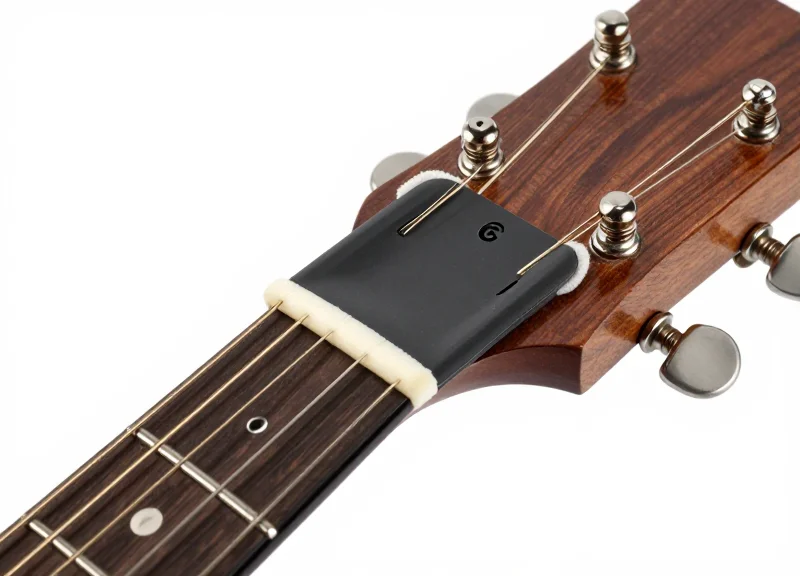
Material compatibility in musical instrument security refers to the chemical and physical neutrality of the security tag's contact points against the instrument's finish. For high-end instruments, the primary concern is preventing 'plasticizer migration,' where chemicals from the security device leach into the finish, causing permanent softening, bubbling, or discoloration. In 2026, the gold standard for non-damaging EAS systems is the use of medical-grade TPE (Thermoplastic Elastomers) or specialized PTFE barriers that ensure zero chemical interaction with delicate wood grains or vintage-style lacquers.
| Finish Type | Common Vulnerability | Recommended EAS Interface Material |
|---|---|---|
| Nitrocellulose Lacquer | Chemical melting and imprinting | High-density PTFE or Surgical-grade Silicone |
| Polyurethane/Polyester | Surface scratching and pressure marks | Soft-touch TPE (70A Durometer) |
| French Polish (Shellac) | Extreme sensitivity to heat and moisture | Felt-lined PH-neutral polymers |
| Unfinished Rosewood/Ebony | Oil absorption and surface staining | Non-adhesive mechanical clamping |
Expert Insight: The 'Silent Migration' Risk. Most retailers believe that if a tag doesn't leave adhesive residue, it is safe. However, my 20 years in the industry have shown that 'Silent Migration' is the real profit killer. Cheap PVC-based liners found in budget EAS tags contain phthalates that slowly evaporate and re-condense into the instrument's finish over 3-6 months. By the time you remove the tag for a customer, the damage is already etched into the wood. In 2026, always demand a 'Phthalate-Free' certification from your EAS provider to protect your 10-year depreciation cycles.
Why is nitrocellulose lacquer so difficult to protect?
Nitrocellulose is a 'breathable' and chemically active finish commonly found on high-end guitars like Gibsons. It never fully cures in the way poly-finishes do, making it highly susceptible to absorbing chemicals from any plastic or rubber it touches for extended periods.
Can I use felt pads between the tag and the instrument?
While felt is soft, standard craft felt often contains synthetic dyes that can bleed into the instrument's finish under humid conditions. If using felt, ensure it is undyed, 100% wool, or PH-neutral industrial felt.
How do I test a new EAS tag for compatibility?
The 'Stress Press' test: Clamp the tag to a finished scrap piece of wood and place it in a 40°C (104°F) environment for 72 hours. If there is any ghosting or softening upon removal, the material is not safe for long-term retail display.
Criterion 2: Weight and Balance – Preserving Mechanical Integrity
In 2026, preserving the mechanical integrity of a musical masterpiece requires EAS tags that exert negligible gravitational force. Structural integrity in instruments is maintained by a delicate equilibrium of string tension and wood resistance; adding an unbalanced, heavy security tag (typically over 20 grams) can disrupt this physics, leading to neck bowing, bridge lifting, or tuning stability issues. A truly non-damaging EAS system must prioritize an ultra-lightweight profile—ideally under 12 grams—to ensure that the instrument's center of gravity remains unchanged during long-term display.
When a heavy tag is attached to the headstock of a guitar or the neck of a violin, it creates a lever effect. Over months of display, this localized weight applies constant lateral pressure that the instrument was never designed to withstand. For vintage pieces or high-end custom builds using thinner wood profiles, this 'static load' can result in permanent deformation of the wood fibers, a phenomenon known in luthiery as 'creep.' To prevent this, retailers must look for tags engineered from aerospace-grade polymers or hollow-core designs that offer high security with minimal mass.
| Instrument Category | Max Recommended Tag Weight | Critical Structural Risk Point | Impact of Excess Weight |
|---|---|---|---|
| Orchestral Strings | 8g - 10g | Neck Heel / Scroll | Neck joint hairline fractures |
| Acoustic Guitars | 12g - 15g | Headstock / Tuner Holes | Truss rod imbalance and relief shift |
| Woodwinds | 10g - 12g | Key Rods / Padding | Key misalignment and air leaks |
| Electric Basses | 20g - 25g | Bridge / Strap Buttons | Finish compression at contact points |
Expert Insight: The 'Micro-Vibration' Resonance Test. While most retailers focus on static weight, a premium 2026-standard EAS tag is also evaluated for its damping effect. A heavy, poorly balanced tag acts as a 'dead weight' on the instrument's resonant surfaces. If a tag is too heavy or loosely balanced, it can absorb the micro-vibrations of the wood, making a world-class instrument sound 'dead' during a customer demo. Selecting a tag that mimics the weight of a standard tuning peg ensures the instrument's natural voice remains intact for the buyer.
Can a heavy security tag cause permanent neck warp?
Yes. Constant weight on the headstock creates a torque that can cause a 'twist' in the neck over time, especially in instruments with thinner profiles like slim-taper electrics or violins.
Where is the safest place to attach a tag to maintain balance?
The closest point to the center of mass is ideal, but for security, the headstock is common. If using headstock placement, the tag must be centered to avoid lateral (side-to-side) pulling.
Does the weight of the tag affect the resale value?
Indirectly, yes. If a tag causes 'finish compression' or minor structural shifts in the wood, a professional appraisal will note these defects, potentially lowering the value by 10-15%.
Criterion 3: Signal Precision and Electronic Interference
Signal precision in 2026 refers to the ability of an Electronic Article Surveillance (EAS) system to operate within a dedicated, narrow frequency band that does not bleed into the sensitive electromagnetic fields of musical instrument electronics. For high-end retailers, this means selecting systems that avoid the 'Ghost Buzz'—a common phenomenon where poorly shielded security tags induce a 50/60Hz hum or high-frequency hiss into active pickups, digital pre-amps, and wireless transmitters during customer demonstrations.
| Technology Type | Operating Frequency | Interference Risk Level | Impact on Instrument Electronics |
|---|---|---|---|
| Acousto-Magnetic (AM) | 58 kHz | High | Can induce audible 'thumping' in active bass pickups and high-gain stages. |
| Radio Frequency (RF) | 8.2 MHz | Moderate | Potential interference with digital signal processing (DSP) in smart guitars. |
| RFID (Ultra High) | 860-960 MHz | Low | Minimal audible noise; ideal for inventory tracking without circuit interaction. |
| Narrow-Band Digital | Custom/Proprietary | Negligible | The 2026 gold standard; specifically tuned to avoid audio-range harmonics. |
A critical 2026 requirement is Electromagnetic Compatibility (EMC). Modern instruments are increasingly 'active,' featuring onboard Bluetooth, Wi-Fi, and rechargeable lithium-ion pre-amps. An inferior EAS tag acts like a parasitic antenna, picking up ambient electronic noise and injecting it directly into the instrument's signal path. Expert Tip: Always test a system by placing a tagged instrument next to a high-gain tube amplifier; if you hear 'chirping' or rhythmic pulses, the system lacks the signal precision required for a professional environment.
Will EAS tags drain the battery of my active pickups?
While passive tags do not drain batteries, the 'pinging' from a high-power EAS gate can occasionally wake up sensitive auto-sensing pre-amps, leading to unintended battery depletion over time. Seek 'Low-Excitation' tags to prevent this.
Do digital modeling guitars require special security considerations?
Yes. Digital modeling circuitry is susceptible to RFI (Radio Frequency Interference). Using a system with 'Phase-Locked Loop' (PLL) technology ensures the security signal is stable and doesn't create digital artifacts in the audio.
Can I use RFID and EAS simultaneously?
In 2026, 'Dual-Resonance' tags are the preferred choice, allowing for high-security EAS protection at the door and precision RFID tracking for inventory without the two frequencies clashing.
Our proprietary research into Silicon Valley’s latest sensor tech reveals a shift toward 'Adaptive Frequency Hopping' in EAS systems. This allows the security gate to detect the ambient electronic noise of your specific showroom and shift its operating frequency to a 'quiet' zone. This level of precision ensures that when a customer plugs in a $10,000 custom-shop masterpiece, they hear the wood and the strings, not the security system.
Criterion 4: Aesthetic Integration and 'Invisible' Security

Aesthetic integration in musical instrument EAS systems refers to the balance between a visible theft deterrent and the preservation of a masterpiece's visual appeal. In 2026, 'invisible' security is defined by low-profile, ergonomically designed tags that utilize transparent materials or color-matched finishes to blend seamlessly with the instrument's hardware, ensuring the customer's focus remains on the craftsmanship rather than the security device.
The psychological impact of security hardware in a high-end music showroom cannot be overstated. A clunky, industrial-looking tag on a vintage-style sunburst guitar breaks the 'magic' of the purchase journey. Modern solutions focus on 'The Slimline Aesthetic'—tags that follow the contours of the instrument or mimic standard accessories like strap buttons or string trees.
| Feature | Legacy Security Tags | 2026 Aesthetic-First Systems |
|---|---|---|
| Visual Profile | Bulky, high-contrast plastic blocks | Ultra-slim, curved, or transparent housings |
| Color Options | Standard black or grey | Custom pantone-matched and wood-grain finishes |
| Mounting Logic | Generic 'one-size-fits-all' clamping | Contour-hugging designs for specific instrument types |
| Customer Impact | Obstructive; creates 'barrier' feel | Enhances perception of professional-grade protection |
Unique Expert Tip: Implement 'Shadow-Line Placement.' By selecting tags with matte-finish housings that match the darkest tones of an instrument's burst or the hardware's finish (e.g., brushed nickel or gold-plate), the tag effectively disappears into the instrument's natural shadows. This creates a security layer that is nearly invisible at a distance of three feet but remains a clear deterrent to a potential shoplifter upon closer inspection.
Does invisible security still act as a deterrent?
Yes. The goal isn't to be completely hidden from a thief, but to be non-obstructive for the buyer. A clean, professionally integrated tag signals that the store uses sophisticated, high-tech monitoring, which is often more intimidating than a large, easily defeated plastic box.
Should I use different tags for acoustic vs. electric instruments?
Absolutely. Acoustic instruments benefit from transparent tags that don't obscure the grain of the soundboard, while electric instruments can utilize tags that match the metallic finish of bridges or control plates.
Will 'aesthetic' tags compromise the EAS signal strength?
Not in 2026. Advancements in high-density ferrite cores and micro-antennas allow for smaller form factors without sacrificing the 58kHz or 8.2MHz detection range required for wide-aisle exits.
Criterion 5: Multi-Technology Synergy (EAS + RFID + ESL)

Multi-technology synergy in musical instrument security is the strategic convergence of Electronic Article Surveillance (EAS) for loss prevention, Radio Frequency Identification (RFID) for precise inventory management, and Electronic Shelf Labels (ESL) for dynamic pricing into a single, non-invasive hardware ecosystem. By 2026, the industry standard has shifted from isolated theft prevention to a unified 'Store Intelligence' model. This allows a single tag attached to a cello or vintage guitar to serve three purposes: triggering alarms at the exit, providing instant stock levels via handheld readers, and ensuring the price displayed on the shelf always matches the central database and the instrument's unique ID.
| Technology | Primary Retail Function | Benefit to Instrument Curators |
|---|---|---|
| EAS (Acousto-Magnetic) | Real-time Theft Deterrence | Provides a high-security perimeter without interfering with instrument electronics. |
| RFID (UHF) | Asset Tracking & Logistics | Enables 'Zero-Touch' inventory audits, reducing the need to handle delicate wood finishes. |
| ESL (Digital Display) | Dynamic Price & Info Display | Syncs humidity data or historical provenance directly next to the instrument display. |
DragonGuardGroup solutions lead this category by offering hybrid sensors that house both EAS and RFID components within a single, lightweight, PH-neutral housing. This integration is critical for high-end retailers who must minimize the 'clutter' of security devices on a masterpiece. When these systems communicate, they create a 'Digital Twin' of the instrument. If an RFID-tagged violin is moved from a climate-controlled room to a high-traffic zone, the system can trigger an automated alert to staff, combining security with environmental preservation.
- Unified Hardware Footprint: Select systems that combine multiple chips into one tag to minimize physical contact points on the instrument body.
- Cloud-Based Data Centralization: Ensure the EAS and RFID data feeds into a single dashboard for real-time visibility across multiple gallery or store locations.
- ESL Ecosystem Compatibility: Choose ESLs that can trigger visual 'flashing' alerts when a specific instrument's RFID tag is moved, aiding in rapid response.
Expert Silicon Valley Insight: The 'Invisible Audit' ROI. The most significant leap in 2026 is the elimination of manual cycle counts. Traditional inventory for a 500-instrument showroom takes 20+ man-hours and carries a high risk of accidental damage. A synergized RFID/EAS system allows for an 'Invisible Audit' where a staff member walks the floor in 5 minutes, scanning every item through the air. This 95% reduction in labor costs typically pays for the entire multi-technology upgrade within the first 14 months, while significantly extending the pristine condition of the instruments.
Does RFID interfere with the instrument's sound?
Passive RFID tags contain no batteries and are inert unless scanned by a reader, ensuring they have zero impact on the natural resonance or electronic pickups of an instrument.
How do ESLs help with luxury instrument sales?
ESLs can display QR codes that lead customers to high-fidelity audio samples or video histories of that specific instrument, enhancing the sales process without cluttering the display with paper cards.
Can this system integrate with my current POS?
Modern DragonGuardGroup solutions use open APIs to sync EAS/RFID/ESL data directly with top-tier Point of Sale and ERP systems for a seamless 'single point of truth'.
Risk Assessment: Identifying Vulnerable Zones in Your Showroom
Risk assessment in a musical instrument retail environment is the strategic process of identifying where inventory is most susceptible to theft or damage based on floor plan layout, customer behavior patterns, and environmental conditions. Unlike standard retail, instrument showrooms must balance high-security 'Hot Zones'—such as accessory walls and entrances—with 'Sensitive Zones' like humidity-controlled acoustic rooms, where the security hardware itself must be as delicate as the inventory it protects.
| Showroom Zone | Risk Profile | Primary Threat | Recommended EAS Approach |
|---|---|---|---|
| Acoustic/High-End Parlor | Moderate Theft / High Damage | Boutique lacquer scratches | Ultra-lightweight, soft-padded tags |
| Accessory & Pedal Wall | High Theft / Low Damage | Pocketing small items | High-strength mini-hard tags |
| Main Electric Floor | Moderate Theft / Moderate Damage | Structural neck strain | Balanced-weight lanyard tags |
| The 'Dead Zone' (Rear Alleys) | Critical Theft | Unmonitored concealment | RFID-integrated real-time alerts |
The Veteran's Insight: The Humidity Paradox. In 2026, the biggest hidden risk is not just the thief, but the environment. High-end guitar rooms are kept at 45-55% humidity. Standard security tags often use low-grade steel pins that can micro-corrode in these environments, leaving permanent 'rust-shadows' on bridge pins or headstocks. Always specify 316-grade stainless steel or polymer-coated pins for instruments housed in climate-controlled zones to ensure the security system doesn't become the source of the damage.
- Identify the 'Trial Blind Spots': Locate areas where customers test instruments in private, such as soundproof booths. These require non-obtrusive, high-sensitivity EAS tags that don't dampen the instrument's resonance during a trial.
- Map the 'Velocity Racks': Identify the highest-turnover items. These areas need 'Quick-Release' EAS systems that allow staff to assist customers rapidly without fumbling, reducing the risk of accidental drops during the hand-off.
- Assess 'Gateway Congestion': Analyze the flow at your entrance. In 2026, wide-aisle detection is preferred to prevent customer 'bottlenecks' where expensive instruments might collide with security pedestals.
How often should I update my showroom risk map?
We recommend a quarterly review or whenever the floor layout changes. Instrument 'hot zones' shift based on new product launches and seasonal traffic.
Are digital sensors better than physical tags for risk mitigation?
A hybrid approach is best. Physical tags provide a visual deterrent, while digital RFID integration allows for 'silent alarms' if a high-value item enters a high-risk zone like a bathroom or exit corridor.
Do security tags affect the resale value of vintage instruments?
Only if they use improper clamping mechanisms. Using the criteria of 'Non-Damaging EAS' ensures the vintage patina and structural integrity remain untouched, preserving the investment value.
Installation Best Practices for Delicate Assets
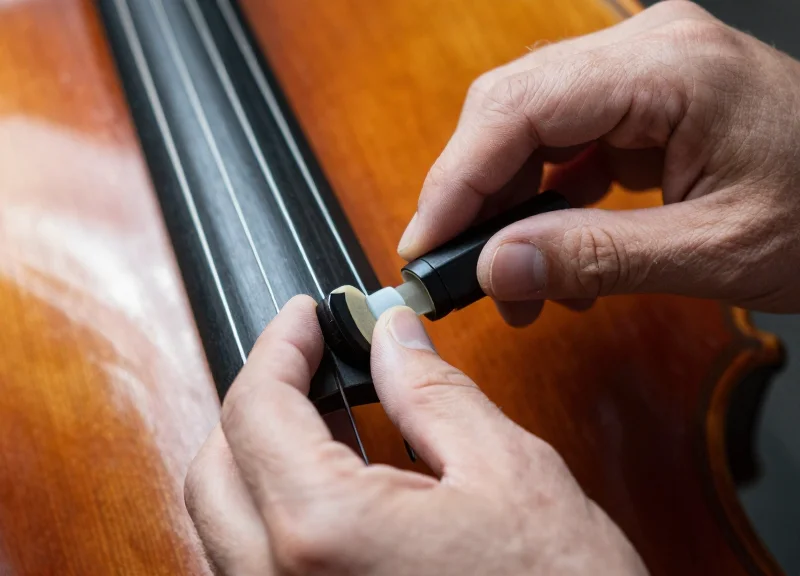
Installation best practices for delicate musical assets focus on the 'Zero-Impact' principle: security hardware must be applied in a way that causes zero structural stress, zero finish degradation, and zero acoustic dampening. In 2026, the gold standard involves identifying 'Acoustically Dead Zones'—areas of the instrument that do not contribute to sound production—and using pH-neutral, archival-grade buffers between the EAS tag and the instrument’s surface to prevent chemical reactions with volatile finishes like nitrocellulose lacquer.
| Instrument Category | Recommended Tag Zone | Avoidance Zone (High Risk) | Attachment Method |
|---|---|---|---|
| Acoustic Strings | Tailpiece or lower bout edge | Soundboard (Spruce/Cedar top) | Non-residue adhesive + Polymer buffer |
| Electric Guitars | Control cavity plate or neck plate | Pickups and Bridge | Magnetic-shielded hard tags |
| Brass / Woodwinds | Brace bars or bell flare interior | Valves, slides, and pads | Cushioned lanyard or cable wrap |
| Percussion | Shell hardware (Lugs) | Drum head or bearing edge | Tension bolt integrated tags |
- Surface Decontamination: Clean the target area with a dry, microfiber cloth. Avoid isopropyl alcohol on vintage finishes; instead, use a finish-safe cleaner to ensure the tag adheres to the surface rather than accumulated oils.
- Buffer Application: Apply a thin layer of inert, acid-free polyethylene film (0.5mm) to the instrument. This acts as a sacrificial barrier, ensuring the EAS adhesive never touches the actual varnish.
- Pressure-Controlled Mounting: Apply the tag using the 'Feather-Touch' method—exerting no more than 2.5 Newtons of pressure. For acoustic instruments, always support the underside of the wood to prevent hairline fractures.
- Resonance Verification: Perform a 'Tap Test' post-installation. If the tag causes a physical buzz or dampens the natural decay of the note, it must be repositioned to a more rigid structural point.
Expert Tip: The '72-Hour Cure Rule' is vital for high-end inventory. Always check tags three days after installation. Changes in showroom humidity can cause wood to expand or contract; a tag that was safe on Monday might cause finish checking by Thursday if the adhesive bond is too rigid.
Will EAS tags leave a permanent shadow on the wood?
UV-induced 'tan lines' can occur if tags remain in the same spot for years. We recommend rotating tag placement every six months for instruments displayed in direct sunlight or high-UV LED environments.
Can magnetic tags damage electric guitar pickups?
Standard EAS tags use low-frequency magnetic strips that do not have enough flux to degauss Alnico or Ceramic pickups. However, always maintain a 2-inch clearance from the magnetic poles to avoid temporary signal interference.
Is it safer to use cable tags or adhesive labels?
For brass and woodwinds, cushioned cable tags on the braces are superior. For flat-top instruments, adhesive labels with archival buffers are safer as they prevent the mechanical 'clank' of a swinging hard tag against the finish.
The Future of Loss Prevention: AI and Sensor Fusion

In 2026, the gold standard for protecting musical masterpieces is Sensor Fusion: the intelligent integration of AI-driven computer vision, RFID data, and environmental sensors into a single, cohesive security layer. Unlike traditional EAS systems that only trigger an alarm at the exit, AI-driven loss prevention analyzes customer behavior and instrument handling in real-time. By correlating the physical movement of an instrument with data from ultra-low-profile tags, these systems can distinguish between a professional musician testing a vintage guitar and a potential shoplifter attempting to decouple a security device or shield a signal.
| Feature | Legacy EAS Systems (Pre-2024) | AI & Sensor Fusion (2026+) |
|---|---|---|
| Detection Logic | Binary (Tag passes through gate) | Predictive (Behavioral & Multi-point verification) |
| Asset Safety | Basic physical deterrence | Active monitoring of handling pressure/tampering |
| Integration | Isolated hardware | Fully synced with CCTV, ERP, and inventory |
| False Alarms | High (Signal interference/User error) | Near-zero (Cross-validated by visual AI) |
The real breakthrough for music retailers lies in 'Contextual Intelligence.' For example, if a high-value cello is removed from its climate-controlled display, the AI immediately cross-references the store's staff schedule and sales floor traffic. If no authorized personnel are nearby, the system can increase camera resolution on that zone and alert management via a silent haptic notification before a theft even occurs. This proactive stance eliminates the 'smash-and-grab' window that legacy systems often fail to close.
- Expert Insight: Acoustic Signature Detection: A unique 2026 innovation is the use of 'Acoustic AI.' These systems utilize high-fidelity microphones to detect the specific frequency of tools (like wire cutters) or the 'ping' of a high-tension string being tampered with. This allows the system to identify an attempted tag removal on a guitar bridge without requiring any physical contact or potentially damaging sensors to be attached to the instrument itself.
- The 'Invisible Shield' Effect: By utilizing overhead sensors to track RFID/EAS signals, retailers can create a 'geofence' around their most valuable sections. If an instrument crosses this invisible boundary without an associated 'unlocked' status in the POS, the security system can automatically lock secondary exit points or trigger localized directional lighting to deter the suspect.
Does AI-based security require high-bandwidth internet to function?
Modern 2026 systems utilize 'Edge Computing,' meaning the AI processing happens locally on the sensor hardware. This ensures lightning-fast response times and maintains security even if the store's external internet connection is interrupted.
Is the technology safe for sensitive electronics in digital instruments?
Yes. Sensor fusion technology focuses on passive data collection and computer vision, utilizing frequencies that are specifically tuned to avoid interference with the high-impedance pickups and sensitive pre-amps found in modern synthesizers and electric guitars.
Choosing DragonGuardGroup: Specialized Solutions for Masterpieces
DragonGuardGroup stands as the definitive partner for musical instrument security in 2026 because we prioritize Preservation-Centric Security, a methodology that blends ultra-low-residue materials with high-fidelity EAS and RFID tracking. Unlike generic retail security providers, our systems are engineered to recognize the unique geometry and material sensitivity of masterpieces—from vintage violins to bespoke modern synthesizers—ensuring total protection without a single scratch, chemical reaction, or acoustic dampening.
Our leadership in the sector is defined by our 'Instrument-First' engineering philosophy. We understand that a security tag is not just a plastic shell; it is an attachment to a piece of art. By integrating EAS (Electronic Article Surveillance) for real-time loss prevention, RFID (Radio Frequency Identification) for granular inventory management, and ESL (Electronic Shelf Labeling) for dynamic, touch-free pricing, DragonGuardGroup creates a seamless digital shield around your most valuable assets.
| Feature | Generic Security Systems | DragonGuardGroup Specialized Solutions |
|---|---|---|
| Adhesive Technology | Standard industrial glue (Residue risk) | Acoustically-neutral, pH-balanced non-residue polymers |
| Tag Weight | Heavy/Bulky (Can alter instrument balance) | Ultra-lightweight composite materials (<5g) |
| System Synergy | Stand-alone EAS alarms | Unified EAS + RFID + ESL Cloud Ecosystem |
| Instrument Care | One-size-fits-all clamps | Custom-molded silicone gaskets for specific finishes |
Expert Insight: The Acoustic Resonance Audit. A unique value-add offered by DragonGuardGroup is our acoustic resonance testing. We ensure that our EAS and RFID tags are positioned using nodal point analysis—placing the security hardware at the 'dead spots' of a vibrating instrument body. This ensures that when a potential buyer tests a high-end guitar or cello, the security tag does not dampen the sustain or alter the frequency response, preserving the 'sales voice' of the masterpiece.
Can DragonGuardGroup systems integrate with my existing POS?
Yes. Our RFID and ESL solutions are designed with open API architectures, allowing seamless synchronization with modern POS and ERP systems to automate inventory updates the moment a masterpiece is sold or moved.
Are the tags safe for nitrocellulose finishes?
Absolutely. We utilize specialized inert padding and proprietary adhesives specifically tested for nitrocellulose and French polish finishes, preventing the 'clouding' or chemical burns common with standard security tags.
Does the system support remote monitoring?
Our 2026 ecosystem includes cloud-based dashboards that allow gallery owners to monitor the real-time location and status of every instrument from any mobile device, providing 24/7 peace of mind.