In the rapidly evolving landscape of 2026, retailers face a pivotal choice between maintaining traditional security barriers and embracing intelligent decision-support systems. As profit margins face pressure from sophisticated theft and supply chain complexities, the transition from legacy Electronic Article Surveillance (EAS) to Radio Frequency Identification (RFID) has moved from a luxury to a strategic imperative. This article dives deep into how next-gen RFID technology provides the granular data necessary to not just stop theft, but to optimize the entire retail ecosystem for maximum profitability. For the modern enterprise, the goal is no longer just sound, but insight.
The 2026 Retail Security Paradigm Shift

The 2026 Retail Security Paradigm Shift represents a move from passive, hardware-centric Electronic Article Surveillance (EAS) to integrated RFID-driven Decision Support Systems (DSS). This transition replaces simple alarms with high-fidelity, item-level visibility, allowing retailers to transform loss prevention from a cost center into a strategic source of operational intelligence. By 2026, the industry is moving beyond 'preventing theft' and toward 'optimizing availability' by utilizing data that identifies exactly what, when, and how items leave the sales floor.
| Feature | Legacy EAS (1990-2024) | 2026 RFID Decision Support |
|---|---|---|
| Primary Goal | Theft Deterrence | Profit Protection & Inventory Accuracy |
| Data Granularity | Binary (Alarm/No Alarm) | Item-Level (Unique Serial ID) |
| Integration | Siloed Security Hardware | Unified ERP/WMS Ecosystem |
| Operational Impact | Reactive Intervention | Proactive Restocking & Predictive Analytics |
| ROI Driver | Reduced Shrinkage | Omnichannel Fulfillment + Shrink Reduction |
In this new era, the focus is on 'Active Intelligence.' While legacy EAS systems merely notify a store associate that a tag has passed through a pedestal, 2026 RFID systems provide the 'Decision Support' required to understand if that exit was a legitimate sale, a technical error, or an organized retail crime (ORC) event. This distinction is critical for maintaining customer friction-less experiences while hardening the store against sophisticated theft tactics.
Why is legacy EAS becoming obsolete by 2026?
Legacy EAS lacks the metadata necessary for modern retail. It cannot distinguish between a high-value leather jacket and a low-cost t-shirt, nor can it tell the inventory system to trigger a reorder after a theft event, leading to 'phantom inventory' and lost sales.
What defines 'Decision Support' in the context of RFID?
Decision Support refers to the analytical layer that sits atop RFID hardware. It uses AI to filter out noise, identify theft patterns, and provide actionable tasks to store associates, such as 'Restock SKU-402' immediately after a confirmed loss.
How does this shift affect the customer experience?
By moving to RFID-based systems, retailers can eliminate intrusive security measures like locked display cases, as the system provides real-time tracking that ensures high-value items are monitored without being physically inaccessible.
Expert Insight: The 'Shrinkage Velocity' Metric. A unique development in 2026 is the adoption of 'Shrinkage Velocity'—a metric that measures the time elapsed between an item being placed on the shelf and its unauthorized removal. By analyzing this velocity via RFID, retailers are now deploying 'Dynamic Thresholding,' where security protocols and staff alerts automatically intensify for specific SKUs that show high theft-speed, allowing for a surgical approach to security rather than a blanket store-wide lockdown.
The Blind Spots of Legacy EAS Systems
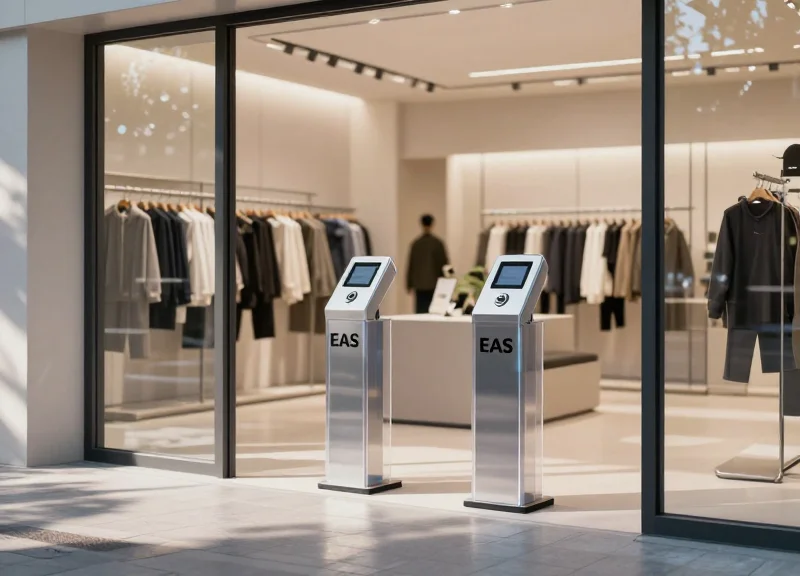
Legacy Electronic Article Surveillance (EAS) acts as a 'binary gatekeeper' that detects the presence of a tag but lacks item-level context; it signals that an event is occurring without identifying what specific merchandise is crossing the threshold. In the 2026 retail landscape, this fundamental lack of granular data creates a critical blind spot where retailers cannot distinguish between high-shrink SKUs, administrative errors, or sophisticated organized retail crime (ORC) tactics, rendering traditional security reactive rather than predictive.
- Anonymity of Alarms: When a legacy EAS alarm triggers, staff only know a tag was detected. They do not know if it was a $500 designer handbag or a $10 accessory, leading to inconsistent response protocols and 'alarm fatigue.'
- Vulnerability to ORC: Legacy systems are easily bypassed by sophisticated theft methods, such as foil-lined 'booster bags' or magnetic detachers, which shield or remove standard AM/RF tags without alerting the system.
- The Data Vacuum: Traditional EAS provides no feedback loop to inventory management systems. If an item is stolen, the system remains unaware of the loss until the next manual cycle count, causing 'phantom inventory' issues.
| Feature | Legacy EAS (AM/RF) | Modern Operational Requirement |
|---|---|---|
| Identification Capability | Generic (Tag presence only) | Item-Level (GTIN + Serial Number) |
| Omnichannel Integration | None (Security Silo) | Full (Real-time inventory sync) |
| Theft Intelligence | Reactive (Alarm only) | Predictive (Pattern recognition) |
| Shrink Attribution | Unknown (Hidden loss) | Exact (Specific SKU identification) |
Unique Expert Insight: The 'Hidden Ghost' effect is the most dangerous blind spot of legacy EAS in an omnichannel world. Because legacy systems cannot update inventory records at the moment of theft, a retailer’s website may show an item is 'in stock' for a Buy-Online-Pick-Up-In-Store (BOPIS) order when it has actually been stolen. This leads to high order cancellation rates and damaged customer loyalty—a cost of shrink that traditional EAS metrics fail to capture entirely.
Why does EAS fail to prevent Organized Retail Crime (ORC)?
ORC groups use specialized tools like signal jammers and shielded bags that exploit the physical limitations of radio frequency and acousto-magnetic waves, which legacy systems cannot detect.
How does legacy EAS impact the customer experience?
False alarms and intrusive security pedestals create a 'fortress' atmosphere. Furthermore, when EAS fails to stop theft, legitimate customers face out-of-stock situations for items the system incorrectly thinks are available.
Can legacy EAS be upgraded without full replacement?
While some hybrid pedestals exist, true item-level intelligence requires a transition to RFID-based infrastructure to bridge the gap between security and inventory visibility.
Deciphering RFID-Based Decision Support

RFID-Based Decision Support (RDS) is an advanced analytical ecosystem that leverages Item-Level Intelligence to provide real-time visibility into inventory health, shrinkage patterns, and supply chain bottlenecks. Unlike legacy systems that only trigger an alarm at the door, RDS acts as a digital nervous system for the modern store, identifying exactly what item moved, when it was last handled, and how that movement impacts the bottom line. By shifting from a binary 'alarm/no-alarm' state to a continuous stream of granular data, RDS empowers retailers to move from reactive loss prevention to proactive profit shielding.
| Capability | Legacy EAS (Traditional) | RFID-Based Decision Support (2026) |
|---|---|---|
| Data Granularity | Binary (On/Off trigger) | Granular (SKU, Size, Color, Item History) |
| Operational Focus | Theft Deterrence | Total Store Optimization & Profit Shielding |
| Inventory Visibility | None (Blind at the shelf) | Real-time Accuracy (Up to 99.9%) |
| Actionable Insight | Immediate Response Only | Predictive Analytics & Root Cause Identification |
To understand RDS, one must view it as a three-tier intelligence loop that begins at the physical tag and ends at the executive dashboard. It isn't just about reading a chip; it's about the sophisticated interpretation of those signals to drive labor efficiency and customer satisfaction.
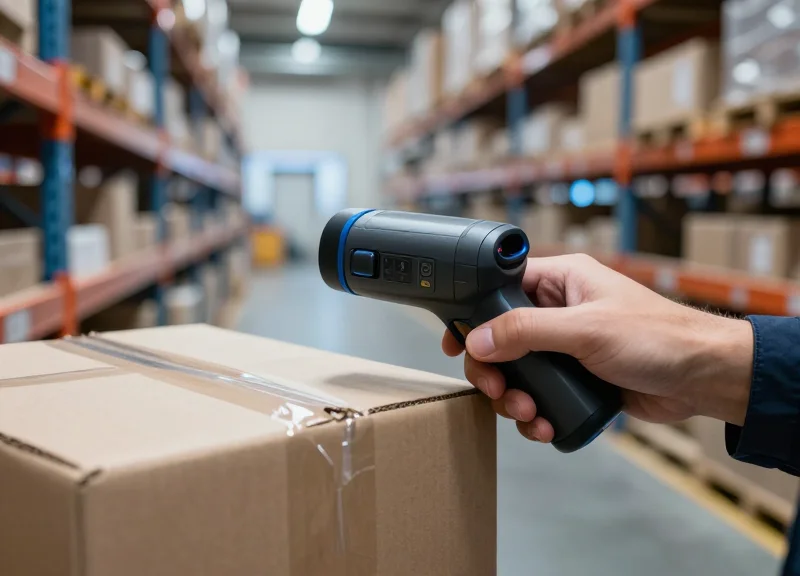
- Signal Acquisition (The Pulse): Fixed overhead readers and handheld scanners capture the unique electronic product code (EPC) of every item, creating a continuous digital heartbeat for inventory.
- Algorithmic Processing (The Brain): Raw data is filtered through AI-driven software that distinguishes between 'legal sales,' 'restock movements,' and 'suspicious activity' based on historical patterns and POS integration.
- Direct Execution (The Muscle): The system generates automated tasks, such as 'Restock High-Value Item A' or 'Verify Inventory Gap in Zone B,' ensuring store associates act on the highest-value opportunities immediately.
Expert Insight: The 'Ghost Inventory' Shield. A unique perspective for 2026 is the role of RDS in eliminating 'Ghost Inventory'—items that appear in the system as 'available' but are physically missing or misplaced. While legacy EAS ignores this gap, RDS treats a 'missing item' as a data point to be solved. By reconciling physical location with digital record every 15 minutes, RDS prevents the 4-8% revenue loss typically caused by out-of-stocks and misplaced merchandise, providing a profit shield that far outweighs simple theft prevention.
Does RFID Decision Support require a total hardware overhaul?
Not necessarily. Modern RDS platforms can often overlay existing digital infrastructure, though high-accuracy systems benefit from strategically placed fixed overhead readers.
How does it improve the customer experience?
By ensuring 100% stock accuracy, customers never encounter a 'disappointing out-of-stock,' and staff spend less time counting inventory and more time providing personalized service.
What is the primary ROI driver for RDS?
The ROI is a composite of reduced shrinkage, increased labor productivity (fewer manual counts), and a significant lift in sales through improved shelf availability.
Shielding Profits Through Item-Level Visibility

Shielding profits through item-level visibility means moving beyond the 'estimated' inventory counts of legacy EAS systems to a 99% accurate, real-time ledger of every unique product in a store. In the 2026 retail landscape, profit is no longer lost solely to external theft, but to 'inventory distortion'—the combined cost of out-of-stocks and overstocks. Item-level RFID acts as a digital twin for physical inventory, ensuring that every SKU is visible to the point of sale, the stockroom, and the digital shopper, effectively turning hidden inventory into realized revenue.
| Feature | Legacy SKU-Level Tracking | RFID Item-Level Visibility |
|---|---|---|
| Accuracy Rate | 65% - 75% on average | 98% - 99.8% |
| Inventory Resolution | Shows 'Blue T-Shirt, Medium' | Shows 'Blue T-Shirt, Medium, Unique ID #882' |
| Ghost Inventory | Undetectable without manual audit | Identified and reconciled in real-time |
| Omnichannel Impact | Requires high safety stock buffers | Enables ship-from-store with zero buffer |
One of the most insidious profit killers in modern retail is 'Ghost Inventory'—items that appear in the system but aren't actually on the shelf. Legacy EAS systems are blind to this; they only know when a generic tag passes a pedestal. In contrast, RFID-based decision support alerts staff the moment a specific item's location becomes 'stale' or when a digital order is placed for an item that isn't where it should be. By eliminating these blind spots, retailers can reduce out-of-stocks by up to 50%, directly boosting the bottom line without needing to increase foot traffic.
- The 'Profit Shield' Expert Tip: The 3% Accuracy Gap Rule: Research indicates that for every 3% improvement in inventory accuracy, retailers see a roughly 1% increase in sales. Most legacy retailers operate at 70% accuracy; moving to 98% via RFID item-level visibility can unlock a nearly 10% revenue lift without additional marketing spend.
- Dynamic Markdown Optimization: Because you know the exact 'age' of an individual item on the floor (not just the SKU), you can trigger localized markdowns to move specific stale units, preserving margins on newer arrivals.
- Automated Replenishment Triggers: RFID removes the human error from 'Cycle Counting.' When a unique item leaves the front door (sold or stolen), the system can instantly trigger a back-stock-to-shelf replenishment task.
How does item-level visibility prevent 'Ghost Inventory'?
Ghost inventory occurs when the system thinks an item is in stock, but it has been stolen, lost, or misplaced. RFID allows for frequent, automated shelf-scans. If the system expects 10 items but only detects 9, it immediately reconciles the loss, preventing the 'out-of-stock' trap for online buyers.
Is item-level tracking too expensive for low-margin goods?
As of 2026, the cost-per-tag has reached a point where even mid-range apparel and high-end grocery items see a positive ROI. The 'cost' of a lost sale due to inventory inaccuracy almost always exceeds the cents-per-tag investment.
Does this replace the need for traditional security guards?
It reallocates their value. Instead of standing by doors, security and staff use RFID data to identify high-risk zones and 'hot' items that are being moved or tampered with in real-time, focusing on prevention rather than just reaction.
Operational Efficiency: EAS Alarms vs. RFID Insight

Operational efficiency in 2026 retail is defined by the transition from reactive EAS (Electronic Article Surveillance) alarms—which signal potential loss without context—to RFID-based insights that provide real-time item-level data. While legacy EAS creates a 'noise-based' environment where staff spend valuable hours responding to false alarms or investigating blind shrink events, RFID-based decision support automates inventory reconciliation and pinpointing the exact location and identity of missing stock. This shift allows retail teams to pivot from manual, low-value security checks to high-value customer engagement and precise replenishment strategies, reducing labor-intensive audit hours by an estimated 60-80%.
| Feature | Legacy EAS (Reactive) | RFID Decision Support (Proactive) |
|---|---|---|
| Staff Response Trigger | Audible siren (often ignored or false) | Real-time digital alert with item ID |
| Inventory Reconciliation | Manual monthly/quarterly counts | Continuous, automated cycle counting |
| Shrink Visibility | Aggregated loss discovered weeks later | Instant detection of the specific SKU lost |
| Labor Allocation | High: Manual tag detaching/checking | Low: Automated POS/exit integration |
| Customer Friction | Intrusive gate checks and delays | Seamless checkout with frictionless exits |
The 'Hidden Labor Tax' of traditional EAS is often overlooked. Every time an EAS pedestal triggers a false alarm—caused by tagged items too close to the door or 'tag pollution' from other stores—employees lose approximately 3 to 5 minutes of floor time. In a high-traffic urban store, this can aggregate into hundreds of lost man-hours per month. Conversely, RFID decision support platforms filter out the noise. By 2026, intelligent software can distinguish between an item being browsed near the exit and an item actually leaving the premises without a 'sold' status in the database, effectively eliminating the false alarm fatigue that plagues legacy retail environments.
How does RFID specifically reduce labor costs compared to EAS?
RFID eliminates the need for manual 'sweep' inventories and reduces the time spent on exception reporting. Instead of staff manually checking every shelf for missing items, the system generates a 'pick list' for replenishment based on real-time data from exit sensors.
What is the impact of RFID on 'Alert Fatigue'?
Legacy EAS has a high false-positive rate, leading staff to eventually ignore alarms. RFID systems provide context—such as the item's name, price, and color—via mobile devices, ensuring staff only respond to legitimate, high-priority events.
Can RFID insights improve the speed of stock replenishment?
Yes. Because RFID tracks item movement in real-time, the system can automatically trigger a restock alert the moment an item leaves the sales floor, ensuring the 'on-floor availability' remains at near 100% without manual intervention.
Expert Tip: To maximize the 'Alert-to-Action' ratio, retailers should integrate RFID exit data directly into their task management software. This converts a security event into a replenishment task. For example, if a high-demand sneaker is detected leaving the store, the stockroom team receives an instant notification to bring a replacement to the floor before the next customer even enters the aisle.
Mitigating Internal and External Shrink with Data

Mitigating shrink with RFID data involves using item-level visibility to create a granular audit trail for every product, enabling retailers to distinguish between administrative errors, internal employee theft, and organized retail crime (ORC). By transforming every item into a data point, RFID-based decision support identifies the exact moment an item goes missing—whether it was never received at the dock, diverted from the stockroom, or removed via a blind spot—allowing for surgical loss prevention interventions rather than broad, inefficient security measures.
In the 2026 retail landscape, the 'blind' alarm of a legacy EAS system is no longer sufficient. When a pedestal beeps, staff rarely know what was taken or how many units are gone. RFID data changes this dynamic by providing 'forensic inventory' capabilities. Retailers can now see 'patterns of intent.' For example, if ten high-value perfumes are moved from the shelf to a fitting room but never exit the POS, the system flags a high-probability internal or external theft event in real-time. This shifted focus from detection to attribution is the hallmark of modern profit protection.
| Shrink Category | Legacy EAS Capability | RFID Data Insight |
|---|---|---|
| Internal Theft | Minimal; Alarms rarely trigger at back exits. | High; Tracks item movement from receiving to backroom. |
| Organized Retail Crime (ORC) | Reactive; Alerts only during the exit event. | Predictive; Identifies bulk-shelf clearing patterns. |
| Administrative Error | Non-existent; Cannot track paperwork errors. | Precise; Reconciles physical count vs. digital records. |
| Vendor Fraud | None; No visibility into carton contents. | Absolute; Audits incoming shipments at the item level. |
Expert Insight: The 'Presumptive Intent' Analytics. One of the most powerful 2026 strategies is the use of 'dwell-time' analytics on high-risk items. If a specific SKU is removed from a shelf and remains in a non-sales zone (like a restroom or employee locker area) for more than a set threshold, the system generates a silent alert. This allows security to intervene before the theft occurs, shifting the ROI of loss prevention from recovery to total prevention.
- Establish an Item-Level Baseline: Conduct a full store RFID cycle count to ensure 99% inventory accuracy before deploying shrink analytics.
- Map High-Risk Zones: Configure RFID sensors to monitor 'transition points' such as fitting room entrances and back-of-house corridors.
- Integrate POS with RFID Data: Cross-reference items passing the exit pedestals against items marked as 'sold' in the POS in real-time to identify unpurchased exits.
- Deploy Pattern Recognition: Use machine learning to identify the signature of a 'sweep' (e.g., 20 items of the same SKU leaving the shelf simultaneously).
How does RFID data reduce 'Sweethearting' at checkout?
By correlating the RFID tags scanned at the exit with the items actually rung up at the POS, the system can flag instances where an employee only scans one item while multiple items leave the store.
Can RFID help identify the specific method of theft?
Yes. Data analytics can reveal if items are leaving through the front door, the loading dock, or are being hidden in 'shielded' bags, based on the signal strength and trajectory of the tags.
Does this data integrate with existing CCTV?
Modern RFID platforms use timestamped data to automatically 'bookmark' video footage, allowing LP teams to skip directly to the moment an item was removed.
Integration and Scalability for Modern Retailers
For retailers targeting 2026 growth, integration and scalability mean moving beyond siloed security hardware toward a Unified Commerce Architecture. This ecosystem requires RFID-based decision support to act as the primary data orchestrator, feeding real-time item-level intelligence into Point of Sale (POS), Electronic Shelf Labels (ESL), and Warehouse Management Systems (WMS). Unlike legacy EAS, which operates as a disconnected 'gatekeeper,' modern RFID integration ensures that every scanned item at the exit or the register updates the entire digital twin of the enterprise simultaneously, allowing for frictionless scaling across thousands of global nodes.
| Feature | Legacy EAS Silos | 2026 Integrated RFID Ecosystem |
|---|---|---|
| Data Interconnectivity | Standalone; no communication with POS. | Bi-directional API sync with POS and ERP. |
| Inventory Relationship | None; ignores stock levels. | Automatic replenishment triggers via ESL. |
| Scalability | Manual hardware tuning per store. | Cloud-native deployment with remote updates. |
| Edge Intelligence | Zero processing at the tag level. | AI-driven filtering at the reader level. |
- API-First Architecture Deployment: Establish a RESTful API layer that allows RFID middleware to push 'event-based' data to legacy POS systems without requiring a full hardware overhaul.
- ESL and RFID Synchronization: Link RFID item-level data with Electronic Shelf Labels to enable 'Pick-to-Light' features and automated price markdowns for aging inventory detected by RFID sensors.
- Edge Computing Integration: Deploy edge gateways at store exits and receiving docks to process 'noise' locally, ensuring only actionable data reaches the cloud, reducing latency and bandwidth costs.
- Unified Dashboard Centralization: Consolidate loss prevention and inventory metrics into a single pane of glass, allowing regional managers to compare shrink patterns across the entire fleet in real-time.
Expert Insight: The 'Event-Driven' Advantage. In 2026, the most scalable retailers will shift from batch processing to Event-Driven Architecture (EDA). Instead of the system asking 'What is in stock?' every hour, the RFID-POS integration automatically 'pushes' an alert only when a specific threshold is crossed (e.g., a high-theft item moving toward an exit without a 'sold' status). This drastically reduces the computational load on store networks while providing 10x faster response times than legacy polling methods.
How does RFID integration affect checkout speed?
When integrated with POS, RFID allows for 'bulk scanning,' where an entire basket is read instantly, reducing checkout times by up to 75% compared to manual barcode scanning.
Can we scale RFID using our existing Wi-Fi infrastructure?
Modern RFID readers often utilize Power over Ethernet (PoE) or integrated Wi-Fi 6/7 modules, allowing them to leverage existing network backbones with minimal additional cabling.
What happens if the cloud connection goes down?
Scalable 2026 systems use 'Local Survivability' modes, where edge gateways continue to log events and trigger local alarms, syncing data to the cloud once connectivity is restored.
The Economic Impact: Calculating 2026 ROI
To accurately calculate the Return on Investment (ROI) for 2026 retail environments, stakeholders must shift their perspective from viewing security as a sunk cost to viewing it as a profit-preservation engine. While legacy EAS (Electronic Article Surveillance) provides a flat defense against shoplifting, RFID-based decision support generates value across three distinct pillars: direct shrink reduction, labor optimization through automated auditing, and the 'availability lift'—the sales increase triggered by maintaining 98%+ inventory accuracy. In modern deployments, the initial capital expenditure is typically recovered within 12 to 18 months, driven primarily by the elimination of manual cycle counts and the drastic reduction in 'ghost inventory' that plagues traditional EAS-only environments.
| Metric | Legacy EAS Impact | RFID Decision Support (2026) |
|---|---|---|
| Annual Shrink Reduction | 1-3% (Static) | 15-30% (Data-Driven) |
| Inventory Accuracy | 65-75% (Manual) | 98-99.8% (Real-time) |
| Labor Costs | High (Manual Tags/Audits) | Low (Automated/Batch Processing) |
| Sales Lift | Negligible | 2-5% (On-Shelf Availability) |
Expert Tip: The 'Elasticity of Availability' is the 2026 secret weapon for ROI. Unlike legacy systems that only tell you something left the building, RFID tells you exactly what is missing before a customer asks for it. For every 3% improvement in inventory accuracy, retailers typically see a 1% direct increase in sales. This 'Halo Effect' often outweighs the physical loss prevention savings, turning the RFID system into a revenue generator rather than a security expense.
- Phase 1: CapEx and Hardware Displacement: Analyze the cost of replacing gate pedestals with overhead RFID sensors and the transition from hard tags to integrated source-tagging.
- Phase 2: Operational Expense (OpEx) Reduction: Calculate the hours saved by switching from manual item-by-item scanning to instantaneous RFID zone-wide counts.
- Phase 3: Revenue Recovery Analysis: Quantify the reduction in BOPIS (Buy Online, Pick Up In Store) cancellations caused by inaccurate stock data.
How does RFID affect insurance premiums in 2026?
Many enterprise insurers are beginning to offer 'Precision Credits' for retailers who can provide granular, time-stamped data on loss events, as it demonstrates a lower risk profile compared to retailers using blind EAS systems.
What is the primary driver of ROI in the first year?
While shrink reduction is significant, the primary first-year driver is usually labor reallocation. Staff spend 80% less time on inventory management and 100% more time on high-value customer interactions.
Does the cost of tags outweigh the benefits?
By 2026, the cost of high-performance RFID inlays has stabilized to the point where source-tagging at the manufacturing level is more cost-effective than the manual application and removal of legacy EAS hard tags.
Future-Proofing Strategy for Global Retail Brands
Future-proofing global retail operations by 2026 hinges on a fundamental shift: moving away from 'Security as an Island' (Legacy EAS) toward 'Visibility as a Service' (RFID-Based Decision Support). To remain competitive, brands must select technology partners who offer modular, cloud-native platforms capable of evolving alongside AI and machine learning, rather than locking the enterprise into proprietary hardware cycles that depreciate faster than their ROI is realized.
| Criteria | Legacy EAS Approach | Next-Gen RFID Decision Support |
|---|---|---|
| Integration | Siloed; minimal API support | API-First; bi-directional data flow |
| Scalability | High CapEx for every site | Cloud-native; remote provisioning |
| Intelligence | Reactive; based on sound/light | Predictive; identifies 'what' and 'when' |
| Lifecycle | 5-7 years (Hardware-limited) | 10+ years (Software-evolvable) |
### The Silicon Valley Perspective: The 'Agile Security' Framework To implement a global strategy that survives the 2030 decade, CIOs and Loss Prevention leaders should adopt an agile framework for technology procurement. This involves three critical pillars: Interoperability, Data Sovereignty, and Edge Intelligence.
- Demand Hardware Agnosticism: Avoid vendors that tie their software exclusively to proprietary tags or readers. The most resilient brands utilize a standardized data layer that can ingest information from any RAIN RFID-compliant hardware.
- Prioritize Edge-to-Cloud Latency: In a high-shrink environment, a three-second delay in data processing is the difference between a recovery and a loss. Ensure your partner uses Edge computing to process events at the store level before syncing to the global dashboard.
- Establish a Unified Data Schema: Ensure your RFID data flows seamlessly into your ERP and POS systems. Theft data shouldn't just exist in a security log; it should automatically update inventory levels to prevent 'ghost inventory' sales friction.
Expert Tip (The 'Dark Data' Insight): Most retailers only use 5% of the data their RFID systems generate. The true value in 2026 lies in 'Non-Event Analytics'—understanding why certain high-value items don't move. By analyzing dwell times and fitting room interactions alongside exit data, brands can predict theft patterns before the tag even reaches the door.
Is it possible to migrate from Legacy EAS to RFID gradually?
Yes. Most global brands utilize a 'Hybrid Overlay' strategy, maintaining existing EAS pedestals while deploying RFID for high-shrink categories first, allowing for a phased CapEx expenditure.
How does RFID impact global sustainability goals?
By reducing over-production through item-level accuracy and minimizing the need for heavy plastic hard tags in favor of integrated eco-friendly labels, RFID supports a circular and more sustainable supply chain.
What is the biggest risk in selecting a partner today?
Vendor lock-in is the primary risk. If a provider cannot demonstrate a robust API documentation and a history of third-party integrations, they will likely become a bottleneck for your digital transformation by 2028.