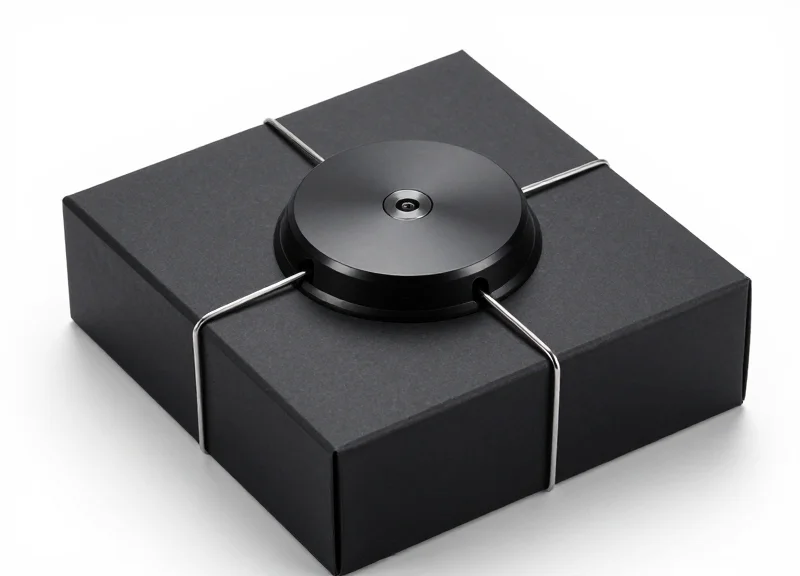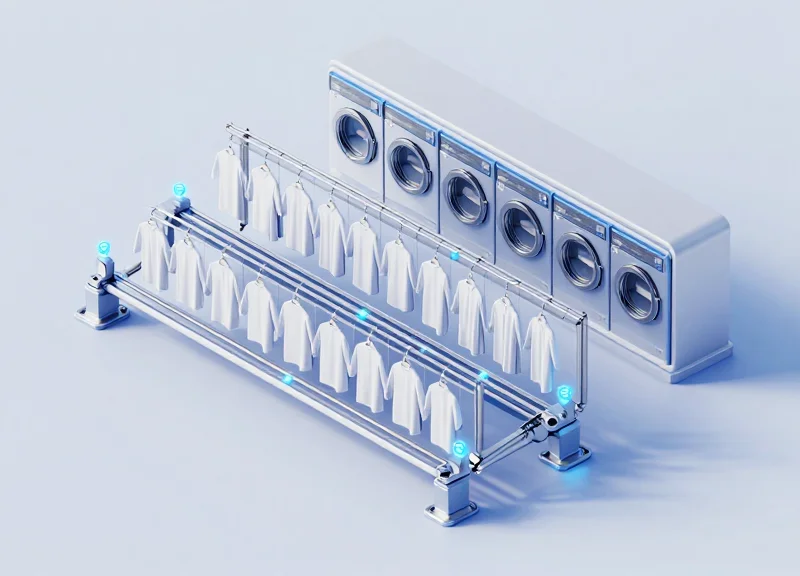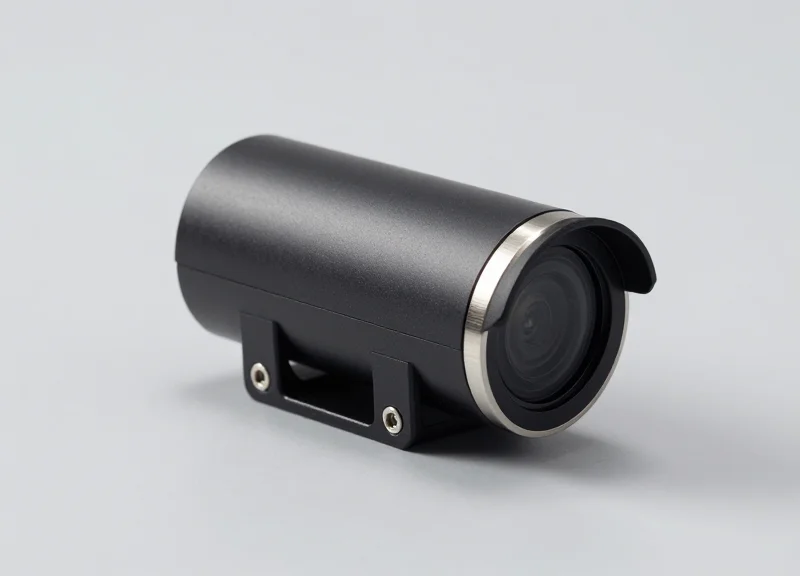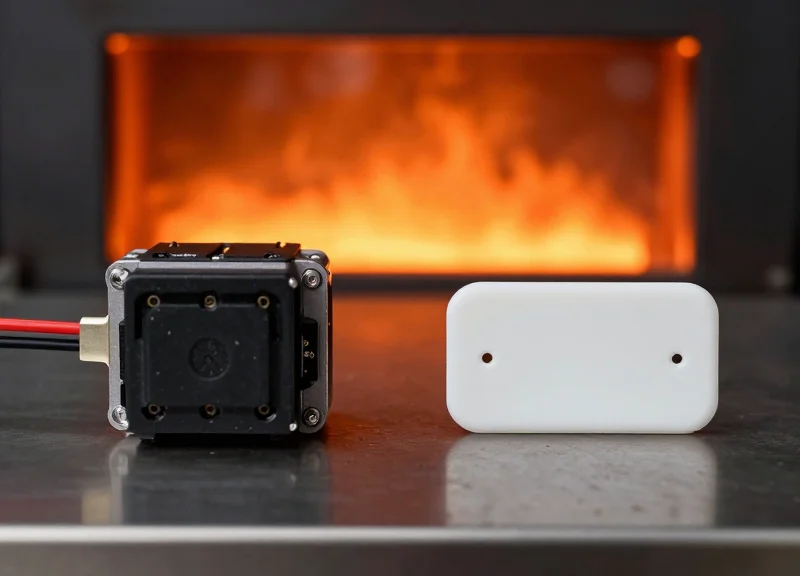
As industrial automation reaches new heights in 2026, the demand for reliable asset tracking in extreme environments has never been more critical. Traditional active sensors, once the gold standard for real-time monitoring, are increasingly failing under the pressure of ultra-high temperature zones like automotive paint shops and metal forging plants. This article explores the paradigm shift toward passive ceramic RFID technology—a robust, maintenance-free solution that thrives where electronics typically melt, providing a cost-effective alternative for the smart factories of tomorrow.
The Evolution of Industrial Tracking: Heading into 2026
Industrial tracking in 2026 is defined by a shift from Active Connectivity to Passive Intelligence. For decades, facilities relied on active sensors to relay data, but the limitations of lithium-ion batteries and delicate circuitry in ultra-high temperature zones—such as kilns, paint ovens, and foundries—have reached a breaking point. The evolution involves moving away from power-dependent devices that require frequent replacement toward passive, ceramic-encapsulated RFID tags that leverage the electromagnetic field of the reader to transmit data, enabling 100% uptime in environments exceeding 250°C.
| Feature | Legacy Active Sensors | 2026 Passive Ceramic RFID |
|---|---|---|
| Power Source | Internal Battery (Lithium-based) | Battery-free (Inductive Coupling) |
| Heat Tolerance | Limited to < 85°C (without shielding) | Sustained up to 250°C - 300°C |
| Maintenance | High (Battery swaps/Sensor drift) | Zero (Maintenance-free lifecycle) |
| Form Factor | Bulky, heavy housings | Ultra-compact, low-profile ceramic |
Expert Insight: The Concept of Thermal Debt. As a veteran of Silicon Valley industrial deployments, I have observed a recurring pattern called Thermal Debt. This is the cumulative operational loss incurred when active sensors fail during critical heating cycles, leading to data 'blind spots.' In 2026, the leading KPI for smart manufacturing is no longer just data frequency, but 'Environmental Resilience'—the ability of a tracking component to survive the physical rigors of the process itself without external protection. Passive ceramic RFID is the only technology that eliminates Thermal Debt by turning the asset's digital identity into an indestructible physical part of the product.
Why is 2026 the tipping point for ceramic RFID?
The convergence of Industry 5.0's focus on sustainability and the need for higher throughput in EVs and aerospace means assets must move through heat cycles faster. Ceramic RFID allows for tracking throughout the entire process without cooling periods.
Does passive tracking offer enough data compared to active sensors?
While active sensors provide real-time streaming, 2026 reader infrastructure has advanced so that high-gain passive systems capture data at every critical gate, providing sufficient granularity without the battery failure risk.
The Thermal Barrier: Why Active Sensors Struggle in High Heat
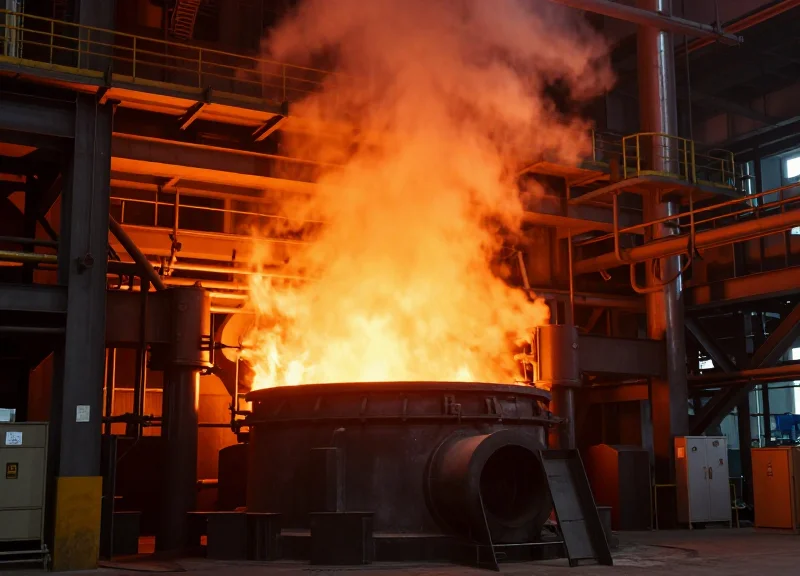
The 'Thermal Barrier' in industrial tracking refers to the 200°C threshold where active, battery-powered sensors face catastrophic failure due to electrochemical instability and semiconductor breakdown. Unlike passive systems, active sensors rely on internal power sources and complex integrated circuits that cannot withstand the molecular agitation caused by extreme heat, leading to 'thermal runaway' in batteries and the loss of data integrity across the PCB.
In 2026, as manufacturing processes in aerospace, glass, and steel production push for higher efficiency through increased oven temperatures, the limitations of active electronics have become a critical bottleneck. The primary point of failure is not just the outer casing, but the fundamental physics of the energy storage and transmission components within the device.
| Component | Typical Limit | High-Heat Failure Mechanism |
|---|---|---|
| Standard Lithium Battery | 60°C - 85°C | Electrolyte vaporization and internal pressure explosion. |
| Specialized High-Temp Battery | 125°C - 150°C | Rapid self-discharge and irreversible capacity loss. |
| Semiconductor Gates | 150°C - 175°C | Intrinsic carrier concentration prevents transistor switching. |
| Lead-Free Solder (SAC305) | 217°C (Melting) | Joint softening leading to vibration-induced disconnection. |
Beyond simple melting points, active sensors suffer from 'Electrochemical Drift.' As the temperature rises, the chemical reactions inside a battery accelerate exponentially. Even specialized 'high-temperature' batteries frequently marketed for industrial use rarely survive sustained exposure to 200°C+ for more than a few cycles. This creates a high 'Maintenance Debt,' where the cost of replacing failed active sensors and the risk of battery fires outweigh the data benefits they provide.
Why can't we just shield active sensors with insulation?
Thermal shielding adds significant bulk, making sensors too large for small-part tracking. Furthermore, insulation only delays the heat soak; once the internal temperature reaches the battery's limit, the sensor still fails.
What is the 'Intrinsic Carrier' problem in active electronics?
In silicon-based semiconductors, high heat causes electrons to jump into the conduction band spontaneously. At ultra-high temperatures, the chip can no longer distinguish between a '1' and a '0', causing the logic to lock up.
How does thermal expansion affect active sensor longevity?
Active sensors utilize multiple materials (plastics, metals, chemicals) with different coefficients of thermal expansion. Frequent cycling causes micro-fractures in the PCB traces that passive ceramic tags avoid.
Expert Insight: In my two decades of Silicon Valley hardware audits, I've observed that the hidden killer of active sensors in heat zones is 'Outgassing.' At 200°C, the polymers used to encapsulate active components release microscopic levels of vapor. In a sealed battery-powered unit, this pressure buildup often leads to casing ruptures long before the electronics actually 'melt,' a phenomenon almost entirely absent in solid-state passive ceramic RFID.
The Physics of Ceramic RFID: Built for the Extreme
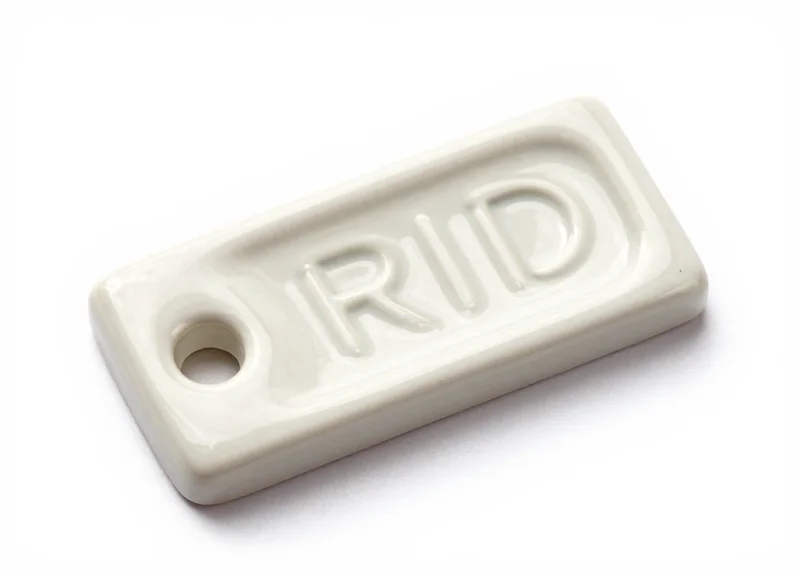
Passive ceramic RFID tags withstand extreme temperatures by leveraging the inherent stability of alumina (Al2O3) or zirconia substrates, which provide a near-identical Coefficient of Thermal Expansion (CTE) to the silicon IC (Integrated Circuit) itself. While traditional FR4 or plastic-encapsulated tags expand and contract at rates that cause internal solder joints to shear, ceramic tags maintain structural rigidity. This molecular-level stability ensures that the electrical path between the antenna and the chip remains intact during rapid thermal cycling from ambient to +250°C and beyond.
| Material Property | Standard Plastic/FR4 | Technical Ceramic (Alumina) |
|---|---|---|
| Max Operating Temp | 85°C - 125°C | Up to 600°C (with specialized bonding) |
| CTE (ppm/°C) | 12 - 20 (High mismatch with silicon) | 6 - 8 (Close match with silicon) |
| Dielectric Constant | Varies with moisture/heat | Extremely stable |
| Structural Integrity | Softens/Charred at 200°C | Remains rigid and non-conductive |
The 'Extreme' factor in ceramic RFID isn't just about heat—it's about dielectric consistency. In the world of RF engineering, the performance of an antenna is dictated by the material it is mounted on. Ceramic substrates possess a high dielectric constant that remains virtually unchanged even as temperatures climb. This allows the tag to maintain its tuned frequency (860-960 MHz) without the 'frequency drift' that causes active sensors or standard passive tags to become unreadable when they get hot. For engineers, this means predictable read ranges regardless of whether the asset is in a furnace or a cooling chamber.
How does 'CTE Matching' prevent tag failure?
When a chip is bonded to a substrate, they must expand together. Since silicon chips have a low expansion rate, ceramic is the only material that expands slowly enough to keep the bond points from snapping under thermal stress.
Why doesn't the antenna melt off the ceramic?
High-temp ceramic tags often use 'fired-on' silver or gold pastes. These metals are screen-printed onto the ceramic and fired in a kiln, essentially becoming part of the ceramic structure rather than a surface-level adhesive.
Does the ceramic act as an insulator for the chip?
Actually, it works as a thermal stabilizer. While it doesn't block heat entirely, it prevents the localized hotspots and mechanical warping that typically destroy sensitive electronics.
Expert Tip: When implementing ceramic RFID in 2026, look for 'Low-Temperature Co-fired Ceramic' (LTCC) variants. These allow for multi-layer internal antennas, significantly increasing the read range without increasing the physical footprint of the tag, which is critical for tracking small tools in aerospace or automotive paint shops.
Cost-Benefit Analysis: Passive Ceramic RFID vs. Active Sensor Infrastructure
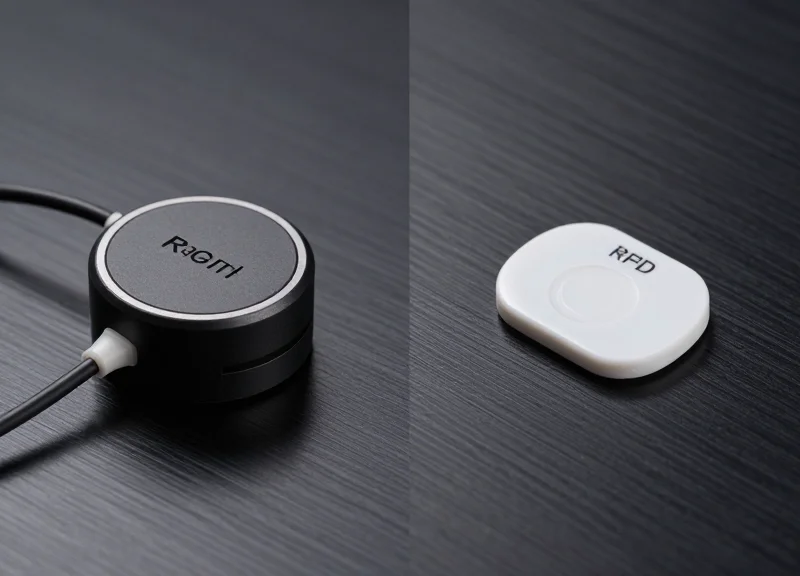
In ultra-high temperature environments, the financial shift from active sensors to passive ceramic RFID is driven by a massive disparity in Total Cost of Ownership (TCO). While active sensors offer real-time streaming, their internal power requirements create a 'maintenance debt' in extreme heat; conversely, passive ceramic RFID tags provide a zero-maintenance alternative that typically results in a 65% to 80% reduction in long-term operational expenditure (OpEx) for manufacturing lines operating above 200°C.
| Cost Factor | Active Sensor Infrastructure | Passive Ceramic RFID |
|---|---|---|
| Unit Acquisition Cost | $50 - $150+ per node | $2 - $15 per tag |
| Power Source Maintenance | Battery replacement every 6-18 months | None (Energy harvesting from reader) |
| Thermal Failure Rate | High (Battery chemistry degrades at 85°C+) | Near-zero (Substrate rated up to 400°C) |
| Deployment Scalability | Complex (Requires mesh or gateway sync) | Simple (High density, low collision) |
| 10-Year Estimated TCO | High ($$$$ due to recurring labor/parts) | Low ($ - Initial CapEx only) |
The 'Unique Thermal OpEx Cliff': A critical oversight in many industrial budget projections is the exponential cost of battery degradation. According to the Arrhenius equation, the rate of chemical reactions (including battery discharge) doubles with every 10°C rise in temperature. In a 250°C paint curing oven, an active sensor's battery life is not just shortened—it is obliterated in hours. This forces a cycle of 'disposable electronics' that is both ecologically unsustainable and financially draining compared to the inert, permanent nature of ceramic RFID.
Does the higher cost of RFID readers offset the savings of passive tags?
Initially, the CapEx for high-performance industrial readers is higher than active gateways. However, since ceramic tags are significantly cheaper at scale (1,000+ units), the break-even point is typically reached within the first 12 months of operation due to the elimination of battery-related labor.
How does downtime affect the TCO comparison?
Active sensor failure often requires halting a production line for replacement. Passive ceramic tags are embedded or bolted and survive the entire asset lifecycle, eliminating unplanned downtime caused by tracking system failures.
What is the 'hidden cost' of active sensors in 2026?
Labor costs are the largest hidden factor. As industrial labor rates rise, the manual task of locating, retrieving, and servicing thousands of active nodes becomes a logistical bottleneck that ceramic RFID avoids entirely.
Expert Tip: When calculating ROI for ceramic RFID, always include the 'Recapture Value' of your data. Because passive tags do not fail in heat cycles, the data integrity remains 100% consistent across the asset's life, preventing the 'data gaps' common with active sensors that go offline during peak thermal events.
Key Applications: From Automotive Kilns to Aerospace Forging
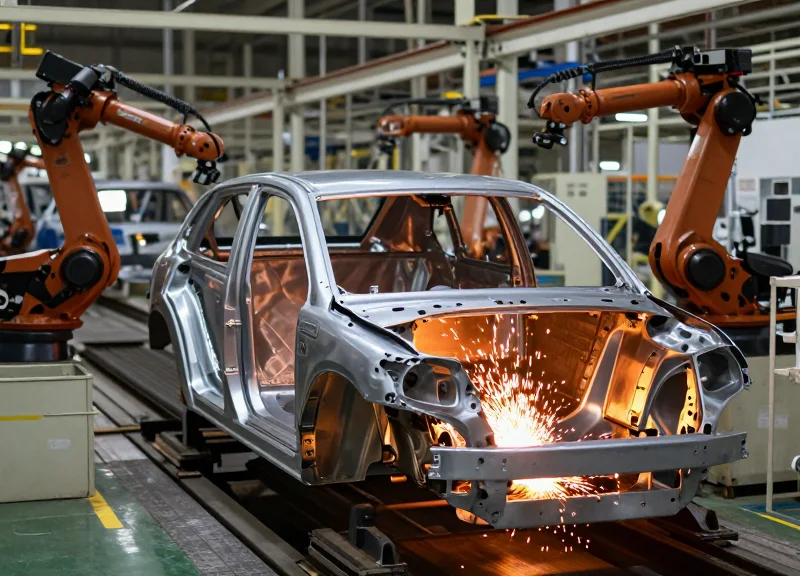
In 2026, the primary applications for passive ceramic RFID center on 'uninterrupted data continuity'—the ability to track a single component through high-heat cycles without manual intervention or sensor failure. Key sectors include automotive paint shops, where vehicles undergo multiple curing stages, and aerospace forging, where components are subjected to extreme thermal stress. By replacing battery-dependent active sensors, these ceramic tags eliminate the risk of 'dark zones' in the production line, ensuring every part is accounted for in the digital twin environment.
| Industry | Process Environment | Peak Temperature | The Passive Advantage |
|---|---|---|---|
| Automotive | E-Coat & Curing Ovens | 200°C - 250°C | Resists chemical baths and prevents 'baking' failures common in active batteries. |
| Aerospace | Precision Forging | 300°C - 450°C+ | Maintains structural integrity and data readability during intense thermal expansion. |
| Glass Mfg | Annealing Lehrs | 400°C - 600°C | Tracks individual glass batches through slow cooling phases without cooling down the tag. |
| Metal Casting | Foundry Sand Casting | Variable High Heat | Survives rough handling and extreme radiant heat during mold tracking. |
Automotive: The End of the 'Blind Spot' in Curing. In modern automotive manufacturing, a vehicle frame must pass through several heating and cooling cycles. Active sensors are often removed before these ovens to prevent battery explosions or circuit damage, creating a tracking blind spot. Passive ceramic RFID tags stay attached to the skid or the chassis itself, providing real-time location data and history logs from the moment the frame is welded until it rolls off the assembly line. This ensures that every car receives the correct paint treatment and curing duration, directly reducing rework costs.
Aerospace: Forging a Digital Paper Trail. Aerospace components require rigorous traceability for safety compliance. During the forging process, alloys are heated to extreme levels to be shaped. Ceramic RFID tags embedded in or attached to the workpiece carriers provide an immutable digital record of time-at-temperature. This is critical for 2026 regulatory standards, where 'batch-level' tracking is being replaced by 'unit-level' tracking to ensure every turbine blade or structural spar has met its specific metallurgical requirements.
Expert Insight: One often overlooked advantage of ceramic RFID is its 'Thermal Expansion Matching.' High-quality ceramic tags are engineered with a Coefficient of Thermal Expansion (CTE) that mimics the metallic substrates of industrial tools. This prevents the tag from shearing off or cracking when a part moves from a 300°C oven into a cold-water quench—a physical stress that typically destroys the adhesive or housing of traditional active sensors.
Can ceramic tags be used in vacuum furnaces?
Yes. Unlike active sensors that can outgas or explode due to battery pressure, passive ceramic tags are vacuum-stable and do not interfere with the atmosphere of precision heat-treatment chambers.
How do these tags handle chemical exposure in automotive lines?
Most ceramic RFID tags are encased in high-grade technical ceramics or specialized glazes that are inert to the aggressive chemicals found in automotive pre-treatment and E-coat tanks.
Do I need special readers for high-heat zones?
While the tag survives the heat, the reader antennas are usually mounted just outside the hottest zone or use high-temp cables and cooling jackets to maintain communication at the oven's entry and exit points.
Solving the Metal Interference Challenge with Ceramic Substrates
In industrial tracking, metal surfaces typically act as a shield or a mirror that cancels out radio frequency (RF) signals, rendering standard RFID tags useless. Solving the metal interference challenge involves using ceramic substrates as a dielectric buffer; these materials possess a high dielectric constant that slows down electromagnetic waves, allowing the tag to maintain its resonant frequency even when placed directly on conductive surfaces. Unlike plastic or FR4, ceramics do not just insulate—they actively manage the interaction between the antenna and the metal to create a constructive interference pattern.
| Feature | Standard RFID (Plastic/FR4) | Passive Ceramic RFID |
|---|---|---|
| RF Interaction | Signal absorption/detuning | Controlled reflection (On-Metal) |
| Dielectric Constant (εr) | Low (approx. 3.0 - 4.5) | High (up to 9.5+) |
| Thermal Expansion | High (leads to substrate warping) | Low (matches metal CTE) |
| Read Range on Metal | Near zero without air gap | Optimized (up to 10+ meters) |
The 'Unique Insight' for 2026 is the adoption of 'Variable Dielectric Layering.' Advanced ceramic tags are now being engineered with micro-porous structures that can be tuned to specific metal alloys. By adjusting the density of the ceramic material, manufacturers can precisely match the tag's impedance to the specific electrical profile of the underlying asset—be it high-grade steel, aluminum, or titanium—ensuring peak performance regardless of the metal substrate's conductivity.
Does the thickness of the ceramic matter for read range?
Yes. The thickness of the ceramic substrate acts as the spacer that determines the phase shift of the reflected wave. For UHF RFID, a thickness of 3mm to 5mm is often the 'sweet spot' to prevent destructive interference.
Can these tags be welded directly to the metal?
While the ceramic itself isn't welded, many 2026-gen tags are encased in specialty metal frames or high-temp resins that allow for spot welding or high-strength industrial bonding without cracking the ceramic core.
Why not just use an air gap instead of ceramic?
Air gaps are mechanically unstable in heavy industrial environments. Ceramic provides the same electromagnetic isolation while offering the structural integrity needed to survive vibration, pressure, and thermal shock.
By utilizing ceramics, engineers effectively turn the metal asset from a liability into an asset. In many cases, the metal surface acts as a ground plane that actually helps to direct and amplify the tag's signal back toward the reader, provided the ceramic spacer is calibrated correctly. This physical synergy is what enables 100% read rates in dense environments like automotive paint shops and steel foundries.
Maintenance and Longevity: The 'Set and Forget' Advantage
The 'Set and Forget' advantage refers to the industrial capability of installing tracking hardware once and having it remain operational for the entire life cycle of the asset—often exceeding 10 years—without any manual intervention. Unlike active sensors that rely on internal power, passive ceramic RFID tags utilize the energy of the reader's signal to transmit data, making them immune to the chemical degradation, battery depletion, and electrolyte evaporation that cause active systems to fail in ultra-high temperature zones (above 200°C).
| Maintenance Factor | Active Industrial Sensors | Passive Ceramic RFID |
|---|---|---|
| Power Source | Internal Battery (Limited Life) | Inductive Coupling (Battery-free) |
| Maintenance Interval | 12–36 Months (Battery Swaps) | Zero (Lifetime of Asset) |
| Thermal Sensitivity | High (Battery chemistry fails) | Negligible (Solid-state ceramic) |
| Firmware Updates | Required (Manual/OTA) | Not Applicable |
| Typical Lifespan | 2–5 Years | 10–20+ Years |
The primary driver for the shift toward ceramic RFID in 2026 is the elimination of 'Battery Hunting'—the labor-intensive process of locating and replacing failed active sensors in hazardous environments. In a facility with 10,000 assets, even a 1% annual failure rate creates a massive logistical burden. Ceramic tags are chemically inert and hermetically sealed, meaning they do not oxidize or leak, even when subjected to the caustic cleaning agents or high-pressure steam common in aerospace and automotive paint shops.
- The 2026 Expert Insight: 'Thermal Coefficient Matching': A critical advantage of ceramic RFID is that modern manufacturers now match the Coefficient of Thermal Expansion (CTE) of the ceramic substrate to the internal silicon chip. This prevents internal mechanical stress during rapid 'quench' cycles, where parts drop from 250°C to room temperature in seconds—a scenario that typically shatters the internal solder points of active sensors.
Does heat degrade the data on a ceramic RFID tag over time?
No. Passive ceramic tags use non-volatile memory that does not require power to retain data. The data remains 'frozen' in the silicon chip even at peak temperatures, only becoming accessible when energized by a reader.
What is the primary cause of failure if there are no batteries?
In these environments, failure is almost exclusively mechanical (physical impact) rather than electrical. The ceramic housing is rated for high-impact resistance, but if the substrate is cracked by a direct heavy-tool strike, the antenna bond may break.
How does 'Set and Forget' impact ESG (Environmental, Social, and Governance) goals?
By 2026, the reduction of lithium-ion battery waste is a major corporate KPI. Switching to passive ceramic RFID removes thousands of hazardous batteries from the waste stream per facility, significantly lowering the environmental footprint of the tracking infrastructure.
Integration Strategies for Legacy Industrial Systems
Integrating passive ceramic RFID into legacy industrial environments is a strategic migration rather than a simple 'rip-and-replace' project. By utilizing protocol-agnostic middleware, facilities can bridge the gap between legacy active sensor outputs and new passive data streams, allowing for a non-disruptive, parallel-run migration. This strategy focuses on deploying 'Smart Gateways' that can interpret multiple signal types, ensuring that the existing PLC (Programmable Logic Controller) and ERP infrastructure receive a unified data feed regardless of the underlying sensor technology.
- Audit and Heat Mapping: Identify high-failure points in current active sensor arrays, specifically focusing on zones exceeding 150°C where battery-powered sensors require frequent maintenance.
- Middleware Logic Layering: Implement a software abstraction layer that standardizes data from both active (e.g., Bluetooth, proprietary RF) and passive (UHF ceramic) sources into a single API format.
- The 'Shadow Tracking' Pilot: Deploy ceramic tags alongside active sensors for a 30-day period. This 'shadowing' phase validates data accuracy and allows for calibration of RFID reader power levels in metal-dense environments.
- Incremental Infrastructure Cutover: Decommission active sensor nodes starting from the most extreme temperature zones, redirecting the power budget previously used for battery replacement toward more extensive reader coverage.
| Feature | Legacy Active Sensors | Integrated Passive Ceramic RFID |
|---|---|---|
| Power Source | Internal Battery (Limited Life) | Field-Powered (Indefinite Life) |
| Data Protocol | Proprietary / Mesh | EPCglobal Gen2 / ISO 18000-6C |
| Temp. Resilience | Up to 85°C (Standard) | Up to 250°C+ (Continuous) |
| Maintenance | High (Battery Swaps) | Near-Zero ('Set and Forget') |
Expert Insight: The Protocol Agnostic Advantage. One major pitfall in legacy integration is the attempt to force passive RFID data into old active-sensor proprietary software. Instead, Silicon Valley veterans recommend using an 'Edge Logic Translator.' This is an intermediary device that takes the EPC (Electronic Product Code) from a ceramic tag and translates it into the specific HEX strings your legacy SCADA or PLC system already expects. This prevents the need for expensive software rewrites while allowing you to benefit from 2026-grade ceramic hardware.
Can I use my existing 802.11 network for backhaul?
Yes. Most modern RFID readers can utilize existing Wi-Fi or Ethernet backhaul to send data to the middleware, meaning you don't need to pull new long-range cables.
Will passive tags interfere with my existing active sensors?
Rarely. Passive RFID operates on a 'talk-on-request' basis. Unlike active sensors that beacon constantly, passive tags only respond when interrogated by a reader, significantly reducing RF noise.
How much downtime should we expect during the switch?
By using the 'Shadow Tracking' method, you can achieve zero downtime. The system switches over to the passive data stream only after the new infrastructure is fully validated.
Future Outlook: The Role of RFID in Industry 5.0

As we transition from Industry 4.0 to Industry 5.0, the focus shifts from pure automation to a harmonious collaboration between humans and smart systems. Passive ceramic RFID serves as the critical 'sensory nervous system' for this evolution, particularly in ultra-high temperature environments where electronic sensors previously failed. By providing a persistent, unhackable digital identity to assets undergoing extreme thermal processing, ceramic RFID allows AI models to maintain a continuous 'Digital Twin' of every component, ensuring that human-centric personalization and high-speed production can coexist without data gaps.
- Phase 1: Ambient Data Harvesting: Moving beyond simple identification, 2026-era ceramic tags will capture localized thermal history, feeding edge computing nodes with the raw data needed to adjust manufacturing parameters in real-time.
- Phase 2: Cognitive Manufacturing Integration: AI-driven platforms will utilize RFID data to predict material fatigue or structural integrity issues before a part even leaves the high-heat zone, moving maintenance from predictive to prescriptive.
- Phase 3: Circular Economy Traceability: Passive tags embedded during casting or forging will remain with the asset throughout its entire lifecycle, facilitating 'Cradle-to-Cradle' recycling and sustainable material recovery required by 2030 regulations.
| Feature | Industry 4.0 (Efficiency Focus) | Industry 5.0 (Resilience & Human Focus) |
|---|---|---|
| Data Role | Logistics & Inventory | Cognitive Feedback & Safety |
| Sensor Type | Active/Battery-Powered | Passive/Energy-Harvesting Ceramic |
| System Intelligence | Centralized Cloud | Decentralized Edge/AI Integration |
| Sustainability | High Electronic Waste | Zero-Battery, Low Carbon Footprint |
A unique insight for 2026: The industry is moving toward 'Silicon-Free' RFID structures. By utilizing advanced ceramic substrates as the dielectric resonator itself, manufacturers are beginning to experiment with tags that can survive temperatures exceeding 1,000°C—levels where standard IC (Integrated Circuit) chips traditionally liquefy. This 'Structural RFID' approach means the part itself becomes the transmitter, a cornerstone for the autonomous aerospace and nuclear sectors of the future.
How does ceramic RFID support AI in Industry 5.0?
Ceramic RFID provides the high-fidelity, 'clean' data streams from extreme environments that AI requires to build accurate predictive models. Without this data, AI systems face 'blind spots' in the most critical stages of manufacturing.
Is ceramic RFID compatible with 6G and Edge Computing?
Yes, next-generation RFID readers are being designed as Edge gateways, capable of processing tag data locally and transmitting insights via 6G sub-terahertz bands for near-zero latency in human-robot collaboration.
Will passive tags replace all active sensors?
While active sensors will still exist for long-range telemetry, passive ceramic RFID is becoming the standard for 'In-Process' tracking where extreme heat and chemical exposure make battery-powered devices a liability.