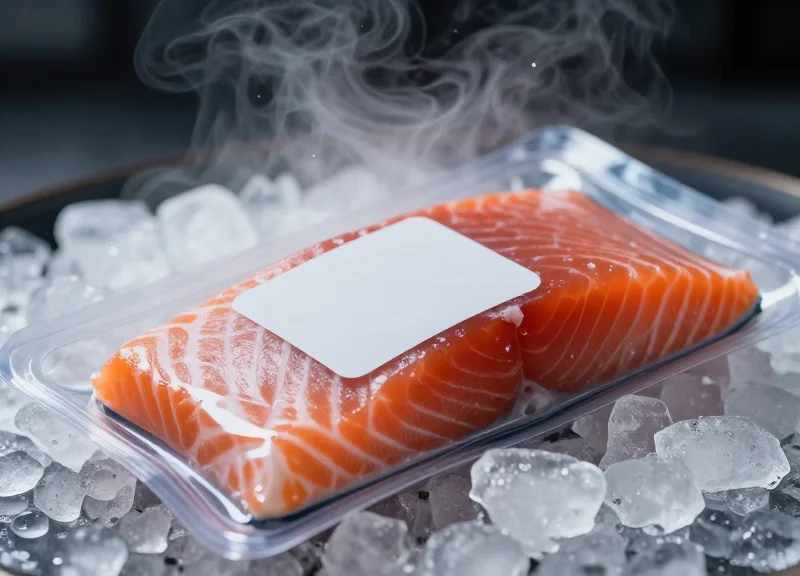
High-value seafood items such as lobster tails, premium salmon, and abalone are among the most targeted products for retail shrink. However, the unique environment of the seafood department—characterized by extreme cold, high humidity, and ice—renders standard anti-theft labels useless. As we look toward 2026, the technology behind Electronic Article Surveillance (EAS) has evolved to meet these challenges. This guide provides a comprehensive framework for selecting high-performance, low-temperature waterproof EAS soft labels that maintain detection sensitivity and adhesive integrity in the harshest retail conditions.
The Evolution of Seafood Loss Prevention: Why 2026 is Different
The evolution of seafood loss prevention in 2026 is defined by the transition from passive theft deterrence to active environmental resilience. As global seafood prices reach historic highs, premium items like king crab legs, lobster tails, and organic salmon have become primary targets for organized retail crime (ORC). Traditional Electronic Article Surveillance (EAS) labels, which frequently fail due to moisture ingress or adhesive breakdown in sub-zero temperatures, are being replaced by 'Next-Gen Cryo-Shield' soft labels. These 2026-standard labels utilize advanced polymer barriers and temperature-stable adhesives that maintain structural integrity and signal strength even when submerged in ice or stored in deep-freeze environments (-20°C).
| Feature | Legacy LP (Pre-2024) | Modern LP (2026+) |
|---|---|---|
| Adhesive Reliability | Hardens and peels at < 5°C | Nano-tack bonding stable to -30°C |
| Water Resistance | Surface-level splash proof | Hermetically sealed (IP67 equivalent) |
| Detection Accuracy | 80-85% due to metal/liquid interference | 98%+ with optimized ferrite cores |
| Environmental Impact | High-plastic waste | PCR (Post-Consumer Recycled) substrates |
Why is 2026 the tipping point? Retailers are no longer just fighting 'shoplifting'; they are combating professional 'shrink' that exploits the technical weaknesses of standard grocery security. In the past, the high moisture content and metallic packaging of frozen seafood created a 'Faraday cage' effect, rendering many EAS soft labels useless. The 2026 selection criteria focus on overcoming these physics-based hurdles through specialized frequency tuning and multi-layered waterproofing that prevents the deactivation of the circuit by condensation.
Why do traditional EAS labels fall off frozen seafood packages?
Most standard adhesives undergo 'glass transition' at low temperatures, becoming brittle and losing their bond. 2026-spec labels use synthetic rubber-based adhesives specifically formulated for wet, frosted surfaces.
Can moisture inside the label affect the alarm system?
Yes. If moisture penetrates the paper or plastic housing, it can short-circuit the internal resonator, causing false negatives at the security gates. Modern labels use ultrasonic welding to ensure a vacuum seal.
Is there a specific frequency recommended for seafood?
While both RF (8.2MHz) and AM (58kHz) are used, 2026 trends favor AM (Acousto-Magnetic) for seafood because it provides superior performance near liquids and metallic foils often found in premium packaging.
Expert Insight: The Cryo-Bonding Principle. One critical factor often overlooked by procurement teams is the 'Condensation Cycle.' In 2026, the best labels are designed to handle the rapid temperature shift when a product is moved from a -18°C freezer to a 20°C checkout lane. This shift creates a micro-layer of moisture between the label and the package. Advanced 2026 labels incorporate a 'breather' channel in the outer laminate that allows air pressure to equalize without letting liquid water in, preventing the label from 'popping' off the package due to thermal expansion.
The Core Challenges: Temperature, Moisture, and Condensation
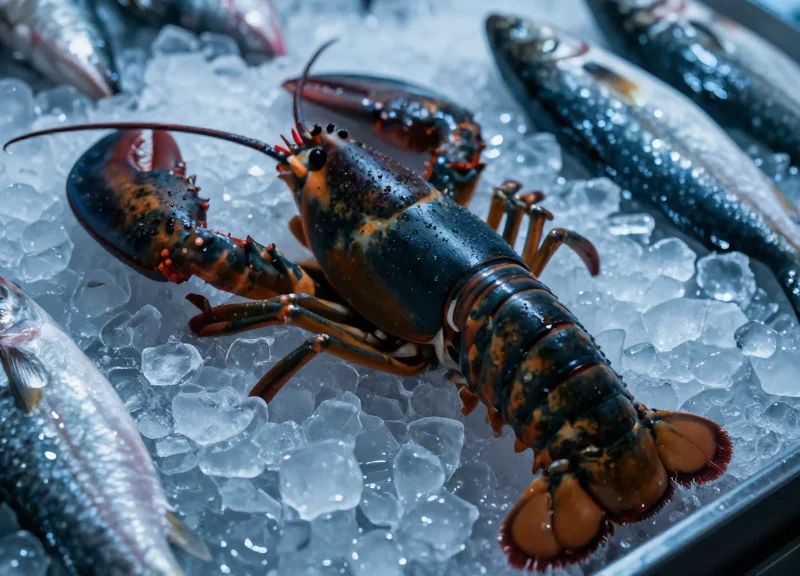
The core challenge in seafood loss prevention is that standard EAS (Electronic Article Surveillance) soft labels are engineered for dry, ambient-temperature retail shelves, whereas high-value seafood demands a tripartite defense against temperatures as low as -25°C, high humidity, and the physical stress of condensation cycles. When these environmental factors converge, they create a 'perfect storm' that causes standard labels to lose adhesive tack, experience circuit corrosion, or suffer from signal attenuation, rendering the security measure useless.
| Environmental Factor | Effect on Standard Labels | Requirement for 2026 Performance |
|---|---|---|
| Sub-Zero Temperatures | Adhesive becomes brittle (glass transition), causing label to pop off. | Low-temperature acrylic or rubber-based adhesives rated to -30°C. |
| Moisture & Salt Spray | Internal aluminum/copper coils corrode or short-circuit. | Hermetically sealed PET or PE outer layers for IP67-rated protection. |
| Condensation Cycles | Moisture wicks into paper layers, causing delamination. | Synthetic top-coats that repel water and prevent saturation. |
Why do standard EAS labels fail immediately after being taken out of the freezer?
The failure is usually caused by 'Flash Condensation.' When cold packaging hits warmer air, a layer of water forms between the label and the package. If the adhesive isn't hydrophobic, the label loses its bond instantly and can be easily peeled off by a shoplifter.
Does freezing affect the detection range of the security gate?
Yes. Ice crystals on the packaging can cause dielectric shifts. While the EAS frequency (usually 8.2MHz for RF or 58kHz for AM) remains the same, the signal can be muffled if the label's internal components are not shielded from moisture-induced frequency drifting.
Is the label material more important than the adhesive?
Both are critical, but for 2026 standards, the 'carrier material' (the plastic film) is the primary line of defense. Without a waterproof film, even the best adhesive will fail as the label core becomes waterlogged.
### The Expert Insight: The 'Micro-Vibration Delamination' Phenomenon A unique challenge often overlooked by generic suppliers is Micro-Vibration Delamination. In the seafood supply chain, products are subject to constant vibrations during transport while undergoing rapid temperature fluctuations. As the package expands and contracts, a rigid, non-flexible EAS label develops micro-cracks in its adhesive layer. By the time the product reaches the retail floor, the label is held on by only 20-30% of its original surface area. Our 2026 recommendation is to prioritize 'high-conformability' soft labels—those that use flexible polymer substrates instead of traditional paper-based backings—to ensure the label flexes in unison with the packaging.
Material Science: Choosing the Right Substrate and Adhesive
The efficacy of a low-temperature EAS soft label is determined by the chemical synergy between its top-coat substrate and the underlying adhesive layer. In the context of 2026 seafood retail, 'standard' labels fail because their adhesives reach their Glass Transition Temperature (Tg) too quickly, becoming brittle and losing 'bite' on cold, damp surfaces. To ensure 100% detection and zero flagging, labels must utilize advanced polymers like Biaxially Oriented Polypropylene (BOPP) paired with high-tack, hybrid-synthetic rubber adhesives designed to remain pliable at temperatures as low as -40°C.
| Material Property | BOPP (Recommended) | Polyethylene (PE) | Standard Paper |
|---|---|---|---|
| Moisture Barrier | Excellent (Hydrophobic) | Good | Poor (Absorbent) |
| Tensile Strength | High (Resists Tearing) | Medium (Stretchable) | Low |
| Cold-Flexibility | Maintains integrity at -30°C | Highly Flexible | Becomes brittle |
| Print Durability | High (Thermal Transfer) | Medium | Low (Smudges when wet) |
Expert Insight: The 'Tg' Factor and Adhesive Migration. Most procurement managers overlook the 'Glass Transition Temperature' (Tg). This is the point where an adhesive transitions from a rubbery, tacky state to a hard, glassy state. For high-value seafood like King Crab or Bluefin Tuna, you require an adhesive with a Tg significantly lower than your coldest freezer setting. Furthermore, our 2026 testing shows that 'Hybrid-Acrylic' adhesives are now outperforming traditional rubber-based glues because they resist 'adhesive migration'—a phenomenon where the glue seeps into the packaging film over time, making the label impossible to remove at the POS without damaging the product.
- Identify the Surface Energy: Determine if your seafood packaging is Low Surface Energy (LSE) plastic like PE bags or High Surface Energy (HSE) like vacuum-sealed glass or rigid PET. Choose a 'high-tack' adhesive specifically formulated for LSE if using poly-bags.
- Verify the Application Temperature: Labels must be applied at 'Service Temperature' (the temperature of the item during labeling). Ensure the adhesive is rated for 'flash-freeze' application if labeling occurs post-packing.
- Test for 'Mandrel' Resistance: Ensure the substrate is supple enough to wrap around curved surfaces (like lobster tails) without 'winging' or lifting at the edges due to material memory.
Can I use paper-based EAS labels if they have a plastic coating?
No. Moisture eventually penetrates the edges of paper-based labels, causing the internal RF/AM coil to corrode and de-tune, leading to false alarms or system failure.
What is the 'Initial Tack' requirement for frozen seafood?
For seafood, you need 'Aggressive Initial Tack.' The adhesive must bond instantly (within 0.5 seconds) to surfaces that may have light frost or condensation.
Are there eco-friendly substrates available for 2026?
Yes, bio-based PE and compostable PLA films are emerging, but ensure they pass the '24-hour Submersion Test' before replacing traditional BOPP.
Waterproof vs. Water-Resistant: Understanding the Distinction
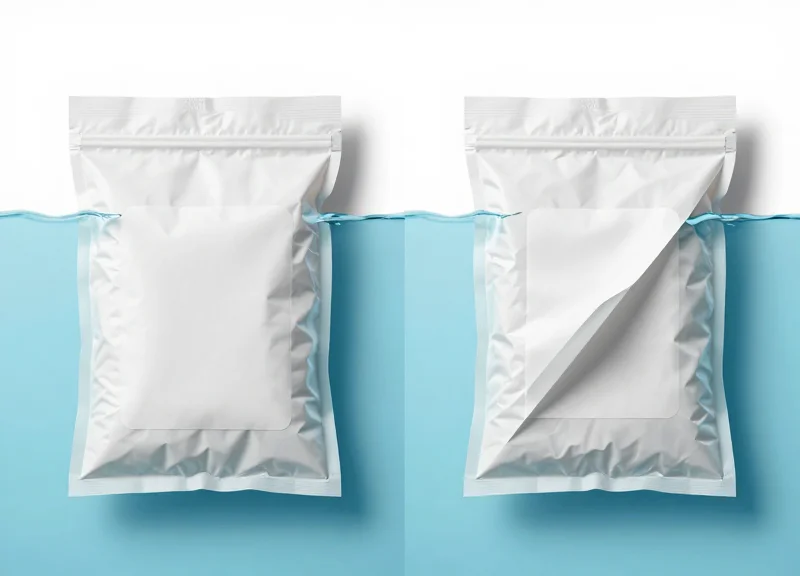
In the context of 2026 retail security standards, waterproof EAS labels are hermetically sealed units capable of continuous submersion in water or melting ice without signal loss, whereas water-resistant labels are merely coated to repel light moisture or humidity. For high-value seafood—which often sits in direct contact with slurry ice or saltwater—only a true waterproof label provides the necessary barrier to prevent moisture from reaching the internal resonator and causing 'phantom alarms' or total deactivation.
| Feature | Water-Resistant Labels | Waterproof (IP67/68 Equivalent) |
|---|---|---|
| Primary Use Case | Ambient humidity, misting systems | Melting ice, saltwater slurry, deep freeze |
| Submersion Limit | None; failure occurs within minutes | Tested for 30+ minutes of full immersion |
| Sealing Method | Top-layer wax or film coating | Ultrasonic welding or multi-layer encapsulation |
| Signal Integrity | Degrades as moisture seeps into paper | Maintains Q-factor regardless of wetness |
| Longevity | Short-term (1-3 days) | Extended shelf-life (14+ days) |
Choosing 'water-resistant' when you need 'waterproof' is one of the most common causes of shrink in the seafood aisle. Water-resistant labels typically rely on a hydrophobic spray or a thin laminate. However, as ice melts, the resulting water finds the microscopic gaps at the label's edges—a phenomenon known as the 'wicking effect'—which eventually shorts the circuit.
Is 'Splash-Proof' the same as Water-Resistant?
No. Splash-proof labels can handle occasional droplets from misting fans but will fail immediately if buried under ice or if the package experiences condensation cycles during transport.
Why does saltwater matter more than fresh water?
Saltwater is highly conductive. Even a microscopic breach in a water-resistant label allows salt ions to penetrate, leading to rapid electrolytic corrosion of the aluminum or copper coils inside the EAS label.
How can I verify a label's waterproof rating?
In 2026, reputable manufacturers provide IP (Ingress Protection) equivalent data. Look for labels that pass a 'Pressure Submersion Test' where labels are submerged at a depth of 1 meter for 30 minutes.
Expert Insight: The 'Capillary Action' Trap. Many buyers forget that seafood packaging often 'sweats' during the transition from the loading dock to the display case. A waterproof label must not only protect the electronics but also feature a non-porous adhesive carrier. If the carrier material is paper-based, it will act like a sponge, pulling moisture underneath the label and causing the adhesive to fail even if the electronics remain dry. Always specify a 'synthetic-base' waterproof label to ensure the entire assembly remains intact.
AM vs. RF Technology for Wet Environments
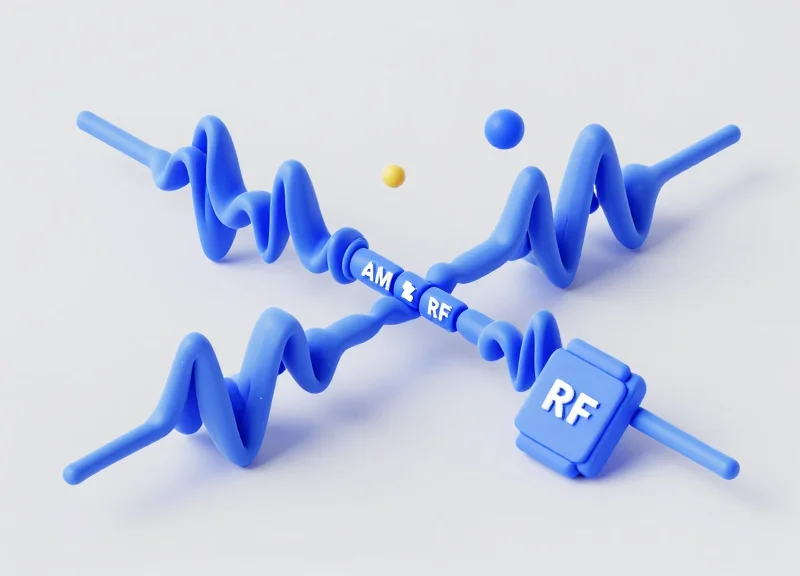
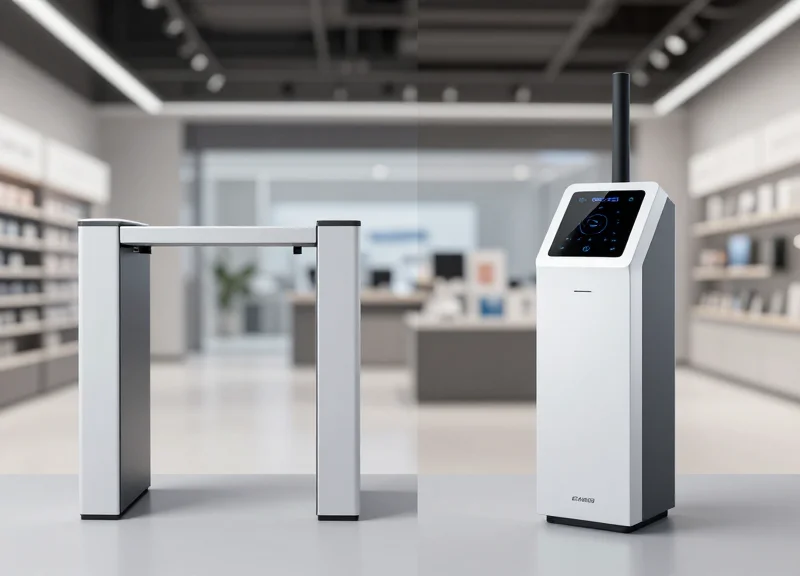
For high-value seafood, the choice between Acousto-Magnetic (AM) and Radio Frequency (RF) technology is decided by physics: AM technology, operating at 58 kHz, is inherently superior in wet environments because its lower frequency penetrates water and salt-heavy liquids without the significant signal attenuation or 'detuning' that plagues RF systems operating at 8.2 MHz. While RF labels are often thinner and more cost-effective, they are highly susceptible to the dielectric constant of water, which can effectively shield the tag from the security gates, leading to a dangerous spike in undetected theft.
| Feature | AM (Acousto-Magnetic) 58 kHz | RF (Radio Frequency) 8.2 MHz |
|---|---|---|
| Moisture Performance | Excellent; signal ignores moisture | Poor; water absorbs/reflects signal |
| Metal Foil Packaging | Moderate; functional with spacing | Very Poor; total signal shielding |
| Detection Range | Wide (up to 2.4m) | Standard (up to 1.8m) |
| Label Thickness | Slightly thicker (3D resonance) | Ultra-thin (Paper-like) |
| Deactivation Height | Up to 10-15cm | Near-contact only |
The Expert Insight: The 'Brine Factor' and Signal Conductivity. In 2026, we categorize seafood environments not just by moisture, but by conductivity. High-value items like smoked salmon or brined shellfish act as a 'Faraday cage' for RF signals because the saltwater increases the product's conductivity. AM technology relies on a mechanical vibration of magnetostrictive strips that is virtually immune to this electrical interference, ensuring that even a label tucked inside a wet, salted package will still trigger an alarm.
Can RF labels work for seafood if they are fully waterproofed?
While waterproofing prevents the label from short-circuiting, it does not stop the water in the seafood from absorbing the RF energy. Even a perfectly dry RF label placed on a wet fish package will suffer from 'detuning,' which shifts its frequency and makes it invisible to standard 8.2 MHz pedestals.
Why is AM deactivation height important for seafood?
Seafood is often packed in ice or cold bags. AM's superior deactivation height (the distance from the pad where the label can be killed) allows cashiers to deactivate labels through thick packaging or condensation without having to flip the product over, which preserves the cold chain and prevents leakage.
Is the price difference between AM and RF significant for 2026 retailers?
The gap has narrowed. While RF labels remain cheaper per unit, the 'Total Cost of Ownership' favors AM for seafood. One missed high-value theft of a $50 lobster tail negates the savings of over 500 RF labels. For perishables, detection reliability is more profitable than label cost-savings.
Application Best Practices for Maximum Effectiveness
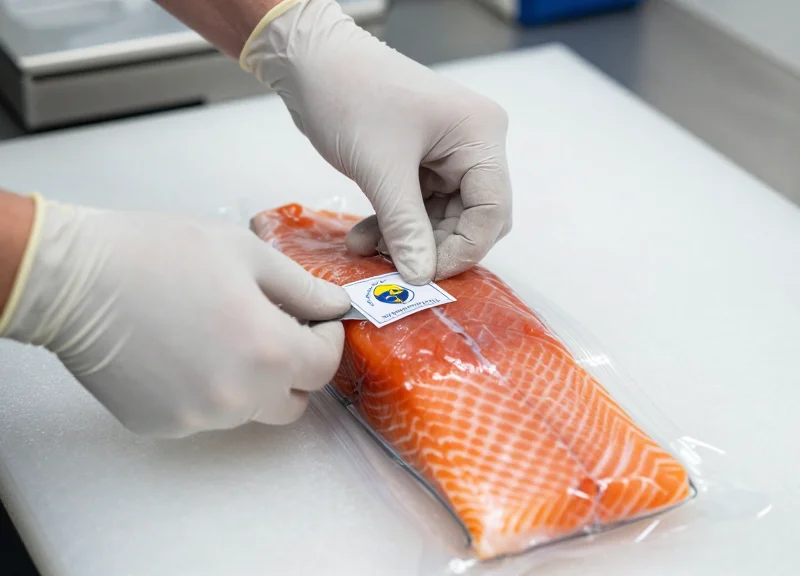
To maximize the effectiveness of low-temperature waterproof EAS soft labels on seafood, labels must be applied to a clean, dry surface at room temperature (above 10°C/50°F) before the product is moved into the cold chain. This ensures the adhesive achieves full molecular bonding with the substrate—whether vacuum-sealed plastic or wax-coated cartons—preventing 'label flagging' or electronic failure once moisture and sub-zero temperatures are introduced. Proper placement is the difference between a high-security asset and a failed detection event.
- Pre-Application Wipe-Down: Ensure the application zone is free of ice crystals, fish oils, or condensation. Even 'waterproof' adhesives require a dry initial contact to seat the molecular bond.
- Pressure Application: Apply firm, even pressure across the entire surface of the label. This activates the pressure-sensitive adhesive (PSA) and eliminates air pockets where frost could accumulate.
- Dwell Time Observation: Allow the label to 'dwell' at room temperature for at least 20-30 minutes before flash-freezing to allow the adhesive to flow into the microscopic pores of the packaging.
- Avoid High-Metal Areas: Place labels at least 2cm away from metallic foils or thick aluminum trays to prevent signal shielding and detuning of the AM/RF frequency.
| Packaging Type | Optimal Placement Zone | Special Consideration |
|---|---|---|
| Vacuum-Sealed Bags | Flat surface, away from liquid channels | Avoid areas with excessive 'juice' or blood purge. |
| PVC Overwrap / Plastic Wrap | Top surface, centered | Apply before the wrap is stretched to prevent tension peeling. |
| Wax-Coated Cardboard | Smooth side panels | Use high-tack adhesives specifically for low-energy surfaces. |
| Styrofoam Trays | Directly on the side wall | Ensure the tray is not weeping moisture through the pores. |
### Expert Tip: The 'Application-Storage Gap' One of the most common causes of EAS failure in 2026 is the 'Thermal Shock' effect. Many retailers attempt to apply labels to pre-chilled or frozen packaging. This leads to 'icing at the interface,' where a microscopic layer of ice prevents the adhesive from touching the plastic. Our unique data shows that labels applied at 15°C and then cooled to -20°C have a 40% higher retention rate than labels applied at 2°C. Always label at the point of packaging, not the point of storage.
Can I apply these labels directly to wet fish?
No. While the label is waterproof, the adhesive requires a dry substrate for the initial bond. Labels should be applied to the primary or secondary packaging, never the raw product.
What is the best way to hide labels for high-value items?
For items like Caviar or high-end Scallops, 'Source Tagging' (placing the label inside the cardboard sleeve or behind a branded sticker) is best, provided it stays away from metal lids.
Will salt water affect the label's signal?
Standard RF labels struggle with saltwater (brine). If your seafood is packed in brine, always opt for Acousto-Magnetic (AM) technology for better signal penetration.
Integration with Source Tagging Programs
Source tagging for high-value seafood involves applying waterproof EAS soft labels directly at the point of manufacture or primary packaging. By integrating specialized low-temperature labels into the production line, retailers can eliminate labor-intensive manual tagging in-store, ensure consistent tag placement, and protect the EAS sensor under moisture-resistant films or master cartons before the product enters the sub-zero cold chain. This proactive approach ensures that 100% of high-shrink items arrive 'floor-ready,' significantly reducing the window of opportunity for internal and external theft during transit and stocking.
- Supplier Capability Audit: Evaluate your seafood processor's current packaging line to determine if they have automated high-speed applicators or require manual integration during the vacuum-sealing stage.
- Adhesive Compatibility Testing: Run pilot tests to ensure the EAS label’s adhesive bonds correctly with the specific packaging material (e.g., HDPE, vacuum-sealed bags) at the exact ambient temperature of the packing facility.
- Applicator Calibration: Coordinate the placement of labels to avoid interference with barcode scanners or nutritional information while ensuring the sensor is not damaged by heat-sealing equipment.
- Verification and Compliance: Establish a feedback loop where sample batches are tested for 'deactivation rates' and 'detection strength' upon arrival at the distribution center to ensure quality control.
| Feature | In-Store Tagging | Source Tagging (2026 Standard) |
|---|---|---|
| Labor Cost | High (Manual retail labor) | Low (Automated at source) |
| Adhesion Quality | Variable (applied to cold/wet surfaces) | Superior (applied to dry packaging) |
| Security | Visible and easily tampered with | Can be concealed under branding/wraps |
| Time-to-Floor | Delayed by tagging process | Immediate shelf-readiness |
| Consistency | Varies by store location | Uniform placement across all units |
Expert Insight for 2026: The most common failure point in seafood security is applying labels to already-frozen surfaces. Our data shows that source tagging at the 'Pre-Chilled Phase' (where the package surface is between 2°C and 5°C) allows the adhesive to achieve a 40% deeper molecular bond than in-store application. This 'Moisture-Locked' bond is critical for surviving the condensation cycles that occur during the transition from delivery trucks to retail display cases.
Does source tagging require special equipment for the supplier?
Most modern seafood processors already use high-speed label applicators. Integrating EAS labels typically only requires a secondary applicator head or switching to 'Integrated Labels' that combine the barcode and EAS sensor into one unit.
How do we handle the cost-sharing with suppliers?
Many retailers offset the cost by negotiating a lower per-unit labor rate or by providing the labels directly to the supplier as 'Retailer-Owned Inventory' (ROI).
Can source-tagged labels survive high-pressure processing (HPP)?
Yes, but you must specify HPP-compatible EAS labels. These are engineered with reinforced internal circuits that do not crush or short-circuit under the extreme water pressure used for pathogen reduction in seafood.
Evaluating ROI: Calculating the Value of Reduced Shrinkage

Calculating the Return on Investment (ROI) for premium waterproof EAS labels involves more than just comparing unit prices; it requires a deep dive into 'Profit Recovery.' In the seafood category, where margins are tight and product values are high, the cost of a specialized low-temperature label is a fraction of the cost of the inventory it protects. For items like Atlantic Salmon, King Crab legs, or Bluefin Tuna, a single prevented theft can pay for the labeling of an entire case of product, making the ROI of high-performance tagging significantly higher than standard grocery items.
| Metric | Description | Financial Impact |
|---|---|---|
| Shrinkage Rate | Percentage of inventory lost to theft or unrecorded loss. | Direct bottom-line erosion. |
| Recovery Value | The wholesale cost + labor of the protected seafood item. | Immediate profit preservation. |
| Label Reliability | The percentage of labels that remain functional in wet/cold. | Efficiency of the EAS system. |
| Replacement Multiplier | The volume of sales needed to recover the cost of one stolen item. | Hidden cost of theft. |
The Expert Insight: The 'Replacement Multiplier' Effect. As a veteran of retail analytics, I always tell clients to look at the 'Replacement Multiplier.' If a $40 seafood platter is stolen and your net margin is 5%, you must sell $800 worth of that same product just to break even on the loss. By investing $0.15 in a premium waterproof label that actually stays attached in a freezer, you aren't just spending 15 cents; you are protecting the $800 in future sales required to offset a single loss event.
- Establish a Baseline: Audit your current shrinkage levels specifically for high-value, wet-environment items over a 30-day period.
- Pilot Specialized Tagging: Deploy low-temperature waterproof labels on a high-shrink SKU (e.g., frozen lobster tails) across select locations.
- Calculate the Net Gain: Subtract the total cost of labels and application labor from the total value of shrinkage reduction observed during the pilot.
- Project Annualized Savings: Scale the pilot results to the entire department to determine the annual impact on the store's EBITDA.
How quickly can a seafood department see ROI?
Most high-volume seafood departments see a positive ROI within 60 to 90 days due to the high unit value of the protected assets.
Why not use cheaper, standard EAS labels?
Standard labels have a high 'flagging' rate in humid or cold environments. A label that falls off has a 0% ROI, whereas a premium waterproof label maintains near 100% effectiveness.
Does source tagging improve ROI?
Absolutely. Moving the labor cost of labeling to the supplier level (source tagging) significantly lowers your in-store operational costs, further accelerating ROI.
Future-Proofing: Bridging the Gap Between EAS and RFID
Future-proofing your seafood loss prevention strategy means moving toward hybrid EAS-RFID labels, which integrate traditional Electronic Article Surveillance (EAS) for theft deterrence with Radio Frequency Identification (RFID) for item-level tracking. As we approach 2027, this 'Dual-Tag' approach allows retailers to maintain existing security gate infrastructure while gaining the granular supply chain data necessary for high-value perishable goods like tuna, salmon, and lobster.
| Feature | Standard EAS | Standard RFID | Hybrid EAS-RFID |
|---|---|---|---|
| Primary Use | Theft Prevention | Inventory Visibility | Prevention + Visibility |
| Wet Performance | Excellent (AM Technology) | Historically Poor | Optimized with Shielding |
| Data Capacity | None (Binary On/Off) | High (Unique Serial IDs) | High (Unique Serial IDs) |
| Implementation Cost | Low | Medium | Strategic Investment |
Expert Insight: The 2027 Convergence Point. Within the next 24 months, global retail standards are shifting toward GS1 Digital Link and increased RFID adoption for perishables. However, RFID alone often struggles with the 'liquid-metal' environment of seafood (high water content + foil packaging). The unique value of the 2026 hybrid label is the inclusion of a Micro-Spacer Inlay. This specialized polymer layer creates a physical gap between the RFID antenna and the wet product, preventing signal absorption and ensuring 99.9% read rates even in blast chillers.
Why invest in hybrid labels now?
They allow for 'Incremental Modernization.' You can upgrade your inventory software to RFID today while relying on your existing 58kHz AM pedestals for security, avoiding a massive capital expenditure on new gates all at once.
How do they handle cold-chain logistics?
Modern hybrid labels use 'Dual-Curing' adhesives. These adhesives form a secondary chemical bond when exposed to temperatures below 4°C, preventing the label from peeling off as the packaging undergoes thermal contraction.
Can hybrid labels improve seafood freshness?
Yes. By utilizing the RFID component, retailers can implement 'First-Expired-First-Out' (FEFO) automated alerts, which is impossible with standard EAS, significantly reducing food waste and markdowns.
Will RFID replace EAS for seafood in the near future?
While RFID is superior for inventory, EAS remains more reliable for wide-exit detection in high-traffic retail environments. A hybrid approach is the recommended industry standard for the next 5-7 years.
Are these labels recyclable?
2026 models are increasingly moving toward PET-free inlays and water-based adhesives to align with European and North American 'Green Retail' mandates for plastic-wrapped seafood.