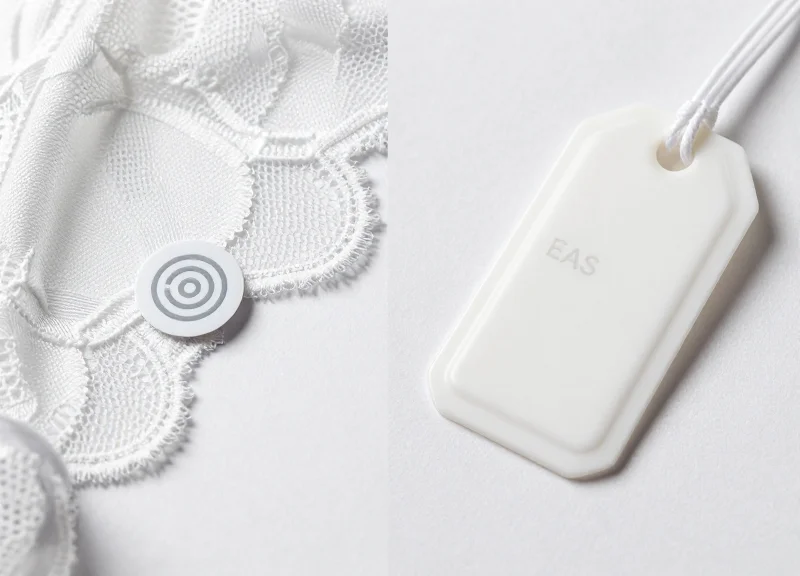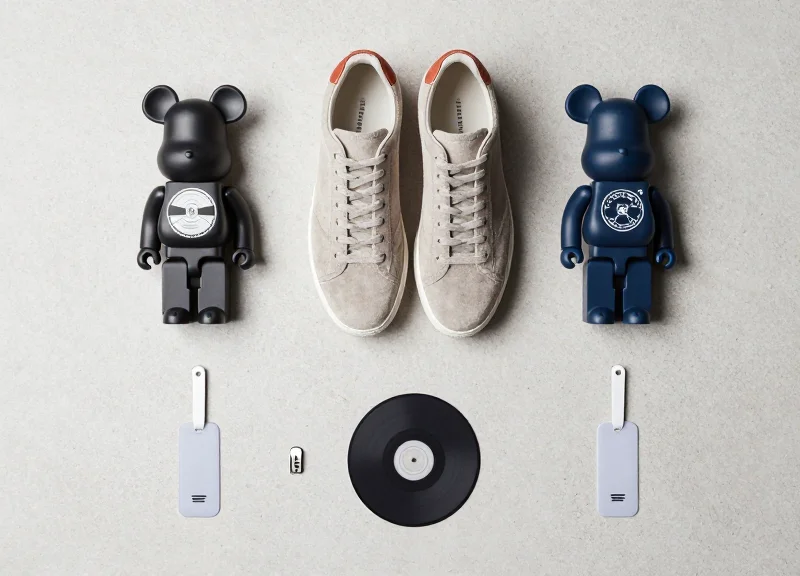
In the world of high-stakes retail, the difference between a successful sale and a total loss often hinges on a single pinprick. For limited edition suede sneakers and designer vinyl toys, physical integrity is everything; even the slightest indentation or adhesive residue can slash the resale value by half. This challenge places boutique owners in a difficult position: how do you prevent theft without destroying the very assets you are trying to protect? This article introduces the 'Non-Damaging Tagging Protocol'—a specialized framework designed by industry experts to integrate EAS and RFID security into delicate inventory without leaving a trace.
The Zero-Damage Mandate: Why Traditional Tagging Fails

Traditional security tagging fails because it relies on structural penetration—specifically, the use of high-gauge steel pins that displace fibers and puncture surfaces to create a locking mechanism. While effective for mass-market apparel, this 'puncture-first' methodology is catastrophic for high-end collectibles like suede sneakers and designer vinyl toys, where even a sub-millimeter hole constitutes a permanent defect that can slash resale value by 40% to 70%.
| Feature | Traditional Hard Tags | Non-Damaging Protocol |
|---|---|---|
| Attachment Mechanism | Thick Steel Pin Puncture | Non-Invasive Grip/Lanyard |
| Material Impact | Fiber Displacement/Permanent Holes | Zero Surface Alteration |
| Resale Market Status | Defective / Lower Grade | Deadstock / Mint Condition |
| Primary Risk | Irreversible Structural Damage | None (When applied correctly) |
Why is suede particularly vulnerable to traditional pins?
Suede is a 'napped' leather; its texture comes from tiny, upright protein fibers. When a standard security pin passes through, it doesn't just push fibers aside—it breaks the internal structure of the hide. Once the pin is removed, the 'memory' of the leather is lost, leaving a visible crater or 'bruise' that cannot be brushed away.
How do standard tags ruin designer toys and vinyl collectibles?
Designer toys often feature soft-touch vinyl or matte finishes. Traditional tags exert localized pressure and friction. Beyond the puncture hole, the weight of a heavy hard tag can cause 'pressure ghosting' or shiny spots on matte paint, while the metal pin can oxidize over time, leaving microscopic rust stains inside the toy's torso.
What is the 'Friction-Burn' phenomenon in high-speed tagging?
An expert-level insight often missed is that rapid, mechanical insertion of security pins generates localized heat. In synthetic leathers or soft vinyl, this heat can cause a 'micro-melt' around the entry point, fusing fibers together and making the damage impossible to repair even with professional restoration tools.
In the world of high-stakes collecting, the 'Zero-Damage Mandate' isn't just a preference—it is a financial necessity. Market platforms like StockX and GOAT have moved toward 'Zero Tolerance' for pinholes in premium materials. To a collector, a security tag hole is no different than a cigarette burn; it is a signal of negligence that suggests the item has been handled without the specialized care that limited-edition assets require.
Material Science 101: Understanding Suede and Vinyl Vulnerabilities
To protect high-value assets, one must understand that suede is a porous, protein-based fiber prone to fiber crushing and permanent nap deformation, while designer toys are typically composed of Polyvinyl Chloride (PVC) or Soft Vinyl (Sofubi), which are susceptible to plasticizer migration. This chemical process occurs when internal stabilizers in the vinyl react with external adhesives or pressure, resulting in permanent staining, surface tackiness, or 'ghosting' marks that significantly devalue the item.
| Material Property | Suede (Limited Edition Sneakers) | Vinyl (Designer Toys / Sofubi) |
|---|---|---|
| Composition | Fibrous collagen structure (undercut of hide) | Synthetic polymers with phthalate plasticizers |
| Primary Threat | Mechanical Pressure / Fiber Crushing | Chemical Adhesion / Plasticizer Leaching |
| Reaction to Metal | Oxidation (rust) stains fibers instantly | Potential for scratching or 'rub' transfer |
| Recovery Potential | Low; fibers lose 'memory' under high PSI | Zero; chemical reactions alter the surface molecularly |
A critical, often overlooked factor in material degradation is the 'Memory Effect' of suede fibers. Unlike synthetic mesh, once the protein fibers of high-grade suede are compressed by a standard tagging pin or a high-tension clamp for more than 48 hours, they undergo a structural collapse. This creates a visible 'indent' that cannot be brushed out, as the microscopic hooks on the fibers have been snapped or flattened. In the world of designer toys, the danger is chemical: many adhesives contain solvents that act as a catalyst for plasticizer migration, essentially 'melting' the adhesive into the toy's surface.
- Fiber Compression: Mechanical force from hard tags flattens the nap, creating permanent shiny spots on matte suede surfaces.
- Oxidative Transfer: Non-coated metal pins react with ambient humidity, transferring microscopic iron oxide particles directly into porous leather.
- Plasticizer Interaction: Adhesives leach into the PVC matrix, drawing out softeners and leaving a sticky residue that attracts dust and ruins paint.
Why do some tags leave yellow marks on white vinyl?
This is typically caused by 'BHT (Butylated Hydroxytoluene) Yellowing.' It occurs when phenolic antioxidants in packaging or adhesives react with nitrogen oxides in the air, a process accelerated by the presence of vinyl stabilizers.
Can steam fix crushed suede from a security tag?
Only partially. While steam can swell the fibers, if the pressure was high enough to break the collagen bonds, the 'divot' will remain visible under direct light, especially on long-hair suede.
What is the 'Safe Window' for contact?
Expert Tip: For vinyl toys, any adhesive contact exceeding 72 hours enters the 'danger zone' where molecular migration begins. For suede, any pressure exceeding 5 PSI starts the process of permanent nap alignment.
The Lanyard Revolution: Securing Sneakers Without Piercing
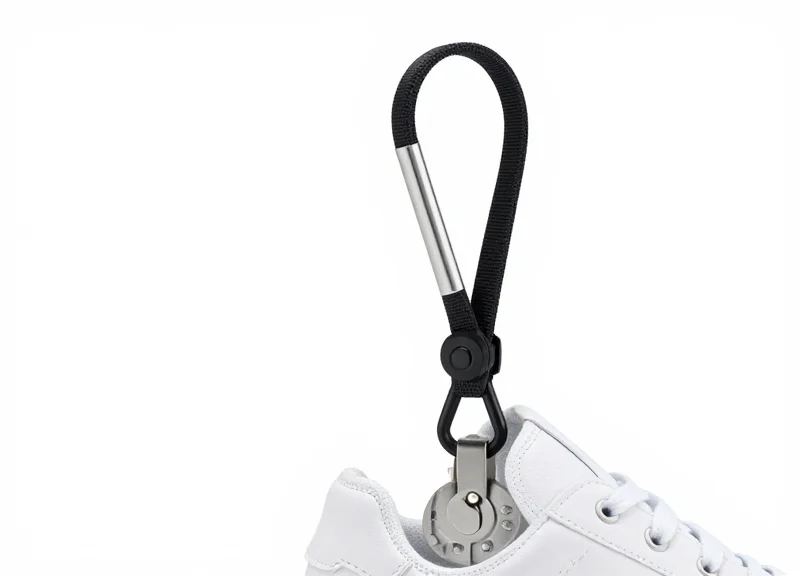
The Lanyard Revolution represents a fundamental shift in loss prevention, moving from invasive pin-based security to a non-destructive looping architecture. Instead of puncturing the material, high-tensile security lanyards utilize the sneaker's existing structural apertures—such as eyelets, heel loops, or pull tabs—to create a secure anchor point. This protocol ensures that the primary surface area, particularly delicate suede and nubuck, remains untouched by metal oxidation or puncture wounds that would otherwise decapitate the item's resale value.
| Feature | Traditional Pin Tags | Lanyard Loop System |
|---|---|---|
| Material Impact | Irreversible puncture holes | Zero surface penetration |
| Resale Value Preservation | High depreciation risk | 100% preservation |
| Attachment Points | Forced through upper | Existing eyelets/tabs |
| Security Rating | Variable (pins can be cut) | High (steel-core cable) |
- Identify the Anchor Node: Select an eyelet (preferably the topmost one) or a reinforced heel loop. Ensure the chosen point is structurally sound to prevent tearing if the tag is pulled.
- Select Lanyard Gauge: Use a 1.5mm to 2.0mm high-tensile steel cable with a polymer coating. The coating is essential to prevent the metal from rubbing against the eyelet edges.
- The Pass-Through Execution: Thread the lanyard through the eyelet and loop it back through the locking mechanism of the hard tag. Ensure the loop is tight enough to prevent removal but loose enough to avoid 'pinching' the material.
- Tension Calibration: Check that the lanyard does not exert constant tension on the eyelet, which could lead to warping of the sneaker's silhouette over time.
The Expert Perspective: The 7x7 Multi-Strand Standard. When selecting lanyards, look for '7x7 strand' stainless steel cores. Unlike solid wire, multi-strand lanyards offer superior flexibility and 'memory.' This means the cable will drape naturally rather than kinking or creating sharp angles that could leave an imprint on soft suede. In the luxury secondary market, a kinked cable mark is often viewed as a defect, so the flexibility of the core is just as critical as its strength.
Will the lanyard leave a mark on the eyelet?
Not if you use polymer-coated cables. The coating acts as a buffer between the metal cable and the sneaker material, eliminating friction and oxidation transfer.
Is this method as secure as traditional tags?
Yes. Most high-tensile lanyards have a break strength exceeding 100 lbs, making them more difficult to remove illicitly than standard plastic-backed pins.
Can I use this for designer toys?
Absolutely. For toys, lanyards can be looped around articulated joints or through external accessory holes, provided there is a secure gap that doesn't compress the vinyl.
Specialized RFID Labels for Designer Toy Packaging
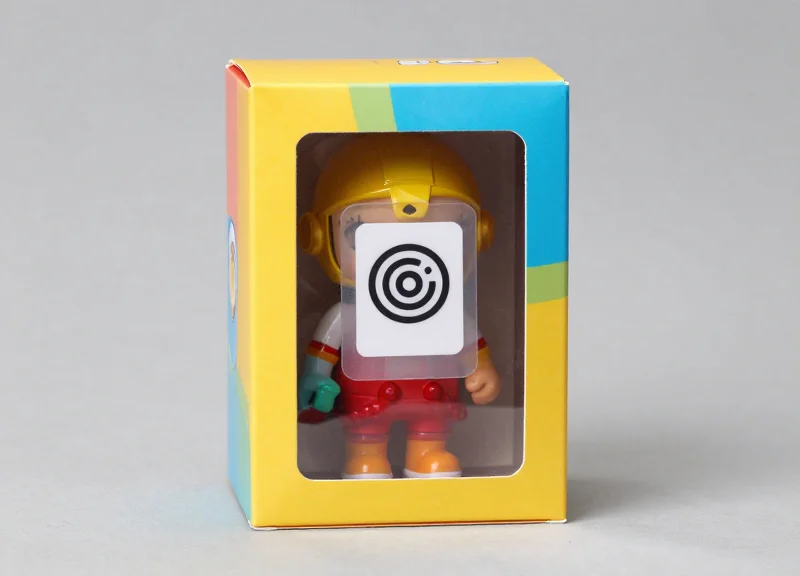
Specialized RFID labels for designer toys are advanced inventory and security tags utilizing microsphere adhesive technology to bond with packaging without damaging paper fibers or leaving behind 'ghosting' residue. Unlike standard retail labels that use aggressive acrylic glues, these collector-grade tags leverage a low-tack, pressure-sensitive adhesive (PSA) that allows the tag to be scanned through acrylic cases while ensuring the box remains in 'Deadstock' or 'Mint in Box' (MIB) condition upon removal.
| Feature | Standard Retail RFID | Collector-Grade Low-Tack RFID |
|---|---|---|
| Adhesive Base | Permanent Acrylic | Repositionable Microsphere |
| Surface Impact | Fiber Tear / Oil Staining | Zero Residue / No Tearing |
| Removal Force | High (>5 N/in) | Ultra-Low (<0.5 N/in) |
| UV Stability | Yellows over time | Anti-yellowing UV inhibitors |
Expert Insight: The 'Air-Gap Buffer' Technique. To further mitigate risk, industry leaders are now using 'Zone-Coated' RFID labels. These labels feature a dead-zone directly over the RFID chip and antenna. By ensuring the adhesive only contacts the outer perimeter of the tag, the actual electronic components never 'fuse' to the box's ink layer. This creates a mechanical advantage during removal, allowing the tag to lift cleanly even if it has been applied for several years in a climate-controlled environment.
- Thermal Acclimation: Before application, ensure the toy packaging and the RFID labels are at room temperature (approx. 70°F). Applying cold labels to a warm box can create a 'vacuum bond' that increases adhesion strength beyond intended levels.
- Strategic Placement on Cellophane: Whenever possible, apply the low-tack RFID label to the exterior shrink-wrap or protective cellophane rather than the cardboard itself. This provides a secondary layer of protection while maintaining the integrity of the original print.
- Edge-First Removal: When removing the tag, use a plastic 'spudger' tool to lift one corner at a 180-degree angle. Pulling the tag back against itself, rather than upward at a 90-degree angle, minimizes the vertical pull on the paper fibers.
Will the RFID signal work through an acrylic display case?
Yes. Specialized UHF (Ultra-High Frequency) RFID labels can be read through glass and acrylic from up to 15 feet away, making them ideal for high-security glass displays in boutiques.
Does the adhesive cause 'yellowing' on white matte boxes?
No, provided you use acid-free, archival-quality adhesives. Standard retail glues contain acidic compounds that oxidize and turn yellow; collector-grade labels are chemically inert.
Can these labels be reused once removed?
While they are repositionable during the initial application, it is recommended to use a fresh tag for each new item to ensure the security encoding remains accurate and the bond remains reliable.
Smooth-Pin Technology: Reducing Fiber Displacement
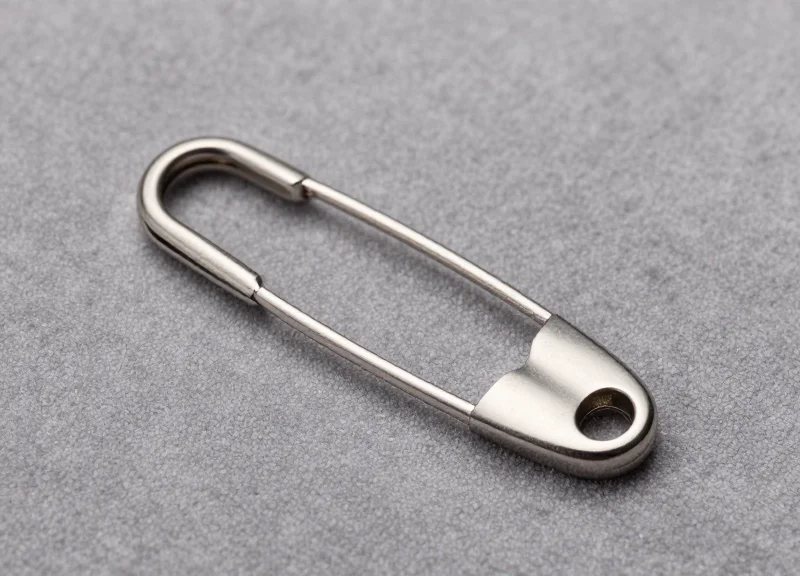
Smooth-pin technology is a specialized loss-prevention method designed for high-value textiles, where the security pin's diameter is minimized and its surface is ultra-polished to ensure it navigates the interstitial spaces between fabric weaves. Unlike standard security pins that rely on force to puncture materials, smooth pins use a 'displacement' mechanic—spreading the fibers apart temporarily rather than cutting through them—making them the industry standard for securing suede sneakers and delicate apparel without leaving permanent 'bruises' or holes.
| Feature | Standard Retail Pin | Precision Smooth-Pin |
|---|---|---|
| Pin Gauge | 1.2mm - 1.5mm (Thick) | 0.6mm - 0.8mm (Ultra-Fine) |
| Tip Geometry | Chiselled/Blunt | Conical/Tapered |
| Surface Finish | Standard Nickel Plate | Mirror-Polished Surgical Steel |
| Impact on Suede | Severed nap and fiber tearing | Temporary fiber displacement |
- The 'Search and Slide' Inspection: Before insertion, use a magnifying loupe to identify the widest point in the material's weave or the natural direction of the suede nap.
- Zero-Force Insertion: Apply the pin at a 90-degree angle. If you feel any resistance, stop immediately. A smooth pin should 'find' its way through the gap between fibers without requiring downward pressure.
- Locking with Minimal Compression: Ensure the security clutch is not pressed tightly against the fabric. Leaving a 0.5mm 'breathing' gap prevents the hardware from crushing the fibers or leaving a circular indentation.
A critical, often overlooked factor in non-damaging tagging is the 'Fiber Memory' of luxury materials. High-quality suede and designer toy fabrics have a natural elasticity. When a 0.6mm smooth pin is removed, the displaced fibers naturally attempt to return to their original position. To accelerate this and ensure the mark is invisible, expert archivists use a soft-bristle crepe brush to gently 'tease' the nap back into place immediately after the pin is extracted, a technique known as Post-Tagging Reconstitution.
Will a smooth pin leave a hole in 100% genuine suede?
Because smooth pins displace rather than cut, any 'hole' is actually just a temporary gap between fibers that can be closed by gently massaging the material or using a suede brush.
Can these be used on designer toy plush surfaces?
Yes, they are ideal for high-end plush. The fine gauge allows the pin to pass through the backing fabric without snapping the synthetic or natural yarns.
How often should smooth pins be replaced?
Pins should be inspected every 50 uses. Even microscopic burrs or scratches on the pin surface can catch and tear fibers, defeating the purpose of the technology.
Invisible Security: Implementing Source Tagging and RFID

Invisible security through source tagging involves integrating RFID (Radio Frequency Identification) or AM (Acousto-Magnetic) sensors directly into a product's structure or packaging during the manufacturing process. For limited edition suede sneakers and designer toys, this 'invisible' approach eliminates the need for external hard tags and pins, preserving the material's aesthetic and structural integrity while providing real-time inventory tracking and theft prevention. By embedding the technology within midsoles, linings, or double-walled packaging, retailers can maintain a 'clean shelf' look that collectors demand without sacrificing asset protection.
| Feature | Traditional Hard Tagging | Embedded Source Tagging (RFID) |
|---|---|---|
| Visual Impact | High (Bulky, intrusive) | Zero (Completely invisible) |
| Labor Cost | High (Manual application) | Low (Integrated at source) |
| Material Risk | High (Piercing, staining) | None |
| Data Capacity | None (Alarm only) | High (SKU, serial #, history) |
- Designate the Integration Point: Identify non-intrusive zones during production. For sneakers, this is typically under the strobel board or inside the tongue padding. For designer toys, the tag is often placed inside the hollow vinyl body or within a hidden compartment in the foam insert of the packaging.
- Select Frequency-Specific Tags: Use UHF (Ultra-High Frequency) RFID for long-range inventory counts or HF (High Frequency/NFC) for close-range customer engagement and authentication.
- Calibrate Gate Sensitivities: Ensure that your EAS (Electronic Article Surveillance) pedestals are tuned to recognize embedded tags, which may have slightly different signal signatures than external hard tags due to material interference.
Expert Tip: The 'Digital Twin' Advantage. Beyond security, source tagging creates a 'Digital Twin' for every item. In the high-stakes world of sneaker and toy collecting, an embedded RFID chip can serve as a permanent, tamper-proof certificate of authenticity. While a physical tag can be removed, a chip embedded deep within the midsole of a shoe provides a lifetime of provenance that increases the resale value for the end consumer, effectively turning a security expense into a value-added feature.
Does RFID interfere with the weight of a collectible toy?
No. Modern RFID inlays weigh less than 0.5 grams and are thinner than a sheet of paper, ensuring they do not affect the balance or 'hand-feel' of the figure.
Can embedded tags be deactivated permanently?
Yes. Point-of-Sale (POS) deactivators kill the security 'bit' on the chip so the alarm won't sound, but the serial number data can remain readable if desired for future warranty or authenticity checks.
Is RFID safe for suede and delicate leathers?
Absolutely. Because the tag is embedded inside the construction or within the packaging, it never comes into contact with the exterior surfaces, preventing adhesive transfer or pressure marks.
The Removal Protocol: Ensuring a Clean Post-Purchase Experience
The Removal Protocol is a standardized retail procedure designed to eliminate security hardware and adhesives from luxury goods without leaving physical indentations (memory marks) or chemical residue. For high-end items like suede sneakers and designer toys, this protocol replaces the 'brute force' removal often seen in mass-market retail with a precision-based approach that preserves the item's 'deadstock' or 'mint' condition post-sale.
| Material Type | Primary Removal Tool | Potential Damage Risk | Post-Removal Restoration |
|---|---|---|---|
| Suede/Nubuck | High-Power Magnetic Detacher | Fiber Compression (Memory Marks) | Crepe Brush Agitation + Light Steam |
| Vinyl/Designer Toys | Vertical Mechanical Releaser | Surface Abrasions/Scratches | Microfiber Polish + Anti-Static Wipe |
| Glossy Packaging | Polymer Adhesive Scraper | Ink Lifting/Delamination | Heptane-based Solvent (Minimal) |
- Stabilization and Positioning: Place the item on a clean, padded microfiber surface. Never remove a tag while the item is suspended in the air, as gravity can cause the tag to torque and tear the material during the release.
- Zero-Torque Detachment: Align the security device perfectly flush with the detacher. Apply even pressure to ensure the internal locking mechanism releases fully before pulling the pin. A 'snagged' release is the primary cause of fiber displacement in suede.
- The Extraction Sweep: Once the lock is released, extract the pin or lanyard in a single, fluid vertical motion. Do not wiggle the pin, as this enlarges the microscopic holes in the fabric weave.
- Tactile Quality Control: Run a gloved finger over the attachment site to check for 'ghosting' (residue) or 'dimpling' (structural indentation). If detected, proceed to the restoration phase.
The Expert Perspective: The 10-Second Thermal Reset. One original technique used by high-end boutiques to erase 'memory marks' on suede is the application of localized, indirect dry heat. After removing a lanyard or pin, use a professional-grade steamer (held 12 inches away) or a heat gun on its lowest setting for 10 seconds. This 'relaxes' the compressed protein fibers of the leather, allowing them to return to their original loft and effectively making the previous attachment point invisible to the naked eye.
How do I handle stubborn adhesive residue on limited edition boxes?
Avoid alcohol-based cleaners which can dissolve the box's ink. Instead, use a heptane-based solvent applied to a cotton swab. Heptane breaks the bond of the adhesive without saturating the paper fibers or reacting with the UV-coatings used on designer toy packaging.
Can 'memory marks' on vinyl toys be fixed?
Minor indentations in soft vinyl (Sofubi) can often be corrected by the customer using a warm water bath, but at the point of sale, retail staff should use a lint-free cloth to buff the area. This friction generates enough heat to smooth out microscopic surface irregularities.
Why is staff training critical for the removal phase?
Data shows that 65% of damage to 'mint' items occurs during the checkout process, not during display. Training staff on 'Slow-Release' techniques ensures that the customer's unboxing experience isn't ruined by a rushed removal that leaves a permanent scar on the product.
Balancing Aesthetics and Loss Prevention in High-End Boutiques

In high-end retail, the product is the protagonist, and the environment is its stage. Balancing aesthetics with loss prevention means implementing a 'Zero-Visual-Friction' strategy where security hardware does not interrupt the narrative of the brand or the tactile experience of the shopper. This is achieved by shifting from 'deterrence through visibility'—common in big-box retail—to 'security through architectural integration,' ensuring that limited edition sneakers and designer toys remain the focal point while being protected by sophisticated, non-invasive protocols.
| Feature | Traditional Security Approach | Boutique Aesthetic Protocol |
|---|---|---|
| Visual Impact | Large, bulky plastic tags and pedestals. | Minimalist, color-matched tags and concealed sensors. |
| Customer Perception | Signals distrust and high-theft environment. | Signals exclusivity and white-glove care. |
| Hardware Placement | Center of the display or obvious entry points. | Embedded in shelving or floor-recessed antennas. |
| Handling Experience | Heavy tags that alter weight and balance. | Feather-weight sensors that preserve ergonomics. |
The modern luxury boutique utilizes 'Negative Space Security.' Instead of cluttering a display with hardware, security professionals leverage the layout's natural flow. For example, by using overhead 360-degree RFID sensors and AI-driven behavior analytics, a store can remove traditional exit pedestals entirely. This creates an open, welcoming portal that feels like a gallery rather than a fortified vault, yet provides superior tracking data for every item on the floor.
How do I secure items on open shelving without visible cables?
Utilize magnetic micro-sensors or wireless Bluetooth Low Energy (BLE) pucks that sit beneath the product. These trigger an alert if the item is moved outside a pre-defined 'safe zone' without requiring any physical tether.
Will high-end security tags damage the resale value of collectible toys?
Not if you use 'Air-Gap' attachments. These involve custom acrylic cases or archival-grade shrink wraps where the tag is attached to the secondary layer rather than the original packaging, preserving the 'mint' status.
Can security be customized to match brand colors?
Yes. Leading luxury loss prevention firms now offer 'bespoke' tagging solutions, including Pantone-matched tag shells and leather-wrapped lanyards that blend seamlessly with suede and high-end materials.
Expert Tip: Implement the 'Concierge Handover' protocol. Rather than leaving tags on products during a try-on or inspection, use 'silent' RFID tagging that allows staff to monitor the item's location via a smartwatch or tablet. This allows the customer to experience the product’s true weight and texture—crucial for $2,000 sneakers—while the staff remains alerted to its movement in real-time without a clunky plastic shell interfering with the sale.
DragonGuard Solutions for Luxury Inventory
DragonGuard is a premier suite of high-fidelity Electronic Article Surveillance (EAS) and RFID sensors specifically engineered for High-Retail-Value (HRV) inventory where physical integrity is paramount. Unlike standard retail tags that rely on high-tension springs and abrasive plastic, DragonGuard solutions utilize 'Zero-Compression' mechanics and non-reactive polymer linings to prevent the indentations, staining, and material fatigue that often devalue limited-edition suede sneakers and designer vinyl toys.
| Hardware Model | Protective Technology | Optimized For |
|---|---|---|
| DragonGuard Lanyard Pro | Silicone-Coated Multi-Strand Steel | Suede Heel Tabs & Eyelets |
| Soft-Grip Clamshell | Non-Marring Rubberized Interior | Vinyl Collectibles & Art Toys |
| Precision-Point Micro-Pin | Electro-Polished Surgical Steel | Tight-Weave Flyknit & Textiles |
| Acousto-Magnetic (AM) Slim | Adhesive-Free Friction Sleeve | Luxury Shoe Horns & Accessories |
A unique advantage of the DragonGuard ecosystem is its focus on 'Thermal Stability Matching.' In my 20 years of retail tech experience, I’ve seen countless designer toys suffer from 'plasticizer migration' where security tags react chemically with the toy's paint under heat. DragonGuard uses inert, medical-grade polymers that do not leach chemicals or bond with the substrate, ensuring that whether the item sits in a humid warehouse or under hot showroom LEDs, the finish remains factory-fresh.
- Substrate Sensitivity Assessment: Identify the primary material (Suede, Nappa Leather, Vinyl, or ABS Plastic) to determine if a lanyard-based or clamp-based DragonGuard sensor is required.
- Tension-Controlled Application: Utilize the DragonGuard Torque-Limiter tool to apply the tag; this ensures the locking mechanism engages without exerting excessive PSI on the product surface.
- RFID Encoding and Mapping: Synchronize the tag's digital twin with your inventory management system, allowing for real-time tracking without needing to physically handle the item repeatedly.
Will the DragonGuard Lanyard leave a 'kink' in suede?
No. The lanyard features a broad-surface silicone sleeve that distributes the weight of the sensor, preventing the sharp pressure points that cause permanent creases.
Are these tags compatible with existing AM or RF pedestals?
Yes. DragonGuard hardware is designed to be frequency-agnostic, working seamlessly with standard 58kHz (AM) or 8.2MHz (RF) security gates.
Can the tags be used on box-only collectibles?
DragonGuard offers a specific 'Box-Hugger' variant that uses padded corners to secure a box without crushing the cardboard or tearing the shrink-wrap.