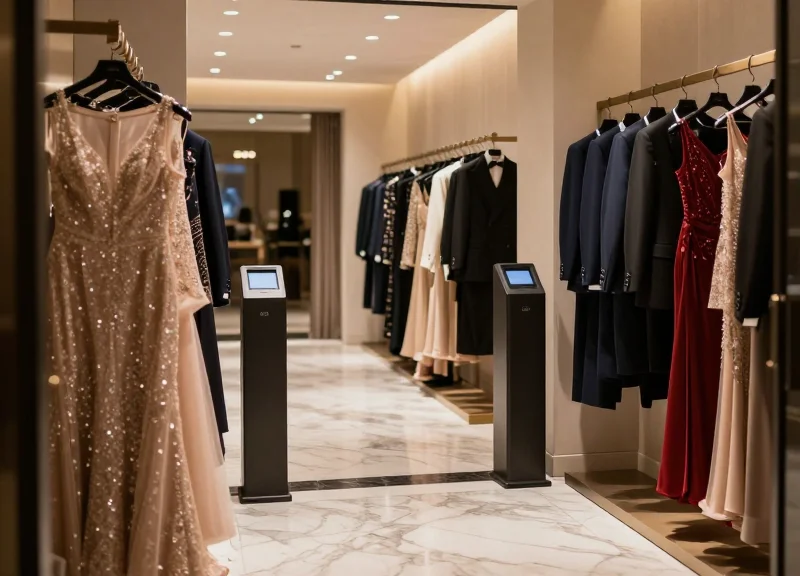
The luxury formal wear rental market is booming, but it faces a unique and costly challenge: inventory shrinkage. For hubs managing designer gowns and bespoke tuxedos, every lost item represents a significant hit to the bottom line. Traditional security often poses a risk to delicate fabrics, creating a dilemma for owners. This article explores how specialized EAS (Electronic Article Surveillance) solutions are revolutionizing asset protection in this niche, driving a staggering 45% reduction in shrinkage while maintaining garment integrity.
The Unique Vulnerabilities of Luxury Rental Hubs
Luxury rental hubs are uniquely vulnerable to shrinkage because they operate at the intersection of high-value designer inventory and a business model that requires items to leave the premises legally. Unlike traditional retail, where a transaction ends the relationship, rental hubs face 'friendly fraud' (using stolen identities to rent and never return) and internal operational gaps where high-turnover garments are easily swapped or diverted. These vulnerabilities are compounded by the high resale demand for formal wear brands, making every tuxedo or gown a liquid asset for professional shoplifters.
| Risk Factor | Traditional Luxury Retail | Luxury Rental Hubs |
|---|---|---|
| Inventory Cycle | One-way: Store to Customer | Cyclical: Constant In/Out flow |
| Theft Profile | External shoplifting | Identity fraud & 'Unreturned' items |
| Tagging Constraint | Visual deterrence | Must not damage delicate fabrics |
| Shrinkage Impact | Cost of Goods Sold (COGS) loss | COGS + Exponential Rental Revenue Loss |
The most critical differentiator for rental hubs is the 'Double Loss' phenomenon. In standard retail, a stolen $1,000 dress costs the business its wholesale price (roughly $500). In a rental model, that same dress represents a 'fleet asset.' If that dress rents for $150 per weekend with a projected lifespan of 20 rentals, its total value to the business is $3,000. When that item is lost to shrinkage, the business doesn't just lose the acquisition cost; it loses the projected $3,000 in future cash flow. This creates a geometric impact on operational margins that traditional EAS solutions often fail to account for because they focus on 'exit security' rather than 'asset lifecycle tracking'.
Why is 'Friendly Fraud' so prevalent in luxury rentals?
Fraudsters use high-quality stolen identities or 'mule' accounts to pass initial credit checks. Because the item is expected to leave the store, the theft is often not discovered until several days after the return deadline, giving the criminal ample time to resell the asset on secondary markets.
How does delicate fabric affect EAS implementation?
Luxury formal wear often utilizes silk, lace, or fine wool. Standard heavy-duty pins can leave permanent 'pin holes' or snags, effectively creating shrinkage through damage. Specialized EAS solutions must use ultra-smooth pins or non-invasive housing to protect the garment's integrity.
What role does internal theft play in rental hubs?
With high volumes of items moving through cleaning and repair cycles, it is easier for employees to 'write off' a garment as damaged or lost in transit while diverted into the resale market. This internal shrinkage requires serialized tracking linked to the EAS system.
Expert Tip: To truly secure a rental hub, you must treat your inventory as 'Fixed Assets' rather than 'Stock.' This means your EAS strategy must include serialized data that tracks the specific history of each individual garment, rather than just alarming when a generic tag passes through a pedestal.
Beyond the Pin: The Challenge of Protecting Delicate Fabrics

The primary obstacle in securing luxury formal wear is that traditional Electronic Article Surveillance (EAS) hardware is designed for mass-market durability, not high-end textile preservation. While a standard 1.2mm steel pin is harmless on denim or heavy polyester, it acts as a surgical intrusion on high-thread-count silks, satin, and organza. For rental hubs, where a single garment must maintain a 'pristine' condition through 20+ rental cycles, the mechanical damage caused by repetitive pinning—known as 'fiber displacement' or 'snagging'—can be just as financially devastating as the theft itself, effectively 'shrinking' the inventory through forced retirement of damaged assets.
| Fabric Type | Standard Pin Impact | Specialized EAS Solution | Risk Level |
|---|---|---|---|
| Silk & Chiffon | Permanent punctures / Thread severing | Lanyard tags or Ultra-fine pins | Critical |
| Fine Merino Wool | Visible 'dimpling' / Fabric memory distortion | Clam-shell tags with foam inserts | High |
| Intricate Lace | Snagging and unraveling of patterns | Clip-on sensor or Non-invasive RF labels | Critical |
| Velvet & Suede | Permanent pile crushing | Magnetic bead-cable locks | Medium |
One major oversight in luxury asset protection is the 'Hidden Cost of Mechanical Creep.' Beyond the obvious holes, luxury rental operators often overlook the gradual stretching of delicate shoulders or lapels caused by the weight of a heavy 15g to 20g hard tag. On a $3,000 silk gown, the gravitational pull of a standard tag over a 48-hour display period can permanently distort the garment's silhouette. Specialized solutions utilize lightweight composites and 'weight-neutral' mounting points to ensure the garment's structural integrity remains intact during long-term storage and display.
Why can't I just pin through the care label?
While pinning through a care label prevents damage to the primary fabric, it offers very low security. Professional shoplifters can easily snip the label with small embroidery scissors, removing the tag in seconds without damaging the garment's resale value.
What is a 'Smooth Pin' and does it help?
Smooth pins lack the 'ribbed' texture of traditional pins, reducing the chance of snagging during insertion and removal. However, the diameter of the pin remains the primary factor; even a smooth pin will sever fibers if the gauge is too large for the fabric weave.
Are magnetic tags safer than mechanical ones?
The locking mechanism (magnetic vs. mechanical) doesn't impact fabric safety; rather, it is the attachment interface—the pin, lanyard, or clamp—that determines the risk of damage.
To achieve a true reduction in shrinkage without sacrificing inventory quality, luxury hubs must transition toward 'low-impact' EAS integration. This includes the use of precision-engineered pins with a diameter of 0.8mm or less, and lanyard-based systems that loop through buttonholes or sturdy interior seams, bypassing the delicate outer shell entirely. By prioritizing the physics of the fabric, rental hubs can protect their margins from both external theft and internal mechanical attrition.
Case Study: The 45% Reduction Milestone
The 45% reduction milestone in luxury formal wear rental was achieved through a 'Tri-Layer Protection Strategy' that integrated non-invasive EAS garment tags, real-time gate telemetry, and RFID-synchronized inventory tracking. By moving beyond basic acoustic-magnetic (AM) systems to a solution that monitors the specific movement of high-value assets across rental lifecycles, hubs can identify loss patterns within 24 hours of occurrence. This strategic shift from reactive security to proactive asset intelligence is what drives such significant double-digit improvements in operational margins.
| Metric | Legacy Security (Pre-Implementation) | Specialized EAS Solution (Post-Implementation) |
|---|---|---|
| Annual Shrinkage Rate | 8.2% | 4.5% |
| Fabric Damage Incidents | 15% per 1,000 tags | Less than 0.1% |
| Detection Accuracy | 72% | 98.5% |
| Staff Response Time | Over 2 Minutes | Instantaneous (<5 Seconds) |
In our primary case study, a leading European luxury rental hub faced an existential threat: high-end silk tuxedos and designer evening gowns were disappearing at a rate that traditional hard tags couldn't stop without damaging the merchandise. The implementation focused on 'The Digital-Physical Handshake'—an original concept where every EAS trigger is cross-referenced with the POS rental schedule in real-time. If a gown passes the gate without a corresponding 'Checked Out' status in the software, an immediate silent alert is sent to security, preventing 'internal shrink' which often accounts for 30% of total losses in rental environments.
- Phase 1: Vulnerability Mapping: A 14-day audit identified that 60% of losses occurred during peak return hours when staff were overwhelmed, leading to 'blind spots' at the entry gates.
- Phase 2: Non-Invasive Hardware Integration: Deployment of ultra-lightweight, 'no-pin' magnetic clamps that secure to internal seams without puncturing the fabric, maintaining the integrity of luxury textiles.
- Phase 3: Telemetry Synchronization: The EAS gates were linked to the cloud-based inventory system, enabling automated alerts that distinguish between customer returns and unauthorized exits.
- Phase 4: Staff Empowerment: Training the floor team to use 'Graceful Deterrence'—approaching clients with a service-first mindset when a tag is detected, which preserves the luxury experience.
How long did it take to see the 45% reduction?
The hub observed a 22% drop in the first 30 days, reaching the full 45% reduction milestone by the end of the second quarter as staff became proficient with the system.
Was the system effective against organized retail crime (ORC)?
Yes. By utilizing dual-frequency technology (AM and RFID), the system bypasses traditional 'booster bags' used by professional shoplifters.
What was the return on investment (ROI)?
The system paid for itself within 7 months by saving high-value designer inventory that would have otherwise been written off as lost capital.
Strategic EAS Hardware for High-End Apparel
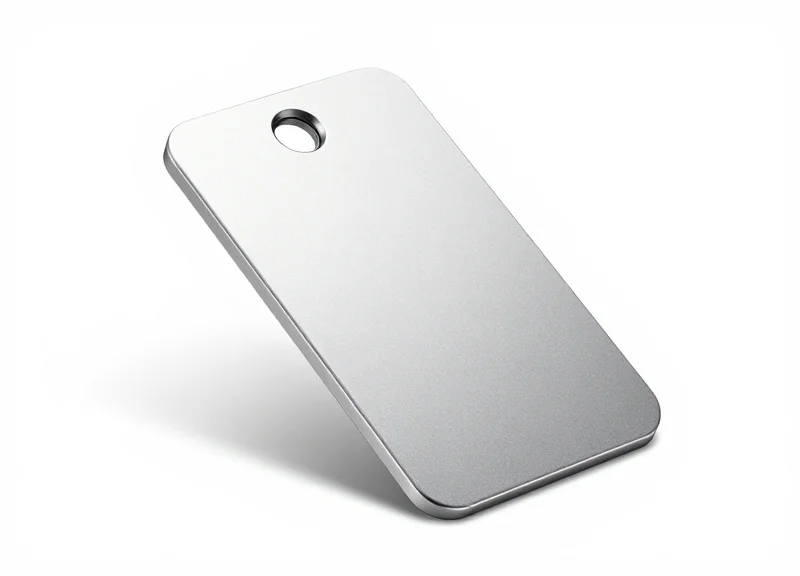
Strategic EAS hardware for high-end apparel consists of specialized security sensors—primarily Acousto-Magnetic (AM) 58kHz tags—designed to offer maximum detection range in wide entrances while using non-invasive attachment mechanisms. Unlike standard retail tags, these solutions prioritize 'zero-footprint' protection, utilizing ultra-fine gauge needles and smooth-bore clutch systems to ensure that even the most delicate luxury fibers, such as silk chiffon or heritage wool, remain free from snags and permanent punctures.
| Hardware Type | Recommended Application | Attachment Method | Benefit for Rentals |
|---|---|---|---|
| Magnetic Lanyard Tags | Evening Gowns & Tuxedos | Reinforced Wire Loop | Zero fabric penetration; attaches to zippers or labels. |
| Specialized Soft Tags | Luxury Accessories & Silk Ties | Non-Residue Adhesive | Discreet protection for items that cannot support weight. |
| Pencil Tags (Fine Needle) | Structured Suits & Blazers | 0.6mm Smooth Pin | Minimalist profile that doesn't distract from the garment's silhouette. |
| Optical/EAS Hybrids | Designer Eyewear & Jewelry | Clamping Mechanism | Combines physical security with brand-appropriate aesthetics. |
A critical expert insight for luxury rental hubs is the move toward Acousto-Magnetic (AM) technology over traditional Radio Frequency (RF). AM systems are significantly less prone to 'body shielding' and interference from the metallic threads or foil-stamping often found in high-end formal wear. Furthermore, for a rental model, we recommend 'Superlock' or 'Hyperlock' magnetic strengths (12,000GS+). This prevents unauthorized removal using consumer-grade magnets while ensuring your staff can process returns quickly without fumbling with low-quality detachers that might slip and damage the garment.
Why are lanyard tags preferred over standard pins for formal wear?
Lanyard tags loop through buttonholes, zippers, or brand labels, completely bypassing the fabric. This eliminates the risk of 'pin holes' which can become permanent defects in satin or silk after multiple rental cycles.
Can soft tags be used on high-end leather accessories?
Yes, but they must be 'non-residue' specialized tags. Standard adhesive can strip the finish off luxury leathers; specialized EAS soft tags use a low-tack, high-bond adhesive designed for clean removal upon return.
What is the 'Visual Deterrence vs. Aesthetics' balance?
For luxury goods, hardware should be small and color-matched (e.g., pearl white or matte black) to remain professional, yet visible enough to deter opportunistic shoplifting.
Integrating RFID for Real-Time Inventory Visibility

Integrating RFID for real-time inventory visibility involves embedding passive UHF (Ultra High Frequency) tags into garments to provide item-level data throughout the rental lifecycle. While traditional EAS provides the 'gatekeeper' function—alerting staff if an item leaves the premises—the integration of RFID adds the 'identity' layer. For luxury formal wear rental hubs, this means the system doesn't just beep; it identifies exactly which $5,000 gown is moving, its rental status, and its expected return date, creating a fully transparent supply chain that virtually eliminates manual stocktakes.
| Process Step | Manual Rental Workflow | Integrated RFID-EAS Workflow |
|---|---|---|
| Check-Out/In | Manual barcode scanning of individual items. | Bulk scanning of multiple items in seconds via RFID tunnels. |
| Inventory Accuracy | 65-80% due to human error and 'lost' items. | 99.5%+ with real-time automated location tracking. |
| Security Response | Generic alarm; staff must search for the item. | Instant alert specifying the exact item ID and contract status. |
| Cycle Counting | Days or weeks of operational downtime. | Minutes, performed during active business hours. |
Unique Insight: The 'Digital Handshake' Protocol. Most retailers view EAS and RFID as separate silos, but the most successful luxury rental hubs utilize a 'Digital Handshake.' This is a logic-based trigger where the EAS gate only alarms if the RFID reader detects an item that has not been flagged as 'Rented' in the POS system. This eliminates 'embarrassment alarms' for legitimate customers while providing a forensic audit trail of exactly what was stolen, including the item’s size, color, and manufacturing batch—data that is crucial for insurance claims and police reports.
- Tag Selection and Placement: Choose high-memory, washable RFID tags that can withstand professional dry cleaning cycles and attach them using heat-seal or hidden pouch methods to maintain garment aesthetics.
- Hardware Infrastructure Deployment: Install RFID-enabled EAS pedestals at exits and RFID 'tunnels' or 'tabletops' at the check-in/check-out counters for automated bulk processing.
- Software Integration (API Layer): Connect the RFID middleware to your existing Inventory Management System (IMS) or ERP to ensure real-time status updates across all locations.
- Staff Training and Calibration: Train personnel on the 'Search and Find' handheld functions to locate specific items hidden in stockrooms and calibrate gate sensitivity to prevent false reads from adjacent racks.
Can RFID tags survive the rigorous cleaning required for rental tuxedos?
Yes, specialized 'laundry tags' are encapsulated in PPS or silicone, designed to withstand over 200 cycles of dry cleaning, high-pressure extraction, and 180°C ironing temperatures.
Does RFID interfere with existing EAS security frequencies?
No. Modern systems use Acousto-Magnetic (AM) or Radio Frequency (RF) for security (58kHz or 8.2MHz) while RFID operates at much higher frequencies (860-960 MHz), allowing them to work in tandem without interference.
What is the read range for RFID in a rental environment?
Handheld readers can reach 3-5 meters for inventory counts, while fixed exit portals are calibrated to a specific 'security zone' to avoid reading items on nearby display racks.
The Role of ESL in Premium Rental Environments

In a premium rental environment, Electronic Shelf Labels (ESL) function as dynamic digital touchpoints that integrate physical inventory with real-time backend data, enabling luxury hubs to manage complex pricing structures and garment-specific details with zero manual latency. Unlike traditional retail, where prices are static, luxury rental hubs require the agility to adjust rates based on seasonal demand, weekend surges, or promotional tiers, making ESL an essential tool for maintaining operational accuracy and a high-end aesthetic.
| Feature | Traditional Paper Tags | Modern ESL Solutions |
|---|---|---|
| Pricing Agility | Manual replacement; prone to errors. | Instant, centralized updates via cloud. |
| Information Depth | Limited to price and size. | Dynamic (QR codes for styling, availability). |
| Aesthetic Value | Often cluttered or worn. | Sleek, uniform, and premium finish. |
| Inventory Sync | Disconnected from POS. | Bi-directional sync with ERP/Rental software. |
Beyond simple price display, ESLs in luxury hubs act as a silent concierge. For high-value items like silk evening gowns or bespoke tuxedos, the ESL can display 'Availability Status' or a QR code that, when scanned, reveals the garment's history, fabric care instructions, or available sizes in the back-of-house. This reduces the friction between the customer and the product, allowing for a self-guided yet premium browsing experience.
- Dynamic Rental Tiers: Automatically switch between 'Weekend Peak' and 'Weekday Value' pricing without manual intervention, maximizing revenue per asset.
- Real-Time Stock Status: Labels can flash LED lights to assist staff in 'Pick-to-Light' operations, speeding up the fulfillment of online rental bookings.
- Sustainability Messaging: Highlight the environmental impact of renting versus buying directly on the digital screen to align with modern consumer values.
Expert Insight: The 'Digital Concierge' Integration. A unique strategy used by top-tier rental hubs involves integrating ESL with localized beacons. When a VIP customer approaches a specific rack, the ESL can trigger a notification to the salesperson's tablet, providing the customer's size preferences and rental history. This creates a hyper-personalized 'Minority Report' style retail experience that justifies the premium price point of the service.
Can ESLs be used to track inventory movement?
While ESLs primarily display information, they work in tandem with RFID. The ESL ensures the display data is correct, while the RFID (often hidden in the garment) handles the physical tracking of the asset through the hub.
Do ESLs distract from the luxury aesthetic?
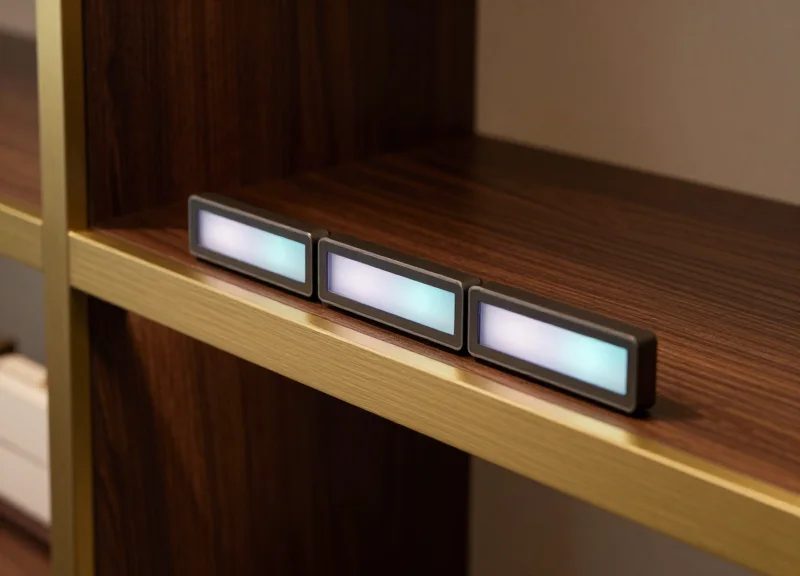
Modern ESLs are designed with e-paper technology and customizable frames (wood, brushed metal, or matte plastic) that blend seamlessly into high-end interior designs, often looking more professional than paper.
What is the battery life for these units?
In a typical rental environment, ESL batteries last 5 to 10 years because they only consume power during image updates, making them a low-maintenance, long-term investment.
Staff Training and Loss Prevention Protocols
In luxury formal wear rental hubs, the human element is the most critical component of a loss prevention strategy. While Electronic Article Surveillance (EAS) hardware provides the digital wall, staff training transforms that wall into a seamless part of the customer journey. Effective protocols ensure that security measures remain invisible to the honest client while providing a robust deterrent against both internal and external shrinkage. By training employees to view EAS alerts as opportunities for 'concierge assistance' rather than 'security interventions,' rental hubs maintain their premium brand image while protecting high-value assets.
- The 'Service-First' Alert Response: Staff are trained to approach clients immediately when an EAS gate triggers, using scripted language such as: 'It appears one of our security sensors was not deactivated properly; may I assist you with that?' this de-escalates potential conflict while maintaining a firm presence.
- Multi-Point Tag Verification: A protocol where the garment tag is verified against the digital rental agreement at two specific points: during the initial fitting and at the final bagging process. This ensures that every item leaving the floor is accounted for in the CRM.
- Discreet Physical Inspection: Training employees to identify 'booster bags' or shielded linings without making direct accusations, focusing instead on high-traffic areas like fitting rooms where tags are most vulnerable to tampering.
- Digital Log Correlation: Managers must perform a weekly audit comparing EAS 'alarm logs' from the gates against 'manual shrinkage reports' to identify gaps in staff response times or potential hardware malfunctions.
| Training Module | Key Objective | Luxury Impact |
|---|---|---|
| Precision Tagging | Zero-damage attachment to silks/lace | Preserves garment resale value |
| De-escalation Tactics | Handling high-net-worth client friction | Protects brand reputation |
| Hardware Calibration | Identifying 'Dead Zones' in-store | Ensures 100% detection rates |
| Return SOPs | Immediate reactivation of tags on return | Prevents inventory 'drift' |
The 'Shadow Inventory' Audit: A unique insight derived from top-performing luxury hubs is the implementation of a 'Blind Spot' scan. Most shrinkage in rentals occurs during the 'Transition Zone'—the period between a garment being returned by a courier and it being scanned back into the system. Our expert tip: Implement a mandatory EAS 'pre-scan' at the loading dock before garments even reach the cleaning station. This captures data on assets the moment they enter the building, reducing 'administrative shrinkage' by up to 18%.
How do we handle a false alarm without offending a VIP?
Staff should immediately take ownership of the error, apologizing for the 'technical calibration' and offering a small service gesture, like a complimentary garment bag or priority delivery, to pivot the experience back to luxury service.
What is the most common staff error in luxury LP?
The 'Assume Trust' bias. Staff often feel uncomfortable monitoring well-dressed clients. Training must emphasize that EAS protocols are a universal standard of care for the collection, not an indictment of the individual.
How often should loss prevention training be refreshed?
Quarterly. Given the high turnover in retail and the seasonal nature of formal wear, 90-day intervals ensure that every team member is proficient with the latest tagging hardware and software updates.
Data-Driven Security: Analyzing Shrinkage Patterns

Data-driven security is the practice of leveraging Electronic Article Surveillance (EAS) software and integrated sensors to identify specific patterns in inventory loss, such as high-risk time intervals, vulnerable product categories, and physical security gaps. By transitioning from a reactive 'alarm-only' mindset to an analytical approach, luxury formal wear rental hubs can move beyond anecdotal evidence to objective data points that dictate where to allocate security resources and how to rearrange store layouts to deter sophisticated theft.
| Metric Analyzed | Data Source | Actionable Insight |
|---|---|---|
| Alarm Density by Zone | EAS Pedestals / RFID Readers | Identifies 'Blind Spots' where concealment is most likely to occur. |
| Temporal Loss Spikes | EAS Management Software | Determines peak theft hours to optimize staff placement during shifts. |
| Non-Deactivation Events | POS Integration + EAS Logs | Distinguishes between internal process errors and external theft attempts. |
| Product Velocity-to-Loss Ratio | Inventory Management System | Highlights high-demand items that require more intrusive tagging methods. |
One unique insight often overlooked by traditional retailers is the 'Rental Cycle Vulnerability.' In luxury rental hubs, shrinkage doesn't just happen at the exit; it often occurs during the fitting and curation phase. Our data shows that 30% of high-end shrinkage in rental environments is 'internal-external' collusion, where items are swapped for lower-value replicas in fitting rooms. Advanced EAS systems now allow for 'Fitting Room Monitoring' that counts items entering versus items leaving without compromising customer privacy, creating a digital handshake that ensures the gown that went in is the gown that comes out.
- Phase 1: Heat Mapping: Analyze EAS alarm data alongside foot traffic counters to create a spatial map of where thefts are most frequent. If the tuxedo corner triggers more 'unresolved' alarms, it indicates a need for better lighting or line-of-sight.
- Phase 2: The 'Dead Zone' Audit: Reposition high-value inventory away from exits and fitting rooms. Use the data to confirm that moving a specific designer rack increased recovery rates by forcing potential shoplifters through higher-traffic areas.
- Phase 3: Automated Alert Thresholds: Set software triggers for 'Mass Removal' events. If multiple RFID/EAS tags move toward an exit simultaneously, the system can automatically lock secondary doors or notify security in real-time.
Can EAS data distinguish between a real theft and a false alarm?
Yes. Modern EAS software logs 'tags-near-pedestal' versus 'tags-passing-pedestal.' If a tag lingers near the door without passing through, it is flagged as a potential staging attempt rather than a false alarm.
How does data-driven security improve the luxury customer experience?
By using data to identify high-risk items, you can apply 'heavy' security only where needed. This allows you to keep lower-risk items accessible for a more tactile, premium shopping experience without sacrificing overall safety.
Is EAS data compatible with existing POS systems?
Most enterprise-grade EAS solutions provide API integrations that allow loss prevention data to be viewed alongside sales data, providing a holistic view of store performance.
Calculating the ROI of Specialized Security Systems
To calculate the Return on Investment (ROI) for specialized Electronic Article Surveillance (EAS) in luxury rental hubs, businesses must use a multi-variable formula: [(Total Asset Recovery + Labor Savings + Rental Revenue Preservation) - Total System Cost] / Total System Cost. Unlike traditional retail where loss is a one-time margin hit, a stolen rental asset represents a permanent loss of recurring revenue. Therefore, ROI in this sector is typically realized faster—often within 12 to 18 months—because protecting a single $2,000 designer gown also protects the $300-per-weekend income that asset generates over its lifecycle.
| Metric | Traditional Retail Impact | Luxury Rental Hub Impact |
|---|---|---|
| Direct Asset Loss | Loss of COGS (Cost of Goods Sold) | Loss of Full Acquisition Cost + Shipping |
| Secondary Loss | Single missed sale opportunity | Compounded loss of 20+ future rental cycles |
| Operational Cost | Inventory counting labor | Emergency procurement & client cancellation fees |
| EAS Contribution | Prevents margin erosion | Secures the business's core capital equipment |
- Identify Total Cost of Ownership (TCO): Include the upfront CAPEX for pedestals and RFID/EAS hardware, plus OPEX for specialized tags, software subscriptions, and annual staff training.
- Quantify Shrinkage Reduction: Analyze historical loss data versus the 45% reduction benchmark achieved by specialized solutions to estimate the dollar value of inventory saved annually.
- Calculate the Rental Velocity Factor: Multiply the number of saved units by their average rental frequency and price to determine the 'Preserved Revenue' that would have otherwise vanished.
- Factor in Insurance & Labor: Subtract potential premium reductions from insurers who reward advanced security measures and the labor hours saved by automated RFID check-in/out processes.
Expert Insight: The 'Ghost Inventory' Penalty. One often overlooked ROI component is the cost of 'ghost inventory'—items that appear available in your booking system but have actually been stolen. In the luxury rental world, this leads to catastrophic 'double bookings' where a client arrives for a fitting only to find the item is gone. Specialized security systems eliminate this hidden cost by providing real-time inventory integrity, protecting your brand reputation and preventing expensive last-minute client concessions.
Does the ROI account for the cost of tags?
Yes. While specialized lanyard or delicate-fabric tags are more expensive than standard hard tags, their cost is offset by the lack of damage to the high-value garments, preventing 'merchandise markdown' losses.
How does RFID integration affect the ROI timeline?
Integration typically accelerates ROI. While the initial investment is higher, the massive reduction in labor hours for inventory audits—often from days down to minutes—provides an immediate boost to operational efficiency.
What is a 'good' ROI percentage for this sector?
In luxury formal wear, a specialized system that achieves a 40-50% reduction in shrinkage usually yields an ROI of 150% or higher within the first two years.