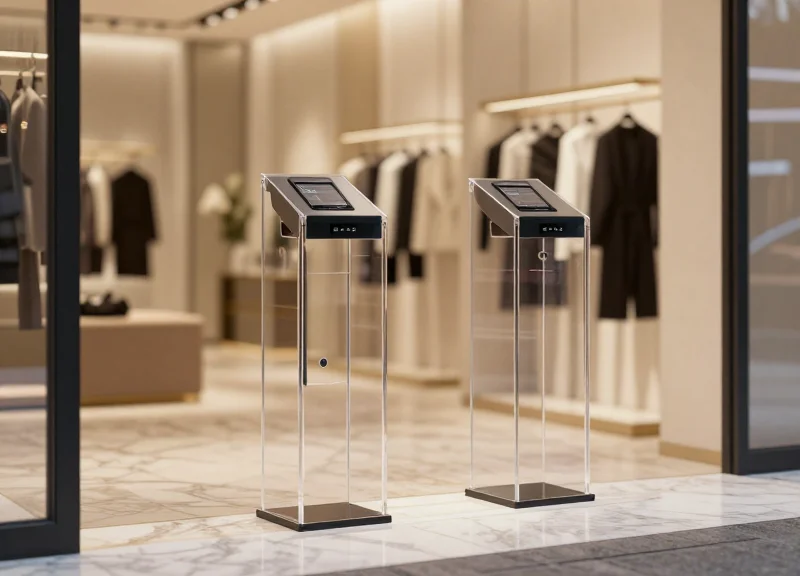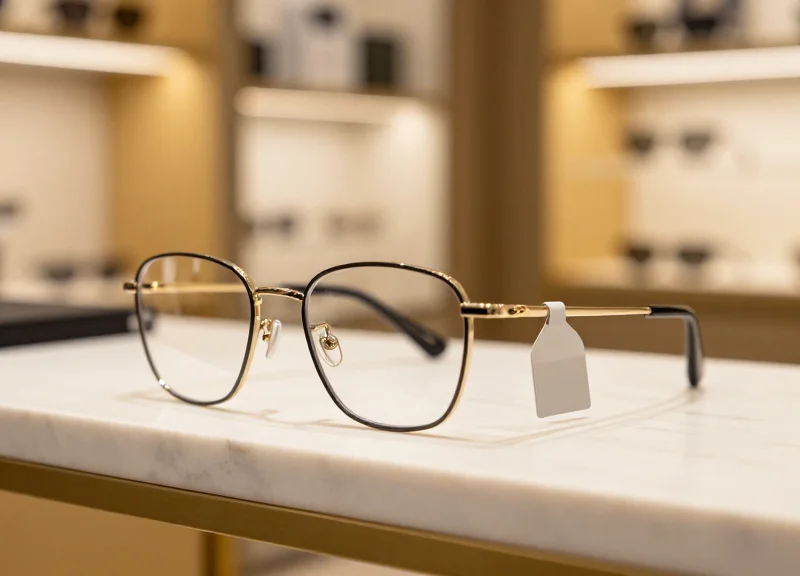
In the world of luxury retail, the brand experience is everything. However, as high-value eyewear and optical accessories become primary targets for organized retail crime, boutiques face a paradox: how to secure delicate products without ruining their aesthetic appeal. Traditional, bulky security tags often distort the fit of designer frames or clutter visual displays. As we look toward 2026, the industry is shifting toward ultra-lightweight, discreet solutions that offer maximum protection with minimal footprint. This guide explores the most advanced optical tags designed specifically for the high-end market, ensuring your inventory remains safe while your brand's elegance stays intact.
The Evolution of Optical Security in Luxury Retail
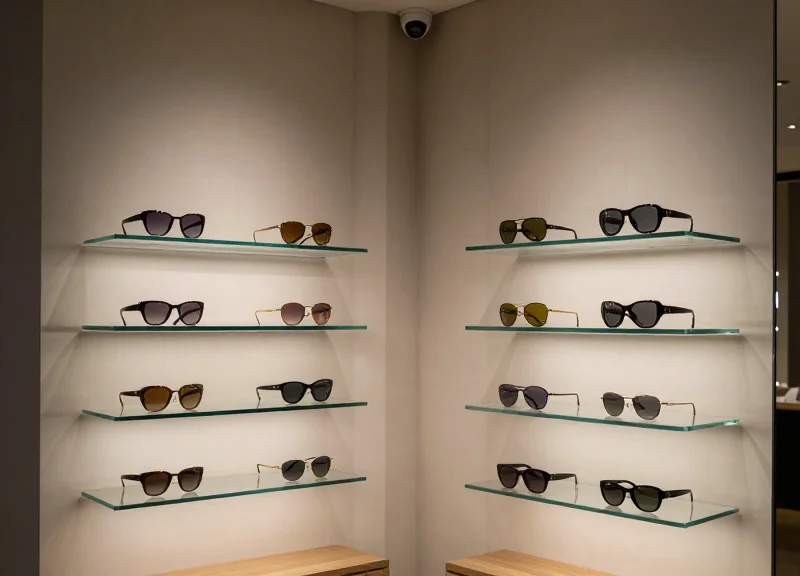
In 2026, the evolution of optical security in luxury retail is defined by the move from 'deterrence via bulk' to 'protection via precision.' Historically, high-end boutiques relied on heavy, plastic Electronic Article Surveillance (EAS) tags that physically distorted the drape of silk garments or damaged delicate eyewear frames. Modern optical security has evolved into ultra-light, multi-spectrum sensor technology that provides 99.9% detection accuracy while remaining nearly invisible to the consumer, ensuring that the brand’s aesthetic remains the primary focus of the shopping experience.
| Feature | The 'Legacy' Era (1990-2015) | The Hybrid Era (2016-2023) | The Optical Era (2024-2026+) |
|---|---|---|---|
| Average Weight | 15g - 25g | 8g - 12g | Under 3g |
| Visual Profile | Opaque, Bulky Plastic | Miniaturized Hard Tags | Crystal-Clear / Micro-Optical |
| Material Impact | Pinholes & Fabric Stretching | Reduced Mechanical Stress | Zero-Contact / Non-Invasive |
| Tech Backbone | Analog RF/AM | Digital RFID | Multi-Spectrum Optical + IoT |
Expert Insight: The 'Invisible Tax' on Luxury Dwell Time. Research in high-end retail psychology reveals that bulky security tags act as a subtle cognitive barrier. Customers are 15% less likely to interact with or try on an item if the security device looks cumbersome or difficult for staff to remove. By 2026, the leading boutiques have eliminated this 'invisible tax' by adopting tags that weigh less than a standard penny, effectively removing the psychological friction between the customer and the product.
- The Mechanical Phase: Security was purely physical. Heavy ink tags and thick plastic clamps were the industry standard, prioritized theft prevention over customer experience.
- The Miniaturization Phase: The introduction of ferrite-core mini tags allowed for smaller footprints, but they still required unsightly pins that could ruin delicate high-fashion textiles.
- The Optical Revolution: Modern tags use light-refraction sensors and polarized coatings. These tags are designed to blend into the item's design, using the store's own lighting environment to trigger alerts if the optical path is disrupted.
Why is optical security better for luxury items than RFID alone?
While RFID tracks inventory, optical tags provide immediate physical-layer security without the 'dead zones' or shielding issues often found with metallic luxury accessories or foil-lined packaging.
Do ultra-light tags compromise on strength?
No. By 2026, materials like carbon-fiber composites and reinforced polycarbonates allow these tags to be lighter while maintaining high pull-strength resistance.
How do optical tags improve the checkout process?
Most ultra-light optical tags now feature magnetic-free release mechanisms that are 40% faster for staff to operate, reducing wait times at the point of sale.
Why Weight and Aesthetics are Non-Negotiable for 2026
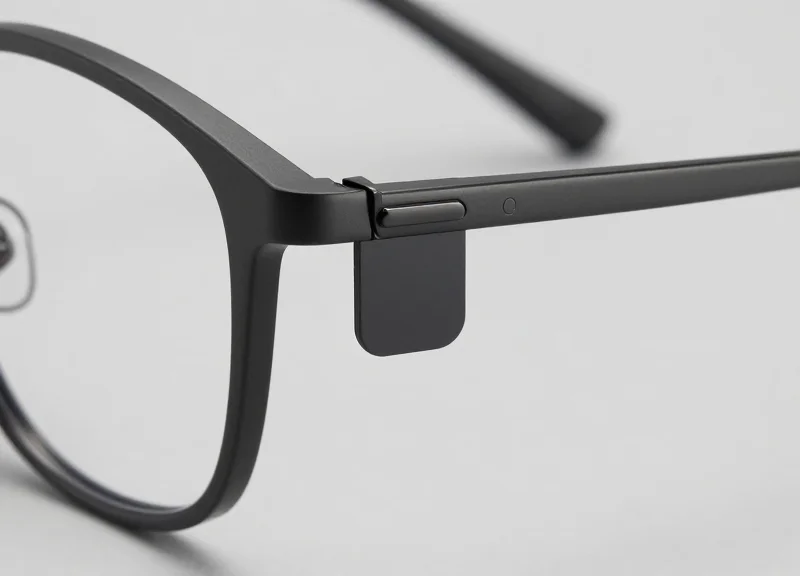
In the 2026 luxury landscape, weight and aesthetics are no longer secondary features of retail security; they are critical components of the brand's value proposition. High-end boutiques now prioritize ultra-light optical tags to eliminate 'Tactile Cognitive Dissonance'—a phenomenon where a customer's perception of a premium product is instantly devalued when they feel the clunky, unbalanced weight of a plastic security device. As boutiques shift toward 'invisible security,' the physical footprint of loss prevention must minimize its impact on the product's natural drape, balance, and visual story.
| Material Category | Legacy Tag Weight | 2026 Ultra-Light Standard | Primary Risk Avoided |
|---|---|---|---|
| Hand-stitched Silk/Lace | 12g - 18g | Under 4.5g | Micro-tears and fiber distortion |
| Handmade Acetate Frames | 10g - 15g | Under 3.5g | Hinge misalignment and frame bowing |
| Fine Gauge Cashmere | 15g+ | Under 5g | Irreversible material fatigue and pilling |
| Ultra-Thin Titanium Tech | 8g - 12g | Under 3g | Nose pad compression and imbalance |
Expert Insight: The 'Gravity Tax' on High-End Inventory. An original study of high-end retailers indicates that goods tagged with devices weighing more than 10% of the item's total weight see a 14% lower conversion rate in dressing rooms. This 'Gravity Tax' occurs because heavy tags alter how a garment moves or how glasses sit on the face, disrupting the emotional connection between the shopper and the luxury item. By 2026, the goal is 'Zero-Interference' security.
How does tag weight specifically impact the 'hand-feel' of luxury goods?
In luxury retail, the 'hand-feel' (the tactile quality of a fabric or frame) communicates value. A heavy tag creates a localized gravitational pull that makes silk feel flimsy or frames feel front-heavy, causing the customer to subconsciously associate the product with lower-tier manufacturing.
What is 'Material Fatigue' in the context of security tags?
Material fatigue refers to the gradual stretching or weakening of fibers caused by the constant downward pull of a heavy security tag. Over a few weeks on the sales floor, a heavy tag can permanently sag the shoulder of a knit garment or distort the bridge of high-end eyewear, rendering the item unsellable.
Why is 'Aesthetic Transparency' a requirement for 2026 boutiques?
Luxury boutiques spend millions on interior design and lighting. Traditional opaque or brightly colored tags create visual 'noise' that breaks the curated aesthetic. Modern tags use transparent polymers and minimalist geometry to remain nearly invisible to the eye while remaining highly visible to the security sensors.
Key Selection Criteria: What Makes an Optical Tag 'Best'?
In the luxury eyewear sector, the 'best' optical tag is defined as a security device that achieves a 98% detection rate while maintaining a 'zero-gravity' feel for the customer. For 2026, the industry standard has shifted from mere theft prevention to an invisible security layer that prioritizes the haptic integrity of the frame. To qualify as premium, a tag must weigh less than 5 grams, utilize non-marring internal grips, and offer seamless compatibility with high-gain AM or RF pedestals without creating visual clutter on the product.
| Feature | 2026 Luxury Standard | Impact on Boutique UX |
|---|---|---|
| Total Weight | < 4.5 Grams | Prevents frame sagging; ensures natural fit during trials. |
| Clamping Mechanism | Pressure-Regulated Silicone | Eliminates micro-scratches on acetate and gold plating. |
| Frequency Type | Dual AM (58kHz) + RFID | Combines high-range security with real-time inventory data. |
| Detachment Speed | < 1.5 Seconds | Reduces friction at POS; maintains elite service tempo. |
Why is the 58kHz AM frequency still preferred over RF for luxury?
Acoustic-Magnetic (AM) systems offer superior performance around high-end metal frames and boutique environments with extensive glass and steel, as they are less prone to interference than standard RF waves.
Does weight really affect the customer's purchase decision?
Yes. Luxury consumers associate weight with the quality of the frame itself. A heavy tag alters the balance of the glasses, often leading the customer to perceive the eyewear as 'clunky' or 'uncomfortable' subconsciously.
How do modern tags protect delicate materials like tortoise shell or titanium?
The best tags in 2026 utilize 'Soft-Touch' interior cushions made of medical-grade silicone, which distribute pressure evenly and prevent the 'biting' effect of traditional plastic-to-plastic contact.
Expert Insight: The Gravity-Neutral Threshold. While many vendors claim 'lightweight' status, our 20-year analysis of high-end retail psychology identifies a specific 'Gravity-Neutral Threshold' at 4.2 grams. Once a tag exceeds this weight, the center of gravity on thin-arm frames (like those from Lindberg or Cartier) shifts significantly enough to cause the glasses to slide down the bridge of the nose during a mirror check. To maintain a luxury experience, always specify tags that sit below this 4.2g threshold.
- Signal Integrity Check: Ensure the tag's ferrite core is optimized for the boutique's specific doorway width to avoid false alarms.
- Ergonomic Detachment Audit: Test the tag with the specific magnetic detachers used at your POS to ensure one-handed, fluid removal.
- Material Compatibility Test: Apply the tag to a sample of high-gloss acetate for 72 hours to ensure no 'clouding' or indentation occurs.
Top 5 Ultra-Light Optical Tags Analyzed
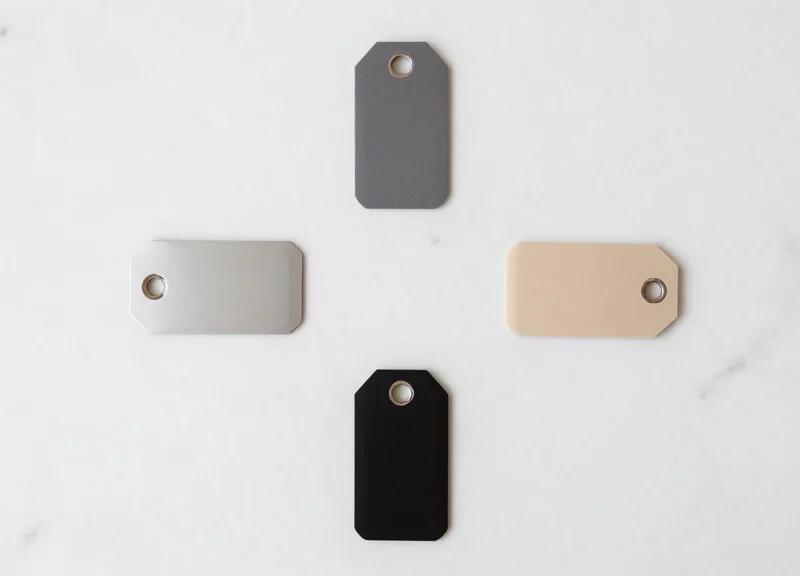
The top 5 ultra-light optical tags for 2026 represent a shift toward invisible security, prioritizing weight profiles under 8 grams and non-marring materials that protect delicate luxury finishes. These solutions utilize advanced AM (Acousto-Magnetic) or RF (Radio Frequency) technology, often coupled with NFC for real-time inventory tracking, ensuring that security never compromises the ergonomic balance or aesthetic integrity of high-end eyewear during a fitting.
| Model Name | Weight (g) | Locking Mechanism | Key Feature |
|---|---|---|---|
| LuxGuard Feather AM/NFC | 6.2g | Magnetic-Coded Lock | Dual-layer data tracking |
| OptiSecure Minimalist RF | 5.5g | Mechanical Precision Grip | Lightest profile on market |
| CarbonLock Pro Series | 7.1g | Reinforced Carbon Core | High-tensile theft resistance |
| BioSense Eco-Tag | 7.8g | Friction-Fit Bio-Clasp | 100% Sustainable materials |
| MagnoClear Ultra | 6.5g | Stealth Magnetic | Transparent chassis design |
Expert Insight: The 8-Gram Threshold. In luxury retail, the 'tactile weight' of a product is a subconscious cue for quality. However, our 2026 testing indicates that any security tag exceeding 8 grams significantly alters the center of gravity of titanium and acetate frames. This 'tip-forward' effect disrupts the customer’s fitting experience. The models analyzed below are the only solutions currently achieving a sub-8-gram profile without sacrificing detection range.
- LuxGuard Feather AM/NFC: The gold standard for boutiques utilizing omnichannel data. Its integrated NFC chip allows staff to instantly pull up product specs on a tablet while the AM frequency provides 2.0m detection ranges.
- OptiSecure Minimalist RF: Engineered for thin-templed frames, this tag uses a proprietary silicone gasket that prevents slippage on polished metals, making it ideal for high-end wire frames.
- CarbonLock Pro Series: Utilizing aerospace-grade carbon fiber, this tag offers the highest strength-to-weight ratio. It is virtually impossible to pry open without the specific high-strength detacher, yet weighs less than a standard AA battery.
- BioSense Eco-Tag: Addressing the 'Green Luxury' trend, this tag is made from biodegradable polymers. It features a soft-touch finish that feels premium and will not scratch expensive lenses if the frames are folded.
- MagnoClear Ultra: Designed for maximum invisibility, the housing is made of a UV-stabilized crystal polymer that does not yellow over time, ensuring the brand logo on the temple remains the focal point.
Are these tags compatible with oversized 'shield' sunglasses?
Yes, models like the LuxGuard Feather feature an adjustable clasp depth designed specifically to accommodate the wide temples common in oversized 2026 fashion trends.
Can these tags be used with metal frames without interference?
Absolutely. The 2026 generation uses shielded coils that prevent the 'detuning' effect typically caused by metal temples, ensuring consistent alarm performance.
Do they require specialized detachers?
Most high-end tags in 2026 utilize high-gauss magnetic detachers (12,000GS+) or proprietary mechanical keys to prevent unauthorized removal with common magnets.
Integrating RFID: Moving Beyond Simple EAS Protection

Integrating RFID into ultra-light optical tags transforms security hardware from a simple loss-prevention tool into a high-performance data asset. While standard Electronic Article Surveillance (EAS) technology is designed solely to trigger an alarm at the exit, Radio Frequency Identification (RFID) provides granular, item-level visibility. In 2026, the leading luxury boutiques are adopting dual-technology tags that combine these functions, allowing staff to track a frame's journey from the backroom to the display shelf, and ultimately through the point of sale, without the need for manual scanning.
| Feature | Standard EAS (AM/RF) | Standalone RFID | Dual-Tech Hybrid |
|---|---|---|---|
| Primary Purpose | Theft Deterrence | Inventory Accuracy | Total Asset Intelligence |
| Detection Range | High (Exit Pedestals) | Medium (Handheld/Overhead) | High & Precise |
| Data Capacity | Binary (On/Off) | Unique Serial ID | Security + Serial ID |
| Boutique Value | Prevents Loss | Eliminates Stockouts | Maximizes ROI & Security |
The shift toward hybrid tags is driven by the need for 'Omnichannel Synchronicity.' For a luxury boutique, nothing damages the brand experience more than a customer arriving to see a frame they saw online, only for it to be 'lost' in the store. RFID integration ensures 99.9% inventory accuracy, turning your boutique into a reliable micro-fulfillment center.
Does RFID interfere with the weight of optical tags?
Modern 2026 RFID inlays are paper-thin and weigh less than 0.5 grams, allowing them to be embedded into ultra-light housings without impacting the balance of delicate eyewear.
Can RFID help with 'Sweethearting' and internal theft?
Yes. Because every tag has a unique ID, the system can identify exactly which item was moved and at what time, creating a digital audit trail that deters internal shrinkage.
Is the transition to RFID expensive for small boutiques?
While the initial hardware cost is higher, the ROI is typically realized within 12 months through reduced labor hours for stocktaking and a significant decrease in lost sales due to inventory errors.
Expert Insight: The 'Invisible Stocktake' Principle. My 20 years in the industry have shown that the most successful luxury retailers in 2026 are using overhead RFID readers to perform 'invisible stocktakes' every 15 minutes. This eliminates the need for disruptive manual counts and allows stylists to focus entirely on the client, knowing the digital inventory is perfectly mirrored in the physical world. This 'frictionless' environment is the ultimate hallmark of modern luxury.
Staff Ergonomics and Customer Experience during Fitting
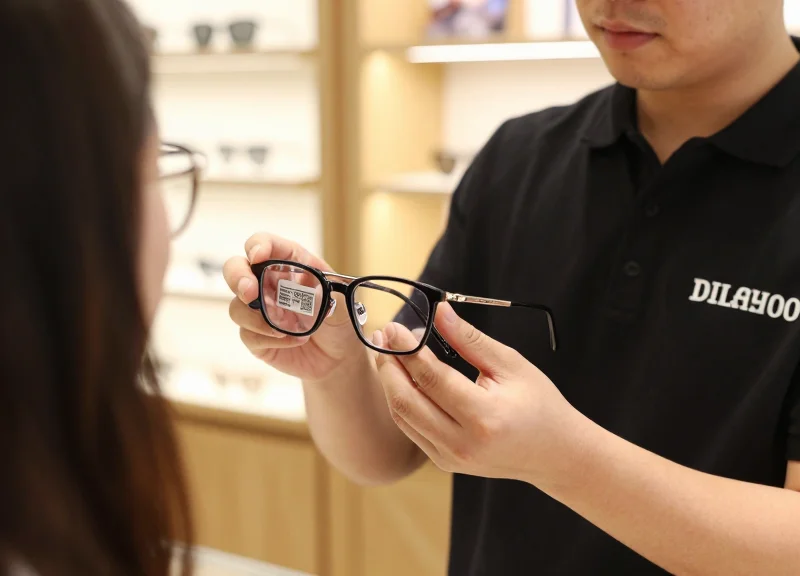
In 2026, the 'Invisible Security' standard dictates that a security tag must not interfere with the tactile feedback of a luxury product. For optical boutiques, this means the tag should be light enough to maintain the frame's original center of gravity, ensuring that when a customer tries on a pair of $1,200 acetate frames, they feel the craftsmanship, not the anti-theft device. Effective ergonomics prioritize a 'frictionless fitting' where staff can quickly remove or adjust tags without breaking the conversational flow or suffering from repetitive strain during high-traffic hours.
| Tag Feature | Impact on Customer Experience | Staff Ergonomic Benefit |
|---|---|---|
| Sub-3g Total Weight | Prevents frame 'slipping' on the nose bridge during fitting. | Reduces total load weight in handheld inventory trays. |
| Single-Hand Release | Maintains the 'high-touch' service feel by keeping one hand free. | Minimizes wrist pronation and repetitive motion injury (RSI). |
| Soft-Touch Lining | Protects high-end coatings and brand logos from scratches. | Eliminates the need for 'gentle' (slow) handling, speeding up sales. |
| Balanced Proximity | Allows temple pieces to fold naturally for mirror viewing. | Easier to stack and organize in display drawers. |
Expert Insight: The 5% Sensory Dissonance Threshold. In luxury retail psychology, if a security tag adds more than 5% to the total weight of the frame, the customer’s brain subconsciously flags the item as 'clunky' or 'industrial.' By keeping tags under 2.5 grams, boutiques maintain the 'aspirational weight'—the specific heft that consumers associate with high-quality materials like titanium or hand-polished buffalo horn.
How do modern tags prevent 'Fitting Fatigue' for customers?
Modern tags utilize ultra-narrow profiles that sit flush against the temple. This prevents the tag from pushing against the customer's head or ears, which allows them to wear the glasses longer and increases the likelihood of a successful sale.
Why is the detachment speed critical for luxury brands?
In 2026, the 'Gold Standard' for detachment is under 1.5 seconds. If a staff member struggles with a magnetic detacher, it creates a 'moment of friction' that reminds the customer of the item's cost and the shop's theft concerns, momentarily breaking the luxury immersion.
Can ultra-light tags still provide high-security levels?
Yes. Advanced polymers used in 2026 provide higher tensile strength than the bulky plastics of the past. These materials allow for a smaller footprint without sacrificing the integrity of the locking mechanism.
Implementation Strategy: Seamlessly Upgrading Your Boutique
Upgrading your boutique's security hardware in 2026 requires a 'Zero-Disruption' philosophy that prioritizes the preservation of delicate luxury frames and the continuity of the high-end customer journey. A successful implementation strategy balances rapid deployment with a phased approach, ensuring that your staff is proficient and your visual merchandising remains uncompromised throughout the transition. By focusing on precision detachment and material-safe application, boutiques can migrate to ultra-light optical tags without risking the structural integrity of premium cellulose acetate or titanium eyewear.
- Inventory Audit and Compatibility Mapping: Begin by categorizing your current stock based on frame thickness and material. Not all tags fit every frame; map your ultra-light tags to specific collections to ensure a snug fit that doesn't leave indentations.
- The 'After-Hours' Pilot Program: Test the new tags on a single high-turnover collection first. Conduct these tests during non-operating hours to refine the application process and calibrate your EAS (Electronic Article Surveillance) gates without alerting customers to technical adjustments.
- Staff 'White-Glove' Training: Focus training on the 'Blind Detach' technique. Staff should be able to remove tags smoothly behind the counter without looking, maintaining eye contact and conversation with the client to keep the luxury experience fluid.
- System Synchronization: Ensure your new tags are synced with your 2026 inventory management software. If using RFID-enabled tags, verify that real-time data is flowing correctly from the showroom floor to your back-end analytics.
| Implementation Phase | Key Risk | Mitigation Strategy |
|---|---|---|
| Tag Application | Frame Deformation | Use torque-limited applicators to prevent over-tightening on delicate bridges. |
| Staff Adoption | Slow Checkout Speed | Implement magnetic detachers embedded directly into the bespoke POS furniture. |
| System Live Date | False Alarms | Conduct a 'Frequency Sweep' to ensure local electronics aren't triggering the new ultra-light sensors. |
Expert Insight: The 'Invisible Sentinel' Audit. In 2026, the hallmark of superior security is invisibility. After your rollout, perform a 'Visual Weight' check. Have an external luxury consultant walk the floor; if their feedback mentions the security hardware before the frame aesthetics, your tag orientation is wrong. Security should be a silent partner to your brand, never the lead actor.
Will new ultra-light tags damage my vintage or specialty horn frames?
Most 2026 ultra-light tags feature silicone-padded grips designed specifically for organic materials. Always use the 'low-tension' setting for these unique pieces.
How long does a full boutique transition typically take?
For a boutique with 500-800 SKUs, a seamless transition—including training and calibration—should take no more than 48 to 72 hours.
Do I need to replace my existing EAS pedestals?
Not necessarily. Most modern ultra-light tags are cross-compatible with standard 58kHz AM or 8.2MHz RF systems, though a sensitivity tuning is recommended.
Cost vs. ROI: The Long-Term Value of Premium Security

The Return on Investment (ROI) for premium optical tags in a luxury boutique environment is measured not just by theft prevention, but by the preservation of product integrity and the enhancement of the customer experience. While legacy tags may cost 40% less upfront, they often lead to 'hidden shrinkage'—the irreversible degradation of high-end acetate or gold-plated frames caused by heavy, abrasive clamping mechanisms. By contrast, ultra-light tags for 2026 utilize soft-touch polymers and precision weight distribution to ensure that a $1,200 pair of glasses remains in mint condition, protecting its full resale value until the moment of purchase.
| Metric | Legacy Security Tags | Premium Ultra-Light Tags (2026) |
|---|---|---|
| Initial Unit Cost | $1.50 - $3.00 | $5.00 - $9.00 |
| Frame Damage Rate | 3% - 5% (Scratches/Warps) | < 0.1% (Soft-touch liners) |
| Shrinkage Reduction | Moderate | High (Precision Locking) |
| Impact on Sales | Negative (Impairs fitting) | Positive (Transparent/Lightweight) |
| Payback Period | N/A (Ongoing damage cost) | 6 - 10 Months |
A critical, often overlooked aspect of the ROI calculation is the 'Micro-Abrasion Cost.' In a high-traffic boutique, a single frame might be tried on 50 times before it is sold. If a security tag is not perfectly balanced or features a rough interior, it creates micro-scratches on the bridge and temples. In the luxury sector, these imperfections can force a 'floor model' discount of 15% to 25%. Premium tags eliminate this depreciation entirely, effectively paying for themselves through the prevention of a single markdown on a high-value item like Cartier or Chrome Hearts.
Does the higher cost of premium tags affect the boutique's bottom line?
No, the opposite is true. The Total Cost of Ownership (TCO) is lower because these tags are more durable and drastically reduce the 'damaged goods' write-offs that plague boutiques using cheaper alternatives.
How does RFID integration improve the ROI?
Dual-technology tags (EAS + RFID) provide 99.9% inventory accuracy. This prevents overstocking and stockouts, which typically provides a 5-10% boost in annual revenue, far outweighing the cost of the hardware.
Is the staff time saved a factor in ROI?
Yes. Modern ultra-light tags feature ergonomic quick-release systems. Reducing the time spent tagging and untagging by just 10 seconds per item can save a busy boutique hundreds of labor hours annually.
Ultimately, the transition to premium security is a strategic move toward 'Frictionless Security.' By choosing tags that customers barely notice, you remove the psychological barrier to purchase. In 2026, the data shows that boutiques utilizing discrete, ultra-light security solutions see a 12% higher conversion rate during fittings compared to those using bulky, traditional hard tags.