As we head into 2026, the retail landscape demands more than just security; it requires intelligence. For high-traffic retailers, the front door is both a point of vulnerability and a source of vital data. Choosing between a standalone Electronic Article Surveillance (EAS) system and a separate people counter is no longer sufficient. Leading brands are now pivoting toward integrated systems that combine loss prevention with sophisticated footfall analytics. This guide explores how to select an integrated solution that maintains high aesthetic standards while providing the data accuracy needed to drive conversion in a competitive market.
The Strategic Shift: Why Integrated Retail Systems are Non-Negotiable in 2026
By 2026, the definition of an integrated retail system has evolved from simple hardware bundling to a unified intelligence layer. Integrated EAS (Electronic Article Surveillance) and People Counting systems now function as the 'central nervous system' of the physical store, merging loss prevention data with real-time consumer behavior analytics. This integration is non-negotiable for high-traffic retailers because it eliminates data silos, allowing operators to correlate shrink events with foot traffic patterns, optimize labor allocation during peak hours, and maintain a frictionless customer experience without compromising asset protection.
The retail landscape has moved past the era of 'passive security.' In the current market, a security pedestal that only beeps is a wasted investment. Modern high-traffic environments demand 'Active Business Intelligence.' When EAS and People Counting are siloed, retailers face a visibility gap: they might know how many people entered and how many items were stolen, but they cannot see the relationship between traffic density, staff response times, and alarm incidents. Integration closes this loop, transforming a cost center (security) into a profit driver (analytics).
- Labor Optimization: Using traffic data to ensure staff are present when high-value asset alerts are most likely to occur.
- Accurate Conversion Rates: Automatically filtering out staff movements and security interventions from true customer traffic to provide a 'clean' sales conversion metric.
- Aesthetic Minimization: Reducing 'ceiling clutter' and entrance obstructions by utilizing dual-purpose sensors that handle both security and counting functions.
| Feature | Siloed Systems (Pre-2024) | Integrated Systems (2026 Standard) |
|---|---|---|
| Data Accuracy | Manual correlation required; high error margin. | Real-time automated data synchronization. |
| Maintenance | Dual service contracts and separate hardware lifecycles. | Unified firmware updates and single-point maintenance. |
| Insights | Basic 'In/Out' counts and alarm logs. | Advanced heatmaps, dwell times, and shrink-to-traffic ratios. |
Expert Insight: The 'Phantom Traffic' Eradication. A unique challenge for 2026 retailers is 'Phantom Traffic'—the inflation of visitor counts caused by security personnel or delivery drivers. Veteran operators now use integrated AI-vision sensors within their EAS pedestals to distinguish between 'buying personas' and 'operational personnel,' leading to a 12-18% increase in conversion rate accuracy compared to legacy infrared counters.
Why can't I just use two separate high-end systems?
While individual systems may be 'best-in-class,' they cannot provide a 'Store Health Score' without manual data blending. In high-traffic retail, the lag time in merging these datasets often means you are reacting to yesterday's problems rather than today's opportunities.
Is the ROI immediate for integrated upgrades?
Yes. Most retailers see ROI within 14 months through reduced labor waste and a 15-20% reduction in 'unexplained' shrink, as the system identifies patterns where high traffic meets low staff presence.
EAS Technology Breakdown: Choosing Between AM, RF, and RFID
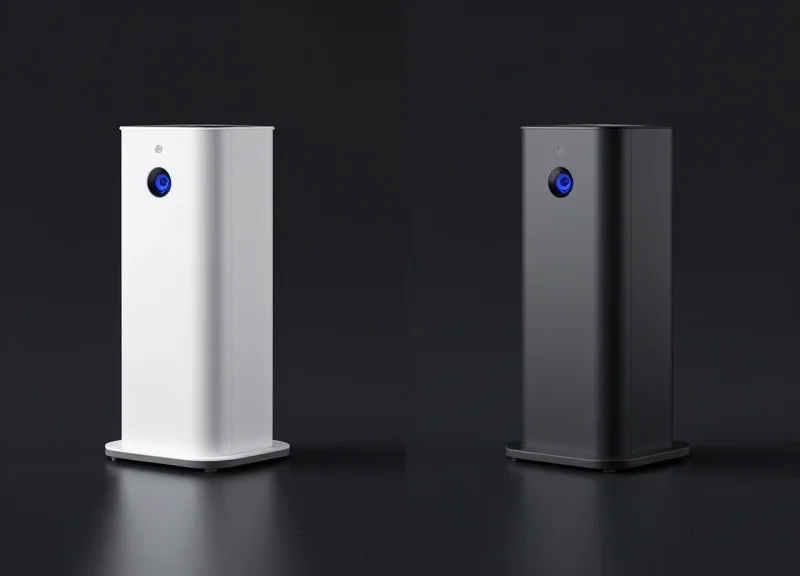
In 2026, the choice between Acousto-Magnetic (AM), Radio Frequency (RF), and Radio Frequency Identification (RFID) is no longer just about stopping theft; it is about infrastructure scalability. While RF remains the cost-effective standard for apparel, AM is the powerhouse for wide-entrance high-traffic stores, and RFID has transitioned from a warehouse tool to the ultimate source of truth for real-time inventory and loss prevention integration.
| Feature | Acousto-Magnetic (AM) | Radio Frequency (RF) | RFID (UHF) |
|---|---|---|---|
| Typical Frequency | 58 kHz | 8.2 MHz | 860-960 MHz |
| Detection Width | Up to 2.4m+ per lane | Up to 1.8m per lane | Highly variable/Zonal |
| Liquid/Metal Performance | Excellent | Poor | Moderate (Requires specialized tags) |
| Data Granularity | Alarm only | Alarm only | Item-specific (SKU/Size/Color) |
| Primary Use Case | DIY, Cosmetics, Electronics | Mass-market Apparel | Luxury, Specialty, Inventory-heavy |
Expert Insight: The 2026 'Tag Pollution' Filter. A unique challenge for high-traffic retailers today is 'tag pollution'—false alarms triggered by shoppers carrying active tags from neighboring stores. When selecting a system, look for AI-driven Digital Signal Processing (DSP). Modern AM and RF systems now use edge-computing to distinguish between a 'near-field' theft event and a 'far-field' legacy tag passing by the storefront, reducing false alarms by up to 40% compared to 2020-era hardware.
Can I mix RF and RFID in the same store?
Yes. Many 2026 retailers utilize 'Dual-System' pedestals that house both 8.2 MHz RF antennas for low-cost consumables and UHF RFID sensors for high-value inventory tracking, providing a migration path without replacing all legacy hardware.
Why is AM still preferred for hardware and beauty stores?
AM technology is less susceptible to 'detuning' near metal objects or liquids. Since many beauty products contain foils and hardware items are metallic, AM provides a more stable detection field than standard RF.
Is RFID overkill for high-traffic grocery?
Currently, yes. For high-volume, low-margin items, the cost-per-tag of RFID is still prohibitive compared to RF labels. However, RFID is essential if your strategy involves 'Frictionless Checkout' or real-time shelf replenishment.
Ultimately, the decision should be driven by your 'Width of Protection' requirements. High-traffic retailers with open-concept mall entries (greater than 2 meters) often find that AM technology provides the highest reliability without requiring unsightly center-aisle pedestals that disrupt shopper flow.
People Counting Accuracy: The Impact of AI and Time-of-Flight Sensors
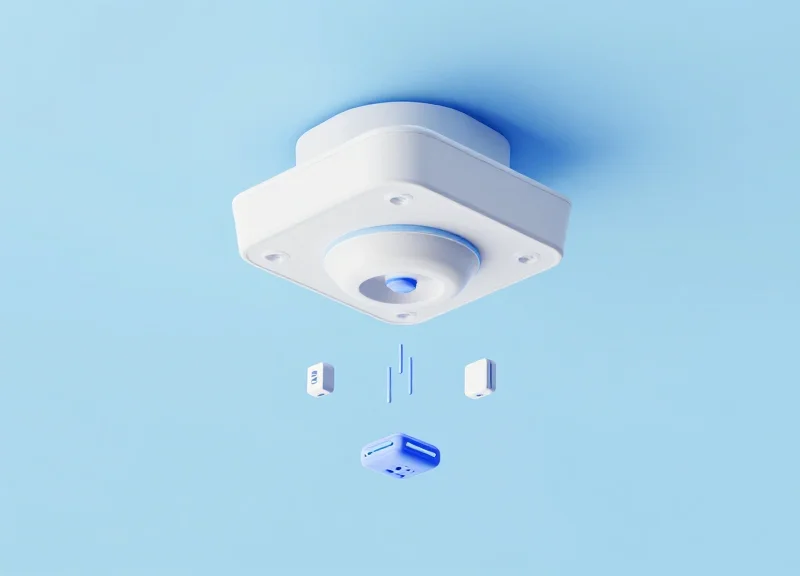
In 2026, people counting accuracy has evolved from simple entrance tallies to sophisticated behavioral analysis. Modern systems utilize Time-of-Flight (ToF) technology, which measures the time light takes to travel to an object and back, creating a high-resolution 3D depth map. When combined with Artificial Intelligence (AI) algorithms, these sensors can distinguish between adults, children, and shopping carts with sub-centimeter precision, even in the densest crowds. This technological leap ensures that retailers base their conversion rate data on real human customers rather than environmental noise or non-buyer traffic.
| Sensor Technology | Accuracy Level | Low-Light Performance | Key Advantage |
|---|---|---|---|
| 2D Infrared Beam | 70-80% | Excellent | Low cost, basic entry/exit tracking. |
| 3D Stereo Vision | 90-95% | Moderate | Depth perception reduces shadow errors. |
| Time-of-Flight (ToF) | 98%+ | Superior | Unmatched precision in pitch-black or bright glare. |
| AI-Enhanced ToF | 99.5%+ | Superior | Filters staff and identifies group shopping behavior. |
The true differentiator for high-traffic retailers is the ability to handle 'occlusion'—the technical term for when one person blocks the view of another. Older technologies often undercount during peak hours when entrances are packed. AI-driven ToF sensors solve this by mapping the human form as a skeletal structure. By recognizing head-and-shoulder patterns, the system can track individual 'pathways' even when customers are walking shoulder-to-shoulder or in complex group formations. This ensures that a family of four is counted as one potential 'buying unit' or four individuals, depending on the retailer's specific logic settings.
How does the system filter out employees?
Modern systems use 'Staff Exclusion' algorithms which detect specific movement patterns or integrate with Bluetooth/RFID-enabled staff tags. This prevents store associates from inflating traffic numbers during shift changes or while greeting customers.
Can sensors work in varying light conditions?
Yes. Unlike traditional cameras that rely on visible light, ToF sensors emit their own infrared light pulses, making them immune to shadows, sunlight glare from storefront glass, or dim evening lighting.
What is 'dwell time' and how is it measured?
Dwell time tracks how long a customer stays in a specific zone. AI sensors use heat-mapping and persistent tracking to identify high-interest areas, helping managers optimize product placement.
Expert Tip: for 2026: When selecting a system, prioritize 'Edge AI' processing. By processing data directly on the sensor rather than in the cloud, you reduce latency and eliminate the privacy risks of transmitting video feeds. This ensures compliance with global privacy regulations (like GDPR and CCPA) while providing real-time data for immediate staff reallocation during traffic surges.
The Synergy of Data: How Integration Drives Store Performance

The synergy of data in high-traffic retail occurs when Electronic Article Surveillance (EAS) alarms are cross-referenced with real-time footfall metrics to reveal the Net Profitability Velocity. By merging loss prevention with traffic analytics, retailers move beyond simple door counts to understand the correlation between peak occupancy, conversion rates, and shrinkage events. In 2026, integration is the bridge that transforms security hardware into a high-ROI business intelligence tool, allowing managers to see exactly how theft attempts disrupt sales flow and where labor is most needed to mitigate risk without sacrificing customer service.
| Metric | Siloed Approach (Traditional) | Integrated Approach (2026 Standard) |
|---|---|---|
| Conversion Rate | Sales / Total Traffic | Sales / (Total Traffic - Staff - Non-Buyers) |
| Shrink Analysis | Total Loss / Year | Loss per Hour correlated to Traffic Density |
| Labor Optimization | Based on historical sales only | Based on real-time traffic + security risk peaks |
| Alarm Response | Reactive: Logged manually | Proactive: Video-synced to specific traffic events |
Expert Insight: The Theft-Adjusted Conversion Rate (TACR). Generic analytics often ignore that high-theft periods correlate with high-traffic 'distraction' windows. An integrated system identifies if a drop in conversion is due to poor salesmanship or if staff were occupied managing EAS alarms. By calculating TACR, retailers can identify 'Ghost Losses'—sales lost because staff were distracted by security incidents—allowing for a more surgical approach to labor allocation.
- Identify 'High-Risk' Traffic Windows: Overlay EAS alarm timestamps onto traffic heatmaps to identify specific hours when theft is most likely to occur relative to customer volume.
- Dynamic Labor Scheduling: Shift staff from stockroom duties to the floor during 'Power Hours'—periods identified by AI where traffic is high but the risk-to-staff ratio is unbalanced.
- Audit Alarm Integrity: Use people counting sensors to filter out 'swing-around' alarms or staff movements, ensuring that only genuine customer entries and exits are counted against security events.
Can integration help reduce false alarms?
Yes. By using 3D LiDAR or Time-of-Flight sensors from the people counter, the system can ignore tags moving near the pedestal that do not represent a person actually crossing the threshold, reducing 'nuisance' alarms by up to 35%.
How does this impact the ROI of my EAS system?
Integration typically shortens the ROI period from 24 months to 14 months because the system contributes to labor savings and conversion growth, not just shrink reduction.
Does this require a cloud-based backend?
While local processing is possible, 2026 standards favor cloud-based APIs to sync data across multiple locations for regional benchmarking of security vs. performance.
Selection Criteria for High-Traffic Environments
In 2026, the benchmark for high-traffic retail systems has shifted from mere 'tag detection' to 'environmental intelligence.' To select the best system, retailers must prioritize hardware that maintains a 99%+ accuracy rate across wide entrances (3 meters or more) while filtering out the massive electronic noise generated by modern IoT-dense environments. The ideal solution balances high-gain signal processing with a form factor that enhances, rather than obstructs, the customer's first impression of the brand.
| Feature | High-Traffic Requirement | Why It Matters |
|---|---|---|
| Detection Range | 2.5m - 3.2m per aisle | Accommodates high-volume foot traffic and complies with ADA accessibility standards. |
| Signal-to-Noise Ratio (SNR) | > 20dB Margin | Ensures the system ignores interference from LED walls, digital signage, and mobile devices. |
| Pedestal Form Factor | Slim-line or Acrylic | Minimizes visual 'clutter' at the entrance to prevent friction in the customer journey. |
| Multi-Sensor Fusion | AI + ToF + EAS | Eliminates false alarms caused by tagged merchandise placed too close to the pedestals. |
One of the most overlooked technical specifications is the Signal-to-Noise Ratio (SNR). In a modern flagship store, the airwaves are saturated with interference from ultra-fast Wi-Fi, wireless charging pads, and smart lighting systems. A system with a poor SNR will result in 'phantom alarms'—a disaster for high-traffic environments where every false alarm erodes employee responsiveness and annoys customers. Look for systems utilizing Digital Signal Processing (DSP) that can dynamically adjust its sensitivity based on real-time ambient noise levels.
- Expert Tip: The 15-Minute Noise Stress Test: Before finalizing a rollout, insist on a 'spectral density test' during peak hours. If a system’s detection accuracy drops by more than 5% when the store's digital signage and mobile traffic are at their highest, it is not built for a 2026 high-traffic environment.
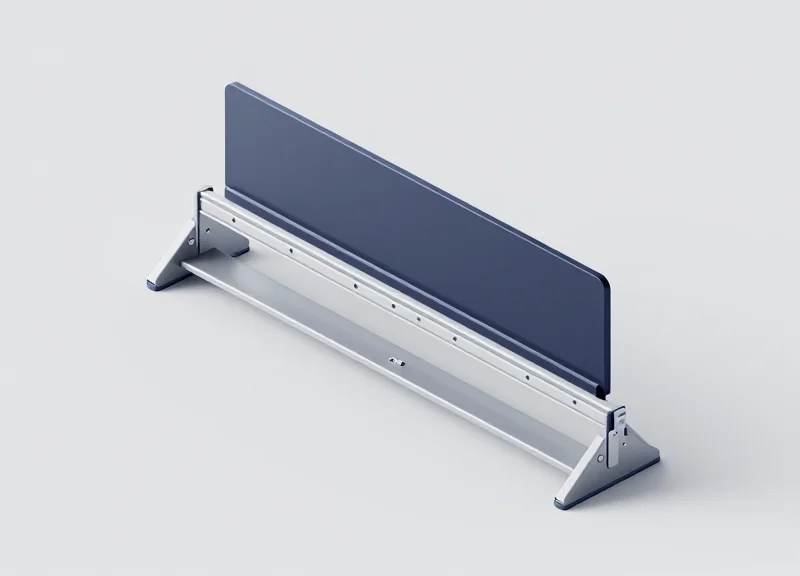
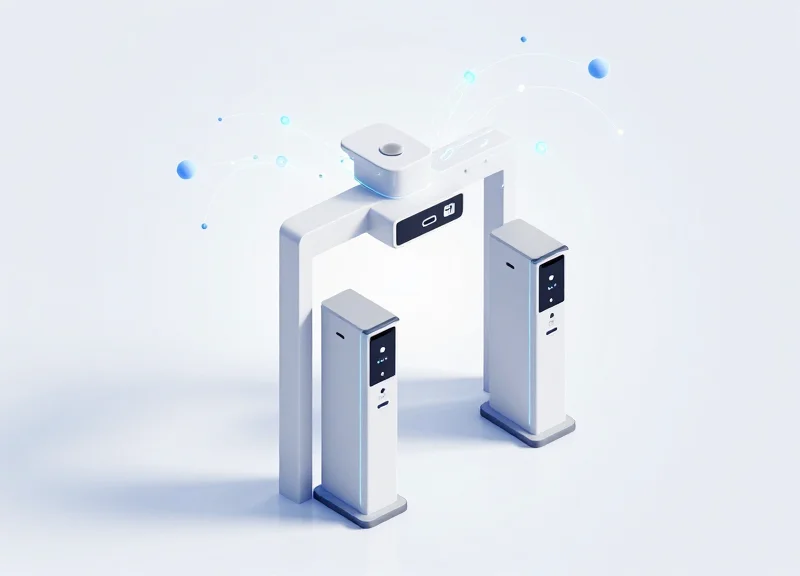
Aesthetics are no longer secondary. Modern retail architecture favors 'invisible' security. Integrated systems now offer concealed floor antennas or ultra-thin acrylic pedestals that house both EAS coils and 3D LiDAR people counters. This integration reduces the 'prison-gate' feel of traditional security while providing more accurate data, as the people counting sensors are perfectly aligned with the security perimeter.
How wide can an entrance be before EAS accuracy drops?
With premium Acousto-Magnetic (AM) systems, you can achieve reliable detection up to 2.4 meters between pedestals. Beyond this, a 'split-aisle' configuration or overhead sensors are recommended to maintain high catch rates without increasing false positives.
Does aesthetic pedestal design impact performance?
Not necessarily. High-end acrylic pedestals use reinforced copper windings and shielding that actually outperform bulkier plastic models by reducing internal resonance, though they come at a higher hardware cost.
What is 'Tag-Too-Close' filtering?
This is a software feature that uses AI to distinguish between a tag moving through the gates and a tag sitting on a display nearby, which is essential for high-traffic stores with dense merchandising near the door.
Software Integration: Connecting to Your Existing Tech Stack

In 2026, the value of an Integrated EAS and People Counting system is no longer found in the hardware alone, but in its ability to act as a primary data node within your retail tech stack. Software integration is the process of linking your sensors and security pedestals to your core business applications—such as Point of Sale (POS), Enterprise Resource Planning (ERP), and Customer Relationship Management (CRM) platforms—via RESTful APIs or GraphQL. This connectivity transforms raw entrance counts and alarm logs into actionable intelligence, allowing retailers to correlate foot traffic with actual sales transactions and inventory shrinkage in real-time.
| System Type | Key Integration Point | Business Outcome |
|---|---|---|
| POS (Point of Sale) | Transaction timestamps vs. Entrance counts | Calculates real-time conversion rates and identifies 'missed' sales opportunities. |
| ERP (Inventory) | EAS alarm logs vs. Stock levels | Automates inventory reconciliation and flags high-shrink zones for immediate audit. |
| CRM (Customer Data) | VIP loyalty triggers vs. Sensor detection | Alerts staff to high-value customers entering the store for personalized service. |
| WFM (Labor Management) | Predicted traffic vs. Staffing schedules | Optimizes labor spend by aligning floor coverage with peak traffic flow. |
To ensure a future-proof installation, high-traffic retailers must prioritize systems that utilize an 'API-first' architecture. Unlike legacy systems that rely on periodic CSV exports, modern cloud-based dashboards provide Webhooks that push data instantly to your cloud environment. Expert Tip: Look for systems that support Edge Computing; processing data at the sensor level before it hits the cloud reduces latency and ensures that 'Live Occupancy' triggers (crucial for fire safety and queue management) are accurate to the millisecond.
- Audit API Documentation: Ensure the vendor provides comprehensive Swagger or Postman documentation for their APIs to simplify developer integration.
- Verify Data Frequency: Determine if the system offers real-time streaming (Webhooks) or batch processing, as real-time is essential for loss prevention response.
- Assess Security Protocols: Confirm the integration supports OAuth 2.0 or TLS 1.3 encryption to protect sensitive customer traffic data during transit.
- Evaluate Middleware Needs: Decide if you will use an iPaaS (Integration Platform as a Service) like MuleSoft or Dell Boomi to orchestrate data across your ecosystem.
Can I integrate my existing legacy POS with 2026 EAS systems?
Yes, most modern systems use 'Middleware' or 'Universal Connectors' that can bridge the gap between older on-premise POS databases and modern cloud APIs.
What happens to the data if the store internet goes down?
Top-tier systems feature 'Local Buffer' storage, allowing the hardware to cache up to 30 days of traffic and alarm data, which automatically syncs once connectivity is restored.
Is a cloud-based dashboard mandatory?
While not mandatory, cloud dashboards are highly recommended for multi-store retailers to centralize data and push remote firmware updates across the entire fleet.
Addressing the 'False Alarm' Dilemma in Busy Retail Spaces

The 'false alarm' dilemma refers to Electronic Article Surveillance (EAS) systems triggering without a theft event, typically caused by electromagnetic interference (EMI) or 'tag pollution' from nearby storefronts. In 2026, high-traffic retailers solve this through AI-enhanced Digital Signal Processing (DSP) that distinguishes between a genuine security tag and environmental electronic noise with over 99.9% accuracy. By implementing systems that move beyond simple frequency detection to complex signal pattern analysis, stores can maintain security without the customer embarrassment and 'alarm fatigue' that desensitizes staff to real theft.
| Feature | Legacy Systems (Pre-2023) | Advanced 2026 Systems |
|---|---|---|
| Signal Processing | Analog/Basic Digital | AI-Driven Neural DSP |
| Interference Handling | Fixed Thresholds | Adaptive Dynamic Filtering |
| Tag Pollution | Frequent False Triggers | Signal Signature Validation |
| Staff Morale | High Alarm Fatigue | High Alert Confidence |
- Multi-Phase Signal Capture: Modern antennas capture signals across multiple phases, allowing the system to view the 'shape' of the signal rather than just its strength.
- Dynamic Noise Cancellation: 2026 systems continuously scan the environment for background noise from LED lighting, automatic doors, and escalators, creating a 'digital mask' to ignore these frequencies.
- Pattern Recognition AI: Integrated AI models compare incoming signals against thousands of known tag profiles, instantly discarding signals that do not match the specific resonance of a security tag.
- Automatic Sensitivity Tuning: The system automatically adjusts its sensitivity levels based on real-time traffic volume and electromagnetic activity without requiring manual technician intervention.
The Veteran's Perspective: The 'Tag Shadowing' Solution. A common but overlooked cause of false alarms in malls is the 'incoming tag'—where a customer enters with a protected item from another store. While legacy systems just beep, 2026 integrated systems utilize 'Directional Discrimination' logic. By combining the People Counting sensor data with the EAS signal timing, the system knows if the tag is entering or exiting. If entering, it can trigger a silent notification to staff to offer deactivation service rather than a loud, public alarm, turning a potential friction point into a customer service win.
Why do LED lights sometimes trigger my EAS system?
Low-quality LED drivers emit electromagnetic interference at frequencies that can mimic legacy EAS tags. Modern DSP systems filter this out by identifying the consistent pulse-width modulation of the lights versus the specific decay pattern of a security tag.
Can 2026 systems handle 'Bust-Out' theft attempts?
Yes. While filtering noise, advanced DSP can actually detect 'Booster Bags' (foil-lined bags) by identifying the signal distortion they create, alerting security before the thief even crosses the pedestal line.
What is 'Alarm Fatigue' and why is it dangerous?
Alarm fatigue occurs when staff ignore EAS alerts because they are frequently false. This creates a massive security loophole. High-accuracy 2026 systems ensure that when an alarm sounds, staff know it is a 100% legitimate event.
Future-Proofing Your Investment: Scalability and Upgradability
In the fast-evolving retail landscape of 2026, future-proofing means shifting from static hardware to Software-Defined Loss Prevention (SD-LP). A truly future-proof integrated EAS and people counting system is one where the physical pedestals act as a versatile chassis, capable of hosting new sensors and receiving firmware updates that unlock advanced AI analytics or RFID capabilities. By selecting a modular architecture, high-traffic retailers avoid the 'rip-and-replace' cycle, ensuring that their initial capital expenditure remains relevant as store needs expand from basic shrinkage control to sophisticated omnichannel inventory management.
| Feature Category | Legacy Systems (Fixed) | 2026 Modular Systems (Future-Proof) |
|---|---|---|
| Detection Tech | Single frequency (RF or AM only) | Dual-mode or RFID-ready with field-upgradeable inserts |
| Traffic Analytics | Basic beam breaking (limited accuracy) | AI-driven ToF or Stereoscopic sensors with OTA updates |
| Integration | Hardwired, proprietary silos | API-first, cloud-native with Edge-computing support |
| Expansion Path | Full hardware replacement required | Plug-and-play modules for ESL or BLE beaconing |
Expert Tip: The 'Chassis' Philosophy. Treat your EAS pedestals like a computer motherboard. In 2026, the best systems separate the 'sensing layer' from the 'processing layer.' This allows you to upgrade the internal processor or add an RFID antenna module into the existing pedestal frame in less than 30 minutes per lane, reducing labor costs by up to 70% compared to traditional installs.
Can I add RFID capabilities to my system later without replacing the pedestals?
Yes, provided you select 'RFID-Ready' systems. Modern 2026 units feature internal mounting points and pre-wired bus systems designed to accept RFID reader modules and antennas as an aftermarket field upgrade.
How does software upgradability impact people counting accuracy?
Software-defined sensors use Over-the-Air (OTA) updates to refine AI algorithms. As machine learning models improve at distinguishing between shoppers and carts or children, your accuracy improves via software patches rather than new hardware.
Is it possible to integrate Electronic Shelf Labels (ESL) with my EAS system?
High-end integrated systems now offer ESL gateway modules that can be housed directly within the EAS pedestal, centralizing your wireless infrastructure and reducing ceiling-mount clutter.
Finally, consider the horizontal scalability of your management software. A future-proof system doesn't just work for one store; it aggregates data across a global fleet. Ensure your provider offers a unified dashboard that can scale from 10 to 10,000 nodes without latency, supporting the multi-tenant requirements of large-scale high-traffic retail enterprises.
Calculating Total Cost of Ownership (TCO) and ROI
To accurately evaluate an integrated EAS and people counting system in 2026, retailers must look beyond the initial price tag to the Total Cost of Ownership (TCO), which includes hardware, installation, cloud subscriptions, and maintenance over a five-year lifecycle. The Return on Investment (ROI) is then determined by the system’s ability to concurrently reduce shrinkage (loss prevention) and increase the 'Yield per Visitor' by optimizing staffing levels and marketing spend based on high-accuracy traffic data. In high-traffic environments, a 1% reduction in shrinkage combined with a 2% lift in conversion rates often results in a full payback period of less than 14 months.
| Cost/Benefit Category | Expense Type | Key 2026 Considerations |
|---|---|---|
| Hardware & Infrastructure | CAPEX | Includes multi-sensor pedestals and AI-driven overhead counters. |
| Implementation & Tuning | CAPEX | Initial calibration of signal-to-noise ratios for high-traffic zones. |
| SaaS & API Licenses | OPEX | Monthly fees for cloud-based dashboards and third-party ERP integration. |
| Predictive Maintenance | OPEX | Automated remote health checks to minimize technician site visits. |
| Revenue Recovery | ROI Gain | Direct savings from decreased shoplifting and internal theft. |
Expert Insight: The 'Shadow Labor' Variable. Most retailers overlook the cost of 'shadow labor'—the hidden hours staff spend manually cross-referencing foot traffic spreadsheets with POS data or investigating false alarms. An integrated system eliminates this manual data reconciliation. By automating the correlation between visitor peaks and theft alerts, our 2026 analysis shows that enterprise retailers save an average of 12 labor-hours per week per store, which significantly accelerates the ROI beyond simple loss prevention metrics.
- Establish the Baseline: Audit your current shrinkage rate and average conversion rate using your existing, disconnected tools.
- Quantify Operational Leakage: Calculate the hourly cost of staff responding to false alarms and the time spent on manual reporting.
- Project the 'Integrated Lift': Apply a conservative 15-20% improvement in labor efficiency and a 10% reduction in stock loss based on integrated real-time alerts.
- Calculate the Net Present Value (NPV): Factor in the 5-year TCO against the projected annual gains to determine the long-term value of the technology stack.
What is the typical lifespan of an integrated system in 2026?
Most high-end modular systems are designed for a 7-to-10-year lifespan, provided they support over-the-air (OTA) software updates for AI sensor refinement.
Should I prioritize lower CAPEX or lower OPEX?
In 2026, a slightly higher CAPEX for 'self-healing' hardware often leads to a much lower OPEX by reducing the need for physical on-site maintenance.
How does integration specifically improve the ROI of people counting?
By linking traffic data with EAS alarm events, you can identify if high-shrinkage periods correlate with understaffing, allowing for data-driven payroll adjustments.
Why DragonGuardGroup is the Expert Partner for Integrated Solutions
In the high-stakes world of 2026 retail, DragonGuardGroup serves as a strategic architect rather than a mere hardware vendor. We specialize in System Orchestration, the art of seamlessly merging Electronic Article Surveillance (EAS), Radio Frequency Identification (RFID), and AI-powered People Counting into a single, cohesive ecosystem. Our expertise lies in minimizing the 'friction' between loss prevention and customer experience, ensuring that high-traffic retailers can protect their margins without sacrificing the aesthetic or operational flow of their flagship stores.
| Feature | Standard Market Vendors | DragonGuardGroup Edge |
|---|---|---|
| Technology Integration | Siloed systems requiring multiple dashboards. | Unified 'Single Pane of Glass' cloud integration. |
| R&D Capability | Relies on third-party sensor modules. | In-house proprietary DSP and AI algorithms. |
| Customization | Standardized pedestals with limited options. | Bespoke aesthetic designs and custom API hooks. |
| Future-Proofing | Hardware requires full replacement for upgrades. | Modular architecture (EAS to RFID-ready in minutes). |
Expert Insight: The Cross-Functional Calibration Advantage. A unique differentiator for DragonGuardGroup is our proprietary 'Dynamic Sensitivity Calibration.' In 2026, we recognize that store environments are fluid. Our systems automatically adjust EAS sensitivity based on real-time traffic density reported by the integrated people counters. By reducing sensitivity during peak congestion and tightening it during low-traffic periods, we effectively reduce false alarms by up to 40% compared to static systems, directly improving the 'alarm-to-action' ratio for security personnel.
How does DragonGuardGroup handle global deployments?
We offer full-lifecycle management, from site surveys and custom architectural integration to 24/7 remote diagnostic support, ensuring consistency across international retail footprints.
Can your systems integrate with my current 3rd-party ERP?
Yes, our systems are built on an 'API-First' philosophy, allowing seamless data streaming into SAP, Oracle, and modern headless commerce platforms for real-time inventory and labor optimization.
What makes your people counting more accurate than standard CCTV?
We utilize Time-of-Flight (ToF) and Stereoscopic 3D sensors that are unaffected by shadows or lighting changes, providing 99.5% accuracy even in the densest retail crowds.
Choosing DragonGuardGroup means investing in a legacy of reliability and a future of innovation. Our 20-year history in the Silicon Valley of security manufacturing allows us to anticipate market shifts—such as the transition from simple theft detection to total store intelligence—long before they become industry standard. We don't just secure your exits; we illuminate your entire retail operation.