In the fast-paced world of global logistics and retail, the gap between physical inventory and digital records can be the difference between profit and loss. While Radio Frequency Identification (RFID) technology offers the promise of perfect visibility, the real challenge lies in integration. Connecting a massive network of sensors and readers to enterprise-level Warehouse Management Systems (WMS) or Enterprise Resource Planning (ERP) platforms requires more than just cables; it requires a sophisticated API strategy. This guide explores how to streamline that connectivity, ensuring your data flows as fast as your goods move.
The Evolution of RFID Connectivity: From Silos to Ecosystems
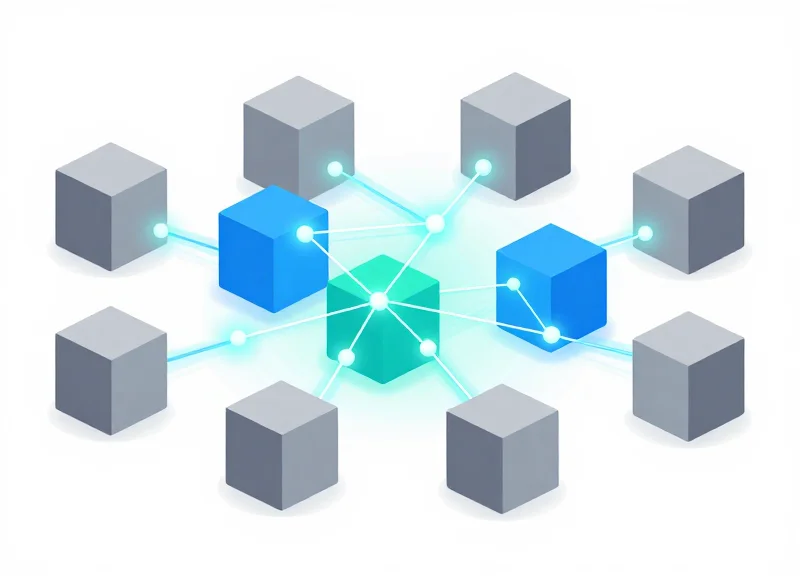
The evolution of RFID connectivity marks a paradigm shift from 'Siloed Hardware' to 'Integrated Ecosystems.' Originally, RFID deployments were isolated closed-loop systems using proprietary protocols that required localized servers and custom middleware. Today, next-gen RFID connectivity leverages open, API-driven architectures—specifically RESTful APIs and MQTT—to bridge the gap between physical sensors and enterprise software. This shift allows for the orchestration of mass device networks, transforming raw tag data into actionable business intelligence within WMS and ERP systems in real-time.
| Feature | Legacy RFID Silos (1.0) | Next-Gen RFID Ecosystems (2.0) |
|---|---|---|
| Architecture | Proprietary, Monolithic | API-First, Microservices |
| Data Flow | Batch processing via Middleware | Real-time streaming (MQTT/Websockets) |
| Scalability | Hardware-bound; High CapEx | Cloud-native; Low-friction OpEx |
| Integration | Custom-coded 'Point' solutions | Standardized API Endpoints |
| Latency | Minutes to Hours | Sub-second (Edge-to-Cloud) |
In the early 2000s, implementing RFID meant fighting 'The Middleware Tax.' Organizations were forced to purchase expensive, vendor-specific software just to translate hardware signals into a format an ERP could understand. This created data silos where information was trapped within the warehouse walls. The modern ecosystem approach removes this barrier by treating the RFID reader as an intelligent IoT edge device. By utilizing standard web protocols, these devices now push data directly into the cloud, enabling a 'single pane of glass' view of global inventory without the need for complex on-site translations.
Why did the industry move away from proprietary SDKs?
Proprietary SDKs (Software Development Kits) created 'Vendor Lock-in.' If a company wanted to switch hardware providers, they had to rewrite their entire integration layer. API-driven systems provide an abstraction layer that makes the enterprise software hardware-agnostic.
What role does the 'Edge' play in modern RFID ecosystems?
The Edge acts as the first filter. Modern APIs allow for edge-processing where readers filter out noise (redundant reads) before sending clean, validated data to the WMS, reducing bandwidth costs and cloud processing overhead.
Is the 'Silo' approach completely dead?
While still present in legacy manufacturing plants, it is being rapidly replaced. The competitive advantage of global supply chain visibility requires data liquidity that only an API-first ecosystem can provide.
Expert Insight: One critical, often overlooked differentiator in this evolution is 'Latency-Sensitive Edge Logic.' In legacy systems, a 'Read' signal might travel through four layers of middleware before triggering an action, causing a 500ms to 2-second delay. In a modern API-first ecosystem, we utilize edge-computing triggers that reduce this to under 50ms, allowing for high-speed automated sorting and real-time error correction that was previously impossible.
Essential API Protocols for Modern RFID Networks
In a modern RFID ecosystem, protocols act as the nervous system, determining how quickly and reliably data moves from a physical tag to a digital ledger. The three essential protocols for next-gen integration are RESTful APIs (for request-response transactions), MQTT (for lightweight, persistent messaging), and Webhooks (for real-time event triggers). Choosing the right protocol is no longer about preference; it is about matching the data throughput and latency requirements of your specific warehouse or enterprise environment.
| Protocol | Communication Model | Latency | Best Use Case |
|---|---|---|---|
| RESTful API | Pull (Request/Response) | Medium | Configuration & On-demand queries |
| MQTT | Push (Pub/Sub) | Low | Massive device telemetry & Real-time tracking |
| Webhooks | Push (Event-Driven) | Low/Medium | Automated alerts & ERP triggers |
### The Shift to Event-Driven Architecture (EDA) While REST remains the standard for web services, it is often inefficient for massive RFID deployments due to the 'polling overhead.' If you have 5,000 sensors, polling each one for status updates via REST consumes significant bandwidth and CPU cycles. MQTT (Message Queuing Telemetry Transport) solves this through a publish/subscribe model. My unique insight for architects: Implementing an 'Edge-Broker' strategy—where MQTT brokers reside on the local network to aggregate tag reads before pushing sanitized data to the ERP—can reduce cloud egress costs by up to 60%.
{
  "topic": "rfid/warehouse_a/gate_4",
  "payload": {
    "epc": "3035307320436AD240000001",
    "timestamp": "2023-10-27T10:15:30Z",
    "rssi": -58,
    "action": "entry"
  }
}
Why is MQTT preferred over REST for massive device counts?
MQTT is stateful and uses a tiny header (2 bytes), making it significantly lighter than HTTP. It maintains a persistent connection, allowing millions of tags to report movements without the handshake overhead required for every REST call.
When should I use Webhooks in an RFID workflow?
Webhooks are ideal for 'if-this-then-that' scenarios. For example, when an RFID gate detects a pallet leaving the loading dock, a Webhook can automatically trigger an invoice generation in the ERP without the ERP needing to constantly monitor the sensor.
Can these protocols be used simultaneously?
Yes. A robust architecture typically uses MQTT for the high-frequency 'heartbeat' of tag reads, REST for administrative configuration of the readers, and Webhooks to signal critical business events to external third-party logistics (3PL) partners.
Architecting the Middleware: The Bridge to Your WMS/ERP
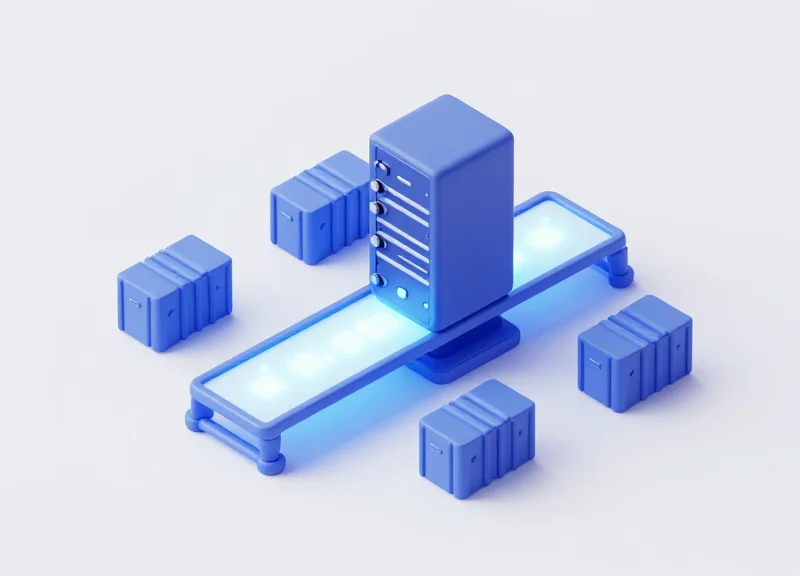
RFID middleware serves as the critical abstraction layer between the physical hardware (readers and antennas) and the logical business environment (WMS/ERP). Its primary function is to resolve the 'firehose' problem: an RFID reader may scan a single pallet 50 times per second, but your ERP only needs to know once when that pallet enters the loading dock. By processing, filtering, and aggregating these raw reads at the edge, the middleware ensures that only clean, deduplicated, and context-aware data packets are transmitted via API to your core systems, preventing database bloat and system latency.
Modern middleware architecture has shifted from simple data pass-through to 'Edge Intelligence.' This involves local compute power that evaluates the 'intent' of a tag read. For instance, if a tag is detected with fluctuating signal strength (RSSI), the middleware determines if the item is truly moving through a portal or simply sitting on a nearby shelf, an architectural necessity for high-density warehouse environments.
| Feature | Legacy Middleware | Next-Gen API-First Middleware |
|---|---|---|
| Data Processing | Centralized (Cloud/Server) | Edge-based (Reader/Gateway) |
| Filtering Logic | Basic Deduplication | Semantic & RSSI-based Intent |
| Connectivity | Proprietary Drivers | RESTful/MQTT/Webhooks |
| Scalability | Linear Hardware Scaling | Microservices/Containerized |
- Signal Smoothing & Noise Reduction: The middleware applies algorithms to ignore 'stray' reads from neighboring zones and removes duplicate entries caused by multi-path interference.
- Data Normalization: Raw hex or binary tag data (EPC) is translated into human-readable formats like JSON, mapping the Tag ID to specific SKU or Batch metadata.
- State Management & Buffering: To prevent data loss during network outages, next-gen middleware maintains a 'Store-and-Forward' buffer, ensuring every critical business event eventually reaches the ERP.
- Business Logic Execution: Thresholds are applied (e.g., 'If item count < 10, trigger restock API call') before the data ever leaves the local network.
{
  "event_type": "item_movement",
  "location_id": "DC_PORTAL_04",
  "timestamp": "2023-10-27T14:20:01Z",
  "action": "INBOUND",
  "filtered_tags": [
    { "epc": "urn:epc:id:sgtin:0614141.012345.6789", "rssi": -52 },
    { "epc": "urn:epc:id:sgtin:0614141.012345.6790", "rssi": -48 }
  ],
  "total_count": 2
}- Expert Tip: Use RSSI Heartbeat for System Health: Don't just filter by RSSI (signal strength) to determine movement. Use the variance in RSSI as a 'heartbeat' diagnostic. A stagnant RSSI with a high read rate often indicates a 'stray' tag that should be programmatically ignored, whereas a rapid signal curve indicates a genuine pass-through event.
- How does middleware handle 'Ghost Reads'?: Ghost reads occur when RF energy reflects off metal or water, reading tags outside the intended zone. Architecting middleware with 'Read Zones' and 'Null Zones' allows the system to compare time-of-flight data to invalidate these false positives.
Strategies for Scaling: Managing Thousands of Readers Simultaneously

Scaling an RFID network to thousands of readers demands a fundamental shift from a 'device-centric' view to an 'orchestration' mindset. In massive deployments across global supply chains, the bottleneck is rarely the reader hardware; it is the network congestion and server-side latency caused by the raw ingest of millions of tag reads. Successful scaling relies on a decentralized architecture where edge computing filters noise at the source, coupled with a high-availability message broker that ensures data persistence even during network outages.
To maintain system integrity as you add devices, you must implement three core pillars: Zero-Touch Provisioning (ZTP), Edge Data Deduplication, and Asynchronous Load Balancing. Without these, a sudden surge in tag reads—such as a simultaneous inventory sweep across 100 warehouses—can create a 'data storm' that overwhelms your ERP's API limits.
| Feature | Small-Scale (1-50 Readers) | Enterprise-Scale (1,000+ Readers) |
|---|---|---|
| Provisioning | Manual IP assignment and UI config | Zero-Touch (DHCP Options + Cloud Direct) |
| Data Handling | Raw stream to WMS/ERP | Edge-filtered 'Actionable Events' only |
| Monitoring | Ping-based heartbeats | Real-time telemetry via MQTT/SNMP |
| Architecture | Point-to-Point (Client-Server) | Pub/Sub Event Bus (Distributed) |
- Implement Zero-Touch Provisioning (ZTP): Automate reader onboarding by using pre-configured templates. When a reader connects to the network, it should automatically check in with a central orchestration controller, download its configuration profile, and update its firmware without manual intervention.
- Edge Intelligence and Filtering: Shift the filtering logic to the reader or an edge gateway. By eliminating 99% of redundant tag reads at the edge, you reduce the bandwidth requirement and ensure your WMS only receives meaningful state changes (e.g., 'Item Departed' vs. 5,000 'Item Present' signals).
- Clustered Message Brokers: Use a clustered MQTT or Kafka broker to decouple device data from your API. This allows the RFID network to continue operating and caching data even if the ERP system is offline for maintenance.
Expert Insight: The 'Shadow Data' Trap. In large-scale deployments, the biggest hidden cost is 'Shadow Data'—valid reads that are irrelevant to business logic. My Silicon Valley experience has shown that by implementing 'Distance-Based Filtering' at the API level (ignoring reads from readers that don't match expected GPS or zone coordinates), you can reduce ERP processing costs by up to 40%.
How do I handle latency across global regions?
Deploy regional edge collectors that aggregate local data before sending summarized batches to your central ERP, reducing the impact of cross-continental latency.
Can my existing ERP handle 5,000 readers?
Likely no, if connected directly. You must use an intermediary high-throughput event bus (like RabbitMQ) to buffer and throttle the data flow into the ERP's REST API.
What happens if a reader goes offline?
Modern enterprise readers support local caching. Once the connection is restored, the reader 'drains' its local database to the middleware, ensuring no loss of inventory visibility.
Data Mapping and Synchronization: Harmonizing RFID with ERP Logic
Synchronizing RFID data with ERP logic is the process of bridging the gap between physical tag movements and digital business records. While an RFID reader captures raw hexadecimal Electronic Product Codes (EPCs), systems like SAP, Oracle, or Microsoft Dynamics 365 operate on structured entities like Stock Keeping Units (SKUs), batch numbers, and purchase orders. To harmonize these, the middleware must perform a 'contextual lookup'—mapping the unique tag ID to its corresponding master data record in the ERP. This ensures that a single tag read at a dock door translates into a 'Goods Receipt' transaction rather than just a log entry in a database.
| RFID Data Point | ERP Mapping Entity | Business Logic Application |
|---|---|---|
| EPC-96 Binary String | Material/SKU + Serial Number | Uniquely identifies an individual asset or product unit. |
| Antenna/Reader ID | Storage Location/Bin | Automatically updates the 'Warehouse Location' field in the ERP. |
| Last Seen Timestamp | Transaction Date/Time | Validates FIFO (First-In, First-Out) compliance and aging. |
| Read Count/RSSI | Confidence Score | Determines if a 'Move' transaction should be triggered or ignored. |
- Decoding and GS1 Normalization: Convert raw hex data into GS1 SGTIN (Serialized Global Trade Item Number) formats to ensure compatibility with global supply chain standards.
- Master Data Enrichment: Query the ERP’s Product Information Management (PIM) module to associate the EPC with specific product attributes like weight, color, or hazardous material status.
- Parent-Child Aggregation: Map individual item tags to their respective pallet or case tags (logical nesting) so the ERP can process a single 'Pallet Received' event for 100 items.
- State-Machine Validation: Check the ERP's current status for the item (e.g., 'In Transit') before allowing a status change to 'In Stock' to prevent data corruption.
Expert Tip: To prevent 'Data Flooding' in your ERP, implement 'State-Change Synchronization' rather than 'Event Synchronization.' Generic integrations often try to update the ERP every time a tag is seen. A Silicon Valley best practice is to only fire an API call when a 'Directional Change' is confirmed (e.g., moving from 'Backroom' to 'Sales Floor'). This reduces ERP overhead by up to 90% and ensures that the system of record only contains high-integrity, actionable movements.
{ "transaction_type": "INV_MOVE", "payload": { "epc": "3034257BF400B7800004CB2F", "sku": "TSHIRT-BLU-LRG", "from_loc": "ZONE_WH_01", "to_loc": "ZONE_RETAIL_04", "timestamp": "2023-10-27T10:15:00Z", "erp_reference": "PO-99821" } }How do we handle RFID reads for items not yet in the ERP?
Implement a 'Quarantine Queue' in the middleware. Tags without a master data match are flagged for manual review or automated vendor-ASN (Advanced Shipping Notice) reconciliation.
What is the best way to sync high-volume batch reads to SAP?
Use asynchronous IDocs or OData services with batching enabled. This prevents the ERP from locking database tables during a massive 5,000-item inventory count.
Can we map RFID data to custom fields in Oracle?
Yes, use the ERP's Flexfields or Extensible Attributes. Common use cases include mapping RFID signal strength to 'Proximity-based Bin Location' for micro-fulfillment.
Edge Computing in RFID: Reducing Latency and Bandwidth Costs
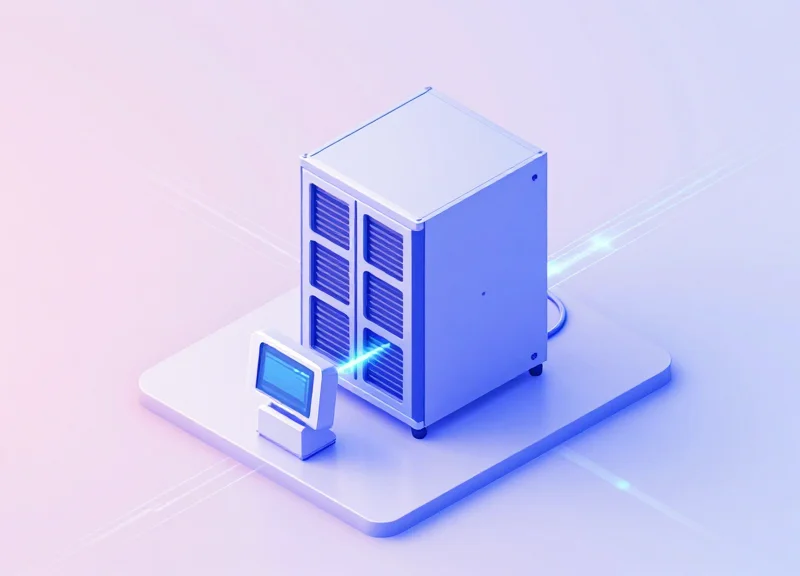
Edge computing in RFID refers to the practice of performing data processing, filtering, and logic execution directly at the reader or local gateway level, rather than transmitting every raw 'ping' to a centralized cloud or ERP server. By shifting intelligence to the network's periphery, organizations can transform a high-frequency stream of thousands of redundant tag reads into a single, actionable business event—such as a 'pallet verified' status—minimizing the strain on corporate bandwidth and ensuring near-instantaneous local reactions.
In a mass device network, an RFID reader might detect the same tag 50 times per second. Without edge processing, sending this 'data noise' across the WAN to an ERP like SAP or Oracle would create massive bottlenecks and unnecessary API overhead. Edge logic solves the 'Data Tsunami' by applying 'Read-Once, Report-Change' filters, ensuring only the delta (the meaningful change in state) is communicated to the core system.
| Feature | Traditional Cloud Processing | Edge-Enabled RFID |
|---|---|---|
| Latency | 200ms - 2s (Dependent on WAN) | < 10ms (Local execution) |
| Bandwidth Usage | High (Transmits all raw reads) | Low (Transmits summarized events) |
| System Reliability | Offline downtime stops operations | Autonomous local operation |
| ERP Payload | Heavy / Redundant | Lean / Contextual |
A critical advantage of edge computing is its ability to drive real-time automation. For example, in a high-speed automated sorting facility, an RFID reader must trigger a physical diverter arm within milliseconds of a tag read. Relying on a round-trip to a cloud-based API introduces too much jitter and latency. By using an edge-side script or a 'Smart Reader,' the decision to divert the package is made locally, while the transaction record is sent to the ERP asynchronously.
def on_tag_read(tag_data):
    # Edge Logic: Filter redundant reads within a 5-second window
    tag_id = tag_data['epc']
    if tag_id not in cache:
        cache[tag_id] = time.now()
        # Trigger local GPIO for conveyor diverter
        trigger_diverter()
        # Send single clean event to ERP API
        erp_client.post('/inventory/move', json={'id': tag_id, 'loc': 'Zone_A'})
    else:
        pass # Ignore redundant noise
Does edge computing replace the need for an RFID middleware?
No, it enhances it. Edge computing acts as the 'first responder' layer of middleware, handling immediate hardware-level filtering, while the central middleware focuses on business logic and multi-site orchestration.
What hardware is required for RFID edge computing?
Most modern Fixed RFID readers (like the Impinj R700) support on-device 'User Apps' or containers. Alternatively, a low-cost IoT gateway or industrial PC can sit between the readers and the network.
Is security compromised at the edge?
Actually, it can be improved. By processing data locally, sensitive raw data stays within the local network, and only encrypted, summarized reports are sent over the public internet to the ERP.
Expert Tip: Implement the '90/10 Rule' of RFID data. In a typical warehouse, 90% of captured data is noise caused by reflections or stationary tags in the reader's field. Designing your edge logic to discard these 'ghost reads' locally is the single most effective way to lower your API consumption costs and improve ERP performance.
Security Frameworks for Enterprise-Grade RFID Integration
Enterprise-grade RFID security is the implementation of multi-layered protocols designed to protect data integrity and privacy across the entire pipeline—from the physical tag read at the edge to the API ingestion point in an ERP or WMS. Unlike consumer IoT, industrial RFID integration requires a Zero Trust architecture where every reader, middleware instance, and API call must be explicitly verified. This framework prevents common vulnerabilities such as tag cloning, unauthorized data sniffing, and 'Man-in-the-Middle' (MitM) attacks that could compromise global supply chain visibility.
| Security Layer | Primary Protocol | Best Use Case | Protection Level |
|---|---|---|---|
| Device Transport | mTLS (Mutual TLS) | Hardening reader-to-middleware communication. | High (Hardware-level identity) |
| API Authentication | OAuth 2.0 / OpenID | Securing WMS/ERP webhooks and endpoints. | Very High (Granular access) |
| Data at Rest | AES-256 Encryption | Storing sensitive tag data in local edge databases. | Critical (Compliance ready) |
| Message Integrity | HMAC (Hash-based MAC) | Validating that tag payloads weren't altered in transit. | Medium-High (Data validity) |
A critical, often overlooked gap in RFID security is the 'Physical-to-Digital Handshake.' While developers focus on API security, the connection between the RFID reader and the local network is frequently left unencrypted. As a veteran of Silicon Valley infrastructure, I recommend implementing Hardware-to-Cloud Attestation. This ensures that the specific physical serial number of a reader is cryptographically bound to its API credentials, preventing a rogue device from masquerading as a legitimate warehouse gate.
- Implement Mutual TLS (mTLS) for Edge Readers: Standard TLS only verifies the server. mTLS requires the RFID reader to present its own certificate, ensuring that only pre-approved hardware can talk to your integration layer.
- Scoped API Scopes and Least Privilege: Never use a global 'Admin' key for device integrations. Create scoped tokens that only allow 'POST' requests for specific endpoints, such as 'inventory_update,' restricting the impact of a compromised device.
- Automated Credential Rotation: Avoid hardcoding API keys in reader firmware. Use a secrets management service (like HashiCorp Vault or AWS Secrets Manager) to rotate credentials every 30 to 90 days automatically.
- Data Masking at the Edge: If an RFID tag contains sensitive PII or proprietary batch codes, mask this data at the middleware level before it hits the public internet, ensuring only non-sensitive identifiers are transmitted.
{
  "header": {
    "alg": "HS256",
    "typ": "JWT"
  },
  "payload": {
    "device_id": "READER_GATE_042",
    "location": "San_Jose_DC",
    "scope": "inventory.write",
    "exp": 1715602400
  },
  "signature": "Strict_HMAC_Verification_Required"
}
How does RFID security impact system latency?
Encryption adds overhead, but using hardware-accelerated chips in modern readers (supporting AES-NI) reduces this to sub-millisecond levels, making it negligible for real-time tracking.
Is EPC Gen2v2 necessary for security?
Yes. If your application involves high-value assets or anti-counterfeiting, Gen2v2 tags provide the cryptographic features needed to prevent unauthorized tag cloning.
How do we handle security for legacy readers?
For readers that do not support modern encryption, place them behind a secure 'Industrial IoT Gateway' that acts as a VPN tunnel or an mTLS-capable proxy to the main network.
Measuring Success: KPI Tracking for RFID-Integrated Systems
Measuring the success of an RFID API integration requires a dual-lens approach: monitoring technical performance at the edge and tracking business outcomes within the ERP or WMS. To achieve a high return on investment (ROI), organizations must move beyond simple 'read counts' and focus on high-fidelity data metrics that reflect the health of the entire communication pipeline, from the physical tag to the final database entry.
| Metric Category | Key Performance Indicator (KPI) | Industry Benchmark Target |
|---|---|---|
| Technical Performance | Read Accuracy Rate (RAR) | > 99.9% in controlled zones |
| Data Velocity | API Payload Round-trip Time | < 200ms (Edge to ERP) |
| System Reliability | Reader Uptime & Connectivity | 99.99% (High Availability) |
| Business Outcome | Inventory Accuracy Improvement | 95% - 98% post-integration |
| Efficiency | Labor Hours per Cycle Count | 80% reduction vs. Barcode |
Expert Insight: The 'Data-to-Decision' Latency Gap. While many engineers focus on reader-to-edge latency, the true bottleneck in mass device networks is often the 'Data-to-Decision' latency. This measures the time from the physical scan to the moment the ERP updates a stock level and triggers a business action (like an automated reorder). In a next-gen integration, your API should aim for 'Zero-Latency Logic,' where edge filtering removes noise so only high-value state changes hit the ERP, preventing database bloat and processing delays.
- Baseline Current Operations: Before deployment, record manual cycle times, shrink rates, and shipping error frequencies to establish a 'before' snapshot.
- Monitor Edge-to-Cloud Throughput: Track the volume of tags processed per second during peak hours to ensure your API gateway can handle burst traffic without dropping packets.
- Validate Data Integrity via Reconciliation: Periodically compare physical RFID reads against ERP stock records to identify 'ghost inventory' or missed tags that indicate hardware misalignment.
- Analyze Exception Frequency: Track how often the system requires manual intervention (e.g., a tag read that doesn't match an expected ASN) to refine your filtering algorithms.
How do I measure the health of a globally distributed RFID network?
Implement a centralized heartbeat monitor that tracks API ping times and 'last-seen' timestamps for every reader across all geographic sites.
What is the most common reason for poor ROI in RFID projects?
Data noise. If your API sends every 'stray' read to the ERP without proper edge filtering, the system becomes slow and the data becomes untrustworthy.
Should I prioritize latency or accuracy?
In supply chain environments, accuracy is paramount. A slightly slower API response (e.g., 500ms) is preferable to a 'fast' response that contains incorrect inventory counts.