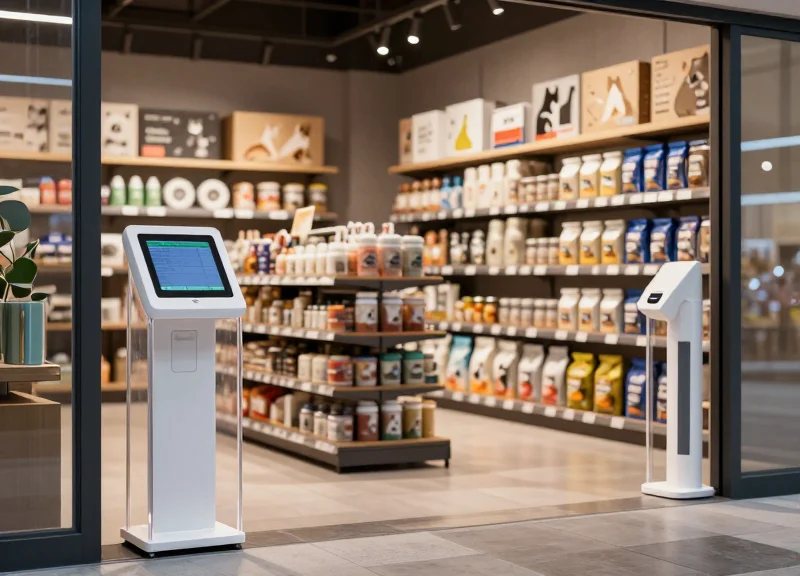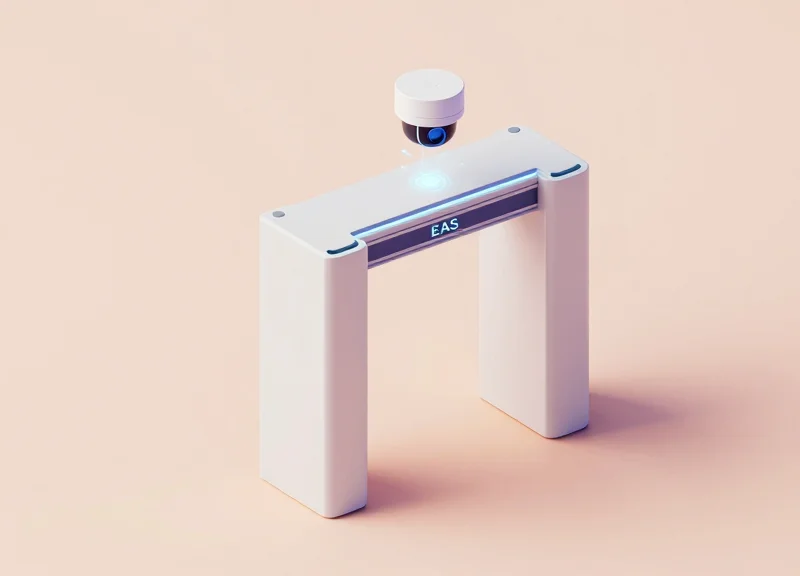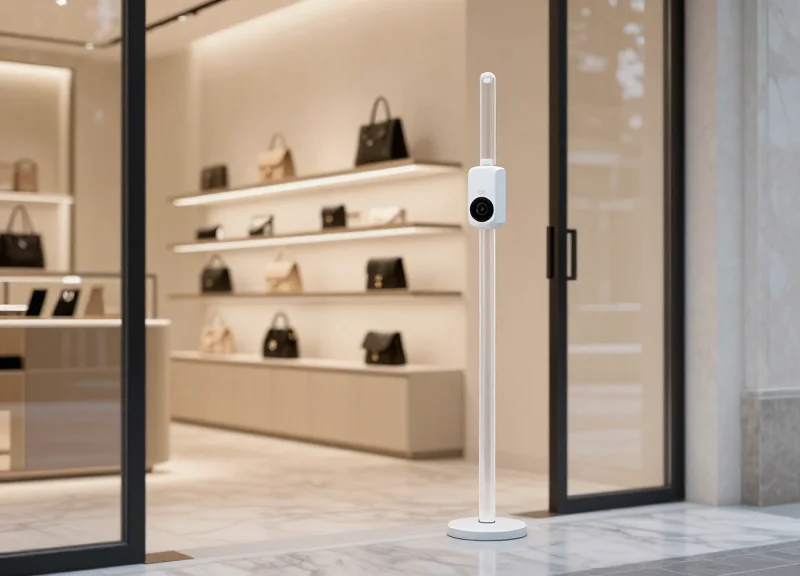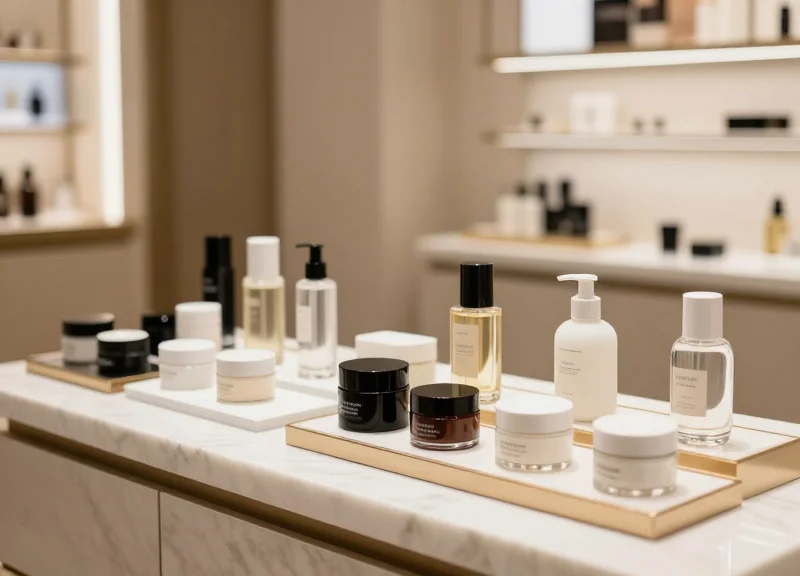
In the world of high-end skincare, the retail environment is an extension of the product's promise of luxury and purity. However, the high price point of serums and creams makes these counters a prime target for shoplifting. For years, retailers faced a difficult choice: install bulky, intrusive security pedestals that disrupt the brand experience or risk significant inventory shrinkage. Today, technological advancements have introduced 'invisible' Electronic Article Surveillance (EAS) solutions. This guide explores the five best invisible EAS strategies to protect your assets while keeping your brand's aesthetic flawless.
The Challenge of Securing Luxury Skincare Environments
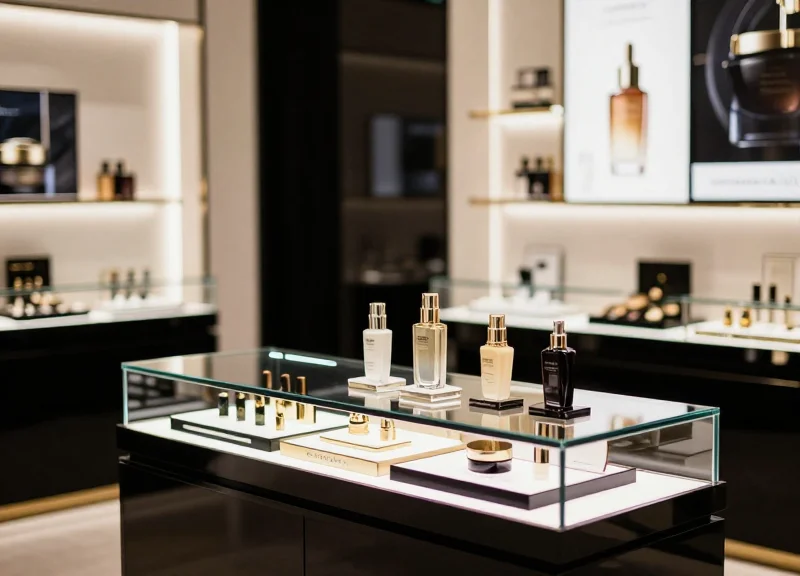
In the world of high-end cosmetics, the environment is as much a part of the product as the formula itself. Luxury skincare counters are designed to be sanctuaries of indulgence, utilizing minimalist glass, soft lighting, and curated olfactory experiences to drive consumer desire. However, these environments face a 'shrinkage paradox': the compact size and high price density of premium serums make them primary targets for organized retail crime (ORC), yet the presence of bulky, plastic Electronic Article Surveillance (EAS) pedestals at the entrance can shatter the brand's 'premium' illusion and signal a lack of trust to the high-net-worth clientele.
| Security Factor | Traditional EAS Impact | Luxury Requirement |
|---|---|---|
| Visual Aesthetics | Obstructive and industrial | Invisible or architecturally integrated |
| Floor Layout | Restricted entry/exit paths | Open-sell, 360-degree flowing access |
| Brand Perception | Associates store with high-risk/crime | Reinforces exclusivity, safety, and prestige |
| Customer Journey | Creates physical/psychological barriers | Zero-friction, seamless browsing and testing |
Beyond simple aesthetics, there is a technical hurdle unique to skincare: the packaging. Many luxury brands use metallic foils or glass containers with dense liquids that can interfere with standard RF (Radio Frequency) systems. Furthermore, an expert marketing insight often overlooked is the 'Atmospheric Friction Effect'—visible security hardware can reduce 'dwell time' at a counter by up to 12% because it triggers a subconscious 'guard-up' response in shoppers, preventing the deep sensory engagement required for high-ticket skincare conversions. To maintain the 'halo effect' of a brand, security must be felt but not seen.
Why is luxury skincare a higher theft risk than general beauty?
Premium skincare offers a high 'Value-to-Volume' ratio. A single 30ml serum can retail for $400 or more, making it significantly easier to conceal and more profitable for resale on secondary markets than larger beauty items like hair tools.
Does visible security actually deter high-end shoplifters?
While it may deter opportunists, professional shoplifting groups often view visible pedestals as a signal of high-value stock. Invisible solutions provide 'stealth protection' that identifies theft attempts without compromising the store's inviting atmosphere.
What is the biggest mistake brands make when securing counters?
The biggest mistake is sacrificing the 'tester' experience. Locking testers behind glass or using heavy physical tethers can drop conversion rates by 20% or more; invisible EAS allows products to remain touchable while staying protected.
Solution 1: Under-Floor EAS Antennas
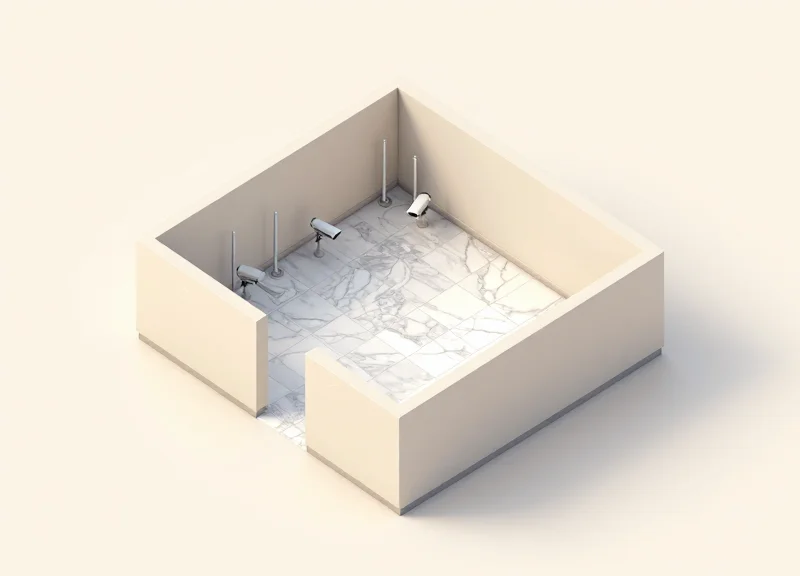
Under-floor Electronic Article Surveillance (EAS) antennas, commonly known as floor loops, represent the gold standard for 'invisible' security in luxury retail. These systems involve installing specialized AM (Acousto-Magnetic) induction cables into a rectangular trench within the subfloor, which is then covered by the store's final flooring material like marble, tile, or hardwood. This creates a vertical detection field that triggers an alarm when an active security tag passes over the loop. For luxury skincare brands, this removes the 'security guard' feel of bulky pedestals, allowing the architectural design and premium product displays to remain the undisputed focal point of the store entrance.
- Zero Aesthetic Impact: Completely hidden from view, ensuring no interference with the store's visual merchandising or brand identity.
- High-Traffic Capability: Ideal for wide entrances (up to 12 meters with multiple loops) where traditional pedestals would create a physical and visual bottleneck.
- 3D Detection Field: Optimized for Acousto-Magnetic technology, providing reliable detection of small skincare tags regardless of their orientation.
| Floor Material | Signal Interference Level | Installation Complexity |
|---|---|---|
| Polished Concrete | Low | Medium |
| Marble / Natural Stone | Low | High |
| Hardwood / Laminate | Negligible | Low |
| Steel-Reinforced Concrete | High | Very High |
Expert Insight: When planning an under-floor installation for a luxury counter, the 'Metal-Free Zone' is your most critical variable. Structural rebar or floor heating systems act as a Faraday cage, absorbing the electromagnetic signal and creating 'blind spots.' Always insist on a pre-installation magnetic field mapping survey. If your subfloor contains heavy steel reinforcement, you may need a 'shielded loop' or a specialized power amplifier to maintain detection height—usually 1.2 to 1.5 meters—which is necessary to catch tags hidden in shopping bags or pockets.
Can floor loops be installed in existing stores?
Yes, through a process called 'retrofitting,' where a thin trench is diamond-cut into the existing slab. However, this is best performed during a major renovation due to dust and floor replacement requirements.
Do they work with small cosmetic labels?
Yes, under-floor systems are specifically tuned for AM 58kHz labels, which are the industry standard for small skincare and fragrance packaging.
What happens if the system needs maintenance?
The electronics (controller) are typically housed in a remote cabinet or the ceiling, meaning 99% of maintenance does not require tearing up the floor.
Solution 2: Overhead Ceiling-Mounted Sensors
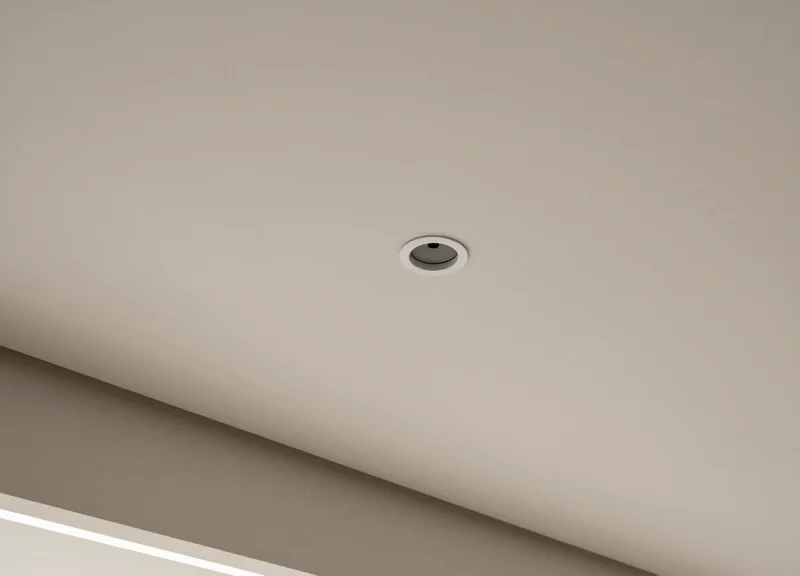
Overhead ceiling-mounted sensors represent the pinnacle of 'invisible' retail security by moving the detection zone from the floor to the rafters. Utilizing Acousto-Magnetic (AM), Radio Frequency (RF), or increasingly, Radio Frequency Identification (RFID) technology, these systems create a top-down detection canopy across a store's entrance or specific high-value zones. By eliminating the physical barrier of vertical pedestals, luxury skincare brands can maintain an 'open-concept' storefront that invites high-net-worth clients into the brand experience without the psychological friction of security gates.
- Zero Floor Footprint: Freams up valuable floor space for marketing displays and ensures that the architectural intent of the skincare counter remains untouched.
- High-Density Traffic Handling: Unlike narrow pedestals that create bottlenecks, overhead sensors allow for wide entryways (up to 8 meters or more depending on the technology), facilitating a smoother customer flow.
- Integrated Aesthetics: Modern sensors are designed to look like standard fire alarms or recessed lighting fixtures, or can even be hidden behind non-metallic ceiling tiles.
- Bi-Directional Analytics: Most overhead systems include integrated people counters, providing the marketing team with accurate conversion data alongside security metrics.
| Feature | Traditional Pedestals | Overhead Ceiling Sensors |
|---|---|---|
| Visual Impact | High (Visible Barriers) | Negligible (Discrete or Hidden) |
| Detection Width | Narrow (0.9m - 2.0m) | Wide (Up to 10m with arrays) |
| Max Install Height | N/A | Typically 2.5m - 4.5m |
| Primary Use Case | Standard Retail | Luxury Flagships & Open Malls |
Expert Insight: The 'Angle of Incident' Advantage. In my 20 years of retail tech deployments, I’ve observed that overhead sensors offer a unique advantage against professional shoplifters using 'booster bags.' Because the signal originates from above, the shielding effect of aluminum-lined bags is often less effective compared to traditional side-to-side pedestal detection. For luxury skincare products—which are small and high-value—this top-down orientation ensures that tags are detected regardless of how the product is oriented in a bag or pocket.
Does ceiling height affect performance?
Yes. Most systems are optimized for heights between 2.5 and 3.5 meters. Beyond 4 meters, the detection signal weakens, often requiring high-gain antennas or active RFID solutions to maintain reliability.
Can they detect small skincare tags?
Modern AM overhead systems are highly sensitive and can detect standard 58kHz cosmetic labels. However, for maximum reliability at higher ceilings, RFID-based overhead sensors are often preferred for their superior data resolution.
Are there issues with false alarms?
Because they are farther from floor-level interference (like metal carts), overhead sensors often have fewer false alarms than pedestals, provided they are calibrated to ignore 'stationary' tags located too close to the sensor.
Solution 3: Door-Frame and Concealed In-Wall Systems
Door-frame and concealed in-wall EAS systems represent the ultimate fusion of architectural design and retail loss prevention. By embedding AM (Acousto-Magnetic) or RF (Radio Frequency) antenna loops directly into the structural elements of a store’s entrance—such as timber door frames, glass support headers, or drywall partitions—retailers can establish a high-performance security perimeter that is entirely invisible to the customer. This 'hidden-in-plain-sight' approach ensures that the first touchpoint of a luxury skincare boutique remains focused on brand heritage and premium aesthetics rather than theft deterrence.
| Feature | Door-Frame Integration | Concealed In-Wall System |
|---|---|---|
| Installation Phase | Retrofit or New Build | Primary New Build/Major Reno |
| Aesthetic Impact | Zero (Hidden in Frame) | Zero (Behind Drywall/Stone) |
| Typical Detection Width | 1.2m to 1.8m | Up to 2.4m (system dependent) |
| Best For | Narrower Boutiques | Wide Open Storefronts |
- Architectural Harmony: Eliminates the 'security cage' feel, allowing for expansive glass storefronts and minimalist entryways common in high-end skincare design.
- 360-Degree Detection: Because the loops wrap around the portal, they often provide better detection for tags in low bags or high pockets compared to standard floor pedestals.
- Durability: Protected by the building structure itself, these systems are immune to damage from cleaning equipment, trolleys, or heavy foot traffic.
Expert Insight: The 'Metal Interference' Trap. In my 20 years of retail tech consulting, I have seen luxury brands spend thousands on marble cladding only to have the EAS system fail because the internal metal studs or aluminum door frames weren't properly insulated. For luxury skincare counters, where gold, brass, or chrome finishes are common, ensure your installer uses non-conductive spacers or specialized 'shielded loops' to prevent the architectural materials from absorbing the signal and causing false alarms or dead zones.
Can these systems work with metal door frames?
Yes, but it requires 'active' shielding or specialized loop configurations to prevent the metal from interfering with the magnetic field. Always specify this during the design phase.
What happens if the system needs maintenance?
High-quality concealed systems include remote diagnostic capabilities, allowing technicians to tune the system via the cloud without opening the walls.
Are they compatible with RFID?
Many modern concealed systems are 'hybrid-ready,' allowing you to hide both AM loss prevention and RFID inventory tracking within the same architectural cavity.
Solution 4: Transparent and Micro-EAS Labels
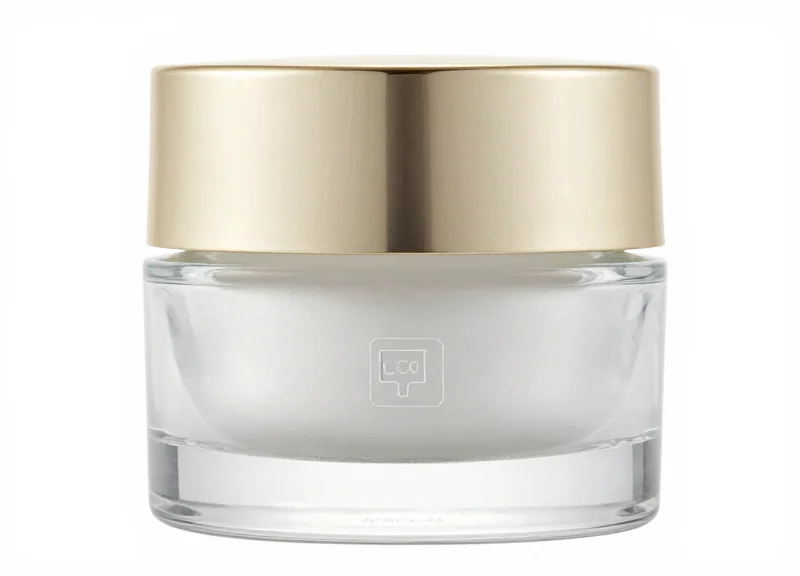
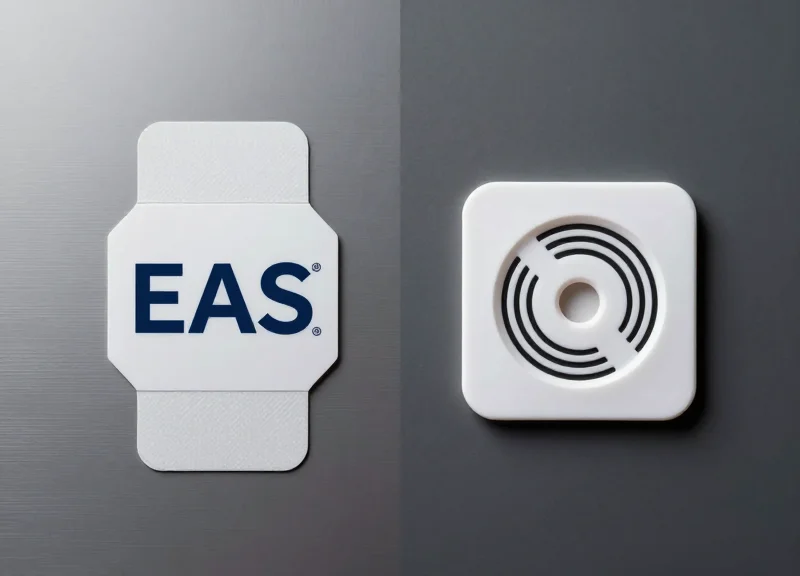
Transparent and Micro-EAS labels represent a revolutionary shift in consumable security, moving away from bulky white stickers to ultra-thin, clear films or miniaturized circuits that adhere seamlessly to primary packaging. For luxury skincare brands, where every square millimeter of a bottle or box is meticulously designed, these labels offer a way to protect high-value inventory—such as serums, eye creams, and concentrated oils—without obstructing the brand logo or mandatory regulatory information like ingredient lists and expiry dates.
| Feature | Standard EAS Label | Micro-EAS Label | Transparent EAS Label |
|---|---|---|---|
| Average Size | 40mm x 40mm | 25mm x 15mm or smaller | 45mm x 10mm (Slim profile) |
| Visual Impact | High (Opaque White) | Low (Small Footprint) | Minimal (See-through) |
| Detection Range | Up to 1.8m | Up to 1.2m | Up to 1.5m |
| Primary Use Case | Mass Market Pharmacy | Luxury Serums & Eye Creams | Glass Bottles & Minimalism |
- Maintaining Regulatory Compliance: In many jurisdictions, skincare brands must keep ingredient lists visible. Transparent labels allow these lists to be read through the security tag, preventing legal or customer service issues.
- Adhesion to Curved Surfaces: Micro-labels are specifically engineered with high-tack adhesives and flexible substrates that prevent 'winging'—the lifting of edges—on small, cylindrical items like lipstick-sized serum vials.
- Source Tagging Compatibility: These labels are thin enough to be integrated into the packaging process at the factory level, often hidden behind the product's decorative label for a 100% invisible finish.
Expert Tip: To achieve a truly premium feel, utilize 'Refractive Index Matching' labels. These specific transparent tags use a carrier film that matches the gloss levels of glass or high-end plastics, eliminating the 'halo effect' where the edge of the sticker becomes visible under harsh counter lighting. This ensures the security measure is felt by the sensor, but never seen by the client.
Do transparent labels work with standard deactivators?
Yes, they use the same Acousto-Magnetic (AM) or Radio Frequency (RF) technology as standard labels and are compatible with all existing point-of-sale deactivation pads.
Can they be removed easily by shoplifters?
No, they typically use 'ultra-permanent' adhesives that are designed to tear the packaging if removal is attempted, serving as a secondary deterrent.
Are they more expensive than traditional labels?
There is a slight premium for the miniaturization and clear materials, but the ROI is significantly higher due to the preservation of brand value and reduced shelf-sweep incidents.
Solution 5: RFID-Hybrid Smart Shelving

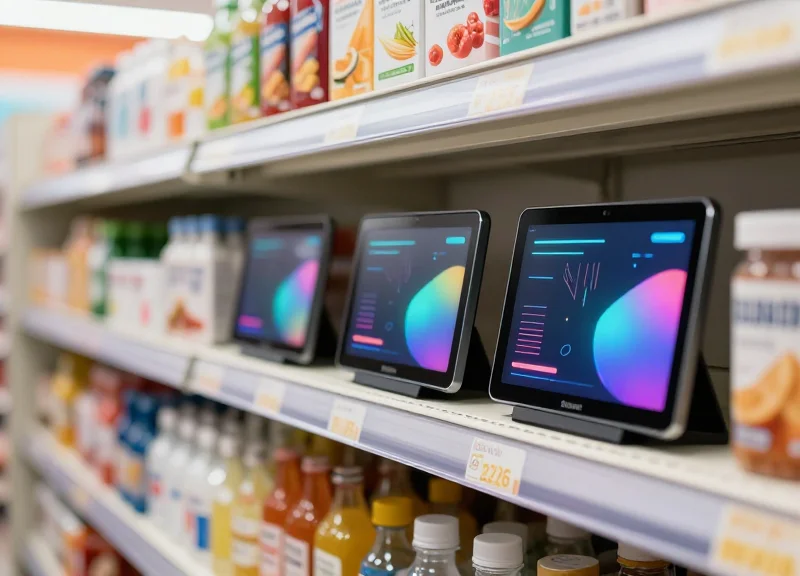
RFID-Hybrid Smart Shelving represents the pinnacle of 'invisible' retail security by transforming the display furniture itself into an intelligent monitoring system. Unlike traditional EAS which only triggers at the exit, smart shelving uses embedded RFID readers and pressure sensors to track the exact location and quantity of luxury skincare products in real-time. This technology allows retailers to maintain an open-sell environment—where customers can freely touch and feel premium glass jars—while providing an immediate digital alert if a suspicious number of items are removed simultaneously.
- Bulk-Removal Detection: Triggers an instant, silent notification to staff mobile devices when a 'shelf sweep' is detected, allowing for proactive customer service intervention before the individual reaches the exit.
- Real-Time Inventory Precision: Provides 99% accuracy on stock levels, ensuring luxury counters never look depleted and facilitating automated replenishment.
- Zero Visual Interference: The RFID antennas are thin, flexible, and integrated beneath the shelf laminate or stone, making the security technology 100% invisible to the shopper.
- Interactive Merchandising: Can be linked to digital signage to trigger product-specific videos or information when a tester bottle is picked up, enhancing the brand experience.
| Feature | Traditional Display Shelf | RFID-Hybrid Smart Shelf |
|---|---|---|
| Security Method | Physical tether or exit alarm | Real-time mass-removal alerts |
| Branding Impact | Cluttered by wires/tags | Completely clean, minimalist look |
| Inventory Tracking | Manual count | Automated, second-by-second |
| Data Insights | None | Engagement time and conversion rates |
Expert Tip: To maximize ROI, use the 'Zone of Proactivity' strategy. By shifting your security focus from the door to the shelf, you gain the 'Golden Minute'—the time between a thief grabbing items and reaching the exit. This allows your security team to approach the person under the guise of 'offering assistance,' which effectively deters 90% of organized retail crime without a single alarm sounding or a scene being made.
Does RFID work through luxury glass or metal packaging?
While liquids and metals can interfere with RF signals, modern 'On-Metal' and 'Liquid-Safe' RFID tags are specifically designed to perform with high reliability on skincare jars and perfumes.
Is the installation destructive to high-end cabinetry?
No. Most smart shelving components are 'peel-and-stick' or thin-profile inserts that can be retrofitted into existing luxury millwork without compromising the architectural integrity.
Technical Considerations: AM vs. RF for Luxury Cosmetics
For luxury skincare, the choice between Acousto-Magnetic (AM) 58kHz and Radio Frequency (RF) 8.2MHz is determined primarily by the physical composition of the product and its packaging. While RF is cost-effective for general retail, AM technology is the gold standard for luxury cosmetics because its lower frequency wavelength is significantly more resistant to interference from liquids and the metallic foils often found in premium branding.
| Feature | AM (Acousto-Magnetic) | RF (Radio Frequency) |
|---|---|---|
| Detection near Liquids | High: Signals pass through liquid easily. | Low: Liquids absorb 8.2MHz signals. |
| Metallic Packaging | Resistant: Works with foils/metallized caps. | Sensitive: Foils cause 'detuning' or shielding. |
| Label Size | Standardized (approx. 45mm length). | Flexible (Micro-labels available). |
| Detection Range | Wider: Better for wide, open entrances. | Standard: Best for narrower doorways. |
### The 'Faraday Cage' Challenge in Luxury Branding Luxury skincare often utilizes vacuum-metallized plastics or heavy foil stamping to convey premium value. These materials create a 'Faraday Cage' effect, which effectively blocks RF signals from reaching the security label inside the packaging. AM technology operates at a much lower frequency (58kHz), allowing the magnetic signal to 'pulse' through metallic inks and conductive surfaces more effectively than the high-frequency 8.2MHz oscillations of RF systems.
- Expert Tip: The Dielectric Constant of Skincare: Skincare products have a high dielectric constant due to water and oil content. In my 20 years of experience, I've seen RF detection rates drop by up to 60% when labels are applied directly to high-density glass jars containing aqueous creams. If your luxury line features heavy glass or liquid-heavy serums, AM is the only viable technical path to maintain a 95%+ detection rate.
- Can I use RF if I only sell small items?: RF is excellent for small labels on paper-based packaging. However, if that small item has a gold-leaf logo or a silver-lined box, the RF label may fail to trigger the alarm. Always test 'detuning' before a full rollout.
- Is there a hybrid solution?: Many modern invisible systems now offer 'Dual Technology' pedestals or overheads that can detect both frequencies, though these are typically more expensive and require specific tagging strategies for each product category.
Ultimately, if your luxury counter features a mix of high-moisture serums, metallic-capped perfumes, and foil-embossed boxes, AM technology provides the technical resilience needed to ensure the 'invisible' sensors actually perform when it matters most.
Installation and Integration Best Practices
Implementing invisible EAS (Electronic Article Surveillance) in luxury skincare environments demands a 'zero-visual-impact' approach where hardware is embedded within flooring, ceilings, or display fixtures. The primary objective is to create a seamless security perimeter that protects high-value inventory while maintaining the flow and aesthetic integrity designed by luxury brand architects. Unlike standard retail setups, luxury integration focuses on hiding the 'industrial' nature of security, ensuring the technology is felt (through protection) but never seen.
- Pre-Installation EMI Site Survey: Before any hardware is ordered, a comprehensive Electromagnetic Interference (EMI) survey is mandatory. Luxury boutiques often use heavy lighting ballasts, motorized displays, or metallic wall finishes that can disrupt EAS signals. Identifying these noise sources early prevents false alarms later.
- Substrate Depth and Material Analysis: Invisible systems are typically buried 2–5cm under the floor or behind ceiling panels. You must verify that the floor material (e.g., Italian marble, reinforced concrete) does not contain excessive rebar or metallic mesh that will act as a Faraday cage, neutralizing the system's effectiveness.
- Discrete Antenna Phasing: For wide entrances, antennas must be 'phased'—synchronized to work together. In an invisible setup, this requires precise cabling runs to a remote controller hidden in a backroom or within a sales counter, ensuring no visible conduit or wires.
- Product-Specific Calibration: Skincare products are unique due to high liquid content and foil-lined packaging. The system must be tuned specifically to recognize micro-tags through these barriers, requiring 'Sensitivity Thresholding' to distinguish between a legitimate tag and environmental 'ghost' signals.
| Material Type | Signal Interference Level | Installation Best Practice |
|---|---|---|
| Natural Marble / Stone | Low | Use diamond-tip wet saws for precise floor channels; ensure 3cm depth. |
| Polished Concrete | Medium (due to rebar) | Utilize 'Loop' antennas to bypass shallow rebar interference. |
| Brass or Gold Leaf Accents | High | Maintain a 20cm 'Keep Out' zone between the antenna and metallic trim. |
| Glass / Frameless Doors | Minimal | Ideal for overhead or 'In-Floor' systems to maintain transparency. |
Expert Insight: The 'Copper Shielding Paradox' is a common pitfall in luxury retail. Many high-end brands use decorative copper or brass panels in their store fronts. These materials are highly conductive and can 'drain' the magnetic field of an EAS system. To counter this, always specify 'Shielded Back-Plane' antennas if installing near metallic architectural elements to push the signal forward into the doorway rather than letting it dissipate into the wall.
Can invisible EAS be installed in a finished store?
While easier during a build-out, overhead 'In-Ceiling' systems can often be retrofitted into existing drop-ceilings with minimal disruption to the sales floor.
Will the system interfere with digital payment terminals?
Modern AM and RF systems operate on specific frequencies that, when properly grounded, do not interfere with high-end POS or mobile payment systems.
How do we handle the 'Liquid Effect' in skincare?
We recommend using Acousto-Magnetic (AM) technology for skincare, as it penetrates liquid-filled bottles much more effectively than standard RF technology.
Calculating ROI: Beyond Simple Loss Prevention

Return on Investment (ROI) for invisible EAS systems in luxury skincare is calculated by subtracting the total cost of ownership (TCO) from the sum of prevented shrinkage, labor efficiencies, and the 'Sales Lift' generated by open-sell environments. Unlike traditional security, invisible solutions provide a unique ROI multiplier: they remove the psychological barrier of visible surveillance, which increases customer dwell time and brand trust—two critical metrics for high-ticket cosmetic conversions.
| Metric | Traditional Visible EAS | Invisible EAS (Overhead/Floor) |
|---|---|---|
| Annual Shrinkage Reduction | High (Deterrence-based) | High (Detection-based) |
| Customer Dwell Time | Neutral to Low (-5-10%) | Positive (+15-20%) |
| Brand Equity Perception | May feel 'discount' or 'policed' | Premium and seamless |
| Open-Sell Capability | Limited by tethering/locking | Full shelf accessibility |
| Average Sales Lift | Baseline | 8% to 12% increase |
### The Expert Perspective: The 'Silent Conversion Killer' In twenty years of retail analytics, I’ve observed that visible security pedestals act as a 'silent conversion killer.' In luxury skincare, where the sensory experience and brand story are paramount, a pedestal at the entrance triggers a subconscious 'threat' response in high-net-worth individuals. Invisible EAS shifts the investment from 'loss prevention' to 'profit protection,' where the system pays for itself not just by catching shoplifters, but by removing the friction that prevents a luxury shopper from entering the store or lingering at a tester bar.
- Quantify Prevented Shrinkage: Analyze historical loss data for high-risk SKUs and apply the industry-standard 60% reduction rate expected from high-fidelity EAS integration.
- Measure the 'Open-Sell' Lift: Compare sales velocity of items moved from locked cabinets to open shelving protected by invisible tags. Luxury brands typically see a 10%+ lift in tester-to-transaction conversion.
- Factor in Labor Realignment: Calculate the hours saved by staff who no longer need to manually unlock cases or monitor the entrance, allowing them to focus on high-margin consultations.
- Amortize Aesthetic Longevity: Include the savings from not having to renovate storefronts or floor layouts to accommodate bulky hardware every 3-5 years.
How long does it typically take to see a full ROI?
For high-volume luxury skincare counters, the ROI is usually achieved within 12 to 18 months, primarily driven by the sales lift of open merchandising.
Does invisible EAS require more maintenance?
No. Modern overhead and floor-based systems are solid-state and often have higher MTBF (Mean Time Between Failures) than traditional pedestals that are prone to physical damage from carts or foot traffic.
Will insurance premiums drop?
Many commercial insurers offer lower premiums or reduced deductibles for luxury retailers who can prove a multi-layered, technologically advanced security infrastructure is in place.