For premium retailers and collectors, the packaging is often as valuable as the product itself. The 'mint condition' status can be instantly devalued by a single adhesive tear or an unauthorized box opening. At DragonGuardGroup, we understand that security should never come at the cost of product aesthetics or resale value. This guide explores how to implement professional EAS security using non-damaging labels, ensuring your inventory remains pristine while staying fully protected from shrinkage and shelf tampering.
The High Stakes of 'Mint Condition' Inventory
'Mint Condition' inventory represents the gold standard of retail assets, where the product's value is inextricably linked to the pristine state of its original packaging. For high-end electronics, limited-edition collectibles, and luxury goods, a broken seal or a dented corner does not just signify a used item—it triggers an immediate and significant financial depreciation. In these sectors, unauthorized unboxing is a form of 'invisible theft' where the physical item remains, but its market premium evaporates the moment the factory seal is compromised.
| Product Category | Sealed/Mint Value | Damaged Packaging Value | Estimated Loss |
|---|---|---|---|
| Consumer Electronics | $1,200 (MSRP) | $850 - $900 (Open Box) | 25% - 30% |
| Designer Fragrances | $250 (Retail) | $150 (Tester/Unboxed) | 40% |
| Vintage/Action Figures | $500 (MISB) | $200 (Loose/Damaged) | 60% |
| High-End Sneakers | $400 (Deadstock) | $280 (Damaged Box) | 30% |
A unique insight often overlooked by standard loss prevention strategies is the 'Shadow Shrinkage' phenomenon. While traditional shrinkage focuses on missing units, shadow shrinkage occurs when the unit is still on the shelf but has been rendered unsellable at full price due to aggressive adhesive labels or customer 'browsing' that results in torn cardboard. For a retailer, the cost of a ruined box can often exceed the cost of the security measure meant to protect it, creating a paradoxical loss where the security tag itself devalues the inventory.
Why does the box matter so much for modern consumers?
The packaging serves as a certificate of authenticity and a guarantee of hygiene/virgin state. In the secondary market (eBay, StockX), 'New In Box' (NIB) status is a binary requirement for top-tier pricing.
Can't retailers just re-shrink-wrap damaged items?
No. Savvy consumers and professional graders can easily distinguish between factory-applied heat-shrink and in-store re-wraps. Any sign of tampering immediately raises flags regarding the item's authenticity or history.
How does unauthorized unboxing impact inventory turnover?
Damaged goods often become 'dead stock' that requires manual intervention, price overrides, and floor-space-consuming 'clearance' sections, slowing down the overall sell-through rate.
The Conflict: Security vs. Original Packaging Integrity
The conflict between loss prevention and product presentation is defined by the 'Destructive Adhesive Dilemma': standard Electronic Article Surveillance (EAS) labels are engineered with high-tack, permanent adhesives designed to prevent tampering. While effective for security, these adhesives create a chemical or physical bond with the packaging substrate—whether it be cardstock, litho-laminated paper, or plastic film. When a customer or reseller attempts to remove a traditional tag, the force required often exceeds the structural integrity of the packaging, resulting in fiber tear, surface delamination, or unsightly 'ghosting' residue that can devalue a collectible or high-end electronic item by up to 40%.
| Damage Type | Cause | Impact on Resale Value |
|---|---|---|
| Fiber Tear | Adhesive bond stronger than paper fibers | Severe: Often renders item 'Non-Mint' |
| Adhesive Residue | Chemical breakdown of the glue layer | Moderate: Requires solvent cleaning which may stain |
| Ink Lifting | Label bonds to the printed graphic layer | High: Destroys visual branding and aesthetic |
| Surface Scuffing | Friction from hard-tag pin insertion | Moderate: Permanent physical denting or holes |
This friction creates a paradox for high-volume retailers. To prevent 'unauthorized unboxing'—where shoplifters remove high-value items and leave empty boxes on shelves—security must be visible and difficult to remove. However, for items like limited-edition sneakers, high-end skincare, or consumer electronics, the box is part of the product. Damaging the box is equivalent to damaging the internal componentry in the eyes of the premium consumer.
Why do traditional labels leave 'ghosting' marks?
Ghosting occurs due to adhesive migration, where the chemical components of the glue seep into the porous layers of the packaging over time, causing a permanent discoloration or oily stain even if the label is peeled off.
Can't we just use 'low-tack' stickers?
Standard low-tack stickers are easily peeled off by shoplifters in seconds, defeating the purpose of EAS. The challenge is finding a 'smart' adhesive that holds firm against casual removal but releases cleanly under specific professional conditions.
Does 'unauthorized unboxing' actually affect shrink rates?
Yes. Statistics show that 'empty box' theft accounts for a significant portion of retail shrink in the electronics and toy sectors, as it allows thieves to conceal smaller items more easily.
Expert Insight: The Time-Temperature Factor. One detail often overlooked by inventory managers is that the 'bond' of a security label isn't static. Through a process called 'cross-linking,' the adhesive on a standard EAS label becomes more aggressive the longer it sits in a warm warehouse or under hot retail display lights. What was a removable tag on day one becomes a permanent part of the box by day thirty. To maintain 'mint' status, retailers must utilize pH-neutral, non-migratory adhesives specifically designed for archival-grade surfaces.
Types of Non-Damaging EAS Labels: AM vs. RF Technologies
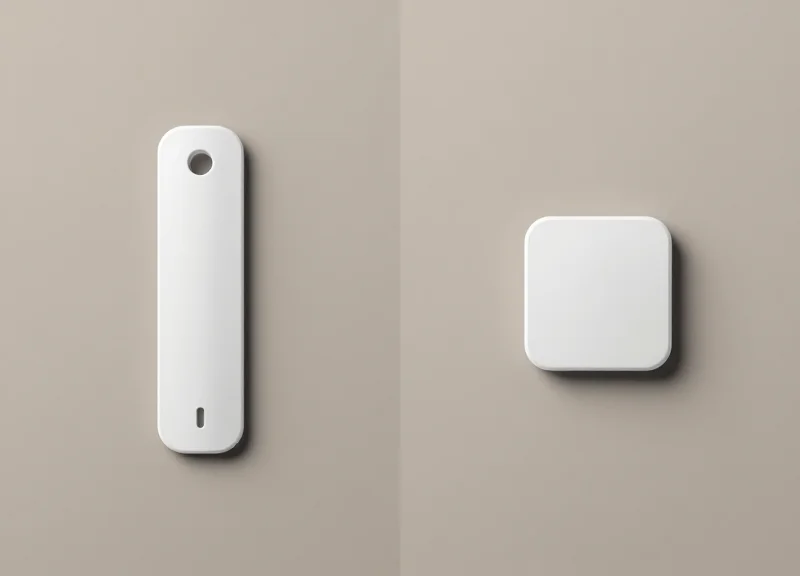
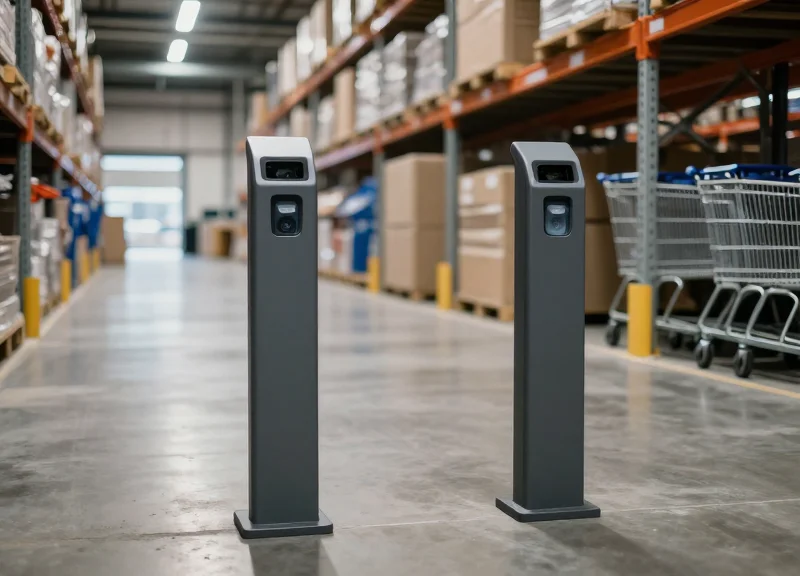
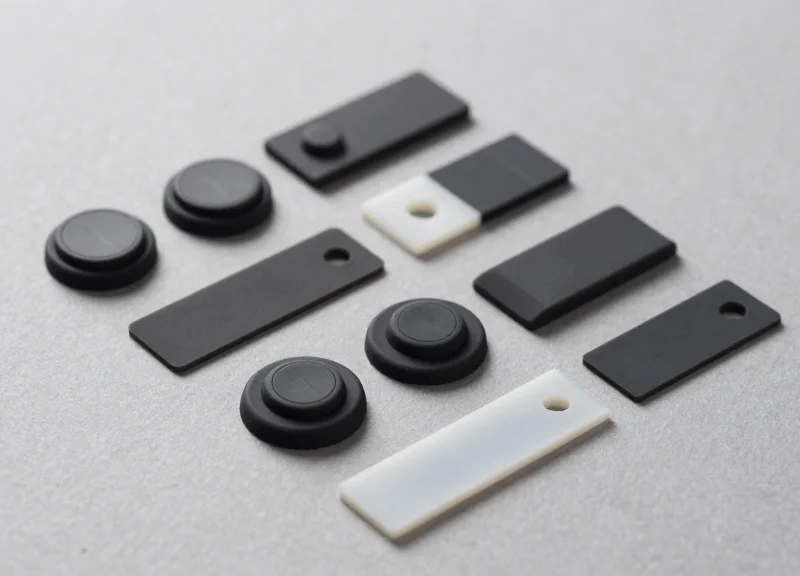
To protect 'mint condition' inventory without compromising packaging integrity, retailers must choose between two primary Electronic Article Surveillance (EAS) technologies: Acousto-Magnetic (AM) and Radio Frequency (RF). AM labels operate at a 58 kHz frequency and are characterized by their slightly thicker, plastic-housed profile, making them ideal for high-end electronics and products with metallic components. In contrast, RF labels operate at 8.2 MHz and are typically paper-thin, allowing them to be integrated seamlessly into barcodes or flat surfaces. Selecting the correct technology is the first step in ensuring that security measures remain invisible to the customer but invincible to shrink.
| Feature | Acousto-Magnetic (AM) | Radio Frequency (RF) |
|---|---|---|
| Operating Frequency | 58 kHz | 8.2 MHz |
| Physical Profile | 3D 'Bubble' Plastic (Thicker) | Paper-thin / Flat |
| Metal Interference | Low (Works near foil/metal) | High (Shielded by metal/foil) |
| Best For | Luxury goods, electronics, tools | Apparel, books, boxed software |
| Deactivation | Contactless (High distance) | Contact-based or close proximity |
AM technology is often the 'gold standard' for high-value items because its signal can penetrate metallic packaging—a common feature in luxury electronics or collectible tins. However, because AM labels are thicker, they require specialized 'non-residue' adhesives that prevent the plastic housing from creating a pressure-mark on the cardboard box beneath. RF labels, while thinner and easier to hide, can be 'tuned out' by metallic inks or foil stamping on high-end packaging. For 'mint condition' items, the choice often hinges on whether the packaging itself contains materials that would interfere with the RF signal.
Expert Tip: The 'Adhesive Ghosting' Factor. In my 20 years in the industry, I have seen 'safe' adhesives fail because of UV exposure. Over time, sunlight can cause a chemical reaction between standard security adhesives and the box's laminate, leading to 'ghosting'—a permanent discoloration of the artwork. When protecting collectibles, always specify 'pH-neutral' or 'removable-grade' adhesives that are specifically tested for long-term archival stability, not just short-term retail use.
Can I use an RF label on a product with metallic foil accents?
It is risky. Metallic foil can create a 'Faraday cage' effect that de-tunes the label, rendering it invisible to the detection gates. For packaging with heavy metallic ink or foil, AM labels are the safer choice.
Do non-damaging labels work with existing security gates?
Yes, but they must match the frequency. An AM label will not trigger an RF gate and vice versa. The 'non-damaging' aspect refers specifically to the adhesive chemistry, not the signal frequency.
Which technology is better for curved surfaces?
RF labels are more flexible and can wrap around curved packaging (like canisters) more easily than the rigid plastic housing of standard AM labels.
Choosing the Right Adhesive: Residue-Free and Peelable Solutions
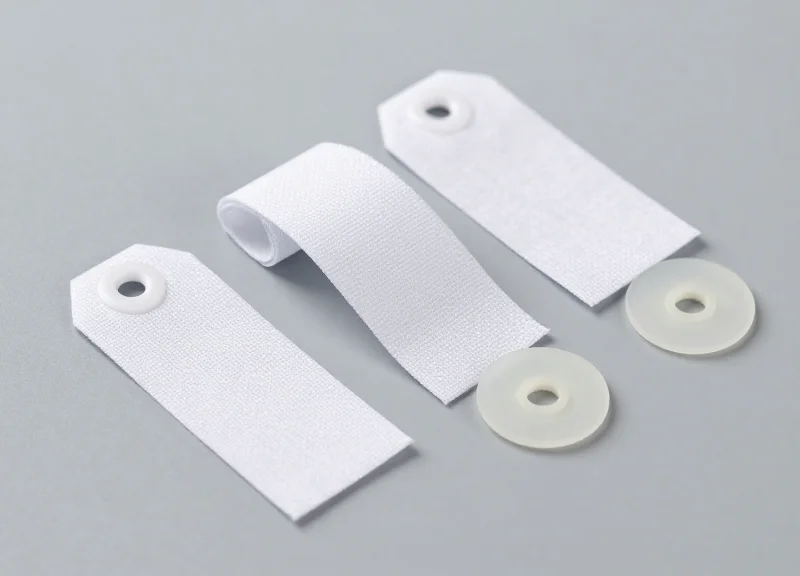
To maintain 'mint condition' status, retailers must utilize Removable Pressure-Sensitive Adhesives (PSAs) that leverage high internal cohesion to ensure the bond breaks at the substrate interface rather than within the adhesive layer itself. Unlike permanent adhesives that create a destructive bond with paper fibers or plastic polymers, residue-free EAS labels use specialized cross-linked acrylics or microsphere adhesives. These solutions provide sufficient initial 'tack' to prevent casual peeling by shoplifters, yet they feature a low 'peel build' over time, allowing the label to be removed months later without leaving sticky polymers or tearing the underlying graphic art.
| Adhesive Category | Bond Strength | Removal Characteristics | Best Use Case |
|---|---|---|---|
| Ultra-Removable | Low to Moderate | Zero residue; repeatable stick. | High-gloss collectibles and thin shrink-wrap. |
| Removable (Peelable) | Moderate | Clean lift; no fiber tear. | Matte cardstock, luxury electronics boxes. |
| Static Cling / Low-Tack | Very Low | Non-chemical bond. | Glass, smooth plastics, or acrylic cases. |
| Permanent (Standard) | High | Destructive; leaves residue. | Disposable shipping boxes only. |
### The Expert Perspective: The 'Ghosting' Phenomenon A common pitfall in retail security is 'ghosting'—a shadow left behind after a label is removed. This isn't always adhesive residue; it is often a UV-exposure discrepancy or a chemical reaction between the adhesive and the box's protective aqueous coating. To avoid this, always specify 'non-migratory' adhesives. These prevent plasticizers from leaching into the packaging, which is the primary cause of permanent staining on high-value cardboard.
- The Clean Peel Test: Before a full-scale rollout, apply a sample EAS label to a non-visible area of the packaging and leave it for 72 hours to allow the adhesive to 'set'.
- Temperature Stressing: Place the test sample in a warm environment (approx. 100°F) for 24 hours to simulate warehouse conditions, as heat can accelerate adhesive migration.
- Slow-Angle Removal: Peel the label at a 90-degree angle at a slow, consistent speed. If the label snaps or leaves 'legs' (tiny strands of glue), the adhesive is too soft for the substrate.
- Surface Energy Check: Verify if the packaging has a 'soft-touch' or silicone coating; these low-surface-energy finishes require specific 'high-tack removable' adhesives to prevent the labels from falling off prematurely.
Will peelable labels fall off during shipping?
No. When correctly specified, removable adhesives have high shear strength, meaning they resist sliding or falling off during transit, even though they have low peel strength for easy removal.
Can I use heat to help remove a stubborn EAS label?
Avoid using heat guns on mint-condition inventory, as heat can warp plastic windows or melt the lamination on the box. Instead, use a specialized adhesive solvent applied sparingly to a microfiber cloth if a standard peel fails.
Does the age of the label matter?
Yes. Adhesives have a shelf life. Using 'dead stock' EAS labels can lead to adhesive crystallization, making them either impossible to remove or prone to falling off.
Strategic Placement: Where to Apply Labels for Maximum Security
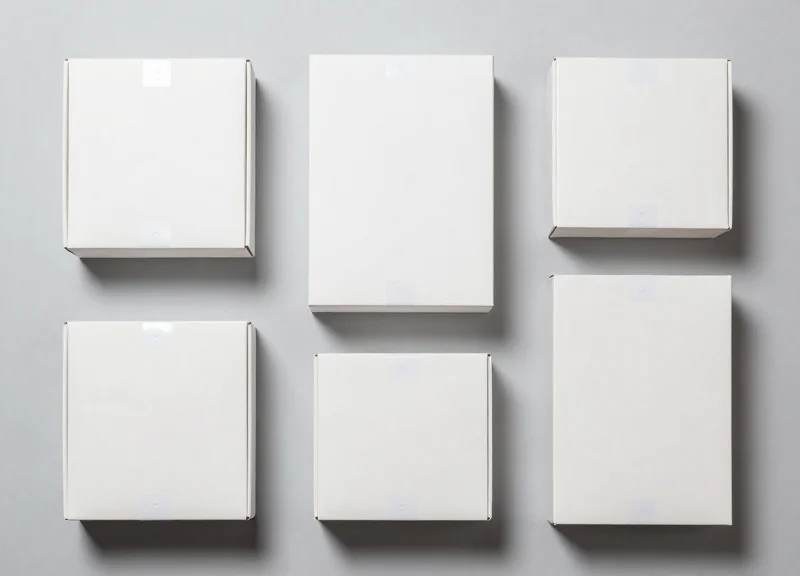
Strategic placement of EAS (Electronic Article Surveillance) labels requires balancing maximum sensor detection with minimal impact on packaging aesthetics. For high-value 'mint condition' goods, the ideal placement is over the primary box opening or on the base of the packaging, ensuring the sensor bridges a seam to prevent unauthorized unboxing without damaging the collector-grade surfaces.
The goal is to create a 'psychological and physical barrier.' When a label is placed strategically, it serves two purposes: it ensures a high alarm rate at the exit pedestals and signals to potential 'box-swappers' or 'parts-raiders' that the integrity of the seal is monitored. In the world of high-end collectibles and electronics, the box is often as valuable as the contents; therefore, placement must be surgical.
| Placement Location | Security Level | Visual Impact | Best Use Case |
|---|---|---|---|
| Bottom Surface (Base) | High | Low | Mainstream electronics, heavy boxed sets |
| Flap Seam (Bridge) | Maximum | Moderate | Preventing 'unboxing' or internal component theft |
| Behind Hang Tab | Medium | Invisible | Small carded items, action figures |
| Internal (Inside Flap) | High | Zero | Luxury goods where the exterior must remain untouched |
Expert Tip: The Shadow-Gap Strategy. For electronics, never place the label directly in the center of a large flat surface. Instead, place it near the corner where the internal product's logic board or battery is located. This 'Shadow-Gap' technique uses the product's own density to help modulate the EAS signal, often making it harder for amateur shoplifters to shield the signal with their hands or body while exiting.
- The 'Seam-Bridge' Technique: Apply the label so it covers the tiny gap where the box flap meets the main body. This ensures that any attempt to open the box will immediately tension the label, acting as a tamper-evident seal.
- Avoid Barcode Interference: Never place EAS labels directly over the manufacturer’s UPC or serial number. This forces the cashier to peel the label to scan the item, which is exactly what we want to avoid for mint-condition inventory.
- Orientation Consistency: Apply all labels in the same orientation (vertical or horizontal) across your inventory. This helps staff identify genuine stock from potential 'look-alike' tampered boxes at a glance.
Will placing a label on the bottom affect signal strength?
No. EAS pedestals are designed to catch signals at various heights. Placement on the bottom of a box is actually preferred as it is less likely to be 'shielded' by the shopper's arm while carrying the item.
How do I prevent the label from being 'scuffed' off?
For items that are frequently slid across shelves, use a 'sub-surface' placement or apply the label slightly recessed from the edge of the box bottom to avoid friction peeling.
Can I hide the label inside the box?
Yes, this is known as 'Source Tagging' or 'Source Placement.' It is the ultimate way to protect mint condition packaging, provided the label is applied during the manufacturing or kitting process before the box is sealed.
Tools and Techniques for Damage-Free Application
Damage-free EAS label application is achieved through a 'Zero-Trace Protocol'—a systematic approach that utilizes micro-pressure techniques and specialized handling tools to prevent substrate deformation, surface scratches, or adhesive migration. By prioritizing the physics of the bond over brute force, retailers can secure high-value collectibles and luxury electronics while maintaining the pristine 'factory-sealed' status essential for resale value.
| Tool | Purpose | Benefit for Mint Inventory |
|---|---|---|
| Nitrile Gloves (Powder-Free) | Prevent skin oil transfer | Eliminates 'ghost' fingerprints on glossy surfaces |
| Precision Tweezers | Centering and alignment | Prevents edge-peeling and accidental corner dings |
| Silicone Rubber Roller | Even pressure distribution | Avoids the localized crushing caused by thumb pressure |
| Anti-Static Microfiber | Surface preparation | Removes dust that causes adhesive 'bubbles' |
- Surface Neutralization: Wipe the application zone with a dry, anti-static microfiber cloth. Avoid chemical cleaners unless specified by the manufacturer, as solvents can degrade the box's aqueous coating or ink.
- The 'Float' Alignment: Using precision tweezers, hold the EAS label by the extreme corner. Hover it over the target area to ensure perfect alignment with the box geometry before making initial contact.
- Gradual Compression: Once positioned, use a silicone roller or a soft-tipped burnishing tool. Apply light pressure from the center outward to evacuate trapped air without denting the cardboard substrate.
- Dwell-Time Monitoring: Allow the adhesive to set for 15 minutes before placing the item on a high-heat display shelf or under intense spotlighting to prevent adhesive 'creep'.
The Expert Insight: The 20-Degree Acclimatization Rule. Many 'mint condition' damages occur not because of the label itself, but because of thermal shock. If inventory is moved from a cold warehouse to a warm retail floor, applying a label immediately can trap microscopic condensation beneath the adhesive. This leads to 'clouding' or permanent ink lifting. Always allow your inventory to acclimate to the retail floor temperature for at least 20 minutes before label application to ensure a stable, non-reactive bond.
Can I reposition a label if I make a mistake?
Generally, no. With 'mint' packaging, pulling a label back up often causes 'fiber tear.' It is better to leave a slightly crooked label than to risk tearing the box's top layer.
Does the weight of the item matter during application?
Absolutely. For hollow boxes (like action figures), always apply labels over the internal support structure or the edges where the box is strongest to prevent the 'concave dent' effect.
How do I prevent 'Adhesive Ghosting' on matte finishes?
Use labels with a low-tack acrylic base. Before wide-scale rollout, perform a 'strip test' on a non-visible part of a sacrificial box to ensure the adhesive doesn't leach oils into the paper.
Preventing Unauthorized Unboxing: Tamper-Evident EAS Strategies

Tamper-evident EAS (Electronic Article Surveillance) strategies utilize security labels as dual-purpose seals that bridge the opening of a product’s packaging. This method transforms a standard loss prevention tool into an active deterrent against 'showrooming' or 'unboxing,' where customers open packages to inspect, swap, or remove contents on the sales floor. By placing a non-damaging yet brittle-backed EAS label across the flap and the main body of the box, any attempt to open the package results in a visible fracture or a broken seal, providing immediate visual evidence to store associates while the internal circuit remains ready to trigger alarms at the exit.
| Feature | Standard EAS Placement | Tamper-Evident EAS Strategy |
|---|---|---|
| Primary Goal | Exit detection only | Unboxing prevention + Exit detection |
| Application Location | Flat surface (anywhere) | Across box flaps or openings |
| Visual Indicator | Subtle presence | Active seal/security indicator |
| Packaging Impact | Hidden or non-structural | Acts as a structural seal |
Expert Insight: The 'Fracture-Pattern' Advantage. In my 20 years in retail tech, I've seen that the most effective labels use a 'brittle facestock' combined with a low-tack, high-shear adhesive. Unlike standard plastic-based labels that stretch, these labels are designed to shatter or 'fracture' if any lifting force is applied. This means even if a shoplifter tries to meticulously peel the label back to open the box and then press it back down, the jagged fracture lines remain visible, signaling that the 'mint condition' has been compromised.
- Identify the Primary Opening Point: Locate the flap or lid most likely to be opened by a customer. For 'mint condition' items, this is usually the top tuck-flap.
- The Bridge Application: Apply the EAS label so that 50% of the label is on the fixed part of the box and 50% is on the movable flap. Ensure the internal circuit of the tag is not bent sharply over the edge to maintain functionality.
- Pressure-Sensitive Activation: Apply firm, even pressure to the label edges. Specialized non-damaging adhesives often require a 24-hour 'cure' time to reach maximum tamper-evident strength.
- Visual Warning Integration: Place the label in a way that its presence is obvious. A visible security seal is a psychological barrier that prevents the casual 'curiosity unboxing' that leads to damaged inventory.
Does the seal prevent the box from being opened?
While it doesn't physically lock the box like a plastic case, it makes opening it without detection impossible, which is often enough to deter 90% of in-store unboxing.
Will the 'fracture' labels leave a mess?
No. Modern 'dry-peel' or brittle facestock labels are engineered to break apart on the surface of the label itself, while the adhesive stays attached to the label fragments rather than the box.
How do staff handle returns with broken seals?
A broken EAS seal serves as an immediate red flag. Staff should be trained to inspect the internal contents for damage or missing parts immediately if the seal is fractured.
Best Practices for High-Value Retail Categories
To maintain 'mint condition' status across diverse retail sectors, loss prevention strategies must adapt to the specific material vulnerabilities and consumer expectations of each category. While a standard EAS label might suffice for a generic household item, high-value categories like toys, electronics, and luxury cosmetics demand a nuanced approach where the security measure is invisible to the collector's eye and harmless to the product's resale value.
| Retail Category | Primary Risk | Recommended EAS Tech | Placement Priority |
|---|---|---|---|
| Collectible Toys | Cardboard Tearing | Peelable AM (58kHz) | Bottom flap or inner flap |
| Consumer Electronics | Residue on Shrink-wrap | RF (8.2MHz) Soft Labels | Over the barcode / Serial # |
| Luxury Cosmetics | Aesthetic Obstruction | Transparent EAS Films | Base of the primary carton |
| Designer Fragrances | Chemical Interaction | Static-Cling EAS | Exterior of the cello-wrap |
How do I protect 'Mint on Card' (MOC) toy collectibles?
For toys where the packaging is as valuable as the item, use 'Dry-Edge' EAS labels. These labels have a non-adhesive perimeter that prevents 'edge-bleed' of glue onto the lithographed cardboard, allowing for clean removal with zero fiber lift.
Should EAS labels be placed directly on electronic box shrink-wrap?
Yes, but ensure the label is applied with light pressure. Electronics collectors often value the original shrink-wrap; using a low-tack acrylic adhesive ensures the wrap doesn't melt or distort if the inventory is stored in high-temperature environments.
How can I secure cosmetics without ruining the luxury branding?
Utilize 'In-Box' tagging where possible. Place the EAS label on the inside of the bottom box flap before the product is put on display. This prevents unboxing while keeping the external premium aesthetic 100% clean.
Expert Tip: The 'Sacrifice Layer' Strategy. For ultra-high-value items where any adhesive is a risk, apply a small piece of archival-grade acid-free tape to the package first, then place the EAS label on top of that tape. This creates a 'buffer zone' that ensures the aggressive security adhesive never actually touches the manufacturer's original packaging.
- Inventory Audit: Identify items where the packaging accounts for >20% of the total market value.
- Adhesion Testing: Perform a '24-hour lift test' on a sample box to ensure the adhesive does not cause 'ghosting' or oil spotting on the substrate.
- Staff Training: Standardize placement locations (e.g., 'Lower Left Corner Only') to ensure consistency and prevent accidental damage during high-volume stocking.
How to Safely Remove EAS Labels Post-Purchase
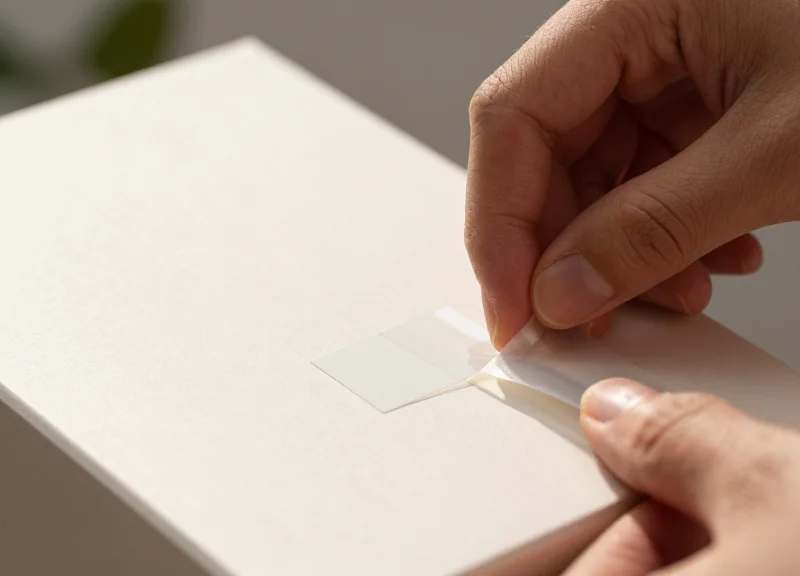
To safely remove an EAS label from 'mint condition' packaging, one must utilize the 'Low-Angle Peel' method combined with controlled thermal activation. This technique involves warming the adhesive to its glass transition temperature—making it pliable—and pulling the label back at a 180-degree angle to minimize vertical tension on the cardboard fibers. By focusing on lateral shear rather than upward lift, you prevent the label from 'skinning' or delaminating the printed top layer of the packaging.
- Controlled Thermal Application: Use a professional heat gun on its lowest setting or a household hairdryer to apply heat to the label for 10-15 seconds. The goal is to soften the tack without overheating the plastic EAS component inside, which could warp the box.
- The Edge Lift: Use a plastic spudger or a guitar pick to gently lift one corner. Avoid using metal blades or fingernails, as these can create micro-dents or oil stains on the matte or gloss finish of the box.
- 180-Degree Slow Pull: Fold the lifted edge back over the label itself. Pull the label slowly, keeping it as close to the surface as possible. This 'low-angle' pull ensures that the force is distributed across the adhesive bond rather than pulling the paper fibers upward.
- Residue Neutralization: If a slight tack remains, use the sticky side of the removed label to 'tap' the residue away. For stubborn spots, use a tiny amount of naphtha-based fluid on a microfiber cloth, as it evaporates quickly without swelling the paper fibers.
| Removal Tool | Risk Level | Best Used For |
|---|---|---|
| Hairdryer (Low Heat) | Low | Standard cardboard and thin-film wraps |
| Plastic Spudger / Guitar Pick | Minimal | Lifting corners without scratching ink |
| Heptane-based Solvent | Medium | Removing old adhesive from glossy UV-coated boxes |
| Metal Razor Blade | High | Not recommended for mint-condition inventory |
Expert Tip: Be aware of 'Ink Migration' on newer digital prints. Modern high-speed inkjet packaging often uses thinner coatings than traditional litho-lamination. For these items, do not use any chemical solvents. Instead, use the 'Cold-Snap' method: if the adhesive is a standard rubber-based hot melt, placing the item in a low-humidity, cool environment (approx. 60°F) for an hour can make the adhesive brittle enough to 'pop' off with a single flick of a plastic tool, leaving zero fiber tear.
Can I use Goo Gone on collector boxes?
Generally, no. Most 'goo' removers are citrus-oil based and will leave a permanent translucent 'grease' stain on cardboard that destroys its 'mint' status. Use Naphtha or Heptane-based fluids which evaporate fully.
What if the label is over a barcode?
Apply the most heat here. Barcode inks are often thermal-sensitive or thinly applied. If the label is pulled too fast, it will 'ghost' the barcode, making the package look damaged.
Does the age of the label matter?
Yes. Adhesives undergo 'cross-linking' over time, becoming more permanent. Labels that have been on a shelf for over 12 months require significantly more patience and slower peeling speeds.
Partnering with DragonGuardGroup for Advanced Inventory Protection
Partnering with DragonGuardGroup allows retailers to move beyond generic loss prevention toward a strategy of 'Aesthetic Security Architecture.' This approach integrates high-performance Electronic Article Surveillance (EAS) and Radio Frequency Identification (RFID) technology directly into your workflow, ensuring that 'mint condition' inventory is protected by security hardware that is physically and chemically compatible with premium packaging. By focusing on low-residue adhesives and precision-tuned frequencies, DragonGuardGroup provides a shield that prevents unauthorized unboxing and theft without compromising the tactile or visual integrity of the product box.
| Feature | DragonGuardGroup Solutions | Standard Industry Tags |
|---|---|---|
| Adhesive Profile | Custom-calibrated 'Low-Tack' High-Bond acrylics | Aggressive permanent rubber-based adhesives |
| Detection Range | Optimized for high-density retail environments | Basic range; prone to signal shielding |
| Packaging Safety | Tested against ink-lift and fiber-tear on 300gsm+ cardstock | High risk of surface damage upon removal |
| Technology Options | Integrated AM, RF, and RFID dual-technology tags | Single-frequency basic labels only |
Our partnership model is built on the understanding that for sectors like high-end toys, electronics, and limited-edition cosmetics, the box is as valuable as the item inside. We don't just supply tags; we engineer the application process to ensure your security investment never results in a markdown due to 'shelf wear' or 'tag damage'.
- Inventory Audit & Sensitivity Analysis: We begin by analyzing your specific packaging substrates—UV coatings, matte laminates, or textured foils—to determine the exact adhesive strength required.
- Custom EAS/RFID Integration: We design labels that match your brand aesthetics, including discreet white-labeling or branded security seals that act as a deterrent while looking official.
- SOP Development for Staff: DragonGuardGroup provides Standard Operating Procedures (SOPs) for your team to ensure every tag is applied and removed with zero damage to the inventory.
- Continuous Performance Monitoring: We offer ongoing technical support to calibrate your pedestals and deactivators, ensuring 99.9% detection rates and zero false alarms.
The DragonGuard Unique Insight: The 'Substrate-Specific Adhesion' Protocol. Unlike competitors who offer one-size-fits-all labels, DragonGuardGroup utilizes a proprietary testing protocol that measures the surface energy of your packaging. This allows us to provide labels with a specific 'peel force' that is strong enough to trigger an alarm if tampered with on the floor, yet remains below the threshold of fiber-tear for the specific cardstock used in your inventory. This scientific approach guarantees that a label can be removed post-purchase without leaving a single trace of its existence.
Do DragonGuard labels work with existing EAS gates?
Yes, our tags are fully compatible with all standard 58KHz (AM) and 8.2MHz (RF) systems, allowing for a seamless upgrade without replacing your existing hardware.
Can you provide source-tagging solutions?
Absolutely. We can work directly with your manufacturers to apply non-damaging EAS labels during the production phase, ensuring products arrive at your store 'floor-ready' and secure.
How do your labels handle environmental changes?
Our adhesives are engineered to remain stable under high-humidity or temperature fluctuations, preventing 'label crawl' or adhesive seepage that often ruins mint-condition boxes in transit.