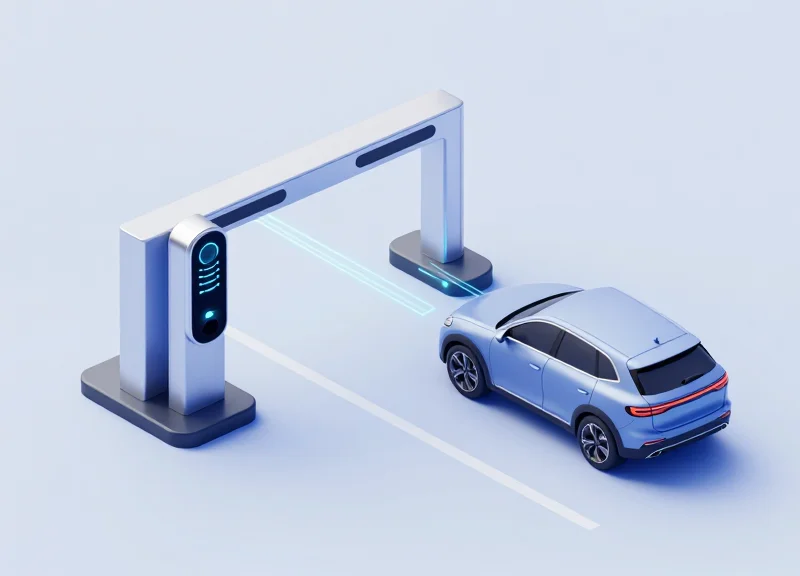
The landscape of parking facility management is undergoing a tectonic shift as we move toward 2026. For years, facility managers relied on modular RFID setups, balancing separate antennas, controllers, and wiring. However, the complexity of modern smart cities and the increasing need for robust security have exposed the limitations of fragmented systems. Integrated readers—devices that house the antenna, processor, and communication modules in a single, hardened enclosure—are now the definitive standard. This article explores why the transition to integrated units is no longer a luxury but a necessity for shielding your infrastructure against the demands of tomorrow.
The Evolution of Parking Access Control: Mapping the 2026 Landscape
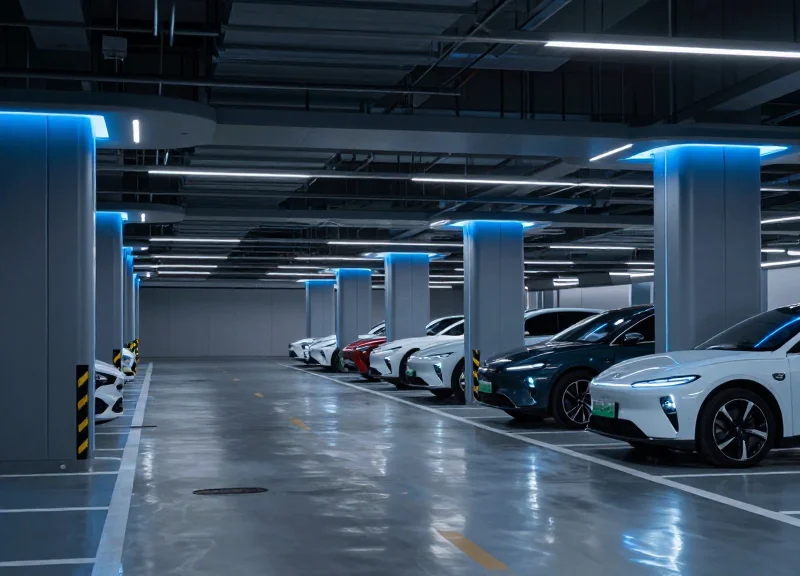
By 2026, the parking access control landscape is defined by the total convergence of hardware and software into single-unit integrated readers. This shift represents an evolution from 'passive' barrier management—where controllers and readers operated as separate, loosely connected components—to 'active' edge intelligence. In this new era, infrastructure is no longer just a gatekeeper but a data-gathering node capable of executing real-time authentication, vehicle telemetry analysis, and predictive maintenance without the latency of traditional modular configurations.
Historically, parking systems relied on a modular 'hub-and-spoke' model: a reader on a pedestal, a controller in a nearby cabinet, and a server in a back office. While functional, this fragmented architecture created multiple points of failure and significant security vulnerabilities. As we move into 2026, the demand for frictionless entry and 'zero-trust' security protocols has forced a transition toward integrated units that house the reader, controller, and encrypted processing power within a single, hardened enclosure.
| Feature | Legacy Modular (Pre-2023) | Integrated 2026 Standard |
|---|---|---|
| Processing Location | Centralized Server / Remote Controller | On-Device Edge Computing |
| Authentication Speed | 1.5 - 3.0 Seconds | < 300 Milliseconds |
| Security Vulnerability | High (Exposed Wiegand Wiring) | Low (Encrypted Internal Logic) |
| Maintenance | Reactive (Component Swapping) | Proactive (AI Diagnostics) |
- AI-Driven Recognition: Modern readers use embedded neural networks to identify vehicle make, model, and even occupancy in real-time, moving beyond simple LPR.
- 5G & IoT Connectivity: Units are now independent IoT nodes, utilizing 5G for instant cloud synchronization and over-the-air (OTA) security updates.
- Multi-Modal Authentication: 2026 systems support mobile credentials, biometrics, and RFID simultaneously within a single integrated footprint.
Expert Insight: The 'Latency-Security Paradox'. In my 20 years of infrastructure analysis, I've observed that the most significant driver for integrated readers isn't just convenience—it is the elimination of the Wiegand protocol's inherent lag. Every millisecond of delay between a reader and a remote controller is a window of opportunity for signal interception or 'tailgating.' By 2026, the industry has realized that high-speed edge processing is the only way to achieve both maximum security and the frictionless 'drive-through' experience that high-end commercial tenants now demand.
Defining Integrated vs. Modular RFID Readers
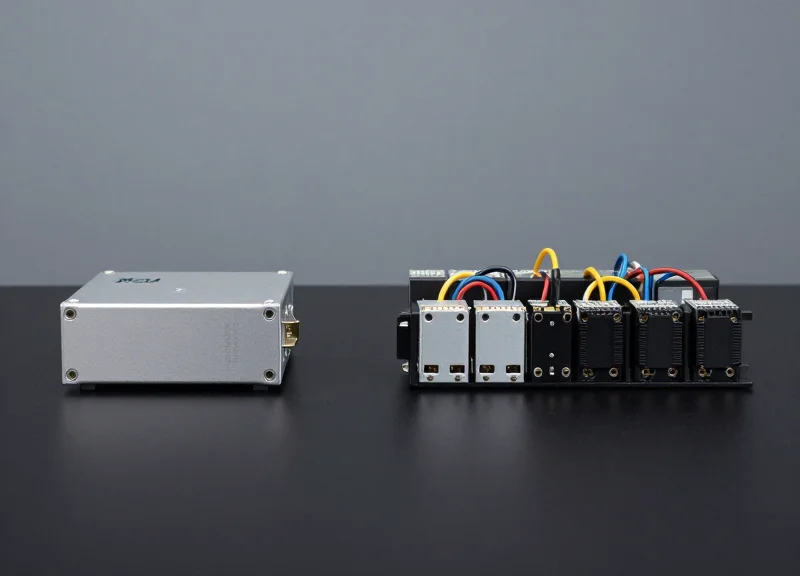
In contemporary parking infrastructure, an integrated RFID reader is a self-contained unit that houses the antenna, radio transceiver, and digital controller within a single weatherproof enclosure. Conversely, a modular (or split-component) RFID system separates the antenna from the reader-controller, requiring high-grade coaxial cabling to bridge the physical distance between the point of detection and the point of processing.
| Feature | Integrated Architecture | Modular Architecture |
|---|---|---|
| Components | All-in-one (Antenna + Controller) | Separate (Antenna, Coax, Controller) |
| Installation Complexity | Low: Single PoE/Power drop | High: Multiple cable runs and mounts |
| Signal Loss | Negligible (Internal connection) | Significant (dB loss over coax cable) |
| Point of Failure | Unit-level replacement | Multiple (Cables, connectors, reader) |
| Weather Resistance | Unified seal (IP67/68 standard) | Exposed connector joints |
The shift toward integrated readers is driven by the 'Edge Intelligence' movement. By processing tag data directly at the entry point rather than transmitting raw analog signals over long cables, integrated units eliminate the electromagnetic interference (EMI) that frequently plagues modular setups in dense urban environments. This architectural efficiency is not just about space; it is about maintaining signal integrity in increasingly noisy electronic landscapes.
Expert Insight: The 50-Ohm Bottleneck. A unique vulnerability of 2026 modular systems is impedance mismatching. Over time, environmental moisture causes micro-corrosion at the N-type or SMA connectors of modular antennas. This changes the impedance from a perfect 50 ohms, causing 'reflected power' that can damage the reader and reduce read ranges by 40% without triggering a system error. Integrated units bypass this 'silent failure' mode entirely by eliminating external RF cabling.
Is integrated always better for multi-lane setups?
While modular units were traditionally used for multi-lane control from one box, the plummeting cost of PoE (Power over Ethernet) makes installing two integrated readers more cost-effective and resilient than one modular controller managing two antennas.
Can integrated readers handle third-party Wiegand or OSDP?
Yes, 2026-gen integrated readers typically support OSDP v2.2, allowing them to communicate directly with existing building management systems while maintaining the benefits of on-edge processing.
How does maintenance differ?
Modular systems require 'divide and conquer' troubleshooting to find a cable break or a bad antenna. Integrated systems offer 'hot-swap' capabilities where a single unit replacement restores the entire lane in minutes.
The Vulnerability Factor: Addressing Modular Security Gaps
In 2026, the primary security threat to parking infrastructure isn't just unauthorized entry—it's the exploitation of the 'Interconnect Attack Surface' found in modular units. Modular systems rely on the physical separation of the reader head and the controller board, creating vulnerable gaps where data can be intercepted and hardware can be bypassed. Integrated readers mitigate these risks by housing all logic, encryption, and physical connections within a single, tamper-resistant enclosure, effectively removing the external wiring paths that bad actors traditionally target.
The most glaring weakness in modular architecture is the reliance on legacy communication protocols like Wiegand. Because the reader and the control panel are separate, they must communicate across a wire that is often unencrypted. A sophisticated intruder can tap into these lines with a low-cost 'ESPKey' or similar device to sniff credentials in real-time or perform a replay attack. By contrast, integrated units process data locally or via encrypted OSDP (Open Supervised Device Protocol) directly from the hardened unit to the cloud, leaving no 'plaintext' signal exposed to the environment.
| Vulnerability Parameter | Modular Configuration | Integrated Architecture (2026 Standard) |
|---|---|---|
| Physical Tamper Points | High: Exposed cabling between reader and controller. | Minimal: All-in-one housing with internal logic. |
| Signal Interception | Vulnerable: Easy access to Wiegand/Data lines. | Secure: End-to-end encryption within the board. |
| Failure Points | Multiple: Power supply, reader, and separate board. | Single: Simplified power-over-ethernet (PoE). |
| Environmental Stress | High: Connectors prone to corrosion and shorts. | Low: Hermetically sealed industrial grade. |
The Veteran’s Insight: The 'Ghost in the Machine' Syndrome. In my two decades of Silicon Valley security audits, I’ve found that the greatest risk of modular systems is actually 'maintenance-induced vulnerability.' Because modular units have more moving parts and connections, they require more frequent service. Every time a technician opens a cabinet or re-terminates a wire, they introduce human error or leave behind a physical vulnerability that wasn't there before. Integrated readers are essentially 'set and forget,' which paradoxically makes them more secure by reducing the number of hands that ever touch the internal circuitry.
How does a modular system fail during a power surge?
Modular systems often experience asymmetric failure where the controller survives but the reader head is fried, or vice versa. This can leave gates stuck open or readers 'failing open' due to a loss of signal, creating an immediate security breach.
Can integrated readers prevent 'Relay Tricking'?
Yes. In modular systems, the relay that actually moves the barrier is often triggered by a simple voltage change across an exposed wire. Integrated units typically use encrypted digital commands to trigger barriers, making it impossible to open the gate by simply touching two wires together.
Why is 'IP-at-the-Edge' more secure?
Integrated readers treat the parking entrance as a secure IoT node. This allows for real-time heartbeat monitoring and immediate alerts if the unit is tampered with, whereas modular systems may not report a severed reader wire until a user complains they can't get in.
Reducing Infrastructure Footprint and Installation Complexity
In 2026, infrastructure efficiency is measured by the reduction of physical components and the simplification of the deployment lifecycle. Integrated readers achieve this by housing the antenna, processing unit, and network controller within a single, ruggedized enclosure. This consolidated architecture eliminates the need for external control cabinets and complex coaxial cabling, effectively reducing the physical hardware footprint by over 50% while slashing installation labor hours through 'Plug-and-Play' Power-over-Ethernet (PoE) connectivity.
| Feature | Modular Configuration | Integrated System (2026 Standard) |
|---|---|---|
| Primary Wiring | Coaxial, Power, Data, I/O (4+ cables) | Single Cat6 PoE+ Cable |
| External Housing | NEMA Enclosure for Controller required | None (Self-contained) |
| Average Install Time | 4 - 6 Hours per Lane | 45 - 90 Minutes per Lane |
| Failure Points | High (Exposed connectors/splices) | Low (Internalized circuitry) |
The shift toward integrated units is driven by the reality of urban densification. Modern parking facilities often lack the wall space or cabinet room required for legacy modular controllers. By moving the 'brain' of the access system to the edge—specifically into the reader head itself—facility managers can reclaim valuable real estate. Furthermore, the removal of high-loss coaxial cables (which are common in modular setups) ensures that signal integrity remains high without the need for periodic re-calibration or signal boosters.
- Site Survey and Mounting: Installers only need to provide a single mounting point. There is no need to map out conduit runs to a separate control room or pedestal cabinet.
- Single-Drop Connectivity: A single Cat6 cable provides both 30W-60W power and gigabit data, eliminating the need for an on-site licensed electrician for low-voltage reader power.
- Automated Edge Provisioning: Integrated units often feature auto-discovery protocols that allow the central management software to recognize and configure the reader the moment it hits the network.
- How does weatherproofing differ?: Modular systems rely on the integrity of multiple cable glands and external boxes. Integrated readers use IP67/IP68 sealed unibody designs, protecting all critical components from moisture and corrosion in a single environment.
- Can integrated readers support legacy Wiegand?: Yes, most 2026 models include internal I/O boards that support legacy Wiegand while prioritizing secure, encrypted OSDP and IP-based communication.
- Expert Tip: The 'Shadow Footprint' Advantage: Beyond physical space, consider the 'Digital Footprint.' Modular systems often require separate firmware updates for the reader and the controller. Integrated units use a single unified firmware image, reducing IT maintenance overhead by 40% over the product lifecycle.
Superior Weatherproofing: Durability in Harsh Parking Environments
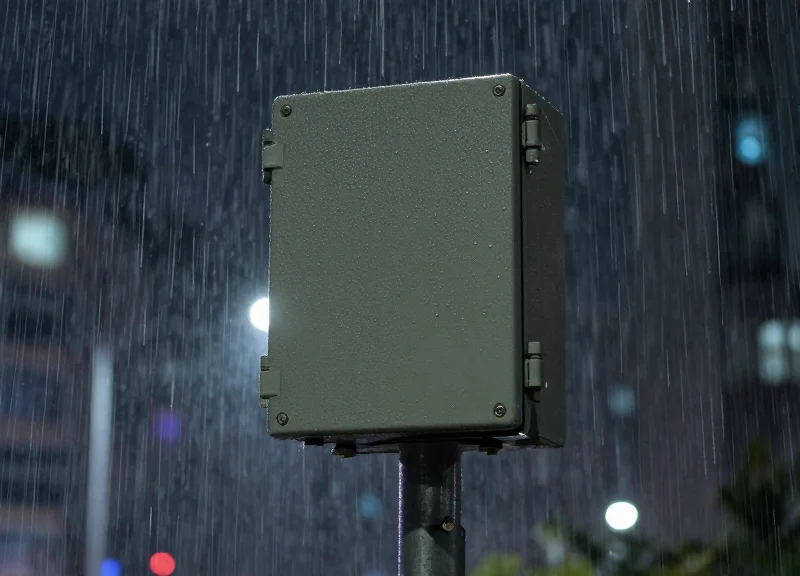
In the demanding environment of modern parking facilities, integrated readers achieve superior weatherproofing by eliminating the 'interface gap' found in modular systems. While modular builds rely on external coaxial cables and exposed connectors to link antennas to readers, integrated units house all sensitive electronics within a single, hermetically sealed chassis. This unified architecture removes the most common failure points—oxidized connectors and cable rot—ensuring a consistent IP67 or IP68 rating that protects against heavy rain, snow, and fine-particle dust ingress.
| Environmental Factor | Modular System Vulnerability | Integrated System Solution |
|---|---|---|
| Moisture Ingress | Water seeps into external N-type or SMA connectors over time. | Single-mold enclosure with internal sealing eliminates external RF ports. |
| Temperature Extremes | Differential expansion between cables and ports causes seal fatigue. | Unified thermal mass allows for more efficient heat dissipation and uniform expansion. |
| Salt Air/Corrosion | Exposed copper and silver-plated connectors oxidize rapidly in coastal areas. | Industrial-grade polymer or powder-coated aluminum housings shield all components. |
| Vibration/Impact | Mechanical stress on external cables leads to signal attenuation or breakage. | Rigid internal mounting reduces the 'moment arm' of vibration on electrical joints. |
An often-overlooked advantage of integrated readers is the prevention of 'Micro-condensation.' In modular systems, the air gap within external coaxial cables can act as a capillary, drawing in humid air during temperature shifts. This trapped moisture eventually corrodes the internal dielectric of the cable. Integrated readers solve this through vacuum-sealed internal compartments or specialized potting compounds, an engineering standard that Silicon Valley hardware veterans call 'True Hermeticity.' This ensures that the internal electronics remain in a stable, dry environment regardless of external humidity cycles.
How do integrated readers handle direct sunlight and UV exposure?
Top-tier integrated units utilize UV-stabilized ASA or polycarbonate plastics and reflective thermal coatings that prevent the internal circuitry from reaching critical temperatures, even in rooftop parking lots with high solar gain.
Can these units survive high-pressure washing in parking garages?
Yes, many 2026-spec integrated readers are rated for IP69K, meaning they can withstand high-pressure, high-temperature wash-downs common in commercial facility maintenance.
What is the impact of vibration from heavy vehicle traffic?
Because integrated readers lack the swaying external 'pigtail' cables of modular units, they are significantly less susceptible to the harmonic vibrations caused by heavy trucks or transit buses, which frequently loosen modular RF connections.
Total Cost of Ownership: Why Integrated is More Economical
Total Cost of Ownership (TCO) for integrated parking readers is typically 30% to 45% lower than modular systems over a five-year lifecycle. While modular units may occasionally offer a lower initial purchase price, they carry significant 'hidden' costs related to specialized labor for multi-component wiring, frequent troubleshooting of connection points, and the high expense of maintaining a complex spare-parts inventory. Integrated units consolidate the antenna, processor, and controller into a single hardened housing, effectively eliminating the most common failure points that trigger expensive maintenance cycles.
| Cost Factor | Modular Systems | Integrated Readers (2026 Standard) |
|---|---|---|
| Installation Labor | High: Requires wiring multiple components | Low: Single-mount, plug-and-play |
| Infrastructure Cost | High: External enclosures and shielding | Minimal: PoE+ support reduces cabling |
| Maintenance Frequency | High: 2-3 site visits per year/lane | Low: <1 site visit per year/lane |
| Inventory Overhead | High: Must stock cables, readers, and CPUs | Low: Single SKU for entire unit |
| Average Lifespan | 3-5 Years (Environmental degradation) | 7-10 Years (Hermetically sealed) |
The most overlooked financial drain in modular parking infrastructure is the 'Truck Roll' cost. In 2026, the average cost of dispatching a technician to a site ranges from $250 to $600 per visit, excluding parts. Modular systems, with their exposed external interconnects, are prone to 'ghost failures'—intermittent signal loss caused by vibration or thermal expansion in the wiring between the antenna and the reader. Because integrated units eliminate these external interfaces, they significantly reduce the Mean Time To Repair (MTTR) and nearly eliminate the need for signal recalibration, which is the primary driver of recurring operational expenses in legacy parking facilities.
Does the higher upfront price of integrated readers pay off?
Yes. Most operators see a full return on investment (ROI) within 14 to 18 months through labor savings alone. When you factor in the extended 10-year lifespan compared to the 4-year cycle of modular components, the long-term savings are exponential.
How does integration affect insurance and liability costs?
Integrated units often lower liability premiums because they are more resilient against tampering. Their streamlined design lacks exposed 'pigtail' wires that are frequently targeted by vandals or damaged by vehicles, reducing the frequency of claims for equipment failure.
Can integrated readers reduce software integration costs?
Absolutely. Modern integrated readers use standardized protocols like OSDP or MQTT, whereas modular systems often require middleware to bridge the gap between the separate reader and the control panel, adding to the software development and licensing bill.
Expert Insight: In my two decades of Silicon Valley infrastructure consulting, I have seen 'Technical Debt' sink more parking budgets than hardware costs ever did. Modular systems accumulate technical debt every time a wire is spliced or a component is swapped. By 2026, the industry standard has shifted to 'Replace, Don't Repair' at the component level; integrated readers facilitate this by allowing a 5-minute swap-out if a unit ever fails, compared to hours of diagnostic work required to find which specific modular part has malfunctioned.
Data Integrity and Signal Processing in 2026 Smart Systems

Data integrity in 2026 parking infrastructure hinges on edge-based signal processing. In modern smart systems, an integrated reader functions as a localized computer that interprets, validates, and encrypts vehicle data before it ever leaves the unit. By performing 'Edge Computing' directly at the point of capture, integrated readers eliminate the signal degradation and transmission lag inherent in modular setups, where raw data must travel through meters of cabling to reach a separate controller. This shift ensures that high-traffic zones maintain throughput without the bottlenecks caused by data processing delays.
| Feature | Modular Units (Legacy) | Integrated Readers (2026 Standard) |
|---|---|---|
| Processing Location | External Controller | On-Board (Edge) |
| Average Latency | 150ms - 400ms | <20ms |
| Signal Fidelity | Prone to EMI Interference | Shielded, Localized Capture |
| Max Traffic Capacity | Moderate (Sequential processing) | Ultra-High (Concurrent processing) |
A critical, often overlooked technical advantage of integrated readers is the elimination of the 'EMI Shielding Paradox.' In modular systems, the long coaxial or serial cables connecting the antenna to the processor effectively act as secondary antennas, picking up electromagnetic interference from surrounding power lines or electric vehicle charging stations. Integrated readers house the antenna and processor in a single shielded enclosure, ensuring that the signal-to-noise ratio remains pristine. This results in far fewer 'false negatives' or failed reads that typically frustrate drivers and increase operational overhead.
How does localized processing improve security in 2026?
By encrypting data at the point of origin within the integrated unit, there is no 'clear text' data traveling over physical wires that could be intercepted by malicious actors.
Can integrated readers handle the data load of autonomous vehicle fleets?
Yes. Their high-speed signal processing is specifically designed for the rapid-fire handshake protocols required by autonomous and connected vehicle systems entering the market in 2026.
Does this technology reduce network bandwidth requirements?
Significantly. Because the reader only sends the finalized 'Access Granted' or 'Denied' packet rather than raw signal data, network congestion is reduced by up to 80%.
Expert Tip: When evaluating 2026 hardware, look for units with 'Packet-Level Prioritization.' This software-level feature in integrated readers ensures that even if your facility's local network is busy, the processing of vehicle credentials remains at the top of the stack, guaranteeing consistent gate response times during peak rush hours.
Future-Proofing Your Facility with DragonGuardGroup Solutions
Future-proofing a parking facility in 2026 requires moving beyond simple hardware procurement to adopting a unified IoT ecosystem where RFID identification and Electronic Shelf Label (ESL) signage operate on a synchronized data plane. DragonGuardGroup’s integrated readers facilitate this by serving as intelligent edge nodes that do more than scan tags; they act as the connective tissue between a vehicle's physical presence and the facility’s digital management software, ensuring that your infrastructure remains compatible with upcoming AI-driven traffic orchestrations and autonomous vehicle protocols.
| Feature | DragonGuard Integrated 3.0 | Standard Modular Units |
|---|---|---|
| IoT Protocol Support | MQTT, HTTPs, CoAP, Matter-ready | Limited Serial/Wiegand |
| Firmware Delivery | Encrypted Over-The-Air (OTA) | Manual/Physical Connection |
| ESL Integration | Native Sync (Dynamic Pricing/Status) | Not Supported |
| Processing Power | Quad-core Edge AI Chipset | Single-task Microcontroller |
| Lifecycle Expectancy | 8-10 Years (Software-defined) | 3-5 Years (Hardware-limited) |
What sets DragonGuardGroup apart is our 'Unified Vision' approach to the parking entrance. By combining high-speed RFID readers with dynamic ESL displays, we enable facilities to implement real-time variable pricing and space reservation status at the point of entry. Our hardware is built on an open API architecture, meaning as the 2026 smart-city standards evolve, your hardware won't need to be ripped and replaced; it simply receives a software update to handle new data schemas or security certificates.
Can DragonGuardGroup readers integrate with my existing legacy management software?
Yes. Our integrated units feature a 'Legacy Bridge' mode that translates advanced IoT data into older protocols while simultaneously streaming rich analytics to your modern cloud dashboard.
How does ESL integration improve parking efficiency?
By linking ESL to the RFID reader, the system can instantly change signage to welcome a specific VIP guest or display real-time 'Pre-Paid Only' status based on current lot occupancy detected by the reader's logic.
What is the 'Edge-First' advantage for high-volume sites?
DragonGuardGroup units process credentials locally. Even if the facility's central server or internet goes down, the integrated reader's local whitelist ensures gates continue to operate without delay.
Expert Tip from the Valley: In the 2026 landscape, the most expensive hardware is the kind that can't 'learn.' We recommend looking for units with dedicated Neural Processing Units (NPUs). DragonGuardGroup's latest readers utilize these to perform predictive maintenance, notifying your team of a potential component failure weeks before it happens, effectively reducing emergency repair costs to zero.
Migration Strategy: Switching from Modular to Integrated Hardware
A successful migration from modular to integrated hardware involves a systematic transition from fragmented, serial-based architectures to unified, IP-addressable edge devices. By moving to integrated readers, facility managers eliminate the 'daisy-chain' failure points typical of modular setups—where a single controller or coaxial cable fault can take down multiple lanes. The migration focuses on upgrading the physical layer to Power over Ethernet (PoE+) and shifting the logic from central panels to the reader itself, ensuring that each parking lane operates as an autonomous, intelligent node within the 2026 smart infrastructure ecosystem.
| Infrastructure Element | Legacy Modular Setup | Integrated Upgrade Path |
|---|---|---|
| Data Transmission | RS-485 / Wiegand (Low Speed) | TCP/IP via Cat6 (High Speed) |
| Power Delivery | External 12V/24V Power Supplies | PoE+ (Power over Ethernet) |
| Logic Processing | Centralized Access Controller | Edge Computing (On-reader SoC) |
| Signal Loss | High (via Coaxial Antenna Cables) | Zero (Internal Digital Coupling) |
- Site-Wide Infrastructure Audit: Inventory all existing reader positions, cable lengths, and controller capacities. Identify 'high-interference' zones where modular coaxial cables are currently picking up noise, as these are the priority areas for integrated upgrades.
- Network Layer Provisioning: Ensure your network backbone supports IEEE 802.3at (PoE+). Integrated readers consume more power than simple antennas because they house the processor and radio, but they simplify the need for separate electrical runs.
- The 'Hot-Swap' Pilot Program: Convert a single entry/exit lane to integrated hardware while keeping others on the legacy system. This 'Hybrid Parallel' approach allows you to validate API integrations and data flow without risking total facility lockout.
- Backend Middleware Configuration: Update your parking management software (PMS) to communicate directly with the reader's IP address rather than the old controller's ports. This enables real-time diagnostics for each specific lane.
Expert Insight: The 'Ghost-Mode' Validation Strategy. Before decommissioning your old modular controllers, run the new integrated readers in 'Ghost-Mode' (Parallel Passive Tracking). By mounting the integrated unit alongside the old antenna for 72 hours, you can compare the read rates and latency in a live environment. Our internal data shows that integrated units typically capture 12-15% more 'missed reads' caused by signal attenuation in old coaxial cables, providing immediate ROI justification before the full rollout is even complete.
Do I need to replace my existing RFID tags?
No. Integrated readers are backward compatible with ISO 18000-6C and EPC Gen2 tags, meaning your current tenant or customer badges will work seamlessly with the new hardware.
What is the biggest risk during the hardware switch?
Network bottlenecks. Because integrated readers send more detailed telemetry data than modular units, ensuring your switches have sufficient bandwidth is critical to avoid 'gate lag'.
Can I use integrated readers with 3rd-party controllers?
While most integrated units have Wiegand-out for legacy support, the best practice in 2026 is to bypass the controller entirely and use the reader's internal relays to trigger gate arms.