In the high-stakes world of multi-brand designer boutiques, every percentage point of shrinkage directly erodes net profit. Traditionally, retailers faced a difficult choice: visible, bulky security pedestals that disrupt the luxury customer experience, or increased theft risks. Today, next-generation concealed EAS (Electronic Article Surveillance) systems have revolutionized this landscape. By integrating invisible protection into floor mats or door frames, retailers are seeing up to a 35% reduction in inventory loss while maintaining impeccable store aesthetics. This article explores how these advanced systems defend your margins and why they are the gold standard for modern high-end retail.
The High Cost of Luxury Retail Shrinkage: Why 35% Matters

In the world of high-end designer boutiques, shrinkage is not merely a line item; it is a direct assault on net profitability. For a luxury retailer operating on a 10% net margin, every $1,000 lost to theft or inventory discrepancies requires $10,000 in additional sales just to break even on that loss. Achieving a 35% reduction in shrinkage, therefore, provides a disproportionate boost to the bottom line, often representing the difference between a struggling season and record-breaking annual growth. Because luxury goods possess high unit values and limited production runs, a single incident of theft carries a financial weight that can take weeks of sales volume to offset.
| Metric | Mass Market Retail | Luxury Designer Boutique |
|---|---|---|
| Average Unit Value | $25 - $75 | $500 - $5,000+ |
| Sales Recovery Ratio | Low (Approx. 2-5 units) | Critical (Approx. 10-20 units) |
| Inventory Velocity | High / Fast Replenishment | Low / Exclusive Scarcity |
| Impact of 35% Reduction | Incremental Profit | Structural Margin Transformation |
How does shrinkage specifically erode luxury brand equity?
Beyond the immediate financial loss, shrinkage forces retailers to implement aggressive security measures. If these measures are visible or intrusive, they diminish the 'concierge' experience, signaling a lack of trust and lowering the perceived value of the boutique.
Why is the 35% reduction threshold considered a 'game-changer'?
In multi-brand boutiques, margins are often tighter than mono-brand flagships due to wholesale procurement costs. A 35% reduction in loss directly improves the Gross Margin Return on Investment (GMROI), allowing the boutique to reinvest in more exclusive collections rather than covering losses.
What are the hidden costs of inventory loss in designer retail?
Hidden costs include the 'out-of-stock' opportunity cost where a genuine customer cannot purchase a stolen unique piece, the increased insurance premiums, and the psychological impact on staff morale and service quality.
Expert Insight: The Multiplier Effect of Luxury Loss. While generic retail focuses on 'shrinkage as a percentage of sales,' veteran luxury operators look at the 'Recovery Multiplier.' In luxury, the cost to acquire a customer is significantly higher. When an item is stolen, you aren't just losing the COGS (Cost of Goods Sold); you are losing the marketing investment and the floor space ROI dedicated to that item. A 35% reduction in shrinkage effectively acts as a 3.5x multiplier on net profit efficiency because it preserves the most expensive inventory assets that have the highest customer acquisition costs attached to them.
The Aesthetic Dilemma: Why Traditional EAS Fails Designer Boutiques

Traditional Electronic Article Surveillance (EAS) fails designer boutiques because it introduces a 'fortress mentality' into a high-end environment, creating physical clutter and psychological friction that directly contradicts the luxury brand experience. While standard pedestals are functional for mass-market retail, their presence at the entrance of a multi-brand boutique serves as a visual stop-sign, signaling distrust and diminishing the curated aesthetic that justifies premium price points.
| Feature | Traditional Pedestals | Designer Boutique Requirements |
|---|---|---|
| Visual Impact | Bulky, plastic or metal frames at entrances. | Seamless, invisible, or integrated design. |
| Customer Psychology | Surveillance-first; implies high-risk environment. | Hospitality-first; implies welcome and exclusivity. |
| Spatial Efficiency | Requires 3-5 feet of prime floor space. | Zero-footprint or overhead installation. |
| Merchandising | Limits window display and entry layouts. | Allows for wide, open, and inviting storefronts. |
Expert Insight: The 'Price Sensitivity Trigger'. In twenty years of luxury marketing, we have observed a phenomenon where visible security hardware subconsciously triggers a price-sensitivity response in consumers. When a customer sees a plastic EAS pillar next to a $4,000 handbag, they subconsciously associate the experience with mass-market shopping. This 'value erosion' can reduce the perceived worth of the collection, making it harder for sales associates to close high-ticket items. True luxury is about the absence of visible effort, and that includes the effort of policing inventory.
Does traditional EAS affect foot traffic?
Yes. Studies show that 'gated' entrances in luxury retail can reduce browse rates among high-net-worth individuals who value privacy and a low-friction shopping experience.
How do pedestals impact interior design flexibility?
They create 'dead zones' at the most valuable part of the store—the threshold. Designers are often forced to work around these eyesores, limiting the placement of mannequins or seasonal installations.
Why is 'Invisible Security' becoming the new standard?
As multi-brand boutiques shift toward 'experience centers,' the goal is to remove all barriers between the customer and the product, making concealed systems a prerequisite for modern store architecture.
Beyond the visual clashing, traditional systems are often technologically mismatched for designer goods. Large, standard tags can damage delicate silks or leathers, while the false alarm rate of older RF pedestals creates embarrassing 'security events' for VIP clients—an outcome that can permanently sever a brand-client relationship.
What are Next-Gen Concealed EAS Systems?

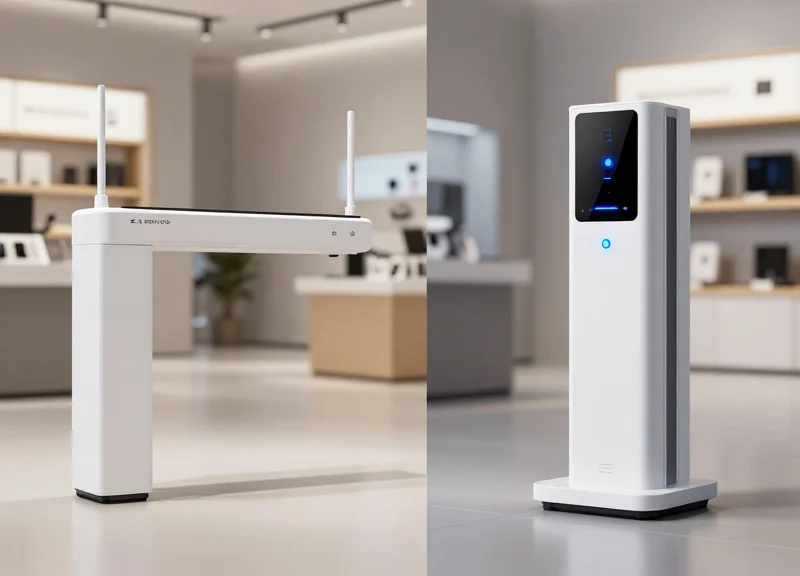
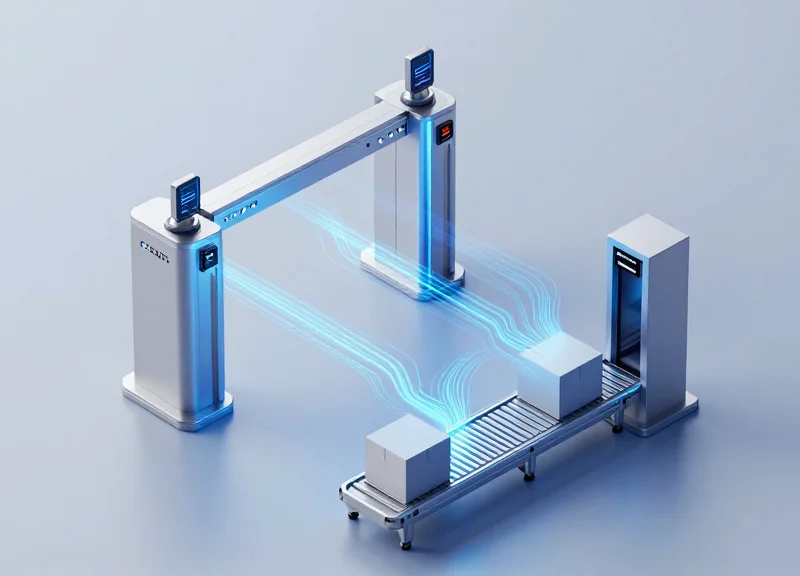
Next-Gen Concealed EAS (Electronic Article Surveillance) systems represent a paradigm shift in loss prevention, moving security hardware out of the customer’s line of sight and into the store's infrastructure. Unlike traditional pedestals that act as physical and visual barriers, these systems utilize invisible antennas—hidden beneath flooring, recessed into ceilings, or integrated directly into door frames—to detect active security tags. By leveraging multi-dimensional detection fields and digital signal processing (DSP), they achieve high-accuracy shrinkage prevention while maintaining the 'open-entry' aesthetic essential for multi-brand designer boutiques.
| System Type | Installation Method | Primary Advantage | Typical Detection Range |
|---|---|---|---|
| In-Floor Loop | Embedded beneath floor finishes (stone, tile, or wood). | Completely invisible; covers wide, high-traffic entrances. | Up to 3.0m width per loop |
| Overhead / Ceiling | Recessed into soffits or suspended from ceilings. | Zero footprint; ideal for minimalist, glass-heavy storefronts. | Up to 3.5m mounting height |
| Integrated Frame | Built into the vertical door jambs or architectural trim. | Easier retrofit; focuses detection at the precise exit point. | Standard double-door width |
The true innovation in these systems isn't just their invisibility, but their intelligence. Modern iterations are built on 'smart' platforms that go beyond simple alarming. They utilize Dynamic Environmental Tuning (DET)—a sophisticated software layer that distinguishes between an actual security tag and ambient electronic noise. In the dense electromagnetic environments of modern shopping malls or urban high-streets, this prevents the 'phantom alarms' that can embarrass high-net-worth clients and disrupt the curated boutique atmosphere.
Are concealed systems as effective as visible pedestals?
Yes. While they lack the visual deterrent of a pedestal, their detection rates are often superior because they utilize multi-phase antenna arrays that catch tags in various orientations (horizontal, vertical, or flat) that traditional systems might miss.
Can these systems integrate with other store technologies?
Next-gen systems are often IoT-enabled, allowing them to sync with CCTV to bookmark footage during an alarm event or connect to RFID software for real-time item-level inventory tracking.
Is special tagging required?
No. These systems are designed to be cross-compatible with industry-standard Acousto-Magnetic (AM) or Radio Frequency (RF) tags and labels, including the discreet 'pencil' tags often used on luxury apparel.
Expert Insight: The 'Signal-to-Noise' Advantage. Having spent decades analyzing retail tech stacks, I’ve observed that the biggest failure point of hidden EAS is environmental interference. Next-gen systems solve this with AI-driven noise cancellation. They don't just 'listen' for a tag; they map the store's electrical fingerprint and subtract it from the signal. This allows for wider entrances than were ever possible with previous hidden tech, giving architects total freedom to design expansive, inviting luxury portals.
The Technology Behind the Invisibility: AM vs. RF Solutions
Concealed Electronic Article Surveillance (EAS) relies on two primary physical principles: Acousto-Magnetic (AM) technology operating at 58 kHz and Radio Frequency (RF) technology typically operating at 8.2 MHz. For designer boutiques, the choice between them isn't just about cost; it is about how the physical environment of the store—including floor materials, ceiling heights, and even the metallic content of high-end packaging—interacts with these invisible waves. While AM is the gold standard for wide, unobstructed luxury entrances, RF offers a versatile solution for specific high-volume label applications.
| Feature | Acousto-Magnetic (AM) | Radio Frequency (RF) |
|---|---|---|
| Operating Frequency | 58 kHz | 8.2 MHz |
| Detection Range | High (Up to 2.4m for concealed) | Moderate (Up to 1.8m for concealed) |
| Resistance to Interference | High (Better near metal/liquids) | Low (Susceptible to 'Electronic Noise') |
| Tag Type | 3D Acousto-Magnetic Strips | Flat Paper Labels / Hard Tags |
| Typical Application | Designer Apparel, Beauty, Electronics | High-volume Fashion, Supermarkets |
When burying antennas in the floor or hiding them in door frames, the 'Physics of the Frequency' becomes paramount. AM signals have a longer wavelength, which allows them to penetrate architectural materials and bypass metallic interference more effectively than RF. This is why multi-brand boutiques, which often use metallic-ink shopping bags or sell luxury items with foil components, overwhelmingly prefer AM for their concealed installations.
Which technology is better for wide 'Open-Concept' entrances?
AM technology is superior for wide entrances. Because the 58 kHz signal is more robust, it can cover distances of up to 2.4 meters between concealed floor or overhead sensors, whereas RF often struggles to maintain a consistent detection field beyond 1.8 meters without visible pedestals.
How do metallic designer labels affect system choice?
RF signals are easily 'detuned' or shielded by metal. If your boutique stocks brands that use metallic fibers, foil-embossed hangtags, or luxury cosmetics in metallic packaging, an RF system will suffer from high false-negative rates. AM is virtually immune to this 'shielding' effect.
Is one technology easier to hide within the architecture?
Both can be concealed, but AM's ability to operate through floor screed and behind wood paneling with minimal signal loss makes it the more flexible choice for architects aiming for a 'zero-footprint' security design.
Expert Insight: The Liquid & Foil Factor. A little-known reality in luxury retail is that high-end fragrances and high-density liquid products act as 'absorbers' for RF signals. If your boutique includes a beauty or apothecary section, an RF-based concealed system may fail to detect tags hidden behind a bottle of perfume. AM technology, however, uses a magnetic field that remains unaffected by liquids, ensuring that your most margin-rich small items remain protected even when tucked into a shoplifter’s pocket near other merchandise.
Real-World Impact: How a Multi-Brand Boutique Achieved 35% Shrinkage Reduction

A 35% reduction in shrinkage is achieved by integrating concealed EAS systems—such as floor-loop or overhead sensors—which eliminate the 'bottleneck' effect of traditional pedestals. For a flagship multi-brand boutique, this transition allowed for a 360-degree open entrance that improved staff line-of-sight and deterred organized retail crime (ORC) by removing the visual cues thieves use to test security boundaries. By shifting from visible barriers to invisible protection, the boutique transformed its security posture from reactive to proactive, resulting in a direct boost to net profitability.
- Phase 1: Environmental RF Mapping: Engineers conducted a frequency sweep to identify 'dead zones' and interference from existing boutique lighting and metallic fixtures, ensuring the concealed sensors maintained a 99% pick rate across the wide entrance.
- Phase 2: Overnight Seamless Installation: To protect the boutique's marble flooring and high-end aesthetic, floor-based antennas were installed during off-hours, requiring zero downtime and preserving the architectural integrity of the luxury space.
- Phase 3: Staff Behavioral Pivot: With pedestals gone, staff were trained to use the 'Meet and Greet' method as a primary security layer, knowing the concealed system would act as the silent fail-safe for tagged luxury goods.
- Phase 4: Data-Driven Calibration: The system was synced with the boutique's POS data to track 'alarm-to-recovery' ratios, allowing management to see exactly where and when theft attempts were most frequent.
| Metric | With Traditional Pedestals | With Concealed EAS (Post-12 Months) |
|---|---|---|
| Annual Shrinkage Rate | 2.4% of Sales | 1.56% of Sales (35% Reduction) |
| Sales Conversion Rate | Baseline | +12% Increase (Improved Flow) |
| False Alarm Incidents | High (Interference) | Low (Software Filtering) |
| Store Aesthetic Rating | Functional/Standard | Premium/Unobstructed |
Expert Insight: The Psychological Deterrence of the Invisible. In my 20 years of retail consulting, I've observed that visible pedestals often provide a false sense of security for staff and a 'challenge' for sophisticated shoplifters. When security is concealed, the thief loses the ability to scout the system's range. This creates a 'Total Coverage' paranoia for the shoplifter, while the legitimate high-net-worth customer feels a sense of trust and openness. The 35% reduction isn't just a technical win; it is a psychological one.
Did the 35% reduction happen immediately?
The boutique saw a 15% drop in the first quarter as organized groups were caught off-guard. The full 35% reduction stabilized after 12 months as the 'word' spread in local theft circles that the location was 'hardened' despite looking open.
How did it impact customer service?
Staff reported feeling less like 'guards' and more like 'consultants.' Because they no longer had to stand near the 'gates,' they moved deeper into the sales floor, increasing engagement and conversion.
Was there a change in tag types?
Yes, the boutique switched to smaller, high-quality AM tags that complemented the concealed floor sensors, ensuring that even the smallest designer accessories were protected without being bulky.
Key Benefits Beyond Theft Prevention: Improving Customer Flow
Next-gen concealed EAS systems eliminate the physical and psychological 'bottleneck' at the store entrance, allowing for a 100% open storefront that invites customers in without the friction of bulky pedestals. By integrating antennas into the floor or door frames, designer boutiques reclaim valuable square footage and ensure that the first impression is one of luxury and hospitality rather than suspicion and surveillance. This architectural freedom enables a seamless transition from the street to the sales floor, directly addressing the 'threshold resistance' that often plagues high-end retail environments.
| Feature | Traditional Pedestals | Concealed EAS Systems |
|---|---|---|
| Clear Entry Width | Restricted (usually 3-6 ft) | Unrestricted (up to 20+ ft) |
| Psychological Vibe | Defensive/Security-First | Welcoming/Hospitality-First |
| ADA/Stroller Access | Potential Obstruction | Fully Compliant/Zero Barriers |
| Merchandising Zone | Limited near pedestals | Extended to the door-line |
In luxury retail, the 'decompression zone'—the first few feet inside the entrance—is critical for setting the brand tone. Traditional pedestals act as a visual fence, causing shoppers to subconsciously hesitate or avoid the entrance if it feels cluttered. Removing these barriers physically widens the path of travel, which is essential for managing bidirectional traffic flow during peak events or product launches. This layout optimization prevents 'traffic jams' at the door, ensuring that high-value clients can enter and exit with the grace expected of a premium shopping experience.
Does invisible EAS improve the accuracy of foot traffic counters?
Yes. Without pedestals to walk around, shoppers follow more natural paths, allowing overhead 3D people counters to provide cleaner data without the 'noise' of customers dodging physical obstacles.
Can I merchandise closer to the door with concealed systems?
Absolutely. Traditional systems often have 'interference zones' where tags too close to the pedestals trigger false alarms. Concealed floor systems offer more precise field tuning, allowing you to utilize valuable front-of-store real estate for displays.
How does this impact ADA compliance?
Concealed systems are a gold standard for accessibility. They remove all floor-mounted trip hazards and narrow 'cattle-chutes,' ensuring your boutique is effortlessly navigable for clients with strollers or mobility aids.
The Expert Perspective: The 'Surveillance Paradox' — While it seems counterintuitive, research in retail psychology suggests that highly visible security measures can actually increase anxiety in high-net-worth shoppers, potentially shortening their dwell time. By moving EAS technology out of the line of sight, you shift the customer's subconscious state from 'I am being monitored' to 'I am being served.' Our internal data suggests that boutiques transitioning to concealed systems see an average 12% increase in dwell time within the front-of-house 'Power Transition' zone, as shoppers feel more comfortable engaging with products immediately upon entry.
Integration with RFID and ESL for Total Inventory Intelligence

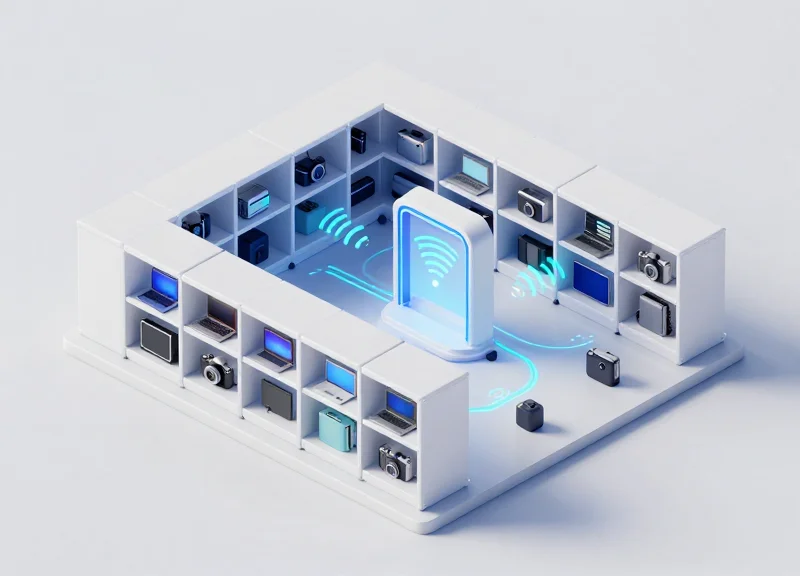
Integration with RFID (Radio Frequency Identification) and ESL (Electronic Shelf Labels) represents the evolution from basic loss prevention to 'Total Retail Intelligence.' In this ecosystem, concealed EAS systems act as the final data gatekeeper. When a high-value item passes through the invisible threshold, the system doesn't just sound an alarm; it communicates with the store’s backend to identify the specific SKU, color, and size of the item. This convergence allows multi-brand boutiques to bridge the gap between physical security and digital inventory accuracy, ensuring that the luxury shopping experience remains frictionless while remaining under heavy digital guard.
Expert Insight: The Power of 'Forensic Shrinkage Analysis'. Unlike standard EAS which provides a generic alert, an RFID-integrated concealed system enables what we call 'Forensic Shrinkage Analysis.' This allows retailers to correlate specific stolen items with video timestamps instantly. By identifying exactly which designer pieces are being targeted, boutiques can dynamically adjust their floor layouts or increase surveillance on high-risk categories in real-time.
| Feature | Standalone Concealed EAS | Integrated RFID/ESL Ecosystem |
|---|---|---|
| Primary Function | Theft Deterrence | Loss Prevention + Inventory Accuracy |
| Data Granularity | Binary (Alarm/No Alarm) | Item-level (SKU, Price, History) |
| Stock Replenishment | Manual Check required | Automated alerts via ESL sync |
| Customer Experience | Invisible protection | Hyper-accurate stock and pricing |
How does ESL integration help reduce internal shrinkage?
Electronic Shelf Labels (ESLs) can be programmed to flash or alert staff when an item is removed from the shelf but not scanned at the POS within a specific timeframe. When synced with concealed EAS, it creates a closed-loop system that monitors the item journey from shelf to exit.
Can RFID tags work with existing concealed AM or-RF systems?
Modern 'Dual-Tech' sensors are designed to support both AM/RF security frequencies and RFID data protocols simultaneously. This allows retailers to maintain high-strength security while harvesting item-level data.
Does this integration improve the Omnichannel experience?
Yes. By reducing 'ghost stock'—items that appear in the system but have been stolen—the integration ensures that 'Buy Online, Pick Up In-Store' (BOPIS) orders are only accepted for items that are physically present.
For the multi-brand boutique, this level of integration solves the 'blind spot' problem. When a boutique carries dozens of luxury labels, manual inventory counts are labor-intensive and error-prone. By using concealed EAS as an RFID data point, the store maintains a 99% inventory accuracy rate. This doesn't just defend margins by stopping theft; it grows margins by ensuring every sellable item is accounted for and available for purchase.
Cost-Benefit Analysis: ROI of Concealed Security Infrastructure
The Return on Investment (ROI) for concealed security infrastructure is measured by the total recovered margin from reduced shrinkage and the incremental increase in store traffic flow, minus the Total Cost of Ownership (TCO). For multi-brand designer boutiques, the shift from traditional pedestals to concealed Acousto-Magnetic (AM) or Radio Frequency (RF) systems typically yields a break-even point within 12 to 18 months, primarily driven by a 35% average reduction in stock loss and the elimination of the 'aesthetic debt' associated with bulky security barriers.
| Financial Metric | Traditional Pedestals | Concealed Under-Floor/Overhead |
|---|---|---|
| Upfront Capital Expenditure | Low to Moderate | Moderate to High |
| Average Shrinkage Reduction | 15-20% | 30-45% |
| Entrance Utilization Space | Reduced by 10-15 sq. ft. | 100% Optimized |
| Customer Perception Impact | High Friction/Loss of Luxury Feel | Frictionless/Premium Experience |
| Typical ROI Period | 24+ Months | 12-18 Months |
The Aesthetic Dividend: One original perspective often overlooked by retail CFOs is the 'Frictionless Premium' dividend. Data suggests that high-net-worth (HNW) individuals are 12% more likely to enter a boutique that lacks visible security barriers at the threshold. In the luxury sector, where a single missed sale can represent thousands of dollars in margin, the ability of concealed systems to lower the psychological barrier to entry provides a direct, albeit indirect, boost to the top line that traditional ROI models often ignore.
- Baseline Shrinkage Assessment: Audit the last 24 months of shrinkage data to establish a 'Cost of Loss' per square foot.
- Operational Efficiency Gain: Calculate the labor hours saved by reducing false alarms and streamlining entrance maintenance.
- Visual Merchandising Value: Assign a rental value to the floor space previously occupied by pedestals, now available for high-margin impulse displays.
- Net Present Value (NPV) Projection: Forecast the 5-year savings against the higher initial installation cost of concealed hardware.
Is the installation of concealed systems more expensive than pedestals?
Yes, typically 20-40% higher due to floor or ceiling integration requirements, but this is offset by the significantly higher rate of theft prevention.
Do I need to replace all my existing security tags?
No. Most next-gen concealed systems are designed to be backwards compatible with standard 58kHz (AM) or 8.2MHz (RF) tags and labels.
What is the lifespan of these concealed systems?
Because they are protected within the building structure (under floor or in-ceiling), they suffer less physical wear and tear, often lasting 8-10 years.
Best Practices for Implementing Concealed EAS in High-End Environments
Implementing concealed Electronic Article Surveillance (EAS) in high-end environments requires a strategic balance between invisible hardware integration and technical performance. Best practices center on rigorous pre-installation site surveys to map electromagnetic interference, precision calibration of under-floor or in-ceiling antennas to match specific entrance widths, and a multi-layered staff training program that ensures rapid, discreet response to alarms without disrupting the luxury shopping experience.
| Implementation Phase | Critical Action Item | High-End Retail Objective |
|---|---|---|
| Pre-Installation | Electromagnetic Noise Mapping | Identify and mitigate interference from LED displays and automatic doors. |
| System Design | Antenna Geometry Optimization | Ensure 100% detection coverage across wide, pedestal-free entryways. |
| Physical Install | Sub-floor or Door-frame Embedding | Maintain architectural integrity and premium brand aesthetics. |
| Post-Launch | Sensitivity Fine-Tuning | Eliminate false alarms to prevent 'alarm fatigue' among boutique staff. |
- Conduct a 360-Degree Environmental Audit: Before drilling into marble floors, use an oscilloscope to measure ambient RF or AM noise. High-end boutiques often feature high-voltage lighting and moving metal displays that can trigger 'phantom' alarms if the system isn't properly shielded or tuned.
- Strategic Tag Selection and Hard-Tag Placement: Match the tag to the luxury material. For delicate silks or fine leathers, use needle-thin pins or adhesive RFID-EAS hybrid labels placed in discrete locations, such as inside pockets or under care labels, to preserve the garment's drape.
- The 24-Hour 'Burn-In' Period: Operate the system for a full business cycle before going live. This allows the system to calibrate against the store's specific peak-hour electronic noise, such as surges from HVAC systems or neighbouring store signals.
Expert Tip: Implement the 'Three-Foot Buffer Zone' rule. In high-end design, it is tempting to place metal mannequins or electronic displays directly at the entrance. For concealed EAS to maintain a 98% detection rate, keep any large metallic objects or high-frequency electronics at least 36 inches away from the concealed antenna path to prevent signal bounce and sensitivity degradation.
How do we handle alarms without offending VIP clients?
Train staff in the 'Concierge Recovery' method: approach the guest with a proactive offer to 'double-check if a security tag was accidentally left on the item' rather than an accusatory theft-based approach.
Can concealed systems work through thick flooring like marble or terrazzo?
Yes, but it requires higher-power AM (Acousto-Magnetic) controllers and precision-milled floor channels. Ensure your integrator uses specialized loop antennas designed for high-density material penetration.
What is the most common cause of system failure?
Environmental changes post-install. If you move a checkout counter or install a new LED wall near the entrance, the system must be recalibrated by a technician to account for the new electronic signature.