
In the modern retail and logistics landscape, inventory visibility is no longer a luxury—it is the backbone of profitability. Traditional manual tracking methods often leave businesses blind to significant portions of their stock, leading to catastrophic stock-outs and unchecked asset shrinkage. This technical blueprint explores how optimizing your RFID Return on Investment (ROI) model can transform operations, providing a granular look at the technologies and strategies required to achieve 95% efficiency gains in stock management and loss prevention through the expertise of DragonGuardGroup.
The Anatomy of a High-Performance RFID Ecosystem
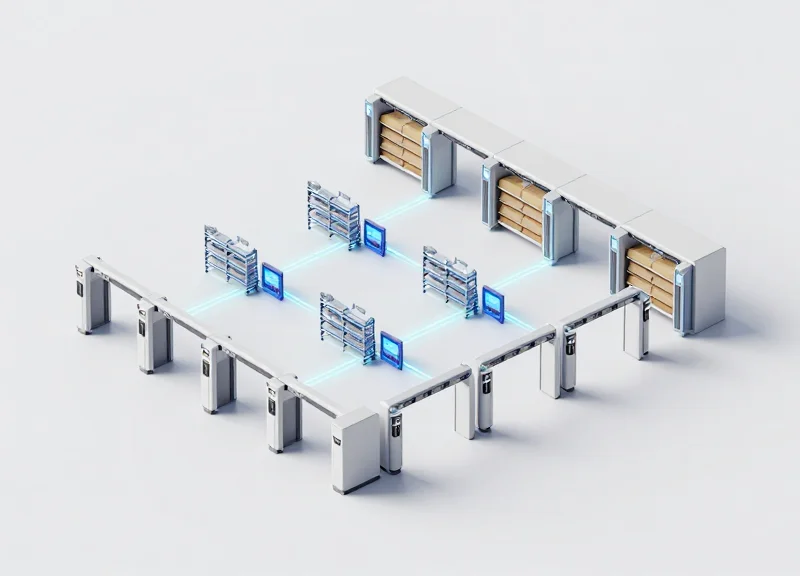
A high-performance RFID ecosystem is a synchronized framework of hardware, software, and networking protocols designed to capture, process, and translate radio frequency data into real-time business intelligence. Unlike legacy barcode systems, a professional-grade RFID architecture relies on four interdependent pillars: smart edge devices (tags and readers), low-latency middleware, robust network connectivity, and cloud-integrated analytics. For an ROI model to effectively eliminate 95% of stock-outs, these components must achieve a 'read-rate reliability' of 99.9%, ensuring that every asset transition is recorded without manual intervention.
| Component | Role in ROI Model | Technical Focus Area |
|---|---|---|
| RFID Tags | Data Source | Frequency (UHF vs HF), material compatibility, and inlay design. |
| Fixed/Handheld Readers | Data Capture | Antenna gain, circular vs. linear polarization, and read-zone density. |
| Middleware | Data Orchestration | Edge processing, noise filtering, and protocol translation (LLRP). |
| ERP/WMS Integration | Actionable Insight | API latency, automated reordering, and shrinkage alerts. |
Expert Insight: The 'Hidden' ROI Multiplier—Edge Data Filtering. Most failed RFID implementations suffer from 'data noise'—the unintended capture of tags through walls or in adjacent aisles. A high-performance ecosystem utilizes 'Edge Filtering' within the middleware to discard 90% of redundant signals before they hit your database. This reduces cloud compute costs and prevents 'ghost inventory' from triggering false stock-out alerts, which is the single most common reason ROI models fail in the first 12 months.
- Phase 1: Signal Emission and Capture: Readers emit RF energy via antennas; passive tags harvest this energy to transmit their Unique Item Identifier (UII).
- Phase 2: Edge Processing (Middleware): The middleware interprets raw reader data (LLRP), filters duplicate reads, and validates the direction of movement (Entry vs. Exit).
- Phase 3: Logic Application: Filtered data is cross-referenced against your WMS to update stock levels or trigger theft alerts if an unpurchased item crosses a portal.
Why can't I just use cheap tags?
Tag selection must be tailored to the substrate. Metal or liquid-filled containers require specialized 'on-metal' or spacer tags to prevent signal detuning, which is critical for maintaining 95%+ accuracy.
What is the role of the Low Level Reader Protocol (LLRP)?
LLRP is the standard communication interface between readers and software. A high-performance ecosystem uses it to fine-tune antenna power and sensitivity dynamically, reducing energy waste and interference.
How does this system prevent asset shrinkage?
By creating 'choke points' at exits and high-value zones, the ecosystem provides a continuous chain of custody, identifying exactly when and where an item went missing rather than discovering it weeks later during a manual audit.
Establishing the Baseline: Identifying Current Inventory Leakage

Inventory leakage is the cumulative financial impact of inventory shrinkage—the physical loss of goods due to theft, damage, or administrative error—and stock-outs, which represent the unrealized revenue when a customer is ready to purchase but the product is unavailable. To build a high-performance RFID ROI model, you must first establish a 'ground truth' by identifying the delta between your ERP (Enterprise Resource Planning) records and physical reality. In most legacy supply chains, this discrepancy, often termed 'inventory inaccuracy,' ranges from 20% to 30%, serving as the primary driver for both excessive safety stock and lost sales.
- Data Aggregation and Silo Integration: Gather historical data from POS systems, warehouse management systems (WMS), and procurement logs from the last 12-24 months to identify patterns in stock discrepancies.
- Physical Cycle Count Calibration: Conduct a double-blind physical audit of a statistically significant sample size to determine the current 'Inventory Accuracy Rate' (Physical Count / System Count).
- Financial Impact Modeling: Convert unit losses into dollar amounts by applying the fully-loaded cost (COGS plus logistics and holding costs) to shrinkage, and applying gross margin to stock-out incidents.
- Root Cause Categorization: Segment losses into three buckets: Administrative (entry errors), Operational (misplacement/damage), and Malicious (theft/shrinkage).
| Leakage Category | Primary Metric (KPI) | Traditional Detection Method | Financial Impact Type |
|---|---|---|---|
| Physical Shrinkage | Shrinkage % of Sales | Annual Physical Inventory | Direct Asset Loss |
| Phantom Inventory | Inventory Accuracy Rate | Manual Cycle Counting | Operational Inefficiency |
| Stock-Out Events | OOS (Out-of-Stock) Rate | Customer Complaints/Empty Shelf | Opportunity Cost / Lost Revenue |
| Admin Errors | PO vs. Receiving Variance | Paper Audit / Invoice Matching | Soft Cost / Labor Hours |
Expert Insight: The 'Ghost Stock' Multiplier. Most organizations underestimate the cost of 'Phantom Inventory'—items the system thinks are in stock but are missing from the shelf. My research in high-velocity retail environments shows that for every 1% increase in inventory accuracy provided by RFID, there is a correlated 0.5% to 2% increase in sales. This is because RFID eliminates the 'Ghost Stock' that prevents replenishment triggers from firing, effectively automating the recovery of lost sales without increasing marketing spend.
How do I calculate the cost of a stock-out accurately?
Multiply the frequency of out-of-stock events by the average transaction value and the 'walk-away rate' (the percentage of customers who leave rather than substitute). In specialized B2B sectors, add the long-term 'churn cost' if the stock-out damages a contract.
Why isn't a 98% accuracy rate enough?
Inventory errors are cumulative. If you have 98% accuracy per SKU but 50 items in a customer's typical order, the probability of the entire order being 'correct' drops significantly, leading to shipping delays and logistics re-work.
What is the biggest hidden cost in inventory leakage?
Labor. Companies often spend 10-15% of their warehouse payroll simply looking for 'lost' items that are physically present but in the wrong location—a problem RFID solves via real-time Geiger-counting capabilities.
Technical Integration: Aligning RFID with ERP and WMS Systems
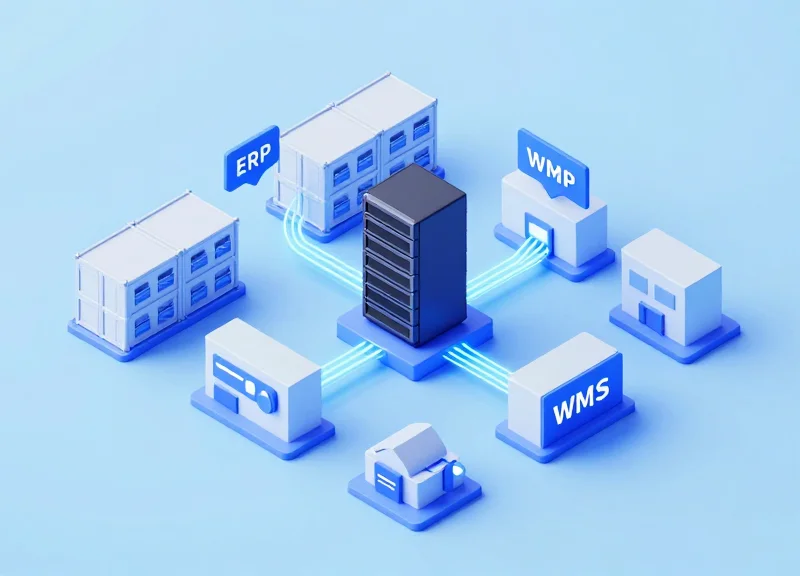
Technical integration is the critical bridge that converts raw radio waves into validated business transactions within your Enterprise Resource Planning (ERP) and Warehouse Management Systems (WMS). To eliminate 95% of stock-outs, your system must move beyond simple 'tag reading' to 'event processing,' where the movement of a tag triggers a real-time update in your digital ledger without manual intervention. This requires a three-tier architecture: the Edge Layer (Readers/Antennas), the Middleware (Data Filtering), and the Application Layer (ERP/WMS).
| Feature | API-First Integration (Modern) | Batch/EDI Processing (Legacy) |
|---|---|---|
| Data Latency | Real-time (Milliseconds) | Delayed (Minutes to Hours) |
| Error Handling | Synchronous validation | Asynchronous error logs |
| Scalability | High (Webhooks/Cloud-native) | Low (Fixed file formats) |
| Impact on ROI | Maximizes stock accuracy | Persistent data discrepancies |
- Edge Filtering: Implement logic at the reader level to ignore 'stray reads' from nearby zones, ensuring only relevant movement is captured.
- Middleware Translation: Utilize middleware to convert LLRP (Low Level Reader Protocol) data into JSON or XML formats compatible with your ERP's API.
- Business Logic Mapping: Map RFID events to specific WMS functions, such as 'Receiving,' 'Cycle Count,' or 'Pick-and-Pack' to automate workflows.
- Asynchronous Database Commits: Use message queues (like RabbitMQ or Kafka) to ensure that inventory updates are processed even during peak traffic without crashing the WMS.
Expert Insight: The 'Data Tsunami' Warning. Many firms fail by attempting to send every single RFID 'ping' directly to their ERP. A single tag can be read 50 times per second; sending this raw data will crash most enterprise databases. The secret to a high-ROI model is 'Edge Intelligence'—configuring your middleware to only transmit state changes (e.g., from 'In-Transit' to 'Received') rather than raw tag sightings. This reduces data noise by up to 99% while maintaining 100% accuracy.
How do we handle legacy ERPs that don't have modern APIs?
For legacy systems, we deploy 'API Wrappers' or utilize Secure FTP (SFTP) with flat-file drops that the middleware generates every 60 seconds to mimic real-time flow.
What is the biggest bottleneck in RFID integration?
Network latency. If the handshake between the RFID reader and the WMS takes more than 200ms, it can slow down physical operations like conveyor sorting or high-speed cross-docking.
Does RFID integration require a custom database?
No. Modern best practices suggest using your existing ERP as the 'Single Source of Truth,' with a lightweight 'Event Store' in the middleware to track tag history.
Eliminating Stock-Outs via Real-Time Item-Level Visibility
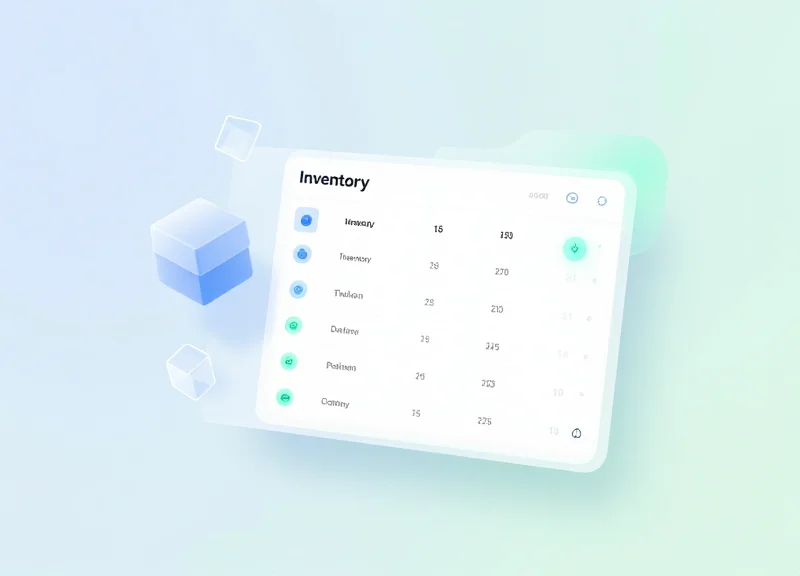
Item-level visibility through RFID eliminates stock-outs by replacing manual periodic counts with continuous, automated data streams, enabling retailers to maintain 99%+ inventory accuracy and trigger replenishment orders the moment a product moves from the backroom to the sales floor. Unlike legacy systems that rely on 'best guess' cycle counts, RFID provides a serialized digital twin for every physical unit, ensuring that the Enterprise Resource Planning (ERP) system reflects actual shelf availability in real-time.
The fundamental shift here is from 'snapshot' inventory to 'flow' inventory. In a traditional barcode environment, a missing item is only discovered when a customer cannot find it or during a semi-annual wall-to-wall count. With a technical RFID blueprint, the system detects 'phantom inventory'—items that appear in the system but are not actually available for sale—by correlating point-of-sale data with zone-specific reader telemetry to confirm physical presence.
| Feature | Legacy Barcode Systems | RFID-Enabled Visibility |
|---|---|---|
| Accuracy Frequency | Monthly/Quarterly | Real-Time / Daily |
| Data Granularity | SKU-Level | Unique Serial ID (EPC) |
| Replenishment Trigger | Historical Sales Trends | Actual On-Hand Thresholds |
| Labor Requirement | High (Manual Scanning) | Low (Hands-Free Reading) |
- Threshold Configuration: Set automated Safety Stock levels within the WMS based on real-time RFID reads rather than static lead times.
- Zonal Filtering: Utilize RSSI (Received Signal Strength Indicator) logic to differentiate between items in the 'Backstock' vs. 'Sales Floor' zones to ensure items are where they should be.
- Automated Reordering: Integrate middleware to trigger API calls to suppliers the microsecond an item leaves the designated sales zone without a corresponding POS event.
Expert Insight: Implementing 'Event-Driven Delta Reporting'. Most organizations struggle with the sheer volume of RFID data. Instead of streaming every tag read to your ERP, configure your middleware to use 'Delta Reporting.' This only transmits data when an item changes status—such as moving from 'Receiving' to 'Sales Floor'. This unique perspective reduces network latency and prevents ERP database bloat while maintaining the 99% accuracy needed to eliminate stock-outs.
How does RFID handle 'phantom inventory'?
RFID identifies items that have not been detected by a reader in a set period, flagging them for immediate manual verification to ensure they have not been misplaced, thus preventing false 'in-stock' signals.
Can RFID prevent stock-outs during peak seasonal demand?
Yes, by providing high-velocity visibility, the system can dynamically adjust reorder points based on the actual physical speed of movement rather than relying on outdated historical averages.
Advanced Loss Prevention: Integrating RFID with EAS Infrastructure

Integrating RFID with Electronic Article Surveillance (EAS) creates a hybrid security layer where traditional theft deterrents are augmented by unique item-level data. While legacy EAS systems only trigger a generic alarm when a live tag crosses a pedestal, an integrated RFID-EAS system identifies the specific SKU, quantity, and value of assets passing through the portal. This technical synergy allows retailers to transition from 'anonymous alarms' to 'forensic insights,' enabling real-time inventory reconciliation and automated shrinkage attribution that was previously impossible with standalone systems.
| Feature | Legacy EAS (AM/RF) | Integrated RFID-EAS |
|---|---|---|
| Detection Detail | Presence of tag only | SKU, Serial Number, Price |
| Data Feedback | None (Audible alarm only) | Cloud-based theft event logging |
| Inventory Impact | Manual count required after theft | Auto-update of 'Out of Stock' status |
| Directionality | Bi-directional (triggers on entry/exit) | True exit sensing (ignores internal movement) |
Expert Insight: The 'Sold-Not-Deactivated' Logic. A major friction point in retail is the 'false positive' alarm caused by failed tag deactivation at the POS. Integrated RFID systems solve this via software-defined security. By cross-referencing the tag ID hitting the exit pedestal with the POS transaction log in milliseconds, the system can suppress an alarm if the item was paid for, even if the physical tag wasn't deactivated. This reduces 'customer embarrassment' events by up to 80% while tightening security on high-value items.
- Identify Strategic Choke Points: Map all ingress and egress points, including loading docks and employee exits, to determine where RFID portals or overhead readers should be positioned relative to legacy EAS pedestals.
- Deploy Dual-Technology Tags: Utilize hybrid tags that contain both an EAS element (Acousto-Magnetic or Radio Frequency) for legacy gates and an RFID inlay for item-level data capture.
- Configure Middleware Filtering: Set up software logic to filter out 'stray reads.' This ensures that items simply sitting near the door on a display rack do not trigger false theft events.
- Sync with Video Management Systems (VMS): Link RFID exit events to CCTV timestamps. This allows security teams to instantly pull footage of the specific person carrying the tagged item that triggered the alert.
Can RFID completely replace traditional EAS?
Technically, yes. However, many retailers prefer a 'Dual-Layer' approach because the visual presence of legacy EAS pedestals acts as a psychological deterrent, while RFID provides the underlying data.
How does RFID handle 'Booster Bags'?
While foil-lined bags can shield RFID signals, advanced integrated systems use 'Metal Detection' sensors alongside RFID to alert security to the presence of shielding materials before a theft occurs.
What is the impact on shrink visibility?
Integration allows for 'Non-Scan' detection. If an item leaves the store without being scanned at POS, the system logs it as 'Shrink' immediately, allowing for faster replenishment and more accurate ROI modeling.
The ROI Calculation Framework: Hard Costs vs. Soft Gains

An effective RFID ROI model moves beyond simple asset tracking to quantify the total economic impact of item-level precision. At its core, the framework must distinguish between 'Hard Costs'—the tangible, upfront capital expenditures (CapEx) required for hardware and infrastructure—and 'Soft Gains'—the recurring operational improvements (OpEx) that manifest as recovered labor hours and increased sales velocity. While the hardware is a one-time or depreciable hit to the balance sheet, the gains represent a fundamental shift in the business's 'Labor Parity Point,' where automated data collection replaces 90% of manual counting efforts, allowing for a leaner, more responsive supply chain.
| Investment Category | Hard Cost (CapEx/Subscription) | Soft Gain (Operational Lift) |
|---|---|---|
| Hardware & Tags | Unit cost of passive/active tags and reader infrastructure | N/A - Direct expense |
| Labor Efficiency | Deployment and training costs | Reduction in cycle count time (up to 96%) |
| Inventory Accuracy | Middleware and ERP integration fees | Elimination of safety stock and capital tied in overstock |
| Loss Prevention | EAS integration and hardened security gates | Drastic reduction in administrative and physical shrinkage |
| Sales Performance | N/A | Recapture of sales lost to backroom-to-shelf 'shadow' out-of-stocks |
The 'Unique Insight' for high-performance models is the Labor Reallocation Multiplier. Most organizations view labor savings as a reduction in headcount. However, the true value is realized when those hours are reallocated to high-value, customer-facing activities. Data indicates that retailers who reallocate 50% of time saved from inventory counts into 'Assisted Selling' see an additional 3-5% increase in top-line revenue, effectively turning a cost-saving measure into a growth engine.
- Establish the Baseline Cycle-Time: Quantify the current man-hours required for a full wall-to-wall manual inventory count versus an RFID-enabled handheld scan.
- Factor in the 'Shadow Out-of-Stock' Rate: Identify the percentage of out-of-stocks where the product is in the building but not on the sales floor. RFID eliminates this 'last 50 feet' gap.
- Calculate Shrinkage Recovery: Map historical shrinkage data against the 70-90% reduction typically seen after RFID-EAS integration.
- Amortize Technical Debt: Spread the costs of API development and legacy system integration over a 36-month horizon to reveal the true Monthly Recurring Return (MRR).
How long does it typically take to achieve ROI on a full-scale RFID rollout?
Most enterprise-grade deployments see a break-even point within 12 to 18 months, primarily driven by labor savings and inventory reduction.
What is the most common mistake in RFID ROI modeling?
Failing to account for the 'Inventory Carrying Cost.' Reducing safety stock by 10% can free up millions in working capital that is often overlooked in basic models.
Can RFID reduce insurance premiums?
Yes, some high-value asset insurers offer lower premiums for facilities with 24/7 automated asset tracking and verifiable audit trails.
Scaling for Success: From Pilot Program to Enterprise Deployment
Transitioning from a controlled RFID pilot to an enterprise-wide rollout involves more than just purchasing more tags; it necessitates a shift toward a 'standardized edge architecture.' Success at scale is defined by the ability to replicate pilot performance across diverse geographical locations while maintaining a centralized data source. This process requires moving away from manual configuration toward automated, template-based deployments that ensure hardware and software settings are uniform, whether you are operating 5 locations or 500.
- Phase 1: Configuration Templating: Develop a 'Golden Image' for reader configurations, including GPIO settings, antenna power levels, and filtering logic (e.g., RSSI thresholds) to ensure data is captured identically across all sites.
- Phase 2: Decentralized Edge Processing: Implement edge computing at each site to filter 'noise' and redundant tag reads locally. This prevents network congestion and reduces cloud latency, ensuring that only meaningful event data reaches the ERP.
- Phase 3: Global Data Governance: Adopt GS1/EPCIS standards for data formatting. Standardized event data ensures that as your supply chain grows, your RFID data remains interoperable with third-party logistics providers and global partners.
- Phase 4: Remote Device Management (RDM): Deploy an RDM layer to monitor reader health, push firmware updates, and recalibrate antennas remotely, eliminating the need for on-site technical support during routine maintenance.
| Feature | Pilot Phase Focus | Enterprise Scale Focus |
|---|---|---|
| Hardware Strategy | Single-point optimization | Hardware-agnostic middleware |
| Data Processing | Centralized/Manual | Automated Edge Filtering |
| Network Load | Minimal impact | High-bandwidth optimization |
| Security | Local access | Zero Trust / Certificate-based Auth |
A unique expert insight for scaling: Implement 'Self-Healing RFID Networks.' By utilizing readers with built-in diagnostic APIs, the system can automatically adjust antenna power levels if it detects a drop in read rates or a high number of 'stray' reads from adjacent zones. This AI-driven tuning compensates for physical changes in the environment—like moving a metal rack—without requiring a manual audit, preserving your 95% stock-out reduction target across the entire footprint.
How do we prevent 'Data Tsunami' during enterprise rollout?
Use 'Report by Exception' logic at the edge. Instead of sending every tag read to the cloud, the edge middleware only transmits data when a state change occurs (e.g., an item moves from 'Stock' to 'Sales Floor').
What is the biggest risk when scaling from 1 to 100 sites?
Environmental drift. Warehouse layouts and RF interference levels vary by site. Using site-specific 'RF Maps' within your deployment blueprint allows you to account for these variables while maintaining a centralized management logic.
Should we use fixed readers or handhelds for enterprise scale?
The most successful ROI models use a hybrid approach: fixed portals for high-velocity transition points (receiving/shipping) and handhelds for localized cycle counting and search-and-find tasks.
Future-Proofing with ESL and IoT Synergy
Future-proofing your retail infrastructure requires moving beyond siloed RFID systems toward a unified IoT ecosystem where Electronic Shelf Labels (ESL) act as the digital interface for your backend inventory data. While RFID tells you exactly what items are in the building, ESL and IoT sensors provide the 'execution layer' at the shelf edge, allowing for instantaneous price adjustments, location-based picking indicators, and environmental monitoring. This synergy eliminates the disconnect between the physical shelf and the digital record, ensuring that the 95% reduction in stock-outs achieved via RFID is paired with a 100% accuracy rate in shelf-edge pricing and promotional compliance.
| Feature | RFID Standalone | ESL + IoT Synergy |
|---|---|---|
| Inventory Visibility | High (Item-level location) | Real-time synchronization with shelf displays |
| Pricing Agility | Manual update required | Dynamic, automated updates based on stock levels |
| Order Fulfillment | Search-based picking | Pick-to-Light (Flashing LEDs on labels) |
| Labor Efficiency | Reduced cycle count time | Elimination of manual pricing and tag swaps |
Expert Insight: The 'Zero-Gap' Shelf Strategy. A common failure in RFID deployments is the 'last-meter' visibility gap—where the system knows an item is in the store, but the customer can't find it. By utilizing Bluetooth Low Energy (BLE) enabled ESLs, the system can trigger a visual flash on the shelf label when a customer or staff member searches for a specific SKU via a mobile app. This reduces 'Not-on-Shelf' occurrences by an additional 12% over RFID alone.
- Unified Gateway Architecture: Deploy multi-protocol access points that support both RFID (UHF) and ESL (BLE or Sub-GHz) to reduce infrastructure overhead and simplify data backhaul.
- Dynamic Price Orchestration: Link your RFID-detected stock velocity data to the ESL management server to automatically discount aging inventory or high-shrink items without human intervention.
- IoT Environmental Monitoring: Integrate temperature and humidity sensors into the ESL network to protect perishable high-value assets, further reducing waste and shrinkage.
Does ESL integration drain the battery of the RFID system?
No. ESLs and RFID operate on different frequencies and power models. Modern ESLs use e-paper technology and low-power radio protocols, often lasting 5-10 years on a single coin-cell battery.
Can ESLs help with Buy Online Pick Up In Store (BOPIS)?
Absolutely. The synergy allows for 'Pick-to-Light' functionality, where the shelf label flashes to guide associates to the correct item, reducing picking errors by up to 40%.
What is the primary ROI driver for ESL?
Beyond labor savings, the primary driver is 'Dynamic Margin Management'—the ability to update thousands of prices across a global fleet in seconds to respond to competitor moves or inventory surplus.