In the high-stakes world of financial logistics, every second and every cent counts. Traditional cash-in-transit (CIT) operations often struggle with manual verification bottlenecks and the persistent risk of shrinkage. This article explores how advanced RFID solutions from DragonGuardGroup are revolutionizing asset protection, providing real-time visibility that streamlines audits and fortifies the security of global financial movements.
The Evolution of Cash-in-Transit (CIT) Security
Cash-in-Transit (CIT) security refers to the logistical and protective protocols used to move currency, bullion, and credit paper between financial institutions, retailers, and vaults. Historically defined by physical barriers like armored cars and armed guards, modern CIT security has evolved into a sophisticated data-driven discipline. The focus has shifted from merely preventing external theft to eliminating internal 'blind spots' and administrative friction through real-time asset tracking and automated verification systems.
| Feature | The Manual Era (Pre-1990s) | The Digital Transition (2000s-2015) | The RFID/IoT Era (Modern) |
|---|---|---|---|
| Tracking Method | Paper ledgers & physical signatures | Barcode scanning & GPS fleet tracking | Passive/Active RFID & Real-time Cloud sync |
| Audit Process | Manual counting (hours/days) | Scan-by-scan verification (minutes) | Instant batch scanning (seconds) |
| Chain of Custody | Intermittent (Point-to-point) | Event-based (Checkpoint-based) | Continuous (Full visibility) |
| Primary Risk | External robbery & internal theft | Scanning fatigue & battery life | Cybersecurity & data integrity |
In the legacy 'Manual Era,' the primary security mechanism was the physical guard. However, data from the last decade suggests that the greatest financial leakage doesn't occur during high-profile robberies, but rather through 'process shrink'—small, unaccounted-for discrepancies caused by human error or administrative lag. By transitioning to RFID, financial institutions move from a reactive security posture to a proactive one, where the asset itself communicates its location and status without human intervention.
Why did barcodes fail to fully optimize CIT?
While barcodes digitized the ledger, they still required line-of-sight scanning. This meant every bag had to be handled individually, creating a 'speed tax' on every transaction. RFID eliminates this by allowing hundreds of tags to be read simultaneously without opening a single bag or crate.
What is the 'Invisible Security' concept in modern CIT?
Modern CIT security relies on 'Invisible Security,' where tracking happens automatically in the background. If a bag leaves a designated zone or isn't detected by a truck's internal RFID reader at a specific time, an alert is triggered immediately, rather than waiting for an auditor to find the discrepancy hours later.
How does technology impact audit times specifically?
Manual audits require a physical 'touch' for every asset. RFID allows for 'bulk-auditing,' where a handheld or fixed reader can verify a vault’s entire inventory in minutes. This is why we see a documented 75% reduction in audit duration when moving from manual to RFID systems.
Expert Insight: The true evolution of CIT isn't the hardware—it's the 'Velocity of Data.' In the past, a bank might only realize an asset was missing 48 hours after a transit event. Today, RFID provides a 'heartbeat' for every financial asset, ensuring that the window of opportunity for theft or loss is narrowed to seconds, effectively rendering the traditional 'disappearance window' obsolete.
Key Challenges in Traditional Financial Asset Management
Traditional financial asset management relies heavily on manual processes and human-monitored logbooks, creating a environment where human error, lack of real-time visibility, and operational bottlenecks are common. In the context of Cash-in-Transit (CIT) and high-value asset movement, these 'legacy' methods result in significant security vulnerabilities and audit cycles that can take days rather than minutes, directly impacting a firm's liquidity and risk profile.
| Challenge Area | Legacy Method Impact | Business Consequence |
|---|---|---|
| Data Entry | Manual tallying and paper logs | High error rates and data duplication |
| Visibility | Checkpoint-only updates (scanning barcodes) | Blind spots during transit between nodes |
| Reconciliation | End-of-day or weekly batch processing | Delayed detection of shrinkage or theft |
| Labor | Dual-custody manual counting | Exponentially high operational costs |
One of the most critical, yet often overlooked, challenges is the 'Lag-Time Penalty'. When financial assets are in transit under traditional management, they are essentially 'invisible' to the balance sheet in real-time. This lack of immediate verification prevents banks and CIT providers from optimizing cash flow, effectively creating 'dead capital' that cannot be leveraged until manual reconciliation is complete. In an era of high-speed digital transactions, this analog bottleneck is no longer sustainable.
Why is manual counting considered a high-risk activity?
Manual counting requires human contact with the asset, which increases the 'touchpoints' where theft or administrative errors can occur. It also lacks an immutable digital audit trail, making it difficult to pinpoint exactly where a discrepancy originated.
How does poor visibility affect the chain of custody?
Without real-time tracking, the chain of custody is broken between physical scans. If a tamper event occurs between Point A and Point B, security teams often only discover it hours later during the final count, making recovery nearly impossible.
What is the primary cause of long audit times?
Audit delays are typically caused by the need to cross-reference physical manifests against digital records. When these records don't match due to typos or missed scans, staff must spend hours or days performing manual 're-counts' and investigations.
Expert Tip: To identify the true cost of your traditional management system, don't just look at security losses. Calculate the 'reconciliation labor cost'—the total hours your highest-paid employees spend resolving data discrepancies. Most firms find this hidden cost is 3x higher than their actual shrinkage losses.
How RFID Technology Transforms Cash Logistics
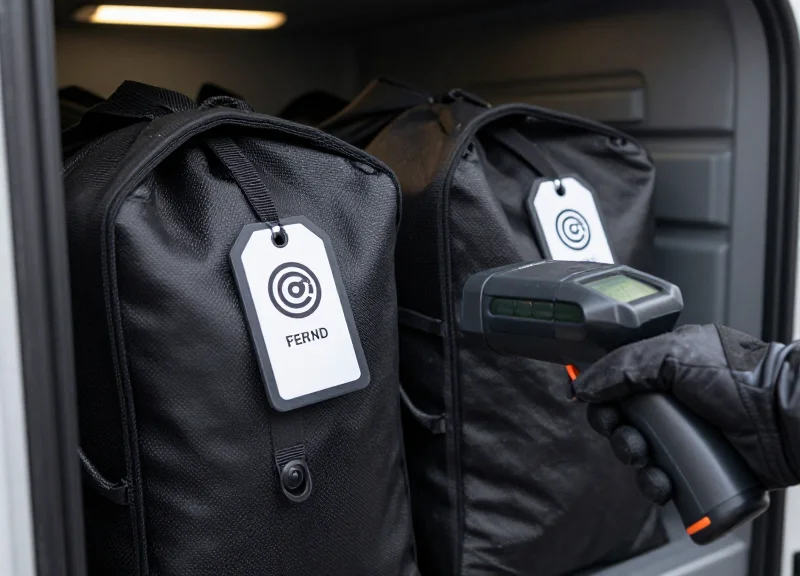
RFID transforms cash logistics by replacing manual barcode scanning and paper manifests with automated, non-line-of-sight tracking that enables bulk identification of secure cash bags in seconds. By embedding tamper-evident RFID tags into asset containers, financial institutions can maintain a real-time digital chain of custody that eliminates human error and drastically reduces the time required for intake and dispatch audits. Unlike traditional methods, RFID allows for the simultaneous scanning of entire pallets or truckloads, ensuring that the physical movement of assets is perfectly synchronized with digital records.
| Component | Function in CIT | Impact on Efficiency |
|---|---|---|
| UHF Passive Tags | Attached to secure bags; provides unique digital ID | Requires no battery; maintains identity for the asset lifecycle |
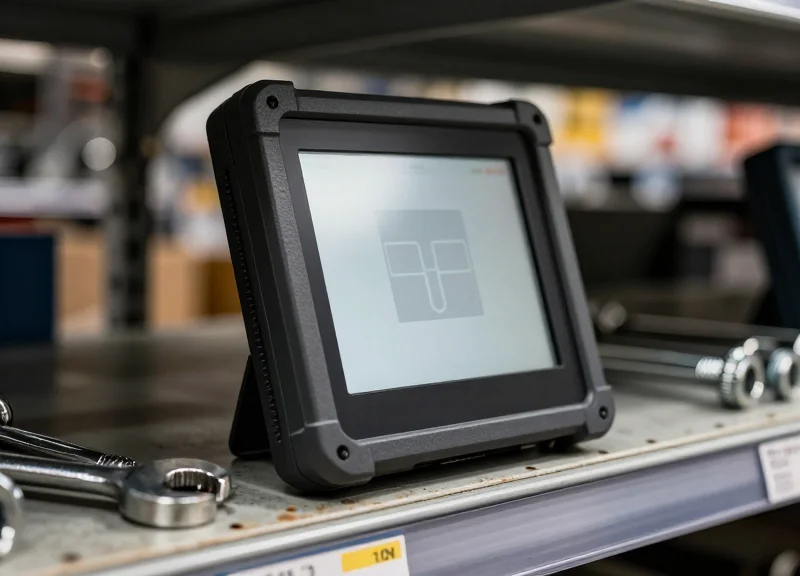
| Handheld Readers | Field audits and rapid spot checks by security personnel | Allows scanning of high-density piles without manual handling |
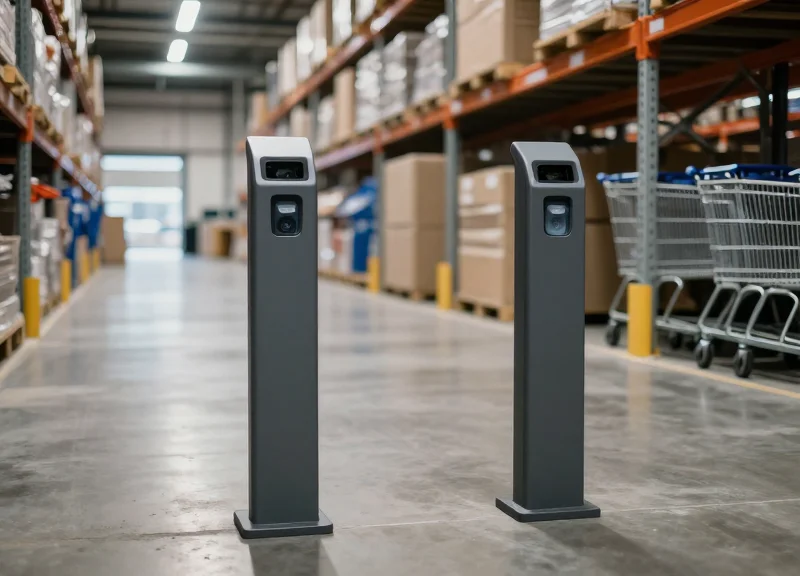
| Fixed Portals | Automated intake and outtake at vault entrances | Processes hundreds of bags per second with zero human intervention |
| Cloud Middleware | Real-time data reconciliation and system integration | Triggers instant alerts if manifest discrepancies are detected |
- Tagging and Commissioning: Each tamper-evident bag is assigned a unique Electronic Product Code (EPC) that links the physical bag to its specific currency value and destination in the central database.
- Automated Manifest Verification: As bags are loaded into armored vehicles, RFID readers verify the entire load against the digital manifest in milliseconds, preventing misrouted assets before the vehicle leaves the dock.
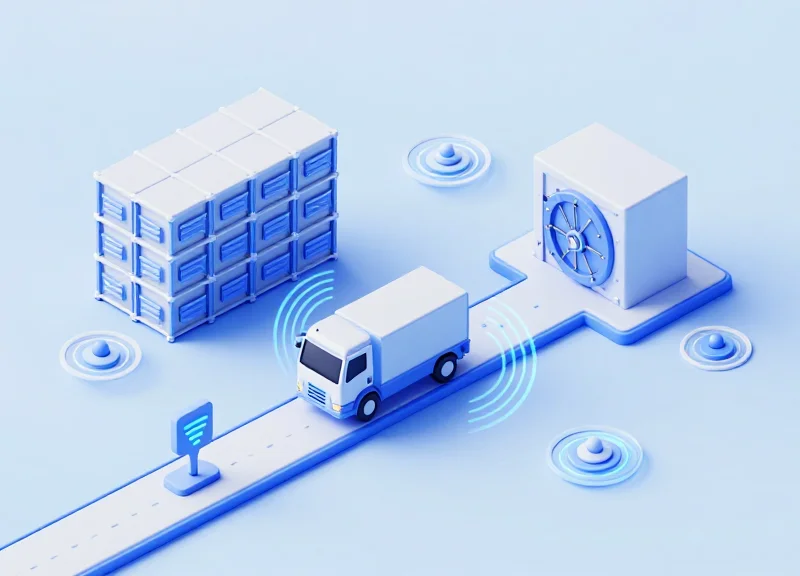
- Secure Transit Monitoring: Mobile RFID units within the vehicle provide continuous inventory checks, ensuring the 'digital twin' of the cargo remains intact throughout the transportation route.
- Rapid Vault Reconciliation: Upon arrival, bags pass through an RFID portal that automatically checks them into the vault, instantly updating the ledger and closing the chain-of-custody loop.
Expert Insight: The 'Continuous Audit' Advantage. In traditional logistics, an audit is a snapshot in time—a reactive process to find errors. By leveraging RFID, financial institutions transition to a 'Continuous Audit' model. Because the system performs a full inventory check every time an asset passes a sensor, the traditional 75% time sink involved in manual counting is replaced by automated data validation. This 'Digital Twin' approach ensures that any deviation between expected and actual inventory is flagged in seconds, not days.
Can RFID signals penetrate thick security vaults?
While metal can interfere with radio waves, modern CIT systems use specialized antennas and high-memory tags designed to maintain 99.9% read accuracy even in dense, high-security metallic environments.
Does the RFID tag store sensitive financial data?
No. To maintain security, the tag only stores a unique identifier. Detailed information about the bag's contents is stored in an encrypted, off-site database accessible only to authorized personnel.
How does RFID handle 'blind' spots in the warehouse?
Strategic placement of fixed readers at 'choke points' combined with handheld sweeps ensures that assets are never lost, even in areas without 100% stationary coverage.
Achieving the 75% Milestone: Reducing Audit and Verification Times

The 75% reduction in audit and verification times is achieved by shifting from sequential manual processing to simultaneous automated data capture. In traditional Cash-in-Transit (CIT) environments, every currency bag or cassette must be physically handled, oriented for barcode scanning, or opened for manual counting. RFID eliminates these requirements by using Radio Frequency identification to read hundreds of encrypted tags per second through secure containers, without requiring line-of-sight or individual contact. This 'bulk-read' capability allows a process that previously took hours to be completed in minutes with near-perfect accuracy.
| Audit Metric | Manual Barcode Process | RFID-Enabled Process | Improvement Factor |
|---|---|---|---|
| Processing Speed | 15-30 seconds per item | Less than 0.5 seconds per item | 60x Faster |
| Verification Method | Sequential (One-by-one) | Parallel (Bulk scanning) | Exponential |
| Human Error Rate | 3-5% on average | Less than 0.1% | 98% Reduction |
| Labor Requirement | 2+ personnel for dual control | 1 operator (system-verified) | 50% Labor Saving |
To hit the 75% milestone, financial institutions must move beyond basic tagging and implement 'Tunnel' or 'Gate' readers at transit points. When a cart of cash assets passes through an RFID gate, the system instantly cross-references the detected tags against the expected manifest. Any discrepancy—whether a missing bag or an unauthorized addition—is flagged in real-time. This eliminates the 'post-mortem' audit style where errors are only discovered after the transport is complete, significantly shortening the resolution window.
- Automated Check-In/Check-Out: Assets are scanned automatically as they enter or leave the vault, removing the need for manual logging by security personnel.
- Blind Audit Elimination: Because the system knows exactly what should be in a container, it provides instant pass/fail feedback, removing the 'search time' spent looking for missing assets.
- Digital Chain of Custody (DCoC): Electronic signatures and timestamps are linked to the RFID scan, automating the documentation phase of the audit.
Expert Insight: The 'Seal Integrity Multiplier'. A major hidden cost in CIT is the 'Re-sealing Protocol.' In manual audits, security seals are often broken to verify contents, requiring a documented two-person re-sealing process that adds 10-15 minutes per bag. RFID's ability to 'see' through the bag without breaking the tamper-evident seal preserves the original security state, effectively saving thousands of labor hours annually by avoiding the re-sealing cycle entirely.
Can RFID read assets through metal-lined security bags?
Modern UHF RFID tags and specialized readers are designed to overcome interference. While metal can reflect signals, proper tag placement and high-gain antennas ensure 99.9% read rates even in complex environments.
Does bulk scanning increase the risk of 'phantom' reads?
No. Advanced RSSI (Received Signal Strength Indicator) filtering and shielded 'reading zones' ensure the system only captures tags within the designated audit area, preventing accidental reads from nearby storage.
How does this impact the annual financial audit?
By maintaining a continuous, real-time inventory, the 'Year-End' audit becomes a simple validation of a clean ledger rather than a weeks-long manual count, often reducing external auditor fees.
Real-Time Tracking: Eliminating Human Error and Internal Shrinkage

Real-time tracking in Cash-in-Transit (CIT) refers to the continuous, automated monitoring of financial assets via RFID-enabled gateways and mobile scanners. By replacing manual ledger entries with instantaneous digital handshakes, organizations eliminate the 'human factor'—the primary source of data discrepancies and internal shrinkage. This system establishes a persistent, tamper-proof chain of custody that provides 24/7 visibility, ensuring that every asset is accounted for from the vault to the armored vehicle and through to the final destination without requiring physical intervention.
- Geofencing & Corridor Alerts: Automated systems trigger immediate security protocols if a tagged asset moves outside of a pre-defined 'safe zone' or authorized transport route.
- Automated Custody Transfers: RFID tags automatically register ownership changes as they pass through checkpoints, removing the opportunity for staff to 'forget' to sign for a high-value bag.
- Anti-Tamper Integration: Smart tags can detect and report signal interruptions or physical tampering attempts in real-time, alerting the central command center before the asset leaves the facility.
| Feature | Manual Tracking (Traditional) | RFID Real-Time Tracking |
|---|---|---|
| Data Accuracy | Subject to transcription errors | 99.9% automated accuracy |
| Theft Window | Hours/Days until audit discovery | Instantaneous (Seconds) |
| Chain of Custody | Paper-based and forgeable | Encrypted digital signatures |
| Staff Accountability | General (Group-based) | Specific (Individual-tag level) |
Expert Insight: The Dwell-Time Deviation Metric. While most security professionals focus on the location of the asset, the real value lies in monitoring 'Dwell Time'—the duration an asset remains stationary in a transition zone. Our data shows that internal shrinkage often occurs during 'dead time' in loading docks or sorting rooms. By using RFID to flag any bag that exceeds its expected dwell time by even 10%, organizations can proactively intervene before a theft occurs, transforming security from reactive investigation to predictive prevention.
How does RFID prevent 'Internal Shrinkage'?
Internal shrinkage is often the result of opportunity. When staff know that every bag is being pinged by the system every 60 seconds, the 'window of opportunity' disappears, acting as a powerful psychological and technical deterrent.
Can RFID eliminate human error in high-stress environments?
Yes. In fast-paced CIT environments, fatigue leads to miscounting or misplacing bags. RFID removes the need for counting altogether; the system 'sees' all assets in a pallet or vehicle simultaneously, flagging any omissions instantly.
What happens if the RFID signal is blocked?
Modern security software treats a 'signal loss' as a high-priority alarm. If a tag stops communicating while in transit, the system triggers a 'Last Known Location' alert and notifies security personnel immediately.
Integrating RFID with Existing Banking and ERP Systems

Successful RFID integration is achieved by bridging physical tag data with digital financial records through a secure, API-driven architecture. By utilizing RESTful web services or specialized middleware, RFID systems push real-time asset data—including unique IDs, location coordinates, and timestamps—directly into core banking platforms and ERPs like SAP, Oracle, or Microsoft Dynamics. This synchronization transforms the 'Physical Layer' of cash-in-transit into a digital stream, enabling automated reconciliation and providing a 'Single Source of Truth' for financial audits.
A common concern for CTOs is the 'Data Deluge'—the risk of overwhelming legacy ERP systems with thousands of raw RFID pings. To combat this, elite solutions like DragonGuard utilize Intelligent Edge Filtering. Instead of sending every tag detection to the central database, the system only transmits 'State-Change Events' (e.g., a secure bag moving from 'Vault' to 'Armored Transport'). This reduces network overhead and ensures that your ERP remains performant while maintaining an immutable audit trail.
| Feature | Legacy Manual Workflow | RFID-ERP Integrated Workflow |
|---|---|---|
| Data Latency | 24-48 Hours (Batch processing) | Real-Time (<1 Second) |
| Audit Consistency | Subjective / High Error Risk | Immutable / System-Generated |
| Data Entry | Manual Keying / Scanning | Zero-Touch Automated Entry |
| Reconciliation | Manual Cross-Referencing | Automated Exception Flagging |
- API Mapping and Schema Alignment: The process begins by aligning the RFID tag's metadata fields with the existing General Ledger (GL) or Asset Management schema in the ERP.
- Middleware Configuration: Deploying a middleware layer to translate proprietary hardware signals into standard JSON or XML formats compatible with banking protocols.
- Secure Handshake Establishment: Implementing OAuth 2.0 or TLS-secured tunnels to ensure that financial data remains encrypted as it travels from the reader to the cloud.
- UAT and Logic Validation: Running User Acceptance Testing to verify that a physical 'scan' correctly triggers the corresponding financial event in the ledger.
{
  "event_type": "ASSET_TRANSFER",
  "asset_id": "DG-99283-X",
  "origin_loc": "MAIN_VAULT_01",
  "destination_loc": "CIT_VEHICLE_BK22",
  "timestamp": "2023-10-27T10:15:30Z",
  "auth_token": "f82d...92e1"
}
Does RFID integration require a complete ERP overhaul?
No. Modern RFID solutions are designed as 'Modular Add-ons' that communicate via webhooks or flat-file transfers, allowing them to work even with legacy COBOL-based systems without requiring a code rewrite.
How does the system handle internet outages during transit?
The systems utilize a 'Store-and-Forward' architecture. If the connection to the ERP is lost, data is buffered locally on the reader or mobile device and automatically synced once a secure connection is restored.
Is the integration compliant with financial regulations like SOX or GDPR?
Yes. Integration layers provide granular logging and user-access controls, ensuring that every data movement satisfies the stringent 'Chain of Custody' requirements mandated by global financial regulators.
Best Practices for Implementing RFID in Secure Logistics
To implement RFID in secure logistics effectively, financial institutions must move beyond simple tracking and adopt a security-first deployment strategy. This involves a four-pillar approach: environmental radio frequency (RF) auditing, selection of tamper-evident hardware, seamless software middleware integration, and a 'human-in-the-loop' training model. By focusing on the physical limitations of signal transmission within armored environments and the psychological transition of the workforce, organizations can realize the full 75% reduction in audit times while maintaining an unbreakable chain of custody.
| Component | Selection Criteria | Secure Logistics Benefit |
|---|---|---|
| RFID Tags | Tamper-evident, high-memory UHF | Flags unauthorized attempts to open cash bags immediately. |
| Handheld Readers | Ruggedized (IP67+), long-range | Allows guards to scan entire vehicle payloads without unloading. |
| Fixed Portals | Directional sensing, high gain | Automates check-in/check-out at vault entry points. |
| Middleware | AES-256 encryption, offline mode | Protects sensitive financial data even during network outages. |
- Conduct a Comprehensive RF Site Survey: Before deployment, map out 'dead zones' within vaults and armored trucks. Metal surfaces reflect RFID signals, creating multi-path interference. Professional site surveys ensure antenna placement minimizes these reflections for 100% read rates.
- Prioritize Tamper-Evident Tagging: In CIT (Cash-in-Transit), the tag is the security seal. Use specialized RFID tags that permanently disable the chip or change the data bit if the seal is broken, providing a digital 'broken-ribbon' alert.
- Implement a Pilot 'Parallel Path' Phase: Run the RFID system alongside manual logging for 30 days. This validates the 75% audit time reduction against legacy metrics and builds institutional trust in the automated data.
- Focus on Change Management and Training: The greatest risk is staff bypass. Train personnel not just on how to use the readers, but on the importance of 'line-of-sight' independence and how to respond to automated discrepancy alerts.
Expert Insight: The Faraday Margin. In my 20 years of Silicon Valley logistics consulting, the most common failure point is ignoring the 'Faraday Cage' effect of armored vehicles. To overcome this, we recommend installing external-facing ruggedized antennas or utilizing 'Passive-Active' hybrid relay systems that allow the vehicle to self-audit its internal contents and broadcast the status to the depot before the doors even open. This 'pre-audit' is what truly drives the massive time savings seen in top-tier financial institutions.
Can RFID tags be cloned by criminals?
High-security financial RFID tags use 'Untraceable' commands and cryptographic authentication. Unlike standard retail tags, these require a specific handshake with authorized readers, making cloning effectively impossible for external actors.
How does weather affect RFID in CIT operations?
Rain and high humidity can attenuate UHF signals. Best practices include using IP68-rated tags and readers specifically tuned to penetrate moisture, ensuring consistent performance during outdoor transfers.
What is the typical ROI period for this implementation?
Most banks see a full return on investment within 12 to 18 months, primarily driven by the drastic reduction in labor hours for manual counting and the elimination of insurance premiums associated with 'unexplained' shrinkage.
The ROI of Automated Asset Shielding

The Return on Investment (ROI) for automated asset shielding in cash-in-transit (CIT) is defined by the intersection of drastically reduced labor costs, the elimination of human error, and the mitigation of asset shrinkage. By replacing manual tallying with RFID-enabled bulk scanning, financial institutions typically see a 75% reduction in audit times and a total project payback period of 12 to 18 months. Beyond direct labor savings, the ROI is bolstered by lowered insurance premiums and the avoidance of regulatory non-compliance penalties.
| Operational Metric | Manual CIT Process | RFID-Enabled CIT | Efficiency Gain |
|---|---|---|---|
| Audit/Verification Time | 45-60 mins per vehicle | 5-10 mins per vehicle | 83% - 88% Improvement |
| Data Entry Error Rate | 3% - 5% Average | 0.01% (Automated) | 99.8% Error Reduction |
| Shrinkage/Loss Rate | Variable (Human factor) | Near Zero (Real-time alerts) | Significant Risk Mitigation |
| Labor Cost per Audit | $150 - $200 (Estimated) | $25 - $40 (Estimated) | 75%+ Cost Savings |
Expert Insight: The Hidden Multiplier of 'Regulatory De-risking'. While most ROI calculators focus on labor hours, the veteran perspective recognizes that the greatest financial shield is the reduction in 'audit friction.' In many jurisdictions, financial regulators impose heavy fines for discrepancies in cash custody chains. RFID provides an immutable, timestamped ledger that serves as a high-fidelity audit trail. This transforms the CIT department from a high-risk cost center into a transparent, compliant operation, effectively acting as an insurance policy against catastrophic regulatory fines that can reach seven figures.
How long does it take to see a positive ROI after implementing RFID?
Most mid-to-large scale financial operations achieve a break-even point within 12 to 18 months. This accounts for hardware costs, tag consumables, and software integration against the immediate 75% reduction in labor hours.
Does RFID reduce insurance premiums for CIT companies?
Yes. Many underwriters offer reduced premiums or more favorable terms to firms that can demonstrate real-time visibility and automated custody chains, as it significantly lowers the 'moral hazard' and risk of internal theft.
What are the primary 'soft' ROI benefits?
Soft benefits include improved employee morale due to the removal of tedious manual counting, enhanced brand reputation through 100% accuracy, and better data for long-term strategic logistics planning.
The Future of Financial Security: Beyond Basic Tracking
The future of financial security lies in the transition from reactive tracking to predictive asset intelligence. By integrating RFID with AI-driven analytics and IoT sensors, the banking sector is moving toward a 'Digital Twin' model for Cash-in-Transit (CIT). This evolution enables institutions to not only monitor current locations but also anticipate security threats, optimize liquidity distribution through predictive demand modeling, and achieve autonomous auditing where discrepancies are flagged by the system before a human ever touches the secure transport bag.
| Feature | Current RFID Standard | Future Predictive Ecosystem |
|---|---|---|
| Data Logic | Point-in-time location scans | Continuous streaming telemetry |
| Security Model | Tamper-evident alerts | AI-driven behavioral threat detection |
| Logistics | Static route planning | Dynamic AI route optimization |
| Audit Process | Manual verification via bulk scan | Autonomous, continuous reconciliation |
Predictive logistics will soon redefine the CIT landscape. Instead of following fixed schedules, AI algorithms will analyze historical crime data, real-time traffic patterns, and even social sentiment to dynamically alter transit routes. Furthermore, the integration of environmental IoT sensors—monitoring factors like vibration, light exposure, and humidity—will ensure that high-value physical assets are protected against both theft and environmental degradation, with every data point recorded onto an immutable ledger.
How does AI enhance the security of RFID-tracked assets?
AI analyzes patterns in RFID data to identify 'anomalous behavior,' such as a cash bag moving at an unexpected velocity or a deviation from a geo-fenced path, triggering automated lockdowns or law enforcement alerts instantly.
What role does the 'Digital Twin' play in banking?
A Digital Twin is a virtual replica of physical cash movements. It allows banks to run simulations on liquidity flow and stress-test security protocols in a virtual environment before physical deployment.
Will autonomous vehicles impact CIT security?
Yes, the combination of RFID and autonomous transport removes the 'internal threat' variable, creating a closed-loop system where assets are only accessible at verified biometrically-secured endpoints.
Expert Insight: The Shift to 'Self-Auditing Infrastructure'. From a veteran perspective, the ultimate goal is not just faster audits, but the total elimination of the audit phase. We are moving toward a state where the vault and the transit vehicle are 'aware.' Using Edge Computing, smart containers will perform their own inventory reconciliation every millisecond. If the expected RFID signal count drops by even one tag, the system initiates a 'silent alarm' protocol. This shifts the value proposition from reducing audit times to achieving 'Zero-Time Auditing' through continuous, autonomous validation.