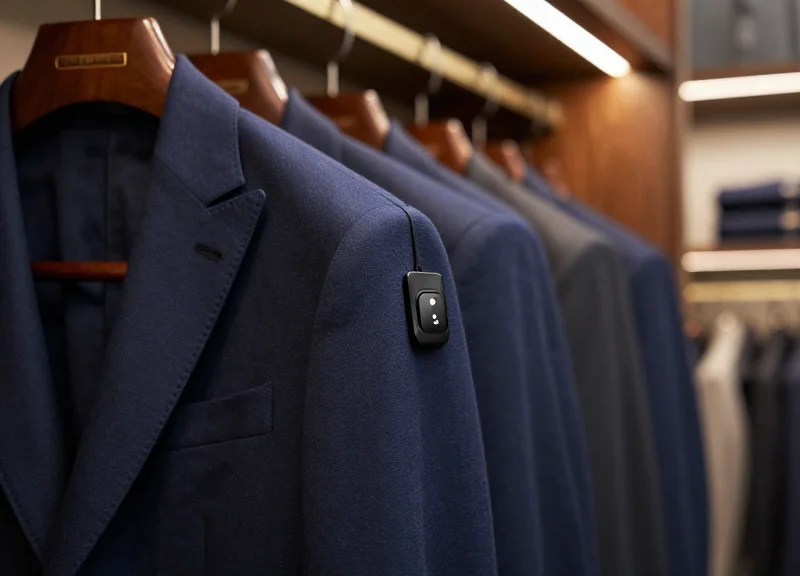
The fast fashion landscape of 2026 demands a radical shift in how retailers approach loss prevention and inventory management. As consumer demand for rapid product turnover accelerates, traditional security measures are no longer sufficient to protect high-volume stock from sophisticated shrink threats. The emergence of Hybrid RFID-EAS (Radio Frequency Identification and Electronic Article Surveillance) solutions represents the next frontier in retail resilience. By combining the immediate theft deterrence of EAS with the granular data visibility of RFID, brands can finally bridge the gap between asset protection and supply chain efficiency. In this comprehensive outlook, DragonGuardGroup examines how these integrated systems are becoming the gold standard for shielding the world's most dynamic fashion inventories.
The 2026 Retail Landscape: Why Fast Fashion is at High Risk

By 2026, the fast fashion sector has reached a critical tipping point where traditional loss prevention methods can no longer keep pace with the 'Ultra-Fast' supply chain model. The risk profile is primarily driven by the Security-Velocity Gap: a phenomenon where the sheer speed of inventory turnover—often exceeding 20-30 cycles per year—creates a visibility vacuum. This environment allows Organized Retail Crime (ORC) syndicates to exploit micro-vulnerabilities in the supply chain, as retailers prioritize speed-to-market over granular item-level security. In this high-stakes landscape, the risk is not just the loss of physical goods, but the systemic corruption of inventory data that powers modern omnichannel retail.
| Risk Factor | Traditional Retail (Pre-2024) | Fast Fashion 2026 Outlook |
|---|---|---|
| Inventory Velocity | Moderate / Seasonal | Ultra-High / Weekly Drops |
| Theft Profile | Opportunistic / Local | Professionalized ORC Syndicates |
| SKU Complexity | Low to Medium | Hyper-Granular (Massive Variety) |
| Security Primary Goal | Theft Deterrence | Total Inventory Intelligence |
- Hyper-SKU Fragmentation: With thousands of new designs launched monthly, the sheer volume of unique identifiers makes manual or legacy EAS monitoring impossible to manage without high error rates.
- The Rise of 'Flash Mob' Loots: Organized groups exploit high-density store layouts to overwhelm staff and bypass standard security gates in seconds, necessitating invisible or long-range detection.
- Omnichannel Inventory Distortion: When an item is stolen but not recorded, it stays 'live' on the e-commerce platform. This leads to 'phantom inventory' and canceled orders, which severely damages brand loyalty.
Expert Insight: The Ghost SKU Vulnerability. A unique challenge in 2026 is the 'Ghost SKU' effect. Because fast fashion cycles move so quickly, stolen items often enter the secondary resale market before the retailer even realizes they are missing. This creates a parallel supply chain where stolen goods compete directly with the brand's own digital storefront. My 20 years in the valley suggests that in 2026, the most successful retailers will treat loss prevention not as a cost center, but as a critical component of their data integrity and AI-forecasting accuracy.
Deconstructing Hybrid RFID-EAS Technology

Hybrid RFID-EAS technology is a dual-layered security architecture that embeds both a Radio Frequency Identification (RFID) chip and an Electronic Article Surveillance (EAS) element—typically Acousto-Magnetic (AM) or Radio Frequency (RF)—into a single, unified tag or label. Unlike legacy systems that merely trigger a 'dumb' alarm when a protected item passes a pedestal, hybrid solutions provide 'intelligent' alerts. They tell the retailer exactly which item is being stolen (SKU, color, and size) while simultaneously verifying if the item was legitimately purchased, effectively merging loss prevention with inventory accuracy.
| Feature | Traditional EAS | Standalone RFID | Hybrid RFID-EAS |
|---|---|---|---|
| Primary Function | Theft Deterrence | Inventory Tracking | Unified Security & Visibility |
| Data Granularity | None (Binary Alert) | High (Item-Level) | High + Actionable Security |
| Alarm Intelligence | Generic Beep | No Native Exit Alarm | Specific Item Identification |
| Retail Speed | Moderate | High | Ultra-High (2026 Standard) |
The technical synergy occurs at the pedestal (gate) level. Modern 2026-gen antennas are equipped with multi-protocol readers capable of sensing the 58kHz AM or 8.2MHz RF resonance of the EAS component while simultaneously interrogating the UHF RFID chip at 860-960MHz. This dual-polling happens in milliseconds, allowing for seamless throughput even in high-traffic fast fashion flagship stores where hundreds of items may pass the sensors every minute.
- Dual-Purpose Hard Tags: A single physical housing containing both an EAS resonator and an RFID inlay, reducing the 'tagging fatigue' for staff and maintaining garment aesthetics.
- Smart Exit Pedestals: Sensors that use beam-forming technology to differentiate between an item being stolen and an item merely placed on a display rack near the entrance.
- Real-Time Cloud Analytics: Software that immediately logs the 'shrink' event, updates the stock count, and can even trigger nearby CCTV cameras to bookmark the event.
Expert Insight: The 'Contextual Alarm' Breakthrough. By 2026, the industry is moving toward 'Context-Aware Pedestals.' Our research indicates that by utilizing edge-computing within the antenna itself, these systems can now filter out 'tag pollution'—tags located deep inside the store that occasionally trigger false alarms due to signal bouncing. This technology reduces 'alarm fatigue' among floor staff by an estimated 45%, ensuring that when an alarm sounds, it is treated as a high-priority security event rather than a technical glitch.
Real-Time Inventory Intelligence for Loss Prevention

Real-time inventory intelligence is the digital capability to monitor individual SKUs across the entire retail floor, allowing loss prevention (LP) teams to move from reactive alarm response to proactive asset protection. By leveraging Hybrid RFID-EAS systems, retailers gain granular visibility into which specific items—including size, color, and price point—are being moved, tampered with, or removed. This intelligence-led approach eliminates the 'mystery' of shrink, providing actionable data that distinguishes between accidental customer errors and targeted organized retail crime (ORC) activities.
- Item-Level Accountability: Unlike traditional security that only signals a generic breach, RFID intelligence identifies the exact product. This allows LP to prioritize responses based on the value and risk profile of the specific item triggered.
- Dwell-Time Analytics: Smart sensors can detect if high-value items are lingering in 'blind spots' or fitting rooms for unusual durations, triggering silent alerts to floor staff before an item even reaches the exit.
- Instant Inventory Reconciliation: When a theft occurs, the system automatically updates the inventory management software. This ensures that 'phantom inventory' doesn't prevent a replenishment order, saving the sale for the next customer.
| Feature | Legacy EAS (Reactive) | Hybrid RFID-EAS (Intelligence-Led) |
|---|---|---|
| Alarm Context | Generic 'Beep' - No item info | Specific SKU/Price/Dept Data |
| Shrink Visibility | Discovered during quarterly audits | Identified in real-time |
| ORC Detection | Difficult to track patterns | Identifies 'Bulk Theft' signatures |
| Staff Action | Check receipt (Conflict prone) | Data-verified intervention |
Expert Insight: In the 2026 fast fashion landscape, the most dangerous threat isn't just the theft—it's the 'Shadow Inventory Trap.' When a hot-selling item is stolen and the system still thinks it is on the shelf, the automated replenishment algorithms fail to trigger. Retailers using real-time intelligence avoid this by treating every theft event as a data point for the supply chain, ensuring that high-velocity styles are replaced within hours, effectively neutralizing the long-term revenue damage of the theft.
How does RFID reduce 'false positives' at the door?
By filtering out 'leaking' signals from nearby displays and only triggering when a tag's status is specifically 'unpurchased' and 'moving through the exit zone,' false alarms are reduced by up to 95%.
Can inventory intelligence predict theft?
Yes. By analyzing patterns of movement—such as a specific number of high-value items being moved from a rack to a low-traffic area simultaneously—the system can alert security to a likely 'grab-and-run' before it happens.
Does this integrate with existing CCTV?
Modern hybrid systems use API hooks to time-stamp video feeds exactly when an RFID-tagged item crosses a threshold, allowing LP teams to find footage of a suspect in seconds rather than hours.
Optimizing Throughput: Managing High-Volume Traffic

Optimizing throughput in a 2026 fast fashion context refers to the ability of security systems to maintain 99.9% detection accuracy while allowing hundreds of shoppers per hour to pass through store exits without friction. Next-gen hybrid RFID-EAS solutions achieve this by integrating multi-beam antenna arrays with AI-driven signal processing, effectively eliminating the 'dead zones' and false triggers that historically caused bottlenecking and negative customer experiences during peak periods.
| Feature | Legacy EAS Systems | 2026 Hybrid RFID-EAS |
|---|---|---|
| Detection Width | Narrow (1.2m - 1.8m) | Ultra-Wide (Up to 3.2m per pedestal) |
| Signal Processing | Simple Threshold (On/Off) | Neural Network Pattern Recognition |
| False Alarm Rate | High (Tag pollution/interference) | Near Zero (Directional Logic) |
| Customer Friction | High (Stops at pedestals) | Zero (Seamless walkthrough) |
One of the most significant breakthroughs in 2026 technology is 'Spatial Filtering.' In traditional fast fashion layouts, merchandise displayed too close to the door often triggers 'nuisance alarms.' Hybrid systems now utilize 3D-vector sensing to map the store's perimeter in real-time. By distinguishing between a tag moving parallel to the door (browsing) and a tag moving perpendicular through the exit (theft), the system ensures that alarms only sound when a genuine breach occurs. This is critical for high-volume environments where security guards cannot afford to investigate every chirp during a Saturday rush.
Expert Insight: The 'Invisible Threshold' Strategy. For 2026, we are seeing a shift away from imposing floor-mounted pedestals toward overhead or 'concealed-in-floor' hybrid arrays. These systems use phased-array antennas to create a virtual security curtain. This not only increases the physical space for crowd flow but also utilizes the 'Directionality Data Point'—the system knows not just that a tag was detected, but exactly which direction it was moving and at what speed. If a tag is detected moving back into the store, the system suppresses the alarm entirely, preventing the 'ping-pong' effect often seen in crowded malls.
How do hybrid systems handle hundreds of tags passing through at once?
Modern RFID-EAS controllers use 'Bulk-Read' algorithms that can process over 800 tags per second. Even if a group of ten shoppers exits simultaneously, the system can discretely identify every individual item in that cloud of data.
Does high traffic reduce the accuracy of detection?
Quite the opposite; next-gen systems use the baseline of constant movement to better calibrate their noise-cancellation filters, maintaining higher accuracy during peak times than during empty store periods.
Can these systems distinguish between a paid item and a stolen item in a crowd?
Yes. By syncing with the POS system in real-time, the hybrid antenna checks the 'Sold' bit on the RFID tag. If the bit is set to 'True,' the EAS alarm is suppressed even as the shopper walks through.
The ROI of Integration: Beyond Theft Deterrence

In the 2026 retail landscape, the Return on Investment (ROI) for hybrid RFID-EAS systems is no longer measured solely by a reduction in shrinkage. While theft deterrence remains a foundational pillar, the true financial catalyst lies in 'Operational ROI'—the ability to achieve 99% inventory accuracy and seamless omnichannel execution. By merging item-level intelligence with exit-point security, retailers can eliminate the 2-3% revenue leak caused by out-of-stock scenarios and 'phantom inventory,' effectively turning a cost-center into a profit-driving asset.
| Performance Metric | Traditional EAS Only | Hybrid RFID-EAS System |
|---|---|---|
| Inventory Accuracy | 60% - 75% (Manual Cycles) | 98% - 99.9% (Real-time) |
| Omnichannel Fulfillment | High Cancellation Rates | Highly Reliable Store-from-Ship |
| Out-of-Stock (OOS) | Reactive Replenishment | Proactive/Automated Alerts |
| Labor Allocation | High (Manual Stock Counting) | Low (Automated Item Scanning) |
For fast fashion brands operating on razor-thin lead times and massive SKU volumes, the integration of RFID into the security gate allows for 'Micro-Warehouse' capabilities. When a store can guarantee its inventory levels with near-perfect precision, it can confidently offer Buy Online, Pick Up In-Store (BOPIS) services without the risk of customer disappointment. This shift reduces the dependency on centralized distribution centers, lowering shipping costs and carbon footprints while meeting the immediate gratification demands of the modern consumer.
How does hybrid technology reduce labor costs?
Hybrid systems automate the inventory auditing process. Instead of staff spending hours manually scanning barcodes for cycle counts, RFID sensors at the exit and throughout the store provide instantaneous stock updates, allowing labor to be redirected toward customer service and sales.
Can hybrid systems prevent 'Ghost Inventory'?
Yes. Ghost inventory occurs when the system believes an item is in stock, but it has been lost or stolen. Hybrid systems reconcile sales data with EAS exit data in real-time, instantly updating the ERP system when an item leaves the floor, ensuring replenishment triggers are accurate.
Does the sales lift justify the higher cost of dual-tech tags?
Industry data for 2026 indicates that the 4-6% sales lift generated from improved on-shelf availability and omnichannel reliability typically pays for the incremental cost of hybrid hardware and tags within 12 to 18 months.
Expert Insight: The 'Ghost Inventory Tax' is the silent killer of fast fashion profitability. In 2026, we are seeing a shift where retailers use hybrid systems to create an 'Automated Replenishment Loop.' By identifying exactly which SKU has left the building—whether via a legitimate sale or an unrecorded loss—the system can trigger a warehouse pick-request within minutes. This ensures that the high-velocity 'hero items' that drive 80% of your revenue are never missing from the sales floor, maximizing every foot of retail real estate.
Sustainability and Security: The 2026 ESG Mandate

By 2026, the retail industry faces a critical inflection point where loss prevention strategies must align with Environmental, Social, and Governance (ESG) mandates to satisfy both regulators and eco-conscious consumers. The 2026 ESG Mandate for security involves transitioning from single-use plastic tags to hybrid RFID-EAS solutions built on sustainable substrates—such as FSC-certified paper, bio-polymers, and aluminum-printed antennas—that reduce electronic waste while maintaining 99.9% detection accuracy. This shift ensures that high-volume inventory protection no longer comes at the cost of a retailer's carbon footprint.
The fast fashion sector has historically been a significant contributor to plastic waste, particularly through the millions of security hard tags and disposable soft labels discarded annually. New Extended Producer Responsibility (EPR) laws in Europe and North America are forcing a redesign of these components. The next generation of hybrid sensors focuses on the 'Circular Security' model, which prioritizes the recyclability of the inlay and the reuse of the housing, effectively turning loss prevention hardware into a sustainable asset rather than a consumable expense.
| Feature | Traditional Security Tags | 2026 Next-Gen Hybrid Solutions |
|---|---|---|
| Material Substrate | PET/Plastic Film | Recyclable Paper or Compostable Bio-resin |
| Antenna Tech | Etched Copper/Chemical Wash | Printed Aluminum (Zero-waste process) |
| Lifespan | Single-use / Linear | Multi-use / Circular Recovery Ready |
| Regulatory Compliance | Minimal (Non-ESG) | Fully Compliant with EU DPP & EPR |
Expert Insight: The most significant breakthrough for 2026 is the 'Inlay-less' RFID antenna. By printing antennas directly onto garment hangtags using conductive soy-based inks, retailers can eliminate the need for plastic PET carriers entirely. This innovation reduces the environmental footprint of a security tag by nearly 40% and simplifies the recycling process for the consumer, who can now dispose of the tag in standard paper recycling streams without removing the electronics.
Do eco-friendly security tags compromise detection range?
No. Modern aluminum-printed and paper-based antennas offer the same, and sometimes superior, conductivity as traditional copper-etched tags, ensuring no loss in EAS or RFID performance.
Is the cost of sustainable RFID-EAS significantly higher?
While the initial unit cost may be 5-10% higher, the reduction in waste-disposal taxes (EPR fees) and the brand equity gained from ESG compliance typically lead to a net positive ROI within 18 months.
Can these tags support Digital Product Passports (DPP)?
Yes. The hybrid RFID component is the primary carrier for DPP data, allowing the same chip to handle security, inventory, and end-of-life recycling instructions for the consumer.
Addressing Technical Challenges and Implementation
Implementing next-gen hybrid RFID-EAS solutions involves the complex synchronization of dual-frequency hardware with cloud-native middleware to bridge the gap between physical loss prevention and digital inventory management. In 2026, the primary technical challenge is no longer just signal detection, but the seamless orchestration of high-velocity telemetry data from store exits into core ERP and POS systems without creating network bottlenecks or data silos.
| Challenge Category | Technical Barrier | 2026 Implementation Standard |
|---|---|---|
| Data Integration | Legacy ERPs cannot process 1,000x event spikes. | Event-driven architecture (EDA) with edge filtering. |
| Hardware Interference | RF shielding from metallic fabrics/foil bags. | Adaptive beam-forming and multi-path signal processing. |
| System Latency | POS-to-Cloud lag causing false alarms at exits. | Local-edge 'Allow Lists' updated in <200ms. |
From a Silicon Valley engineering perspective, the most overlooked hurdle is 'Telemetry Flooding.' A single fast-fashion flagship can generate millions of tag pings per hour. To solve this, technical leaders must implement 'Edge Intelligence'—where the RFID reader itself filters out redundant 'heartbeat' signals and only pushes actionable state changes (e.g., 'Sold' or 'Moving to Exit') to the cloud. This prevents the 'Shadow API Trap,' where legacy REST wrappers crash under the weight of real-time security telemetry.
- Environment Mapping and RF Tuning: Conduct a dynamic RF audit to identify interference zones caused by HVAC systems or neighboring retail signals, ensuring the EAS pedestals are calibrated for high-density traffic.
- Middleware Orchestration: Deploy a localized middleware layer that translates raw HEX data from RFID tags into structured JSON payloads compatible with modern retail APIs.
- Zero-Trust POS Handshake: Integrate a real-time verification loop where the security pedestal queries the POS transaction log via a low-latency cache before triggering an audible alarm.
How do we prevent 'tag collision' in high-density fashion racks?
Modern readers use anti-collision algorithms that utilize probabilistic bit-slotted Aloha protocols, allowing the system to distinguish between hundreds of individual tags in milliseconds.
Can hybrid systems work with existing Wi-Fi infrastructure?
Yes, but it is recommended to isolate security telemetry on a dedicated VLAN to prevent bandwidth contention with customer-facing guest Wi-Fi or mobile POS devices.
What is the most critical factor for 2026 deployments?
API Latency. The 'time-to-clear' for a purchased item must be sub-half-second to ensure a customer walking quickly toward the exit does not trigger a false positive.
Future-Proofing Your Brand with DragonGuardGroup
Future-proofing your retail brand requires more than just hardware; it demands a strategic partnership with a technology leader like DragonGuardGroup that specializes in merging RFID-driven inventory intelligence with traditional Electronic Article Surveillance (EAS) to create a unified, scalable security ecosystem. By selecting a partner that bridges the gap between loss prevention and data-driven supply chain management, retailers can protect high-volume inventory while simultaneously unlocking the granular visibility needed for the next generation of omni-channel retail.
| Feature | Standard Security Vendors | DragonGuardGroup Solutions |
|---|---|---|
| Integration Speed | 6-12 Months (Legacy Systems) | Plug-and-Play Hybrid Modules (3 Months) |
| Data Granularity | Binary (Alarm/No Alarm) | Item-level SKU and Location Analytics |
| Sustainability | Standard Plastic Housing | Recyclable and Bio-based RFID-EAS Composites |
| Scalability | Fixed Hardware Lifespan | Firmware-upgradable Sensor Arrays |
In the fast-paced 2026 market, the ability to pivot is your greatest competitive advantage. DragonGuardGroup provides a 'Modular Upgrade Path' (MUP) that allows brands to deploy traditional EAS infrastructure today while retaining the capability to activate RFID features remotely via software as their digital maturity grows. This eliminates the 'rip-and-replace' cycle that often drains capital during technology shifts.
- Phase 1: Diagnostic Assessment: We conduct a thorough audit of your current shrink rates, throughput speeds, and existing ERP compatibility to design a bespoke hybrid architecture.
- Phase 2: Hybrid Pilot Integration: Deployment of dual-frequency tags and pedestals in high-traffic flagship stores to validate ROI and calibrate false-alarm suppression algorithms.
- Phase 3: Global Rollout and Optimization: Full-scale implementation supported by our 24/7 technical monitoring team to ensure zero-downtime transitions across international territories.
Expert Insight: In 2026, the most successful brands will treat security tags not as passive locks, but as 'Ambient Intelligence Sensors.' DragonGuardGroup is pioneering the use of hybrid tags that provide 'Pre-incident Intelligence'—notifying staff when unusual item movement patterns suggest a professional shoplifting event is being staged before the items even reach the exit.
Is DragonGuardGroup hardware compatible with my current 58kHz systems?
Yes, our hybrid solutions are designed to be backwards compatible with most industry-standard Acousto-Magnetic (AM) systems, allowing for a gradual transition to RFID.
How does DragonGuardGroup handle international compliance for 2026 ESG mandates?
All our 2026 product lines utilize eco-friendly adhesives and recycled polymers, meeting or exceeding the latest EU and North American sustainability regulations for retail technology.
Can your systems integrate with AI-based video surveillance?
Absolutely. Our hybrid pedestals feature API hooks that sync RFID detection events with video timestamps, providing a complete visual and data audit of every exit event.