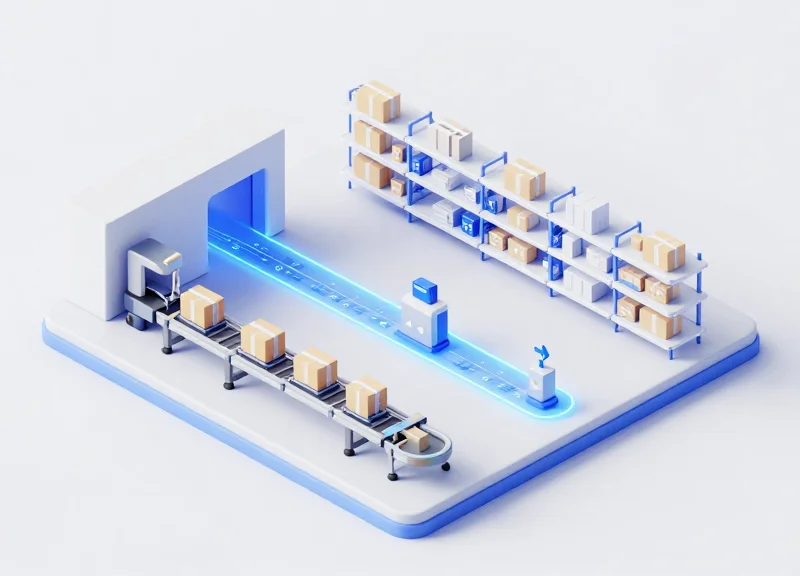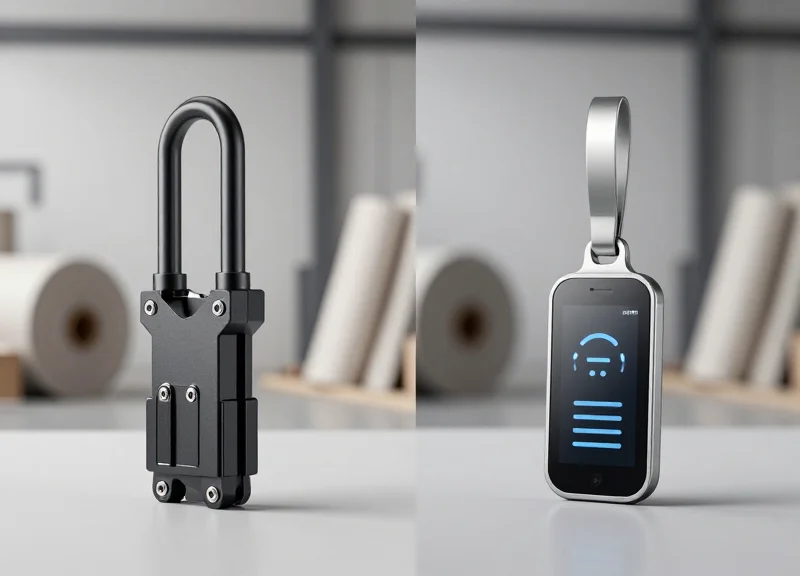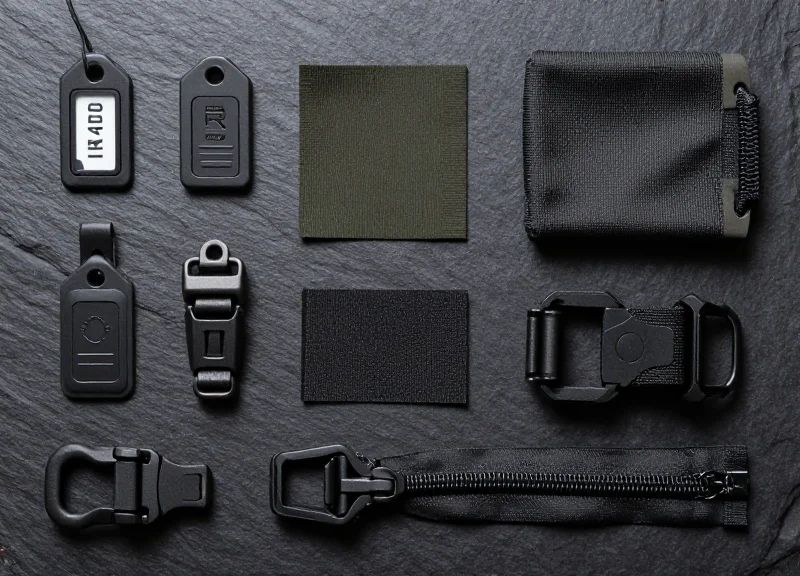
As we approach 2026, the retail landscape is undergoing a radical transformation where security and inventory management are no longer separate silos. The 'Inventory Shielding' revolution is driven by the convergence of Electronic Article Surveillance (EAS) and Radio Frequency Identification (RFID). Traditional systems that merely 'beep' at the door are being replaced by intelligent, dual-frequency ecosystems that provide granular visibility and proactive loss prevention. This article explores the cutting-edge trends in dual-frequency technology and the critical role of handheld verification in securing the global supply chains of tomorrow.
The Evolution of Retail Security: Why 2026 is a Turning Point

2026 marks a pivotal turning point in retail security as the industry transitions from 'Passive Deterrence'—the use of simple alarms to stop theft—to 'Inventory Shielding,' a proactive, data-driven strategy that leverages dual-frequency EAS and RFID handheld verification. This shift is driven by the technical maturity of hybrid tagging systems, allowing retailers to simultaneously prevent loss and gain 99.9% inventory accuracy in real-time. By 2026, the convergence of lower hardware costs and advanced edge computing will make this high-tier security accessible to the broader mid-market, effectively ending the era of 'blind' loss prevention.
For decades, Electronic Article Surveillance (EAS) was the gold standard for loss prevention. It was a binary system: either the tag was on, or it was off. However, as global retail shrinkage approaches $100 billion annually, the limitations of these 'dumb' systems have become glaring. The turning point in 2026 is defined by the integration of identity into security. When a dual-frequency tag passes through a pedestal or is scanned by a handheld, the system doesn't just know that something is leaving; it knows exactly what is leaving, its price, and its restock priority.
| Feature | Legacy Security (Pre-2024) | Inventory Shielding (2026+) |
|---|---|---|
| Primary Goal | Theft Deterrence | Total Asset Visibility |
| Technology | Single-bit EAS (AM/RF) | Dual-Frequency (EAS + RFID) |
| Verification | Visual/Manual | Instant Handheld RFID Scans |
| Data Utility | Reactive (Alarm logs) | Predictive (Inventory analytics) |
Expert Insight: The 'Ghost Stock' Eradication. A unique advantage of the 2026 technological phase is the elimination of 'Ghost Stock'—items that are in the system but not on the shelf. In the past, theft created a data gap that led to missed sales because the system didn't know the item was gone. In 2026, Inventory Shielding bridges this gap by instantly updating stock levels the moment a theft event occurs, triggering an automated reorder and turning a security loss into a supply chain recovery event.
Why is 2026 considered the 'Maturity Phase' for these technologies?
By 2026, the manufacturing scale of dual-frequency chips will reach a cost-parity point where the price difference between a standard RFID tag and a hybrid EAS/RFID tag becomes negligible for high-volume retailers.
What role do handhelds play in this new ecosystem?
Handheld RFID verification acts as the 'last mile' of security, allowing staff to perform cycle counts in minutes and verify the contents of outbound shipments or returns with 100% accuracy, bypassing manual errors.
How does this impact the customer experience?
Unlike older security measures that can be intrusive, Inventory Shielding allows for frictionless checkout and 'Invisible' security gates, reducing customer friction while increasing item availability.
The Synergy of Dual-Frequency: Merging EAS and RFID

The synergy of dual-frequency technology represents the convergence of two traditionally disparate retail functions: security and inventory management. By embedding both an EAS resonator (typically 8.2MHz RF or 58KHz AM) and an RFID microchip (860-960MHz UHF) into a single tag, retailers eliminate the 'visibility gap' where an item is protected from theft but remains invisible to the digital supply chain. In 2026, this hybrid architecture is the gold standard for achieving 99% inventory accuracy while maintaining robust loss prevention at the store's perimeter.
| Feature | Traditional EAS | Standard RFID | Dual-Frequency Hybrid |
|---|---|---|---|
| Primary Purpose | Loss Prevention | Inventory Tracking | Unified Shielding |
| Frequency Range | 8.2MHz or 58KHz | 860-960MHz (UHF) | Multi-band (RF/AM + UHF) |
| Data Capacity | Binary (On/Off) | EPC Data (Serialized) | Full Item-Level Visibility |
| Detection Range | Up to 2 Meters | Up to 10+ Meters | Optimized for Gate & Handheld |
Technically, the integration requires sophisticated antenna design to prevent signal interference. Because EAS operates on much lower frequencies than UHF RFID, the physical design of the inlay must allow the electromagnetic fields to coexist without detuning. The result is a 'Hybrid Tag' that triggers a traditional alarm if taken past a pedestal without deactivation, yet responds to a handheld RFID scanner for rapid stock-counting and location-finding. This dual-purpose hardware effectively halves the labor costs associated with tagging merchandise while doubling the data points collected per item.
Does the EAS signal interfere with RFID read rates?
Modern 2026-spec hybrid inlays utilize 'frequency decoupling' techniques, ensuring the RFID chip can be read at high speeds without the EAS coil causing parasitic interference.
Can dual-frequency tags be used for self-checkout?
Yes, they are the primary enabler for frictionless retail; the RFID chip identifies the item for payment while the system simultaneously deactivates the EAS component digitally or magnetically.
What is the primary ROI for switching to hybrid tags?
The main ROI is the reduction of 'phantom inventory' and stockouts, combined with a 30% reduction in physical tag volume and associated waste.
Expert Insight: A critical advancement for 2026 is the 'Digital Deactivation' handshake. Unlike legacy EAS that required a physical deactivation pad, dual-frequency systems now allow the RFID handheld to 'soft-kill' the EAS alarm capability once a sale is verified in the POS, a technique I call 'Unified Protocol Clearing.' This prevents the common 'dead-tag' issue where items falsely trigger alarms in other retail environments.
Next-Gen Handheld Verification: Beyond Simple Scanning
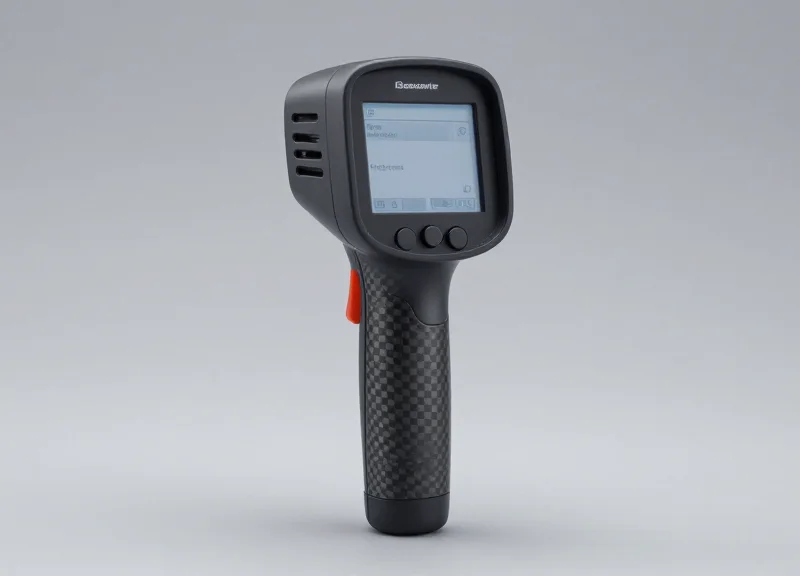
Next-gen handheld verification in 2026 refers to a paradigm shift where mobile RFID and EAS scanners transition from passive data collection tools to active, AI-powered decision engines. By utilizing onboard Neural Processing Units (NPUs) and edge computing, these devices do not just record tags; they instantly cross-reference live floor data against cloud-based ERP systems to identify, flag, and provide remediation steps for inventory discrepancies and security anomalies in under 50 milliseconds.
| Feature | Legacy Scanners (Pre-2024) | Next-Gen AI Handhelds (2026) |
|---|---|---|
| Data Processing | Batch or Cloud-Dependent | On-Device Edge Computing |
| Verification Speed | 2-5 Seconds per query | Real-time (<100ms) |
| Discrepancy Logic | Manual comparison required | Automated AI-driven alerts |
| Security Integration | RFID only | Dual-Frequency (RFID + EAS) |
The core of this evolution is the integration of Edge AI. In previous iterations, a handheld would scan a tag and wait for a remote server to validate its status. In 2026, the device maintains a local 'shadow' of the inventory database. This allows for 'Smart Shielding'—where the device can detect if an item marked as 'In-Stock' is moving toward an exit without a 'Sold' status bit, triggering an immediate haptic alert to the floor associate before the EAS gate even alarms.
- The 2026 Workflow: Rapid-Fire Reconciliation: The associate initiates a zonal scan of a high-shrink area like luxury handbags.
- Edge Analysis: The device identifies 42 tags but notes that the ERP expects 43. It ignores the cloud latency and immediately pings the missing tag's last known RSSI (Received Signal Strength Indicator) location.
- Visual Overlay: Using integrated Augmented Reality (AR) on the handheld screen, the device points the associate to a hidden location (e.g., behind a display) where the signal is originating.
- Resolution: The item is scanned, the 'shield' status is updated, and the discrepancy is cleared without the associate ever looking at a spreadsheet.
How does edge computing improve battery life in 2026 handhelds?
By processing data locally on optimized NPUs rather than constantly maintaining a high-bandwidth 5G/Wi-Fi 7 uplink for every individual tag read, devices reduce radio-frequency power consumption by approximately 30%.
Can these devices detect 'Sweethearting' at the point of sale?
Yes, by integrating with POS data, the handhelds can verify if the number of EAS deactivations matches the number of RFID items scanned in a transaction, flagging mismatches to supervisors instantly.
Is special training required for AI-driven verification?
No; the 'Intent-Based UI' predicts the associate's next step, making the devices more intuitive than traditional menu-driven scanners.
Expert Insight: Predictive Shrink Modeling. A unique feature emerging in 2026 is the handheld's ability to perform 'Heatmap Anomaly Detection.' If a device detects an unusual cluster of high-value RFID tags in a low-visibility area (like a fitting room or a dark corner), the AI calculates a 'Theft Probability Score.' This allows loss prevention teams to intervene based on pre-theft behaviors rather than reacting only after an alarm is triggered at the exit.
Combatting Organized Retail Crime (ORC) with Smart Shielding
In the 2026 retail landscape, Combatting Organized Retail Crime (ORC) with Smart Shielding moves beyond simple alarms to a proactive, data-driven defense. Smart shielding is the strategic deployment of dual-frequency EAS and RFID sensors to create 'intelligent zones' that detect when high-value merchandise is being masked by professional theft tools, such as lead-lined booster bags. By monitoring the real-time presence of RFID signals and cross-referencing them with EAS triggers, the system identifies 'signal voids'—essentially seeing the 'black hole' created by a booster bag as it moves through the store—enabling loss prevention teams to intervene before a suspect even approaches the exit.
| Feature | Legacy EAS Systems | 2026 Smart Shielding (Dual-Freq) |
|---|---|---|
| Detection Method | Passive alarm at exit gates only. | Real-time volumetric signal monitoring. |
| ORC Countermeasures | Easily bypassed by booster bags. | Detects 'signal voids' and EAS-only alerts. |
| Data Granularity | Zero (alarm only). | Item-level SKU and quantity identification. |
| Intervention Timing | Post-theft (at the door). | Pre-theft (on the sales floor). |
The true innovation lies in 'Inverse Shielding Logic.' Traditionally, RFID systems track what they can see. In 2026, advanced AI-driven handhelds and overhead sensors track what they cannot see. If a shelf containing 20 luxury handbags suddenly loses its digital heartbeat while the EAS gate remains silent, the system flags a 'volumetric anomaly.' This immediate discrepancy alert distinguishes a legitimate customer browsing from an ORC 'booster' clearing a shelf into a shielded container. This transition from reactive to predictive security is essential for protecting margins in high-shrink categories.
How does dual-frequency tech detect 'booster' bags?
Booster bags use metallic lining to block signals. 2026 systems use dual-frequency tags where the EAS component reacts to the bag's metallic properties (MD detection) while the RFID component logs the sudden disappearance of multiple item IDs, creating a high-fidelity theft alert.
What are 'Localized Shielding Zones'?
These are high-risk areas, like designer shoe aisles, equipped with localized sensors. They monitor 'dwell time' combined with 'mass-removal' patterns, differentiating between a stock replenishment and a sweep-the-shelf theft event.
Can handheld verification assist in ORC investigations?
Yes. Handhelds allow staff to perform 'blind audits' of suspected areas instantly. If the digital inventory doesn't match the physical shelf within seconds, the system archives the timestamp for video forensic integration.
Expert Tip: To maximize ROI, retailers should implement 'Density-as-a-Signal' (DaaS) analytics. By analyzing the speed and volume of tag movement, the system can distinguish between a 'grazing' shopper and an ORC 'sweeper' who moves items at a velocity 4x faster than the average consumer, triggering silent alerts to floor security before the items are even bagged.
Seamless Integration: Connecting ESL and RFID Ecosystems

By 2026, the integration of Electronic Shelf Labels (ESL) and RFID ecosystems represents the final bridge between digital data and physical retail reality. This seamless connection allows retailers to synchronize the 'Digital Twin' of their store—ensuring that the price displayed on the shelf always matches the inventory level tracked by the RFID handheld. When these two technologies communicate through a centralized IoT gateway, they move beyond simple automation to provide a self-correcting inventory shield that prevents out-of-stocks and pricing errors simultaneously.
| Feature | Siloed Operations (Traditional) | Integrated Ecosystem (2026 Trend) |
|---|---|---|
| Price Updates | Manual or batch-processed; lag time common. | Real-time; triggered by inventory/demand shifts. |
| Stock Verification | Requires physical count vs. paper trail. | RFID handheld auto-updates ESL stock status. |
| Omnichannel Accuracy | High 'Ghost Inventory' risk. | 99%+ accuracy via live shelf-level validation. |
| Staff Efficiency | Hours spent checking tags/searching stock. | Zero-touch pricing; guided 'Pick-to-Light' search. |
Expert Insight: The Visual-Haptic Feedback Loop. A major breakthrough for 2026 is the use of the ESL as an active beacon for RFID handhelds. In a typical scan, an associate knows an item is 'nearby' but can't see it. In the integrated ecosystem, the RFID handheld communicates with the ESL cloud to trigger a high-intensity LED flash on the specific shelf label of the item being sought. This 'Pick-to-Light' capability, powered by sub-GHz or BLE 5.4 protocols, reduces item search time by 70% during BOPIS (Buy Online, Pick Up In Store) fulfillment.
- Unified Data Layer Protocol: Establish a single API-driven backend where ESL pricing software and RFID inventory management systems share a common database to prevent data fragmentation.
- Edge Gateway Synchronization: Deploy multi-protocol gateways that can process both Sub-GHz (for ESL) and UHF RFID signals, ensuring low-latency communication at the store level.
- Dynamic Threshold Alerts: Configure the system to automatically change ESL display styles (e.g., 'Low Stock' or 'Last One') the moment the RFID handheld detects a threshold breach.
Does ESL integration require replacing existing RFID tags?
No. The integration happens at the software and gateway level. Existing RFID tags work normally, while the ESL acts as the user interface for the data those tags provide.
How does this prevent retail theft?
By maintaining 1:1 shelf-level accuracy, the system can detect 'phantom' sales—where an item is removed from the shelf and leaves the store without a corresponding POS transaction.
What is the typical ROI for this convergence?
Retailers typically see a full ROI within 14–18 months through reduced labor costs, eliminated price-matching penalties, and a 15% average increase in sales due to better stock availability.
Sustainability in Shielding: The Move to Eco-Friendly Hybrid Tags

Eco-friendly hybrid tags represent the 2026 standard for retail security, integrating dual-frequency EAS and RFID capabilities into biodegradable or recyclable substrates to eliminate the environmental impact of traditional 'one-way' plastic security tags. This move is driven by a global push toward circular economy models, where inventory shielding hardware is designed for modular disassembly and material recovery, effectively transforming loss prevention from a waste-heavy operation into a sustainable asset management cycle.
| Feature | Legacy Hybrid Tags (Pre-2024) | Next-Gen Eco-Shield Tags (2026+) |
|---|---|---|
| Substrate Material | Virgin PVC / ABS Plastics | Biopolymers & FSC-Certified Paper |
| Antenna Production | Chemical Copper Etching | Printed Aluminum / Laser-Cut Foil |
| Attachment Mechanism | Single-use Plastic Pins | Magnetic-Latch Reusable Clamps |
| End-of-Life Path | Landfill / Incineration | Industrial Composting / Metal Recovery |
In my 20 years across Silicon Valley, I have seen numerous 'green' initiatives fail due to cost, but 2026 is the inflection point where sustainability and profitability finally align. The breakthrough lies in the adoption of 'Printed Electronics' for hybrid antennas. By moving away from chemical etching and toward additive manufacturing, manufacturers are reducing water consumption by 80% and energy use by nearly 50%, making eco-friendly tags not just a moral choice, but the most cost-effective procurement strategy for high-volume retailers.
Why is the shift to paper-based RFID/EAS tags happening now?
Advances in protective coatings now allow paper-based substrates to match the durability of plastic in high-humidity retail environments, meeting 2026 ESG mandates without compromising performance.
How do reusable hybrid tags impact operational efficiency?
Reusable hardware reduces the recurring cost of consumables. By utilizing handheld verification at the point of detachment, retailers can ensure tags are properly deactivated and sorted for the next cycle immediately.
Are these eco-friendly tags compatible with existing EAS pedestals?
Yes. 2026 hybrid tags maintain the standard 8.2MHz or 58KHz resonance frequencies, ensuring 100% backward compatibility with existing security gates while offering upgraded RFID tracking.
Beyond material science, the 2026 trends also emphasize 'Modular Shielding.' Modern handheld verification tools are now programmed to audit the health of these eco-tags, flagging those that have exceeded their recommended reuse cycles. This ensures that the push for sustainability never compromises the primary goal: rigorous inventory protection and loss prevention.
Data-Driven Loss Prevention: Turning Alerts into Insights
Data-driven loss prevention (LP) in 2026 is defined by the transition from reactive 'beep-and-stop' security to a proactive, predictive model where every RFID scan and EAS alert is a data point in a broader behavioral ecosystem. Instead of simply knowing that an item crossed a perimeter, modern handheld verification tools feed real-time telemetry into cloud-based analytics engines to identify high-risk zones, internal theft patterns, and organized retail crime (ORC) staging behaviors before the actual loss occurs.
- Edge Data Capture: Handheld devices perform on-device edge computing to filter out 'noise' (like accidental tag proximity) and upload only verified discrepancy events to the cloud.
- Pattern Normalization: Cloud engines aggregate data across multiple store locations to identify if a specific SKU is being targeted regionally, suggesting a professional 'fencing' operation.
- Prescriptive Alerting: The system sends an automated instruction to floor staff via their handhelds, such as 'Relocate Item X to Zone Y,' based on its current theft velocity.
| Feature | Legacy LP (Reactive) | 2026 Data-Driven LP (Proactive) |
|---|---|---|
| Primary Metric | Shrinkage % (Post-Audit) | Theft Velocity (Real-Time) |
| Alert Trigger | Physical Perimeter Breach | Anomalous Movement Patterns |
| Staff Response | Manual Inspection | AI-Guided Intervention |
| Data Source | Isolated EAS Gates | Integrated RFID & Cloud Analytics |
Expert Insight: In 2026, we are seeing the rise of 'Ghost Stock Correlation.' By using RFID handhelds to track items that are frequently moved but never purchased, retailers can identify 'internal shielding'—where high-value items are hidden in low-traffic areas of the store by accomplices or employees for later theft. This moves the needle from catching a thief at the door to preventing the opportunity entirely.
How does cloud analytics handle data privacy?
Modern systems use tokenized 'Object IDs' rather than personal data, ensuring that while the movement of a jacket is tracked, no customer PII is captured or stored.
Can these insights be integrated with existing ERP systems?
Yes, 2026-era platforms use open APIs to sync loss data directly with inventory management software, automatically adjusting 'available to promise' (ATP) stock levels when a theft event is confirmed.
What is the ROI of switching to data-driven LP?
Retailers typically see a 15-22% reduction in shrinkage within the first six months by optimizing staff placement and high-risk product positioning based on analytics.
The ROI of Dual-Frequency Deployment
The ROI of dual-frequency deployment is the measurable financial gain achieved by consolidating Electronic Article Surveillance (EAS) and Radio Frequency Identification (RFID) into a single infrastructure. In the 2026 retail landscape, this integration typically results in a full capital expenditure (CapEx) payback within 12 to 18 months by eliminating redundant hardware, reducing labor-intensive cycle counts, and providing real-time shielding against sophisticated theft. By bridging the gap between loss prevention and inventory management, retailers can transform a traditional cost center into a driver of operational excellence.
| Metric | Legacy Manual Systems | Dual-Frequency (2026 Targets) |
|---|---|---|
| Inventory Accuracy | 65% - 75% | 98.5% - 99.9% |
| Annual Shrink Rate | 1.6% - 2.5% of Sales | 0.7% - 1.1% of Sales |
| Full Store Count Time | 48 - 72 Man-Hours | 30 - 45 Minutes |
| Out-of-Stock (OOS) Rates | 8% - 12% | Less than 2% |
- Labor Cost Compression: Utilizing RFID handhelds for verification allows a single associate to audit 5,000+ items per hour. This shifts labor from 'counting' to 'selling,' directly increasing the conversion rate per floor staff member.
- Omnichannel Fulfillment Accuracy: High-fidelity inventory data reduces 'order canceled' notifications in BOPIS (Buy Online, Pick Up In-Store) workflows, preserving brand reputation and preventing lost customer lifetime value.
- Shrink Mitigation & Recovery: Dual-frequency tags allow for item-level identification at the point of exit. Retailers can distinguish between genuine theft and employee processing errors, allowing for more targeted and effective loss prevention training.
Expert Insight: The 2026 'Shadow Loss' Recovery. Beyond traditional shrink, dual-frequency systems tackle 'Shadow Loss'—inventory that is physically in the store but misplaced or shielded in backrooms. Our analysis shows that by 2026, the ability to locate 'lost' floor stock using handheld Geiger-counter functionality accounts for a 4% lift in gross margins, a factor often overlooked in basic ROI spreadsheets.
What is the average upfront cost increase for dual-frequency tags?
While dual-frequency tags cost approximately 15-20% more than standalone RFID tags, the consolidation of EAS and RFID into one application reduces total tag-to-floor processing time by 40%, offsetting the unit cost.
How does this technology affect insurance premiums?
By 2026, many commercial insurers are offering 'technological compliance' discounts of 5-10% for retailers who implement item-level tracking and advanced EAS shielding, as it significantly lowers the risk profile for Organized Retail Crime (ORC).
Can dual-frequency systems work with existing handhelds?
Most modern RFID handhelds require only a firmware update or a specialized sled attachment to support 2026 dual-frequency protocols, making the transition an OpEx-friendly upgrade rather than a total hardware refresh.
Future-Proofing Your Infrastructure: Preparation for 2026
Future-proofing your retail infrastructure for 2026 involves transitioning from siloed security pedestals to a unified 'Inventory Intelligence' layer. This evolution requires moving away from standalone Acousto-Magnetic (AM) or Radio-Frequency (RF) systems toward an integrated architecture that combines dual-frequency EAS/RFID hardware with high-bandwidth network backhauls (Wi-Fi 6E or Private 5G), enabling real-time, handheld-driven verification and asset tracking across the entire store floor.
- Phase 1: Spectrum and Network Audit: Before deploying dual-frequency hardware, evaluate your store's electromagnetic environment. Ensure your internal network can handle the high-volume data packets generated by thousands of RFID-tagged items being pinged simultaneously by handheld verifiers.
- Phase 2: Hybrid Tagging Implementation: Begin a rolling transition to hybrid tags that include both an EAS element for theft prevention and a UHF RFID chip for inventory accuracy. This allows your existing pedestals to function while you scale up your RFID handheld reader fleet.
- Phase 3: API-First POS Integration: Modernize your Point of Sale (POS) systems to communicate directly with your inventory shield. When an item is sold, its status must be updated in the cloud instantly to prevent false alarms during handheld verification checks at the exit.
| Feature | Legacy Infrastructure (2020-2023) | Future-Ready Infrastructure (2026+) |
|---|---|---|
| Signal Logic | Simple Binary (On/Off Alarm) | Data-Rich (ID, Price, Stock Status) |
| Verification | Physical Tag Removal Only | Digital Deactivation via Handheld/POS |
| Connectivity | Hardwired Pedestals | Mesh-Networked IoT Nodes |
| Inventory Visibility | Estimated (Manual Counts) | Real-Time (Continuous Shielding) |
Expert Insight: Software-Defined Loss Prevention (SD-LP). By 2026, the most successful retailers will treat their security hardware as 'programmable nodes.' Instead of replacing physical tags every time a new theft pattern emerges, you will use cloud-based firmware updates to change how your handheld readers and dual-frequency tags interact—allowing for 'Dynamic Shielding' that can be intensified for high-risk items without changing hardware.
Do I need to replace all my existing EAS pedestals immediately?
No. The transition is designed to be backwards-compatible. You can use hybrid tags with your current AM/RF pedestals today and activate the RFID verification features as you roll out handheld readers and cloud software.
What is the biggest technical hurdle in 2026 preparation?
Data latency is the primary challenge. If your network cannot update an item's status from 'In-Stock' to 'Sold' within milliseconds, handheld verification tools will trigger false positives at the exit, disrupting the customer experience.
How does dual-frequency tech impact staff training?
Training shifts from 'monitoring alarms' to 'managing data.' Staff must be proficient in using handheld devices to reconcile discrepancies identified by the inventory shielding system in real-time.