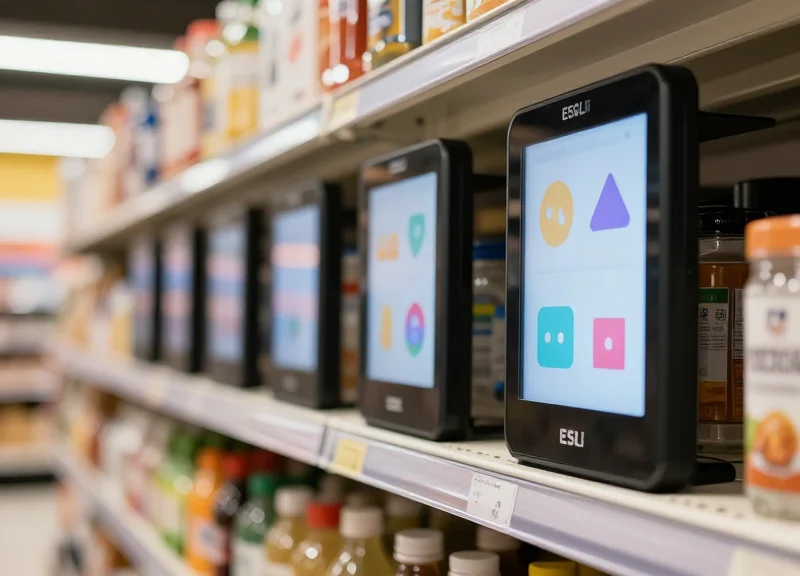
In the rapidly evolving landscape of global retail, the traditional security gate is no longer just a barrier against theft; it is becoming the gateway to digital transformation. As we approach 2026, hypermarkets are facing a dual challenge: rising shrinkage rates and the critical need for real-time inventory precision to support omnichannel fulfillment. Next-gen RFID-ready EAS (Electronic Article Surveillance) systems are emerging as the pivotal solution, transforming legacy loss prevention hardware into powerful data hubs that drive operational excellence and inventory visibility.
The Evolution of Retail Security: From Basic EAS to Intelligent RFID
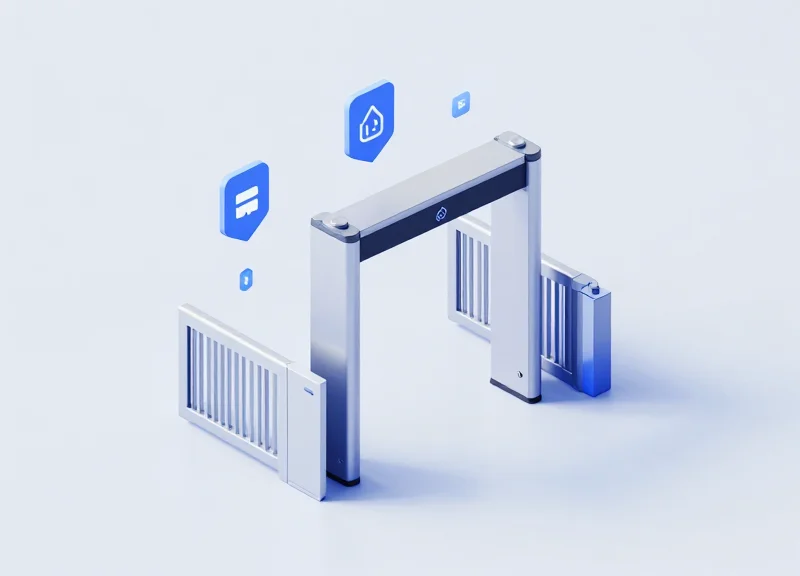
The evolution of retail security represents a shift from reactive theft prevention to proactive inventory intelligence. While traditional Electronic Article Surveillance (EAS) systems were designed solely to trigger an alarm when an un-deactivated tag passed through pedestals, next-generation RFID-ready EAS systems go beyond the 'beep.' By integrating Radio Frequency Identification, retailers can now identify exactly which item is leaving the store, its specific SKU, and its real-time impact on stock levels, effectively merging loss prevention with high-precision inventory management for the 2026 landscape.
| Feature | Legacy EAS (Acoustic-Magnetic/RF) | Next-Gen RFID-Ready EAS |
|---|---|---|
| Primary Goal | Theft Deterrence | Total Inventory Intelligence |
| Data Granularity | Binary (Alarm / No Alarm) | Item-Level (SKU, Color, Size) |
| Inventory Visibility | Zero Visibility | 99%+ Accuracy |
| Operational Impact | Reactive Staff Response | Automated Reordering & Shrink Analytics |
In the hypermarket sector, where high volume and diverse product categories make manual counting impossible, the limitations of traditional EAS have become a bottleneck. Basic systems tell you that something was stolen, but they cannot tell you what is missing until the next manual cycle count—often weeks later. This data gap is the primary driver for the 2026 transition toward RFID-integrated pedestals.
- The Analog Era (1970s-1990s): Basic RF and AM gates focused on high-decibel deterrents. Detection was the only metric that mattered.
- The Digital Transition (2000s-2015): Introduction of Digital Signal Processing (DSP) to reduce false alarms and improve detection ranges in noisy environments.
- The Hybrid RFID Era (2016-2023): EAS gates began incorporating RFID readers as secondary sensors, allowing retailers to trial item-level tracking at exits.
- The Intelligence Era (2024-2026+): Full convergence. EAS systems now act as edge-computing nodes that update global inventory databases in real-time the moment a product crosses the threshold.
Expert Insight: By 2026, the 'Invisible Gate' will become the industry standard. This involves overhead RFID sensors that eliminate bulky floor pedestals entirely. My 20 years in Silicon Valley retail tech suggest that the winners will be those who treat loss prevention data as 'Supply Chain Signal #1'—using exit data to trigger immediate 'Need to Restock' alerts on floor-associate wearables, effectively neutralizing the financial impact of theft through faster inventory turnover.
Does RFID replace EAS entirely?
No, they are complementary. RFID provides the 'what' and 'where,' while EAS provides the 'security' signal. The most effective 2026 systems use hybrid tags that carry both technologies.
Why is this critical for hypermarkets?
Hypermarkets suffer most from 'phantom inventory'—items that show as 'in stock' in the system but are actually stolen. RFID-ready EAS eliminates this by updating stock counts automatically at the point of exit.
Why Traditional Gates are Failing Modern Hypermarkets
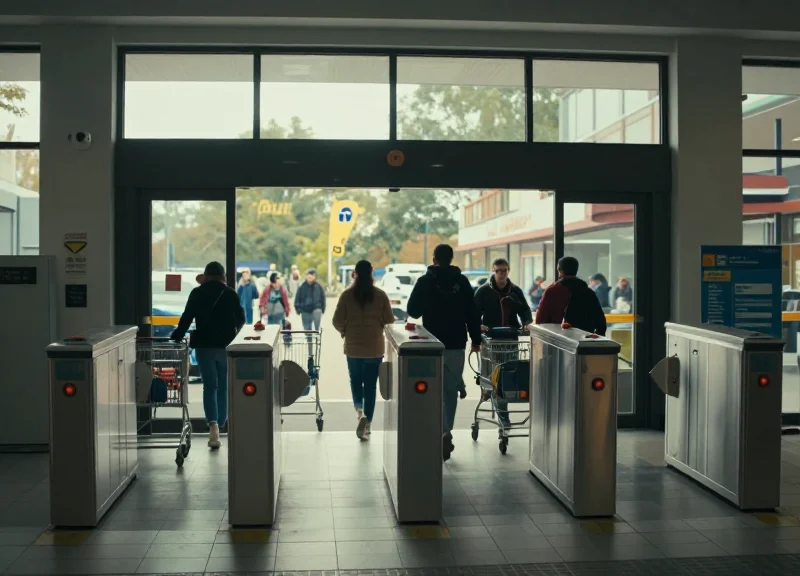
Traditional Electronic Article Surveillance (EAS) gates are fundamentally 'blind' systems that recognize the presence of a tag but cannot identify the specific item attached to it. In the context of 2026 hypermarket operations, this lack of item-level visibility is a fatal flaw. While legacy gates served their purpose for basic loss prevention, they fail to address the complexities of modern inventory management, high-density foot traffic, and the need for real-time stock reconciliation that defines the current retail landscape.
| Feature | Legacy EAS Gates | Modern Hypermarket Requirement |
|---|---|---|
| Detection Type | Binary (On/Off) | Data-Rich (SKU, Color, Size) |
| Traffic Flow | Narrow bottlenecks | Wide-aisle, high-volume flow |
| Inventory Impact | None (Security only) | Real-time digital twin updates |
| Alarm Accuracy | Frequent false positives | Directional sensing & filtered alerts |
Expert Insight: The 'Data-Ghost' Problem. A unique failure of traditional gates is what I call the 'Data-Ghost.' When an item is stolen or misplaced near a legacy gate, the inventory management system still believes the item is on the shelf. This leads to 'Phantom Stock,' where a customer orders an item online for pickup (BOPIS), but the item is physically gone. Traditional gates do nothing to bridge this gap, causing a direct hit to omnichannel revenue and customer trust.
- The Bottleneck Effect: Traditional gates require narrow installation widths (typically 1.2 to 1.8 meters) to maintain detection strength, which restricts shopper flow and prevents large trolley movement—a critical requirement for hypermarkets.
- Alarm Fatigue and Desensitization: Legacy systems are prone to 'tag pollution' and false triggers from neighboring electronics. This leads to staff ignoring alarms entirely, rendering the security investment useless.
- Zero SKU Intelligence: When an alarm sounds on a legacy gate, staff have no idea if it's a $2 chocolate bar or a $500 bottle of cognac. This prevents prioritized response and data-driven loss prevention strategies.
Can legacy EAS gates be retrofitted for RFID?
While some hardware can be 'bolted on,' the internal processors usually lack the throughput to handle thousands of RFID tag reads per second, leading to missed detections in high-traffic hypermarket exits.
How do traditional gates impact labor costs?
They increase costs significantly. Because they don't identify the item, staff must manually search bags for every alert, whereas next-gen systems can instantly notify staff via mobile of exactly what item passed through.
Are traditional gates effective against 'Organized Retail Crime' (ORC)?
Hardly. ORC groups exploit the binary nature of EAS by using 'booster bags' or signal jammers that legacy systems cannot intelligently diagnose or bypass.
The Convergence of Loss Prevention and Inventory Intelligence
The convergence of loss prevention (LP) and inventory intelligence represents a critical paradigm shift: it is the transformation of security hardware from a 'cost center' into a 'revenue enabler.' In the 2026 hypermarket landscape, RFID-ready EAS (Electronic Article Surveillance) systems no longer just scream when a tag passes through; they serve as high-speed IoT data terminals. This convergence allows retailers to treat every exit event as a real-time inventory transaction, ensuring that the 'on-hand' stock levels reflected in digital systems match the physical reality on the shelves with up to 99% accuracy.
| Feature | Legacy EAS (Security Only) | Converged RFID-EAS (Intelligence) |
|---|---|---|
| Data Granularity | Binary (Alarm or No Alarm) | Item-level (SKU, Color, Size, Batch) |
| Inventory Action | None | Automated real-time stock subtraction |
| Shrink Insight | Total Loss Value (Estimated) | Specific Item Identification (Exactly what was lost) |
| Operational Role | Passive Deterrent | Active Supply Chain Sensor |
Expert Insight: For 20 years, the 'Holy Grail' of retail has been solving 'Phantom Inventory'—items the system thinks are in stock but are actually lost or stolen. Converged systems solve this by using 'Delta-Log Logic.' When an item leaves the store without a 'sold' flag from the POS, the RFID-EAS doesn't just trigger an alarm; it instantly updates the inventory database to mark that specific item as 'Shrinkage-Unavailable.' This prevents the system from promising that item to an online 'BOPIS' (Buy Online, Pick Up In-Store) customer, thereby protecting the brand's reputation and customer experience.
- Tag Recognition: As a product nears the exit, the RFID-ready pedestal identifies the unique Electronic Product Code (EPC) of the item.
- POS Reconciliation: The system cross-references the EPC with the Point of Sale database in milliseconds to check for a 'paid' status.
- Intelligent Response: If unpaid, the system triggers a discreet alert for LP and simultaneously logs the theft in the inventory management system.
- Automated Replenishment: The inventory system identifies the hole on the shelf and, if thresholds are met, triggers a restock request to the backroom or warehouse.
Can converged systems distinguish between a customer and a restocking movement?
Yes. Advanced algorithms and directional beam-forming technology can determine if a tagged item is moving toward the exit (potential theft) or being moved from the backroom to the sales floor (restocking), preventing false stock updates.
How does this impact the ROI of EAS hardware?
By combining the budgets of Loss Prevention and Operations, the ROI is typically achieved 40% faster. The system pays for itself not just by reducing theft, but by reducing out-of-stocks and manual cycle-counting labor.
Is this compatible with existing legacy tags?
Next-gen systems are 'Dual-Technology' ready, meaning they can support traditional AM/RF tags while transitioning the high-value inventory to RFID, allowing for a phased and cost-effective rollout.
Key Features of Next-Gen RFID-Ready EAS Systems
Next-gen RFID-ready EAS systems are hybrid security architectures that integrate traditional Electronic Article Surveillance (EAS) with Ultra-High Frequency (UHF) RFID technology. Unlike legacy gates that merely trigger an audible alarm, these intelligent systems identify exactly which items are leaving the store in real-time. By merging loss prevention with item-level visibility, they allow hypermarkets to maintain 99% inventory accuracy while simultaneously reducing shrink through granular data attribution.
| Feature | Legacy EAS Gates | Next-Gen RFID-Ready EAS |
|---|---|---|
| Detection Type | Generic Signal (AM or RF) | Dual-Mode (AM/RF + Item-Level RFID) |
| Data Output | Binary (Alarm / No Alarm) | Granular (SKU, Color, Size, Time) |
| Connectivity | Standalone / Local Wired | Cloud-Native / IoT API Integrated |
| Inventory Impact | Zero Visibility | Automatic Real-Time Stock Updates |
- Dual-Technology Sensor Fusion: These systems house both Acousto-Magnetic (AM) or Radio Frequency (RF) antennas alongside RFID readers. This ensures compatibility with existing hard tags while allowing a phased transition to RFID-only tagging without replacing hardware.
- Directional Intelligence & Beam Steering: Modern sensors utilize phased-array antennas to determine the direction of travel. This eliminates 'ghost alarms' caused by tags placed too close to the gate and ensures that only items actually exiting the store trigger an event.
- Cloud-Native Analytics Dashboard: Real-time telemetry is pushed to a centralized cloud platform, allowing loss prevention managers to identify shrink patterns across multiple regions and predict high-risk time windows based on historical data.
- API-First Integration with ESL and POS: Seamless connectivity with Electronic Shelf Labels (ESL) and Point of Sale (POS) systems allows the gate to cross-reference an item's 'sold' status against its physical exit, virtually eliminating false positives for customers.
Expert Insight: The 'Silent Alarm' Shift. A critical, overlooked feature of 2026-ready systems is the shift toward mobile-first alerts. Instead of a disruptive siren that harms the customer experience, these systems send 'Silent Alarms' with specific SKU images to security tablets. This allows for a 'soft approach' where staff can provide 'enhanced customer service' to someone who simply forgot to pay for an item at a self-checkout, turning a potential loss into a recovered sale without a confrontation.
Can these systems work with my current tags?
Yes. RFID-ready EAS is designed for backwards compatibility. You can continue using your current AM or RF hard tags while gradually tagging high-value categories with RFID to gain item-level insights.
How does this improve omnichannel (BOPIS) accuracy?
By tracking every item that leaves the front door or the loading dock, the system updates your 'Available to Promise' (ATP) inventory instantly, preventing online orders for items that were actually lost to shrink.
What is the typical read range for these next-gen gates?
Modern RFID-ready gates offer wide-aisle coverage of up to 3-4 meters, allowing for open, 'gateless' store designs that do not impede high-volume hypermarket foot traffic.
Boosting Inventory Accuracy: The Hidden ROI of Integrated Systems

The hidden ROI of integrated RFID-EAS systems lies in the transition from 'defensive' loss prevention to 'offensive' inventory optimization. By merging security gates with item-level tracking, hypermarkets can achieve inventory accuracy levels above 98%, effectively eliminating the 1-3% revenue leak caused by phantom inventory—items that appear in the system but aren't on the shelf. This integration transforms every exit and entry point into a real-time data terminal that fuels automated replenishment cycles and reduces out-of-stock (OOS) events by up to 50%.
| Metric | Legacy EAS (Security Only) | Integrated RFID-EAS (2026 Standard) |
|---|---|---|
| Inventory Accuracy | 65-75% | 98-99.8% |
| Labor Allocation | Manual cycle counts (Weekly) | Real-time visibility (Automated) |
| OOS Revenue Loss | High (4-8% of sales) | Low (<1% of sales) |
| Shrinkage Insight | Total value lost only | Item-level 'what, when, and how' |
The Veteran Perspective: The 'Velocity-Based Replenishment' Advantage. Most analysts focus on theft, but the true 2026 competitive edge is micro-pick efficiency. When an RFID gate detects a specific SKU leaving the floor, it doesn't just trigger an alarm; it updates the digital twin of the store. This allows for 'Just-in-Time' shelf restocking that prevents the labor-intensive 'hide and seek' game employees play when looking for mislabeled stock in the backroom, potentially saving 40% in operational labor costs.
- Identify Phantom Inventory Gaps: Compare POS data against gate-exit RFID logs to identify items that left the store without a transaction, immediately updating stock levels.
- Automate Reorder Triggers: Integrate gate data with your ERP to trigger automated purchase orders when high-velocity items cross the threshold, ensuring zero-gap availability.
- Optimize Safety Stock: Use high-accuracy data to reduce the 'buffer' stock held in warehouses, freeing up capital for other business investments.
How long does it take to see a return on investment?
Most hypermarkets report a full ROI within 12 to 18 months, primarily driven by a 2-4% lift in total sales due to better product availability.
Can these systems help with omnichannel fulfillment?
Absolutely. High-accuracy inventory is the backbone of 'BOPIS' (Buy Online, Pick Up In Store). Integrated gates ensure that the item shown as 'available' online is actually on the shelf.
Does this replace the need for manual audits?
It doesn't eliminate them entirely, but it reduces the frequency of full-store counts from monthly to annually, shifting labor to customer-facing roles.
Preparing for 2026: The Strategic Shift in Hypermarket Operations
The strategic shift for 2026 involves transforming the hypermarket from a simple point-of-sale into an intelligent, multi-modal fulfillment node where Next-Gen RFID-ready EAS acts as the primary data validator. Rather than merely preventing theft, these systems now serve as the critical 'integrity layer' for Buy Online, Pick Up In-Store (BOPIS) and automated checkout models, ensuring that the physical inventory movement perfectly mirrors the digital ledger in real-time.
| Operational Pillar | Traditional Retail (Pre-2024) | Next-Gen Hypermarket (2026+) |
|---|---|---|
| Checkout Model | Manual cashier scanning | Frictionless/Hybrid automated exit |
| Inventory Visibility | Weekly/Monthly manual audits | Real-time gate-triggered updates |
| BOPIS Strategy | Labor-intensive manual picking | RFID-assisted high-speed fulfillment |
| Gate Function | Sounding alarms on exit | Inventory data ingestion & validation |
### The 'Invisible Checkpoint' Strategy One unique insight for 2026 is the concept of 'Passive Real-Time Correction' (PRTC). In this model, the EAS gates do not just flag stolen goods; they identify items that were picked for an online order but never correctly updated in the system. If an associate walks through a gate with a BOPIS bin, the system automatically validates the contents against the order manifest. If a discrepancy is found, an alert is sent instantly to their handheld device. This eliminates the 'ghost inventory' problem that currently plagues 40% of omnichannel retailers.
- Infrastructure Audit: Evaluate current EAS pedestals for RFID upgradeability. Most legacy AM or RF systems will require a full hardware refresh to support 2026 data throughput requirements.
- Middleware Integration: Connect EAS hardware to the Warehouse Management System (WMS) and ERP. The value of next-gen gates is only realized when data flows into the inventory ecosystem.
- Staff Re-skilling: Shift loss prevention personnel from 'guard' roles to 'inventory intelligence' roles, where they manage data-driven alerts rather than just physical confrontations.
- BOPIS Optimization: Implement RFID tags at the source. By 2026, source-tagging will be the standard, allowing gates to track item movement from the backroom to the curbside pickup zone.
Will automated checkouts increase shrink in 2026?
Not with RFID-ready EAS. Unlike vision-based systems that can be fooled by 'box swapping,' RFID identifies the specific serial number of every item, making it nearly impossible to exit with unpurchased goods undetected.
How does this impact the customer experience?
It eliminates the 'false alarm' friction. Modern gates can distinguish between a deactivated tag and a legitimate purchase, and even allow for 'invisible' security where gates are hidden in the floor or ceiling.
Is the investment justified for smaller hypermarket chains?
Yes, because the labor savings from automated inventory counts and reduced out-of-stocks typically pay for the hardware within 14 to 18 months, regardless of store size.
Overcoming Implementation Challenges: A Roadmap for Retailers
Transitioning to next-gen RFID-ready Electronic Article Surveillance (EAS) is not a simple 'rip-and-replace' project; it is a strategic architectural shift that requires balancing existing security protocols with high-velocity data capture. For retailers moving toward the 2026 standard, the key to success lies in a phased integration that leverages hybrid hardware—capable of reading both legacy AM/RF tags and new RFID labels—to prevent service disruptions while building a foundation for 99% inventory accuracy.
- Phase 1: RF Environment Audit: Conduct a comprehensive scan of the hypermarket floor to identify potential interference sources like metal shelving or high-voltage lines that could degrade RFID signal strength.
- Phase 2: Hybrid Tagging Strategy: Begin by tagging high-value, high-shrink items with dual-technology tags. This allows your legacy gates to remain functional while your new RFID systems begin gathering data.
- Phase 3: Edge-to-Cloud Integration: Establish the API handshake between your new EAS pedestals and your existing ERP/WMS systems to ensure real-time inventory updates without manual intervention.
- Phase 4: Pilot and Fine-Tuning: Deploy the system in a single department (e.g., Electronics or Apparel) to calibrate read rates and false-alarm filters before a full-store rollout.
| Common Challenge | Strategic Solution | Operational Impact |
|---|---|---|
| Hardware Fragmentation | Deploy Multi-Protocol Controllers | Reduced capital expenditure and centralized management. |
| Signal Interference | Beam-Steering Antenna Arrays | Eliminates 'dead zones' at wide hypermarket entrances. |
| Staff Resistance | Mobile-First Alert Dashboards | Empowers associates with actionable data rather than just noise. |
A unique insight often overlooked by retailers is the 'Shadow Inventory Trap.' During the transition, stock that is in transit or in the backroom often lacks RFID tags while floor stock is already upgraded. To solve this, retailers should implement a 'Day Zero' hard-audit, where 100% of the backroom is tagged simultaneously with the gate installation. This prevents the EAS system from generating false 'out-of-stock' alerts when the system fails to see untagged inventory that is technically on-site.
Can we reuse our existing EAS pedestals?
In many cases, yes. Leading providers offer 'insert' kits that upgrade internal electronics to RFID-readiness while keeping the physical aesthetic of your store entrance intact.
How does this impact the checkout speed?
Next-gen systems actually accelerate checkout. RFID-ready EAS can be integrated with bulk-scanning POS, allowing an entire cart to be scanned and deactivated in seconds rather than item-by-item.
What is the typical ROI timeline for this transition?
Most hypermarkets see a full ROI within 14 to 18 months, primarily driven by a 25% reduction in shrink and a 15% lift in sales due to improved on-shelf availability.
Data-Driven Decision Making at the Store Front

Data-driven decision making at the store front refers to the strategic use of real-time telemetry gathered by RFID-integrated Electronic Article Surveillance (EAS) systems to optimize hypermarket operations. Unlike legacy gates that only trigger alarms, next-gen systems capture granular data on every tagged item and individual moving through the entrance. By 2026, these 'smart gates' will serve as the primary sensor for measuring the delta between inventory presence and actual sales, allowing managers to adjust staffing, replenishment, and layout based on empirical flow patterns rather than intuition.
| Metric Category | Legacy EAS Capability | Next-Gen RFID-EAS Impact (2026) |
|---|---|---|
| Traffic Analytics | Simple directional count. | High-fidelity pathing and conversion rates. |
| Loss Context | Generic alarm (no item ID). | Instant identification of SKU, price, and timestamp. |
| Staffing | Fixed schedules based on history. | Dynamic allocation based on real-time door pressure. |
| Inventory Flow | Manual audits required. | Automated detection of 'Ghost Inventory' at exit. |
- Dynamic Staffing Optimization: By analyzing peak entrance/exit times via gate sensors, hypermarkets can automate labor scheduling to ensure checkout lanes and customer service desks are staffed exactly when demand spikes, reducing wait times.
- Merchandising Validation: Smart gates track which promotional items (e.g., seasonal end-caps near the door) are actually leaving the store, providing a direct 'A/B test' for visual merchandising effectiveness.
- Preventative Restocking: When the gate detects a high volume of a specific SKU exiting within a short window, it can trigger an automated 'Low Stock' alert to the backroom before the shelf is even empty.
Expert Insight: The 'Shrink-to-Sales Velocity Ratio' In my two decades of retail tech consulting, I’ve seen a shift from reactive to proactive loss prevention. The most advanced retailers are now using a 'Shrink-to-Sales Velocity Ratio.' By correlating how fast an item is legitimately sold versus how often it triggers a 'near-miss' or 'unrecorded exit' at the gate, managers can identify if a high-theft item should be moved to a more visible location or if its current placement is actually driving 'impulse theft' due to lack of staff presence.
{
  "gate_event": {
    "timestamp": "2026-05-12T14:30:05Z",
    "location_id": "HYPER-089-ENTRANCE-A",
    "event_type": "UNPAID_EXIT_ATTEMPT",
    "items": [
      {
        "epc": "3034257BF400B7800004CB2F",
        "sku": "PREMIUM-COFFEE-01",
        "value": 24.99
      }
    ],
    "action": "ALERT_STORE_SECURITY_APP"
  }
}
Does this data collection violate customer privacy?
No. RFID-EAS systems track anonymous Item-Level EPC data and directional traffic flow. They do not store personally identifiable information (PII), ensuring compliance with GDPR and CCPA.
Can these gates integrate with my existing POS?
Yes. Modern systems use standard APIs to cross-reference 'items passing the gate' against 'items cleared at POS' in milliseconds, creating a seamless audit trail.
DragonGuardGroup's Vision: Leading the Future of Retail Security
DragonGuardGroup's vision for 2026 is centered on the 'Intelligence-First' retail environment, where security hardware evolves from a passive deterrent into a proactive business intelligence engine. By integrating Next-Gen RFID-ready EAS systems, we enable hypermarkets to bridge the gap between loss prevention and inventory precision, ensuring that every gate transition provides actionable data for supply chain optimization. Our goal is to eliminate the friction between security protocols and the customer experience, creating a 'silent guardian' that protects assets while accelerating the move toward fully automated, autonomous retail spaces.
- Unified Data Ecosystem: We envision a world where EAS gates, RFID handhelds, and ESL systems share a single source of truth, reducing inventory discrepancies to near-zero.
- Sustainability through Longevity: Our hardware is built on modular architectures, allowing retailers to upgrade from standard EAS to RFID via software or simple plug-in modules, reducing electronic waste.
- Human-Centric Design: Security should not be intimidating. Our 2026 roadmap focuses on transparent, aesthetically integrated designs that maintain store ambiance while providing maximum coverage.
| Feature | Legacy Security Providers | DragonGuardGroup 2026 Vision |
|---|---|---|
| Primary Function | Shrinkage Reduction Only | Loss Prevention + Inventory Intelligence |
| Data Granularity | Bulk Alarms (No Item Detail) | Item-Level Visibility & SKU Identification |
| System Integration | Siloed Systems | API-First Native Integration (ERP/WMS) |
| Maintenance | Reactive On-Site Repairs | AI-Driven Predictive Remote Diagnostics |
Expert Insight: The 'Security-as-a-Service' Pivot. As a veteran in this space, I see the industry moving toward a model where the physical gate is merely a portal for a much larger software ecosystem. DragonGuardGroup's unique advantage lies in our proprietary 'Frictionless Intelligence' algorithm. Unlike competitors who focus on high-decibel alarms, our 2026 systems prioritize silent alerts and automated restocking triggers. When an item nears the exit, the system doesn't just check for a tag; it cross-references the POS transaction in milliseconds. If it's a legitimate purchase, the data point is used to update the shelf-replenishment queue, transforming a security event into a logistical win.
How does DragonGuardGroup handle existing legacy hardware?
Our vision includes backward compatibility. We provide retrofitting kits that allow existing AM or RF pedestals to gain RFID capabilities without a full 'rip-and-replace' investment.
Is the 2026 technology compliant with global privacy standards?
Absolutely. Our systems focus on SKU data and asset movement, utilizing anonymized metadata that adheres to GDPR and CCPA requirements, ensuring customer privacy is never compromised.
What role does AI play in your upcoming releases?
AI is used to filter 'noise' from environment interference, virtually eliminating false alarms and allowing staff to focus only on genuine security threats or inventory anomalies.