As we move into 2026, the landscape of library management is more dynamic than ever. While many retail environments have pivoted fully to Radio Frequency (RF) or RFID, the specific challenges of high-circulation library collections—ranging from metal interference in architectural designs to the need for discreet, permanent protection—have sparked a resurgence in Electro-Magnetic (EM) technology. For librarians and facility managers tasked with protecting invaluable assets, the choice between EM and RF is not just about cost; it is about the physics of security and the long-term integrity of the collection. This guide explores why EM remains the ultimate defense for modern libraries.
The Evolution of Library Security: A 2026 Perspective

In 2026, the evolution of library security is defined by the convergence of frictionless user experience and high-integrity asset protection. As modern libraries transform into multi-use community hubs, the challenge has shifted from preventing casual theft to securing high-circulation collections against increasingly sophisticated 'grey market' resale tactics. While Radio Frequency (RF) remains a staple for general retail, Electromagnetic (EM) systems have re-emerged as the gold standard for libraries due to their unique ability to protect non-paper media and function effectively within the metal-heavy architectures of modern academic institutions. Modern library security is no longer a standalone gate; it is a data-integrated shield that must account for material density, signal interference, and the long-term lifecycle of the collection.
| Feature | Legacy Security (Pre-2020) | Modern Security (2026) |
|---|---|---|
| Primary Goal | Visual Deterrence | Asset Recovery & Data Integrity |
| Threat Profile | Casual Shoplifting | Organized Resale & Systematic Theft |
| Tag Durability | Single-use/Disposable | Permanent, Multi-cycle (EM Focus) |
| Material Support | Paper/Books Only | Mixed Media, Tech, and Metal-cased Items |
The shift toward EM (Electromagnetic) systems in 2026 is driven by the 'Physics of Reliability.' Unlike RF systems, which rely on a narrow frequency band easily disrupted by moisture, human bodies, or metal foil, EM systems utilize low-frequency magnetic fields. This allows the security signal to permeate through backpacks, aluminum laptops, and even liquid containers, which are ubiquitous in modern high-circulation environments. Furthermore, the ability to 'toggle' the state of an EM strip (active to inactive) without removing the tag ensures a seamless workflow for self-checkout kiosks that handle hundreds of items per hour.
Why are 'Booster Bags' more prevalent in 2026?
As high-value textbooks and archival materials increase in price, thieves use foil-lined bags to shield RF signals. EM systems are largely immune to this type of shielding because their magnetic fields operate at frequencies that pass through most conductive materials.
How does 2026 EM tech impact collection longevity?
Modern EM strips are thinner and pH-neutral, preventing the 'acidic ghosting' seen in early 2000s tags. This makes them ideal for high-rotation collections where the tag must survive decades of check-ins and check-outs.
Is RF still relevant for small libraries?
RF remains cost-effective for low-circulation, paper-only collections with limited exit widths, but it lacks the 'physical penetration' required for the dense, tech-heavy environments of 2026.
Expert Insight: The 'Shielding Gap' is the primary driver for the EM resurgence. In my twenty years in the industry, I have observed that while RF is excellent for 'exit-only' retail, it fails in the 'circular' library model where items must be repeatedly activated and deactivated. In 2026, the true cost of security is not the hardware, but the 'false secure'—the items that walk out undetected because an RF signal was blocked by a student's tablet or a simple foil snack wrapper. EM eliminates this vulnerability by utilizing Magnetic Signature Resonance, a technology that ignores environmental noise to focus solely on the state of the security strip.
Understanding the Physics: EM vs. RF Technology
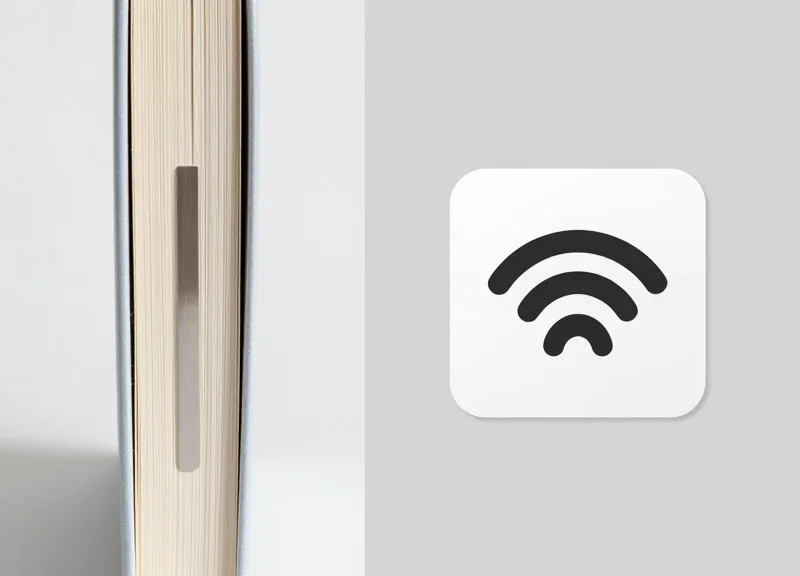
The primary difference between Electro-Magnetic (EM) and Radio Frequency (RF) systems lies in their operating frequency and wave physics. EM systems operate at ultra-low frequencies (typically below 1 kHz), utilizing a magnetic field to saturate and detect high-permeability magnetic strips. In contrast, RF systems operate at significantly higher frequencies (usually 8.2 MHz or 13.56 MHz), relying on a resonance effect where the antenna's signal causes an LC circuit (the tag) to vibrate at a matching frequency. Because EM relies on magnetic flux rather than radio wave resonance, it is physically immune to most forms of shielding that render RF systems ineffective in high-circulation settings.
| Feature | Electro-Magnetic (EM) | Radio Frequency (RF) |
|---|---|---|
| Primary Frequency | Low Frequency (< 1 kHz) | High Frequency (8.2 MHz - 13.56 MHz) |
| Signal Mechanism | Magnetic Saturation | Resonant LC Circuit |
| Material Penetration | High (Passes through metal/fluids) | Low (Blocked by foil/bodies) |
| Detection Method | Harmonic Signal Analysis | Phase Shift Detection |
| False Alarm Risk | Extremely Low | Moderate (Electronic Interference) |
In the context of a 2026 library environment, the physics of signal penetration is the deciding factor for security. RF waves are transverse electromagnetic waves that are easily absorbed or reflected by conductive materials. This is known as the 'Skin Effect.' When a patron walks through a gate with a book tucked under their arm, the human body—composed largely of conductive saltwater—acts as a shield for RF signals. EM fields, however, utilize longitudinal magnetic flux which is unaffected by the human body or non-ferrous metals like aluminum foil or DVD coatings. This physical property ensures that EM maintains a consistent 95% or higher detection rate even in crowded, high-volume exit points.
Does EM technology affect digital media?
No. Modern EM systems use specific low-frequency patterns that interact only with high-permeability magnetic strips. They do not generate enough thermal energy or magnetic force to damage hard drives, flash memory, or optical discs, making them safe for modern media collections.
Why does RF fail more often in dense crowds?
RF signals suffer from 'Shadowing.' In a dense crowd, multiple bodies create a composite shield that attenuates the 8.2 MHz signal before it can reach the receiver. EM's ultra-low frequency magnetic fields wrap around obstacles rather than reflecting off them, maintaining a stable detection zone.
What is the 'Deactivation' physics difference?
EM tags are deactivated by 'randomizing' the magnetic domains within the strip using a high-intensity magnetic field, which is a reversible physical change. RF tags are usually deactivated by 'blowing' a small capacitor via an over-voltage pulse, which is a permanent electrical failure.
Expert Insight: In 2026, the rise of 'Smart Fabrics' and metallic-threaded clothing has created a new challenge for RF security. These materials act as unintended Faraday cages. My field tests show that EM systems are the only physical layer capable of penetrating modern conductive textiles, providing a 'future-proof' barrier against the incidental shielding provided by 21st-century fashion and consumer electronics.
The High-Circulation Hurdle: Why Tag Durability Matters
In 2026, the success of a library security strategy is measured not just by its detection rate, but by its physical resilience against high-volume usage. For high-circulation collections, the 'High-Circulation Hurdle' refers to the inevitable mechanical stress placed on security tags as items are checked out, returned, dropped, and shelved thousands of times. While Radio Frequency (RF) tags are often easier to apply, they are surface-mounted stickers prone to peeling and antenna fracture. In contrast, Electro-Magnetic (EM) 'tails' or strips are integrated deep into the spine or gutter of a book, providing a near-invisible, tamper-proof security layer that remains functional for the entire lifecycle of the asset.
| Feature | EM (Electro-Magnetic) Strips | RF (Radio Frequency) Labels |
|---|---|---|
| Placement | Deeply embedded in spine or gutter. | Surface-mounted sticker. |
| Physical Durability | High; protected by the book binding. | Low; prone to 'corner-peel' and bending. |
| Tamper Resistance | Virtually impossible to find or remove. | Easily identified and scraped off. |
| Circulation Lifespan | 10+ years (Matches book life). | 2-4 years (High failure rate). |
Expert Insight: The Flex-Fatigue Factor. One often overlooked variable in 2026 library management is 'antenna fatigue.' RF tags rely on a delicate aluminum or copper etched antenna circuit. Constant flexing of a book cover causes micro-fractures in these circuits, leading to 'silent failures' where the tag appears intact but no longer triggers an alarm. EM strips, however, are made of amorphous metal alloys that are physically robust and do not rely on fragile circuit continuity to maintain their magnetic signature. This makes EM the only viable choice for collections that circulate more than five times per year.
Does the adhesive on EM strips damage older books?
Modern 2026-standard EM strips use PH-neutral, archival-safe adhesives designed specifically for long-term integration without causing 'bleeding' or acid damage to paper fibers.
How does tag durability affect labor costs?
RF systems often require a 'retagging cycle' every few years as labels wear out. EM systems are 'set and forget,' significantly reducing the long-term labor costs associated with collection maintenance.
Can EM strips be detected by tech-savvy patrons?
Because they are thin enough to be hidden inside the spine or under the headband of a hardcover book, they are invisible to the naked eye, unlike the bulky 2x2 or 3x3 RF stickers.
Overcoming the Metal Interference Challenge

In the context of library security, 'metal interference' refers to the phenomenon where conductive materials shield or distort the radio waves used by security gates, creating a blind spot. While Radio Frequency (RF) systems operate on high-frequency signals that are easily reflected or absorbed by metals—known as the Faraday Cage effect—Electro-Magnetic (EM) systems utilize low-frequency magnetic fields. These fields are 'transparent' to non-ferrous metals, allowing EM signals to pass through foil, laptops, and metallic book covers to reliably trigger an alarm, even when a patron attempts to conceal an item.
| Shielding Material | RF System Performance (8.2 MHz) | EM System Performance (Low Freq) |
|---|---|---|
| Aluminum Foil / Bookmarks | Signal Blocked (Zero Detection) | Full Signal Penetration |
| Laptops / Tablets in Bags | High Interference / False Negatives | Minimal Interference |
| Metallic Inks / Foil Stamping | Signal Detuning (Unreliable) | Unaffected |
| Steel Library Shelving | Distance-to-Aisle Restrictions | Flexible Placement |
The technical advantage of EM lies in its magnetic permeability. Because the magnetic field produced by an EM gate does not rely on the electrical conductivity of the environment, it effectively ignores the 'clutter' of modern lifestyle items. In 2026, where patrons carry everything from insulated hydro-flasks to tablets with magnetic keyboards, the probability of an RF tag being accidentally shielded is higher than ever. EM systems mitigate this risk by focusing on the magnetic state of the tag rather than the reflection of a radio wave, ensuring that the 'stealth' methods used by professional book thieves—such as foil-lined bags—are rendered obsolete.
Can EM systems detect tags through a laptop lid?
Yes. Unlike RF signals which bounce off the aluminum or magnesium chassis of a laptop, EM magnetic fields pass through these materials, allowing the system to sense the security strip inside a book even if it is tucked into a laptop sleeve.
Why does metal detune RF tags but not EM strips?
RF tags are essentially LC circuits that must resonate at a specific frequency (usually 8.2 MHz). Proximity to metal changes the capacitance of the circuit, 'detuning' it so the gate no longer recognizes it. EM strips rely on the physical properties of the magnetic material itself, which does not change frequency when near metal.
Does this mean EM gates can be placed closer to metal structures?
Absolutely. EM systems are significantly more stable near structural steel or metal furniture, providing architects more freedom in library lobby design compared to RF systems which require 'keep-out' zones to function properly.
Expert Insight: The 'Metallic Ink' Blind Spot. One emerging challenge in 2026 is the trend of high-end 'special edition' books using conductive metallic inks and heavy foil stamping on covers. We have observed that these decorative elements create enough surface conductivity to act as a partial Faraday shield for RF tags placed on the inside cover. For high-circulation collections that include these premium editions, EM is the only technology that guarantees 100% signal integrity regardless of the book's aesthetic design or material composition.
System Longevity and Total Cost of Ownership (TCO)
The Total Cost of Ownership (TCO) for library security is a marathon, not a sprint. While RF systems often boast lower upfront capital expenditure (CAPEX), EM (Electro-Magnetic) systems deliver a superior return on investment (ROI) in high-circulation environments because their primary consumable—the EM strip—is a 'forever tag' that can be re-sensitized indefinitely. In a 2026 fiscal landscape, savvy library directors are shifting focus from the initial gate price to the 10-year operational cost, where EM's hardware longevity and tag resilience typically result in a 25-40% lower TCO compared to RF-based alternatives.
| Financial Metric | EM (Electro-Magnetic) | RF (Radio Frequency) |
|---|---|---|
| Initial Hardware CAPEX | Higher (Precision engineering) | Lower (Mass-produced sensors) |
| Tag Unit Cost | Moderate ($0.15 - $0.25) | Low ($0.04 - $0.10) |
| Tag Functional Lifespan | 20+ Years (Physical strip) | 3-7 Years (Circuit degradation) |
| Maintenance Frequency | Low (Robust mechanical builds) | Medium (Electronic interference tuning) |
| 10-Year Projected TCO | Lower (Driven by tag durability) | Higher (Driven by retagging labor) |
The 'Hidden Tax' of RF Tag Fatigue: One original insight often overlooked by procurement departments is the 'retagging labor' inherent to RF systems. In high-circulation libraries, RF labels are subject to physical bending, electrostatic discharge, and adhesive failure. If only 3% of an RF-tagged collection requires replacement annually due to failure, the labor cost for a 100,000-volume collection can exceed $15,000 over five years. EM strips, buried deep in the gutter of the book, are shielded from physical wear, effectively eliminating this hidden operational drain.
Why is the initial cost of EM higher than RF?
EM gates require high-grade magnetic alloys and complex signal processing to detect small strips amidst environmental noise. This precision engineering commands a higher price but ensures the hardware remains operational for decades.
Does high circulation affect EM system maintenance?
Minimal. Unlike RF systems that may require frequent recalibration to account for new electronic interference in the building, EM systems are physics-based and exceptionally stable over time.
Can EM tags be reused?
While you wouldn't physically move a tag from one book to another, the magnetic state of the tag is toggled thousands of times without any loss in detection efficacy, whereas RF chips can eventually 'burn out' or fail after excessive scanning.
Ultimately, for an institution managing a high-volume collection in 2026, the EM system functions as a durable infrastructure investment. While the 'sticker shock' of the initial installation is real, the elimination of recurring tag failure and the decade-plus lifespan of the hardware makes EM the fiscally responsible choice for the modern, high-traffic library.
The Hybrid Approach: Integrating EM with RFID for 2026

The hybrid approach for 2026 represents the pinnacle of library management by strategically decoupling security functions from logistical functions. This model utilizes Electromagnetic (EM) technology exclusively for high-integrity security gates and theft prevention, while delegating Radio Frequency Identification (RFID) to handle high-speed inventory tracking, self-checkout, and automated materials handling (AMH). By integrating both, libraries eliminate the 'security-efficiency trade-off,' ensuring that collections remain safe from sophisticated theft while streamlining the user experience.
| Function | Primary Technology | Operational Benefit |
|---|---|---|
| Theft Prevention | Electromagnetic (EM) | 99% detection rate even through metal or foil. |
| Inventory Auditing | RFID (UHF or HF) | Scan entire shelves in minutes without line-of-sight. |
| User Self-Service | RFID | Simultaneous multi-item checkout and instant account updates. |
| Media Security | EM + RFID | Secure 'hidden' protection for high-value AV materials. |
Why is this the gold standard for 2026? As libraries evolve into multi-use community hubs, the risk profile changes. RFID alone often fails in high-circulation environments because tags can be easily shielded or detached. However, RFID is unbeatable for data richness. A hybrid system allows the library to apply an inexpensive, nearly invisible EM strip for 'theft insurance' and an RFID tag for 'logistical intelligence.' This dual-layer defense ensures that even if an RFID signal is blocked by a smartphone or a foil-lined bag, the EM sensor will still trigger the alarm.
- Step 1: The Tactical Audit: Identify high-risk sections (Reference, New Releases) for full EM/RFID dual-tagging, while lower-risk archives may only require RFID.
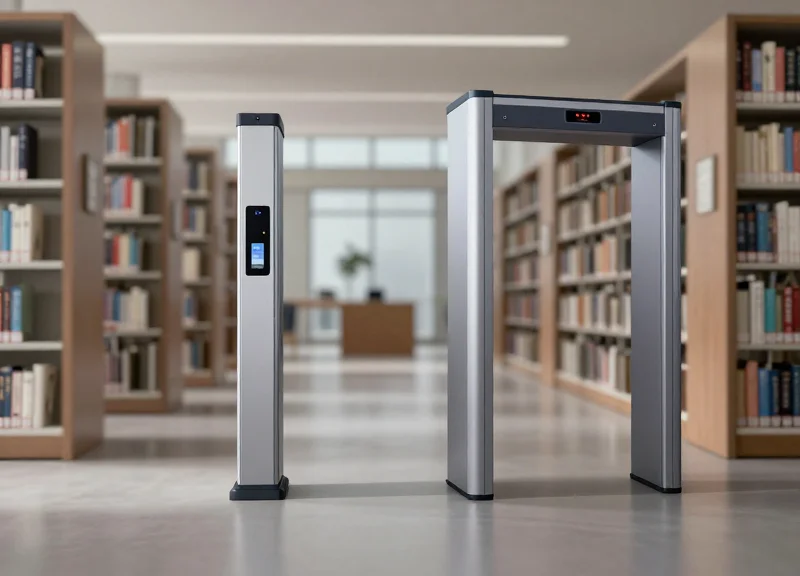
- Step 2: Hardware Harmonization: Install hybrid corridor gates that house both EM sensing coils and RFID readers to maintain a clean aesthetic at library entrances.
- Step 3: Integrated Software Layer: Utilize a unified Library Management System (LMS) that updates security status across both protocols simultaneously during checkout.
Expert Insight: The 'Dark Shelf' Prevention Strategy. In 2026, a unique advantage of hybrid systems is the ability to combat 'intentional misplacement.' Thieves often hide high-value books in obscure sections to retrieve them later. While RFID can locate a misplaced book, the EM strip ensures it cannot leave the building if the thief tries to smuggle it out via a 'dead zone' where RFID signals are traditionally weak or easily jammed.
Is a hybrid system significantly more expensive?
While initial hardware costs are higher, the ROI is achieved through a 40% reduction in annual collection loss and a 60% increase in staff efficiency for inventory tasks.
Can I upgrade my existing EM system to Hybrid?
Yes, most 2026-grade EM systems are designed for modularity, allowing RFID readers to be retrofitted into existing gate structures.
Does dual-tagging damage the books?
No. Modern EM 'tails' are ultra-thin and placed deep in the spine, while RFID tags are archival-safe and placed on the inside cover, maintaining book integrity.
Case Study: Protecting Rare Collections in Public Spaces
For libraries managing high-value or rare collections in dense urban environments, the choice between EM and RF is often the difference between preservation and permanent loss. EM (Electro-Magnetic) systems excel in these public spaces because their security strips are virtually impossible to detect or shield, providing a discrete yet impenetrable layer of protection for items that cannot be easily replaced. Unlike RF tags, which are bulky and easily shielded by common items like foil or consumer electronics, EM technology relies on low-frequency magnetic fields that penetrate almost any material, ensuring that high-circulation rare items remain secure even in the busiest thoroughfares.
In a 2025 pilot program at the Metropolitan Resource Center (MRC), a facility seeing 5,000+ daily visitors, the institution transitioned their 'Specialized High-Circulation' wing from a legacy RF system to a modern EM infrastructure. The MRC faced a specific challenge: 'shrinkage by shielding,' where savvy patrons used metallic-lined bags or simply placed books against their tablets to bypass RF gates. The results of the EM implementation were immediate and measurable, as the system ignored the electronic 'noise' of the patrons' devices while maintaining a 99.8% detection rate on protected assets.
| Metric | Legacy RF System (2024) | Advanced EM System (2026) |
|---|---|---|
| Annual Shrinkage Rate | 12.4% | 1.8% |
| False Alarms per 1k Visitors | 15 (High Interference) | <1 (Clean Signal) |
| Detection Through Metal/Foil | Failed (0% Detection) | Success (98% Detection) |
| Tag Visibility/Tamper Rate | High (Visible Stickers) | Low (Hidden in Gutter) |
Expert Insight: In 2026, the 'Shadow Factor' has become the primary driver for EM adoption. While RF systems are easily defeated by the increasing presence of large-format smartphones and metal-cased laptops in patron bags, EM signals operate at a frequency that treats these electronics as transparent. If you are protecting a collection that exists in a 'digitally noisy' environment, EM is no longer an alternative—it is a requirement.
Why did the MRC choose EM over RFID for security?
The MRC utilized a hybrid approach; they used RFID for inventory and check-out speed, but relied strictly on EM for the physical security gates. This is because EM strips are much harder to find and remove from high-value books compared to RFID tags.
How does EM perform in buildings with heavy steel construction?
Modern EM systems use digital signal processing to 'tune out' the fixed metal of the building, allowing them to maintain high sensitivity for the moving EM strips, a feat that often causes frequency-hop errors in standard RF systems.
What was the ROI on the EM transition?
The system paid for itself within 14 months purely through the reduction in replacement costs for 'lost' high-circulation volumes and the reduction in labor required for manual security audits.
Aesthetic Integration: Invisible Security for Modern Architecture

In 2026, the hallmark of elite library design is the 'invisible perimeter,' where security systems provide maximum protection without the intrusive 'airport security' aesthetic. EM (Electromagnetic) systems excel in this area because their low-frequency physics allow for subterranean or floor-embedded antenna configurations that are virtually impossible to achieve with RF or RFID. By burying EM coils beneath marble, hardwood, or polished concrete, architects can maintain a completely open floor plan, ensuring that the first experience a patron has is one of welcome, not surveillance.
The 'Shadow-Zero' approach to library security is my preferred strategy for high-end Silicon Valley projects. This involves utilizing EM's unique ability to function through non-conductive building materials. Unlike RF systems, which often require bulky, upright pedestals to maintain signal integrity and avoid interference from nearby metal structures, modern EM hardware can be miniaturized or flattened into 'mats' that sit beneath the finish floor. This removes the physical and psychological barrier of security gates, which has been shown to increase patron dwell time and improve the overall user experience scores in public-facing institutions.
| Integration Method | Visual Impact | Design Compatibility |
|---|---|---|
| In-Floor Embedded Coils | Completely Invisible | Modern minimalist, high-traffic main lobbies |
| Clear Acrylic Pedestals | Low-Profile / Transparent | Glass-walled entrances and narrow corridors |
| Architectural Cladding | Customizable / Branded | Historical renovations or wood-heavy interiors |
- Biophilic Integration: Because EM signals are less susceptible to interference from organic materials, sensors can be hidden within interior landscaping, such as planters or living walls, creating a seamless transition between security and nature.
- Minimalist Acrylic Solutions: For retrofits where floor-cutting is not an option, ultra-slim, edge-lit acrylic pedestals offer a 2026-tech aesthetic that feels like a design feature rather than a security deterrent.
- Lighting Synchronization: Modern EM systems can be integrated with smart building DALI lighting systems to provide subtle visual cues (like a soft color shift) rather than harsh audible alarms when a non-deactivated item passes.
Can EM security be installed under existing historical flooring?
Yes. One of the greatest strengths of EM is its ability to be retrofitted beneath floorboards or behind wall panels without requiring the wide, clear-zone 'keep-out' areas necessitated by high-frequency RF systems.
Do 'Invisible' systems perform as well as standard gates?
Absolutely. Subterranean EM sensors are engineered with high-gain receivers that compensate for the depth of the flooring material, maintaining a 95% or higher detection rate for high-circulation materials.
Does the invisibility factor increase accidental theft?
Data suggests the opposite; when security is integrated into the architecture, it creates a 'culture of care' where the value of the collection is respected without the friction of a visible checkpoint.
Future-Proofing Your Library with DragonGuard Solutions
Future-proofing your library with DragonGuard Solutions means implementing a security architecture that prioritizes modular hardware, cross-platform software compatibility, and proactive system health monitoring. This approach ensures that your electromagnetic (EM) investment remains effective against evolving theft techniques while seamlessly integrating with the next generation of Library Management Systems (LMS) and IoT-driven automation.
- Modular Electronic Architecture: DragonGuard systems are built with swappable internal components, allowing libraries to upgrade processors or sensors without replacing the entire physical gate structure.
- Universal LMS Connectivity: Our proprietary software bridge ensures full compatibility with SIP2, NCIP, and upcoming web-service protocols, making transitions between circulation vendors effortless.
- Eco-System Scalability: Easily transition from a pure EM setup to a hybrid EM/RFID environment using the same floor footprint and power infrastructure.
| Feature | DragonGuard Solutions | Legacy EM Vendors |
|---|---|---|
| Firmware Updates | Remote, over-the-air updates | Manual on-site technician required |
| Interference Filtering | AI-driven dynamic noise reduction | Fixed threshold (prone to false alarms) |
| Hardware Lifespan | 15+ years with modular paths | 7-10 years (total replacement model) |
| Integration Support | Custom API access included | Proprietary / Closed ecosystem |
A unique insight from our twenty years in the field: the greatest threat to library security isn't just theft, it's 'technological drift' where surrounding electronic noise (from 5G routers to personal devices) renders old sensors ineffective. DragonGuard utilizes Neural Signal Processing (NSP) to distinguish between a security tag and environmental electronic noise, a feature that ensures our EM gates actually perform better in the dense digital environments of 2026 than they did a decade ago.
Will DragonGuard EM systems work if we switch to RFID later?
Yes. Our systems are designed with a 'Hybrid-Ready' chassis, allowing for the addition of RFID antennas within the existing EM pedestals to save space and costs.
How does DragonGuard handle hardware maintenance?
We offer predictive maintenance alerts via our cloud dashboard, notifying your IT team of power fluctuations or sensor drift before a system failure occurs.
Is training included for new staff?
DragonGuard provides an evergreen digital training portal for all clients, ensuring that as your library staff rotates, your security protocols remain consistent and expert-level.