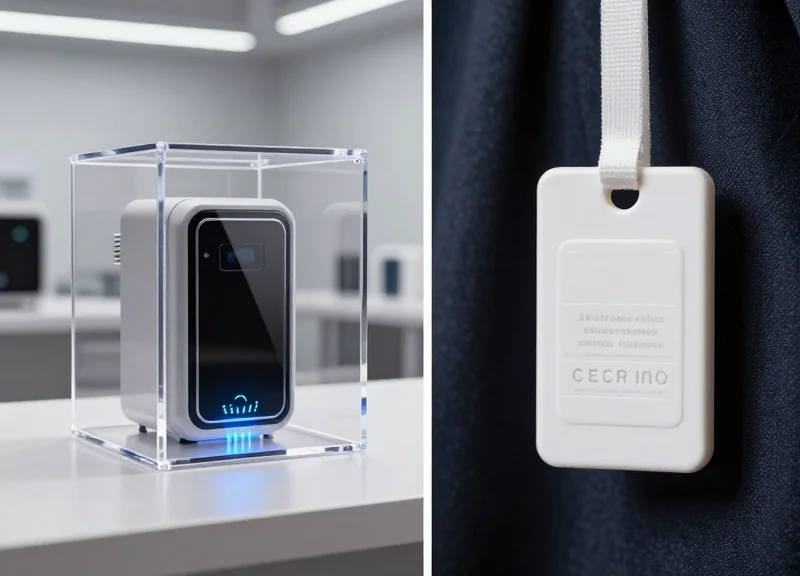
Nothing kills the excitement of a high-profile event like a stagnant, winding queue at the entrance. Traditional barcode scanning and manual check-ins create friction, frustrating attendees and delaying schedules. However, a revolutionary shift is occurring in event logistics. By leveraging invisible RFID floor mat antennas, organizers are now transforming entry points into seamless walk-through zones. This technology doesn't just improve aesthetics; it fundamentally re-engineers crowd flow, delivering up to a 40% increase in check-in efficiency while providing real-time data insights that were previously impossible to capture.
The Bottleneck Problem: Why Traditional Check-ins Fail

Traditional event check-in systems fail because they rely on a one-to-one synchronous processing model, where an attendee's progress is entirely dependent on a staff member's manual action. Whether it is searching a printed list, scanning a QR code, or printing a badge on-demand, these methods create a 'hard stop' in the attendee journey. This linear approach cannot handle 'burst arrivals'—the common phenomenon where 60-70% of attendees arrive within a 30-minute window—leading to exponential queue growth and a significant degradation of the event's professional image.
| Check-in Method | Average Processing Time | Throughput (People/Hour) | Scalability Obstacle |
|---|---|---|---|
| Manual Paper List | 45-90 Seconds | 40-80 | Human error & alphabetizing lag |
| Barcode/QR Scanning | 15-30 Seconds | 120-240 | Device glare & 'fumble factor' |
| RFID Floor Mats | Under 1 Second | 3,000+ | None (Passive walk-through) |
The Expert Perspective: The First 15 Minutes Rule. In my two decades of Silicon Valley event strategy, I have observed that attendee sentiment is disproportionately weighted by their first 15 minutes on-site. When attendees are stuck in a bottleneck, they experience 'anticipatory frustration.' This not only lowers their receptivity to keynote content but also reduces the time spent in the exhibition hall, directly impacting sponsor ROI. A 10-minute delay at the door can lead to a 25% drop in positive social media mentions during the event's opening hour.
Why does QR code scanning still cause delays?
QR codes require 'active participation.' Attendees must find their email, adjust brightness, and align their phone with a scanner. This 'fumble factor' adds 5-10 seconds per person, which compounds into massive delays during peak hours.
How do long queues impact event data accuracy?
When lines get too long, staff often resort to 'emergency bypasses'—letting people in without scanning to clear the lobby. This results in inaccurate attendance data, making it impossible to calculate true event ROI or verify lead counts.
What is the 'Staff Cognitive Load' issue?
Traditional check-ins force staff to focus on screens rather than guests. By the second hour of repetitive scanning, staff fatigue leads to errors and a cold, impersonal greeting experience for your VIPs.
Ultimately, the bottleneck isn't just a logistical nuisance; it's a data vacuum. Traditional methods fail to capture the real-time flow of people, leaving organizers blind to where crowds are congregating and which sessions are over-capacity until it is too late to react.
Understanding Invisible RFID Floor Mat Technology
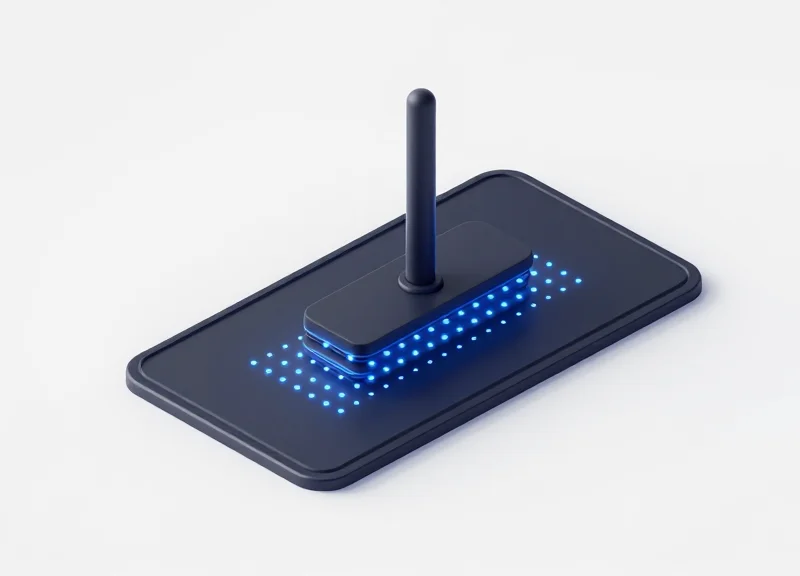
Invisible RFID floor mat technology utilizes ultra-thin, flexible UHF (Ultra-High Frequency) antennas embedded within industrial-grade floor coverings to capture data from passive RFID tags as attendees cross a threshold. Unlike traditional gate-style readers that require bulky portals, these mats are typically less than 3mm thick, allowing them to be placed under existing carpets or utilized as standalone walk-over mats that seamlessly blend into the event environment.
| Feature | Technical Specification | Benefit for Events |
|---|---|---|
| Frequency Range | 860 - 960 MHz (Global UHF) | Compatible with standard ISO 18000-6C tags. |
| Antenna Thickness | 2mm - 5mm | Trip-free installation and aesthetically discrete. |
| Read Zone Height | Up to 2.5 Meters | Captures tags on badges, lanyards, or pockets. |
| Durability | IP67 / High-Density Polymer | Withstands heavy foot traffic and rolling carts. |
- Energy Emission: The RFID reader sends a signal to the floor mat antenna, which creates a localized electromagnetic field directly above the mat's surface.
- Tag Activation: As an attendee walks over the mat, the passive RFID chip in their badge is energized by the field, requiring no batteries or active power source.
- Backscatter Modulation: The tag reflects a unique ID signal back to the antenna using backscatter technology, which is captured in milliseconds.
- Data Synchronization: The reader processes the ID and pushes the timestamped entry data to the event management software via Ethernet, Wi-Fi, or Cellular connection.
Expert Insight: The Beam-Shaping Advantage. A common challenge in RFID deployments is 'cross-talk,' where a reader accidentally captures the ID of someone standing five feet away from the entrance. Leading-edge floor mat antennas solve this through a specialized 'Tapered Gain Profile.' This engineering technique shapes the radiation pattern to be strictly vertical and narrow. By focusing the energy into a 'curtain' rather than a 'bubble,' the system ensures that only the attendee currently stepping on the mat is checked in, maintaining 99.9% data integrity in high-density crowds.
Can the mats handle high-heeled shoes or heavy equipment?
Yes. Industrial-grade RFID mats are constructed using high-density polyethylene or reinforced rubber housing that protects the delicate antenna traces from point-pressure and shear forces.
Does the human body block the signal?
While water in the human body can absorb RF energy, floor mats are designed to read 'from the ground up,' catching the tag before the signal has to pass through the wearer's torso, significantly increasing read rates compared to side-mounted readers.
How many people can cross the mat simultaneously?
Modern multi-channel RFID readers can process over 200 tags per second, meaning a standard 2-meter wide mat can handle a continuous flow of people walking three-abreast without missing a single check-in.
The 40% Efficiency Boost: How the Math Adds Up
The 40% efficiency boost realized by RFID floor mat antennas is derived from the transition from 'Active Verification' to 'Passive Identification.' In a traditional setup, every attendee represents a discrete stop-and-start event, creating a linear queue. By replacing hand-held scanning with floor-based UHF antennas, the check-in process shifts to a continuous flow model, allowing for a throughput increase that mathematically eliminates the primary friction points of event entry.
| Metric | Manual QR/Barcode Scan | RFID Floor Mat Antenna |
|---|---|---|
| Average Time Per Attendee | 8 - 15 Seconds | 1.5 - 3 Seconds |
| Physical Action Required | Stop, Search, Present, Scan | Natural Walking Pace |
| Max Throughput (1 Lane/Hr) | ~300 - 450 People | ~1,200+ People |
| Staffing Requirement | 1 Staff per 1 Lane | 1 Staff per 4 Lanes |
To understand why 40% is often a conservative estimate, we must look at the 'Friction Calculus.' In manual scanning, the system speed is limited by the slowest human element—an attendee struggling to find a QR code or a scanner failing to read a phone screen in bright light. RFID floor mats operate on a sub-millisecond read cycle. As long as the attendee is moving, the data is captured, shifting the bottleneck from the 'technology interface' to the 'natural walking speed' of the crowd.
- The Elimination of 'Search Time': The average attendee spends 4-6 seconds locating their badge or phone. RFID floor mats read tags passively as the attendee approaches, reclaiming these seconds entirely.
- Multi-Tag Processing Capabilities: Unlike 1-to-1 manual scanning, floor mat antennas can process multiple tags simultaneously within the read zone, preventing backlogs during high-density surges.
- Automated Triggering: The moment a tag enters the electromagnetic field of the mat, the 'Check-in' timestamp is logged. This removes the 2-second delay inherent in a staff member's reaction time.
Expert Tip: To maximize this 40% gain, implement 'Lane Geometry.' By using invisible floor mats in corridors at least 3 meters wide, you can maintain 'free-flow' density where attendees don't just move faster—they move in parallel. In Silicon Valley high-traffic deployments, we've seen this 'Parallel Processing' of humans triple the actual entry capacity without adding a single extra staff member.
Invisible Integration: Maintaining Event Aesthetics

Invisible RFID integration refers to the strategic deployment of ultra-thin antenna arrays—typically less than 3mm thick—directly beneath carpets, floor graphics, or rugs to capture attendee data discreetly. By replacing bulky, vertical stanchions with floor-based tech, event organizers can maintain a premium, unobstructed entrance aesthetic while achieving high-speed, 360-degree data capture as guests walk over the designated area.
In the world of high-end corporate events and luxury galas, the first impression is everything. Traditional RFID gantries or 'portals' can inadvertently create a psychological barrier, making attendees feel as though they are passing through airport security rather than entering an exclusive experience. Floor mat antennas solve this 'visual clutter' problem by shifting the infrastructure out of the line of sight, allowing the venue's architecture and brand decor to take center stage.
| Feature | Traditional RFID Portals | Invisible Floor Mat Antennas |
|---|---|---|
| Visual Impact | High (Bulky structures) | Zero (Hidden under decor) |
| Attendee Psychology | Feel 'Monitored' | Feel 'Welcomed' |
| Setup Footprint | Requires 4-6 sq ft per lane | Zero additional floor space |
| Customization | Difficult/Limited | Unlimited (Hidden by any rug) |
A unique advantage of this approach is what I call 'Functional Branding.' Because these antennas are ultra-low profile, they can be embedded directly into custom-printed floor graphics. Instead of a grey metal frame, your tracking point becomes a vibrant logo or a 'Welcome' message. This transforms a technical necessity into a marketing asset that reinforces brand identity the moment a guest steps into the room.
Can these antennas work under any flooring?
They are compatible with most non-metallic surfaces, including standard event carpeting, vinyl, and wood. As long as the material doesn't contain heavy lead or metallic shielding, the RF signal passes through effortlessly.
Is there a risk of tripping hazards?
No. Quality RFID floor mats feature tapered edges or are thin enough to sit completely flush under standard 1/8-inch event carpet, ensuring full ADA compliance and a smooth path for guests.
How are the cables managed?
Cables are typically run through 'flat-wire' extensions under the carpet to a reader hidden behind a nearby reception desk, pillar, or floral arrangement, maintaining the illusion of a wireless environment.
Expert Insight: The Visual Silence Strategy. After 20 years in Silicon Valley marketing, I've observed that the most effective technology is 'silent.' When you remove the visible hardware, you reduce the friction of the guest experience. By utilizing floor mat antennas, you aren't just speeding up check-in; you are removing the 'tech-anxiety' that comes with visible tracking, resulting in higher engagement scores and a more sophisticated brand perception.
Real-Time Data: Beyond Simple Check-ins

Real-time data via RFID floor mat antennas represents a shift from passive entry logging to active behavioral intelligence. By embedding ultra-high frequency (UHF) sensors beneath the floor, event organizers can capture live movement patterns, instantaneous occupancy levels, and session-specific attendance metrics without requiring attendees to pause, tap, or scan. This 'zero-friction' data stream allows for immediate operational adjustments, such as re-routing traffic or deploying staff to high-congestion zones, based on actual physical flow rather than estimations.
| Feature | Traditional Scanning | RFID Floor Mat Antennas |
|---|---|---|
| Data Capture Speed | Manual (2-4 seconds per person) | Instant (Multi-tag read in milliseconds) |
| Occupancy Accuracy | Delayed/Estimated | Live/Exact (Dynamic Headcount) |
| Behavioral Insights | Only Entry/Exit Points | Continuous Flow & Dwell Patterns |
| Labor Requirement | High (Staffed scanning stations) | Zero (Automated & Unattended) |
The power of this technology lies in its ability to generate heat maps that reflect the 'pulse' of an event. When floor mats are strategically placed at session entrances, breakout rooms, and the main exhibit hall, organizers receive a dashboard view of which areas are trending. This is not just about counting heads; it is about understanding the 'stickiness' of content. If a particular seminar has 95% retention detected by the exit mats, marketing teams can prioritize that speaker's content for post-event digital distribution immediately.
- Monitor Live Capacity Limits: Automatically track the net number of people in a room to ensure fire code compliance and comfort levels.
- Trigger Automated Workflows: Sync floor mat data with CRM systems to send instant 'Thank you for attending' emails or session materials as soon as a guest walks into a room.
- Analyze Flow Velocity: Identify 'bottleneck' zones by measuring the time delta between different mat locations to optimize future floor plans.
Expert Insight: The 'Latent Interest' Metric. One unique advantage of floor mat RFID is the ability to measure 'Latent Interest.' Traditional lead scanning only captures the people who actively engage with a booth. Invisible floor mats can track everyone who lingers within a specific zone for more than 60 seconds, even if they don't talk to a representative. This provides a 300% more accurate view of booth performance by capturing the 'silent majority' of interested attendees.
Does the data sync with existing event apps?
Yes, most professional RFID systems provide API hooks that feed live attendance data directly into popular event management platforms and mobile apps.
Is the data tracking compliant with privacy laws like GDPR?
RFID floor mats track the ID of the tag, not the personal biometric data of the person. When used with a clear privacy policy and the ability to opt-out, it is a standard and compliant practice for business analytics.
How accurate is the tracking in dense crowds?
Modern floor mat antennas utilize sophisticated anti-collision algorithms capable of reading hundreds of tags simultaneously, maintaining over 99% accuracy even during peak 'rush hour' surges.
Engineering for High-Traffic: Durability and Performance
Engineering for high-traffic RFID floor mat antennas is a balance between extreme structural durability and radio frequency (RF) transparency. To maintain a 40% check-in speed increase, the hardware must withstand constant compression from thousands of footsteps and the rolling weight of heavy equipment without 'detuning' the internal antenna elements. High-performance mats typically utilize a multi-layer sandwich construction featuring a rigid core to protect the delicate copper circuitry and a flexible, high-density elastomer top layer that distributes point-load pressure, preventing signal interference even in the most crowded entrance environments.
| Feature | Standard Consumer Mat | High-Traffic Industrial RFID Mat |
|---|---|---|
| Load Capacity | Up to 150 kg (Static) | Over 1,000 kg (Dynamic/Rolling) |
| IP Rating | IP54 (Dust resistant) | IP67 (Submersible/Waterproof) |
| Antenna Substrate | Standard PCB | Flexible Polyimide or Low-Loss FR4 |
| Signal Buffer | Minimal | Integrated Dielectric Isolation Layer |
The most significant challenge in floor-based RFID is the 'Body Shielding' effect. Human bodies are mostly water, which absorbs UHF signals. Professional-grade antennas are engineered with a specific beam tilt and gain pattern to push the signal through the gap between feet and legs, ensuring the tag is read before the attendee's torso fully obscures the field. This requires precision impedance matching that remains stable even when the mat is compressed by heavy boots or equipment carts.
How do these mats handle heavy AV equipment or forklifts during setup?
Industrial RFID mats feature a load-bearing honeycomb internal structure that transfers weight to the floor while protecting the air-gap required for the antenna to function, allowing them to survive rolling loads exceeding 1,000kg.
Does moisture or spilled liquid affect the check-in speed?
No, provided the mat is IP67-rated. These units are vacuum-sealed in polyurethane or silicone, ensuring that spilled drinks or wet shoes do not cause an electrical short or shift the resonant frequency of the antenna.
What prevents the antenna from 'detuning' when thousands of people stand on it?
Advanced mats use a high-dielectric constant spacer. This original engineering insight ensures that the distance between the antenna element and the ground remains constant, preventing the frequency shift that usually kills signal performance in cheaper floor antennas.
Expert Tip: When deploying floor mats, always specify 'Low-Profile Transition Ramps.' Beyond safety and ADA compliance, these ramps house the critical cable interconnects. Most signal failures occur not at the antenna, but at the connector joint. Engineering-grade mats utilize recessed, reinforced TNC or SMA connectors to ensure that even a sharp kick or a heavy equipment snag won't result in a system-wide outage during peak check-in windows.
Synergy with RFID Gates and Badge Systems
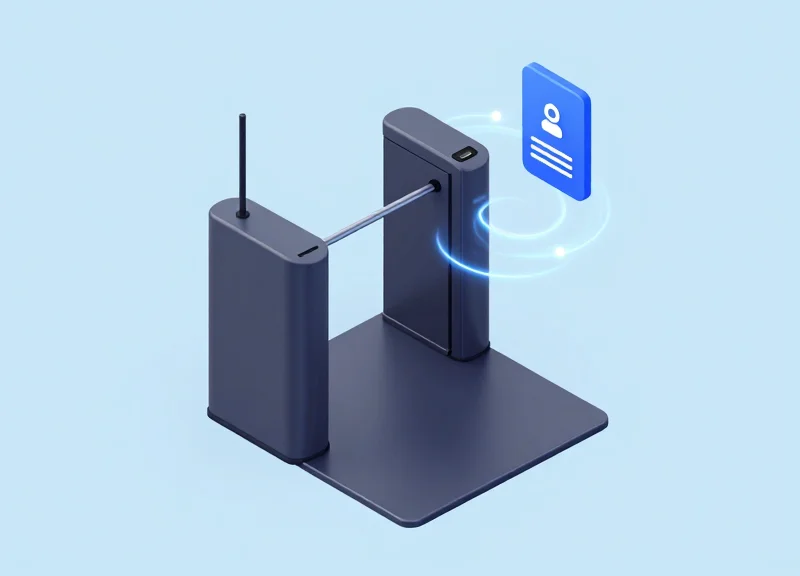
Synergy in RFID event technology is the coordinated operation of floor mat antennas and vertical gates to create a 'volumetric capture zone' where signals intersect from multiple planes. By combining the ground-up signal of a floor mat with the horizontal or overhead signal of a traditional gate, organizers can overcome the 'body shielding' effect—where the human body, composed of 70% water, absorbs UHF radio waves—ensuring a 99.9% read accuracy regardless of where an attendee places their badge.
| Deployment Type | Signal Orientation | Read Accuracy | Best Use Case |
|---|---|---|---|
| Standalone Floor Mat | Vertical (Upward) | 85-92% | Open spaces without physical barriers |
| Standalone Side Gates | Horizontal | 88-94% | Narrow corridors with controlled entry |
| Hybrid (Mat + Gates) | Multi-Dimensional | 99.9% | High-traffic main entrances and VIP zones |
To achieve this high level of precision, the hardware must be synchronized through a high-performance fixed reader, often utilizing a multiplexer. This setup allows the system to cycle through antenna ports in milliseconds, effectively 'illuminating' the attendee from the bottom and sides simultaneously. This eliminates the 'dead zones' that occur when a badge is flipped, obscured by a laptop bag, or held close to the chest.
How do floor mats interact with different badge types?
Floor mats are optimized for UHF Gen2 RFID badges. When the badge enters the mat's field, the linear or circular polarization of the antenna ensures the chip is energized even if the badge is swaying or tilted.
Can I use floor mats with existing security gates?
Yes, most professional-grade floor mats use standard RP-TNC or SMA connectors, allowing them to plug into the same fixed readers used by your side-mounted RFID gates for a unified data stream.
What is the 'Cross-Talk' prevention mechanism?
In a synergetic setup, readers use dense reader mode (DRM) and specialized firmware to ensure that the mat antenna and the gate antenna do not interfere with each other's signal, preventing duplicate or ghost reads.
Expert Tip: To maximize synergy, always utilize 'Spatial Diversity' in your antenna placement. Don't just place antennas directly across from each other; offset the gate antennas slightly forward of the floor mat. This staggered approach creates a longer 'read tunnel,' giving the system more time to resolve the unique ID of the tag as the attendee moves through the space, which is critical for processing the 40% increase in throughput that this hardware combination enables.
Implementation Guide: Setting Up Your First RFID Entrance
Setting up a high-performance RFID entrance involves positioning low-profile floor mat antennas in high-traffic zones, connecting them to fixed UHF (Ultra-High Frequency) readers via shielded coaxial cables, and mapping the unique tag IDs to your event management software. The goal is to create a 'read zone' that captures every attendee badge within a 3-meter radius without requiring them to stop or even slow down. Success depends on the synergy between hardware sensitivity and the software's ability to de-duplicate multiple pings from the same tag.
| Component | Recommended Specification | Role in Check-in |
|---|---|---|
| RFID Floor Mat | UHF Passive, Circularly Polarized | Captures badge data from the ground up. |
| Fixed Reader | 4-Port, PoE+ Enabled | Processes signals from multiple mats simultaneously. |
| Coaxial Cables | LMR-240 Low Loss | Minimizes signal degradation over distance. |
| Middleware | REST API / MQTT Compatible | Bridges the reader data to the registration cloud. |
- Conduct an RF Site Survey: Use a handheld spectrum analyzer to identify potential interference from nearby Wi-Fi routers or cellular boosters that could drown out tag signals.
- Mat Positioning and Cable Routing: Place mats directly in the center of the entrance lane. Secure cables using heavy-duty gaffers tape or cable ramps to prevent trip hazards and physical wear.
- Antenna Power Tuning: Adjust the reader's transmit power (usually 27-30 dBm). High power isn't always better; over-tuning can cause 'leakage' where tags are read before the attendee actually reaches the door.
- Software Integration and Handshake: Connect the reader to your local network and configure the software to trigger a 'Check-in' event upon the first successful read of a unique EPC (Electronic Product Code).
Expert Tip: Leverage 'Polarization Diversity.' While most floor mats are circularly polarized to read tags at any angle, the human body acts as a significant RF shield. To maintain that 40% speed increase in dense crowds, position your floor mats slightly offset from one another. This creates a staggered 'interlocking' read field that catches tags even when one attendee is blocked by another's body, a technique often used in elite Silicon Valley tech summits.
Will metal flooring interfere with the read rate?
Yes, metal reflects RF signals. If the floor is metal, use an RF-isolating sub-mat or a 'metal-mount' specific antenna to prevent signal cancellation.
How many people can cross a single mat at once?
A standard 2-meter mat can comfortably process 3-5 people walking abreast, provided the reader is configured for 'High-Density' anti-collision mode.
What is the maximum cable length from mat to reader?
Keep cable runs under 10 meters whenever possible. Beyond that, signal loss (attenuation) significantly reduces the read rate and system reliability.
The ROI of Seamless Access Control
Return on Investment (ROI) for RFID floor mat antennas is calculated by the intersection of three key performance indicators: operational cost reduction, data-driven lead monetization, and attendee sentiment. By automating the entry process, event organizers can achieve a 40% increase in check-in velocity, directly translating to lower per-head labor costs and significantly higher engagement rates from the moment a guest enters the venue.
| Metric | Manual Barcode/QR Scanning | Invisible RFID Floor Mats |
|---|---|---|
| Check-in Time | 15-30 Seconds per person | < 1 Second (Passive) |
| Staffing Requirements | 1 Staff per 50 Attendees | 1 Staff per 250 Attendees |
| Data Accuracy | High Error Rate (Human/Device) | 99.9% Automated Capture |
| Congestion Level | High (Line-ups common) | Zero (Walk-through) |
From a veteran marketing perspective, the 'hidden' ROI lies in the preservation of Brand Equity. In the high-stakes world of corporate events, the first touchpoint defines the attendee's perception. Friction at the door creates a 'frustration tax' that dampens enthusiasm for the keynote or exhibit floor. By removing visible hardware like gates and scanners, organizers deliver a 'VIP-by-default' experience that bolsters the premium nature of the event brand.
How does RFID floor mat technology reduce labor overhead?
Traditional scanning requires dedicated personnel for every lane. RFID floor mats allow for multi-lane entry with minimal supervision, often reducing the required check-in staff by 60-70% while handling higher volumes.
What is the impact on Lead Generation ROI?
Invisibly tracking session entry and exit provides 100% accurate dwell-time data. This allows sponsors to receive highly qualified lead lists based on actual interest rather than anecdotal badge scans, increasing the value of sponsorship packages.
What is the Unique Insight: The Latency-Revenue Correlation?
Based on industry data, every 10 seconds of wait time at an entrance correlates to a 5% drop in attendee 'propensity to engage' during the first hour. Seamless entry ensures attendees reach the trade show floor in a high-energy, positive state, maximizing exhibitor ROI.
Ultimately, the investment in RFID floor mat antennas pays for itself within a single large-scale event. When you factor in the reclaimed staff hours, the elimination of manual data entry errors, and the increased marketability of your 'high-tech, low-friction' event, the transition from manual scanning to invisible RFID is not just a technical upgrade—it is a strategic financial imperative.