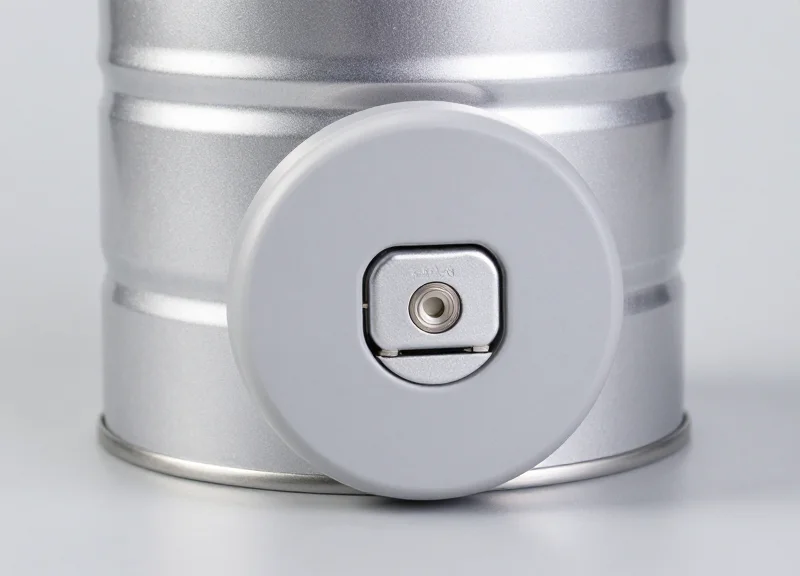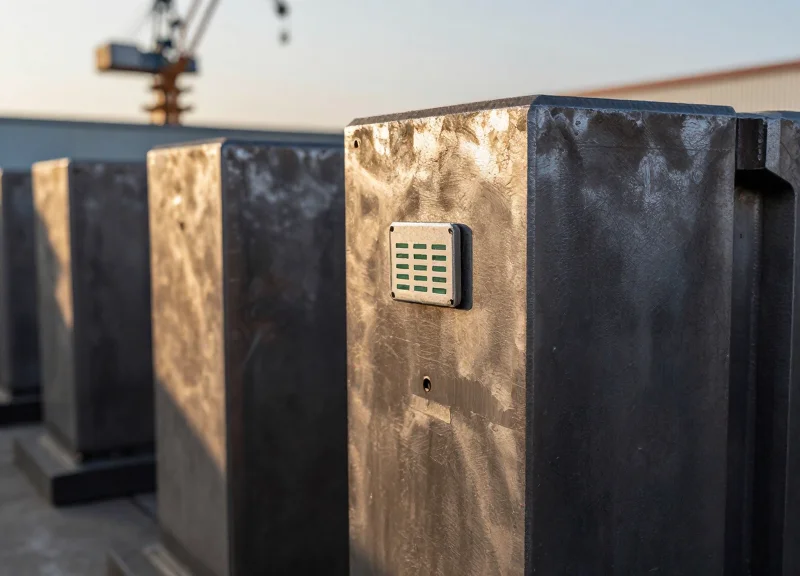
In heavy industrial manufacturing, molds represent some of the most critical and expensive assets. However, managing these assets in sprawling outdoor storage yards often leads to inefficiencies, lost items, and costly downtime. Metal surfaces and harsh environmental conditions have historically hindered tracking precision. This guide explores how advanced metal-mount RFID technology overcomes these barriers, delivering near-perfect tracking accuracy and transforming outdoor mold management into a streamlined, high-visibility operation.
The Evolution of Asset Tracking: Moving Beyond Manual Mold Management
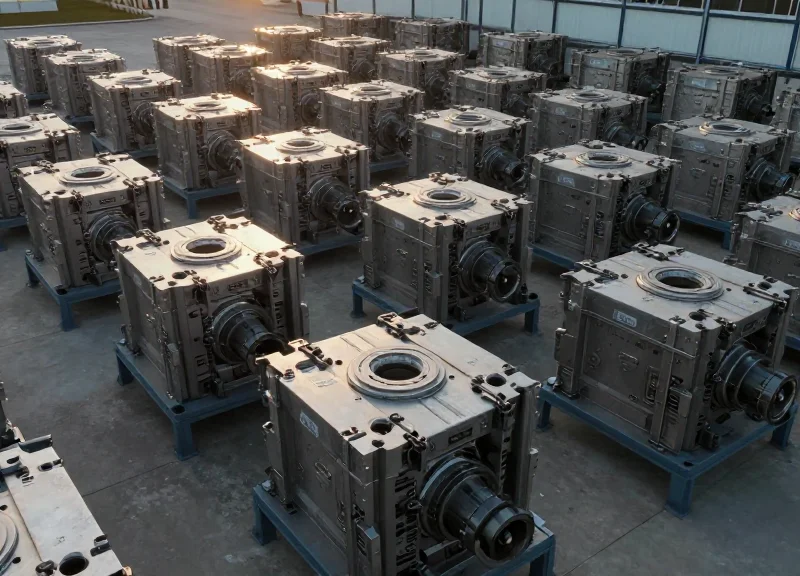
The evolution of asset tracking in mold management represents a strategic shift from reactive, paper-dependent workflows to proactive, real-time visibility powered by specialized Metal-Mount RFID technology. Historically, tracking heavy industrial molds relied on manual logs and visual inspections, methods that struggle to maintain accuracy above 70% in outdoor environments. Today, achieving 99.9% accuracy requires moving beyond line-of-sight barcodes to automated systems that can withstand metal interference and extreme weather conditions, effectively digitizing the physical yard.
For decades, the 'Gold Standard' for managing expensive injection molds or casting dies was a combination of whiteboards, Excel spreadsheets, and the tribal knowledge of yard foremen. While these manual systems worked for small inventories, they hit a breaking point as global supply chains demanded faster turnaround times and higher asset utilization. The introduction of barcodes was a step forward, but in outdoor industrial settings, they face a fatal flaw: environmental degradation. Sunlight, rain, and physical abrasion quickly render printed labels unreadable, leading to the same 'lost asset' scenarios that plagued the paper era.
| Feature | Manual/Paper Tracking | Standard Barcoding | Metal-Mount RFID |
|---|---|---|---|
| Data Capture | Handwritten Entry | Line-of-Sight Scan | Automated/Bulk Read |
| Outdoor Durability | Very Low | Moderate (Fades) | High (IP68/Rugged) |
| Accuracy Rate | ~60-75% | ~85-90% | 99.9% |
| Metal Interference | N/A | None | Shielded for Metal |
| Labor Requirement | Extremely High | High | Minimal/Automated |
The true catalyst for the current technological shift is the unique physics of the mold yard. Molds are massive heat-sinks of metal that reflect and distort standard radio frequencies. Early RFID attempts often failed because the metal surface 'de-tuned' the antenna. The evolution to Metal-Mount RFID solved this by using specialized spacers and antenna designs that actually leverage the metal surface to improve signal propagation. This move from 'tracking despite the metal' to 'tracking with the metal' is what finally enabled the 99.9% accuracy threshold required for modern industrial operations.
What is the 'Search Cost' in mold management?
In a manual yard, the 'Search Cost' is the cumulative labor expense of workers physically hunting for a specific mold. For a facility with 500+ assets, this can exceed $50,000 annually in lost productivity alone, an 'invisible' cost that Metal-Mount RFID eliminates by providing GPS-integrated sub-meter location data.
Why did barcodes fail in outdoor mold yards?
Beyond simple fading, barcodes fail due to 'environmental occlusion.' Dust, snow, or even oxidation on the mold surface prevents the optical laser from reading the code, necessitating manual overrides that introduce human error into the database.
How does digital automation impact asset lifecycle?
Automation moves tracking from 'Where is it?' to 'How is it performing?' By digitizing the check-in/out process, companies can track maintenance cycles based on actual usage rather than estimated timeframes, extending mold life by up to 25%.
Expert Insight: In my 20 years of observing Silicon Valley industrial implementations, the biggest mistake companies make is treating asset tracking as a 'scanning task' rather than a 'data flow.' The leap to 99.9% accuracy isn't just about the tag; it's about the removal of human touchpoints. When a forklift passes through an RFID portal and the system updates automatically without the driver stopping, you've achieved true digital transformation. This 'zero-friction' data capture is the hallmark of the most profitable modern manufacturing facilities.
The Physics of Failure: Why Standard RFID Fails on Metal and Outdoors

Standard Passive UHF RFID tags fail on metal surfaces because of a phenomenon known as electromagnetic detuning. When a standard dipole antenna is placed directly against metal, the metal acts as a ground plane that reflects the radio frequency energy. This reflection creates an out-of-phase signal that effectively cancels out the incoming wave from the RFID reader. Furthermore, the metal induces Eddy currents in the tag antenna, shifting its resonant frequency and preventing the chip from harvesting enough power to wake up and transmit its data.
| Feature | Standard RFID Label | Industrial Metal-Mount RFID |
|---|---|---|
| Interaction with Metal | Signal cancellation (Short-circuit) | Utilizes metal as an antenna booster |
| Read Range on Steel | 0 to 10 centimeters | Up to 10+ meters |
| Environmental Seal | Paper/Film (Permeable) | IP68/IP69K Encapsulation |
| Thermal Expansion | Adhesive failure/Cracking | Flexible or high-temp resins |
Beyond the electromagnetic hurdles, the outdoor environment presents a secondary layer of physical failure. Standard labels are typically constructed from polyester or paper, which succumb to UV degradation, causing the material to become brittle and the printed data to fade. In mold management, where assets are often stored in open yards, the constant cycle of thermal expansion and contraction (the 'breathing' of the metal) shears the adhesive bond of standard labels, leading to 'tag drop'—a scenario where the digital identity literally falls off the asset.
How does moisture affect signal accuracy in outdoor mold yards?
Water has a high dielectric constant. While standard tags are detuned by water droplets, metal-mount tags often use ceramic or specialized polymer housings that maintain a stable dielectric environment, ensuring consistent read rates even during heavy rain or snow.
Why can't I just use a thicker foam spacer with a standard tag?
While a spacer reduces interference, it doesn't eliminate it. Professional metal-mount tags are engineered so the antenna design accounts for the metal's parasitic capacitance, whereas a DIY spacer approach leads to unpredictable read ranges and 'dead zones' in the yard.
What is the impact of UV exposure on asset visibility?
UV radiation breaks down the polymer chains in standard adhesives. Within 6 months of outdoor exposure, a standard tag can lose 80% of its peel strength, leading to asset loss that the system cannot track.
Expert Insight: Achieving 99.9% accuracy requires more than just a signal; it requires managing the 'Impedance Match.' In outdoor mold management, we often see failures not because the tag is broken, but because the 'Backscatter Link Budget' was calculated for indoor conditions. Metal-mount tags specifically use a 'PIFA' (Planar Inverted-F Antenna) architecture that actually uses the mold's own surface area to strengthen the signal, turning a technical obstacle into a performance advantage.
Engineering the Solution: How Metal-Mount RFID Tags Defy Interference
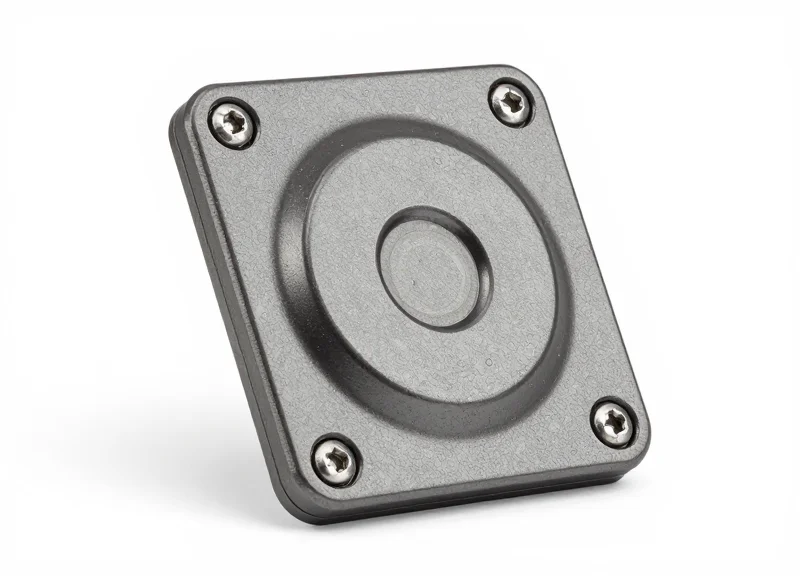
Metal-mount RFID tags defy interference by utilizing a specialized dielectric spacer that creates a physical and electromagnetic buffer between the tag's antenna and the metallic surface. While standard RFID tags suffer from signal cancellation and detuning when placed on metal, these engineered tags are designed to use the metal as a 'ground plane.' This configuration allows the tag to reflect radio frequency (RF) energy back toward the reader, significantly boosting the signal strength and ensuring a near-perfect 99.9% read accuracy in challenging outdoor industrial environments.
| Feature | Standard RFID Label | Engineered Metal-Mount Tag |
|---|---|---|
| Interaction with Metal | Signal absorbed or short-circuited | Signal reflected and amplified |
| Mounting Method | Direct adhesive to surface | Dielectric standoff/spacer |
| Read Range on Steel | Near zero (fails) | Up to 10-15 meters |
| Environmental Tolerance | Low (peels and cracks) | High (IP68 rated and UV resistant) |
The technical breakthrough lies in 'Impedance Matching' and antenna geometry. In a typical tag, metal causes eddy currents that oppose the tag's magnetic field, effectively killing the communication. Metal-mount tags, however, employ specialized antenna architectures—such as Planar Inverted-F Antennas (PIFA). This engineering ensures that the impedance of the antenna remains matched even when the tag is bolted to a massive steel mold. Instead of fighting the physics of the metal, the tag incorporates the asset's surface area into its own radiation pattern.
- High-Permittivity Dielectrics: These specialized materials slow down the electromagnetic wave within the tag, allowing the antenna to be physically compact while maintaining the correct resonant frequency for UHF bands.
- Encapsulated Ruggedization: For outdoor mold management, internal components are encased in high-impact polymers like ABS or polycarbonate to protect against physical strikes, moisture ingress, and thermal expansion.
- The Ground Plane Effect: By positioning the antenna at a precise fraction of the wavelength from the metal, the surface acts as a parabolic reflector, significantly increasing the tag's read range and reliability.
Expert Insight: The Thermal Frequency Drift Factor. A critical but often overlooked detail in outdoor mold management is that the dielectric constant of a tag's spacer can shift with temperature fluctuations. In extreme outdoor heat, a low-quality tag's resonant frequency can 'drift' away from the standard UHF band (e.g., 902-928 MHz), leading to missed reads despite the tag being physically intact. To achieve 99.9% accuracy, engineers must specify tags using thermally stable ceramics or engineered polymers that maintain a constant dielectric value from -40°C to +85°C. This prevents the metal mold from becoming an unintentional 'shield' due to temperature-induced detuning.
Durability in the Wild: IP Ratings and Material Resilience for Outdoor Use

In outdoor industrial environments, 'durability' is defined by a tag’s ability to maintain a hermetic seal against moisture and dust while resisting the degrading effects of ultraviolet (UV) radiation. Achieving 99.9% tracking accuracy requires metal-mount RFID tags that carry a minimum rating of IP68 or IP69K. These standards ensure that the internal circuitry remains isolated from environmental stressors such as torrential rain, humidity, and the high-pressure, high-temperature wash-downs common in heavy machinery maintenance. Without this structural integrity, moisture ingress will detune the antenna, leading to 'blind spots' where assets become invisible to the reader.
| Rating | Protection Level | Best Use Case for Mold Management |
|---|---|---|
| IP67 | Dust-tight; immersion up to 1m for 30 mins. | Standard outdoor storage with occasional rain exposure. |
| IP68 | Dust-tight; continuous immersion beyond 1m. | Long-term storage in flood-prone areas or heavy humidity. |
| IP69K | Protection against high-pressure (1450 psi), high-temp (80°C) jets. | Industrial molds subject to steam cleaning or chemical degreasing. |
Beyond ingress protection, the material science of the tag housing is paramount. Standard plastics like PVC will embrittle and crack within 18 months of direct UV exposure. For a multi-year ROI, tags should be encapsulated in high-performance polymers such as Polyphenylene Sulfide (PPS) or UV-stabilized Acrylonitrile Butadiene Styrene (ABS). These materials offer the chemical resistance necessary to survive exposure to hydraulic fluids, lubricants, and cleaning solvents often found on the factory floor and in outdoor storage yards.
Expert Insight: The CTE Mismatch Risk. A critical but rarely discussed failure point in outdoor RFID is the Coefficient of Thermal Expansion (CTE) gap. Metal molds expand and contract significantly when moving from a freezing winter yard into a high-heat production environment. If the tag's adhesive or housing doesn't account for this physical expansion, the bond will shear, causing the tag to fall off. For 99.9% accuracy, we recommend using high-shear acrylic foam tapes (like 3M VHB) or mechanical rivets that allow for micro-movements between the tag and the metal surface.
Does a higher IP rating improve the read range of the tag?
No, IP ratings specifically measure the physical protection of the enclosure. However, they indirectly protect read range by preventing internal corrosion and detuning caused by moisture, which would otherwise degrade performance over time.
How does UV resistance affect the lifespan of a metal-mount tag?
UV radiation breaks down the molecular bonds in low-grade plastics, leading to cracking. Once the shell cracks, the IP rating is void, and the antenna is exposed to the elements. UV-stabilized housings are essential for tags intended to last 5-10 years outdoors.
Can these tags withstand sub-zero temperatures?
Yes, high-quality outdoor RFID tags are typically rated for -40°C to +85°C. The primary concern in extreme cold is impact resistance; using ruggedized PPS housings prevents the tag from shattering if it is struck while brittle in cold temperatures.
The Path to 99.9% Accuracy: Integration Strategies for Industrial Readers

To reach a 99.9% read rate in outdoor mold management, integration must move beyond simple hardware installation to a specialized 'System-Oriented Approach.' In environments dominated by heavy metal molds, standard reader configurations fail due to multi-path interference and signal collisions. Achieving near-perfect accuracy requires the deployment of high-sensitivity industrial readers equipped with circular polarization to capture tags at any orientation, coupled with RSSI (Received Signal Strength Indicator) filtering to distinguish between a mold directly in front of the reader and a signal reflecting off a neighboring steel structure.
| Feature | Fixed Reader Arrays | Rugged Handheld Readers |
|---|---|---|
| Primary Use Case | Automated gate entry/exit tracking | Manual inventory audits & spot checks |
| Antenna Type | High-gain circular polarized (Far-field) | Linear or switchable circular |
| Ideal Environment | Narrow chokepoints and loading docks | Open storage yards and dense stacking |
| Accuracy Driver | Phase-based directionality sensing | Operator proximity and haptic feedback |
- Site Survey & RF Mapping: Conduct a dynamic RF survey to identify 'dead zones' and 'hot zones' caused by metal reflections. Map the yard to determine where signal bounce is most likely to cause ghost reads.
- Power Calibration (The 'Less is More' Rule): Avoid the common mistake of setting readers to maximum power. In metal environments, high power increases multipath interference. Tune the transmit power to the minimum level required to hit the target distance.
- Implementing RSSI Thresholding: Configure middleware to ignore any tag signals falling below a specific decibel threshold. This ensures the system only records 'strong' direct hits rather than weak reflected signals from distant molds.
- Edge Intelligence Filtering: Use reader-level algorithms to de-duplicate tag reads in real-time. If a tag is seen 50 times in 2 seconds, the reader should consolidate this into a single verified event before hitting the database.
Expert Insight: The Ghost Read Paradox. In 20 years of Silicon Valley industrial deployments, I have found that 'phantom reads'—detecting a tag that isn't actually there—are a bigger threat to 99.9% accuracy than missed reads. By utilizing Circularly Polarized antennas specifically, you mitigate the risk of the 'null zone' (where a tag is invisible due to its angle), but you must counter this with strict software-side 'Low Duty Cycle' settings to prevent the reader from over-energizing the environment and picking up tags through metal fences or around corners.
Will rain or snow affect the reader's accuracy?
Yes, water molecules absorb RF energy. To maintain 99.9% accuracy, industrial readers should be programmed with 'Environmental Profiles' that slightly boost gain during high-humidity or precipitation events.
How many antennas are needed per chokepoint?
For outdoor mold gates, a 4-antenna array (two on each side at varying heights) is the gold standard to ensure every angle of the mold is covered, regardless of how it is loaded on a transport vehicle.
Can I use standard Wi-Fi networks for data backhaul?
In outdoor yards, Wi-Fi is often unreliable. We recommend PoE (Power over Ethernet) for fixed readers or Private LTE/5G for handhelds to ensure the data reach the ERP without latency.
Real-Time Visibility: Streamlining Inventory and Maintenance Schedules

Real-time visibility in outdoor mold management is the seamless synchronization between an asset's physical location and its digital status, enabled by 99.9% accurate Metal-Mount RFID tracking. By integrating high-durability tags with centralized Asset Management (EAM) or ERP systems, organizations can instantly locate specific molds in sprawling outdoor yards and trigger automated maintenance workflows based on actual usage and environmental exposure. This eliminates the 'blind spots' that typically lead to lost production hours and premature tool degradation.
| Operational Metric | Legacy Manual Tracking | 99.9% Metal-Mount RFID |
|---|---|---|
| Inventory Cycle Time | 4-8 Hours (Manual Walkthrough) | 15-30 Minutes (Automated Scanning) |
| Data Accuracy | 80-85% (Human Error Prone) | 99.9% (Verified Digital Read) |
| Maintenance Trigger | Reactive or Date-Based | Proactive & Usage-Based |
| Asset Search Time | 30+ Minutes per Retrieval | Instant Location Identification |
The transition from reactive to proactive maintenance is where the ROI of high-accuracy RFID truly scales. When a mold is scanned at the production gate or moved within an outdoor storage zone, the system automatically logs its lifecycle stage. If a mold is nearing its 'shot count' limit or has been exposed to harsh outdoor elements for a specific duration, the system can autonomously flag it for inspection before it ever reaches the press, preventing catastrophic failures mid-cycle.
- Automated Check-In/Check-Out: Fixed RFID portals at storage gates automatically update the asset status as it moves from the yard to the factory floor, ensuring the digital twin always matches the physical location.
- Usage-Driven Maintenance Alerts: RFID data bridges the gap between the tool room and the yard, triggering service alerts based on the number of cycles completed or the elapsed time since the last refurbishment.
- Precision Inventory Reconciliation: Handheld readers allow staff to perform a full yard audit by simply driving a vehicle equipped with a long-range reader through the aisles, updating thousands of asset records in minutes.
Expert Insight: The Environmental Load Factor. A unique advantage of 99.9% tracking in outdoor environments is the ability to calculate 'Environmental Load.' By tracking exactly how long a mold sits in high-humidity or UV-intense outdoor zones via RFID timestamps, managers can apply a 'wear multiplier' to maintenance schedules. This ensures that assets stored outdoors in harsher conditions receive more frequent anti-corrosion treatments than those kept in climate-controlled areas, a level of precision impossible with manual logs.
Can RFID help if a mold is placed in the wrong storage bin?
Yes. With 99.9% accuracy, the system identifies the 'Last Seen' location and can trigger an 'Out of Zone' alert if a mold is placed in an incorrect area, allowing for immediate correction.
Does this integrate with existing ERP systems?
Modern RFID middleware is designed to pipe data directly into SAP, Oracle, or custom EAMs via APIs, ensuring your maintenance schedules are updated in real-time without manual entry.
How does visibility reduce capital expenditure?
By knowing exactly what you have and where it is, companies avoid the common 'ghost asset' problem where new molds are purchased because the existing ones cannot be found in the yard.
Cost-Benefit Analysis: The ROI of High-Precision RFID Investment
Return on Investment (ROI) for high-precision metal-mount RFID in outdoor mold management is defined by the intersection of labor efficiency, capital asset preservation, and production uptime. While the initial procurement of specialized metal-mount tags and industrial readers is higher than barcode or passive non-metal systems, the 'Payback Period' typically occurs within 12 to 18 months by eliminating 'ghost assets' and reducing the search-time labor costs that plague manual outdoor inventory processes.
| Metric | Manual/Barcode Tracking | High-Precision RFID (99.9%) |
|---|---|---|
| Average Search Time | 45-60 minutes per mold | < 2 minutes per mold |
| Annual Asset Loss Rate | 3% - 5% (Avg. $15k per mold) | < 0.1% Loss Rate |
| Inventory Audit Speed | Days/Weeks (Labor Intensive) | Hours (Real-Time) |
| Maintenance Compliance | Reactive/Paper-based | Proactive/Automated Alerts |
To calculate the true value, organizations must look beyond the unit price of a tag and analyze the three primary pillars of cost recovery: labor reallocation, asset replacement avoidance, and lifecycle optimization.
- Labor Cost Reduction: In large outdoor yards, workers spend an average of 15% of their shift simply locating tools. High-precision RFID allows for rapid-fire location, reclaiming hundreds of man-hours per year that can be redirected to higher-value production tasks.
- Mitigation of Capital Expenditure (CapEx): Industrial molds can cost between $10,000 and $100,000. Losing just one mold due to poor visibility can negate the entire cost of an RFID system implementation. High-precision tracking ensures 99.9% asset retention.
- Extended Asset Lifecycle: Automated data logging ensures molds are serviced based on actual usage cycles rather than estimates. This precision prevents premature wear and extends the functional life of the asset by 20-30%.
Expert Insight: The 'Inventory Buffer' Multiplier. Most facility managers maintain a 5-10% excess mold inventory to account for lost or misplaced assets. By achieving 99.9% tracking accuracy, companies can safely reduce this buffer, freeing up millions in tied-up capital that was previously held as 'insurance' against poor visibility.
Is the higher cost of metal-mount tags justified for small molds?
Yes, because signal interference from metal surfaces makes standard tags unreadable. A cheap tag that provides 0% visibility has a negative ROI, whereas a metal-mount tag provides the 99.9% accuracy required for operational reliability.
How does weather resistance impact the long-term ROI?
Tags with IP68/69K ratings prevent premature failure in outdoor environments. Investing in ruggedized tags reduces the 'replacement rate' of the tags themselves, ensuring the system remains maintenance-free for 5-10 years.
What is the biggest hidden cost in mold management?
Production downtime. If a manufacturing line is ready to run but the specific mold cannot be found in the outdoor yard, the cost of the idle line can exceed $10,000 per hour, far outweighing any RFID infrastructure costs.
Implementing a Future-Proof System: Software and Cloud Integration
Implementing a future-proof software architecture for RFID-enabled mold management involves bridging the gap between physical tag reads and enterprise decision-making through high-performance middleware and scalable cloud platforms. By centralizing data from outdoor readers, organizations can transition from reactive tracking to proactive asset orchestration, ensuring that 99.9% accuracy at the reader level translates into 100% operational transparency across the global supply chain.
The true 'brain' of an outdoor RFID system is the middleware. In rugged environments where metal interference and signal bounce are common, middleware serves as a sophisticated filter. It utilizes Low Level Reader Protocol (LLRP) to communicate with hardware, deduplicating 'ghost reads' and normalizing data before it ever reaches your ERP or WMS. Without this layer, your database would be flooded with redundant entries, slowing down system performance and obscuring real-time asset locations.
| Feature | On-Premises Middleware | Cloud-Native Integration |
|---|---|---|
| Latency | Ultra-low; ideal for high-speed automated lines. | Slightly higher; dependent on internet stability. |
| Scalability | Limited by physical server capacity. | Virtually infinite; scales with asset volume. |
| Global Visibility | Requires VPN or complex networking. | Native access from any location or device. |
| Maintenance | High; requires internal IT management. | Low; managed by the SaaS provider. |
- API-First Architecture: Ensure your RFID software utilizes RESTful APIs to allow seamless data flow between the RFID middleware, your ERP (like SAP or Oracle), and maintenance management systems (CMMS).
- Edge Computing Deployment: Deploy logic at the 'edge'—directly on the readers—to process data locally in outdoor yards. This reduces bandwidth consumption and ensures tracking continues even if the cloud connection flickers.
- Data Normalization and Security: Implement TLS 1.3 encryption for all data in transit from the outdoor reader to the cloud, ensuring that sensitive asset movements are protected from interception.
Expert Insight: The 'Digital Twin Buffer' Strategy. To truly future-proof your system, don't just track location; create a Digital Twin of every mold. Use your cloud platform to attach telemetry data—such as total outdoor exposure time, temperature cycles, and strike counts—to the RFID tag ID. This creates a historical ledger that predicts mold failure before it happens, a strategy known as 'Condition-Based Monitoring' that standard location tracking cannot achieve.
Can we integrate RFID data with our existing SAP or Microsoft Dynamics system?
Yes. Modern RFID middleware is designed to output data in formats like JSON or XML, which can be ingested by major ERPs via standard API connectors or flat-file transfers.
How does the system handle data if the outdoor Wi-Fi goes down?
Future-proof systems utilize 'Store-and-Forward' logic. The reader or local edge gateway buffers the tag data internally and automatically syncs it to the cloud once connectivity is restored.
What is the benefit of a web-based dashboard for mold management?
A cloud-based dashboard provides a single version of truth, allowing managers in different geographic regions to see the exact status and location of molds in real-time without needing specialized software installed.
Choosing the Right Partner: What to Look for in Metal-Mount RFID Hardware
To achieve 99.9% tracking accuracy in outdoor mold management, selecting a hardware partner requires moving beyond simple procurement to strategic engineering. The ideal partner must provide specialized metal-mount RFID tags that utilize high-dielectric materials to prevent signal interference from the molds themselves, while offering a ruggedized form factor capable of withstanding UV exposure, chemical washes, and extreme temperature fluctuations typical of industrial outdoor storage.
| Selection Criteria | Commodity Supplier | Strategic Industrial Partner |
|---|---|---|
| Technical Expertise | Catalog-based sales | Custom RF antenna tuning for specific metal alloys |
| Durability Testing | Standard IP67 claims | Accelerated aging and mechanical stress validation |
| Customization | Limited to standard sizes | Bespoke attachment methods (weld-on, rivet, high-bond) |
| Support Scope | Transactional / Return-to-base | On-site RF environment site surveys and optimization |
Expert Insight: The Substrate Matching Principle. A common mistake is assuming all metal-mount tags are universal. In reality, the specific alloy of your molds (e.g., P20 steel vs. aluminum) significantly impacts the tag's resonance. A top-tier partner will offer 'substrate-matched' tuning, ensuring the tag's antenna is optimized for the exact electromagnetic properties of your specific asset class, which is often the difference between 95% and 99.9% read rates.
- Validate Engineering Pedigree: Ensure the partner owns their IP and design process. You need access to engineers who understand the physics of RF on metal, not just sales representatives.
- Assess Customization Capabilities: Molds come in various shapes. Your partner should provide options for tag form factors that can be recessed or flush-mounted without losing signal integrity.
- Verify Industrial Track Record: Request case studies specifically involving outdoor metal asset tracking. A tag that works in a climate-controlled warehouse will likely fail in an outdoor yard within 18 months.
- Test for Longevity: Inquire about 'Mean Time Between Failure' (MTBF) data and the specific grade of epoxy or polymer used to encapsulate the RFID chip.
What IP rating is necessary for outdoor molds?
While IP67 is standard, IP69K is recommended for molds that undergo high-pressure steam cleaning or heavy chemical degreasing during maintenance cycles.
How do I know if a tag will stay attached for 10 years?
Look for partners who offer mechanical attachment options like rivet holes or specialized industrial adhesives that have been tested for shear strength at high temperatures.
Can I use the same partner for readers and tags?
While not mandatory, selecting a partner with a holistic ecosystem ensures that the reader's firmware is pre-optimized for the specific backscatter profiles of the metal-mount tags being used.