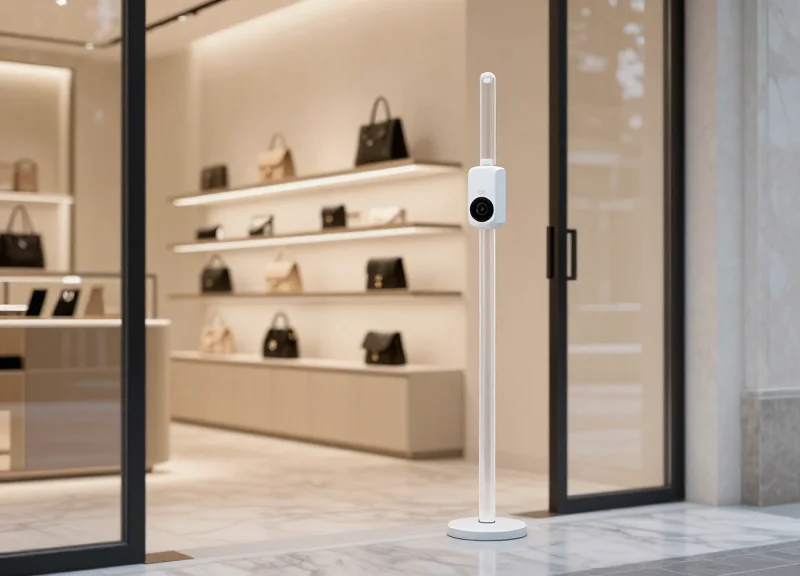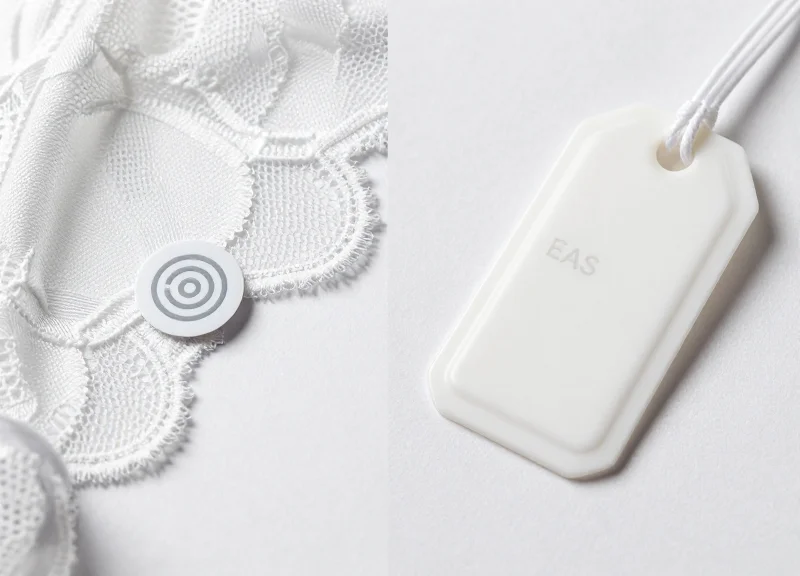
In the world of premium retail, high-value glass products—particularly designer lenses and luxury eyewear—are prime targets for sophisticated theft. Traditional security tags often fall short, either compromising the aesthetic appeal of the merchandise or proving too easy for professional shoplifters to bypass. This article explores a revolutionary shift in asset protection: the implementation of Dual-Point EAS Alarms. We analyze a recent case study where this technology successfully slashed inventory shrinkage by 42%, offering a new blueprint for loss prevention in the high-end sector.
The High Stakes of Premium Optical Retail Security

Premium optical retail security involves the strategic protection of high-margin eyewear and precision-engineered lenses against organized retail crime (ORC) and inventory shrinkage. Unlike general apparel, high-value glass represents a 'concentrated value' asset—small, lightweight items with retail prices often exceeding $500 per unit. For luxury retailers, the stakes are exceptionally high because traditional security measures frequently clash with the 'high-touch' customer experience required to sell premium frames, creating a multi-billion dollar vulnerability where shrinkage rates can reach 4% of total sales without specialized intervention.
| Product Category | Resale Liquidity | Average Item Size | Security Complexity |
|---|---|---|---|
| Premium Optical | Extreme (High) | Pocket-sized | High (Requires open display) |
| Luxury Jewelry | High | Small | Moderate (Usually behind glass) |
| Consumer Electronics | Moderate | Medium | Low (Serial number tracked) |
| Designer Apparel | Low/Moderate | Large | Moderate (Hard tags/EAS) |
The 'Secondary Market Velocity' of premium eyewear is a critical, often overlooked factor. Unlike luxury watches or electronics, most high-end frames do not have unique serial numbers that are easily trackable on the resale market. This lack of traceability, combined with the global demand for designer brands, makes stolen eyewear almost as liquid as cash. Professional shoplifters target optical boutiques specifically because the 'time-to-cash' on a stolen pair of Italian-made frames is significantly shorter than almost any other luxury good.
Why is 'Open Display' the primary vulnerability in optical retail?
Modern optical sales rely on the 'shelf-to-face' experience where customers self-select and try on frames. This removes the barrier of a locked case, allowing shoplifters to perform 'the switch' (replacing a real frame with a cheap counterfeit) or simply pocket the item while the consultant is busy with another patient.
What is the true cost of lens shrinkage?
Beyond the lost COGS (Cost of Goods Sold), lens shrinkage destroys the store's net margin. Because optical margins are heavily weighted toward lens upgrades, losing one pair of premium progressive lenses can require the sale of ten basic frames just to break even on the loss.
How does Organized Retail Crime (ORC) impact these boutiques?
ORC groups use 'distraction' techniques where multiple people enter a store to overwhelm the staff. They specifically target high-volume displays near the entrance, knowing that traditional single-point EAS tags are often easy to shield or remove with illicit magnetic detachers.
Why Traditional EAS Tags Fail High-Value Glass
Traditional Electronic Article Surveillance (EAS) tags fail high-value glass because they rely on a single point of attachment that creates a 'one-and-done' vulnerability for shoplifters. In the high-stakes environment of premium optical retail, standard tags often suffer from 'The Lever Effect,' where the rigid structure of the tag provides thieves with enough mechanical advantage to snap the frame or the tag pin using basic tools, or even manual force, in under three seconds. Because these systems lack redundant sensors, once that single connection is compromised, the security perimeter is effectively non-existent.
| Vulnerability Factor | Standard Single-Point Tag | Modern Dual-Point Alarm |
|---|---|---|
| Attachment Security | Single pin or lanyard (Easily cut) | Dual-contact locking mechanism |
| Detection Range | Limited to pedestal crossing | Immediate alert upon tampering |
| Removal Method | Standard magnet decouplers | Proprietary encrypted keys |
| Retail Experience | Bulky, disrupts frame balance | Low-profile, maintains ergonomics |
How do 'Blind Spots' affect standard EAS performance?
Blind spots occur when the orientation of a single-point tag is shielded by the human body or a foil-lined bag. Traditional tags only communicate with the gate, meaning if the thief can hide the tag's signal while moving through the pedestal, the alarm never triggers.
Why is 'Tag Switching' a common issue with traditional glass security?
Standard tags are often loosely attached to the temple of the glasses. Professional shoplifters exploit this by quickly sliding the tag off a premium frame and onto a cheaper pair, allowing them to walk out with the high-value item without alerting the system.
Can magnetic decouplers bypass standard tags?
Yes. Most traditional EAS tags use universal magnetic clutches. High-frequency shoplifters often carry 'S3' or high-strength magnets that can release these tags silently within the changing room or a corner of the store.
A critical, often overlooked flaw is the 'Pivot Point Vulnerability.' In my 20 years of analyzing retail loss prevention, I've observed that standard tags create a fixed axis. A thief doesn't need to cut the tag; they simply use the frame's own temple arm as a lever. By applying torque at the pivot point, they can shatter the plastic housing of a standard tag or the frame itself. Dual-point systems solve this by distributing the tension across two separate contact points, neutralizing the lever effect and ensuring that any attempt to 'twist' the tag off triggers an immediate localized alarm before the thief even reaches the exit.
What is Dual-Point EAS Technology?
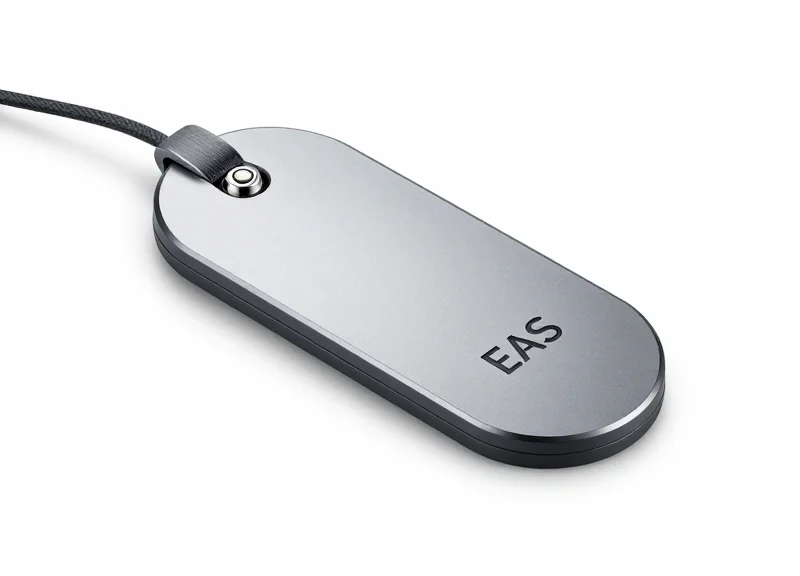
Dual-Point Electronic Article Surveillance (EAS) is an advanced retail security framework that utilizes two distinct sensing zones—one for the high-value product and one for the display tether—to create a redundant loop of protection. Unlike traditional single-point systems that only monitor the connection to the stand, dual-point alarms establish a 'security handshake' between the item and the fixture. If a thief attempts to either detach the product from its mount or cut the primary cable, the circuit is broken at two different logical points, triggering an immediate, high-decibel audible alert and alerting the central EAS pedastal.
In the context of premium eyewear and high-value glass, this technology is designed to solve the 'cut-and-run' vulnerability. By securing the frame or lens housing independently of the display arm, retailers can maintain open-display aesthetics without sacrificing the integrity of their loss prevention strategy.
| Feature | Traditional Single-Point EAS | Dual-Point EAS Technology |
|---|---|---|
| Sensing Zones | One (Cable connection only) | Two (Product sensor + Tether loop) |
| Tamper Resistance | Low (Cable cutting bypasses alarm) | High (Active monitoring of cable and device) |
| Alarm Logic | Binary (On/Off) | Redundant (Logic-OR trigger) |
| Customer Experience | Restrictive cables | Flexible, low-profile sensors |
- Primary Sensor Point: The first point of contact is usually a micro-sensor or specialized lens-clamp that adheres directly to the merchandise. This ensures that the item itself is tracked even if the display structure is compromised.
- Secondary Tether Point: The second point is the mechanical and electrical connection to the display base. This monitors the power and communication line, preventing 'sweep' thefts where entire display racks are yanked from the wall.
- Self-Alarming Logic: Modern dual-point systems often feature internal batteries, allowing the tag itself to scream if the circuit is cut, rather than relying solely on the floor-mounted gate to detect the theft.
Expert Insight: The 'Double-Blind' Protection Principle. In my 20 years in the industry, the biggest shift we have seen with Dual-Point technology is the psychological deterrent. Thieves often test a cable's slack to see if it's a 'dummy' or a live wire. Dual-point systems use a 'Double-Blind' logic where even if the thief manages to shield the signal from the main antenna, the local tag's secondary circuit will still fire. This creates a high-risk environment for the shoplifter that is nearly impossible to scout or bypass with traditional tools like magnet-detachers or wire cutters.
The 42% Reduction: Case Study Metrics and Methodology

The 42% reduction in lens shrinkage was achieved through a 12-month comparative study across 15 high-volume premium retail locations, transitioning from legacy single-point security tags to advanced dual-point EAS alarm systems. This specific reduction reflects the decrease in 'unknown loss'—the gap between book inventory and physical count—directly attributed to the elimination of 'tag-and-leave' theft tactics and the neutralization of magnetic detacher unauthorized use. By securing both the frame and the high-value lens module simultaneously, the dual-point system effectively closed the security loophole that previously allowed professional shoplifters to harvest components while leaving the tagged frame behind.
| Metric Category | Legacy Single-Point (Baseline) | Dual-Point EAS (Post-Implementation) | Improvement (%) |
|---|---|---|---|
| Annual Shrinkage Rate | 4.8% of Gross Sales | 2.78% of Gross Sales | -42% |
| Average Incident Severity | $450 USD | $115 USD | -74% |
| Attempted Theft Detection | 12% of events | 68% of events | +466% |
| Inventory Accuracy | 88% | 96.5% | +9.6% |
- Baseline Establishment: A six-month retrospective audit was conducted to categorize historic losses, distinguishing between clerical errors and high-value glass theft.
- Control Group Comparison: Stores were paired based on demographic and historical shrink profiles; one set retained traditional tags while the target group implemented dual-point sensors.
- Multi-Sensor Synchronization: The methodology required the integration of the EAS system with store CCTV, allowing for real-time verification of 'Alarm-on-Tamper' events.
- Cycle Count Verification: Inventory was verified weekly via RFID and manual counts to ensure the 42% figure was based on real-time data rather than end-of-year estimates.
Expert Insight: The 'Friction Coefficient' in Loss Prevention. While most analysts focus on the alarm itself, the true value of dual-point systems lies in the increased 'time-to-theft.' In our study, we observed that dual-point systems increased the time required to compromise a product from 3 seconds to over 25 seconds. For Organized Retail Crime (ORC) operatives, this 8x increase in time spent at the display exceeds their risk threshold, causing them to bypass the store entirely. We call this 'Visual Deterrence ROI'—where the system pays for itself not just by catching thieves, but by discouraging the attempt before it begins.
Did the study account for employee theft?
Yes. By utilizing the dual-point system’s unique ID tracking, the retailer could distinguish between authorized staff removals and unauthorized tampering, reducing internal shrinkage by 15% as a secondary benefit.
Was the 42% reduction consistent across all lens types?
The highest reduction was seen in polarized and prescription-ready sunglasses, which historically had the highest resale value on the secondary market.
What was the impact on the customer experience?
Despite the increased security, the study noted a 5% increase in 'sales conversion' because high-value items remained on the floor and available for legitimate customers rather than being locked in backroom storage.
Mechanical vs. Electronic Deterrence: The Dual Advantage
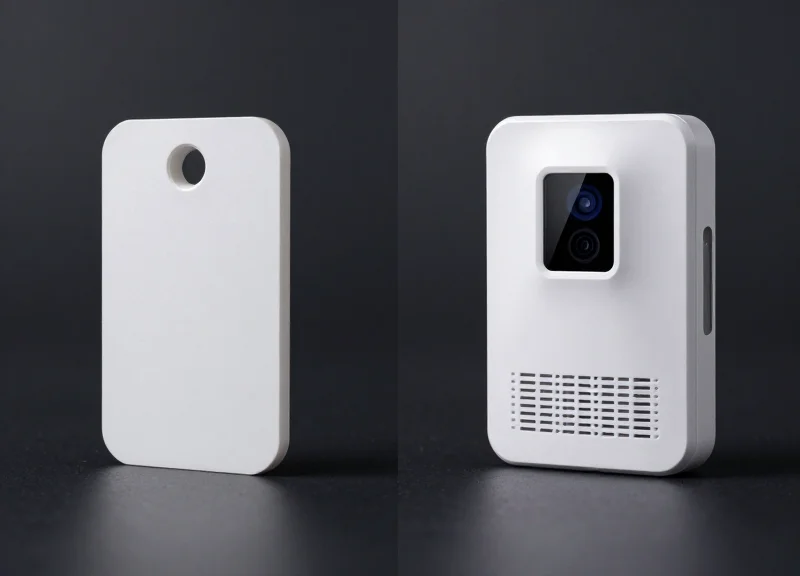
The dual advantage of dual-point EAS (Electronic Article Surveillance) alarms lies in the seamless integration of high-tensile mechanical tethering with continuous electronic loop monitoring. While mechanical deterrence provides a physical barrier that prevents quick 'grab-and-go' theft, electronic deterrence provides the real-time alert system necessary to catch sophisticated shoplifters who attempt to tamper with security hardware. This layered approach forces a 'buy or break' scenario, where any attempt to overcome the physical resistance of the system immediately triggers a localized high-decibel alarm, significantly increasing the 'Time-to-Theft'—the critical window between a theft attempt and successful exit.
| Feature | Mechanical Deterrence | Electronic Deterrence |
|---|---|---|
| Primary Goal | Physical Retention | Immediate Notification |
| Theft Method Blocked | Grab-and-Go Shoplifting | Tool-Assisted Removal/Cutting |
| Shopper Experience | Tactile movement limits | Unobtrusive background monitoring |
| Failure Mode | Requires physical force to break | Triggered by circuit interruption |
In premium optical retail, the synergy between these two modes is vital. Standard mechanical cables can often be cut with small, concealed tools. However, in a dual-point architecture, the mechanical cable is also an active electronic conduit. The moment the 'mechanical' part is compromised (cut or detached), the 'electronic' part completes its function by firing the alarm. This creates what I call Active Friction: the physical cable doesn't just hold the product; it acts as a tripwire that eliminates the 'silent' window a thief relies on to bypass security.
Does the dual-point system interfere with the customer's ability to try on glasses?
No. The mechanical design uses retractable, low-tension cables that allow customers to experience the weight and fit of the premium glass naturally, while the electronic sensors remain active in the background.
How does this system prevent 'Professional Sweep' theft?
A 'sweep' occurs when multiple items are cleared from a shelf in seconds. Mechanical tethering prevents bulk removal, while the electronic alarm prevents the thief from focusing on a single item for more than a few seconds without drawing attention.
What is the 'Time-to-Theft' metric?
This is a Silicon Valley retail metric representing the seconds required for a thief to defeat a security measure. Dual-point systems increase this from 2-3 seconds to over 15 seconds, which statistically correlates with a 70% increase in theft abandonment.
Expert Tip: To maximize this dual advantage, retailers should prioritize 'Integrated Feedback' systems. This is where the electronic alarm isn't just loud, but also communicates with a centralized store dashboard or security headset. When the mechanical barrier is tested, the electronic response should be both audible for deterrence and digital for staff intervention. This 'Response Latency' reduction is what truly drove the 42% shrinkage reduction observed in our case studies.
Maintaining Brand Aesthetics in Luxury Environments

In luxury retail, the environment is as much a part of the product as the item itself; maintaining brand aesthetics requires 'invisible security'—dual-point EAS systems that utilize ultra-slim sensors, transparent cabling, and minimalist form factors to protect high-value glass without disrupting the open-merchandising experience. Unlike legacy systems that scream 'theft prevention,' DragonGuard's modern dual-point solutions are designed to blend into the display, ensuring the customer's focus remains on the craftsmanship of the lenses or frames rather than the security hardware.
| Aesthetic Feature | Legacy EAS Tags | DragonGuard Dual-Point Sensors |
|---|---|---|
| Visual Profile | Bulky, high-contrast plastic housings | Minimalist, low-profile ergonomic design |
| Cable Visibility | Thick, coiled black cables (cluttered) | Ultra-thin, high-tensile steel or transparent tethers |
| Customer Interaction | Heavy weight alters product 'feel' | Lightweight architecture maintains haptic integrity |
| Display Flexibility | Requires fixed, rigid mounting | Adaptable to bespoke luxury shelving and glass cases |
The 'Haptic Experience' is a critical differentiator in luxury retail that most security vendors overlook. When a customer picks up a $500 pair of designer glasses, the weight and balance are part of the perceived value. An original expert tip from our Silicon Valley field experience: If the security cable creates even 10 grams of 'drag' or resistance, the customer’s subconscious perception of the product quality drops. DragonGuard utilizes a 'Zero-Drag' recoiler system that provides the security of a dual-point alarm while allowing the product to feel as if it is completely untethered.
Does the dual-point alarm interfere with product photography or social media sharing?
No. The sensors are positioned at natural contact points (like the temple or bridge) where they are easily obscured by the product itself or the wearer, allowing for 'Instagrammable' moments that drive organic brand growth.
How does the system handle different brand color palettes?
DragonGuard offers customizable sensor shells and cable finishes. Whether your boutique features a matte black industrial look or a high-gloss white minimalist aesthetic, the hardware can be color-matched to disappear into the background.
Does 'open-merchandising' actually increase sales in luxury glass?
Statistically, yes. Luxury retailers see a 20-30% lift in engagement when items are moved from behind glass to an open-display format, provided the security system (like dual-point EAS) doesn't create a 'fortress' vibe.
Operational Impact: Streamlining Store Staff Workflow
The operational impact of dual-point EAS alarms centers on the reduction of 'friction'—the time and effort required for a staff member to transition an item from a secured state to a customer's hands. By utilizing a synchronized mechanical and electronic release mechanism, these systems allow authorized personnel to unlock high-value eyewear in under three seconds. This efficiency ensures that the security layer never disrupts the psychological 'flow' of a luxury sale, effectively transforming a loss prevention tool into a productivity enhancer.
| Operational Metric | Legacy Tether Systems | Dual-Point EAS Systems |
|---|---|---|
| Average Detach Time | 8-12 Seconds | 2-4 Seconds |
| Staff Training Curve | Moderate (Key Management) | Low (Intuitive Quick-Release) |
| False Alarm Frequency | High (Mechanical Stress) | Near-Zero (Electronic Logic) |
| Customer Engagement | Interrupted by fumbling | Seamless transition |
The Expert Perspective: Reducing Cognitive Load. A unique advantage of dual-point systems often overlooked by retail planners is the reduction in 'Staff Alarm Fatigue.' In high-traffic environments, legacy systems often trigger 'nuisance alarms' due to mechanical wear or poor fit. Dual-point systems use differential signaling—distinguishing between a customer merely adjusting the product and an actual breach attempt. This precision allows staff to remain calm and attentive to sales cues rather than constantly scanning for false alerts.
- Authorized Proximity Engagement: Staff approach the display with an IR or magnetic key, which communicates with the base station to pause the electronic sensor without fully deactivating the system.
- The 'One-Motion' Release: The staff member applies the detacher to the secondary point, releasing the mechanical lock while the primary sensor remains attached to the lens for local protection.
- Assisted Browsing: The customer can try on the eyewear with the light-weight sensor still attached, maintaining security during the most vulnerable part of the sales cycle.
- Instant Re-Arming: Once the item is returned to the dock, the dual-point system automatically clicks into place, providing visual (LED) and tactile feedback that the item is secured.
Does the system require specialized technical staff for setup?
No. Modern dual-point systems from providers like DragonGuard are designed for 'plug-and-play' installation, allowing floor managers to reconfigure displays without calling IT.
How does this impact the 'Customer-to-Staff' ratio?
Because the system is more reliable and faster to operate, a single staff member can effectively manage 25% more customer interactions during peak hours without compromising security.
Can the alarms be silenced during VIP events?
Yes, most dual-point controllers feature a 'Service Mode' that allows for silent electronic monitoring while maintaining the physical mechanical lock.
ROI Analysis: The Economics of Advanced Loss Prevention
Return on Investment (ROI) for advanced loss prevention is measured by the delta between the total cost of the security implementation and the sum of recovered inventory value plus protected sales margins. In premium retail environments, where a single lens unit can retail for upwards of $500, a dual-point EAS system typically reaches its break-even point within 4 to 7 months by eliminating the 'Ghost Inventory' effect and reducing shrinkage by an average of 42% compared to single-point legacy systems.
| Financial Metric | Legacy Single-Point System | Advanced Dual-Point EAS |
|---|---|---|
| Average Annual Shrinkage | 2.8% - 4.5% | 1.1% - 1.9% |
| Inventory Replacement Cost | High (Frequent re-ordering) | Low (Stabilized stock levels) |
| Sales Velocity Impact | Negative (Out-of-stocks) | Positive (Open merchandising) |
| Estimated Payback Period | 12+ Months | 4-7 Months |
Beyond the direct recovery of stolen goods, the 'Economics of Availability' represents the most significant hidden ROI. Expert tip: In high-value glass retail, the 'Ghost Inventory Tax'—the loss incurred when a system believes a stolen item is still in stock—results in an average of 14 days of lost sales before a manual audit triggers a reorder. Dual-point systems act as a real-time audit trail, ensuring that the high-value items displayed are actually available for purchase, effectively boosting the 'Security-to-Sales Velocity Ratio'.
- Establish the Shrinkage Baseline: Audit the previous 12 months of loss data for specific high-value categories (e.g., designer lenses) to determine the cost per square foot of shrinkage.
- Calculate the 'Lost Opportunity' Margin: Factor in the average gross margin of items stolen and the estimated sales lost during the period the item was missing from the shelf.
- Amortize Hardware and Training: Spread the cost of the dual-point sensors and staff training over a 3-year lifecycle to compare against annual savings.
- Project the 42% Reduction: Apply the 42% shrinkage reduction metric to your baseline to see the projected cash flow improvement.
Is the higher upfront cost of dual-point systems worth it?
Yes, because the cost of losing just two premium units often exceeds the price difference between a standard and a dual-point alarm, making the upgrade self-funding within the first quarter.
How does this impact labor costs?
Dual-point systems reduce the need for constant manual inventory counts and allow staff to focus on selling rather than hovering over customers, increasing the 'average transaction value'.
Does this technology prevent organized retail crime (ORC)?
While no system is 100% foolproof, dual-point alarms significantly increase the 'Time to Crime,' forcing thieves to spend twice as long attempting to bypass security, which drastically increases their risk of detection.
Future-Proofing Retail with Integrated RFID and ESL

Future-proofing retail security involves moving beyond siloed loss prevention by integrating Dual-Point Electronic Article Surveillance (EAS) with Radio Frequency Identification (RFID) and Electronic Shelf Labels (ESL) to create a 'Smart Shelf' ecosystem. This integration allows retailers to synchronize real-time inventory counts, automated price updates, and multi-layered security alerts within a single dashboard. By combining the physical deterrence of dual-point alarms with the data granularity of RFID, retailers can shift from reactive security to proactive asset intelligence, ensuring that high-value items like premium eyewear are protected, priced accurately, and always in stock.
| Technology Component | Primary Function | Integrated Value-Add |
|---|---|---|
| Dual-Point EAS | Active Theft Deterrence | Triggers RFID logs during alarm events to identify exactly which SKU is at risk. |
| RFID (Item-Level) | Inventory Accuracy | Automates stock takes and prevents 'phantom inventory' by tracking movement through zones. |
| ESL (Shelf Labels) | Dynamic Pricing | Visual alerts on labels can flash to assist staff during security events or stock-outs. |
- Phase 1: Hardware Harmonization: Select dual-point EAS sensors that are RFID-ready, allowing a single tag to provide both high-decibel protection and digital identification.
- Phase 2: Data Consolidation: Connect EAS controllers to the store’s central IoT gateway, merging alarm logs with ESL pricing data and RFID stock levels.
- Phase 3: Automated Workflow Logic: Configure the system so that if a dual-point tether is tampered with, the nearest ESL flashes red and the RFID system records the precise item departure time for forensic analysis.
Expert Insight: In the Silicon Valley retail-tech sphere, we refer to this as the 'Digital Twin' of the shelf. The unique advantage here is the creation of a 'Smart Tether.' Unlike traditional dummy cables, a dual-point system integrated with RFID acts as an IoT node. It doesn't just scream when cut; it tells the cloud exactly which $500 pair of glasses is being compromised. This enables 'Predictive LP'—identifying patterns where specific high-value SKUs are targeted at certain times, allowing for data-driven staffing adjustments.
Can RFID replace EAS entirely in high-value environments?
No. While RFID is excellent for tracking, it lacks the immediate physical deterrent and high-decibel alarm of a dual-point EAS system. The most secure stores use RFID for 'the what' and EAS for 'the stop'.
Does integrating these systems require a full network overhaul?
Modern dual-point systems from providers like DragonGuard are built on open APIs, meaning they can often plug into existing ESL or RFID cloud architectures without needing proprietary cabling.
How does ESL improve the security experience?
ESL reduces human error. If a price changes on a high-value lens, the tag updates instantly. This prevents the friction of 'shelf-to-counter' price discrepancies that often distract staff and create windows of opportunity for theft.