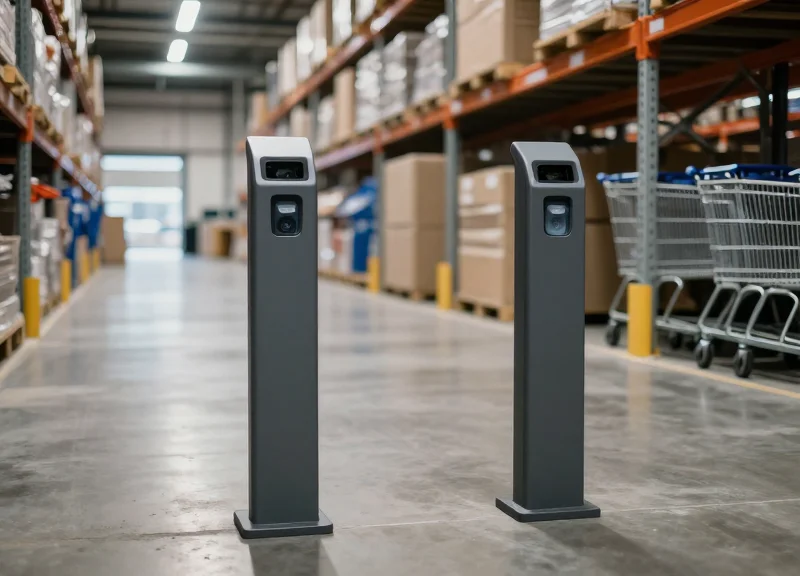
For decades, the high-pitched chirp of an Electronic Article Surveillance (EAS) pedestal has been the standard signal for retail loss prevention. But in an era of organized retail crime (ORC) and frictionless checkout, a simple 'beep' is no longer enough. Standalone security systems are reactive, often ignored, and prone to false alarms. As we look toward 2026, the industry is undergoing a seismic shift. Next-gen Vision-Integrated EAS—a powerful fusion of computer vision, AI, and traditional sensor technology—is rapidly replacing legacy hardware. This evolution moves retail security from reactive alarms to proactive, data-driven intelligence that protects margins and enhances the customer experience.
The Evolution of Retail Security: From Pedestals to Intelligence
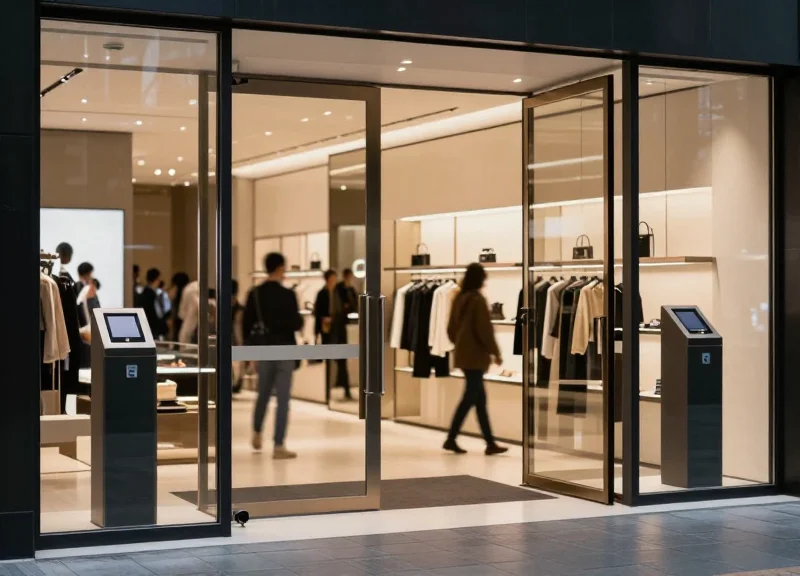
The evolution of retail security represents a shift from passive deterrence to proactive intelligence. Historically, Electronic Article Surveillance (EAS) relied on 'standalone' pedestals at storefronts that triggered an audible alarm whenever an active tag passed through the gates. While effective for decades, this binary approach—either the alarm is on or off—lacks the context required for modern high-shrink environments. Next-gen vision-integrated EAS replaces these blind sensors with computer vision and AI, transforming the security gate from a simple 'beep' machine into a sophisticated data hub that identifies specific items, tracks suspect behavior, and filters out false positives in real-time.
| Feature | Traditional Standalone EAS | Vision-Integrated Intelligence |
|---|---|---|
| Detection Method | RF/AM Signal only | Multi-sensor (RF/AM + Computer Vision) |
| Response Type | Reactive (Alarm sounds after exit) | Proactive (Alerts triggered by behavior) |
| Data Granularity | Binary (Yes/No alarm) | Rich (Item SKU, direction, time, intent) |
| False Alarm Management | Requires manual staff intervention | Automated visual verification |
In the Silicon Valley 'old guard' of retail tech, we viewed security as a friction point—something that slowed down the customer to protect the margin. However, the current retail landscape is plagued by 'The Information-Action Gap.' Traditional pedestals tell you a theft might be happening, but they don't tell you what is leaving the store or who is taking it. This lack of actionable data leads to 'alarm fatigue,' where employees eventually ignore the beeps because 95% of them are false positives caused by poorly deactivated tags or interference. By 2026, the labor cost of manually investigating these false alarms will outweigh the cost of upgrading to vision-based systems that offer 99% accuracy.
Why is the 'Standalone' era ending by 2026?
Standalone systems are blind to 'organized retail crime' (ORC) tactics like 'pushouts' and 'tag shielding.' As AI hardware becomes more affordable, the ROI of a system that can visually confirm a theft outweighs the lower upfront cost of a legacy pedestal.
What is the 'Blind Alarming' problem?
This refers to the industry-wide issue where security systems trigger an alarm without providing a visual record. This forces security guards to make 'stops' without evidence, increasing the risk of litigation and negative customer experiences.
How does Computer Vision improve ROI?
Beyond security, vision-integrated systems provide heatmaps, dwell-time analytics, and conversion data, turning a loss prevention expense into a marketing and operations asset.
Expert Tip: The true differentiator in 2026 will not be the hardware, but the 'Edge-to-Action' speed. Next-gen systems process video data locally on the pedestal itself (Edge Computing) to trigger alerts within milliseconds. If your system relies on the cloud to verify a theft, the shoplifter is already in the parking lot before your staff receives the notification.
Why Standalone EAS is No Longer Sufficient
Standalone Electronic Article Surveillance (EAS) is no longer sufficient because it operates as a reactive, context-blind trigger that fails to distinguish between technical glitches and actual theft. In an era of organized retail crime (ORC), a system that only 'beeps' creates massive operational friction, leading to a documented 95% alarm-response failure rate where staff either ignore alerts or lack the evidence needed to intervene safely and legally.
The fundamental flaw of legacy EAS is 'The Cry Wolf' effect. When a pedestal alarms, it offers no data on who triggered it, what item is involved, or the intent of the individual. This lack of visibility creates 'Alarm Fatigue,' a dangerous psychological state where employees subconsciously filter out the sound of security, effectively rendering the multi-thousand dollar investment invisible to the very people supposed to act upon it.
| Feature | Standalone EAS (Legacy) | Vision-Integrated EAS (Next-Gen) |
|---|---|---|
| Alarm Accuracy | High false-positive rate (tags/interference) | Verified by AI-vision validation |
| Actionable Data | None; Audio beep only | Real-time video clip of the event |
| Theft Method Detection | Detection only at exit | Detects 'sweeping' or 'concealment' in-aisle |
| Staff Response | Delayed or ignored due to fatigue | Immediate via mobile push notifications |
What is the primary cause of EAS failure in 2024?
The primary cause is context-free alarming. Without visual confirmation, employees are hesitant to confront potential shoplifters for fear of 'bad stops' and legal repercussions, causing them to ignore most alerts.
How does standalone EAS impact the customer experience?
False alarms create a 'guilty until proven innocent' environment. When a system beeps due to a poorly deactivated tag, it embarrasses loyal customers and creates a hostile shopping atmosphere.
Can standalone EAS stop Organized Retail Crime (ORC)?
Rarely. ORC groups use foil-lined 'booster bags' to shield tags from EAS signals. Standalone systems are physically incapable of detecting these shields, whereas vision-integrated systems identify the bag itself.
Expert Insight: The 'Security-Friction Paradox'. In my 20 years in Silicon Valley retail tech, I've observed that the more 'annoying' a security system is without being 'intelligent,' the more it actually increases shrink. When staff are frustrated by legacy EAS, they often intentionally disable or lower the volume of the pedestals just to complete their shift in peace. By 2026, the cost of this human-induced bypass will exceed the cost of the theft itself, making the transition to vision-integrated systems an operational necessity rather than a luxury.
Defining Vision-Integrated EAS: How it Works

Vision-Integrated Electronic Article Surveillance (EAS) represents the fusion of physics-based detection and digital intelligence. While legacy systems rely solely on electromagnetic fields to detect an active tag at the exit, Vision-Integrated EAS uses high-definition AI cameras as the 'eyes' that provide context to the signal. By mapping the exact coordinates of a person passing through the pedestals against the metadata of an EAS alarm, the system eliminates 'blind' beeps and transforms every security event into a searchable, actionable data point.
- Signal Acquisition: The process begins when an active RF or AM tag enters the detection field between the antennas, triggering a standard electronic signal.
- Visual Contextualization: The moment the antenna is triggered, the integrated AI camera captures a high-resolution video snippet, using edge computing to isolate the individual responsible for the trigger.
- Behavioral Analysis: Simultaneously, computer vision algorithms analyze the subject's actions prior to the alarm—such as 'sweeping' items into a bag or suspicious lingering—to assign a threat level.
- Automated Verification: The system cross-references the alarm with POS data to see if a transaction occurred nearby, distinguishing between a technical tag failure and a potential theft.
- Intelligent Alerting: If the threat level is high, a notification containing the live video feed is sent directly to security staff mobile devices, rather than just triggering a generic audible siren.
| Feature | Standalone Legacy EAS | Next-Gen Vision-Integrated EAS |
|---|---|---|
| Primary Input | Signal Frequency (RF/AM) | Unified Metadata (Signal + Video) |
| Verification | Manual intervention required | Automated AI-driven verification |
| Data Output | Simple alarm count | Detailed event video & path tracking |
| False Alarm Handling | High (Non-deactivated tags) | Low (Filtered by POS & Visuals) |
A unique technical differentiator in these next-gen systems is what I call the 'Metadata Handshake.' Unlike traditional setups where a camera simply records the exit, Vision-Integrated systems embed the EAS alarm timestamp directly into the video stream's metadata at the edge. This creates a forensic-ready 'Event ID' that links the physical tag frequency to a specific human profile. This level of synchronization allows retailers to build 'Behavioral Blacklists'—not based on facial recognition, which carries privacy risks, but on unique gait and movement patterns associated with repeat Organized Retail Crime (ORC) offenders.
Do I need to replace my existing pedestals?
Not necessarily. Many next-gen solutions are 'overlay' systems that use IoT sensors to retro-fit existing pedestals, though full integration is most effective with native AI-ready hardware.
How does this system impact customer privacy?
Modern Vision-EAS utilizes 'Privacy by Design,' often performing analysis on the edge and blurring faces until a security breach is confirmed, ensuring GDPR and CCPA compliance.
Can it detect 'tag shielding' (Booster bags)?
Yes. While metal-lined bags may block RF signals, the vision component detects the physical profile of the booster bag and alerts staff before the thief even reaches the exit.
Combating Organized Retail Crime (ORC) with AI

Organized Retail Crime (ORC) is neutralized by vision-integrated AI through the use of deep-learning algorithms that transition from reactive 'tag-sensing' to proactive behavioral intelligence. Unlike traditional systems that only trigger an alarm when a physical tag passes through a gate, AI-driven platforms detect the 'Pushout'—a primary ORC tactic where professional thieves exit with unpurchased full carts—by cross-referencing cart contents with Point-of-Sale (POS) data and recognizing high-speed, high-volume movement patterns characteristic of professional theft rings.
| Theft Tactic | Legacy EAS Performance | Vision-Integrated AI Performance |
|---|---|---|
| Pushout Theft | Ineffective; relies on tags that are often shielded or removed. | High; detects full-cart exits without associated POS transactions. |
| Flash Mobs | Overwhelmed; alarm fatigue leads to total security failure. | Effective; identifies multi-object movement and triggers lockdown. |
| ORC 'Touring' | Zero capability to track suspects across different store branches. | Strategic; uses behavioral 'fingerprints' to alert regional stores. |
| Shielded Bags | Undetectable; foil-lined bags block RF/AM signals. | Proactive; identifies suspicious bag entry and loitering behaviors. |
The fundamental shift in ORC mitigation lies in the transition from 'Loss Prevention' to 'Predictive Deterrence.' AI systems do not wait for the exit; they analyze the entire shopper journey. When an ORC operative performs a 'shelf sweep'—clearing an entire category of high-value items into a bag in seconds—the vision system identifies the abnormal velocity of the action and alerts security before the suspect even approaches the door. This 'Pre-Exit Intervention' is the only way to safely manage the aggressive nature of modern ORC groups.
What is a 'Behavioral Signature' in ORC detection?
A behavioral signature is a sequence of non-linear actions—such as scanning for cameras, frequent exit-checking, and rapid item selection without price-checking—that AI models use to assign a high-probability 'intent to steal' score before a theft occurs.
How does AI handle ORC 'Flash Robs'?
AI systems utilize spatial density analysis to recognize when a group enters and disperses unnaturally. It can automatically trigger silent alerts or deploy smart-locking mechanisms on high-value cases to mitigate mass-loss events.
Can vision systems identify boosters using foil-lined bags?
Yes. While foil bags hide RF tags, the AI identifies the physical signature of the 'Booster Bag' itself (extra weight, rigid shape) or the specific act of placing items into an unnatural receptacle, bypassing the electronic shielding entirely.
- Detection: AI cameras identify a 'shelf sweep' or 'pushout' behavior at the shelf or perimeter.
- Verification: The system cross-references the event with real-time POS data to ensure it isn't a legitimate bulk purchase.
- Notification: High-resolution video clips are instantly pushed to the mobile devices of store associates or security personnel.
- Documentation: The incident is logged in a regional database, creating a digital evidence package for law enforcement and identifying repeat offenders across the retail chain.
Expert Insight: The 'Total Asset Protection' paradigm suggests that the most valuable data point in 2026 won't be that an item was stolen, but the metadata of the theft. By capturing the face, vehicle license plate, and specific pathing of ORC members, vision-integrated EAS allows retailers to build RICO-level cases against organized syndicates rather than just processing individual petty shoplifters. This shift from incident management to intelligence-led policing is why standalone pedestals are becoming obsolete.
Eliminating False Alarms and Enhancing Customer Experience
Vision-integrated Electronic Article Surveillance (EAS) solves the retail false alarm crisis by cross-referencing radio frequency (RF) or acousto-magnetic (AM) signals with real-time video analytics to confirm if a tagged item is actually exiting the store. Unlike standalone pedestals that trigger on 'tags too close' or environmental electromagnetic interference, these AI-driven systems require visual confirmation of a person crossing the threshold with an item before alerting staff. This 'double-check' mechanism can eliminate up to 95% of non-theft-related alarms, ensuring that security interventions are only initiated for legitimate threats.
For decades, the retail industry has suffered from 'Alarm Fatigue.' When security pedestals beep constantly due to interference or poorly deactivated tags, employees begin to ignore them, and honest shoppers feel criminalized. This 'security theater' creates cognitive friction—a psychological barrier that discourages repeat visits. By 2026, the transition to vision-integrated systems will mark a shift from reactive noise-making to proactive, silent verification. This evolution preserves the 'open floor' psychological state that is essential for high-end retail and impulse purchasing.
| Feature | Legacy Standalone EAS | Vision-Integrated EAS |
|---|---|---|
| Trigger Basis | Signal proximity only (high noise) | Multi-modal (Signal + Video validation) |
| False Alarm Rate | High (15-30% of triggers) | Ultra-Low (<2% of triggers) |
| Staff Response | Delayed due to alarm fatigue | Immediate (verified threat) |
| Customer Perception | Intrusive and embarrassing | Seamless and frictionless |
Expert Insight: The 'Halo Effect' of Frictionless Security. My 20 years in Silicon Valley retail tech have shown that a 10% reduction in false alarms correlates to a 3% increase in Net Promoter Score (NPS). Why? Because customers associate a quiet, well-managed environment with premium service. By moving security to the background, vision-integrated systems protect the brand's 'premium feel' while simultaneously hardening the store against professional thieves.
Does vision integration slow down the checkout process?
No. In fact, it speeds up the exit flow. Because the system can distinguish between a customer with a receipt-validated item and a shoplifter, staff no longer need to stop every person when a 'phantom alarm' occurs, leading to faster throughput.
How does the system handle 'tag pollution' from other stores?
The AI vision layer analyzes the item associated with the alarm. If a customer enters with a bag containing a tag from a competitor, the system recognizes the 'entry' motion and ignores the alarm, preventing an embarrassing interaction for the shopper.
Is the customer's privacy protected during this process?
Modern systems utilize edge computing, where visual analysis happens locally on the device. No personal biometric data is stored; the AI simply identifies the action of a 'tag passing a threshold' to validate the electronic signal.
The Strategic Data Advantage: Beyond Loss Prevention

The strategic data advantage of vision-integrated EAS lies in its ability to convert security sensor data into actionable retail analytics, effectively transforming a traditional cost center into a profit-driving business intelligence tool. Unlike legacy systems that only trigger alerts during a theft event, vision-integrated platforms capture continuous streams of metadata regarding shopper behavior, foot traffic, and engagement levels. This allows retailers to bridge the gap between Loss Prevention (LP) and store operations, using high-definition visual data to calculate precise conversion rates, generate heatmaps, and optimize floor layouts for maximum revenue.
| Feature | Standalone EAS (Legacy) | Vision-Integrated EAS (Next-Gen) |
|---|---|---|
| Primary Data Output | Alarm counts (Beeps) | Heatmaps, Dwell Time, Traffic Flow |
| Traffic Accuracy | Basic beam counting (Inaccurate) | AI-filtered human detection (98%+ accuracy) |
| Staffing Insights | None | Real-time labor allocation based on traffic |
| Conversion Tracking | Not possible | Syncs with POS to show real-time sales lift |
By leveraging computer vision, store managers can finally answer why certain zones are underperforming. If the vision system reports high traffic in a promotional area but low dwell time, it indicates that the visual merchandising is failing to capture attention. Conversely, high dwell time with low sales conversion suggests a need for more sales associates in that specific zone. This granular level of insight was previously locked behind expensive, standalone traffic-counting hardware, but it is now an inherent byproduct of modern security infrastructure.
How does vision integration improve conversion rate accuracy?
Standard traffic counters often miscount staff, children, or security guards as potential customers. AI-powered vision systems use person-reidentification and skeletal tracking to filter out non-shoppers, providing a 'clean' visitor count that reflects true sales opportunities.
Can these systems help with inventory placement?
Yes. Heatmapping data reveals the 'golden paths' shoppers take through a store. Retailers use this to place high-margin impulse items along the most traveled routes, significantly increasing the Average Transaction Value (ATV).
What is 'Alarm-to-Action' correlation?
This is the ability to analyze visual data preceding an alarm. By identifying which displays are most frequently targeted by shoplifters, managers can relocate high-risk inventory to areas with better natural surveillance without sacrificing sales visibility.
Expert Tip: The Labor Optimization Ratio. A unique advantage of vision-integrated EAS is the ability to implement 'Dynamic Staffing.' By analyzing the correlation between traffic spikes and theft events, retailers can predict high-risk windows and automatically reassign personnel to those zones. This dual-purpose strategy uses employees as both brand ambassadors to drive sales and a 'human shield' to deter Organized Retail Crime (ORC), effectively lowering the cost of security while increasing store throughput.
Integration with RFID and ESL: The Unified Store Concept

The 'Unified Store Concept' represents the shift from isolated security hardware to a synchronized digital infrastructure where Vision-Integrated EAS, Radio Frequency Identification (RFID), and Electronic Shelf Labels (ESL) function as a single organic unit. By 2026, the industry is moving toward a model where vision systems provide the 'who' and 'how' of an event, while RFID provides the 'what' (item-level data) and ESL provides the 'where' (real-time shelf status). This integration eliminates data silos, allowing retailers to track a product's journey from the stockroom to the point of sale, and eventually out the door, with 99% inventory accuracy and visual proof of every transaction.
| Capability | Legacy Standalone EAS | Unified Ecosystem (Vision + RFID + ESL) |
|---|---|---|
| Inventory Precision | Bulk/Category Level | Unique Item-Level (Serialized) Tracking |
| Theft Context | Audible Alarm Only | Visual Event + SKU Identification + Dwell Time |
| Price Integrity | Manual Paper Tags | Dynamic Pricing + Security Alert Visuals |
| Shrink Analysis | Reactive/Historical | Real-Time Predictive Intelligence |
One of the most powerful synergies in this unified concept is the communication between AI-powered vision and ESLs. For example, if a vision system detects a 'shelf-sweeping' event—where a person removes ten high-value perfumes in seconds—it can instantly signal the ESLs in that aisle to flash or change display states, while simultaneously alerting security. This creates a 'hostile environment' for thieves while remaining invisible to the average shopper. Furthermore, the combination of RFID and Vision solves the 'orphan tag' problem; if an RFID tag is found in a fitting room, vision-integrated EAS can backtrack the video feed to identify who handled that specific item, providing a clear audit trail for Organized Retail Crime (ORC) investigations.
Does RFID replace the need for Vision-Integrated EAS?
No, they are complementary. RFID tells you which item is missing, but it cannot tell you the intent or the face of the individual involved. Vision provides the behavioral context that RFID lacks.
How does ESL integration improve loss prevention?
ESLs can be programmed to act as visual deterrents. When a Vision system detects suspicious behavior, it can trigger an ESL to display a 'Stock Monitored' message or change color, signaling to the shoplifter that the system is aware of their actions.
Is it difficult to manage these three technologies simultaneously?
Modern API-first platforms consolidate these streams into a single dashboard. By 2026, 'Single Pane of Glass' management will be the standard for tier-1 retailers, reducing the complexity of monitoring separate systems.
Expert Insight: The 'Triple-Point' Verification. The most successful retailers in 2026 will utilize Triple-Point Verification—a process where a security event is only flagged if the Vision AI (behavioral), the RFID (item-specific), and the POS (transactional) data fail to align. This 'Silicon Valley' approach to retail security reduces false positives by over 95%, ensuring that security staff only intervene when a high-probability theft is occurring, thereby protecting the brand's reputation and the customer experience.
The ROI of Vision-Integrated Security by 2026

The Return on Investment (ROI) of vision-integrated security by 2026 is defined by a shift from reactive loss prevention to proactive operational intelligence. Unlike standalone Electronic Article Surveillance (EAS) which only measures 'theft after the fact,' vision-integrated systems provide a 3:1 value proposition: they reduce shrink through real-time behavioral alerts, eliminate the high labor costs of manual alarm investigation, and provide actionable retail analytics that drive store conversion. For most mid-to-large scale retailers, the transition from legacy 'beep' systems to AI-integrated visual platforms results in a total cost of ownership (TCO) reduction of 22% over a five-year lifecycle.
| Metric | Standalone EAS (Legacy) | Vision-Integrated EAS (Next-Gen) |
|---|---|---|
| Average Shrink Reduction | 5-10% | 25-40% |
| False Alarm Rate | High (Interference-heavy) | Near-Zero (Visual Confirmation) |
| Labor Allocation | 15-20 mins/day per staff on alarms | 2-3 mins/day (Verified events only) |
| Data Utility | Binary (Alarm/No Alarm) | Multidimensional (Dwell, Pathing, Shrink) |
| Payback Period | 24-36 Months | 12-18 Months |
Expert Insight: The 'Labor Reclamation Multiplier.' Most retailers underestimate the hidden cost of alarm fatigue. In a typical retail environment, employees ignore or half-heartedly check up to 60% of alarms because of high false-positive rates. Vision-integrated systems use a 'Visual Validation' gate that only triggers alerts for genuine threats. By 2026, this 'Reclamation Multiplier' will allow retailers to redirect roughly 120 labor hours per year, per store, from security response to active floor selling, effectively turning a security expense into a revenue-generating asset.
- Baseline Shrink Assessment: Audit current losses from Organized Retail Crime (ORC) and pushout theft that traditional EAS pedestals often miss due to shield bags or tag removal.
- Labor Cost Quantization: Calculate the hourly wage cost of staff responding to false alarms and the opportunity cost of missed customer interactions during those periods.
- Hardware Consolidation: Factor in the savings from replacing separate CCTV, heat-mapping, and EAS sensors with a single, unified vision-integrated unit.
- Projected Insurance Premium Reductions: Consult with risk management to determine if AI-verified security logs lead to lower liability premiums for high-shrink locations.
Is the initial CapEx significantly higher than traditional EAS?
While the upfront cost is roughly 15-25% higher, the hardware consolidation and reduction in annual maintenance (OpEx) typically result in a lower TCO by the end of year two.
Can vision-integrated systems lower my insurance costs?
Yes. Many insurers are beginning to offer discounts or improved terms for retailers who can provide forensic, AI-verified evidence of theft, as it significantly increases the recovery rate of stolen goods.
What is the primary driver of ROI in 2026?
The primary driver is 'Operational Efficiency.' It's no longer just about stopping a $50 item from leaving the store; it's about the data that prevents that theft while simultaneously optimizing the entire store's staffing model.
Preparing Your Infrastructure for the Vision Shift
Transitioning to vision-integrated Electronic Article Surveillance (EAS) is not a simple hardware swap; it is a fundamental architectural upgrade. To move 'beyond the beep,' retailers must shift from isolated sensor loops to an integrated, data-rich ecosystem that combines high-definition optical sensors with real-time AI processing. This requires a infrastructure baseline capable of handling heavy video streams, low-latency decision-making, and secure data backhaul to the cloud or local servers without disrupting existing store operations.
| Infrastructure Component | Legacy Standalone EAS | Next-Gen Vision-Integrated EAS |
|---|---|---|
| Connectivity | Basic twisted pair / No data connection | Cat6A Ethernet / 10Gbps Fiber Backhaul |
| Power Source | Standard AC Wall Outlets | PoE+ (802.3at) or PoE++ (802.3bt) |
| Processing | Local analog circuitry | Edge-AI Computing / GPU-accelerated Nodes |
| Data Traffic | Minimal (Alarm signals only) | High-bandwidth (4K Video + Metadata streams) |
- Network Bandwidth Audit: Analyze current upload speeds and latency. Vision systems require dedicated VLANs to prevent security video streams from choking Point-of-Sale (POS) traffic and slowing down customer transactions.
- Power Over Ethernet (PoE) Upgrading: Switch to PoE++ (Type 3 or 4) injectors or switches. Modern vision-integrated pedestals often consume 60W to 90W to power both the AI processors and the optical sensors simultaneously.
- Edge Gateway Deployment: Install local edge servers to process video analytics on-site. This reduces latency for real-time theft intervention and minimizes cloud egress costs by only uploading critical incident data.
- Physical Sightline Optimization: Reconfigure store entrances to ensure 'clear-zone' visibility for sensors. Unlike legacy RF fields, vision systems require unobstructed paths to track skeletal movements and complex pushout patterns.
Expert Insight: The '400% Packet Surge'. In my twenty years in Silicon Valley retail tech, the most common failure point is underestimating metadata overhead. When you transition to vision-integrated systems, you aren't just sending video; you are sending object-detection metadata frames. This can increase network packet size by up to 400% compared to standard CCTV. Always provision for a 20% 'AI-headroom' in your switching capacity to accommodate future deep-learning model updates without requiring another hardware overhaul in 2027.
Can I repurpose my existing CCTV cameras for vision-integrated EAS?
Generally, no. Legacy CCTV lacks the frame-sync and ultra-wide-angle optics required for precision EAS tracking at high-traffic entrance points.
How does this infrastructure handle power outages?
Vision systems should be backed by a centralized UPS (Uninterruptible Power Supply) at the switch level, ensuring security remains active during localized power dips.
What is the recommended storage strategy?
A 'Hybrid-Edge' model is best: store high-res incident video locally on the edge gateway for short-term review, and push only the metadata and low-res thumbnails to the cloud for long-term trend analysis.