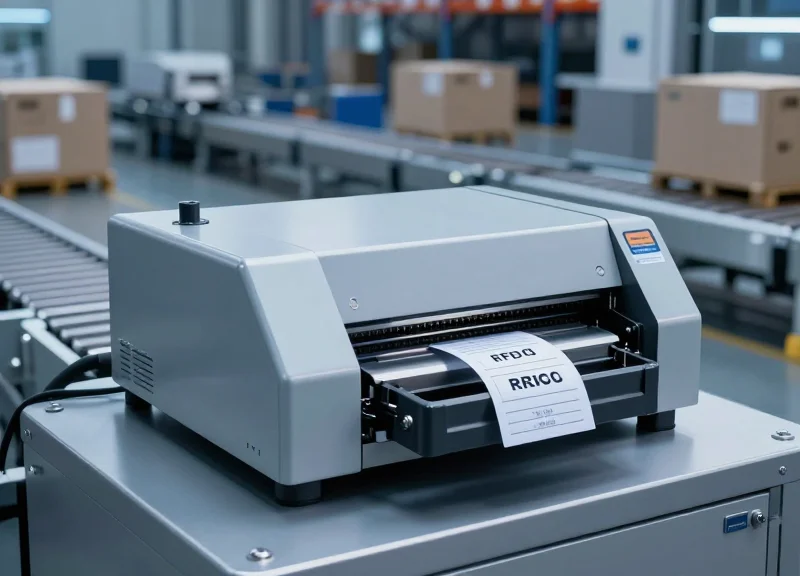
In an era where operational transparency is paramount, the traditional manual audit has become a liability. Businesses relying on spreadsheets often face inaccuracies that lead to compliance failures and financial losses. Radio Frequency Identification (RFID) technology offers a paradigm shift, turning a weeks-long auditing process into a matter of seconds. At DragonGuardGroup, we specialize in bridging the gap between physical assets and digital intelligence, empowering organizations to achieve constant audit readiness through high-speed automation.
The High Cost of Traditional Manual Auditing

Traditional manual auditing is the practice of physically verifying every asset in a facility using spreadsheets or paper logs—a process that is not only time-consuming but statistically proven to have an error rate of up to 30%. This 'manual audit tax' stems from excessive labor hours, operational downtime, and the inevitable financial discrepancies that arise when human intervention is the primary data source in a high-velocity business environment.
| Metric | Manual Auditing | RFID Automated Auditing |
|---|---|---|
| Data Accuracy | 70% - 85% | 99.5% - 99.9% |
| Audit Duration | Weeks to Months | Seconds to Minutes |
| Labor Intensity | Very High (Multiple Teams) | Very Low (Single Operator) |
| Data Latency | High (Weeks Old) | Real-Time |
One of the most insidious costs associated with manual tracking is what I call the 'Ghost Asset Premium.' My experience with Fortune 500 tech firms has shown that roughly 15% to 25% of the assets listed on a manual ledger no longer exist or are unusable. Yet, companies continue to pay property taxes, insurance premiums, and maintenance contracts on these phantom items. Because manual audits are so grueling, they are performed infrequently, allowing these financial leaks to persist for years without detection. Furthermore, the opportunity cost of pulling skilled IT or operations staff away from their core responsibilities to walk floors with a clipboard can result in thousands of dollars in lost productivity every single day.
Why does manual auditing fail in modern enterprises?
Modern assets are highly mobile and frequently reassigned; manual spreadsheets cannot keep pace with this movement, leading to 'data decay' where records become obsolete within 48 hours of an audit.
What is the primary driver of labor costs in manual audits?
The search for 'missing' items accounts for nearly 40% of audit time. Without real-time location data, staff spend hours hunting for assets that were moved or misplaced, turning a simple count into a forensic investigation.
How does manual reporting impact compliance and liability?
Inaccurate records lead to failed regulatory audits and security risks. If you cannot prove the location of a laptop containing sensitive data, the resulting fines and brand damage far outweigh the cost of any tracking system.
Understanding RFID-Driven Audit Readiness
RFID-driven audit readiness is a proactive operational stance where an organization maintains a 99.9% accurate, real-time digital ledger of physical assets. Unlike traditional methods that rely on periodic manual counts, RFID readiness ensures that your asset register always matches physical reality, allowing for instantaneous reporting and compliance verification at any point in the fiscal year without the need for manual cleanup.
| Feature | Reactive (Manual) Auditing | Proactive (RFID) Readiness |
|---|---|---|
| Data Freshness | Weeks or months old | Real-time / Sub-second |
| Verification Speed | Days per department | Under 60 seconds |
| Human Error Risk | High (Manual entry fatigue) | Negligible (Automated capture) |
| Audit Prep Time | High (Weeks of cleanup) | Zero (Always ready) |
In my 20 years of experience in the Silicon Valley ecosystem, I have observed that 'Audit Day' often creates more organizational friction than almost any other compliance event. The shift to RFID technology is not merely a hardware upgrade; it is a fundamental move from a 'Snapshot' mentality to a 'Stream' mentality. In a snapshot environment, you are only compliant on the day of the count. In a stream environment enabled by RFID, compliance becomes an automated, permanent state of being.
- The 'Ghost Asset Paradox' Insight: Expert Tip: Move beyond simple presence-detection. To truly bolster audit readiness, use RFID to track 'Last Seen' metadata. Most organizations fail audits because of 'Ghost Assets'—items that are on the books but physically gone. RFID provides an automated digital chain of custody. If an asset has not been 'seen' by a reader in 30 days, the system should auto-flag it for investigation. This proactive reconciliation prevents the massive 'write-off' shocks that typically occur during end-of-year manual audits.
- Establish the Digital Baseline: Tag all physical assets with unique RFID identifiers and synchronize them with your ERP or Fixed Asset Module to create a single source of truth.
- Automate Data Collection: Deploy fixed gateways at egress points or implement scheduled handheld sweeps to update asset status without human trigger points.
- Set Automated Exception Alerts: Configure your reporting engine to flag deviations—such as an asset leaving a designated zone or failing to be scanned—immediately, allowing for real-time correction.
Does RFID replace the need for an external auditor?
No, but it significantly reduces their billable hours. External auditors can verify your RFID processes and sample a small fraction of assets, relying on your automated, high-integrity reports for the bulk of the validation.
How does RFID ensure data integrity better than barcodes?
RFID tags provide a unique UID that is difficult to duplicate or 'spoof.' Because the scanning process is automated and removes the manual 'point-and-click' step, the data is far less susceptible to human manipulation or oversight.
Essential Infrastructure for 60-Second Reporting
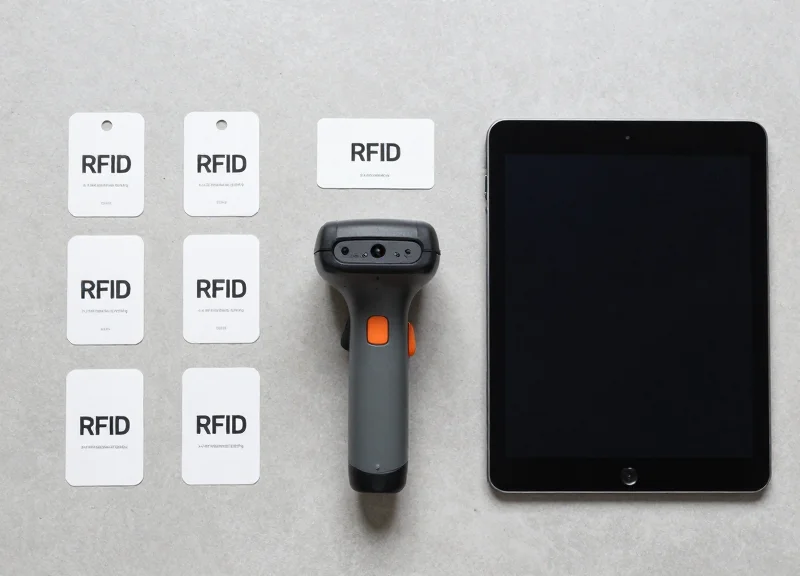
To generate an automated RFID asset report in under 60 seconds, your infrastructure must support a three-tier architecture: the Edge Layer (high-memory RFID tags and high-gain readers), the Integration Layer (middleware that filters 'noise' or redundant reads), and the Application Layer (a centralized cloud platform with pre-configured reporting logic). This ecosystem eliminates manual data entry, ensuring that the time from the physical scan to a finalized PDF report is limited only by your internet connection speed rather than human processing.
| Component | Requirement for 60-Second Reporting | Why it Matters |
|---|---|---|
| RFID Tags | Passive UHF (Gen 2) | High-speed bulk reading of hundreds of items simultaneously. |
| Readers | Fixed Portals or High-Power Handhelds | Ensures 99.9% read accuracy without repeated passes. |
| Middleware | Edge Data Filtering | Prevents system lag by stripping duplicate pings before they reach the database. |
| Cloud Platform | API-First Architecture | Allows instantaneous data sync and one-click report generation. |
- High-Performance RFID Tags: Select tags based on your asset material (e.g., 'on-metal' tags for IT servers) to ensure consistent read ranges of 10-30 feet.
- Fixed vs. Mobile Interrogators: Fixed portals at exit/entry points provide 'always-on' auditing, while handheld readers allow for rapid 'geofencing' or inventorying of specific rooms in seconds.
- Centralized Management Software: The 'brain' of the operation that stores asset history, depreciation schedules, and compliance data in a query-ready format.
Expert Tip: The 100ms Rule. To hit the 60-second reporting mark, your infrastructure must prioritize 'Edge Intelligence.' Generic RFID setups often flood a database with raw data, causing the reporting software to hang during processing. A Silicon Valley-standard deployment uses readers that process data at the edge, sending only 'state changes' (e.g., Asset A moved from Room 1 to Room 2) to the cloud. This reduces the data payload by up to 90%, enabling the instantaneous generation of complex audit trails.
Do I need a specific type of internet connection for 60-second reporting?
While a standard broadband connection is sufficient, low-latency Wi-Fi 6 or 5G connectivity for handheld readers ensures that data syncs in real-time without buffering.
Can I use my existing barcode labels?
No. Barcodes require line-of-sight and manual scanning. RFID infrastructure is a separate hardware layer, though many companies use 'hybrid' labels that include both a barcode and an RFID inlay for backward compatibility.
Is middleware always necessary?
For large-scale audits (over 1,000 assets), middleware is essential to manage data traffic. Without it, the 'noise' from overlapping reader fields can slow down report generation significantly.
The Workflow: How to Generate Reports in Under a Minute

Generating an audit report in under 60 seconds is achieved by replacing manual data entry with a high-speed synchronization loop between handheld or fixed RFID readers and a centralized asset management platform. This workflow leverages 'Edge Computing' to process thousands of tag IDs locally before pushing structured data to the cloud, ensuring that the final PDF or Excel export is a reflection of real-time physical reality rather than an outdated ledger.
- Triggered Bulk Capture: The operator initiates a scan via a mobile RFID handheld or passes assets through a portal. Unlike barcodes, which require line-of-sight, the RFID reader captures hundreds of unique Electronic Product Codes (EPCs) per second from up to 30 feet away.
- Instantaneous Data Reconciliation: The software instantly compares the 'observed' scan data against the 'expected' asset list in your database. This happens at the software layer, identifying matches, unauthorized movements, or missing items in milliseconds.
- Automated Exception Flagging: Instead of a human looking for errors, the system highlights discrepancies automatically. If Asset A is in Room B but should be in Room C, it is flagged as an 'Exception' before the report is even finalized.
- One-Click Template Export: The user selects a pre-configured audit template (e.g., 'Fixed Asset Compliance' or 'Inventory Variance'). The system populates the data into a professional format and generates a secure download link or email attachment instantly.
| Workflow Step | Manual Audit Time | Automated RFID Time |
|---|---|---|
| Data Collection | 4 - 8 Hours | 15 - 30 Seconds |
| Data Entry/Sync | 2 - 4 Hours | Instantaneous |
| Error Verification | 2 Hours | Automated (5 Seconds) |
| Report Formatting | 1 Hour | 5 Seconds |
Expert Insight: The Power of 'Exception-First' Reporting. From a veteran auditor's perspective, the value of 60-second reporting isn't just speed—it's the shift to exception-based management. Instead of verifying what you know you have, automated workflows allow you to focus exclusively on the 1% of assets that are missing or misplaced. This 'delta-only' focus is what actually saves companies thousands in labor costs during peak audit seasons.
Does the 60-second window include physical scanning time?
In most localized environments (like a server room or a high-value tool crib), the 60-second window covers both the scan and the report generation. For massive warehouses, the reporting itself is still sub-60 seconds once the data is synced.
Can these reports be automated to send daily?
Yes. Advanced RFID platforms allow you to schedule these workflows so that a 'Status Report' is delivered to your inbox every morning at 8:00 AM without any manual intervention.
What file formats are supported?
Standard enterprise workflows typically export to CSV for data manipulation, XLSX for internal review, or tamper-proof PDF for official compliance submissions.
Key Data Points for a Compliance-Grade Asset Report

A compliance-grade asset report is a verifiable document that reconciles physical presence with financial ledgers. To meet the rigorous standards of internal and external auditors (such as those for SOX, GASB, or ISO certification), the report must move beyond a simple list of items. It requires a specific set of data points that establish a 'chain of evidence,' including Unique Asset Identifiers (EPC/TID), precise location telemetry, custodian assignments, and, most critically, a system-generated 'Last Physical Verification' timestamp that proves the asset was physically sensed by an RFID reader at a specific moment in time.
| Data Field | Compliance Requirement | RFID Validation Method |
|---|---|---|
| Unique Asset ID (EPC/TID) | Proof of Individual Identity | Hard-coded hardware tag ID prevents duplication and ghost assets. |
| Precise Timestamp | Existence at Time of Audit | System-generated clock syncs across readers for non-repudiation. |
| Geographic/Zonal Location | Tax and Insurance Compliance | Zonal detection via fixed portals or GPS-tagged handheld readers. |
| Custodian History | Chain of Custody Accountability | Automated logs linked to employee badge IDs during scanning sessions. |
| Verification Delta | Reconciliation Accuracy | Automated comparison between ERP 'Expected' and RFID 'Found' quantities. |
Expert Tip: The 'RSSI' Validation Layer. A unique insight often overlooked is the inclusion of RSSI (Received Signal Strength Indicator) values in your internal logs. While auditors may not ask for this directly, having the signal strength recorded provides technical proof of proximity. It demonstrates that the scanner was within a specific range of the asset, effectively debunking any potential claims of data manipulation or 'long-distance' phantom scans.
What is the most common reason auditors reject automated reports?
The most common reason is the lack of a clear audit trail. Reports must include the 'Reader ID' and 'User ID' for every scan to show which specific hardware and person were responsible for the data collection.
How do RFID reports handle assets that are currently in transit?
Compliance-grade systems use 'Last Seen' logic. If an asset is in transit, the report should show the timestamp of the last portal it passed through, providing a verifiable exit point from its previous location.
Should I include 'Missing Assets' in a report for an external auditor?
Yes. Transparency is key to audit readiness. A 'Reconciliation Delta' or 'Missing Items' list proves that your system is functioning as intended by identifying discrepancies for immediate investigation.
Reducing Human Intervention and Eliminating Ghost Assets
Automated RFID reporting eliminates ghost assets by replacing subjective manual counts with objective, real-time data captures. Ghost assets—items that appear on financial ledgers but are no longer physically present—account for up to 30% of inventory records in unmanaged environments. By removing the need for human intervention, RFID automation ensures that if an item is not detected by the sensor network during a 60-second sweep, it is flagged for immediate reconciliation, preventing phantom entries from inflating tax liabilities and insurance premiums.
In traditional auditing, 'human intervention' is a euphemism for 'opportunity for error.' Every time a technician manually logs a serial number or checks a box on a clipboard, the risk of data degradation increases. RFID technology bypasses the human element by utilizing electromagnetic fields to automatically identify and track tags attached to objects. This creates a 'closed-loop' system where the physical asset is the single source of truth, effectively killing the ghost asset phenomenon at the source.
| Audit Component | Manual Intervention Impact | Automated RFID Result |
|---|---|---|
| Data Entry | High risk of typos and transposition errors | Zero-touch data capture directly to DB |
| Asset Verification | Relies on 'sight-line' which misses hidden items | Non-line-of-sight scanning captures 100% visibility |
| Ghost Asset Detection | Often takes years to realize an item is missing | Instant discrepancy alerts via real-time logic |
| Labor Cost | Multiple FTEs required for weeks of counting | Single operator generates reports in seconds |
What are the financial implications of ghost assets?
Ghost assets cause companies to overpay on personal property taxes and insurance premiums for equipment they no longer own. Additionally, they lead to capital budget waste as managers may order 'replacements' for items that are actually in the building but simply lost due to poor tracking.
How does automation prevent 'zombie' assets?
Zombie assets are the opposite of ghost assets—physical items present but not on the books. RFID automation identifies these unregistered tags during routine scans, allowing administrators to bring them back into compliance immediately.
Can RFID eliminate human error entirely?
While it doesn't eliminate the need for strategy, it removes the 'clerical' errors associated with data collection. Humans move from being data collectors to data analysts, focusing on resolving discrepancies rather than finding the items.
Expert Insight: The Concept of the 'Self-Healing' Inventory. Most businesses treat audits as a snapshot in time. However, the most advanced Silicon Valley operations use RFID to create what I call a 'Self-Healing Inventory.' By integrating RFID readers with exit/entry points and automated reporting triggers, the system detects when an asset 'flatlines' (fails to check in). Instead of waiting for a quarterly audit to discover a missing server or medical device, the system proactively updates its status. This shift from periodic verification to continuous validation is the ultimate defense against audit failure.
Integrating Automated RFID Data with ERP Systems

Integrating automated RFID data with Enterprise Resource Planning (ERP) systems is the final bridge between physical asset movement and financial accountability. This process involves mapping real-time data captured by RFID readers—such as location, status, and timestamps—directly into core business modules like SAP, Oracle, or Microsoft Dynamics. By establishing a digital thread between the physical tag and the financial sub-ledger, organizations eliminate the 'data lag' that typically leads to audit discrepancies and ghost assets.
| Feature | Manual ERP Updates | Integrated RFID-ERP | |||
|---|---|---|---|---|---|
| Data Latency | Days or Weeks | Near Real-Time (<60s) | |||
| Human Error Risk | High (Manual Entry) | Negligible (Automated) | Data Accuracy | 85-90% | 99.9% |
| Audit Readiness | Reactive/Stressful | Always-On/Proactive |
Expert Tip: To achieve true Silicon Valley-grade agility, move beyond batch processing. Modern RFID implementations utilize an 'Event-Driven Architecture' (EDA). Instead of waiting for a nightly sync, your RFID middleware should push 'events' (like an asset leaving a zone) immediately to the ERP via Webhooks. This ensures that your financial records are a living reflection of your physical reality, not a historical snapshot.
- Establish API Endpoints: Configure RESTful or SOAP APIs within your ERP environment to accept incoming data from the RFID middleware.
- Define Data Mapping: Align RFID data fields (EPC, TID, RSSI) with ERP asset fields (Asset ID, Serial Number, Cost Center, Location).
- Implement Validation Logic: Create a 'logic gate' that verifies the data before it commits to the master record, checking for duplicate scans or impossible movements.
- Set Up Bi-Directional Sync: Ensure the ERP can send updates back to the RFID system, such as marking an asset as 'Retired' or 'Out for Repair' to update tag status in the field.
{ "event": "asset_movement", "timestamp": "2023-10-27T10:00:00Z", "tag_id": "E2801191200072E6", "new_location": "Warehouse_A_Dock_4", "erp_asset_id": "FA-99283", "status": "In-Transit" }Does integration require custom coding for every ERP?
Most modern RFID middleware providers offer pre-built connectors for major platforms like SAP and Oracle, significantly reducing the need for ground-up custom development.
How do we handle security during data transfer?
All data should be encrypted via TLS 1.3 during transit, and API access should be restricted using OAuth 2.0 or dedicated API keys with least-privilege permissions.
What happens if the ERP system goes offline?
Leading RFID systems use a 'Store-and-Forward' mechanism, caching scan data locally and automatically syncing it once the ERP connection is restored to prevent data loss.
Measuring ROI: Time Savings and Financial Accuracy

The Return on Investment (ROI) for automated RFID asset reporting is primarily driven by the radical shift from manual data collection to instantaneous verification. While manual audits often take weeks and yield only 85-90% accuracy, RFID automation enables 99.9% data integrity in under 60 seconds. Organizations typically see a 95% reduction in labor costs associated with inventory cycles and a significant decrease in capital expenditure by eliminating the 'phantom' need for duplicate equipment.
| Metric | Manual Reporting | Automated RFID Reporting |
|---|---|---|
| Time per 1,000 Assets | 24 - 40 Man-Hours | Under 1 Minute |
| Data Accuracy Rate | 75% - 88% (Human Error) | 99.5% - 99.9% |
| Audit Frequency | Annual or Bi-Annual | Daily or On-Demand |
| Labor Cost (Est.) | $1,500 - $3,000 | < $10 |
| Ghost Asset Rate | 15% - 30% typical | < 1% |
Beyond simple labor savings, the financial accuracy of RFID reporting tackles the 'Hidden Compliance Tax.' When assets are incorrectly logged or go missing (Ghost Assets), companies continue to pay insurance premiums and property taxes on items they no longer own. Conversely, 'Zombie Assets'—items physically present but not on the books—create massive liability during external audits. Automated reporting provides the documentary evidence needed to scrub the balance sheet clean, often saving mid-sized enterprises tens of thousands of dollars in overpaid taxes alone.
- Identify the Labor Delta: Calculate the total hours spent by staff on physical inventory counts annually and multiply by the fully-loaded hourly rate.
- Quantify Ghost Asset Carry Costs: Estimate the cost of insurance and taxes paid on missing items (typically 2-5% of the asset's book value).
- Factor in Procurement Avoidance: Track how many 'new' asset requests were cancelled because the RFID system located an existing, underutilized asset elsewhere in the facility.
- Audit Defense Savings: Measure the reduction in professional service fees (CPAs/Legal) required to reconcile books during an intensive external audit.
Expert Insight: Many managers overlook 'Search Waste' as an ROI metric. In a traditional warehouse or hospital environment, staff spend roughly 10% of their shift simply looking for equipment. RFID doesn't just make the report faster; it reclaims those thousands of annual 'search hours' for productive work, often representing a larger financial gain than the audit savings themselves.
How long does it take to see a positive ROI?
Most enterprises achieve a break-even point within 12 to 18 months, depending on asset density and the frequency of required audits.
Can RFID reporting reduce insurance premiums?
Yes. Many insurers offer lower rates for organizations that can prove high-frequency, high-accuracy asset tracking, as it reduces the risk of loss and theft.
What is the biggest contributor to RFID ROI?
While labor savings are immediate, the largest long-term contributor is 'Capital Expenditure Avoidance'—knowing exactly what you have so you stop buying what you don't need.
Future-Proofing Your Audit Strategy with AI and RFID
Future-proofing your audit strategy means leveraging Artificial Intelligence (AI) and Machine Learning (ML) alongside RFID hardware to transition from static, periodic inventory checks to a state of 'Continuous Audit Readiness.' By applying ML algorithms to RFID-generated data streams, organizations can move beyond simply recording what is present to predicting asset movement patterns, automatically identifying anomalies like unauthorized relocations, and ensuring that financial records reflect physical reality in real-time without human intervention. This shift effectively eliminates the 'audit season' by maintaining a perpetual, verified state of compliance.
- Predictive Ghost Asset Prevention: AI models analyze historical RFID scan frequency to flag assets likely to go missing before they disappear from the records, allowing for proactive recovery.
- Intelligent Asset Grouping: Machine learning identifies logical clusters of assets that move together, automatically alerting the system if a 'kit' or 'set' is broken during transit or storage.
- Automated Depreciation Alignment: By tracking actual asset usage and environmental exposure via RFID, AI can suggest adjustments to depreciation schedules based on real-world wear rather than arbitrary timelines.
| Feature | Manual Auditing | Standard RFID | AI + RFID (The Future) |
|---|---|---|---|
| Frequency | Annual/Quarterly | Weekly/Monthly | Real-Time / Continuous |
| Data Accuracy | 60-70% | 95-99% | 99.9% (Self-Correcting) |
| Analysis Type | Descriptive | Diagnostic | Predictive & Prescriptive |
A unique insight for Silicon Valley-level operations is the concept of the 'Self-Healing Inventory.' While standard RFID tells you an item is missing, an AI-enhanced system uses historical telemetry to suggest where the item likely is—perhaps it was misfiled in a high-density zone or left in a loading bay. This predictive logic reduces 'search time' by up to 90% compared to basic RFID systems, transforming the audit from a discovery process into a simple verification of AI-driven insights.
Will AI and RFID replace the need for human auditors?
No, but they shift the auditor's role from data collection to high-level analysis and risk management. Humans will focus on exceptions and strategy rather than counting boxes.
How does AI improve RFID read rates?
AI filters out 'noise' and signal interference in complex environments, using probabilistic modeling to confirm asset location even when a tag is partially obscured.
Is AI integration expensive for existing RFID users?
Most modern RFID software platforms are moving toward API-first architectures, making it increasingly affordable to layer AI analytics on top of existing hardware investments.