Maintaining the integrity of bank note transport is a critical challenge for financial institutions and cash-in-transit (CIT) providers. Traditional mechanical seals, while common, lack the real-time visibility and digital verification necessary to combat sophisticated internal and external threats. The implementation of tamper-evident RFID tags represents a paradigm shift in currency monitoring. By combining physical tamper-evidence with automated digital tracking, organizations can establish an airtight chain of custody that significantly reduces shrinkage, eliminates manual audit errors, and ensures total transparency from the central vault to the final destination.
The Evolution of Banknote Security: Beyond Traditional Seals

The evolution of banknote security represents a fundamental shift from passive physical barriers to active, data-driven intelligence. While traditional lead and plastic seals were designed to provide a visual indicator of interference, modern banknote monitoring requires a 'digital-physical hybrid' approach. This transition ensures that the chain of custody is not merely observed through human inspection but verified through automated, real-time data streams that eliminate the risks of counterfeit seals and manual logging errors.
For decades, the banking industry relied on mechanical seals. However, these methods are increasingly vulnerable to 'sophisticated bypass' techniques. Criminals can often replicate generic plastic seals or use heat-based methods to open and reseal packages without leaving obvious visual traces. In the high-stakes environment of currency transit, the absence of a visible break no longer equates to a guarantee of integrity.
| Feature | Traditional Plastic/Lead Seals | RFID Tamper-Evident Tags |
|---|---|---|
| Verification | Manual/Visual Inspection | Automated Electronic Handshake |
| Data Logging | Paper-based/Manual Entry | Immutable Digital Ledger (Cloud) |
| Tamper Detection | Post-event (Reactive) | Real-time Alert (Proactive) |
| Clone Resistance | Low (Easy to replicate) | High (Encrypted Unique IDs) |
| Operational Speed | Slow (Individual checks) | Bulk (Scanning hundreds at once) |
Why are traditional seals considered 'silent failure' points?
Traditional seals suffer from 'silent failure' because they only provide evidence of tampering if someone physically checks them. If a seal is expertly cloned or bypassed, the security breach remains undetected until the cash is manually counted, often days or weeks after the theft occurred.
How does RFID technology solve the 'human element' risk?
RFID removes the subjectivity of visual inspection. A digital reader can instantly detect if a tag’s internal circuit has been broken, even if the exterior of the bag looks pristine, ensuring that security is not dependent on a fatigued or compromised guard.
Can these tags be used with existing security bags?
Yes, modern RFID tamper-evident tags are designed to integrate seamlessly into existing high-security polybags and cassettes, adding a digital layer without requiring a total overhaul of physical infrastructure.
Expert Insight: The Concept of Digital-Physical Entanglement. In my 20 years observing security trends, the most significant breakthrough is what I call 'Digital-Physical Entanglement.' Unlike a standard seal where the 'lock' and the 'data' are separate, RFID tamper-evident tags unify them. The moment the physical seal is compromised, the digital identity of the asset changes state in the database. This creates an environment where an asset cannot be moved or accepted in a 'healthy' digital state if the physical seal has been touched, making the 'steal-and-replace' strategy mathematically impossible for bad actors.
Understanding Tamper-Evident RFID: The Mechanics of Security

Tamper-evident RFID tags are specialized electronic security devices that combine radio-frequency identification with a physical-to-digital seal; they utilize a fragile continuity loop integrated directly into the RFID chip's antenna circuit. When the physical seal is broken—whether by cutting, peeling, or forced entry—the electronic circuit is permanently interrupted, causing the chip to immediately change its internal 'status flag' or cease operation entirely, providing an immutable digital record of the breach.
Unlike traditional mechanical seals that require a person to manually inspect a serial number, these digital hybrids communicate their integrity status automatically whenever they pass through an RFID gateway or are scanned by a handheld reader. In the context of high-security banknote monitoring, this means a cash canister or transit bag can report its own compromised state without a human ever touching the package.
| Feature | Standard RFID Tag | Tamper-Evident RFID Tag |
|---|---|---|
| Detection Method | Proximity/Presence only | Continuity loop sensing |
| Status Reporting | Static ID number | Dynamic status (Secure vs. Tampered) |
| Physical Security | None (Adhesive only) | Integrated mechanical seal/loop |
| Audit Speed | Requires visibility to find damage | Instant digital detection of damage |
- Initialization: The tag is applied to a banknote container, and the security loop is closed. The RFID chip registers a 'Closed' or 'Secure' status in its memory bank.
- Interruption: If an unauthorized party attempts to open the container, the conductive material in the seal is severed. This break is detected by the chip's internal logic controller.
- Digital State Change: The chip toggles a specific bit in its memory—often referred to as a 'tamper flag'—which remains permanently set even if the wires are re-touched.
- Real-Time Notification: The next time the tag enters a reader field, it broadcasts the tamper alert along with its unique ID, triggering an immediate security protocol in the management software.
Expert Insight: Most people believe tamper detection is binary (on or off). However, advanced 'dual-antenna' tags utilize a technique called Impedance Mismatch Detection. Even if a sophisticated attacker tries to bridge a cut wire with conductive ink, the change in the circuit's electrical impedance shifts the antenna's resonance frequency. This makes the tag 'detune,' allowing the reader to detect tampering even if the circuit appears physically closed to the naked eye.
Can the tamper flag be reset?
No. In high-security banking tags, the tamper flag is designed as a 'one-way' digital state. Once the circuit is broken, the chip's logic prevents the status from returning to 'Secure' without authorized cryptographic commands, if at all.
Does the tag need a battery to detect tampering?
No. Most banknote tags are passive. They store the fact that the circuit was broken in non-volatile memory the next time they are powered by a reader's field, or use 'battery-assisted passive' (BAP) tech for real-time logging.
What happens if the tag is completely destroyed?
If a tag fails to check in at an expected checkpoint (a 'missing ping'), the system flags the entire shipment as compromised, ensuring that destruction is as visible as tampering.
Key Benefits of RFID for Chain of Custody Management
Implementing RFID for banknote chain of custody management replaces manual, error-prone logging with automated, high-speed data capture. By using tamper-evident RFID tags, financial institutions can achieve 100% visibility of cash-in-transit (CIT) assets, reduce reconciliation labor costs by over 80%, and eliminate the 'blind spots' that occur during manual hand-offs between secure zones.
The primary advantage of RFID over traditional barcode or manual systems lies in the transition from line-of-sight verification to bulk-processing. In a high-security environment, the speed of data acquisition directly correlates to reduced exposure time for high-value assets. When banknotes are moving through the chain of custody, every second spent on manual entry is a second of increased security risk.
- Instantaneous Batch Reconciliation: Unlike barcodes, RFID allows for the simultaneous scanning of hundreds of currency cassettes or bags without opening the transport containers, reducing processing time from hours to seconds.
- Elimination of Human Error: Automated data capture removes the risk of transcription errors, missed serial numbers, or 'ghost' inventory that typically plagues manual logbooks.
- Proactive Security Alerts: Tamper-evident RFID tags provide immediate digital alerts if a seal is compromised, shifting security from a reactive 'discovery after the fact' model to a real-time intervention model.
- Continuous Audit Readiness: Every tag interaction is timestamped and geolocated, creating a permanent, searchable record that simplifies regulatory compliance and internal audits.
| Feature | Manual/Traditional Seals | Tamper-Evident RFID Tags |
|---|---|---|
| Verification Speed | 1-2 minutes per unit | < 1 second per unit (Bulk) |
| Data Integrity | Subject to human error | 100% digital accuracy |
| Tamper Detection | Visual inspection only | Real-time electronic alerting |
| Audit Trail | Paper-based/Manual entry | Automated, immutable logs |
Expert Insight: The Velocity of Liquidity. While most managers focus on the security aspect, the true ROI of RFID in bank note monitoring is the 'Velocity of Liquidity.' By reducing the time banknotes spend in the 'reconciliation limbo' of the loading dock or vault intake, banks can move cash back into circulation or interest-bearing accounts faster. This reduction in 'idle cash' time often pays for the entire RFID implementation within the first 12 to 18 months.
How does RFID improve insurance compliance?
Insurers often offer lower premiums for facilities that utilize automated, tamper-evident tracking because it significantly lowers the 'unexplained disappearance' risk profile.
Can RFID tags be read through armored vehicles?
While metal interferes with RF signals, strategic placement of external antennas or handheld readers at vehicle egress points ensures 100% capture during the loading/unloading phase.
Does this require a complete software overhaul?
No. Modern RFID middleware can typically integrate via API into existing ERP or Vault Management Systems (VMS), acting as a high-speed data input layer.
Critical Features to Look for in High-Security RFID Bank Note Tags
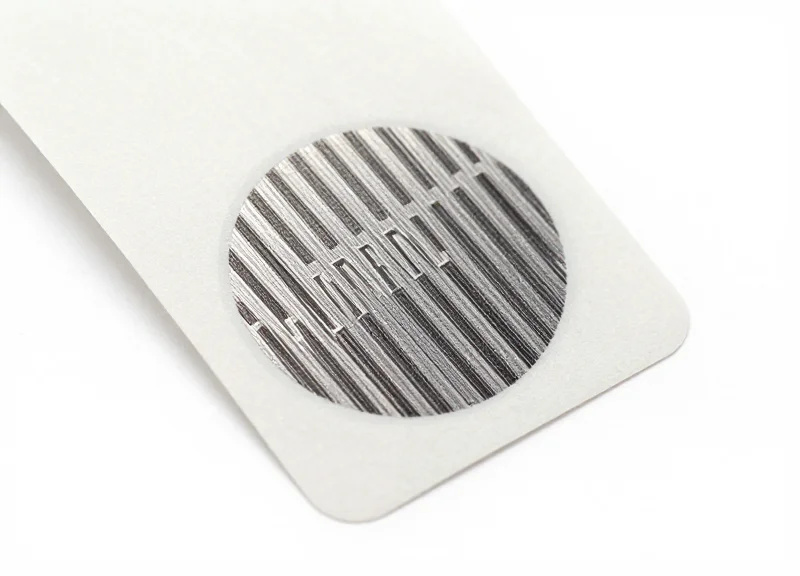
To effectively secure the chain of custody for banknotes, high-security RFID tags must serve as a 'digital fingerprint' that is impossible to replicate and resilient against both physical and electronic tampering. Unlike standard inventory tags, these specialized components integrate advanced silicon circuitry with physical security seals, ensuring that the identity of the cash container is inextricably linked to its integrity. The ideal tag provides a dual-layer of protection: an encrypted digital record for automated tracking and a physical tamper-evident mechanism that permanently alters the chip's state if the seal is breached.
| Feature | UHF (Ultra-High Frequency) | HF (High Frequency / NFC) |
|---|---|---|
| Primary Use Case | Bulk scanning of pallets/bins in transit. | Individual bag verification via handhelds. |
| Read Range | Up to 10-15 meters. | Near-field (under 10 cm). |
| Data Transfer Rate | High (excellent for rapid auditing). | Low to Moderate. |
| Security Level | High (requires specialized readers). | Moderate (susceptible to mobile sniffing). |
- Cryptographic Authentication (AES-128): Look for tags that support symmetric-key cryptography. This ensures that only authorized readers can challenge the tag and receive a verified response, preventing 'skimming' or cloning by malicious actors.
- Antenna Design and Read Sensitivity: Banknote containers often contain dense materials or metal foils. High-sensitivity antennas (e.g., -20 dBm or better) ensure reliable reads even when tags are stacked deep within a vault or transport vehicle.
- Physical Unclonable Function (PUF) Technology: An industry-leading feature is PUF, which utilizes microscopic variations in the silicon chip to create a unique identifier that cannot be copied even by the chip manufacturer.
- Environmental Ruggedization: Tags must withstand the 'Cash-in-Transit' lifecycle, including extreme temperature fluctuations during transport, high humidity, and mechanical shocks from automated sorting systems.
A critical expert tip for procurement: prioritize tags that feature 'State-Aware' memory. Traditional tags simply stop working when a seal is broken, but state-aware tags update their internal memory bit to reflect a 'Tampered' status. This allows the system to log exactly when and where the breach occurred during the next scan, rather than the tag simply disappearing from the inventory list, which could be misidentified as a simple read error.
Why is UHF preferred over HF for large-scale bank operations?
UHF allows for 'bulk reading,' meaning a warehouse gate can scan hundreds of currency bags simultaneously as they pass through, whereas HF requires a 1-to-1 scan which creates bottlenecks.
What happens if an RFID tag is shielded by tin foil?
While metallic shielding can block signals, modern high-security protocols involve 'missing tag' alerts. If a bag was expected at a checkpoint but isn't detected, an immediate security protocol is triggered.
Can these tags be reused to save costs?
In high-security banknote monitoring, tags should be single-use. The physical tamper-evidence mechanism is destroyed upon opening, and the chip should be programmed to 'self-destruct' or lock once the cycle is complete to prevent reuse on counterfeit containers.
Integration: Connecting RFID Hardware with Banking ERP Systems
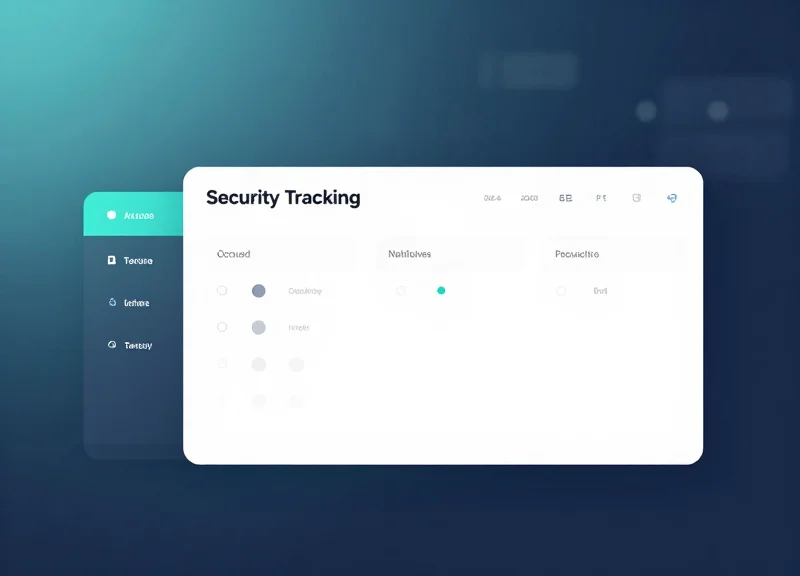
Integrating RFID hardware with banking ERP systems involves deploying an intelligent middleware layer that translates raw radio frequency signals into structured, encrypted data packets compatible with core financial ledgers like SAP, Oracle, or proprietary treasury management platforms. This connection ensures that every bank note movement recorded by a tamper-evident tag is instantly reflected as a digital transaction, creating a real-time, bi-directional link between the physical vault and the digital balance sheet.
- Middleware Orchestration: Deploy a middleware layer to filter 'noise' from the RFID readers, ensuring only relevant tag events (e.g., 'Seal Broken' or 'Location Change') are passed to the ERP to prevent system bloat.
- Secure API Integration: Utilize RESTful APIs or MQTT protocols with AES-256 encryption to push data from the RFID gateway to the banking database, ensuring the integrity of the chain of custody during transit.
- Data Mapping and Logic: Map specific RFID Electronic Product Codes (EPC) to unique asset identifiers within the ERP, allowing the system to automatically trigger alerts or reconciliation workflows when a tag is scanned.
- Automated Audit Logging: Configure the ERP to generate immutable audit logs for every RFID event, providing a timestamped history that satisfies both internal security protocols and external regulatory requirements.
| Integration Protocol | Best Use Case | Pros | Cons |
|---|---|---|---|
| RESTful API | Standard ERP Updates | Widely supported, high compatibility | Slightly higher latency than MQTT |
| MQTT | Real-time Alerts | Extremely low bandwidth, instant | Requires dedicated broker setup |
| WebSockets | Live Monitoring Dashboards | Continuous bi-directional stream | Heavy on server resources |
Expert Insight: The 'Truth Buffer' Strategy. In high-security banking environments, do not allow RFID data to update the primary ledger directly. Instead, implement a 'Validation Buffer' where RFID events are cross-referenced with secondary telemetry (such as vault weight sensors or motion cameras) before the ERP finalizes the transaction. This secondary validation prevents 'phantom reads' from accidentally altering the financial record.
Can RFID hardware integrate with legacy banking COBOL systems?
Yes, but it typically requires a modern API gateway or a flat-file exchange (SFTP) where the middleware converts RFID data into the specific fixed-width formats required by legacy mainframes.
How is data collision handled in high-density environments?
Modern readers use anti-collision algorithms (Slotted Aloha or Binary Tree) within the hardware layer, ensuring that even if 500 bags are scanned simultaneously, each unique ID is captured and queued correctly for the ERP.
What happens if the ERP connection goes offline?
High-tier RFID gateways include 'Store-and-Forward' capabilities, caching tag events locally with encrypted timestamps and syncing them automatically once the ERP connection is restored.
Best Practices for Cash-In-Transit (CIT) RFID Implementation

Implementing RFID for Cash-In-Transit (CIT) involves deploying a network of ruggedized Ultra-High Frequency (UHF) readers at critical handover points—such as loading docks, vault entrances, and armored vehicle bulkheads—synchronized with tamper-evident tags to create an automated, real-time audit trail. The primary objective is to eliminate 'black holes' in the supply chain by ensuring that bank note canisters and bags are automatically checked in and out of every facility and vehicle without the need for manual scanning or human intervention, thereby significantly reducing the risk of internal theft and administrative error.
- Phase 1: RF Site Survey and Mapping: Conduct a comprehensive electromagnetic audit of distribution centers and armored vehicles. Identify potential interference from metallic structures or existing wireless networks to determine optimal antenna placement for 100% read rates.
- Phase 2: Hardware Hardening: Deploy IP67-rated readers and antennas capable of withstanding the vibrations, temperature fluctuations, and physical shocks common in CIT logistics. In vehicles, use shielded cabling to prevent engine noise from interfering with data transmission.
- Phase 3: Transition Zone Configuration: Install 'Chokepoint' portals at every physical threshold. These portals should utilize directional antennas to distinguish between assets moving 'In' versus 'Out,' automatically updating the custody status in the ERP system.
- Phase 4: Pilot Testing with Ghost Shipments: Run a 30-day pilot using non-circulated currency or dummy loads. This allows for the calibration of RSSI (Received Signal Strength Indicator) thresholds to ensure that only the tags inside the vehicle are read, not those sitting nearby on a warehouse shelf.
| Implementation Area | Hardware Type | Critical Configuration Requirement |
|---|---|---|
| Armored Vehicle Cargo Area | Fixed Ruggedized Reader | RF Shielding to prevent external 'bleed-through' reads. |
| Vault Entrance/Exit | Overhead Portal Antennas | High-speed processing for bulk-reading hundreds of tags simultaneously. |
| Loading Dock Handover | Integrated Gate Readers | Photo-eye triggers to activate readers only when a shipment passes. |
Expert Insight: The 'RF Shadow' Strategy. A common pitfall in CIT deployment is the 'false positive' read where a reader captures tags through a wall or inside a passing truck. Silicon Valley best practices now favor a 'Low-Power Proximity' approach for vehicle bulkheads. By intentionally reducing the power of internal vehicle readers and lining the cargo bay with RF-absorbent material, you create an isolated environment. This ensures that the system only confirms a 'Secure Load' when the door is locked and the signal is contained, effectively turning the vehicle itself into a mobile, secure vault that self-audits every 30 seconds.
How do we handle signal interference in urban 'canyons'?
While RFID handles the local custody, use GPS-synced cellular backhaul to timestamp RFID events with precise coordinates, ensuring the system knows exactly where a custody transfer occurred.
What is the most common point of failure?
Antenna misalignment due to vehicle vibration is the top hardware issue. We recommend using locking industrial connectors and vibration-dampening mounts to maintain read-path integrity.
Can RFID tags be shielded by the cash itself?
High-density paper can attenuate signals. Best practice involves using 'Flag Tags' or placement on the exterior of the bank note carrier to maintain an air gap between the tag and the cash stack.
Regulatory Compliance and Audit Readiness in Financial Logistics
Regulatory compliance in financial logistics is defined by 'non-repudiation'—the cryptographic assurance that a transaction or movement cannot be denied. For banks and Cash-In-Transit (CIT) providers, tamper-evident RFID tags serve as the primary source of truth, automating the 'Proof of Custody' required by Central Bank mandates and international standards such as ISO 9001 and ISO/IEC 27001. By digitizing the physical movement of currency, institutions can provide auditors with an immutable ledger that tracks every hand-off, storage event, and potential security breach in real-time, effectively eliminating the human error associated with traditional paper-based logs.
| Compliance Metric | Manual Audit Process | RFID-Automated Audit |
|---|---|---|
| Data Integrity | Subject to transcription errors and 'ghost' entries. | Digitally signed, time-stamped, and immutable. |
| Reconciliation Speed | Weeks of cross-referencing manifests. | Instantaneous via automated dashoards. |
| Tamper Evidence | Visual inspection only; high bypass risk. | Electronic 'Seal-Broken' alerts sent to ERP. |
| Audit Documentation | Physical files stored in multiple locations. | Centralized cloud-based forensic history. |
A unique insight gained from two decades of logistics technology is the concept of 'Passive Compliance Tracking.' In a traditional environment, compliance is a disruptive event—an audit stops operations. With high-security RFID, compliance becomes a byproduct of the workflow itself. Because the tag records its own status, the institution is perpetually 'Audit Ready.' This shifts the internal audit team's role from 'detective work' (finding what went wrong) to 'monitoring work' (confirming everything is right), drastically reducing the cost of regulatory adherence.
How does RFID satisfy Basel III operational risk requirements?
Basel III requires banks to demonstrate robust internal controls against operational risk, including theft and loss. RFID provides the quantitative data necessary to prove that physical assets are secured by a 'detect-and-defend' system, potentially lowering capital reserve requirements for operational risk.
Do RFID solutions meet Central Bank 'Dual Control' mandates?
Yes. Most high-security RFID implementations require two distinct authenticated scans to acknowledge a custody transfer, digitally enforcing the 'four-eyes principle' required for high-value currency movement.
Is the data generated by RFID tags admissible in legal proceedings?
When implemented using secure frequencies and encrypted chips, RFID data provides a forensic timeline that is often used as admissible evidence for insurance claims and legal investigations regarding currency theft or chain of custody breaches.
Furthermore, the implementation of tamper-evident RFID technology aligns directly with the European Banking Authority (EBA) guidelines on outsourcing, ensuring that when banks use third-party CIT providers, they maintain full visibility and control over their assets. This level of granular oversight is no longer an optional 'nice-to-have'; in the modern regulatory landscape, it is the standard for institutional accountability.
Mitigating Risks: Preventing Internal Fraud and Transit Theft
Mitigating risk in currency logistics requires a shift from reactive auditing to proactive 'Continuous Custody Awareness.' By implementing tamper-evident RFID tags, financial institutions can create a digital seal that identifies unauthorized access the millisecond it occurs, effectively closing the window of opportunity for both opportunistic internal fraud and sophisticated transit theft. Unlike traditional serial-number tracking, which only confirms a loss after it has happened, RFID-enabled monitoring provides a real-time health check on every asset in the chain of supply.
| Risk Factor | Legacy Security (Mechanical) | Advanced RFID Security |
|---|---|---|
| Internal Skimming | Hard to detect without manual piece-counting. | Automatic weight/count discrepancy alerts via RFID sensors. |
| Seal Tampering | Visual inspection required; prone to human error. | Digital 'Tamper-Bit' flips if the circuit is broken; instant alert. |
| Transit Diversion | GPS tracks the truck, not the specific cash boxes. | Individual box tracking ensures the 'load' follows the truck. |
| Audit Integrity | Manual logs can be falsified or altered. | Immutable, timestamped blockchain or ERP ledger entries. |
The 'Digital Friction' Strategy: My experience in high-stakes logistics suggests that the most effective deterrent is not a lock, but 'Digital Friction.' This involves creating an environment where the perceived probability of getting caught is 100%. When a bank teller or a CIT driver knows that their every interaction with a currency bag is being broadcast to a central command center via a cryptographic RFID handshake, the psychological incentive to commit fraud is almost entirely eliminated.
- Automated Inventory Reconciliation: As cash cassettes move through 'RFID Tunnels' at distribution centers, the system automatically compares the detected assets against the manifest, flagging any missing units within seconds.
- Geofence-Triggered Authentication: High-security RFID tags can be programmed to only allow 'Authorized Open' signals when the tag is within a specific GPS geofence, such as the bank’s vault area.
- Proactive Breach Notification: If a tamper-evident circuit is severed during transit, an immediate push notification is sent to the security operations center (SOC), enabling rapid response or law enforcement intervention.
Can RFID tags prevent 'fishing' (removing notes through a small opening)?
Yes. Modern high-security bags utilize RFID tags with integrated mesh sensors. If the bag is cut or even slightly stretched to create a gap, the sensor circuit is broken and an alert is triggered immediately.
How does the system handle signal jamming during a theft?
The system utilizes 'Heartbeat' monitoring. If the RFID reader at a gateway loses signal or is jammed, the lack of data is treated as a high-priority security breach, triggering an automated lockdown.
Is the tamper evidence permanent?
Absolutely. Once the RFID tag’s 'Tamper Bit' is set to 1 (true), it cannot be reset by a field user. Only an authorized administrator via an encrypted back-end command can clear the alert after a full audit.
The Future of High-Security Monitoring: IoT and Blockchain Integration
The future of high-security monitoring lies in the convergence of IoT-driven RFID hardware and blockchain technology, creating an immutable, decentralized ledger that eliminates single points of failure in the chain of custody. By treating every RFID 'event'—such as a tamper alert, geographical scan, or environmental shift—as a cryptographic transaction, financial institutions can achieve an indestructible digital twin for every banknote bundle. This transition from siloed database records to a distributed 'Trustless Chain of Custody' ensures that no single entity can alter historical movement data, providing a level of transparency previously impossible in traditional banking logistics.
| Feature | Legacy Monitoring Systems | IoT + Blockchain Integration |
|---|---|---|
| Data Integrity | Centralized; vulnerable to admin tampering. | Immutable; cryptographically secured. |
| Verification | Manual audits and paper-based logs. | Automated, real-time consensus-based validation. |
| Alert Mechanism | Passive alerts requiring human review. | Active Smart Contracts trigger immediate actions. |
| Visibility | Siloed by organization or department. | Universal, permissioned visibility for all stakeholders. |
Integrating these technologies creates a deterministic security environment. In this model, the RFID tag acts as the 'Edge Oracle,' feeding real-time physical data into a blockchain network. If a tamper-evident RFID tag is compromised, the status change is not just recorded in a local database; it is broadcasted across a peer-to-peer network, making it mathematically impossible to 'roll back' or hide the breach. This is particularly vital for international currency transfers where multiple jurisdictions and handlers are involved.
- Edge Sensing: IoT-enabled RFID tags continuously monitor the physical state (seal integrity, light exposure, or GPS coordinates).
- Cryptographic Hashing: Data packets from the RFID reader are hashed and timestamped, creating a unique digital fingerprint of the event.
- Smart Contract Execution: Pre-defined logic (Smart Contracts) automatically validates the data against the transport manifest and expected parameters.
- Ledger Commitment: The validated transaction is added to a new block, visible to all permissioned nodes in the banking network.
Expert Insight: The Rise of Zero-Knowledge Proof (ZKP) Auditing. A significant trend emerging in high-security monitoring is the use of ZKPs within the blockchain layer. This allows a central bank to verify that a pallet of banknotes contains the exact requested amount and has not been tampered with, without actually revealing the specific serial numbers or denominations to the logistical third parties handling the shipment. This 'privacy-preserving security' is the gold standard for maintaining national fiscal confidentiality while ensuring total logistics integrity.
Can blockchain handle the high throughput of millions of RFID scans?
Modern implementations use Layer-2 scaling solutions or sidechains to process high-frequency RFID pings at the edge, only committing critical state changes to the main ledger to ensure speed and cost-efficiency.
Is a public or private blockchain better for bank note monitoring?
Private, permissioned blockchains (like Hyperledger Fabric) are preferred for financial logistics, as they offer high throughput and ensure that sensitive movement data is only visible to authorized participants.
What happens if the IoT sensor loses connectivity?
Advanced RFID readers utilize 'store-and-forward' logic, caching signed transactions locally and synchronizing with the blockchain as soon as a secure connection is re-established, maintaining the chain of custody sequence.