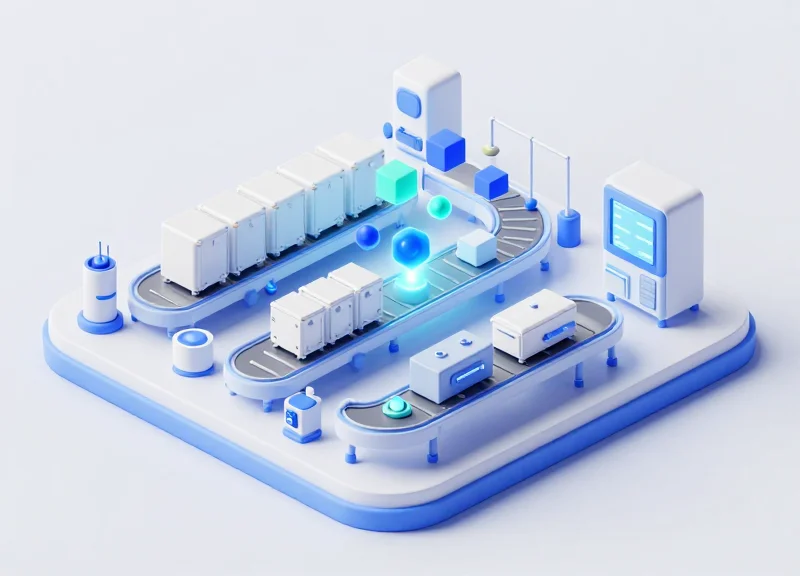
In the high-stakes world of pharmaceutical logistics, 'good enough' is never enough. With biologics and life-saving vaccines requiring strict environmental controls, traditional monitoring methods are increasingly obsolete. Integrated temperature and pressure RFID tags represent the next frontier in cold chain integrity. By providing granular, real-time data at the item level, these devices allow manufacturers to verify compliance and product efficacy throughout the entire journey. This article provides a comprehensive blueprint for deploying these advanced sensors to meet the most stringent pharmaceutical standards.
The Critical Role of Environmental Monitoring in Modern Pharma Logistics

Environmental monitoring in modern pharma logistics is the rigorous, real-time observation of physical conditions—specifically temperature, pressure, and humidity—that affect the chemical stability and biological activity of pharmaceutical products during transit. In an era where biologics and cell-based therapies dominate the market, maintaining a 'fixed' temperature is no longer sufficient; logistics providers must now ensure a validated 'stability budget' through end-to-end visibility. This shift is driven by Good Distribution Practice (GDP) requirements, which mandate that any excursion outside of specified parameters must be documented, analyzed, and remediated to prevent compromised medicine from reaching the patient.
| Feature | Legacy Cold Chain | Modern Integrated Monitoring |
|---|---|---|
| Primary Metric | Temperature only | Temp, Pressure, Humidity, Vibration |
| Data Capture | Manual logging/Passive tags | Automated RFID/IoT Active sensing |
| Compliance | Reactive reporting | Proactive, real-time validation |
| Product Focus | Small molecule generics | Biologics, mRNA, Gene therapies |
The transition to integrated monitoring is necessitated by the extreme sensitivity of modern specialty drugs. Unlike traditional pills, biologics are large, complex molecules that can degrade due to micro-shifts in atmospheric pressure or humidity, even if the temperature remains within the target range. For instance, a drop in pressure within a high-altitude air freight cargo hold can compromise the seal integrity of certain vials, leading to oxidation or contamination that temperature sensors alone would never detect.
- Expert Insight: The Pressure-Precursor Effect: A unique advantage of integrated monitoring is the 'Pressure-Precursor' detection. In cryogenic and dry-ice shipping, a sudden stabilization or drop in internal pressure often precedes a temperature spike by 30 to 60 minutes. By monitoring pressure via RFID tags, logistics managers can identify a seal failure or insulation breach before the thermal mass of the product begins to heat up, providing a critical window for intervention that saves million-dollar shipments.
Why is pressure monitoring suddenly critical for pharma?
With the rise of pre-filled syringes and lyophilized (freeze-dried) products, atmospheric pressure changes can affect plunger positioning or vial stopper integrity, potentially introducing non-sterility even if the cold chain is maintained.
How does environmental monitoring impact regulatory audits?
FDA and EMA inspectors now look for continuous data loops. Integrated monitoring provides a 'Digital Twin' of the shipment's journey, making it significantly easier to prove compliance during Annex 15 or GDP audits.
What is the primary cause of environmental excursions?
Human error during 'last-mile' handoffs remains the top cause. Automation via integrated RFID tags removes the manual scanning requirement, ensuring data continuity during high-risk transfer points.
Why Pressure Monitoring is the New Standard for Pharma Integrity

Pressure monitoring has become a non-negotiable standard in pharmaceutical logistics because temperature stability alone cannot guarantee the integrity of sealed biologics during air transport. Fluctuations in atmospheric pressure create differentials that can lead to "vial breathing"—a process where micro-leaks in container closures allow external contaminants or moisture to enter, potentially compromising the sterility and potency of life-saving medications. As high-value therapies move through global air corridors, capturing pressure data is the only way to validate that the physical container closure system (CCS) remained intact throughout the journey.
While the industry has mastered temperature control via advanced phase-change materials and active cooling, pressure remains a "silent killer" in the cold chain. During high-altitude transit, the significant drop in external air pressure forces internal gases to expand. If a seal's integrity is even slightly marginal, this expansion can create microscopic gaps. Conversely, during descent, the increase in external pressure can pull ambient, potentially unsterile air into the vial. For complex biologics and mRNA-based therapies, these subtle atmospheric changes can trigger chemical degradation or oxidation that standard temperature sensors simply won't detect.
| Variable | Primary Risk | Impact on Product | Monitoring Solution |
|---|---|---|---|
| Temperature | Thermal Degradation | Protein Denaturation / Efficacy Loss | Passive Data Loggers |
| Pressure | Vial Breathing / Seal Breach | Loss of Sterility / Oxidation | Integrated RFID Pressure Sensors |
| Humidity | Moisture Ingress | Stability Loss in Lyophilized Goods | Digital Hygrometers |
Expert Insight: The Pre-Filled Syringe (PFS) Vulnerability. A critical but often overlooked risk involves pre-filled syringes. Rapid pressure drops during ascent can cause mechanical plunger movement, even within secondary packaging. This movement can disrupt the sterile barrier or cause "leachables" to migrate from the stopper into the drug product. To mitigate this, veteran logistics engineers now mandate pressure-sensitive RFID tags that log at 1-minute intervals during takeoff and landing, providing the granular data necessary to prove that the mechanical integrity of the delivery device remained within validated tolerances.
How does pressure affect lyophilized (freeze-dried) drugs?
Lyophilized products are typically vacuum-sealed. If integrated pressure sensors detect a spike during transit, it indicates a seal failure that likely allowed moisture ingress, causing the product to 'cake' and lose chemical stability.
Why isn't airplane cabin pressure data sufficient for compliance?
Cabin logs only reflect the aircraft environment. They do not account for the micro-climates inside specialized thermal shippers or the specific pressure differentials experienced at the pallet level due to stacking and airflow restrictions.
Does pressure monitoring impact RFID battery life?
Modern integrated Temp-Pressure RFID tags utilize ultra-low-power ASICs. While sensing two variables consumes more energy than one, advanced power management allows these tags to maintain a 2-year shelf life even with frequent logging intervals.
Integrated RFID Tags: Merging Temperature, Pressure, and ID Tracking
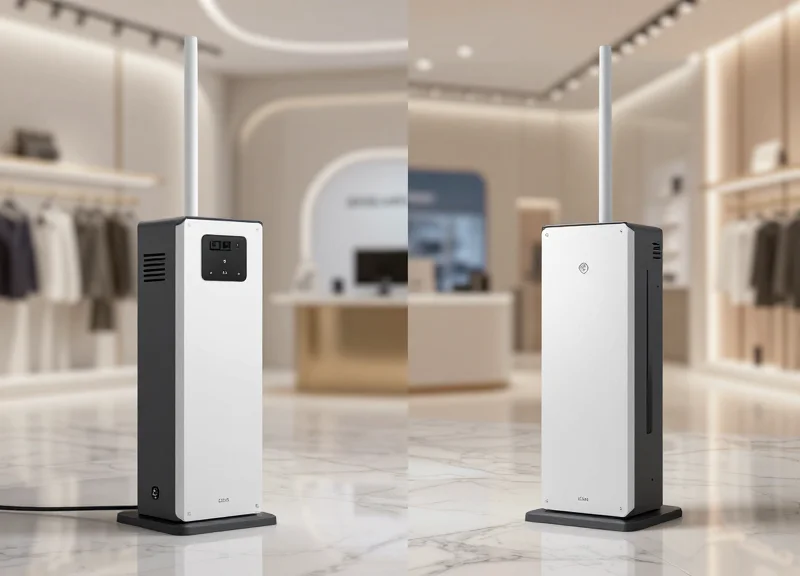
Integrated RFID tags are multi-modal IoT devices that synchronize temperature and barometric pressure data with a unique electronic product code (EPC), creating a single, immutable digital record for pharmaceutical assets. By embedding both micro-electromechanical systems (MEMS) for pressure and high-precision thermistors for temperature onto a single silicon substrate, these tags eliminate the data silos common in traditional logistics. Unlike legacy systems that require manual reconciliation of separate data loggers and packing slips, integrated tags ensure that every environmental reading is hardware-locked to the specific asset's identity at the exact moment of capture.
| Feature | Passive Integrated Tags (UHF) | Active Integrated Tags (BAP/Battery) |
|---|---|---|
| Power Source | Energy harvesting (from reader) | Internal long-life lithium battery |
| Data Logging | Real-time only (usually) | Continuous logging with local memory |
| Read Range | 3 - 10 meters | 100+ meters |
| Ideal Use Case | Box-level check-in/check-out | Continuous container monitoring |
The architecture of these tags relies on an Integrated Circuit (IC) capable of handling dual-sensor inputs. In a typical pharmaceutical deployment, the tag remains dormant until it passes through an RFID portal or is polled by a handheld reader. For active variants, the 'Battery-Assisted Passive' (BAP) technology allows the sensor to wake up at pre-defined intervals to log pressure and temperature spikes, storing them in non-volatile memory that persists even if the battery eventually fails.
How is data integrity maintained if the reader loses power?
Integrated tags utilize on-chip non-volatile memory (NVM). The environmental data and the unique ID are written to the chip's memory bank simultaneously, ensuring the record remains intact and retrievable once power is restored or a mobile reader is introduced.
Can these tags withstand sterilization processes like Autoclaving?
Specialized 'ruggedized' integrated tags are encased in medical-grade PEI or silicone, allowing them to withstand the high heat and pressure of sterilization without compromising the internal MEMS pressure sensors.
What is the typical accuracy for pressure sensing in these tags?
Pharma-grade integrated tags typically offer pressure accuracy within +/- 1 to 2 hPa, which is sufficient to detect seal breaches or altitude-related cabin pressure failures during air freight.
Expert Insight: When deploying these tags, focus on 'Sensor-to-Chip Synchronization.' The most advanced tags utilize a cryptographic handshake between the sensor and the RFID controller. This prevents a common vulnerability where external sensor data is spoofed or injected into the RFID stream. For high-value biologics, this hardware-level 'binding' is the gold standard for satisfying 21 CFR Part 11 requirements for electronic records.
Achieving Regulatory Compliance: GDP, EMA, and FDA 21 CFR Part 11
In the highly regulated world of pharmaceutical logistics, compliance is defined by data integrity. Regulatory bodies like the FDA and EMA now mandate the 'ALCOA+' principles—requiring data to be Attributable, Legible, Contemporaneous, Original, and Accurate. Integrated RFID tags facilitate this by replacing fallible manual logs with automated, cryptographically secure digital records. By capturing temperature and pressure data at the point of existence and transmitting it to a decentralized or cloud-based ledger, companies can prove that the 'chain of custody' never became a 'chain of mystery,' ensuring every biologic remains safe and effective for patient use.
| Regulation | Key Requirement | RFID Compliance Benefit |
|---|---|---|
| FDA 21 CFR Part 11 | Electronic records and signatures must be trustworthy and reliable. | Automated timestamping and unique tag IDs create a tamper-proof digital audit trail. |
| EU GDP (2013/C 343/01) | Maintain medicinal product integrity during all stages of storage and transport. | Continuous environmental monitoring (Temp/Pressure) prevents 'blind spots' in transit. |
| EMA Annex 11 | Risk management and validation of computerized systems. | Standardized RFID protocols simplify system validation and reduce human data-entry errors. |
| USP <1079> | Good storage and distribution practices for drug products. | Detailed environmental mapping confirms that products stayed within stability limits. |
Expert Insight: The 'Contemporaneous' Advantage. One of the most common findings during a regulatory audit is 'retrospective logging'—the act of filling in temperature logs hours or days after the event. In the eyes of the FDA, if it wasn't recorded at the time, it didn't happen. Integrated RFID tags solve this by performing 'Edge Logging.' Because the data is recorded directly onto the tag's memory with an internal hardware clock, it provides a physical guarantee of contemporaneous recording that manual systems or standard Bluetooth loggers often fail to match under rigorous scrutiny.
How does RFID simplify the audit process for Quality Assurance (QA) teams?
RFID allows for 'Audit-by-Exception.' Instead of reviewing thousands of manual logs, QA teams use software to flag only the shipments where RFID tags recorded a pressure or temperature deviation, drastically reducing the time required for batch release.
Can RFID records be used as a legal defense in 'Loss of Potency' claims?
Yes. Because passive and semi-passive RFID records are generated at the item level and are difficult to alter without detection, they serve as high-fidelity evidence of proper handling during litigation or insurance claims.
Does 21 CFR Part 11 require every RFID tag to be validated?
While individual tags are considered 'components,' the system used to collect, store, and sign off on that data must be validated. RFID systems with end-to-end encryption ensure that the data remains 'Original' from the sensor to the final report.
Ultimately, moving to integrated RFID tracking transforms compliance from a reactive, 'defensive' posture into a proactive quality asset. When a GDP inspector asks for proof of atmospheric stability during a trans-Atlantic flight, a single scan of an integrated RFID tag provides a more robust answer than a thousand pages of manual paperwork.
Strategic Deployment: Placement and Signal Optimization in Cold Environments

Strategic deployment for integrated temp-pressure RFID tags involves more than simple attachment; it requires a calculated approach to physics to overcome the 'Faraday Cage' effect of metal-lined refrigerated units. Successful deployment ensures that the tag is positioned where it can accurately reflect the internal environment's thermal mass while maintaining a clear line-of-sight (LoS) or optimized reflection path for RF signals to reach the reader. For pharmaceutical compliance, this means placing tags at known 'thermal stress points'—areas most susceptible to temperature fluctuations—without sacrificing the air-flow access required for accurate barometric pressure readings.
| Environment Type | Primary RF Challenge | Optimal Tag Placement | Sensor Priority |
|---|---|---|---|
| Aluminum Air Cargo ULD | Signal Reflection/Multi-path | Top-center, 5cm from ceiling | Pressure (Atmospheric changes) |
| Stainless Steel Reefer | Signal Absorption/Shielding | Near door seals or plastic vents | Temperature (Airflow consistency) |
| Deep Freeze (-80°C) Chest | Battery Latency/Ice Attenuation | External mount with internal probe | Thermal Stability |
| Vaccine Shipper (Small Box) | Liquid/Metal interference | Outer wall of inner insulation | Integrated Temp-Pressure |
- Identify Thermal and Pressure Voids: Before deployment, conduct a mapping study to identify the 'coldest' and 'warmest' spots in the container. Integrated tags should be placed at the warmest spot to monitor for excursions, but must also have clearance for the pressure sensor port to detect cabin pressure drops during air transport.
- Mitigate Metal Interference: Never place a standard RFID tag directly against a metal surface. Use 'on-metal' spacers or ferrite-backed tags. This creates a dielectric gap that prevents the metal from detuning the antenna and enables the signal to propagate.
- Optimize for Circular Polarization: Since tags on pallets often shift during transit, use circularly polarized reader antennas. This ensures that the signal is captured regardless of the tag's orientation (vertical vs. horizontal) as it passes through the checkpoint.
Expert Tip: The 'Micro-Climate' Trap. A common mistake is tightly wrapping integrated tags in heavy-duty shrink wrap. While this secures the tag, it creates a sealed micro-climate that can lag in temperature reporting and completely mask atmospheric pressure changes. For pharma-grade compliance, ensure the tag's pressure vent is exposed to the ambient air of the container, even if the pallet is wrapped.
Will frost or ice buildup impact the RFID signal?
Yes, water is a significant RF absorber. While UHF RFID can penetrate some ice, heavy frost buildup on the tag antenna can reduce read range by up to 40%. In deep-freeze environments, utilize high-gain antennas to compensate.
What is the '5-centimeter rule' in deployment?
To avoid signal nulls, maintain at least 5cm of clearance between the tag antenna and any metal or liquid-filled vials. This ensures the electromagnetic field can form correctly for the return backscatter.
How many tags are needed for a standard 40ft reefer?
For pharma-grade compliance, a minimum of three tags is recommended: one at the bulkhead (airflow source), one in the center, and one at the tail (near the doors) to monitor the full thermal gradient.
Real-Time Alerts and Intervention: Moving from Post-Mortem to Prevention
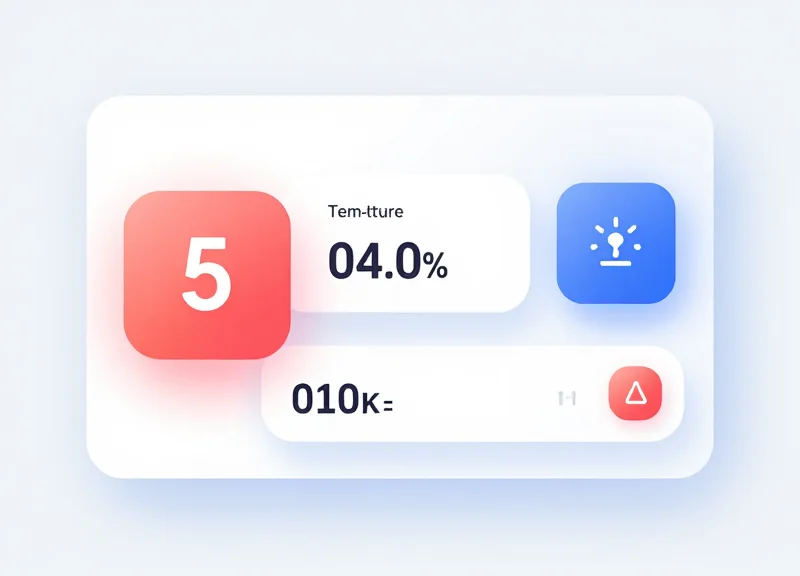
Real-time alerts in the pharmaceutical cold chain represent a fundamental shift from forensic analysis to active risk mitigation. By integrating temperature and pressure sensors with an automated notification layer, logistics managers can transition from documenting 'what went wrong' (post-mortem) to preventing 'what might go wrong' (intervention). This proactive stance is essential for high-value biologics and gene therapies where a single excursion can result in millions of dollars in losses and critical delays in patient care.
| Feature | Legacy Post-Mortem Approach | Modern Preventive Approach |
|---|---|---|
| Data Visibility | Data downloaded after delivery | Continuous live telemetry via RFID/IoT |
| Action Trigger | Audit discovery of a breach | Predictive logic (Rate of Change) |
| Impact | Product disposal and loss | Re-routing, cooling, or manual intervention |
| Regulatory Status | Passive compliance | Active Quality Management (QMS) integration |
Expert Insight: The Kinetic Buffer Zone. Most systems alert when a threshold is crossed (e.g., exceeding 8°C). However, industry leaders now utilize 'Kinetic Buffer' alerts. By calculating the rate of rise in temperature or the drop in pressure relative to external ambient conditions, the system can predict a breach 20 minutes before it happens. This window—the Kinetic Buffer—is the difference between a successful rescue and a total loss.
- Edge Data Capture and Transmission: Active or Semi-Passive RFID tags transmit telemetry to cloud-connected gateway readers located in warehouses, transport hubs, or refrigerated vehicles.
- Logic Engine Processing: A centralized cloud engine evaluates incoming data against pre-defined stability profiles (e.g., Mean Kinetic Temperature limits) for the specific pharmaceutical SKU.
- Automated Escalation: If a deviation is detected, the system triggers multi-channel alerts (SMS, Email, Webhook) to on-site staff or logistics providers.
- Documented Remediation: Staff execute a pre-defined SOP (e.g., 'Move pallet to backup cold room') and log the corrective action directly into the digital audit trail.
Can real-time RFID prevent 'false alarms' from short door openings?
Yes. Advanced logic engines use time-weighted averages and 'dwell time' filters to ensure alerts are only triggered when the product's internal temperature—not just the air temperature—is at risk.
What happens if a gateway loses internet connectivity?
Modern RFID gateways feature local caching and 'Store-and-Forward' capabilities, ensuring that while the alert might be delayed, the data integrity remains intact for compliance purposes.
How does pressure alerting assist in preventing contamination?
An immediate alert for a pressure drop in secondary packaging can signal a breach in seal integrity, allowing for rapid re-inspection before the product is exposed to atmospheric moisture or contaminants.
Integration Infrastructure: Connecting Sensors to Enterprise ERP Systems
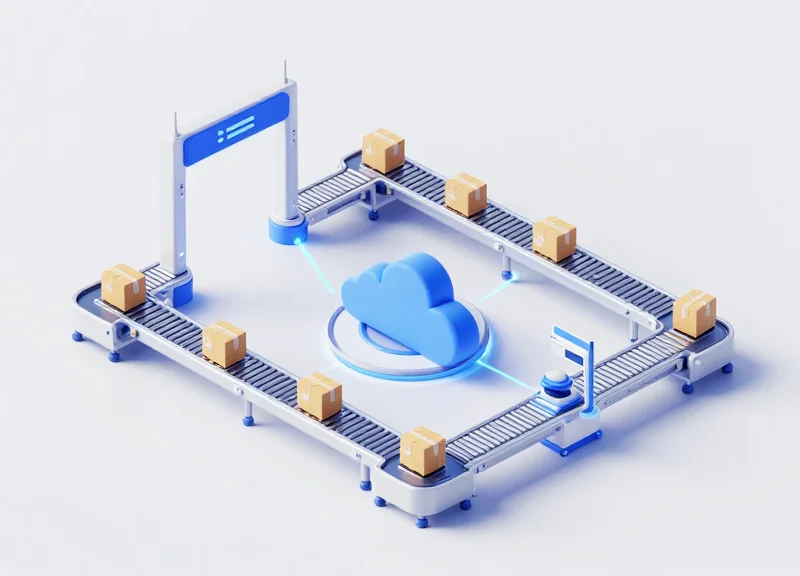
Integration infrastructure for cold chain RFID serves as the critical translation layer between physical sensor telemetry and the digital record of truth. In a pharma-grade deployment, this involves an edge-to-cloud pipeline where RFID gateways capture raw environmental data—specifically temperature and atmospheric pressure—apply logic-based filtering through middleware, and push validated payloads into Enterprise Resource Planning (ERP) systems via secure APIs. This architecture ensures that the ERP reflects real-time environmental status without being overwhelmed by the high-frequency noise inherent in raw RFID scans, maintaining a clean and audit-ready database.
- Edge Acquisition Layer: Fixed or handheld RFID readers at key transition points (e.g., loading docks, airport tarmacs) capture tag data and buffer it locally to prevent data loss during network intermittent connectivity.
- Middleware Processing Layer: A dedicated software layer deduplicates redundant reads and validates sensor data against pre-defined business rules, ensuring only significant environmental changes are flagged.
- Protocol Mapping Layer: Telemetric data is formatted into lightweight JSON or XML structures and transmitted via MQTT for low-latency messaging or RESTful APIs for standard cloud-based ingestion.
- Enterprise Integration Layer: The final data is mapped to specific modules within systems like SAP S/4HANA or Oracle Cloud, triggering automated workflows such as 'Quality Release' or 'Condition-Based Quarantine'.
| Integration Approach | Data Latency | Compliance Reliability | Infrastructure Complexity |
|---|---|---|---|
| Direct-to-Cloud API | Low | High | Moderate |
| On-Premise Middleware | Ultra-Low | Very High | High |
| Batch File Transfer | High | Low | Low |
Silicon Valley Expert Tip: Leverage the GS1 EPCIS 2.0 standard to future-proof your infrastructure. Unlike previous versions, EPCIS 2.0 is specifically designed to handle 'sensor elements' within the event data. By wrapping your temperature and pressure readings in an EPCIS-compliant schema, you create a globally interoperable data set that can be shared across different logistics partners' ERPs without custom re-mapping, significantly reducing the cost of cross-border compliance.
How do we handle data gaps during air transit when readers are unavailable?
Use RFID tags with on-board logging capabilities. The infrastructure must be configured for 'asynchronous backfilling,' where the reader automatically pulls the stored history from the tag's memory upon arrival and fills the temporal gaps in the ERP record.
Can legacy ERP systems handle high-frequency pressure data?
Legacy systems often struggle with high-velocity data. It is recommended to use a 'Data Lake' for granular sensor history and only push 'Exception Events' (e.g., a pressure drop indicating a seal breach) to the primary ERP to maintain system performance.
What security protocols are required for pharma data integration?
All data in transit must be encrypted via TLS 1.2+, and API access should be governed by OAuth 2.0 to ensure that environmental records satisfy FDA 21 CFR Part 11 requirements for electronic record integrity.
Evaluating ROI: Reducing Spoilage and Insurance Premiums with RFID

Calculating the Return on Investment (ROI) for integrated temp-pressure RFID systems in pharmaceutical logistics goes beyond the initial hardware cost. True ROI is realized through the 'Prevention-to-Profit' ratio: the delta between the cost of deploying sensors and the total cost of avoided product loss, regulatory fines, and inflated insurance premiums. In high-value biologics, where a single pallet can be valued at over $1 million, the prevention of just one thermal or pressure excursion event can pay for an entire year's worth of RFID infrastructure deployment.
| ROI Driver | Financial Impact | Strategic Value |
|---|---|---|
| Direct Spoilage Reduction | High (15-25% improvement) | Prevents total loss of high-value API/Biologics. |
| Insurance Premium Credits | Moderate (5-12% reduction) | Negotiated lower rates via unalterable audit trails. |
| Labor Efficiency | Medium (40% reduction) | Automated data logging vs. manual thermometer checks. |
| Recall Mitigation | Critical (Avoidance of Millions) | Granular tracking limits scope of recalls to specific units. |
A unique financial lever often overlooked by CFOs is the 'Visibility Credit.' By providing underwriters with granular, immutable data that integrates both pressure and temperature, firms can move from general risk-pool pricing to bespoke, performance-based insurance models. In many cases, insurers are willing to reduce Self-Insured Retention (SIR) limits when a company demonstrates real-time intervention capabilities, effectively lowering the cost of capital tied up in risk reserves.
Does pressure sensing specifically improve ROI?
Absolutely. Pressure drops often precede temperature spikes in vacuum-insulated panels (VIPs). Detecting a seal failure early allows for repackaging before the product is compromised, converting a potential $500k loss into a minor maintenance event.
How does RFID affect 'Soft Costs' like audit readiness?
Traditional audits require weeks of data aggregation. RFID systems with automated cloud syncing reduce audit prep time by up to 80%, allowing quality assurance teams to focus on process improvement rather than paper-trailing.
What is the typical 'Payback Period'?
For mid-to-large scale pharma distributors, the payback period for integrated RFID systems typically ranges from 14 to 22 months, depending on the volume of high-sensitivity products handled.
Expert Tip: When presenting the ROI case to stakeholders, distinguish between 'Dead Loss' (spoiled product) and 'Regulatory Loss' (unspoiled product that must be destroyed due to lack of compliant data). RFID eliminates the latter by providing the 'continuous proof' required by the FDA and EMA, ensuring that even if an excursion occurs, you have the data to prove if the product remained within stable parameters.
The Roadmap to Scalable Implementation for Global Distribution
Scaling the deployment of integrated temperature and pressure RFID tags globally involves a strategic shift from localized proofs-of-concept to a standardized, cross-border framework. Success in global distribution depends on establishing a unified data architecture that remains compliant with regional variations in radio frequency (RF) regulations—such as FCC in North America and ETSI in Europe—while ensuring that sensor data remains accessible and immutable throughout the entire custody chain.
- Phase 1: Standardized Pilot Protocol: Establish a baseline configuration for sensor thresholds and data logging intervals across a diverse range of shipping lanes to gather 'real-world' baseline data.
- Phase 2: Global RF Harmonization: Select 'Rain RFID' compliant tags that support wide-band frequencies (860-960 MHz) to ensure consistent readability as shipments move through different regulatory jurisdictions.
- Phase 3: Partner Integration: Distribute standardized Reader Infrastructure Kits to 3PL partners and high-volume distribution centers to ensure the physical 'mesh' is ready for inbound tagged cargo.
- Phase 4: Automated Validation (CSV): Implement Computerized System Validation (CSV) following GAMP 5 guidelines to ensure the global cloud platform can handle the surge in data points without compromising integrity.
| Scale Component | Localized Pilot Stage | Global Enterprise Stage |
|---|---|---|
| Data Volume | Kilobytes per shipment | Terabytes of telemetry across the fleet |
| Infrastructure | Handheld manual scanners | Fixed portals and automated conveyor tunnels |
| Regulatory Scope | National (e.g., FDA only) | International (FDA, EMA, MHRA, TGA) |
| Interoperability | Proprietary vendor app | GS1 EPCIS-compliant data exchange |
Expert Tip: To bypass the complexity of varying regional RF power limits, utilize 'Dual-Antenna' tags. These specialized tags are engineered to compensate for lower-power regions (like Japan or parts of Europe) by providing higher sensitivity, ensuring that a pharma pallet can be scanned with equal accuracy in a high-power US warehouse as it is in a more restricted European port, without needing to change tags mid-transit.
How do we handle data privacy across borders (GDPR vs HIPAA)?
The system should be designed to decouple environmental sensor data from PII (Personally Identifiable Information). While the sensor data moves globally, patient-specific information is linked only at the destination pharmacy level via secure, encrypted tokens.
What is the biggest failure point in global scaling?
Inadequate training of 3PL staff at transit hubs. Even the most advanced integrated tags fail if ground crews do not understand the 'Line of Sight' requirements for fixed readers or improper stacking techniques that create RF shadows.