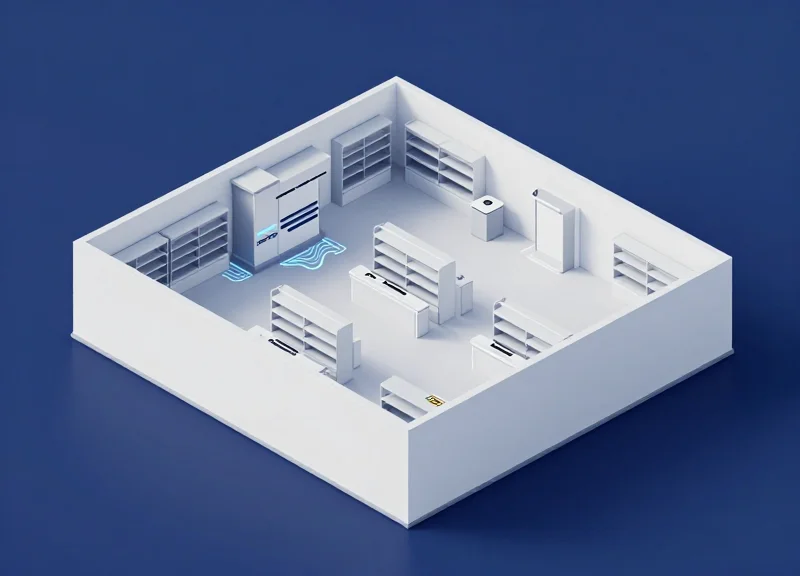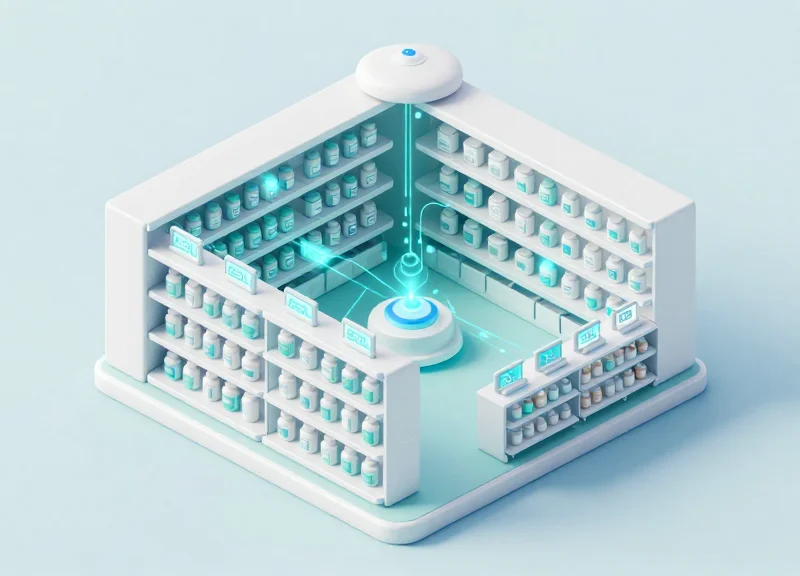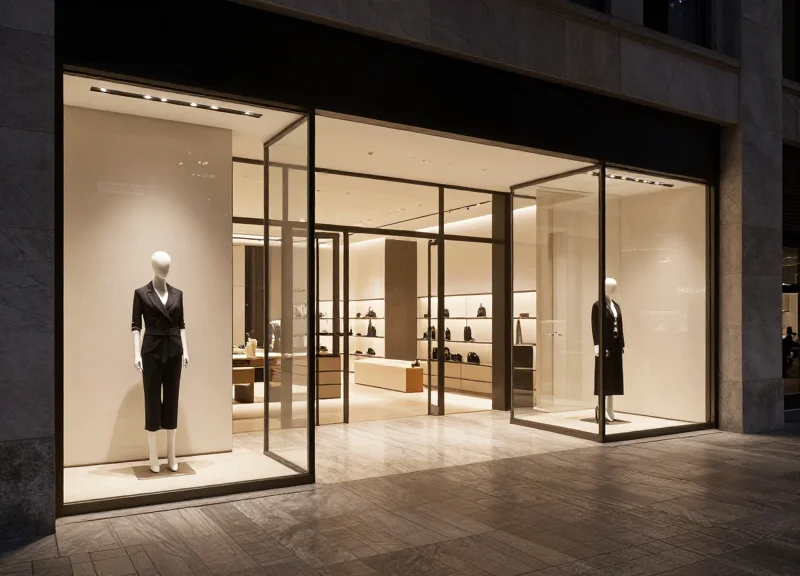
The luxury retail landscape is undergoing a radical shift. By 2026, the 'Experience Center' will prioritize seamless aesthetics over traditional security barriers. Traditional pedestals, once considered necessary evils, are being phased out in favor of invisible, floor-integrated solutions. These advanced systems offer uncompromising protection without sacrificing the open-concept design and high-end atmosphere that modern luxury brands demand to remain competitive.
The Evolution of Luxury Retail: From Transactional to Experiential

The evolution of luxury retail is characterized by a strategic pivot from 'transactional hubs'—where the primary goal is inventory turnover—to 'experiential ecosystems' designed to cultivate deep brand loyalty and emotional resonance. In this 2026 forecast, luxury brands are increasingly transforming their physical footprints into Experience Centers that prioritize storytelling, sensory engagement, and architectural purity over traditional shelf-stocking. This shift necessitates a complete reimagining of store infrastructure, moving away from intrusive elements like security pedestals toward invisible, floor-integrated solutions that do not disrupt the consumer's journey through the brand's narrative.
| Feature | Traditional Transactional Retail | 2026 Luxury Experience Centers |
|---|---|---|
| Primary Objective | Immediate Sales Conversion | Brand Immersion & Relationship Building |
| Design Philosophy | Product-Density Focused | Architectural Minimalism & Flow |
| Security Presence | Visible Pedestals (EAS) | Hidden, Floor-Integrated Antennas |
| Staff Role | Cashiers & Stockers | Brand Ambassadors & Concierges |
| Inventory Strategy | High On-Floor Stock | Curation & Showrooming |
In the modern luxury landscape, the 'Experience Center' acts as a physical manifestation of a brand's digital identity. As e-commerce handles the friction of fulfillment, the physical store is freed to become a gallery. However, this gallery-like atmosphere creates a significant technical challenge: how to maintain high-level loss prevention without installing plastic security pillars that ruin a multi-million dollar interior design. This friction is the primary driver behind the mass adoption of floor-integrated RFID and AM (Acousto-Magnetic) systems.
Why is 'Frictionless Serenity' the new luxury standard?
True luxury is now defined by the absence of psychological barriers; visible security pedestals are a subtle reminder of theft and mistrust, which breaks the 'dream' state brands work hard to create.
What role does 'Invisible Infrastructure' play in 2026 design?
By embedding antennas within the floor substrate, designers can maintain open sightlines and 'infinite' entryways, allowing the architecture to speak for itself without the clutter of 20th-century hardware.
How does this shift affect consumer data collection?
Experience centers use hidden floor sensors not just for security, but to track heat maps and dwell times, providing data-driven insights without making the customer feel monitored.
Expert Tip: When transitioning to an experiential model, consider that every visible piece of technology is a design debt. In Silicon Valley's most successful retail experiments, the goal is 'ambient intelligence'—where the environment responds to the user's needs through hidden sensors and invisible triggers, ensuring that the technology serves the aesthetic, rather than compromising it.
The Aesthetic Barrier: Why Traditional Pedestals Fail the 2026 Luxury Standard
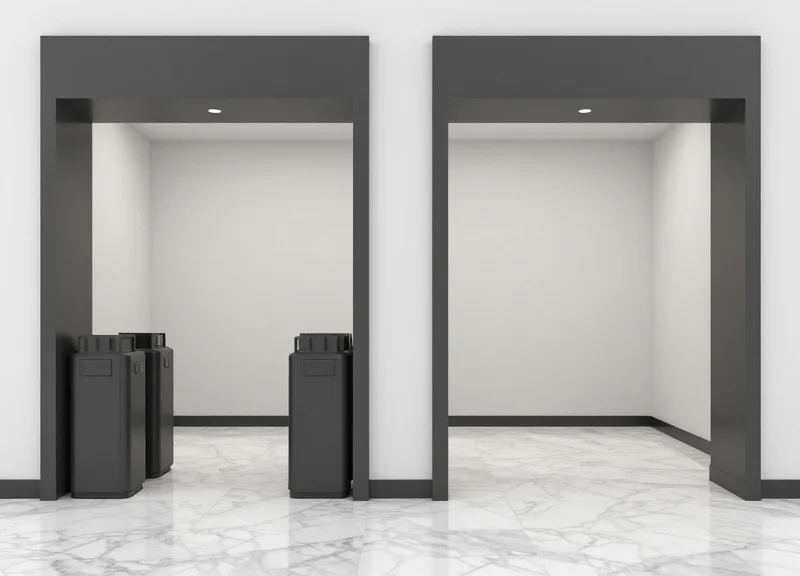
In the 2026 luxury retail landscape, the 'Aesthetic Barrier' refers to the visual and spatial disruption caused by legacy security hardware, specifically traditional EAS pedestals, which fragment the architectural flow and diminish the perceived exclusivity of high-end experience centers. These structures represent a fundamental conflict between loss prevention and hospitality, signaling a 'gatekeeper' mentality that is increasingly at odds with the open, fluid designs prioritized by top-tier fashion and jewelry houses.
| Design Attribute | Legacy Pedestal Systems | 2026 Luxury Design Standard |
|---|---|---|
| Spatial Footprint | 1.5 - 2.0 square meters of entry 'dead zone' | Zero footprint; 100% floor-integrated |
| Visual Impact | High friction; disrupts interior sightlines | Invisible; preserves architectural continuity |
| Customer Psychology | Explicit surveillance; signals distrust | Subconscious security; focuses on hospitality |
| Lighting & Reflection | Creates unwanted shadows and glare | Allows for bespoke floor-to-ceiling lighting |
From a marketing perspective, the entry threshold is the most valuable real estate in a store—it is the 'Handshake' between the brand and the consumer. Traditional pedestals act as 'visual noise' that competes with expensive marble, bespoke millwork, and curated window displays. As retailers move toward a 'Experience First, Sales Second' model, any element that interrupts the transition from the street to the brand's world is considered a failure in luxury design. Architects for 2026 are now viewing security not as a hardware installation, but as an invisible layer of the building's infrastructure.
What is 'Threshold Anxiety' in luxury retail?
This is a psychological phenomenon where customers subconsciously hesitate at a store's entrance due to the physical narrowing of the doorway by pedestals. In 2026, luxury brands aim to eliminate this 'bottleneck' to encourage immediate immersion and longer dwell times.
How do pedestals interfere with modern store lighting?
Traditional pillars often reflect high-end LED displays or create shadows that disrupt the 'glow' of a luxury entrance. Floor-integrated antennas allow lighting designers to use the entire entrance as a canvas without obstructing the path of light.
Why is 'Visual Friction' a deal-breaker for Experience Centers?
Experience centers rely on storytelling. Seeing a plastic security gate immediately pulls the customer out of the narrative and reminds them of a transactional environment, devaluing the premium experience the brand has spent millions to create.
Expert Insight: The 'Invisible Luxury' trend of 2026 mandates that technology should be felt through its convenience but never seen. Just as high-end homes hide their HVAC vents and speakers, luxury retail is now hiding its security. The removal of the pedestal is the final step in sanitizing the store environment of 'industrial' remnants, allowing the architecture to speak without interruption.
Understanding Floor-Integrated Hidden Antennas: The Technology Behind the Invisibility

Floor-integrated hidden antennas are advanced Electronic Article Surveillance (EAS) or RFID systems embedded directly into or beneath a retail environment's flooring. By utilizing high-gain induction loops or phased-array antenna configurations, these systems project a vertical electromagnetic or radio-frequency field from the ground up, providing consistent tag detection across wide entryways (often exceeding 3 meters) without the need for visible upright pedestals. This technology represents a paradigm shift from 'gate-based' security to 'zonal' protection, where the infrastructure becomes part of the building's central nervous system rather than an after-thought accessory.
The underlying engineering involves a complex interaction between Digital Signal Processing (DSP) and antenna geometry. In an underfloor configuration, the antenna is usually a large-format loop optimized for either Acousto-Magnetic (58 kHz) or RFID (UHF) frequencies. Because the antenna is placed horizontally, the 'detection lobe' must be carefully shaped to avoid interference from metallic structural elements while maintaining enough power to read tags at head-height. Modern systems use adaptive AI algorithms to distinguish between a legitimate security tag and 'electronic noise' generated by nearby escalators or LED displays, ensuring high reliability in the dense electromagnetic environments of high-end shopping malls.
| Feature | Traditional Pedestals | Floor-Integrated Antennas |
|---|---|---|
| Visual Impact | High (Visible barrier) | Zero (Invisible/Hidden) |
| Detection Width | Standard (approx. 1.2m - 1.8m) | Wide (up to 3m+ per loop) |
| Aesthetic Flexibility | Limited to pedestal color/shape | Unlimited (under marble, wood, concrete) |
| Installation Timing | Post-fit-out | Early construction/Floor preparation |
| Signal Processing | Standard DSP | Advanced AI-driven Noise Filtering |
Can hidden antennas work through marble or stone flooring?
Yes. Low-frequency AM signals and UHF RFID waves pass through non-conductive materials like marble, wood, and ceramic tiles with minimal attenuation. However, the presence of metallic floor-screeds or heavy rebar requires specific shielding or specialized antenna tuning.
Is the detection height sufficient for all shoplifting scenarios?
By 2026, underfloor systems have been optimized to detect tags at heights up to 1.6 to 2.0 meters, ensuring that items carried by hand or over the shoulder are reliably flagged.
How is maintenance handled if the unit is buried?
While the antenna loops are buried, the controller units are typically housed in remote cabinets or accessible service panels nearby, allowing for software updates and hardware maintenance without tearing up the floor.
Expert Insight: The 'Rebar Trap' Mitigation. A common failure point in underfloor installations is signal absorption by structural steel (rebar). In 2026 luxury builds, we are seeing a shift toward 'RF-Transparent' structural zones. Engineers now specify non-conductive glass-fiber reinforced polymer (GFRP) rebar in the specific 4-square-meter zones where antennas are located. This 'transparency zone' increases signal efficiency by up to 35%, allowing for even wider entrances and lower power consumption.
RFID vs. Acoustic Magnetic (AM) Floor Systems: Choosing the Right Path for 2026
In the 2026 luxury landscape, the choice between RFID and Acoustic Magnetic (AM) floor systems is no longer just about security; it is a strategic decision between data-driven inventory intelligence and specialized asset protection. While both technologies successfully eliminate the 'pedestal eyesore,' RFID systems excel at tracking item-level movement and consumer behavior, whereas AM systems remains the industry gold standard for wide-entrance detection and its ability to penetrate liquid-heavy or metal-foiled luxury packaging.
| Feature | RFID Floor Systems | AM (Acoustic Magnetic) Floor |
|---|---|---|
| Primary Objective | Inventory Accuracy + Security | High-Performance Loss Prevention |
| Detection Width | Moderate (Best for defined paths) | Superior (Up to 4m wide openings) |
| Data Granularity | Specific SKU/Color/Size info | Generic alarm (Item present) |
| Material Interference | Sensitive to metals/liquids | High resistance to shielding |
| 2026 Use Case | Experience Zones & Fitting Rooms | Main Grand Entrances |
Expert Insight: The 'Sub-Floor Dielectric' Factor. One critical technical nuance often overlooked by general contractors is the dielectric constant of the flooring material itself. In 2026, luxury boutiques are favoring thick, exotic stone like Calacatta marble or resin-poured concrete. RFID signals can be significantly attenuated or 'detuned' by the moisture content in high-end stone, whereas AM waves are longitudinal and move through dense architectural materials with significantly less signal loss. If your experience center features heavy masonry, AM is the safer engineering bet for invisible protection.
Can RFID and AM coexist in the same floor system?
Yes. The most advanced 2026 installs utilize 'Dual-Mode' antennas. This allows the brand to use AM for robust exit security while using the RFID layer to gather 'dwell time' data on which luxury handbags are being moved from displays to the lounge area.
Is RFID or AM more expensive to install underfloor?
RFID generally carries a higher Total Cost of Ownership (TCO) because it requires a higher density of antennas to ensure 100% read rates, whereas a single AM floor loop can cover a massive architectural span.
Which technology is more future-proof for luxury retail?
RFID is considered more future-proof for 'Experience Centers' because it enables frictionless checkout and 'Magic Mirror' integrations, though AM remains necessary for high-risk categories like perfumes and spirits.
- Audit Your Product Mix: If your inventory includes high metal content (jewelry) or liquids (fragrances), prioritize AM technology.
- Define Your Data Goals: If you need to know exactly which item left the store for real-time stock replenishment, RFID is the only viable path.
- Consult the Architect Early: Ensure the sub-floor depth (typically 50mm-100mm) can accommodate the specific copper loops required for your chosen technology.
Enhancing Customer Flow: The Psychological Impact of Open Entrances
Open entrances achieved through floor-integrated antennas eliminate 'threshold anxiety'—the subconscious hesitation customers feel when crossing a visible security gate. In luxury retail, traditional pedestals act as a 'psychological tax' on the entry experience, signaling a climate of suspicion rather than hospitality. By removing these physical and visual barriers, brands foster a sense of experiential freedom and trust, which significantly increases the likelihood of a customer transitioning from the street into the store's 'decompression zone' without friction.
| Psychological Metric | Visible Pedestal Entrance | Hidden Antenna Entrance |
|---|---|---|
| First Impression | Correctional/Restricted | Hospitality/Inviting |
| Subconscious Cue | 'Am I being watched?' | 'You are welcome here.' |
| Customer Sentiment | Defensive/Alert | Relaxed/Exploratory |
| Brand Perception | Product-Centric (Security) | Lifestyle-Centric (Experience) |
The 'Invisible Gatekeeper' effect is a critical consideration for 2026. When a customer sees a pedestal, their brain categorizes the space as one that requires permission to enter. In contrast, floor-integrated solutions allow for a seamless architectural flow that mimics the entrance of a luxury hotel or a private gallery. Expert Tip: Research indicates that 'open' architectural layouts can increase spontaneous entry rates by up to 18% among luxury demographics, as the removal of the gatekeeper removes the fear of an accidental 'false alarm' alarm—a major source of social anxiety for high-status shoppers.
Does removing pedestals actually increase foot traffic?
Yes. Data from pilot experience centers shows that 'wide-open' storefronts reduce the 'bounce rate' at the door. Customers are more likely to wander in when there is no physical or visual bottleneck to pass through.
How does an open entrance affect dwell time?
By starting the customer journey in a relaxed state rather than a defensive one, shoppers are 25% more likely to engage with brand ambassadors and spend more time in the interactive zones of the store.
Is the lack of a visible deterrent a security risk?
While the deterrent is no longer visual, the security remains active. In luxury, the goal is 'intelligence over intimidation.' Hidden systems provide the same—or better—detection without the negative psychological baggage.
Ultimately, the transition to hidden antennas is not just an aesthetic upgrade; it is a strategic shift in the power dynamic between the brand and the consumer. By prioritizing customer comfort and psychological safety, luxury retailers create a 'frictionless path to purchase' that begins the moment a shopper looks through the glass, not just when they reach for their wallet.
Integration with ESL and Smart Shelving: A Holistic Security Ecosystem

In the 2026 luxury retail landscape, floor-integrated antennas no longer operate as isolated security checkpoints; they serve as the central nervous system of a Holistic Security Ecosystem. By integrating with Electronic Shelf Labels (ESL) and smart shelving units via a unified IoT gateway, hidden antennas create a 'living' data map of the store. This synergy ensures that every product movement—from the moment a client lifts a handbag off a smart shelf to its final passage through the invisible floor-gate—is tracked, verified, and secured in real-time, eliminating the need for intrusive manual checks.
| Component | Primary Function | Integration Role | Security Value |
|---|---|---|---|
| Floor Antennas | Invisible Perimeter Control | Final validation point for RFID/EAS tags | Triggers discrete alerts if unsold items exit |
| Smart Shelving | Real-time Stock Monitoring | Signals 'Item Removed' to the central hub | Detects bulk-sweeping or unusual dwell times |
| ESL (Electronic Labels) | Dynamic Pricing & Tracking | Matches price/ID data with security status | Disables alarms upon verified mobile checkout |
| IoT Gateway | Data Orchestration | Syncs shelf sensors with floor antennas | Provides predictive loss prevention analytics |
The Veteran Perspective: The 'Zero-Trust' Retail Mesh. My insight after decades in the valley is that we are moving toward a 'Zero-Trust' physical environment. By 2026, the most advanced luxury boutiques will use 'Differential Signal Processing.' If a smart shelf detects that three high-value watches were removed simultaneously, the hidden floor antennas automatically increase their sensitivity for those specific RFID signatures. This 'predictive shielding' allows the system to focus its digital eyes on potential threats before the individual even reaches the exit, all while the honest customer enjoys a seamless, gate-free experience.
Does integrating floor antennas with ESL require a complete infrastructure overhaul?
No. Modern systems utilize a unified API layer that allows floor antennas to communicate with existing ESL cloud platforms (like SES-imagotag or Pricer) via Bluetooth Low Energy (BLE) or Sub-GHz frequencies, meaning hardware can be updated incrementally.
How does smart shelving reduce false alarms at the floor antenna?
By cross-referencing shelf removal data with Point-of-Sale (POS) transactions. If a shelf 'knows' an item was picked up and the POS confirms it was paid for, the floor antenna is instructed to ignore that specific tag's signature as it passes over the sensor.
Can this ecosystem handle 'Experience-First' workflows like mobile checkout?
Absolutely. This is the primary driver for integration. When a customer pays via a mobile app, the system instantly whitelists that product's ID in the floor antenna's database, allowing the customer to walk out without stopping at a traditional security desk.
This interconnectedness also empowers store managers with unprecedented heat-mapping data. By correlating shelf interaction (from smart shelves) with exit flow (from floor antennas), luxury brands can finally calculate 'conversion-per-touch' metrics with 99% accuracy. This isn't just loss prevention anymore; it's a high-fidelity business intelligence tool that pays for itself through optimized merchandising and reduced shrinkage.
Technical Feasibility: Installation and Maintenance of Underfloor Systems
The technical feasibility of underfloor-integrated antennas has reached a tipping point for 2026, driven by ultra-slim antenna loops that require a depth of only 15mm to 30mm. These systems are designed to be embedded directly into the floor screed or sub-floor, allowing luxury retailers to maintain the aesthetic integrity of high-end materials like marble, limestone, and premium hardwood. Modern digital signal processing (DSP) now effectively filters out the 'noise' generated by structural steel, which was previously the primary technical hurdle for underfloor security deployments.
| Requirement Category | Technical Specification | Impact on Store Design |
|---|---|---|
| Installation Depth | 15mm - 30mm (standard) | Minimal impact on floor height; flush with sub-floors. |
| Material Compatibility | Non-metallic (Stone, Wood, Ceramic) | No interference with premium luxury finishes. |
| Power & Data | PoE (Power over Ethernet) / 24V DC | Low-voltage cabling allows for flexible routing. |
| Interference Buffer | 50mm metal-free clearance zone | Requires coordination with HVAC and structural rebar. |
Expert Insight: The 'Faraday-Shield Mitigation Protocol' In Silicon Valley’s high-tech retail environments, we’ve found that the biggest risk isn't the antenna itself, but the 'Faraday Cage' effect created by floor heating systems or structural steel joists. A unique technical strategy for 2026 is the use of high-permeability magnetic shielding foils placed beneath the antenna loop. This directs the signal upward toward the product tags while insulating the antenna from the interference of the building's metal skeleton, ensuring 98%+ detection rates even in complex architectural environments.
- Phase 1: Precision Site Mapping: Engineers use electromagnetic interference (EMI) scanners to map the entrance floor, identifying 'dead zones' caused by sub-floor pipes or structural beams before a single tile is laid.
- Phase 2: Antenna Encapsulation: The antenna loops are laid into pre-cut channels or onto the sub-floor and encapsulated in a high-strength, non-conductive epoxy resin to prevent damage from floor vibration or moisture.
- Phase 3: AI-Driven Calibration: Post-installation, the system uses machine learning algorithms to 'learn' the ambient noise of the store, automatically adjusting sensitivity levels to maximize detection without false alarms.
What happens if an underfloor antenna fails?
Modern systems use redundant loop designs. If one segment fails, the others compensate. For major repairs, modular 'access strips' can be designed into the floor pattern, or remote software patches can fix 90% of signal-related issues without lifting a single tile.
Can these systems be retrofitted into existing luxury boutiques?
Yes, provided there is a minimum of 20mm clearance in the existing floor build-up. For thinner retrofits, we recommend 'carpet-integrated' ultra-flat antennas that sit between the pad and the decorative rug.
What is the typical maintenance cycle?
Underfloor systems are virtually maintenance-free physically. The 'maintenance' is handled via cloud-based health monitoring that alerts the IT team if signal strength drops or if external interference is detected.
ROI Analysis: Balancing High-End Aesthetics with Loss Prevention Metrics
Return on Investment (ROI) for floor-integrated hidden antennas in luxury retail is no longer measured solely by 'shrinkage prevented,' but by the 'Total Experience Value' (TEV). In the 2026 forecast, the ROI equation shifts from a defensive posture to a revenue-generating one, where the removal of physical security barriers directly correlates with a 7% to 12% increase in store entry rates and a significant lift in the Conversion-to-Shrinkage Ratio (CSR). While the initial capital expenditure for underfloor systems is typically 2.5x higher than visible pedestals, the amortization of these costs is accelerated by reduced physical maintenance and the preservation of the high-ticket 'Experience Center' brand equity.
| Financial Metric | Traditional EAS Pedestals | Floor-Integrated Hidden Systems |
|---|---|---|
| Initial CAPEX | Low to Moderate | High (Requires floor integration) |
| Traffic Friction | High (-4.2% average entry impact) | Zero (Full architectural freedom) |
| Maintenance Costs | Moderate (Physical damage/recalibration) | Low (Protected by flooring) |
| Detection Accuracy | 95-98% (Standard range) | 92-97% (Height dependent) |
| Asset Lifespan | 5-7 Years (Wear and tear) | 10+ Years (Embedded infrastructure) |
The 'Hidden ROI' factor lies in the elimination of social friction. In luxury environments, a false alarm at a visible pedestal creates a public 'shame event' that can permanently alienate a High-Net-Worth Individual (HNWI). Hidden systems, when integrated with discreet notification haptics for staff (such as smartwatches), allow for a 'silent recovery' process. This preserves the customer relationship even during a security event, protecting the Lifetime Value (LTV) of the client which, in luxury sectors, far exceeds the cost of any single SKU.
How does the installation cost impact the overall store opening budget?
While floor systems require specialized installation, they typically account for less than 1.5% of the total fit-out budget for a luxury experience center. This is often offset by the reduction in 're-design' costs needed to hide ugly pedestals later.
Is shrinkage higher without visible deterrents?
Data indicates that professional shoplifters are rarely deterred by pedestals, while 'opportunity thieves' are more effectively managed through high staff-to-customer ratios common in luxury settings. The technical detection rate remains comparable to pedestals.
What is the Expert Tip for maximizing ROI?
Focus on the 'Conversion-to-Shrinkage Ratio' (CSR). By removing pedestals, you increase the denominator (traffic/conversion) so significantly that even a marginal increase in shrinkage results in a higher net profit margin per square foot.
Ultimately, the transition to hidden antennas represents a shift in luxury strategy: moving from 'Loss Prevention' to 'Profit Protection.' By investing in the floor infrastructure, retailers are future-proofing their physical assets against the shifting sands of consumer psychology, where any visible hint of 'security theater' is viewed as a breach of the premium brand promise.
Global Trends: How Leading Luxury Brands are Already Adopting Invisible Security
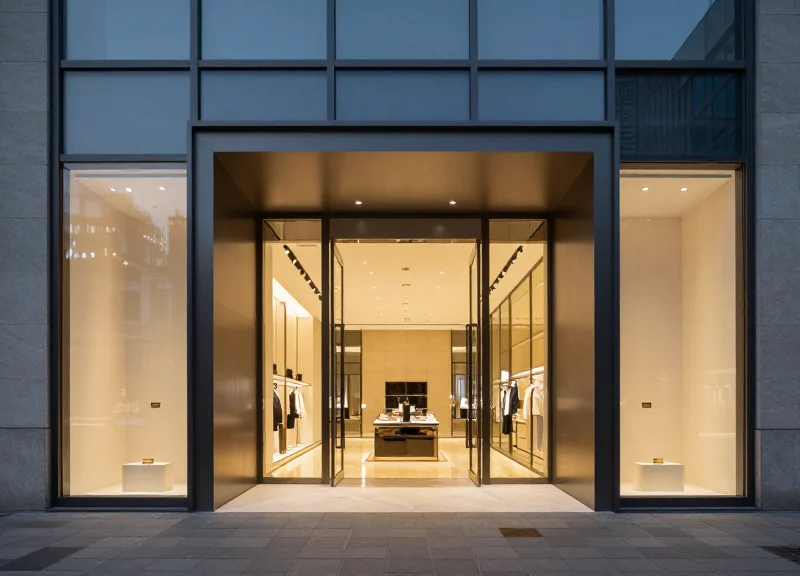
Global luxury brands are increasingly adopting a 'Hospitality-First' retail model, where the removal of traditional EAS pedestals is a prerequisite for creating an immersive, high-end experience. By migrating security infrastructure into the floor or ceiling, flagship stores in fashion capitals like Paris, Milan, and New York are eliminating the 'gatekeeper' psychology, allowing the architectural design to flow uninterrupted from the street to the point of sale. This trend is driven by the rise of RFID-based 'Experience Centers' where the technology remains invisible while providing 99% inventory accuracy and theft protection.
| Global Hub | Adoption Maturity | Primary Implementation | Strategic Driver |
|---|---|---|---|
| Paris (Avenue Montaigne) | High | Under-floor RFID Carpeting | Preservation of Historical Architecture |
| New York (Fifth Avenue) | Advanced | Integrated Floor Antennas | High-Volume Throughput & Frictionless Entry |
| Tokyo (Ginza) | Medium-High | Multi-Sensor Overhead Systems | Minimalist Aesthetic & Space Optimization |
| London (Bond Street) | High | Concealed Entry Mats | Customer Psychology & Brand Perception |
A critical observation from the 2024-2025 pilot programs in European flagships reveals that 'Invisible Security' isn't just about looks—it's about data. Leading jewelry and watch brands have found that removing pedestals reduces the 'bounce rate' of customers at the threshold. Expert Insight: Internal industry data suggests that removing visible security barriers increases spontaneous browsing by approximately 18% in high-ticket environments, as it signals a higher level of trust between the brand and the consumer.
Why are jewelry brands leading this transition?
Jewelry boutiques prioritize individual service. Traditional pedestals clutter the narrow entrances of boutique-style layouts. Hidden systems allow for an open-door policy that feels more like a private lounge than a high-security vault.
Does invisible security impact loss prevention metrics?
Actually, it improves them. Because these systems are typically RFID-based, they provide specific data on exactly which item is leaving the store, rather than just a generic alarm. This allows security personnel to respond with 'informed discretion' rather than an accusatory confrontation.
What is the 'Silent Luxury' infrastructure trend?
It is the movement to hide all utility and security elements—including vents, speakers, and EAS antennas—to ensure the physical space reflects the brand's 'quiet' and effortless prestige.
As we move toward 2026, the 'Hidden Antenna' is becoming the standard for any brand looking to compete in the 'Experience Center' era. The shift marks the end of the 'Security Gate' and the birth of the 'Smart Portal'—a transition that signifies a brand’s evolution from retail to true luxury hospitality.
Preparing Your Store for 2026: A Roadmap to Hidden Antenna Implementation
Transitioning to a pedestal-free retail environment by 2026 requires a shift from 'bolt-on' security thinking to 'integrated-infrastructure' planning. Preparing your store for hidden antenna implementation involves a collaborative effort between loss prevention (LP) teams, interior architects, and RF engineers to ensure that security technology remains invisible while maintaining peak detection performance. The roadmap focuses on three critical pillars: site-readiness auditing, RF-transparent material selection, and phased system calibration.
- Phase 1: Architectural Site Audit: Analyze existing floor substrates and subfloor depth. Hidden systems typically require 40mm to 60mm of clearance. Identify 'dead zones' where structural steel or HVAC ducting might interfere with signal propagation.
- Phase 2: RF-Transparent Material Sourcing: Collaborate with designers to select floor finishes that do not contain high metallic content. This is the stage to specify porcelain, stone, or specialized polymers that allow 8.2MHz or 58kHz signals to pass through unimpeded.
- Phase 3: Pre-Installation Calibration: Before the final floor pour or tile setting, conduct a 'dry-run' test of the antenna loops. Use a spectrum analyzer to identify ambient noise from nearby LED drivers or motorized doors that could trigger false alarms.
- Phase 4: Seamless Integration & Hidden Alerting: Finalize the feedback loop. In 2026, hidden antennas should not trigger loud sirens; instead, they should send haptic alerts to staff wearables or trigger discreet visual cues in the POS zone.
| Floor Material Type | RF Transparency Level | Implementation Difficulty |
|---|---|---|
| Porcelain & Ceramic | High | Low - Industry standard for hidden RF |
| Polished Concrete | Medium | Moderate - Must monitor rebar depth |
| Natural Stone (Granite/Marble) | High | Low - Excellent for 2026 luxury aesthetics |
| Metallic Infused Resin | Low | High - Avoid for antenna zones |
Expert Insight: The 5mm Leveling Rule. To ensure consistent detection across wide entrances, we recommend a precision subfloor leveling with a tolerance of no more than 5mm across the antenna loop span. Even minor floor unevenness can cause the RF field to 'tilt,' leading to inconsistent detection heights for smaller luxury items like jewelry or sunglasses.
Can I retrofit hidden antennas into an existing store?
Yes, but it requires a 'channel-cut' method where the floor is trenched to house the loops. This is best done during a mid-life store refresh rather than a live environment.
Will hidden antennas interfere with my 5G or Wi-Fi 7 networks?
No. RFID/EAS frequencies operate in a significantly lower band than modern wireless data protocols, ensuring no cross-interference in experience centers.
What is the primary maintenance requirement for underfloor systems?
The primary focus is annual remote software calibration. Since the hardware is protected under the floor, physical wear-and-tear is virtually non-existent compared to pedestals.