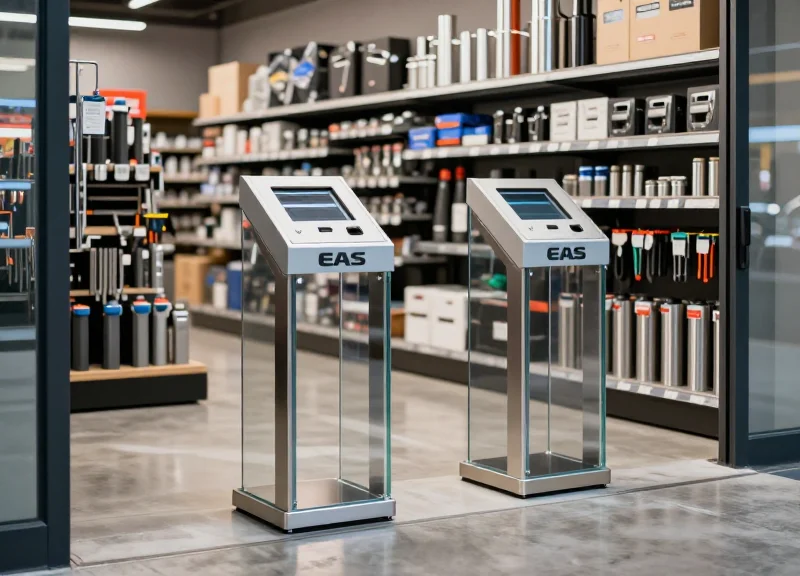

As we approach 2026, the management of multi-million dollar orchestral inventories is undergoing a radical shift. Traditional Electronic Article Surveillance (EAS) systems, while reliable for basic theft prevention, are increasingly seen as insufficient for the complex needs of modern symphonies and conservatories. The industry is rapidly transitioning toward discreet RFID-hybrid solutions—a sophisticated blend of security and intelligence that offers real-time visibility without compromising the aesthetic or structural integrity of priceless instruments. This article explores why the transition is happening now and how hybrid technology is redefining asset protection for the world's most valuable musical collections.
The Current State of Orchestral Asset Management

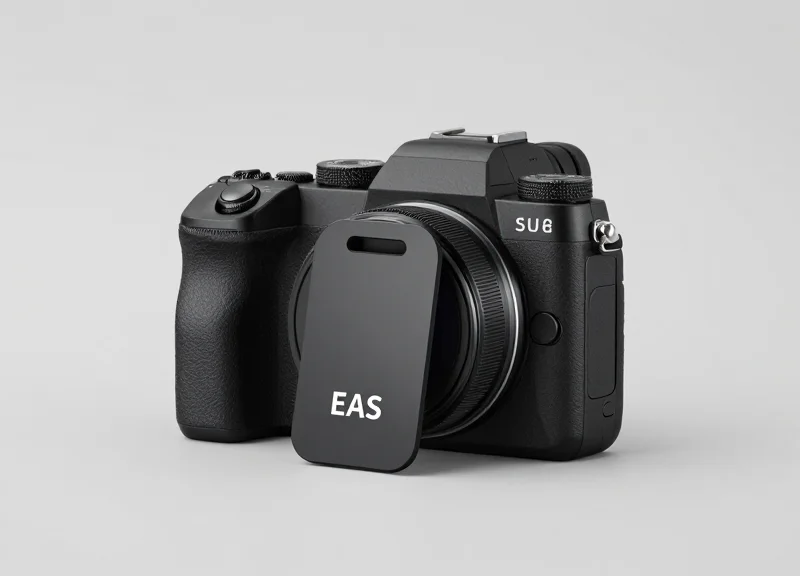
Orchestral asset management currently relies on a patchwork of Electronic Article Surveillance (EAS) and manual inventory audits, a model that focuses on perimeter alarms rather than real-time location intelligence or the physical preservation of multi-million dollar assets. While EAS has provided a basic level of theft deterrence for decades, it fails to address the complexities of modern international touring, instrument climate-control monitoring, or the discreet aesthetic requirements of professional ensembles. In the 2026 landscape, the industry is recognizing that a 'binary' security approach—where an item is either inside or outside a gate—is insufficient for inventory that requires constant custody chain verification.
| Feature | Traditional EAS | Orchestral Requirement (2026) |
|---|---|---|
| Visibility | Obtrusive hard tags or stickers | Discreet, non-invasive integration |
| Data Depth | Binary (In/Out) | Full telemetry, location, and history |
| Preservation | Physical clamping or adhesives | Non-invasive, resonance-neutral mounting |
| Infrastructure | Fixed pedestals at exits | Ubiquitous, zone-based tracking |
The primary friction point in the current state is the 'Aesthetic-Security Paradox.' Professional musicians and curators are often reluctant to attach bulky EAS tags to 18th-century cellos or delicate woodwinds because these tags can damage varnishes or, more critically, interfere with the instrument's acoustic resonance. This has led to a dangerous trend where high-value assets are left 'naked' or untracked to preserve their playability, creating significant insurance liabilities and security gaps during transit and backstage handling.
Why is traditional EAS failing the music industry?
Traditional EAS creates logistical bottlenecks during rapid stage transitions and provides zero data on instrument condition or precise location within a large venue, leading to 'invisible' losses.
What is the primary risk of current manual audits?
Manual logging is prone to human error and latency; by the time a high-value violin is noticed missing during a monthly audit, it may have already exited the country.
How do current systems impact insurance premiums?
Underwriters are increasingly penalizing organizations that rely on 'passive' security, demanding 'active' tracking solutions that provide real-time recovery data.
Expert Insight: A critical but often overlooked limitation is the 'Resonance Interference Factor.' Traditional EAS tags, due to their bulk and weight, can subtly alter the acoustic resonance of stringed instruments. In elite orchestral environments, even a 5-gram weight shift on a bridge or tailpiece can be detected by a soloist. The transition to RFID-hybrid tracking is not just a security upgrade; it is a mechanical necessity to ensure that security measures do not compromise the 'voice' of the instrument.
Defining the RFID-Hybrid Advantage
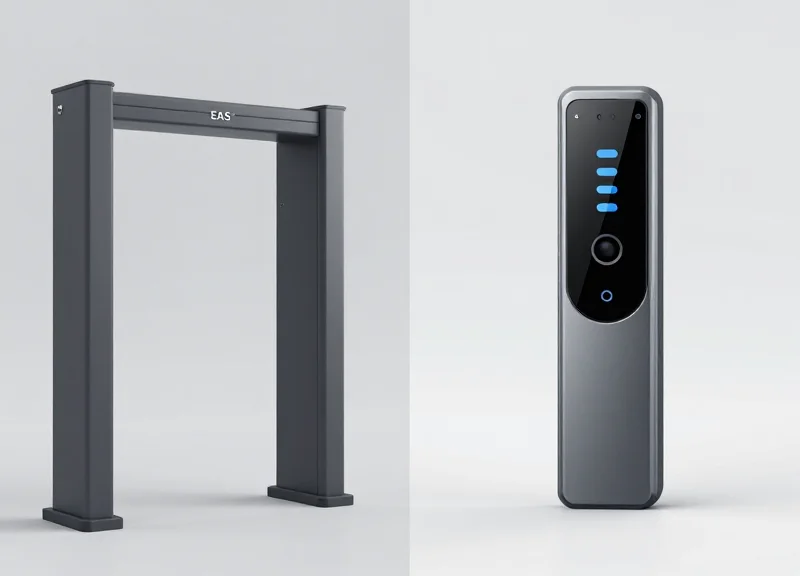
The RFID-hybrid advantage is a security paradigm that fuses the immediate alarm capabilities of Electronic Article Surveillance (EAS) with the item-level intelligence of Radio Frequency Identification (RFID). Unlike traditional systems that merely trigger a 'binary' alarm (on or off) when a tag passes a gate, a hybrid system identifies exactly which instrument—down to the specific serial number, condition report, and maintenance history—is crossing the threshold. This 'Dual-Layer' approach ensures that security gates function as both a loss prevention barrier and a high-speed data collection point, modernizing orchestral logistics without requiring a complete overhaul of existing physical infrastructure.
| Feature | Traditional EAS Only | RFID-Hybrid System |
|---|---|---|
| Detection Range | Narrow (Gate-specific) | Wide (Room-scale + Gates) |
| Data Granularity | None (Anonymous alarm) | Specific (Item ID, owner, history) |
| Inventory Audits | Manual / Barcode | Automated (Real-time) |
| Aesthetic Impact | Bulky, visible tags | Discreet, embedded tags |
| 2026 ROI | Diminishing | High (Due to automation) |
Technically, the synergy is achieved through 'Dual-Frequency Coexistence.' While traditional EAS operates on 8.2 MHz (RF) or 58 kHz (AM) to detect presence, the RFID component utilizes the 860-960 MHz UHF band. This allows for a non-interfering, simultaneous scan. For orchestras, this means a Stradivarius violin or a custom-made bassoon can be monitored for theft at the stage door while simultaneously being 'checked in' for a performance in the digital management system—all without a single manual scan.
Can RFID tags interfere with the acoustics of high-value woodwinds or strings?
No. Modern hybrid tags use 'Acoustic-Neutral' adhesive or are embedded within cases and tailpieces. Because the tags are passive (no battery), they do not emit a signal unless interrogated by a reader, ensuring no electromagnetic interference with digital recording equipment or the instrument's natural resonance.
Is the transition expensive for orchestras already using EAS gates?
The ROI is typically realized within 18 months through reduced inventory labor and insurance premiums. Many 2026-ready systems allow for 'Gate Retrofitting,' where RFID readers are added to existing EAS pedestals, preserving original capital investments.
How does this prevent 'False Positives' during busy tour load-ins?
Hybrid systems utilize 'Directional Logic' sensors. They distinguish between an instrument leaving the facility (Alarm) and one arriving for a performance (Check-in), eliminating the chaos of traditional alarm bells during transit.
Expert Insight: The 'Ghost-Tagging' Strategy. A unique advantage for 2026 is the implementation of 'Ghost-Tagging'—the placement of secondary, inert RFID chips within instrument cases that act as a fail-safe. If a thief removes a primary EAS tag, the discreet RFID-hybrid system continues to track the instrument's location throughout the supply chain via the global GS1 network, a level of persistence traditional EAS simply cannot match.
Trend 1: The Move Toward Discreet and Invisible Tagging

By 2026, the orchestral security landscape will shift from bulky, visible EAS 'hard tags' to discreet, invisible RFID-hybrid tagging. This trend focuses on 'Stealth-by-Design,' where ultra-thin sensors are embedded directly into instrument linings, case frames, or beneath bridge components. This evolution ensures that high-value assets—such as Stradivarius violins or custom-built harps—remain protected by a 'digital twin' that is physically unnoticeable to performers, audiences, and potential thieves, maintaining both the instrument's visual heritage and its precise acoustic resonance.
| Feature | Legacy EAS Tags | 2026 Discreet Hybrid Tags |
|---|---|---|
| Visibility | High (Overt Deterrence) | Zero (Covert Intelligence) |
| Form Factor | Clunky Plastic Shells | Flexible Polyimide Substrates |
| Acoustic Impact | High (Dampens Vibration) | Neutral (Mass < 0.1g) |
| Removal Risk | Easy to pry/cut | Impossible without damaging asset |
A significant technical hurdle in the music industry has always been the 'Mass Loading' effect—where adding any weight to an instrument changes its frequency response. The 2026 generation of RFID-hybrid tags utilizes flexible, nano-printed antennas that weigh less than a drop of varnish. These sensors are often integrated during the restoration or manufacturing process, tucked inside the purfling or within the internal blocks of string instruments. For brass and woodwinds, tags are increasingly placed inside the custom-molded foam of the instrument's primary case, utilizing the case itself as a secondary 'smart' shield.
Does discreet tagging affect the resale value of vintage instruments?
No. In fact, it often increases value by providing an immutable digital provenance and 'Certificate of Authenticity' that is physically linked to the instrument's DNA.
How is a hidden tag powered?
These are passive or semi-passive systems. They harvest energy from the RFID reader's signal or use microscopic 'energy-cell' batteries designed to last 15-20 years.
Can thieves use signal detectors to find hidden tags?
Modern hybrid tags use frequency-hopping and 'sleep-to-wake' protocols, making them virtually undetectable by standard illicit scanning devices until they pass through an authorized gateway.
Expert Insight: The Resonance-Neutral Substrate. A breakthrough for 2026 is the adoption of 'Acoustic-Grade Adhesives.' Unlike standard industrial glues, these medical-grade polymers match the elastic modulus of tonewoods like spruce and maple. This means the tag vibrates in perfect sympathy with the instrument, ensuring that the tracking technology is literally 'silent' in the hands of a virtuoso.
Trend 2: Real-Time Global Visibility for Touring Orchestras

Real-time global visibility for touring orchestras in 2026 refers to the seamless integration of passive RFID tagging for local inventory management with active IoT gateways for global logistics tracking. Unlike traditional EAS which only alerts security at a physical exit, this hybrid approach allows orchestral managers to monitor the location, temperature, and shock-status of high-value instruments across international borders via a centralized cloud dashboard. By leveraging 'Logistical Mesh' networks, orchestras can now ensure that a 17th-century Stradivarius is accounted for from the rehearsal hall in Berlin to the concert stage in New York without manual intervention.
| Feature | Traditional EAS/Manual Tracking | 2026 Hybrid Visibility |
|---|---|---|
| Tracking Scope | Zonal (Building only) | Global (Cloud-synced) |
| Data Updates | Point-in-time (Manual scan) | Continuous (Live stream) |
| Transit Security | Zero visibility in flight/truck | Active alerts for unauthorized movement |
| Customs Compliance | Paper ATA Carnets | Digital 'Smart' Carnet integration |
A significant 2026 breakthrough is the 'Digital Carnet' integration. By utilizing the unique ID of the embedded RFID tag, orchestral logistics teams can automate the verification of assets at customs checkpoints. Instead of manually inspecting each case, customs officials can use high-range readers to verify the entire manifest in seconds. This reduces the time instruments spend on hot tarmacs or in unconditioned loading bays—a critical factor for the structural integrity of wood-based instruments.
How does the tracking work when the instruments are in a flight case?
Modern tracking uses 'Case-Agnostic' antennas. A master active tag is placed on the flight crate which aggregates signals from the discreet passive tags on the individual instruments, relaying data via satellite or cellular links during transit.
Will these signals interfere with venue wireless systems or airline electronics?
No. 2026 hybrid tags operate on ultra-wideband (UWB) or low-energy Bluetooth (BLE) frequencies that are specifically shielded and certified for aviation safety and zero-interference with wireless audio equipment.
What happens in areas with poor cellular coverage?
Hybrid gateways utilize 'Store-and-Forward' technology, logging all environmental and location data locally and encrypted, then uploading the full history the moment a handshake with a network is established.
Expert Tip: To maximize ROI, orchestras should implement 'Geofencing' around venues. By creating a digital perimeter, the system can automatically trigger a roll-call the moment the equipment truck arrives at a new theater, instantly notifying the stage manager if a specific trunk has been left at the previous stop or diverted in transit.
Overcoming the Pain Points of Traditional Inventory Audits
Traditional inventory audits for orchestras have historically been defined by manual 'touch-and-tally' processes that are not only prone to human error but also pose a physical risk to delicate, multi-million dollar instruments. By 2026, the transition to RFID-hybrid tracking solves these bottlenecks by enabling non-line-of-sight data capture. This allows inventory managers to scan entire storage vaults or instrument trucks in seconds, achieving 100% data integrity without ever opening a flight case or disturbing a bridge setup. This technological leap transforms the audit from a dreaded semi-annual event into a continuous, automated background process.
| Audit Metric | Traditional EAS / Manual | RFID-Hybrid System (2026 Standard) |
|---|---|---|
| Audit Duration | 24 - 72 Hours | 5 - 15 Minutes |
| Data Accuracy | 92% - 95% (Human Variance) | 99.9% (Digital Precision) |
| Labor Requirement | 3 - 5 Staff Members | 1 Staff Member |
| Instrument Handling | High (Physical verification needed) | Zero (Non-contact scanning) |
| Insurance Compliance | Periodic / Reactive | Real-time / Proactive |
One of the most significant shifts is the move toward 'Silent Audits.' Unlike legacy EAS systems that only trigger an alarm at a door, RFID-hybrid tags respond to handheld or overhead 'interrogators' that cross-reference the physical location of an instrument with the digital manifest in real-time. This eliminates the 'ghost inventory' problem—where items appear in the ledger but are physically missing—which is a primary cause of insurance premium hikes for touring ensembles.
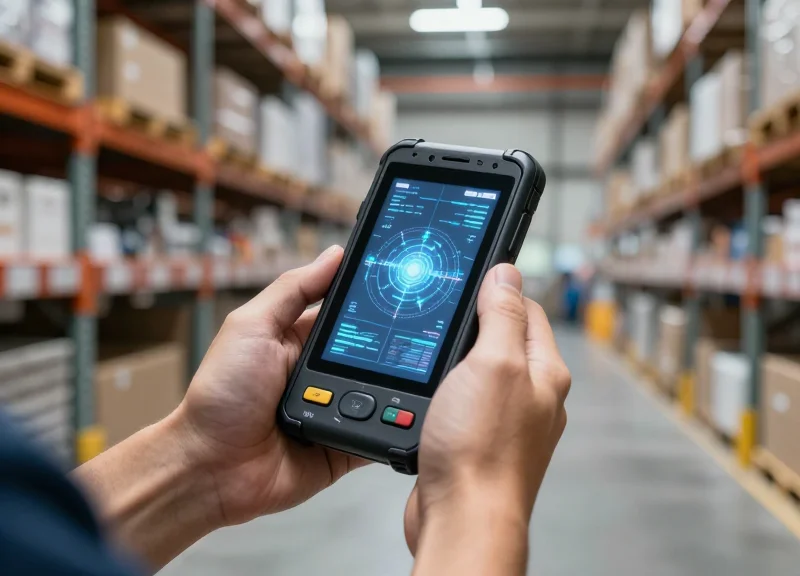
- Initialize Rapid Scan: The inventory manager uses a long-range UHF RFID handheld to sweep the rehearsal hall or storage locker. The reader communicates with the hybrid tags even through carbon-fiber cases.
- Automated Reconcilliation: The system instantly compares the 'seen' tags against the master asset database, highlighting any discrepancies such as missing bows or misplaced violas.
- Generate Compliance Report: A timestamped, tamper-proof report is generated automatically, providing the 'Proof of Presence' required by high-value asset insurers like Lloyd's of London.
Expert Tip: For 2026, we recommend 'Zone-Based Reconcilliation.' By installing discreet hybrid sensors at the transition point between the stage and the wings, the system can perform a micro-audit every time the orchestra moves, ensuring no instrument is left behind during a quick stage reset or venue change.
How does RFID-hybrid handle instruments in metal-lined cases?
Modern 2026 hybrid tags utilize 'on-metal' or specialized 'spacer' designs that leverage the case's surface to actually improve signal propagation, ensuring 100% readability even in shielded environments.
Is this system compliant with international customs (ATA Carnet)?
Yes, the automated audit reports provide a digital audit trail that mirrors the requirements for ATA Carnet documentation, significantly speeding up border crossings for international tours.
Can the system detect if a tag has been tampered with?
Advanced hybrid tags include 'tamper-loop' technology. If the tag is removed or the adhesive is broken, the RFID chip broadcasts a specific error code during the next audit sweep.
The Role of Data Analytics in Loss Prevention

Data analytics in orchestral loss prevention is the process of using software to interpret signal data from RFID-hybrid tags, shifting the focus from reactive alarm responses to predictive risk mitigation. By 2026, the industry standard will move beyond knowing that an instrument is missing to understanding the specific 'path of vulnerability' it took. Analytics engines now aggregate data from every scan point to identify 'hot zones'—physical locations where instruments are most frequently left unattended or where signal interference suggests a security blind spot. This allows ensemble managers to optimize staffing and physical security precisely where it is needed most.
| Feature | Legacy EAS Reporting | 2026 Predictive Analytics |
|---|---|---|
| Detection Type | Point-of-Exit Alarms | Continuous Path Analysis |
| Data Source | Single Gate Trigger | Multi-sensor Mesh Network |
| Insight Depth | Binary (Safe vs. Stolen) | Behavioral (Dwell Time & Flow) |
| Actionable Output | Security Guard Response | Automated Workflow Adjustments |
One of the most significant shifts in this technology is the 'Dwell-Time Deviation' metric. This unique analytical insight flags when a high-value asset, such as a Stradivarius violin or a custom-built harp, remains in a non-secure area—like a loading dock or a backstage hallway—for 15% longer than the established baseline for that specific venue. Instead of waiting for the instrument to leave the building, the system triggers a 'pre-loss alert,' allowing stagehands to secure the asset before a theft opportunity even arises.
- Baseline Mapping: The software records standard movement patterns during rehearsals and transit to establish a 'normal' behavioral profile for each instrument category.
- Hot Zone Identification: Heatmaps visualize areas where instruments congregate or stall, highlighting structural vulnerabilities in the theater or storage facility.
- Anomaly Detection: AI algorithms flag deviations, such as an instrument moving toward a secondary exit during off-hours or being handled by unauthorized personnel.
- Insurance Integration: Aggregated data is exported to insurers to prove rigorous oversight, often resulting in lower premiums for high-value orchestral collections.
How does analytics improve staff accountability?
By correlating instrument movement with staff shift schedules, the system creates a digital audit trail that discourages internal shrinkage and encourages better handling protocols.
Is the software difficult to integrate with existing systems?
Modern 2026 platforms use cloud-based APIs that sync directly with existing Inventory Management Systems (IMS) and security camera feeds for a unified dashboard.
Can these analytics detect potential damage?
Yes, many hybrid tags now include G-force sensors; analytics can correlate 'hard impacts' with specific locations or handlers to prevent future accidental damage.
Aesthetic Preservation: Why High-Value Assets Demand Subtlety

Aesthetic preservation in high-value orchestral tracking is the practice of integrating security hardware—such as RFID-hybrid tags—so discreetly that they do not alter the visual profile, physical weight, or acoustic resonance of the instrument. For curators and owners of instruments like Stradivari or Guarneri violins, the primary requirement for security is that it remains invisible to the audience and unfelt by the performer. Unlike traditional Electronic Article Surveillance (EAS) systems that rely on bulky, visible plastic tags, 2026's discreet solutions ensure that the 'soul' of a vintage asset remains untouched while providing continuous, real-time security monitoring.
| Feature | Traditional EAS Tags | 2026 Discreet RFID-Hybrid |
|---|---|---|
| Visual Impact | High (Bulky plastic housings) | Near-Zero (Embedded or skin-thin) |
| Weight | 5g - 15g (Affects balance) | < 0.5g (Acoustically neutral) |
| Attachment | Mechanical clamps or high-tack glue | Archival-grade micro-adhesion |
| Asset Value Risk | High (Finish damage/Resale drop) | Negligible (Non-invasive) |
A unique insight for 2026 is the emergence of 'Mass-Compensated Tagging.' In the world of high-end orchestral assets, even a gram of weight added to a violin’s tailpiece or a cello’s interior can dampen specific harmonics. The latest trend involves luthiers and security engineers collaborating to place ultra-thin RFID-hybrid chips in 'vibration-neutral' zones. This ensures that the instrument's acoustic signature remains identical to its pre-tagged state, a critical factor for professional soloists and insurance underwriters who require 'no-alteration' clauses to be met for full coverage.
Will the adhesives used for RFID-hybrid tags damage vintage varnish?
Modern archival-grade adhesives are pH-neutral and designed to be reversible. They create a molecular bond strong enough for security but can be removed by a certified luthier without leaving residue or lifting original finish.
Can these tags be hidden inside the instrument?
Yes, 2026 hybrid tags are small enough to be placed inside the f-holes of string instruments or within the valve casing of brass, though external placement on the case is often preferred for maximum signal strength.
Does subtlety compromise the deterrent effect of security?
While traditional EAS relied on 'visual deterrence,' high-value inventory security in 2026 relies on 'silent recovery.' The goal is not to scare a thief, but to ensure the asset is tracked and recovered the moment it moves beyond a geofenced perimeter.
Cost-Benefit Analysis: The ROI of Transitioning by 2026
The Return on Investment (ROI) for transitioning from traditional Electronic Article Surveillance (EAS) to discreet RFID-hybrid tracking is measured through the convergence of drastic labor reduction, asset recovery certainty, and the mitigation of 'invisible' logistical losses. While traditional EAS acts merely as a localized deterrent, a hybrid RFID system functions as a financial safeguard that provides granular data on an instrument's location and status. By 2026, the cost of inaction—represented by rising insurance premiums and manual inventory errors—is projected to exceed the capital expenditure of system implementation for most mid-to-large scale orchestras.
| Financial Metric | Traditional EAS (Status Quo) | Discreet RFID-Hybrid (2026 Goal) |
|---|---|---|
| Inventory Audit Labor | High (40-80 man-hours per month) | Low (<2 man-hours per month) |
| Insurance Premium Impact | Standard rates; no discounts | 10-15% 'Active Visibility' discount |
| Asset Recovery Rate | Low (<15% once off-site) | High (>85% via real-time pings) |
| Equipment Lifecycle | 5 years (limited utility) | 8-10 years (firmware upgradeable) |
Expert Insight: The 'Actuarial Pivot' of 2026. A critical, often overlooked data point for 2026 is the shift in underwriting standards. Major boutique insurers for high-value musical assets are moving toward a 'Digital Twin' requirement. Within two years, orchestras that cannot provide a real-time digital audit trail for their inventory will likely face 'High-Risk' surcharges. Implementing RFID-hybrid systems now isn't just about security; it's about moving your inventory into a lower actuarial risk tier, effectively allowing the system to pay for itself through premium savings alone.
- Direct Labor Savings: Automating the check-in/check-out process for touring ensembles eliminates the need for manual scanning or clipboard-based tracking, saving an estimated $25,000 annually in administrative overhead.
- Reduced 'Shrinkage' and Misplacement: Orchestral inventory often suffers from 'internal shrink'—instruments left in rehearsal halls or wrong vehicles. RFID alerts prevent these assets from entering 'dead zones,' reducing replacement costs for missing accessories and student-tier instruments.
- Logistical Precision: Hybrid systems that utilize both UHF RFID and BLE (Bluetooth Low Energy) allow for tracking across international borders without manual intervention, preventing costly customs delays and secondary inspections.
Is the initial CapEx higher than EAS?
Yes, initial hardware costs for hybrid tags and gateways are 20-30% higher than basic EAS gates. However, the total cost of ownership (TCO) is lower due to reduced loss and significantly lower operational man-hours.
How long does it take to see a positive ROI?
Most organizations reach the break-even point within 18 to 24 months, depending on the total value of the collection and the frequency of international travel.
Does this require a complete infrastructure overhaul?
No. Modern hybrid systems are designed to be 'overlay' technologies that integrate with existing inventory management software via API, minimizing the need for new IT staffing.
Implementation Strategy: Moving from EAS to Hybrid

The implementation strategy for transitioning from traditional Electronic Article Surveillance (EAS) to a discreet RFID-hybrid system is a multi-phased deployment designed to overlay modern data intelligence onto existing physical security perimeters. By adopting a 'Parallel-Run' model, orchestral managers can maintain basic theft deterrence via Acousto-Magnetic (AM) or Radio Frequency (RF) signals while incrementally introducing ultra-high frequency (UHF) RFID for item-level visibility. This ensures that high-value instruments are never left unprotected during the technological shift and allows for the calibration of 'silent alarms' that notify security via mobile alerts rather than disruptive audible sirens.
- Phase 1: Electromagnetic Environment Audit: Conduct a comprehensive site survey of the concert hall and storage facilities to identify potential interference from existing wireless stage equipment or structural metal that could impact RFID read rates.
- Phase 2: Hybrid Portal Retrofitting: Install dual-technology sensors into existing EAS pedestals or discreetly within door frames. This allows the system to read legacy security tags while simultaneously capturing the unique ID of new RFID-enabled assets.
- Phase 3: The 'Ghost-Tagging' Protocol: Apply non-invasive, specialized RFID tags to the inventory. For orchestral assets, this involves using 'on-metal' tags for brass and discreet, adhesive-free micro-tags for delicate wood instruments, often hidden within the case lining or near the tailpiece.
- Phase 4: Middleware API Integration: Connect the RFID hardware to your existing Inventory Management System (IMS) or ERP. This step ensures that a 'detected' instrument at a portal is automatically cross-referenced against the current rehearsal schedule or loan agreement.
- Phase 5: Staff Onboarding and Pilot Testing: Run a 30-day 'Shadow Period' where the hybrid system logs data without triggering public alarms, allowing staff to adjust to new workflows and ensuring the system is tuned to the unique acoustics of the venue.
| Feature | Traditional EAS (Legacy) | RFID-Hybrid (2026 Standard) |
|---|---|---|
| Detection Accuracy | Binary (Tag present/not present) | Specific (Unique ID, Location, History) |
| Aesthetic Impact | Visible, bulky hard tags | Discreet, 'invisible' embedded tags |
| Automation | Manual gate response | Real-time cloud logging and API triggers |
| Audit Capability | Zero (Requires manual scan) | Instant (Full inventory in minutes) |
Expert Silicon Valley Tip: The '80/20 Aesthetic Rule' is vital for high-value orchestral environments. While 80% of your assets (cases, chairs, sheet music stands) can use standard RFID labels, the top 20% of high-value instruments should utilize 'Signature-Matched Tags.' These are custom-tuned tags that account for the specific moisture content of aged spruce or maple wood, preventing detuning while ensuring the tag remains readable even when stored in carbon-fiber flight cases.
Will RFID interfere with wireless microphones or monitors?
No. Modern hybrid systems operate on specific UHF bands (860-960 MHz) that are distinct from standard 2.4GHz/5GHz Wi-Fi and common wireless audio frequencies, ensuring zero interference during live performances.
Can we reuse our old EAS pedestals?
Yes. Most leading 2026 hybrid solutions are designed as 'insert' upgrades for existing pedestals, significantly reducing the capital expenditure required for the transition.
What is the lifespan of an RFID-hybrid tag?
Passive RFID tags have no battery and can last 20+ years, making them ideal for long-term archival tracking of vintage instruments that may stay in a collection for decades.