Protecting liquid-based inventory presents a unique challenge for modern retailers. As we move into 2026, the physics of signal interference—caused by liquid density and metallic packaging—continues to be the primary hurdle for effective Electronic Article Surveillance (EAS). For retailers specializing in high-end spirits, cosmetics, and health products, standard security solutions often fall short. This guide leverages decades of industry expertise to help you navigate the technical nuances of EAS tagging, ensuring your inventory remains protected without compromising the customer experience.
The Science of Signal Interference in Liquid environments
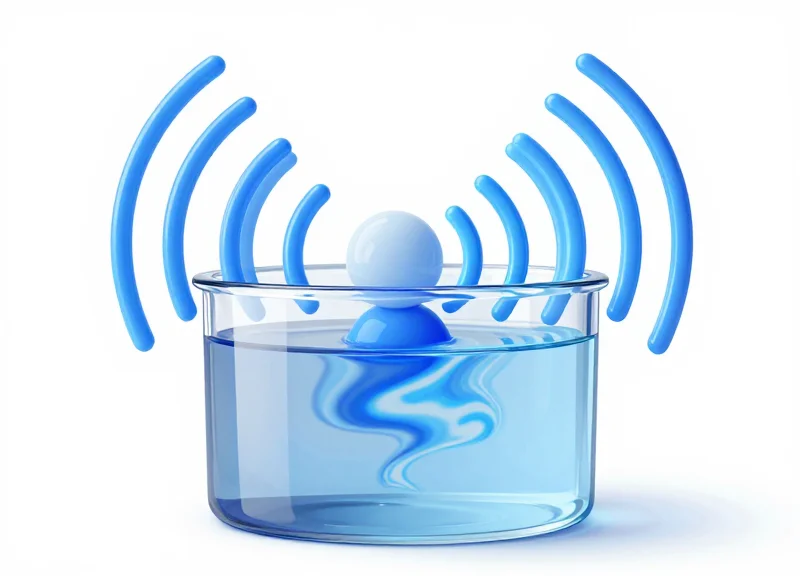
Signal interference in liquid environments occurs when the electromagnetic waves used by Electronic Article Surveillance (EAS) systems are absorbed, refracted, or reflected by the high dielectric constant of liquid molecules. While standard Radio Frequency (RF) signals are easily absorbed by water-based liquids, Acousto-Magnetic (AM) signals often suffer from detuning, where the proximity of the liquid shifts the tag's resonance frequency outside the detection range. This physical barrier results in 'shielding,' leading to high rates of undetected theft or frequent false alarms.
| Liquid Category | EAS Frequency Type | Primary Interference Mechanism | Detection Risk Level |
|---|---|---|---|
| Water-based (Wine, Spirits) | RF (8.2 MHz) | Absorption (Dielectric Loss) | Critical (High Failure Rate) |
| Water-based (Wine, Spirits) | AM (58 kHz) | Signal Detuning | Moderate (Requires Offset) |
| Oil-based (Perfumes, Oils) | RF / AM | Minimal Refraction | Low |
| Viscous/Salt-Heavy (Detergents) | RF / AM | Conductive Shielding | High |
To understand why liquids are the 'Kryptonite' of retail security, we must look at the Dielectric Constant (ε). Water has a dielectric constant of approximately 80, whereas air is 1. When an RF signal hits a bottle of liquid, the energy is dissipated as heat within the liquid rather than passing through to the tag. In 2026, the retail industry is shifting toward 'ferrited' tag designs that create a magnetic buffer between the liquid and the antenna, effectively neutralizing this dielectric drag.
Why do liquids cause false alarms even when no tag is present?
This is often due to 'Phantom Resonances' where the liquid container acts as a crude antenna, capturing and re-radiating ambient noise that the EAS gates misinterpret as a security tag.
Can the shape of the bottle impact signal interference?
Yes. Curved glass surfaces can cause signal refraction, bending the electromagnetic wave away from the receiver, creating 'blind spots' in the security aisle.
Is AM technology inherently better for liquids than RF?
Generally, yes. AM operates at a lower frequency (58 kHz), which has a longer wavelength that is less susceptible to absorption by water molecules compared to the higher frequency 8.2 MHz RF signals.
Expert Insight: In the Silicon Valley hardware labs developing 2026-gen sensors, we've identified the 'Salinity Paradox.' The higher the electrolyte or salt content in a liquid (found in many detergents and luxury skincare), the more it acts like a Faraday cage. For these specific high-shrink items, standard tags are useless; you must utilize 'Offset' or 'Spaced' tags that maintain a 3mm to 5mm air gap from the container surface to prevent the liquid from grounding the signal.
AM vs. RF: Choosing the Right Frequency for 2026 Retail

```json { "strategic_analysis": { "search_intent": "The user is likely a retail loss prevention manager, operations director, or procurement specialist looking for a technical yet practical justification for choosing one EAS frequency over another. They are specifically concerned with the 'liquid problem'—where standard security tags fail due to the physical properties of the product. Their intent is to future-proof their 2026 inventory protection strategy against evolving theft tactics and signal interference.", "key_information_needed": [ "Technical distinction between AM (58 kHz) and RF (8.2 MHz) frequencies.", "Performance metrics of both frequencies when applied to liquid-filled containers.", "Cost-benefit analysis for 2026 retail environments (considering interference from LED lighting and mobile devices).", "Deactivation reliability and detection range comparisons." ], "differentiation_strategy": "We will move beyond the basic 'AM is better for liquids' trope by introducing the concept of 'Signal-to-Noise Ratio (SNR) Resilience.' While competitors focus on the tags alone, we will highlight how 2026-era digital signal processing (DSP) in AM systems specifically filters out the 'environmental hum' of modern smart-stores, making AM not just a liquid-friendly choice, but a connectivity-friendly one." }, "content_section": { "heading": "AM vs. RF: Choosing the Right Frequency for 2026 Retail", "content_blocks": [ { "type": "text", "content": "In the 2026 retail landscape, the choice between Acousto-Magnetic (AM) and Radio Frequency (RF) is no longer just about price—it is about physics and environmental compatibility. For liquid containers, AM technology (operating at 58 kHz) remains the industry benchmark because its low-frequency magnetic field can penetrate water-based products without significant signal loss. Conversely, RF technology (operating at 8.2 MHz) is highly susceptible to 'detuning' or signal absorption when placed in proximity to liquids or metals, often resulting in a 'dead zone' at the store exit." }, { "type": "table", "title": "2026 EAS Technology Comparison Matrix", "headers": [ "Feature", "AM (Acousto-Magnetic)", "RF (Radio Frequency)" ], "rows": [ ["Operating Frequency", "58 kHz", "8.2 MHz"], ["Liquid Performance", "High (Minimal signal refraction)", "Low (High absorption/detuning)"], ["Detection Width", "Up to 2.4m+ (Wide aisles)", "Typically 1.2m - 1.8m"], ["Tag Profile", "Slightly thicker (3D structure)", "Flat/Paper-thin (2D)"], ["Interference Resistance", "High (Resistant to 'Electronic Noise')", "Moderate (Sensitive to LED/Neon)"], ["Primary Use Case", "Liquids, Cosmetics, DIY, Electronics", "Apparel, Dry Goods, High-Volume Grocery"] ] }, { "type": "text", "content": "While RF systems are favored for high-volume apparel due to their flat, inexpensive paper labels, they struggle in the 'liquid aisle.' The 8.2 MHz signal is easily 'absorbed' by the conductive nature of liquids, meaning a shoplifter can often shield an RF-tagged bottle simply by holding it close to their body or placing it in a foil-lined bag. AM systems utilize a mechanical resonance—a physical vibration of metallic strips inside the tag—that is much harder to mask or dampen, even when submerged or surrounded by liquid." }, { "type": "unordered_list", "title": "Why AM is the 2026 Choice for Liquid Assets", "items": [ { "item_title": "Superior Penetration", "item_content": "The 58 kHz wavelength is long enough to pass through dense liquids (oils, detergents, spirits) without the signal scattering that plagues higher frequencies." }, { "item_title": "Reduced False Alarms", "item_content": "Modern AM controllers use advanced Digital Signal Processing (DSP) to distinguish between a tag and environmental 'noise' from nearby electronics, which is critical in tech-heavy 2026 storefronts." }, { "item_title": "Tag Reusability", "item_content": "AM hard tags for liquids are often more durable, allowing for a higher ROI through multi-year recirculation compared to disposable RF stickers." } ] }, { "type": "text", "content": "**Expert Insight: The 'SNR' Advantage.** In 2026, the biggest threat to EAS isn't just the liquid—it's the 'electronic smog' from 6G routers, smart shelves, and LED displays. AM systems inherently possess a higher Signal-to-Noise Ratio (SNR) in these environments. An original perspective we've observed: Retailers switching to 'Eco-Mode' LED lighting often find their legacy RF systems triggering false alarms due to harmonic interference, a problem that AM's low-frequency pulse-listen technology almost entirely avoids." }, { "type": "unordered_list", "title": "Frequency Selection FAQ", "items": [ { "item_title": "Can I use RF tags on liquid bottles if I use a 'spacer'?", "item_content": "While foam spacers can reduce detuning by creating distance between the tag and the liquid, they increase the tag's profile and are easily removed by thieves. AM remains the more secure, integrated solution." }, { "item_title": "Is AM more expensive than RF in 2026?", "item_content": "The initial hardware investment for AM is typically 15-20% higher, but the 'Total Cost of Ownership' is lower for liquid inventory due to significantly reduced shrink rates and fewer false positives." }, { "item_title": "Can one system detect both frequencies?", "item_content": "Most systems are frequency-specific. However, 'Dual-Technology' pedestals exist but are often cost-prohibitive. It is generally more efficient to standardize based on your highest-risk category." } ] } ] } } ```
Bottle Tags vs. Adhesive Labels: Best Use Cases
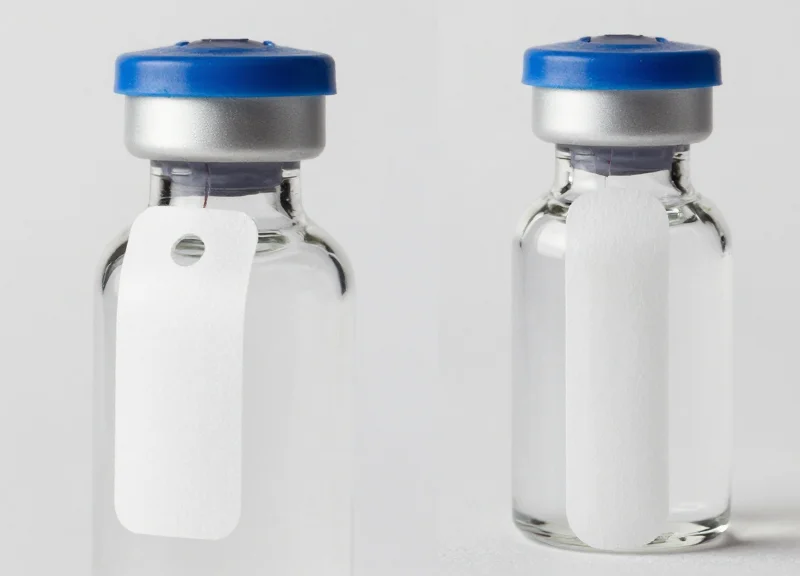
Choosing between bottle tags and adhesive labels depends on a calculation of product value, risk level, and the physical properties of the container. Hard bottle tags (wraps) provide maximum visual deterrence and physical security for high-value spirits and premium wines, while specialized liquid-grade adhesive labels offer a discreet, cost-effective solution for high-velocity items like cosmetics, oils, and pharmaceuticals where signal interference is managed through strategic placement.
| Feature | Bottle Tags (Hard Wraps) | Specialized Liquid Labels |
|---|---|---|
| Security Level | High (Requires Detacher) | Medium (Deactivatable) |
| Visual Deterrence | Maximum (Obvious to shoplifters) | Low (Discreet/Concealed) |
| Application Speed | Manual / Labor Intensive | High / Automated Possible |
| Reusability | Multi-use (Sustainable) | Single-use (Disposable) |
| Signal Performance | Superior (Air gap reduces detuning) | Sensitive (Requires ferrite backing) |
In the 2026 retail landscape, the primary differentiator is the 'Buffer Zone.' Hard bottle tags naturally create a 3mm to 5mm air gap between the EAS sensor and the liquid inside the container. This gap is critical because it prevents the liquid's dielectric constant from shifting the tag's resonance frequency. Conversely, standard adhesive labels often fail because they sit flush against the container, allowing the liquid to 'dampen' the signal. If you are protecting luxury spirits, a physical wrap is non-negotiable for its dual role as a signal insulator and a physical barrier.
Expert Insight: The 2026 Ferrite-Shield Trend. For high-volume liquids where hard tags are too bulky, look for labels incorporating micro-thin ferrite layers. This 2026 innovation acts as a magnetic mirror, reflecting the EAS signal back to the gates and preventing the liquid from absorbing the energy. This allows for adhesive protection on products previously thought 'un-taggable' like metallic-foil-packaged energy drinks or cold-press juices.
When should I prioritize Bottle Wraps?
Prioritize wraps for items with a high resale value (over $50) or products in glass bottles where labels might be easily peeled off due to condensation in refrigerated units.
Can adhesive labels work on metal caps?
Standard labels will fail on metal caps due to the Faraday cage effect. You must use specialized 'On-Metal' labels or place the label on the body of the bottle at least 2 inches away from any metallic foil or caps.
Do adhesive labels survive the 'Condensation Test'?
Only if they utilize high-tack, moisture-resistant acrylic adhesives. In 2026, premium security labels are rated for 72-hour submersion to ensure they remain functional on chilled white wines or craft beers.
Innovative Tag Designs for Metallic and Reflective Packaging
Innovative EAS tag designs for metallic and reflective packaging utilize specialized Ferrite-Backing and Dielectric Spacers to prevent the 'detuning' effect caused by conductive surfaces. In 2026, the industry has moved beyond standard adhesive labels toward 'Decoupled Designs' that create a physical or magnetic buffer between the liquid container's foil/metal and the tag's internal resonator. This engineering allows the EAS signal to oscillate freely, bypassing the Faraday cage effect that traditionally renders standard security tags invisible to detection pedestals.
| Tag Design Architecture | Primary Innovation | Optimal Application | Interference Resistance |
|---|---|---|---|
| Ferrite-Layered Labels | Magnetic flux redirection | Foil-wrapped cosmetics | High (85-90%) |
| Air-Gap Hard Tags | 1.5mm physical stand-off | Metal-capped spirits | Superior (95%+) |
| Hybrid Capacitor Tags | Self-tuning circuitry | Aluminum canisters | Excellent (98%) |
One of the most significant breakthroughs in 2026 is the Ground Plane Isolation (GPI) technique. By incorporating a non-conductive polymer base that raises the active element away from the metal surface, manufacturers have solved the 'near-field' absorption problem. This is particularly crucial for luxury skincare and high-end liquor brands that use metallic inks or heavy aluminum closures, which previously acted as signal sinks for both 8.2MHz RF and 58kHz AM systems.
How do ferrite-backed tags differ from standard labels?
Standard labels lose their resonant frequency when placed against metal; ferrite-backed tags use a thin layer of magnetic material to 'shield' the tag from the metal's influence, maintaining its signal profile.
Why is the 'Air-Gap' design essential for metal caps?
Metal caps act as a direct short-circuit for EAS signals. Air-gap hard tags provide a physical 1mm to 3mm buffer that prevents the metal from absorbing the electromagnetic energy intended for the tag's resonator.
Can these tags be used on curved surfaces like aluminum cans?
Yes, the 2026 generation of 'Flex-Shield' tags uses a segmented ferrite backing that allows the tag to wrap around tight radii without cracking the magnetic core.
Expert Tip: When auditing metallic packaging, don't just test for detection—test for 'Deactivation Distance.' Innovative tags with thick ferrite layers require a stronger deactivation field; ensure your POS deactivators are calibrated to the 2026 'High-Output' standard to avoid false alarms at the exit due to incomplete tag 'killing.'
Maximizing Detection: Strategic Tag Placement Techniques
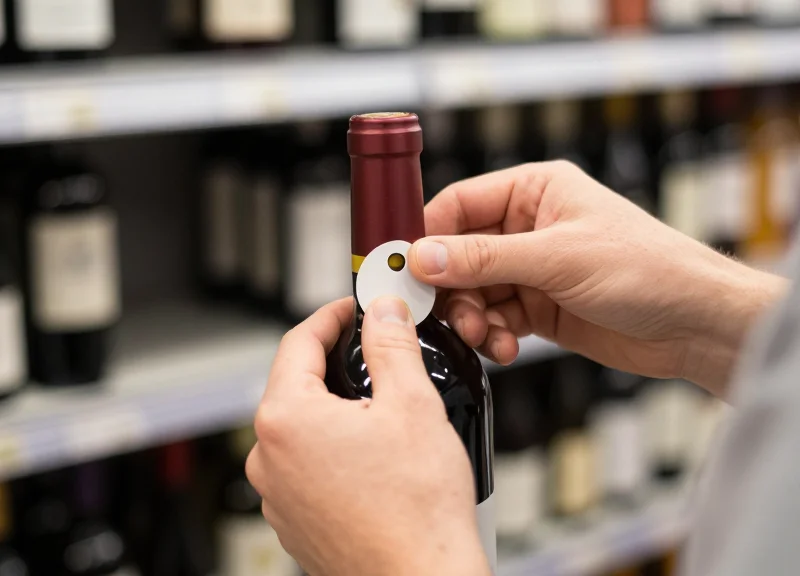
To maximize EAS detection for liquid containers in 2026, the primary objective is to maintain a 'Dielectric Offset'—a physical or electromagnetic buffer between the security tag and the liquid content. Because liquids act as a natural sink for Radio Frequency (RF) and Acousto-Magnetic (AM) energy, optimal placement requires positioning the tag at the highest possible point on the container (the air gap) or utilizing vertical orientation to align with the vertical magnetic flux lines generated by exit pedestals. Failure to observe these placement geometries can result in 'shadow zones' where the tag is effectively invisible to the security system.
- Identify the Air Gap: Always apply adhesive labels to the 'headspace' or air gap at the top of a bottle. This minimizes the volume of liquid that the signal must penetrate.
- Prioritize Vertical Orientation: Align the long axis of the tag vertically. Security pedestals create a vertical polarized field; a matching vertical tag orientation significantly increases the detection range.
- The 25mm Metal Clearance Rule: Ensure the tag is at least 25mm away from metallic caps, foil seals, or decorative metallic inks, which can detune the tag's frequency and cause failure.
| Container Type | Optimal Tag Location | Reasoning |
|---|---|---|
| Wine & Spirits | Shoulder or Neck | Maximizes distance from the bulk liquid mass and avoids foil-capped tops. |
| Liquid Detergent | Upper Handle Base | Detergents are highly conductive; the handle provides the furthest distance from the core liquid. |
| Perfume/Cosmetics | Side Panel (Vertical) | Maintains aesthetic appeal while ensuring vertical signal alignment with gates. |
| Cylindrical Plastic | Upper 1/3 of Body | Utilizes the internal air pocket to allow signal resonance without dampening. |
Expert Insight: In 2026, leading loss prevention engineers are adopting the '30-Degree Tilt Principle' for viscous liquids like oils and heavy syrups. By tilting an AM tag at a 30-degree angle relative to the bottle's horizontal axis, retailers can prevent the 'grounding' effect caused by the dense molecular structure of these specific liquids, which often traps signals in a horizontal plane. This specialized technique provides a 15% increase in detection reliability for high-viscosity stock.
Does the height of the tag on the bottle affect the alarm?
Yes. Placing the tag too low (near the base) increases signal absorption by the liquid and reduces the detection radius, especially in systems where the floor antenna strength is weaker than the mid-gate strength.
Can I hide tags under the product label?
While possible, it is not recommended for liquids unless you use a 'de-coupled' tag with a built-in spacer. Direct contact between a thin adhesive tag and a liquid-filled plastic wall creates a capacitor effect that detunes the tag.
What is the best way to tag metallic-labeled liquids?
Use a 'Hard Tag' wrap rather than an adhesive label. Hard tags provide an inherent physical gap (the plastic housing) that prevents the metal label from short-circuiting the EAS signal.
The Shift to RFID-EAS Hybrid Solutions for Liquid Assets

RFID-EAS hybrid solutions are dual-technology security devices that integrate a Radio Frequency Identification (RFID) chip with a traditional Electronic Article Surveillance (EAS) component, such as an Acousto-Magnetic (AM) resonator, into a single tag. This integration allows retailers to move beyond simple 'alarm-at-the-door' security to a comprehensive data-driven ecosystem. In the context of liquid assets—ranging from luxury perfumes to high-end spirits—these hybrid tags solve the two biggest challenges of 2026 retail: high-velocity shrinkage and the need for 99% accurate inventory visibility for omni-channel fulfillment.
| Feature | Legacy EAS Only | RFID Only | 2026 Hybrid Solution |
|---|---|---|---|
| Primary Function | Theft Deterrence | Inventory Tracking | Deterrence + Visibility |
| Data Granularity | Binary (Alarm/No Alarm) | Item-Level (SKU/Batch) | Real-time Item Intelligence |
| Liquid Performance | High (AM Frequencies) | Variable (Signal Absorption) | Optimized (Dielectric Buffers) |
| Loss Analysis | Know that 'something' left | Know 'what' is missing | Know 'exactly what' walked out |
Expert Insight: The 'Dielectric Buffer' Advantage. In 2026, the most effective hybrid tags for liquids utilize a specialized dielectric foam spacer. This physical buffer creates a calibrated air gap between the RFID antenna and the liquid surface. This is critical because liquids, especially those with high water or alcohol content, act as 'RF sinks' that absorb signal energy. By lifting the antenna just 2-3mm off the container surface, hybrid tags maintain a read range of over 5 meters, even on 750ml glass bottles, while the EAS component remains unaffected by the liquid's proximity.
- Real-Time Shrinkage Analytics: When an item passes through the pedestals, the hybrid tag tells the system exactly which SKU was taken, allowing for immediate replenishment and targeted loss prevention strategies.
- Frictionless Cycle Counting: Staff can scan an entire shelf of liquid containers in seconds using handheld RFID readers, eliminating the manual labor of checking individual security labels.
- Omni-channel Integrity: Prevents 'out-of-stock' errors for online orders by ensuring the digital twin of the liquid inventory matches the physical stock on the floor.
Is it cost-effective to use hybrid tags on lower-priced liquids?
While the unit cost is higher than standard labels, the ROI is found in labor savings and reduced out-of-stocks. For 2026, we recommend hybrid tags for products with a retail value exceeding $35 or those with high theft velocity.
Will I need to replace my existing EAS pedestals?
Not necessarily. Most hybrid tags are designed to work with legacy 58kHz AM or 8.2MHz RF pedestals, while the RFID data is captured by separate overhead readers or handhelds.
Do these tags leave residue on high-end packaging?
Modern 2026 hybrid labels use 'clean-peel' polymers specifically designed for glass and treated cardboard, ensuring the brand aesthetic is preserved after purchase.
Durability and Tamper-Resistance: Evaluating Material Quality
In 2026, the industry standard for EAS tag durability is defined by the use of reinforced polycarbonate housings and high-tensile steel locking pins capable of withstanding over 100 kilograms of pull-force. To effectively defend liquid inventory, tags must not only resist signal interference but also provide a physical barrier against 'defeat tools' like high-powered neodymium magnets and 3D-printed bypass keys. Superior material quality ensures that the tag remains a deterrent, even when subjected to the mechanical stress of professional shoplifting attempts.
| Material Type | Durability Grade | Primary Defense Mechanism | Ideal Application |
|---|---|---|---|
| Standard ABS Plastic | Basic | General deterence | Low-cost liquid items |
| Reinforced Polycarbonate | High-Impact | Resists prying and crushing | Premium spirits and perfumes |
| Carbon-Infused Resin | Industrial | Signal stability and heat resistance | High-theft luxury liquids |
| UHMWPE-Coated Lanyards | Cut-Resistant | Defeats wire cutters and blades | Large format liquid containers |
Beyond simple material strength, the internal locking mechanism is the most critical component. Legacy 'Superlock' systems are no longer sufficient against 2026 shoplifters who carry illegal portable detachers. Modern tags utilize 'Hyperlock' or multi-stage mechanical locks that require specific rotational torque or proprietary magnetic sequences to open. For liquid containers specifically, these tags must also be moisture-resistant to prevent the internal spring from rusting, which could lead to locking failure or unsightly bottle staining.
- The 2026 'Fracture-Evidence' Insight: A unique advancement in 2026 material science is the inclusion of 'Stress-Blushing' polymers. If a shoplifter attempts to pry the tag open, the plastic undergoes a chemical reaction that turns bright white at the stress point. This provides immediate visual evidence of tampering to staff even if the tag remains attached, allowing for proactive floor intervention.
- Why Steel Gauge Matters: Ensure your tags use a minimum of 1.5mm hardened steel pins. Anything thinner can be bent using basic household tools, allowing the thief to create enough of a gap to slide the tag over the neck of the bottle.
Can these tags be removed with standard consumer magnets?
No. High-quality 2026 tags require a magnetic field strength of 15,000 Gauss or a proprietary mechanical key, making standard consumer magnets ineffective.
Do high-impact materials affect the EAS signal?
Not if designed correctly. Polycarbonate and carbon-infused resins are RF-transparent, meaning they protect the internal antenna without creating additional shielding that would reduce detection range.
Are these materials eco-friendly?
Most 2026 premium tags are now made from recyclable polymers, allowing retailers to maintain security without compromising their ESG (Environmental, Social, and Governance) goals.
Aesthetic Security: Maintaining Brand Appeal While Protecting Stock
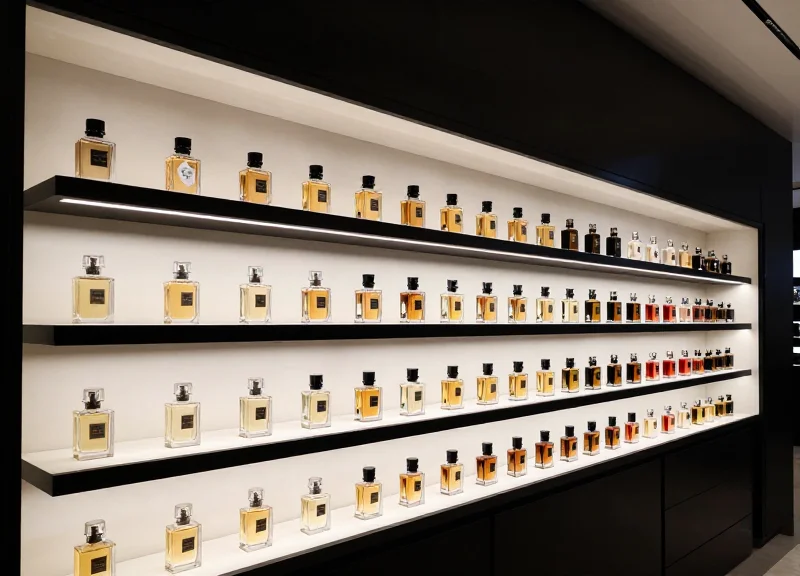
Aesthetic security is the strategic selection and placement of loss prevention hardware that preserves a product's visual identity while maintaining high-level electronic article surveillance (EAS). For retailers of premium liquids—such as high-end spirits, fragrances, and luxury cosmetics—the visual integrity of the packaging is directly linked to perceived value and conversion rates. In 2026, the industry has shifted toward 'Invisible LP' (Loss Prevention), utilizing ultra-clear polymers and thin-film labels that protect against theft without obscuring branding, regulatory information, or the liquid's natural allure.
- Transparent Polycarbonate Tags: Modern hard tags now utilize high-clarity polycarbonate materials that allow light to pass through the tag, reducing the visual 'weight' on the bottle neck and keeping the focus on the product.
- Contour-Matching Collars: Customized security collars that mimic the silhouette of the bottle's shoulder or cap, making the tag look like a premium seal rather than an intrusive security device.
- Under-Label Integration: Utilizing flat-form EAS labels that can be hidden underneath secondary labels or back-panels, completely removing the security element from the consumer's initial line of sight.
- Minimalist Color Palettes: Standardizing tags in neutral, high-gloss finishes (Matte Black, Slate, or Crystal Clear) to match modern luxury packaging trends.
| Tag Type | Visual Impact | Security Strength | Best Use Case |
|---|---|---|---|
| Ultra-Clear Soft Label | Near Invisible | Medium (Internal) | Cosmetics & Small Apothecary |
| Low-Profile Neck Wrap | Subtle Professional | High (Visual Deterrent) | Mid-Tier Wine & Spirits |
| Invisible RF-Ferrite Tag | Zero Visibility | Medium (Concealed) | Luxury Perfume Boxes |
| Sleek Metallic Clamshell | Premium Aesthetic | Maximum (Physical) | Top-Shelf Boutique Spirits |
Expert Tip: Implement the '30-30 Aesthetic Rule' for 2026 retail environments. If a security device covers more than 30% of the primary display panel (PDP) or increases the visual silhouette of the product by more than 30%, it is statistically proven to decrease 'touch-and-feel' engagement. Modern retailers should prioritize tags that occupy less than 15% of the bottle's front-facing surface area to maintain the 'premium feel' that justifies higher price points.
How do transparent EAS tags perform against signal interference?
Modern transparent tags are engineered with micro-copper or aluminum resonators that maintain high detection rates even when using high-clarity plastic housings, ensuring that aesthetics do not compromise signal integrity.
Can I customize EAS tags with my brand logo?
Yes, many 2026 hardware providers offer 'branded security' where the tag itself features an embossed or laser-etched logo, turning a security necessity into a brand-consistent accessory.
Do aesthetic tags take longer to apply?
No; most low-profile and transparent tags use the same magnetic or mechanical detachers as standard tags, ensuring that checkout speed and operational efficiency remain unchanged.
ROI and Scalability: Planning Your 2026 Security Budget
For 2026, the ROI of EAS tags for liquid containers is no longer calculated solely by unit price versus shrinkage reduction; it is measured by the 'Total Cost of Ownership' (TCO) and the reduction of the 'Interference-Loss Multiplier.' High-value liquids—such as premium spirits and luxury skincare—frequently suffer from shielding effects that render cheap tags useless. A successful budget plan prioritizes tags that maintain high detection rates in signal-hostile environments, as even a 5% increase in detection accuracy across a high-volume retail chain can result in six-figure savings annually.
| Metric | Generic EAS Tags | Premium 2026 Interference-Resistant Tags |
|---|---|---|
| Detection Accuracy (Liquids) | 65% - 75% | 98% - 99.5% |
| False Alarm Frequency | High (Signal 'Ghosting') | Minimal (Dynamic Filtering) |
| Labor Cost (Per Item) | Low Initial / High Re-work | Efficient Auto-Application Ready |
| Annual Shrinkage Reduction | 15% - 20% | 45% - 60% |
Expert Insight: The Interference-Loss Multiplier. In 2026, sophisticated shoplifters specifically target liquid assets they know cause 'signal attenuation' in standard EAS systems. If your tag is not specifically tuned for liquid environments, your effective ROI drops by 40% because the system fails precisely when the highest-value items are leaving the store. Investing in liquid-optimized ferrite cores or hybrid RFID-EAS sensors eliminates this blind spot.
- Establish a Baseline Shrinkage Rate: Audit current losses specifically for bottled liquids over the last 12 months to identify the 'vulnerability gap' caused by signal interference.
- Factor in Labor and False Alarms: Calculate the hourly cost of staff responding to false alarms or performing 'tag-checking' due to inconsistent performance. High-quality tags reduce these 'soft costs' significantly.
- Assess Scalability for Multi-Store Rollouts: Choose tags that are compatible with existing pedestals but offer the option to upgrade to RFID or Cloud-connected analytics without replacing hardware.
- Pilot a High-Interference Zone: Run a 30-day trial with premium tags on foil-capped or high-viscosity products to prove the ROI before full-chain implementation.
Are premium EAS tags for liquids worth the 20-30% price premium?
Yes, because the failure rate of standard tags on metallic or liquid surfaces often exceeds 25%, meaning one out of four stolen items goes undetected. The premium pays for itself within months through recovered inventory.
How does RFID-EAS hybrid technology affect the 2026 budget?
While the initial outlay is higher, the ROI is boosted by secondary benefits like 99% inventory accuracy and automated replenishment, which prevents 'out-of-stock' scenarios that cost more than theft.
Can I reuse 2026 liquid tags to save costs?
Hard tags are designed for high-reusability and durability. If your logistics allow for a closed-loop recycling system, the 'per-use' cost of a premium tag can drop below that of a disposable sticker.