In the modern logistics landscape, speed and accuracy are no longer just advantages—they are requirements for survival. As global supply chains face increasing complexity, traditional manual scanning methods have become a bottleneck. By leveraging RFID-enabled automated identification, smart warehouses are seeing a transformative 35% increase in throughput. This article explores how this technology pays for itself by optimizing operations, reducing human error, and providing unprecedented visibility into inventory flow.
The Evolution of Smart Warehousing: From Manual to Automated
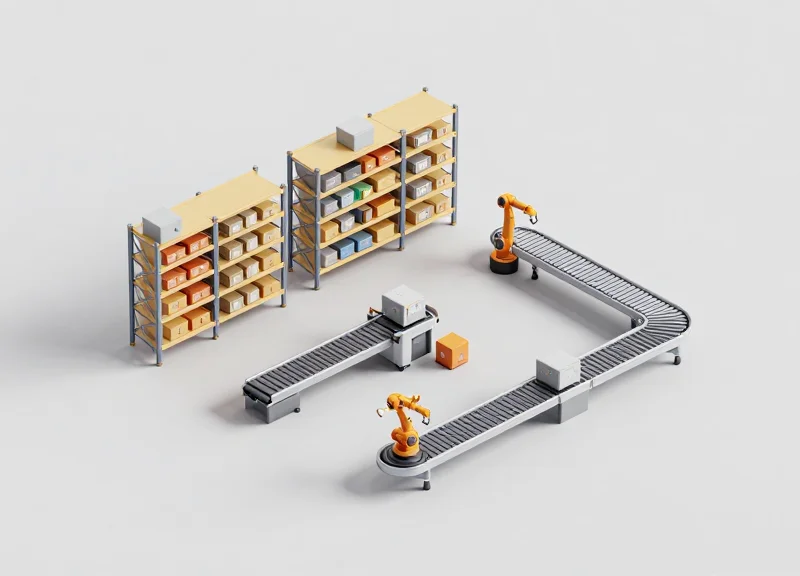
The evolution of smart warehousing represents a paradigm shift from 'passive' storage to 'active' digital ecosystems, where manual verification is replaced by real-time automated identification. Driven by the need for massive throughput and 99.9% inventory accuracy, the industry has transitioned from paper-based logs to barcodes, and finally to RFID-enabled environments that allow for simultaneous, touchless data capture of thousands of items.
| Feature | Manual Warehousing | Barcode Scanning | RFID-Enabled Smart Warehousing |
|---|---|---|---|
| Data Capture | Paper/Manual Entry | Line-of-sight Scan | Simultaneous Bulk Reading |
| Human Intervention | High (Prone to error) | Moderate (One by one) | Minimal (Automated gates) |
| Throughput Speed | Slow / Static | Linear / Sequential | Exponential / Concurrent |
| Visibility | Delayed / Reactive | Point-in-time | Real-time / Predictive |
In the early days of logistics, warehousing was a cost center defined by physical labor and static shelving. The introduction of the barcode in the 1970s was revolutionary, yet it still required a 'one-to-one' interaction: a human operator had to find a label and trigger a scan. In today's hyper-competitive e-commerce landscape, this linear bottleneck is the primary barrier to scale. The 'Smart' warehouse of the current era leverages RFID (Radio Frequency Identification) to move from sequential processing to parallel processing, effectively decoupling labor hours from volume capacity.
- The Paper Era: Reliance on clipboards and memory. High risk of 'dark inventory' where items exist in the building but are digitally invisible.
- The Digital Transition: Introduction of Warehouse Management Systems (WMS) and handheld scanners. Improved accuracy but kept personnel tethered to individual scanning tasks.
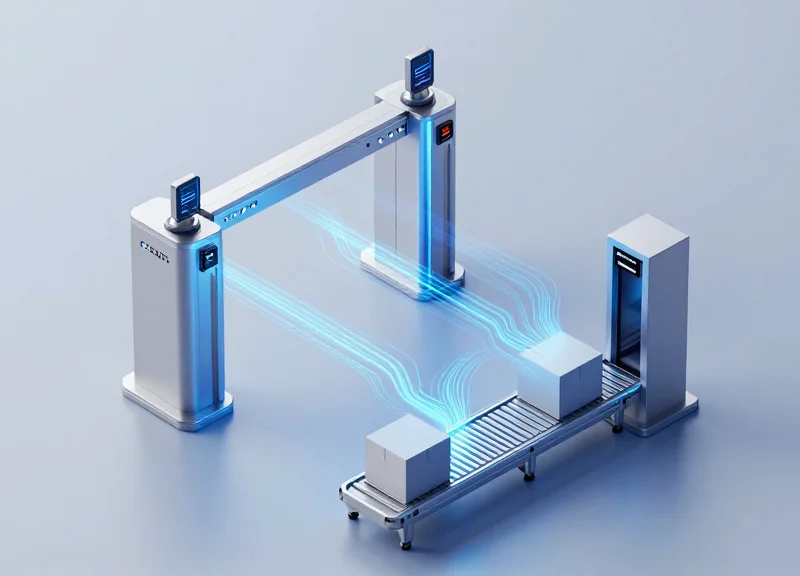
- The Autonomous Frontier: Integration of RFID, IoT sensors, and robotics. Identification happens 'on the fly' as items pass through portals or move via conveyors, eliminating the need for manual checkpoints.
Expert Insight: The true ROI of automation isn't just labor reduction; it is the increase in 'Data Velocity.' In a manual system, data lags behind the physical goods by minutes or hours. In an RFID-enabled smart warehouse, the digital twin of your inventory updates at the speed of light. This allows for 'Zero-Stop' logistics—where goods move from receiving to shipping without ever needing a human to pause for a scan, directly contributing to that 35% throughput boost.
Understanding RFID-Enabled Automated Identification (Auto-ID)
RFID-Enabled Automated Identification (Auto-ID) is a sophisticated technology ecosystem that uses radio frequency electromagnetic fields to identify, track, and manage inventory without requiring human intervention or direct line-of-sight. Unlike traditional barcodes that demand one-on-one manual scanning, RFID Auto-ID allows for the simultaneous capture of hundreds of data points, transforming physical assets into digital data streams in real-time. By integrating silicon-based tags, high-gain antennas, and intelligent middleware, smart warehouses can achieve total visibility across the supply chain at the speed of light.
| Feature | Passive RFID (Standard) | Active RFID (Advanced) |
|---|---|---|
| Power Source | Powered by Reader's signal | Internal Battery |
| Read Range | Up to 15 meters | Up to 100+ meters |
| Unit Cost | $0.05 – $0.15 | $15.00 – $50.00 |
| Primary Use | Inventory, Pallets, Apparel | RTLS, High-value Assets, Vehicles |
- The Tag Trigger: An RFID reader sends out a radio signal via an antenna. When a passive tag enters this field, its own antenna draws energy to 'wake up' the microchip.
- Data Transmission: The tag backscatters its unique electronic product code (EPC) and any associated sensor data back to the reader.
- Signal Interpretation: The reader receives the radio waves and converts them into digital data strings.
- Middleware Filtering: The edge software (middleware) filters out duplicate reads and pushes clean, actionable data into the Warehouse Management System (WMS) or ERP.
Expert Insight: The 'Data Density' Advantage. In my two decades observing Silicon Valley logistics, the biggest differentiator for RFID isn't just 'speed'—it's 'Data Density.' While a barcode contains only a SKU, an RFID tag can hold unique serial numbers, expiration dates, and even temperature logs. This allows for 'Individual Item Intelligence,' where the system doesn't just know you have a box of widgets, but exactly which box was manufactured on which line at what time. This granularity is what actually unlocks the 35% throughput boost by eliminating verification errors that plague manual systems.
Is RFID susceptible to interference from metal or liquids?
Historically, yes. However, modern 'on-metal' tags and specialized UHF (Ultra-High Frequency) wave-shaping have largely mitigated these issues, allowing for reliable reads even in challenging environments.
How does Auto-ID differ from standard barcodes?
The primary difference is the 'Non-Line-of-Sight' (NLOS) capability. You can scan a sealed pallet containing 200 items without opening it or aiming at individual labels.
What is the lifespan of an RFID tag?
Passive tags have no moving parts or batteries, meaning they can remain functional for decades, often outlasting the physical product they are attached to.
The 35% Throughput Factor: How RFID Accelerates Operations

The 35% increase in throughput achieved through RFID-enabled automated identification is primarily driven by the transition from sequential, line-of-sight manual scanning to simultaneous, bulk data acquisition. In a smart warehouse environment, RFID removes the 'human-in-the-loop' delay, allowing items to be tracked and verified at the speed of the conveyor belt or forklift movement. This creates a friction-less flow of goods where data is captured automatically as assets pass through 'choke points' or portals, effectively decoupling warehouse capacity from labor availability.
| Operational Phase | Manual / Barcode Process | RFID-Enabled Process | Throughput Impact |
|---|---|---|---|
| Receiving | One-by-one scanning of cartons; manual data entry. | Bulk pallet scanning via tunnel or portal in seconds. | Up to 90% reduction in dock-to-stock time. |
| Picking | Walking to locations; scanning individual items/locations. | Real-time location sensing and hands-free verification. | 20-30% faster order cycle times. |
| Shipping | Final manifest check per item; manual label verification. | Automated gate verification for 100% order accuracy. | Eliminates staging delays and re-work. |
One unique insight often overlooked by supply chain managers is the 'Shadow Latency' of manual scanning. In a traditional barcode system, every scan is a micro-stoppage. Across 10,000 units, these micro-stoppages aggregate into hours of lost kinetic energy. RFID enables 'Kinetic Data Capture,' where the movement of the product is the data event. By capturing data without stopping the product, you recover the lost momentum that represents the hidden 35% of your facility's theoretical capacity.
- Elimination of Decanting: With RFID, goods can remain in their original packaging while being fully inventoried, removing the need to open boxes just to find a barcode.
- Concurrent Verification: Systems can verify order contents against the WMS (Warehouse Management System) in real-time as the pallet moves toward the loading dock, rather than as a separate post-picking step.
- Dynamic Slotting Optimization: High-velocity data allows for real-time adjustments to warehouse layout, moving fast-moving items closer to dispatch based on actual flow data.
Can RFID handle high-density metal or liquid environments?
While these materials traditionally interfered with radio waves, modern specialized tags and 'on-metal' RFID technology ensure that even challenging inventory can be tracked with 99%+ accuracy.
How does RFID affect labor costs during peak season?
By automating identification, warehouses can handle up to 40% more volume during peak seasons without a proportional increase in temporary staffing, significantly protecting margins.
Is the throughput gain immediate?
Most facilities see a 'velocity spike' within the first 30 days of implementation as the most egregious bottlenecks at the receiving dock are resolved instantly.
Direct vs. Indirect ROI: Calculating the Financial Impact
To calculate the ROI of RFID-enabled automated identification, enterprises must evaluate both Direct ROI (hard savings)—immediate, measurable reductions in operational expenses—and Indirect ROI (soft savings)—long-term gains in business intelligence, customer loyalty, and market responsiveness. While a 35% increase in throughput provides the headline figure, the true financial impact stems from a reduction in manual labor hours and the near-elimination of shipping errors, typically resulting in a full system payback within 12 to 18 months for high-volume smart warehouses.
| Category | Direct ROI (Hard Savings) | Indirect ROI (Soft Savings) |
|---|---|---|
| Labor | Reduction in manual scanning hours & cycle counts. | Increased employee morale due to reduced repetitive tasks. |
| Accuracy | Elimination of mis-shipment fines and re-shipping costs. | Enhanced brand reputation and customer lifetime value (LTV). |
| Inventory | Reduction in safety stock levels and holding costs. | Improved 'Velocity Premium' and faster cash-to-cash cycles. |
| Capital | Lower depreciation on equipment through optimized usage. | Scalability to handle peak seasons without adding headcount. |
The 'Direct' side of the ledger is often the easiest to sell to the C-suite. By automating identification, a warehouse can typically reduce labor costs associated with data entry by 70% to 90%. However, the 'Indirect' impact is where the competitive advantage is cemented. For instance, real-time inventory visibility allows for 'Lean' inventory management, which reduces the capital tied up in excess stock—often a multi-million dollar benefit for mid-to-large scale operations.
- Baseline Current Costs: Audit current manual labor hours for receiving, picking, and inventory counting. Include the average cost per error (returns, restocking, and shipping).
- Project RFID Efficiencies: Apply the 35% throughput increase to your labor model and calculate the reduction in FTE (Full-Time Equivalent) requirements for the same volume.
- Factor in the 'Velocity Premium': Calculate the financial gain from reducing the cash-to-cash cycle. Faster identification means faster billing and improved working capital.
- Amortize Total Cost of Ownership (TCO): Balance initial hardware and tag costs against the long-term reduction in shrink and asset loss over a 3-5 year period.
Expert Insight: The Velocity Premium. Most ROI models overlook what I call the 'Velocity Premium.' In a legacy warehouse, data lags behind physical movement by hours or even days. With RFID, the data is the movement. This synchronization allows companies to shorten their Order-to-Cash (OTC) cycle significantly. For a $100M revenue operation, shortening the cycle by just two days can unlock millions in liquid capital that was previously trapped in the supply chain 'black hole.' That liquidity is the ultimate indirect ROI.
Eliminating Human Error: Enhancing Inventory Accuracy
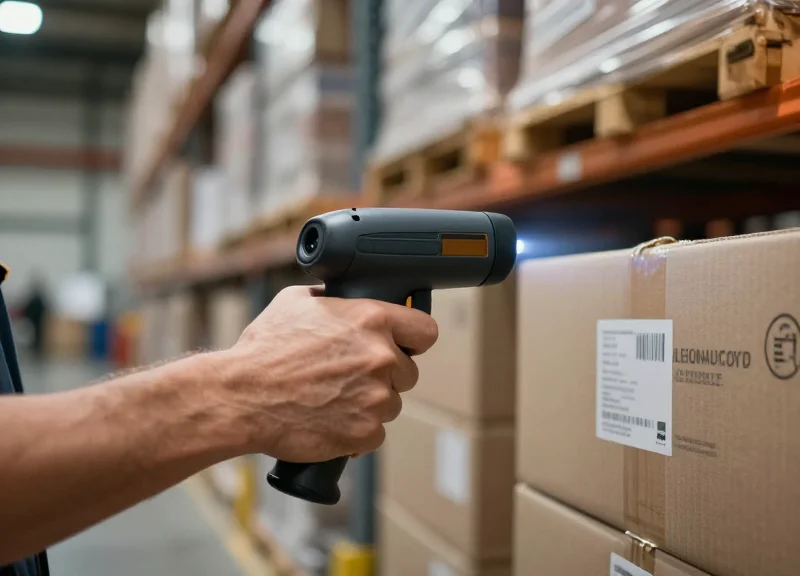
Automated identification eliminates the 'human in the loop'—the primary source of data degradation in logistics. By transitioning from manual barcode scanning to RFID-enabled capture, warehouses move from a 65% average inventory accuracy rate to a consistent 99% or higher. This shift occurs because RFID readers capture data autonomously, removing the risks of missed scans, fat-finger data entry errors, and the 'guesswork' often associated with high-volume receiving and fulfillment.
| Feature | Manual/Barcode Systems | RFID-Enabled Automation |
|---|---|---|
| Typical Accuracy Rate | 60% - 80% | 99.5% - 99.9% |
| Data Capture Method | Manual Line-of-Sight | Autonomous Radio Wave |
| Processing Speed | 1 item per 3-5 seconds | Up to 1,000 items per second |
| Verification | Subjective/Manual Audit | Real-time System Validation |
A critical, often overlooked perspective is the 'Cost of the Ghost': Phantom Inventory. In my 20 years of experience, the most expensive error isn't just a miscount; it is the system believing an item is in stock when it is physically missing. This triggers lost sales and halts production lines. RFID creates a 'Digital Twin' of the physical warehouse floor, where every item's location and status are updated in milliseconds, effectively banishing phantom inventory and the emergency re-ordering costs it generates.
- Automated Receiving Validation: As pallets pass through RFID portals at the dock door, the system automatically compares the physical arrival against the Digital Advance Shipping Notice (ASN), flagging discrepancies instantly without human intervention.
- Continuous Cycle Counting: Instead of disruptive annual counts, RFID allows for daily or hourly 'blind counts' using overhead readers or autonomous mobile robots, ensuring the WMS always reflects physical reality.
- Error-Free Picking & Packing: Smart bins and RFID-enabled packing stations alert workers immediately if the wrong SKU is placed in a shipping carton, stopping the error at the source before it reaches the customer.
Does RFID eliminate the need for manual audits entirely?
While it reduces the frequency, we recommend quarterly 'spot-checks' to ensure tag integrity; however, the labor required for these audits typically drops by 80% compared to traditional methods.
How does the system handle high-density storage errors?
RFID readers use RSSI (Received Signal Strength Indicator) and phase-angle data to determine the exact location of a tag, preventing the 'cross-talk' errors common in older automated systems.
What happens if a tag is damaged?
Modern industrial RFID tags are designed for high-durability; if a tag fails, the system identifies the 'missing' data point during the next gate-scan, allowing for immediate remediation.
Real-Time Data Visibility: Empowering Data-Driven Decisions

Real-time data visibility in smart warehousing refers to the instantaneous, automated tracking of assets, inventory, and personnel as they move through a facility, enabled by a continuous stream of RFID telemetry. Unlike traditional batch processing, where data is only updated after a manual scan, RFID-enabled visibility creates a 'digital twin' of the warehouse. This allows managers to see the precise status of every SKU and resource at any given second, forming the foundation for agile, data-driven decision-making that can pivot in response to live operational shifts.
| Operational Metric | Reactive (Manual/Barcode) | Proactive (RFID/Real-Time) |
|---|---|---|
| Labor Allocation | Based on yesterday's throughput reports. | Dynamic shifting based on current bay congestion. |
| Pick-Path Efficiency | Static routes updated monthly or quarterly. | Live heat-mapping to avoid traffic and aisle blocks. |
| Inventory Restocking | Triggered by end-of-day cycle counts. | Auto-triggered the moment a threshold is crossed. |
| Bottleneck Detection | Identified after delays have occurred. | Real-time alerts when dwell times exceed limits. |
A unique advantage of RFID data visibility often overlooked by legacy operators is Temporal Path Analysis. While most systems tell you where an item is, RFID tells you the velocity at which it traveled and where it stalled. By analyzing the time-stamped 'breadcrumbs' of RFID tags, managers can identify 'micro-bottlenecks'—physical layout flaws like a narrow corner or poorly placed charging station—that silently bleed minutes from every picking hour. Identifying these invisible friction points is the difference between a warehouse that is merely functional and one that is truly optimized.
- Identify Live Bottlenecks: Use dashboard heat maps to see where personnel or equipment are congregating, allowing for immediate intervention to clear floor obstructions.
- Dynamic Labor Rebalancing: If the RFID system detects a surge in inbound shipments, managers can instantly reassign staff from low-priority picking to receiving docks before the backlog creates a multi-hour delay.
- Automated Quality Control Gates: Set up RFID portals at transition points that automatically flag if a pallet is heading toward the wrong shipping lane, preventing costly mis-ships before they leave the building.
How does real-time visibility improve employee safety?
By tracking the movement of forklifts and personnel simultaneously, systems can provide proximity alerts or identify high-risk zones where near-misses are frequent, allowing for safer layout redesigns.
Can RFID data help with predictive maintenance?
Yes. By tracking the total 'mileage' or hours of operation of RFID-tagged machinery (like AGVs or lift trucks), managers can schedule maintenance based on actual usage rather than arbitrary calendar dates.
Does this require a full WMS overhaul?
Not necessarily. Most modern RFID middleware is designed to sit atop existing Warehouse Management Systems, feeding real-time data into your current interface via APIs.
Overcoming Implementation Challenges: Best Practices
To overcome RFID implementation challenges, enterprises must transition from a 'plug-and-play' mindset to a 'physics-first' strategy. The most common hurdles—signal interference, tag readability on metallic surfaces, and data silos—are best mitigated through rigorous site surveys, the selection of environment-specific hardware, and the deployment of robust middleware that filters raw 'noise' into actionable business logic. By prioritizing the physical environment before the software layer, organizations can ensure the 99%+ read accuracy required to achieve a 35% throughput boost.
| Challenge Category | Common Obstacle | Best Practice Solution |
|---|---|---|
| Physical Environment | RF interference from metal racking or liquid containers. | Utilize 'on-metal' spacer tags and perform a spectrum analysis to identify multipath interference. |
| Data Integration | Middleware latency and ERP data synchronization issues. | Deploy edge computing to filter redundant reads at the reader level before sending to the cloud. |
| Tag Reliability | Tag detachment or damage during high-velocity handling. | Conduct 'peel and shear' testing and select industrial-grade adhesives or encapsulated hard tags. |
| Hardware Placement | Dead zones in portal or dock door coverage. | Implement phased-array antennas and dynamic power adjustment for circular polarization. |
Expert Insight: The 'Pilot-to-Scale Physics Audit' In my 20 years of Silicon Valley deployments, the number one failure point isn't the software—it's the 'density drift.' A pilot in a half-empty warehouse behaves differently than a full-scale operation with 40-foot high metal racks. I recommend a 'Dynamic Load Stress Test' during the pilot phase: simulate peak capacity with maximum metallic and liquid interference to find the 'true' read-rate baseline before the full capital expenditure.
- Phase 1: RF Site Survey: Use a spectrum analyzer to map existing ambient noise and identify physical barriers that reflect or absorb radio waves.
- Phase 2: Tag-to-Asset Mapping: Match tag types (Active, Passive, or BAP) specifically to the asset material; never use standard paper inlays on metallic surfaces.
- Phase 3: Logic-Layer Integration: Develop specific 'filtering logic' to prevent 'stray reads' (e.g., a reader at Dock Door 1 picking up a tag moving through Dock Door 2).
- Phase 4: Iterative Antenna Calibration: Adjust antenna angles and power levels in 5% increments until the 'sweet spot' for the specific facility geometry is found.
Can RFID work in facilities with high metal content?
Yes, but it requires 'On-Metal' (MOM) tags which feature a specialized ceramic or foam backing to create a buffer between the metal surface and the antenna.
How do we prevent duplicate data from multiple readers?
Implement a 'Low-Level Reader Protocol' (LLRP) and middleware with time-stamp de-duplication to ensure an item is only counted once per transition.
Is it possible to integrate RFID with a 20-year-old WMS?
Yes. The standard approach is to use an API-first middleware layer that translates RFID events into standard EDI or flat-file formats the legacy system can ingest.
The DragonGuardGroup Edge: Comprehensive RFID Solutions
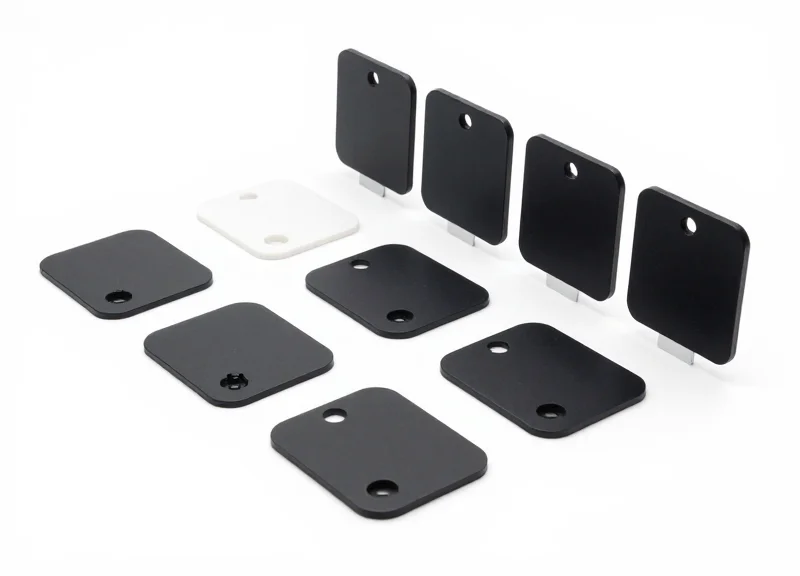
The DragonGuardGroup Edge lies in its ability to bridge the gap between asset security, inventory accuracy, and retail-level visibility through a unified ecosystem of RFID, EAS, and ESL technologies. Unlike vendors that offer siloed hardware, DragonGuardGroup provides a holistic 'Security-to-Efficiency' framework, ensuring that every item is not just tracked for throughput, but protected against shrinkage and integrated into a dynamic pricing and picking environment. This synergy allows smart warehouses to achieve a 35% boost in throughput while simultaneously reducing loss and labor costs through automated, real-time data synchronization.
- Integrated EAS & RFID Synergy: Combining Electronic Article Surveillance with RFID allows for high-security environments where inventory tracking and loss prevention occur simultaneously without additional hardware overhead.
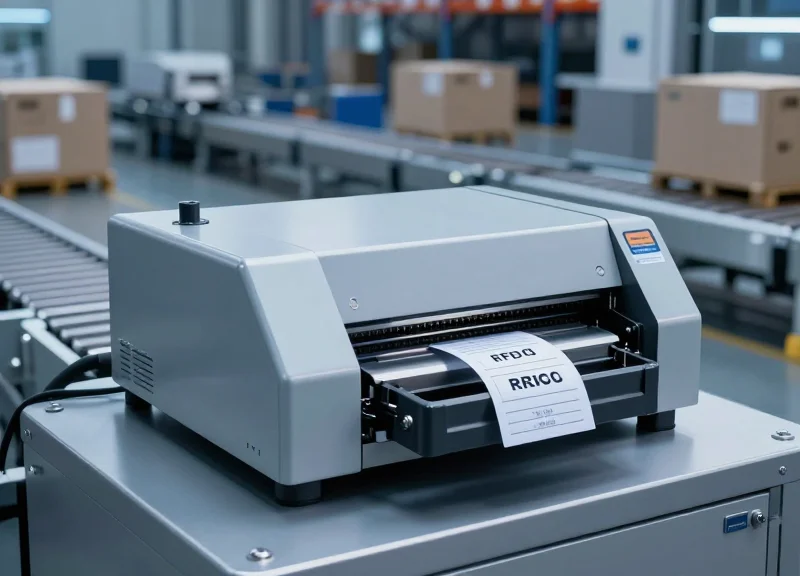
- Industrial-Grade Durability: Our RFID tags and labels are engineered for the rigors of smart warehousing, featuring heat-resistant adhesives and impact-resistant housings for heavy machinery environments.
- ESL for Dynamic Picking: By integrating Electronic Shelf Labels, warehouse managers can update bin locations and picking instructions in milliseconds, eliminating the need for paper labels and manual updates.
- Global Deployment Capability: With a robust supply chain and technical support network, we scale solutions from single-facility pilots to international multi-site operations with consistent hardware standards.
| Technology Layer | Primary Function | Strategic Benefit for Smart Warehousing |
|---|---|---|
| RFID (UHF/HF) | Granular Item Tracking | 99.9% inventory accuracy and 35% faster throughput via bulk scanning. |
| EAS (Security) | Loss Prevention | Reduces shrinkage and unauthorized inventory movement at facility exits. |
| ESL (Shelf Labels) | Visual Data Display | Reduces picking errors by providing real-time LED-guided location cues. |
| Cloud Middleware | Data Harmonization | Centralizes hardware data for seamless integration with ERP and WMS platforms. |
Expert Insight: The Cross-Pollination ROI. While most providers treat EAS and RFID as separate budgets, the DragonGuardGroup methodology utilizes RFID-encoded EAS tags. This creates a 'Forensic Security' data loop: when an EAS gate is triggered, the system doesn't just sound an alarm; it identifies the specific SKU and serial number being moved. This unique insight allows warehouse managers to reconcile 'missing' inventory in real-time rather than waiting for an end-of-quarter audit, effectively turning security events into actionable inventory data.
Can DragonGuardGroup hardware integrate with my existing WMS?
Yes, our RFID and ESL solutions are designed with open API architectures, allowing for seamless data handshakes with major Warehouse Management Systems and ERPs like SAP and Oracle.
What makes your RFID tags different from generic alternatives?
DragonGuardGroup tags undergo rigorous stress testing for read-range consistency and interference rejection, ensuring high performance even in metal-heavy or high-density warehouse environments.
Do you offer customized tag designs?
We specialize in custom form factors, including metal-mount tags, laundry-grade RFID for textile tracking, and specialized labels for cold-chain storage environments.
Future-Proofing Your Warehouse: The Intersection of RFID and AI

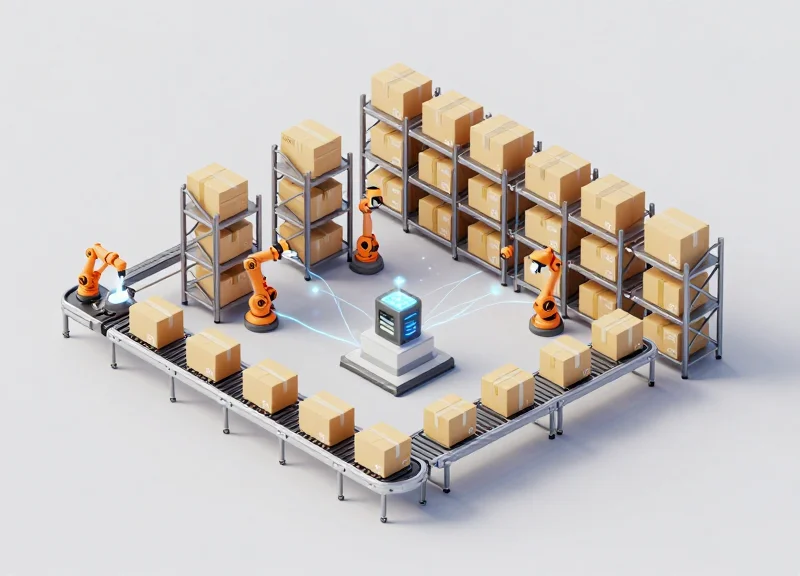
Future-proofing a warehouse requires moving beyond simple data collection to 'Cognitive Warehousing,' where the intersection of RFID and Artificial Intelligence (AI) serves as the facility's nervous system and brain. While RFID provides the high-fidelity, real-time data of every physical movement, AI and Machine Learning (ML) algorithms interpret these patterns to predict demand surges, automate replenishment cycles, and optimize slotting strategies before bottlenecks occur. This synergy transforms the warehouse from a reactive storage space into a proactive, self-optimizing strategic asset.
| Feature | Traditional RFID Implementation | AI + RFID Integrated Ecosystem |
|---|---|---|
| Data Utility | Descriptive: Tells you what is currently in stock. | Prescriptive: Tells you what will be needed and where to move it. |
| Replenishment | Threshold-based: Reorder when stock hits X. | Predictive: Reorder based on lead times, weather, and market trends. |
| Labor Management | Reactive: Staffing based on current backlog. | Pre-emptive: Dynamic scheduling based on predicted inflow. |
The 'Self-Healing' Inventory Insight: A unique advantage of combining AI with RFID is the concept of 'Self-Healing Inventory.' Traditional systems only flag a discrepancy during a cycle count. An AI-enhanced RFID system can detect 'ghost inventory'—items that are physically present but misplaced—by analyzing irregular movement patterns that deviate from standard operating procedures. By identifying these anomalies in real-time, the system can task a floor worker to rectify the placement immediately, maintaining 99.9% floor-to-record accuracy without manual audits.
How does AI use RFID data for predictive maintenance?
AI analyzes the frequency and speed of RFID-tagged assets (like forklifts or pallets) moving through zones. If an asset's cycle time increases, AI predicts mechanical fatigue or layout inefficiency before a breakdown occurs.
Can RFID and AI automate the reordering process?
Yes. By feeding live RFID inventory levels into ML models that account for seasonal demand and shipping delays, the system can autonomously trigger Purchase Orders (POs) to ensure optimal stock levels without human intervention.
What is the role of 'Computer Vision' in this intersection?
AI often fuses RFID data with Computer Vision. While RFID identifies the 'what' and 'who,' cameras provide the 'how' (e.g., verifying if a package was handled safely), creating a multi-layered digital twin of the warehouse.
As we move toward Industry 4.0, the integration of RFID and AI will be the primary differentiator for global logistics leaders. Those who leverage this 'Digital Twin' of their supply chain will not only see a 35% boost in throughput but will also gain the agility to pivot operations in real-time as global market conditions shift.