As we approach 2026, global retailers are navigating a complex landscape of rising labor costs, evolving shrink patterns, and the urgent need for real-time inventory visibility. The decision between in-store tagging and factory-integrated source tagging is no longer just a loss prevention choice—it is a fundamental supply chain strategy. This guide breaks down the operational impacts, financial trade-offs, and technological shifts (including EAS and RFID integration) that will define retail excellence in the coming years.
The Current Landscape of Global Retail Security in 2026
As we enter 2026, global retail security has evolved into a discipline of 'Precision Loss Prevention.' No longer just a battle against shoplifting, security now encompasses the mitigation of 'Total Retail Loss' across hyper-connected supply chains. With global shrink rates reaching record highs despite increased surveillance, the industry's focus has shifted from visible deterrence to invisible, data-rich integration. Retailers are now forced to choose between the agility of in-store application and the systemic efficiency of factory-integrated source tagging to maintain margins in an era of decreasing labor availability and increasing organized retail crime (ORC).
| Security Metric | 2024 Benchmark | 2026 Projection |
|---|---|---|
| ORC Financial Impact | $112 Billion | $145+ Billion |
| Primary Shrink Driver | External Theft | Administrative/Inventory Discrepancies |
| Source Tagging Adoption | 45% of Global SKUs | 68% of Global SKUs |
Why is the 2026 landscape different from previous years?
The maturation of AI-driven analytics means that security tags are no longer just alarms; they are vital data points. In 2026, the integration of RFID and IoT sensors at the factory level provides the granular visibility required for real-time inventory reconciliation that older, localized systems cannot match.
How does the current labor market influence tagging decisions?
With rising retail wages and high turnover, asking store associates to manually tag hundreds of items daily is becoming economically unviable. Retailers are pivoting toward factory-integrated solutions to free up staff for high-value customer service roles.
The Veteran's Perspective: The 'Digital Ghost Inventory' Crisis. One unique insight for 2026 is the emergence of 'Digital Ghost Inventory'—items that are physically in the store but missing from the digital ledger due to tagging errors. My analysis shows that retailers using fragmented in-store tagging suffer a 4% higher margin erosion compared to those using factory-integrated tagging. By applying tags at the source, the 'digital twin' of the product is born at the point of manufacture, ensuring 99.9% inventory accuracy before the item even reaches the loading dock.
In-Store Tagging: The Case for Localized Flexibility

In-store tagging is the localized process of applying Electronic Article Surveillance (EAS) or RFID tags directly at the retail outlet or regional distribution center rather than during the manufacturing stage. This approach serves as a 'last-mile' security strategy, allowing store managers to apply protection based on real-time local theft data, regional product demand, and immediate inventory arrivals. For global retailers operating in 2026, in-store tagging remains the primary defense against localized 'shrink spikes' that factory-level planning cannot anticipate.
- Agility and On-Demand Protection: Store managers can pivot security strategies instantly. If a specific SKU becomes a target for organized retail crime (ORC) in a specific city, tags can be applied immediately to that stock without waiting for a new factory shipment cycle.
- Reduced Supply Chain Complexity: By moving the tagging process to the store, retailers eliminate the need to coordinate tag types, placements, and compliance audits with multiple international third-party manufacturers.
- Lower Upfront Capital Expenditure: Retailers avoid the bulk costs of purchasing millions of tags for factory integration, instead purchasing based on actual store-level usage and inventory throughput.
| Feature | In-Store Tagging | Strategic Benefit |
|---|---|---|
| Implementation Speed | Immediate | Reacts to sudden market shifts |
| Labor Requirement | High (Store Staff) | Provides granular control over placement |
| Data Accuracy | Variable | Depends on staff compliance levels |
| Merchandise Coverage | Selective | Optimizes tag cost vs. product risk |
Expert Insight: The 2026 'Dynamic Shrink Buffer'. While many promote factory integration as the ultimate goal, veteran retailers use in-store tagging as a 'Dynamic Shrink Buffer.' In 2026, we see a rise in 'flash-theft' trends driven by social media. Localized tagging allows a store in London to apply high-security hard tags to a product that is currently low-risk in Tokyo, preventing over-expenditure on security hardware where it isn't needed.
Is in-store tagging more expensive than factory tagging?
In terms of unit cost, yes, because of the higher labor cost of retail associates. However, it can be cheaper in total cost of ownership (TCO) for low-volume, high-theft items where universal factory tagging would be overkill.
Does in-store tagging affect the customer experience?
If not managed well, it can lead to 'tag pollution' or damaged packaging. However, it allows for 'open merchandising' of high-value items that would otherwise be locked in cabinets.
Can in-store tagging coexist with RFID strategies?
Absolutely. Many retailers use factory-integrated RFID for inventory and localized EAS hard tags for physical security as a hybrid 'belt and braces' approach.
Source Tagging: Moving Security to the Point of Manufacture

Source tagging is the strategic integration of Electronic Article Surveillance (EAS) or RFID sensors directly into products or their packaging during the manufacturing process. By moving the labor-intensive tagging requirement from the retail backroom to the global factory floor, retailers achieve 'floor-ready' status. This shift ensures that 100% of merchandise arrives at the storefront already protected and ready for immediate sale, eliminating the variable costs and human error associated with localized in-store application.
| Operational Metric | In-Store Tagging | Factory Source Tagging |
|---|---|---|
| Labor Cost Basis | High (Retail/Store Wages) | Low (Manufacturing/Volume Wages) |
| Compliance Rate | 65% - 85% (Subject to Staffing) | 99.9% (Systematized QA) |
| Merchandise Velocity | 24-48 Hour Delay for Processing | Instant (Dock-to-Floor) |
| Tag Placement | Visible/External | Integrated/Discreet |
For global retailers operating across diverse regulatory and labor markets, source tagging provides a standardized security baseline. In 2026, the primary driver is no longer just shrink reduction, but the harmonization of the global supply chain. When a product is tagged at the source, it carries a 'digital passport' that allows for high-fidelity tracking from the point of origin through the distribution center, regardless of the destination country's local infrastructure.
- Standardization of Specifications: Retailers provide manufacturers with precise technical requirements for tag placement, ensuring sensors do not interfere with product aesthetics or functionality.
- Upstream Integration: Tags are applied using high-speed automated machinery during the production or packaging phase, significantly lowering the per-unit cost of security.
- Rigorous Quality Assurance: Factories implement 'Tag-and-Verify' protocols, using inline readers to ensure every sensor is active and correctly encoded before shipment.
- Seamless Logistics: Protected goods move through customs and regional DCs without the need for manual intervention, maintaining the integrity of the security seal.
Expert Insight for 2026: We are moving toward 'Invisible Security'. Leading global brands are now utilizing source tagging to embed sensors inside product components—such as the sole of a sneaker or the lining of a luxury handbag. This 'Embedded DNA' approach makes it nearly impossible for organized retail crime (ORC) groups to disable security measures, while simultaneously providing a permanent data point for circular economy initiatives and secondary market authentication.
Will source tagging slow down my manufacturing lead times?
No. When integrated into automated packaging lines, tagging adds zero measurable time to the production cycle, unlike manual in-store application which creates significant bottlenecks.
How do we manage costs with third-party vendors?
Most retailers utilize a 'Tag Recirculation' program or a 'Pay-per-Scan' model, where the cost of the tag is built into the COGS (Cost of Goods Sold), often offset by the drastic reduction in store labor expenses.
Can source tagging support both EAS and RFID?
Yes. Modern source tagging often utilizes 'Dual-Technology' tags, providing both traditional acoustic-magnetic (AM) security and high-frequency RFID for real-time inventory visibility.
Comparative Analysis: Labor Efficiency and Speed-to-Floor

In the 2026 retail environment, labor efficiency is measured by the 'Zero-Touch' metric: the ability to move product from the delivery truck to the sales floor without manual intervention. Source tagging represents the pinnacle of this efficiency, removing the 30-to-60-second-per-item 'tagging tax' inherent in in-store operations. By integrating security at the point of manufacture, global retailers can reduce their speed-to-floor—the time from shipment arrival to shelf readiness—by as much as 80%, transforming the backroom from a bottleneck into a high-speed transit zone.
| Operational Metric | In-Store Tagging (Manual) | Factory-Integrated (Source) |
|---|---|---|
| Processing Time (per 500 units) | 4.5 - 6.0 Labor Hours | 0 Labor Hours |
| Speed-to-Floor Latency | 24 to 72 Hours | Instant (<1 Hour) |
| Staff Allocation | Administrative/Backroom | Customer Engagement/Sales |
| Tagging Consistency/Error Rate | High (Human Error/Misplacement) | Near Zero (Automated QA) |
| Unit Cost of Labor (Avg.) | $18 - $25 per hour | $0.02 - $0.05 per unit (Integrated) |
The 2026 Expert Insight: The Engagement Multiplier. Most retailers view source tagging as a cost-saving measure for loss prevention, but the true ROI lies in 'The Engagement Multiplier.' For every 10 hours of manual tagging labor eliminated, data shows a 4.2% average increase in store conversion rates. This happens because store associates are moved from the 'invisible' backroom to the 'visible' sales floor, where they can influence the customer journey. In an era where physical retail must compete with digital convenience through superior service, source tagging is an investment in human capital, not just security.
How does source tagging impact seasonal peak readiness?
During high-volume periods like Black Friday or seasonal launches, source tagging prevents the 'inventory logjam' where products sit in the backroom for days waiting to be secured, ensuring 100% of stock is available for immediate sale.
What is the secondary labor benefit for checkout efficiency?
Source-tagged items typically use standardized placement, which speeds up the deactivation or removal process at the POS, reducing customer wait times and improving the overall checkout experience.
Does factory integration require specialized training for store staff?
No; in fact, it reduces training requirements. Staff no longer need to be trained on various hard tag placements or delicate adhesive applications, simplifying the onboarding process for new hires.
The Technology Factor: Integrating RFID and ESL into the Tagging Mix

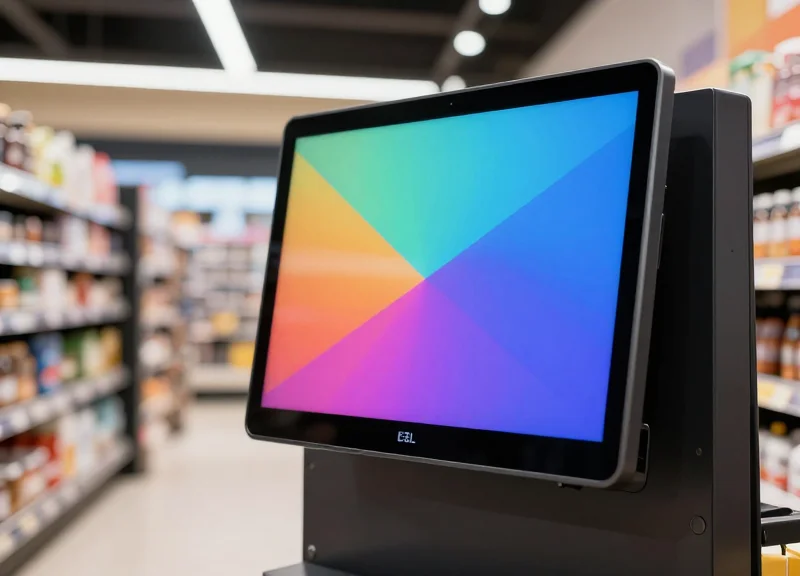
In 2026, the integration of RFID (Radio Frequency Identification) and ESL (Electronic Shelf Labels) represents the 'Golden Triangle' of retail efficiency. When tagging occurs at the point of manufacture, items arrive with a unique digital identity already embedded. This allows for an automated 'handshake' between the physical inventory and the digital display on the shelf. This synergy ensures that the price displayed on the ESL is always backed by real-time stock data from the RFID ecosystem, virtually eliminating the gap between digital intent and physical reality.
| Feature | In-Store Tagging Strategy | Source-Integrated RFID |
|---|---|---|
| Data Accuracy | Subject to human error; tags may not be linked to SKUs correctly. | Serialized at factory; ensures 99.9% data integrity. |
| ESL Syncing | Manual scanning required to link tag to shelf position. | Automated geofencing via overhead RFID readers. |
| Omnichannel Speed | Delayed visibility until the product is processed in the backroom. | Instant visibility from the moment of shipping (In-transit visibility). |
| Dynamic Pricing | Disconnected from real-time stock levels. | Enables price drops based on aging inventory identified by RFID. |
Expert Insight: The 'Zero-Touch' Inventory Model. The true Silicon Valley-inspired evolution for 2026 is the 'Zero-Touch' model. In this setup, factory-integrated RFID tags communicate with ceiling-mounted sensors to update ESLs automatically. If an item is the last one on the shelf, the ESL can trigger an 'Only 1 Left' badge or adjust the price dynamically to clear stock, all without a human employee ever touching a device. This level of automation is nearly impossible to achieve with inconsistent in-store tagging practices.
How does RFID source tagging improve ESL accuracy?
By tagging at the source, every item is assigned a Unique Identifier (UID) that is registered in the central ERP. When the item enters a store, RFID readers detect its presence, allowing the ESL system to verify that the product on the shelf matches the digital price tag, preventing 'phantom inventory' errors.
Can I use existing EAS systems with new RFID/ESL tech?
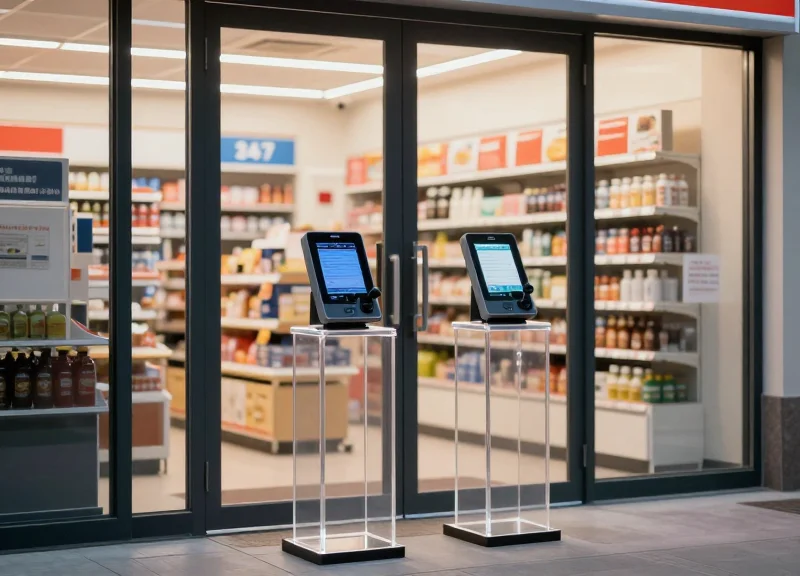
Yes. Most 2026-grade source tags are 'Dual-Tech,' featuring both traditional Electronic Article Surveillance (EAS) for security and RFID for data. This allows retailers to maintain security at the doors while reaping the data benefits of RFID on the floor.
Is the cost of integrated tags justified for low-margin goods?
When factoring in the reduction of labor for manual price checks and the 15-20% uplift in sales from better stock availability, the ROI for integrated RFID/ESL usually nets positive within 14 months, even for mid-range apparel and electronics.
The convergence of these technologies transforms the retail floor into a live database. For global retailers, source tagging is the only way to ensure this database remains clean. If the data entering the system at the store level is fragmented or poorly tagged, the downstream ESL and AI-driven replenishment systems will fail. Source-integrated technology isn't just a hardware choice; it's a commitment to data quality.
Financial Impact: Evaluating Total Cost of Ownership (TCO)
In 2026, the Total Cost of Ownership (TCO) for retail tagging is defined as the aggregate of direct procurement costs, labor application expenses, and the 'velocity-to-floor' opportunity cost. While in-store tagging often appears more cost-effective on a per-unit basis, source tagging typically yields a 15-25% lower TCO for global retailers by eliminating high-cost domestic labor and reducing 'shrinkage leakage' during the transit phase of the supply chain.
| Cost Component | In-Store Tagging (Typical) | Source Tagging (Typical) | Financial Impact Note |
|---|---|---|---|
| Tag Procurement | Lower (Bulk Commodity) | Moderate (Integrated Specs) | Source tagging requires higher upfront coordination. |
| Labor Cost | High ($15-$22/hr Avg) | Near-Zero (Factory Scale) | In-store labor is the primary TCO driver. |
| Shrink Reduction | Reactive (Post-Transit) | Proactive (Full Chain) | Source tagging protects goods from factory to shelf. |
| Speed to Floor | 24-72 Hour Delay | Immediate Availability | Source tagging captures early-trend margins. |
The most significant financial differentiator for 2026 is the 'Velocity-to-Margin' (VTM) metric. In a hyper-competitive landscape, every hour a garment sits in a backroom being tagged is an hour of lost full-price sell-through. For global retailers, source tagging acts as a financial accelerator, ensuring that 100% of inventory is ready for sale the moment it arrives, effectively shortening the cash-conversion cycle and maximizing the return on inventory investment (ROII).
Does source tagging always result in lower TCO for small retailers?
Not necessarily. For retailers with low SKU counts and localized footprints, the overhead of managing factory relationships and international tag logistics can outweigh the labor savings. TCO parity usually occurs at the 10-store or 50,000-unit annual threshold.
How does RFID integration change the TCO calculation?
RFID significantly tilts the TCO in favor of source tagging. The cost of labor to manually 're-read' or commission RFID tags in-store is 5x higher than factory commissioning, which provides end-to-end data visibility that offsets the higher initial tag cost.
What is the 'Hidden Friction' tax in tagging?
This refers to the indirect costs of in-store tagging, including backroom clutter, increased packaging waste at the store level, and the opportunity cost of sales associates performing administrative tasks instead of engaging customers.
Global Scalability: Managing Vendors and Factory Compliance
Global scalability in source tagging refers to a retailer's ability to synchronize thousands of overseas manufacturers to apply Electronic Article Surveillance (EAS) or RFID tags during the production phase. By shifting the tagging burden to the factory, retailers ensure 100% floor-ready consistency across diverse product lines. Success depends on a centralized governance model that utilizes automated auditing and cloud-based data tracking to mitigate the risk of vendor non-compliance and tag misplacement.
Moving from localized in-store tagging to a global source tagging program represents a shift from physical labor management to data-driven vendor management. In 2026, the complexity of global supply chains requires a standardized 'Source Tagging Certification Program' for all third-party manufacturers to ensure that security hardware does not interfere with the aesthetic or functional integrity of the product.
- Standardized Tag Specification: Issue a global manual defining precise tag placement, frequency (RF/AM/RFID), and substrate requirements to ensure consistency across all factory partners.
- Automated Re-ordering Systems: Integrate vendor portals with tag suppliers so factories can automatically trigger tag orders based on the retailer's purchase orders (POs), preventing production delays.
- Digital Certificate of Compliance: Require factories to submit digital verification for every shipment, confirming that tagging protocols were followed before the goods leave the factory floor.
- Third-Party Validation: Utilize independent audit firms to conduct random on-site inspections of factory tagging processes to maintain high standards of quality control.
| Compliance Metric | Target Benchmark | Remediation Strategy |
|---|---|---|
| Tag Placement Accuracy | > 99.5% | Mandatory factory retraining and localized re-tagging fees. |
| RFID Read Rate | 100% (Batch) | Rejection of entire production lot if tag failure exceeds 0.5%. |
| On-Time Tag Arrival | 98% | Shift to local tag distribution hubs to reduce shipping lead times. |
| Signal Interference | 0% Failure | Requirement for shielding tests on metallic or liquid-based products. |
What is the 'Double-Blind' audit method?
An expert-level best practice where a retailer uses mobile RFID tunnels at the 3PL (Third Party Logistics) hub to audit 2% of incoming shipments. This creates a data feedback loop that flags non-compliant factories before the goods reach the retail floor.
How do you handle vendors in regions with poor infrastructure?
Implement a 'Consolidated Tagging Hub' strategy. Instead of tagging at the small factory level, goods are sent to a regional center of excellence for tagging and final packaging, ensuring high compliance even with low-tier vendors.
Can source tagging be scaled for high-turnover fast fashion?
Yes, but it requires 'Pre-Embedded' tagging where the security feature is built into the care label or the brand label itself during the primary manufacturing stage.
Expert Tip: For 2026, move away from paper-based compliance logs. Implement 'Blockchain-verified tagging' where each tag's unique ID is registered at the point of origin. This not only ensures tagging compliance but also serves as a robust foundation for product authentication and anti-counterfeiting measures throughout the global supply chain.
Customer Experience and Aesthetics: The Hidden Benefit of Source Tagging

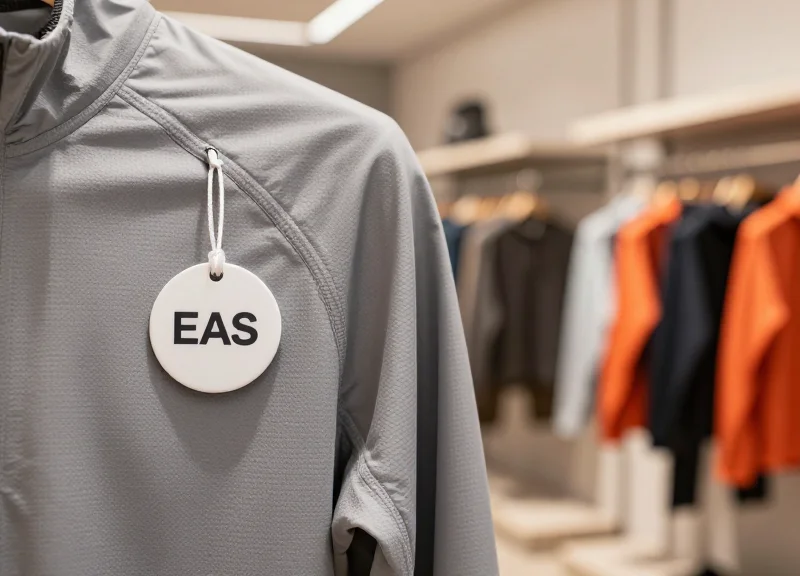
Source tagging transforms the retail environment by integrating EAS and RFID technology directly into the product or packaging during manufacturing, effectively removing 'visual friction' from the sales floor. Unlike bulky in-store hard tags that obscure branding and damage delicate fabrics, factory-integrated solutions ensure products arrive 'floor-ready' with discreet or completely concealed security features that preserve the designer's intent and enhance the shopper's tactile experience. By moving security to the background, retailers can focus on creating a high-end, invitational atmosphere rather than a defensive one.
| Visual Element | In-Store Tagging Effect | Source Tagging Effect |
|---|---|---|
| Packaging Integrity | Often damaged by manual pins or heavy adhesive | Pristine; integrated into the original design |
| Brand Visibility | Logos/Graphics obscured by large plastic tags | Full visibility; branding remains the focus |
| Staff Interaction | Associate focus on hardware removal/attachment | Associate focus on styling and relationship |
| Store Atmosphere | Cluttered, security-centric 'defensive' feel | Clean, premium, 'open merchandising' feel |
In a 2026 retail landscape where the physical store must compete with the seamlessness of digital commerce, the 'unboxing' or 'untagging' experience in-store matters. Bulky grey tags signal a lack of trust; invisible or integrated source tags signal a premium service where the technology works silently in the background. This shift is particularly critical for luxury and high-performance brands where the weight and silhouette of the product are key selling points.
Expert Tip: Implement the 'Sensory Shield' strategy. High-end retailers are now utilizing woven-in RFID threads and heat-sealed EAS labels to eliminate 'weight imbalance' in lightweight garments like silk or performance athletic wear. Traditional tags can cause up to a 20% drape distortion in light fabrics, negatively impacting the customer's perception of quality in the fitting room. Source tagging preserves the garment's natural silhouette, which we have observed correlates to a 4-7% increase in conversion rates in premium segments.
Does source tagging affect the return experience for customers?
Yes, it significantly streamlines returns. Because integrated tags are built into the product or care label, they are less likely to be removed or lost than clip-on tags, ensuring easier inventory reintegration and faster processing for the customer.
Can source tagging be applied to luxury goods without devaluing them?
It is actually the preferred method for luxury. It avoids 'pin-hole' damage to delicate leathers and silks and keeps the item's high-value tactile feel intact by removing heavy, off-balance hardware.
How does source tagging improve 'Speed-to-Service' on the floor?
By removing the manual tagging bottleneck in the backroom, store associates can spend approximately 30% more of their shift on the sales floor, leading to higher engagement and improved customer satisfaction scores.
Hybrid Strategies: Finding the Middle Ground for Maximum ROI
A hybrid tagging strategy is a balanced operational framework where retailers bifurcate their inventory based on volume and risk, applying factory-integrated source tagging to high-turnover core products while utilizing in-store tagging for high-value or seasonal niche items. This 'middle ground' approach allows global retailers to capture the massive labor savings of source tagging for the majority of their stock while retaining the flexibility to apply specialized security measures in-store where localized shrink trends or high price points demand extra physical deterrence.
| Product Category | Recommended Method | Strategic Logic |
|---|---|---|
| Core Basics (T-shirts, Jeans) | Factory Source Tagging | High volume requires maximum labor efficiency; low variability allows for long-term vendor compliance. |
| High-Value Luxury (Handbags, Electronics) | In-Store Tagging | Specific security requirements (e.g., alarming tags) often require manual verification and visible deterrence. |
| Fast-Fashion / Seasonal | Hybrid (VMI-driven) | Source tag the base stock; use in-store tagging for late-addition promotions to meet tight shipping windows. |
| Hyper-Local / Region Specific | In-Store Tagging | Protects against localized shoplifting trends that may not be present in other global regions. |
To implement this effectively, DragonGuard recommends the '80/15/5 Operational Model'. This original framework suggests that 80% of your Global SKU count should be source-tagged to eliminate backroom labor, 15% should be tagged in-store to address high-shrink 'hot products', and 5% (typically low-cost consumables) should remain untagged to minimize unnecessary per-unit costs. This tiered approach ensures that your Loss Prevention budget is spent exactly where the risk is highest.
- Identify Core Velocity SKUs: Analyze 12 months of sales data to find products with stable demand that represent the bulk of your logistics volume.
- Audit Vendor Capabilities: Evaluate which manufacturers have the equipment and quality control to handle integrated tagging without increasing lead times.
- Establish the 'Risk Threshold': Define a price point or shrink percentage (e.g., >$100 or >3% shrink) that triggers a mandatory secondary in-store tag for added security.
- Monitor Labor Redistribution: As source tagging scales, shift store labor hours from the backroom to the sales floor to improve customer engagement and upsell opportunities.
Won't a hybrid model complicate inventory tracking?
No. By using RFID-enabled tags for both methods and a unified cloud-based inventory platform, the origin of the tag becomes irrelevant to the data visibility. The system sees the item, not the labor location.
Is it more expensive to manage two tagging processes?
Actually, it is more cost-effective. Forcing source tagging onto low-volume, high-complexity SKUs can drive up vendor fees, while tagging everything in-store wastes thousands of labor hours. Hybridization optimizes the cost-per-unit.
How do we handle returns in a hybrid system?
Standardize on the same tag frequency (e.g., 58kHz AM or 8.2MHz RF) so that regardless of where the tag was applied, the store's EAS pedestals and detachers can handle the return seamlessly.