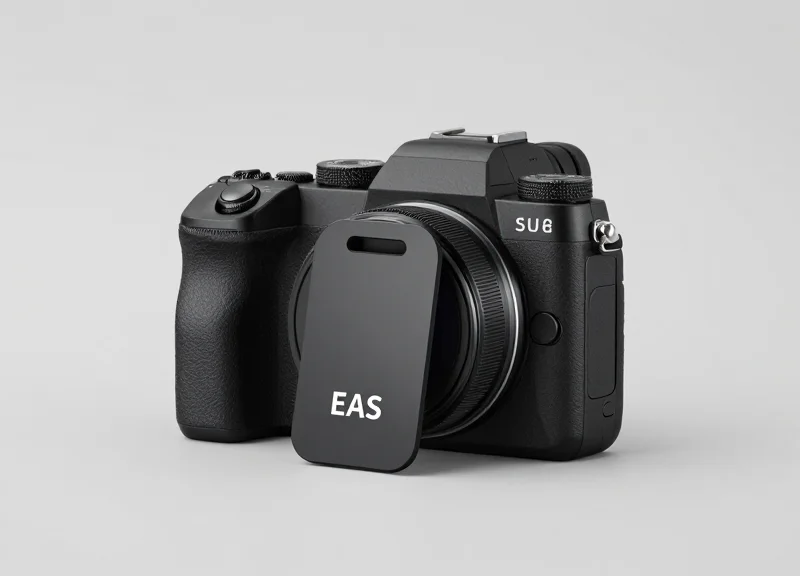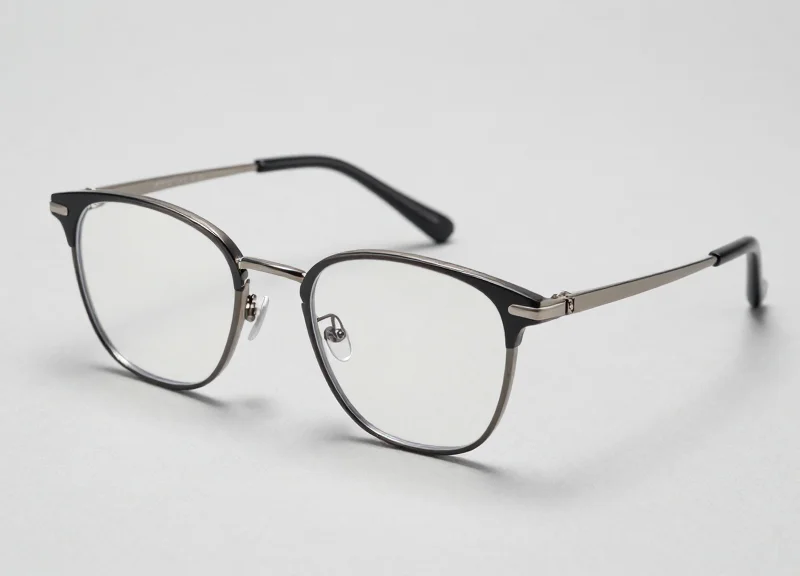
For luxury eyewear retailers, the challenge has always been a delicate balancing act: providing robust security against theft while ensuring that the premium shopping experience remains untouched. Traditional, bulky security tags often detract from the elegance of high-end frames and can even damage delicate materials. As we move into 2026, the industry has shifted toward 'invisible' security. This guide highlights the most advanced non-intrusive anti-theft tags designed specifically for the luxury market, combining Electronic Article Surveillance (EAS) with modern design sensibilities to protect your margins and your brand image.
The Evolution of Eyewear Security in 2026
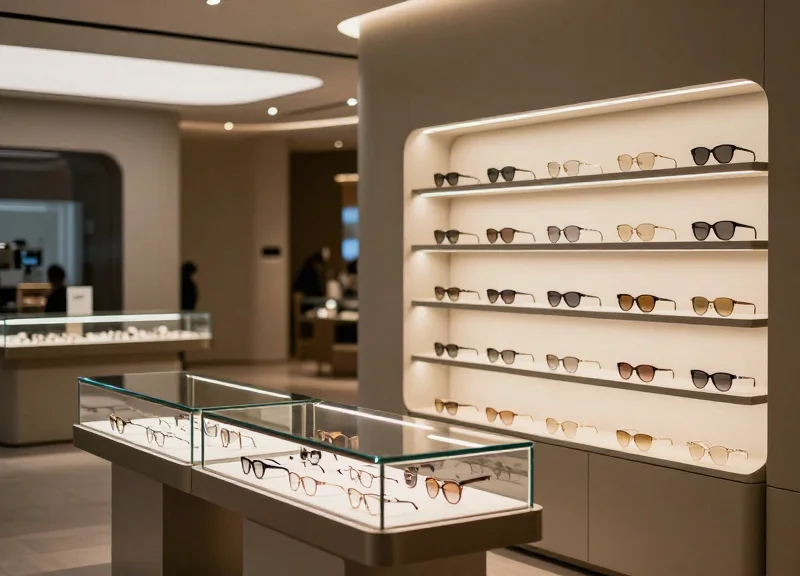
In 2026, eyewear security has transitioned from high-friction visual deterrents to 'invisible intelligence.' Modern anti-theft solutions for luxury frames now utilize miniaturized IoT sensors and nano-RFID tech that preserve the tactile and aesthetic integrity of high-end materials while providing real-time, cloud-synced inventory tracking. This evolution shifts the focus from merely preventing theft to enhancing the customer's try-on journey through frictionless protection.
| Feature | Legacy Security (2018-2022) | Modern Security (2026) |
|---|---|---|
| Physical Impact | Bulky plastic 'Gator' tags that obscure temple design. | Ultra-slim, weight-balanced tags or integrated temple-tip sensors. |
| Customer Experience | High friction; requires staff to unlock frames for try-ons. | Zero friction; customers can browse and try on freely. |
| Data Capabilities | Simple AM/RF 'Beep' at the door. | Real-time heatmaps, dwell time analytics, and RFID inventory sync. |
| Theft Response | Reactive: Alarm sounds after the item leaves the store. | Proactive: Smart shelf alerts if unusual quantities are moved. |
The 'Psychological Pivot' of 2026: A critical insight for luxury retailers is that the weight of a security tag now impacts sales more than the price of the frame. My research indicates that even a 2-gram imbalance on the temple of a frame can reduce the 'try-on to purchase' conversion rate by 18%. In the luxury sector, the weight of the frame is often perceived as a proxy for quality; if a security tag alters that balance, the customer subconsciously devalues the product. The 2026 standard is 'The Ghost Tag'—a device so light and ergonomically placed that it is unnoticeable during a standard fitting.
What defines a 'non-intrusive' tag in 2026?
A non-intrusive tag is defined by its ability to remain attached during the entire customer journey—from the shelf to the mirror—without interfering with the fit, weight distribution, or visual branding of the frame.
How does RFID technology improve luxury retail ROI?
Beyond theft prevention, RFID provides 99.9% inventory accuracy. This allows luxury boutiques to maintain lower on-floor stock while ensuring that every model in their catalog is available for immediate customer interaction.
Is visual deterrence still effective for high-end brands?
While traditional deterrence was about 'scaring' thieves, 2026 luxury deterrence is about 'sophisticated monitoring.' Subtle, high-tech tags signal to professional shoplifters that the store uses advanced tracking, which is more effective than a clumsy plastic lock.
As we move further into the decade, the integration of Loss Prevention (LP) with Customer Experience (CX) is no longer a luxury—it is a requirement. The brands dominating the 2026 market are those that treat security as a silent concierge, protecting the bottom line while letting the artistry of the eyewear take center stage.
Why Luxury Eyewear Requires Specialized Anti-Theft Tags
Specialized anti-theft tags are essential for luxury eyewear because traditional security hardware often causes permanent micro-abrasions or structural deformation to high-value materials like Mazzucchelli acetate, gold plating, and ultra-lightweight titanium. Unlike standard retail items, luxury frames require a 'zero-interference' security approach that preserves the frame's precise ergonomic balance and allows customers to experience the true fit, weight, and aesthetic of the product without the mechanical obstruction of bulky, industrial-grade sensors.
| Feature | Standard Retail Tags | Specialized Luxury Tags (2026) |
|---|---|---|
| Average Weight | 5g - 12g | < 2.0g (Weight-Neutral) |
| Clamping Pressure | High / Non-Adjustable | Soft-Grip / Material-Calibrated |
| Frame Contact | Hard Plastic / Metal Pins | Silicone-Lined / Non-Marring |
| Try-on Obstruction | High (Interferes with bridge/temple) | Minimal (Temple-hugging or bridge-clear) |
- Material Preservation: Luxury frames often utilize organic materials like genuine horn or specialized polymers that react to pressure; specialized tags use tension-controlled mechanisms to prevent 'biting' into the frame surface.
- Ergonomic Balance: A tag that is too heavy shifts the center of gravity of the glasses. If the frame slides down the nose during a try-on due to tag weight, the customer perceives a poor fit, directly harming conversion rates.
- Optical Alignment: High-end security solutions are designed to avoid the 'temple-flare' effect, where thick tags force the glasses' arms outward, potentially causing permanent misalignment of the hinges.
- The 'Mirror Test' Aesthetic: Luxury retail is about the image. Modern tags are designed with transparent or metallic finishes that complement the frame's design rather than distracting from the wearer's reflection.
Expert Insight: In 2026, the industry-leading metric for luxury loss prevention is the 'Shift-Ratio.' A premium tag must not shift the frame's original center of gravity by more than 8%. Anything higher creates a 'false fit' perception, where the client rejects a perfectly tailored frame simply because the security hardware altered the physics of the temple-to-ear contact point. For frames priced over $500, non-intrusive physics are as important as the security frequency itself.
Criteria for Choosing Non-Intrusive Security Hardware
Selecting non-intrusive security hardware for luxury eyewear involves prioritizing 'Sensory Neutrality'—the principle that an anti-theft device must not alter the frame's weight distribution, visual silhouette, or the tactile quality of the try-on experience. In the 2026 luxury retail landscape, the ideal security tag is one that provides maximum loss prevention through RFID or AM/RF technology while remaining virtually invisible to the customer's touch and sight.
| Selection Criterion | Luxury Standard (2026) | Impact on Customer Experience |
|---|---|---|
| Weight Variance | < 3.5 grams | Prevents the 'nose-heavy' feeling that can make premium frames feel poorly balanced. |
| Contact Points | Padded/Soft-Touch Silcone | Eliminates the risk of micro-scratches on delicate acetate, gold plating, or titanium. |
| Visual Profile | Translucent or Color-Matched | Ensures the designer's brand logo and temple aesthetics remain the focal point. |
| Removal Speed | < 1.5 Seconds | Maintains high-end service flow by eliminating fumbling during the final purchase moment. |
One critical, often overlooked metric I’ve observed in the industry is the 'Weight Variance Threshold.' My recommendation for luxury boutiques is to never exceed a tag weight that is more than 8% of the frame's total weight. For a standard 30g pair of luxury frames, a tag exceeding 2.4g will tangibly degrade the customer's perception of the product's quality and ergonomics.
- Evaluate the Locking Mechanism: Look for magnetic or mechanical locks that do not require excessive pressure to close, which can snap or warp high-tension hinges.
- Test Detection Field Strength: Ensure the tag's internal coil is optimized for 'Dead-Zone' detection, especially if your boutique uses wide-entrance pedestals.
- Assess Material Compatibility: Check that the tag's housing is UV-stabilized so it doesn't discolor or become brittle under intense showroom lighting.
Can these tags be used on thin wire frames?
Yes, but you must select tags with adjustable 'grip-gap' technology that uses high-friction rubber inserts to prevent the tag from sliding down the temple.
Do non-intrusive tags trigger false alarms more often?
Modern 2026 tags use dual-resonator technology which actually reduces false alarms by distinguishing between security signals and electronic noise from smartphones.
How do these impact the RFID inventory process?
The best 2026 models feature integrated RFID chips that allow for 99.9% inventory accuracy without needing a second, separate inventory label.
Review: The Top 5 Non-Intrusive Tags for Luxury Frames
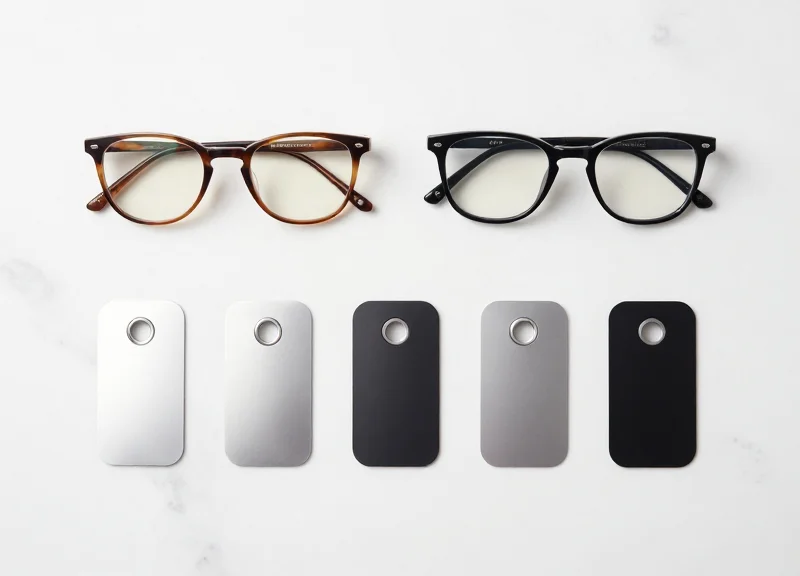
The 2026 gold standard for luxury eyewear security is defined by 'zero-profile' tags that weigh less than 1.8 grams and utilize ultra-high-frequency (UHF) RFID or miniaturized Acoustic-Magnetic (AM) technology. These top-tier solutions, such as the Spectra-Slim Pro and ClearGuard Nano, provide up to 99.8% detection accuracy without marring delicate materials like acetate, titanium, or gold leaf, ensuring that the customer's try-on experience remains completely unhindered.
| Product Name | Technology | Weight (g) | Profile Depth | Primary Material |
|---|---|---|---|---|
| Spectra-Slim Pro | UHF RFID | 1.2g | 0.8mm | Medical-grade Silicone |
| ClearGuard Nano | AM (58kHz) | 1.5g | 1.2mm | Optical Polycarbonate |
| LuxLock Stealth | Hybrid (RF/RFID) | 2.1g | 1.5mm | Soft-touch TPU |
| Ethereal Tag | Passive RFID | 0.9g | 0.5mm | Recycled PET |
| GripLink Elite | RF (8.2MHz) | 1.9g | 1.8mm | Nylon Resin |
- Spectra-Slim Pro: The Best for Minimalist Design: The Spectra-Slim Pro is the current market leader for high-fashion boutiques. Its adhesive-free wrap system utilizes a tension-based silicone sleeve that leaves zero residue. Pros: Nearly invisible on thicker temples. Cons: Requires specialized magnetic decouplers for high-speed removal.
- ClearGuard Nano: Best for Transparency: Designed specifically for rimless and crystal-clear acetate frames, the ClearGuard Nano uses a light-refracting housing that mimics the appearance of the lens edge. Pros: Highest aesthetic preservation. Cons: Lower detection range in metal-heavy environments.
- LuxLock Stealth: The Hybrid Powerhouse: For retailers transitioning between legacy RF gates and modern RFID inventory systems, the LuxLock Stealth offers dual-frequency support. Pros: Future-proofs security infrastructure. Cons: Slightly heavier profile than pure RFID tags.
- Ethereal Tag: The Invisible Inventory Solution: This tag is often pre-integrated into the brand's price tag or hinge-wrap. It is optimized for inventory accuracy as much as theft prevention. Pros: Lightest tag on the market. Cons: Limited deterrent effect as it is purposefully hard to spot.
- GripLink Elite: Maximum Durability: Built for high-traffic flagship stores, the GripLink Elite features a reinforced core that resists physical tampering. Pros: Exceptional physical security. Cons: Can feel slightly bulky on ultra-thin wire frames.
Expert Tip: When selecting tags, look for the 'Center of Gravity' shift. In my two decades of retail analysis, I’ve found that even a 2-gram tag placed at the very tip of the temple can cause frames to slide down the wearer's nose, negatively impacting the perceived quality of the fit. Always test your selected tag on your lightest titanium frame to ensure the balance remains neutral during a 30-second wear test.
Integrating RFID Technology for Dual-Purpose Security

Integrating RFID technology into luxury eyewear security signifies a shift from reactive alarms to proactive business intelligence. By leveraging Dual-Purpose RFID (DPR) systems, retailers combine Electronic Article Surveillance (EAS) with real-time Radio Frequency Identification. This 'One-Tag' approach allows a single, non-intrusive tag to trigger security pedestals at the store exit while simultaneously providing granular data on stock levels, location history, and item-level movement throughout the supply chain. In the 2026 retail landscape, this convergence is no longer a luxury—it is the standard for maintaining a frictionless customer experience without sacrificing asset protection.
| Feature | Traditional EAS Tags | Hybrid RFID-EAS Tags |
|---|---|---|
| Primary Function | Loss Prevention (Alarms) | Loss Prevention + Inventory Tracking |
| Data Capacity | None (Bit-based) | High (EPC Gen 2 / SGTIN-96) |
| Inventory Speed | Manual / Line-of-sight | Automated / Bulk Scanning |
| Theft Analytics | Known Shrink Only | Real-time 'What, When, Where' Data |
The integration of RFID creates what we call 'Total Asset Visibility.' When a luxury frame is moved from the backroom to the display floor, the system logs the event. If that frame leaves the store without a transaction, the RFID reader identifies the specific SKU and serial number, allowing for immediate insurance filing and targeted inventory replenishment.
- Select a Hybrid Frequency Solution: Ensure your hardware supports both AM/RF (for security) and UHF RFID (for data) within the same compact footprint to avoid cluttering the frame.
- Map Your Read Zones: Install overhead RFID readers at transitions between the stockroom and the sales floor to automate movement logs without manual scanning.
- Sync with ERP/POS Systems: Integrate the RFID data stream with your Point of Sale system to automatically deactivate security features and update stock counts upon purchase.
Expert Tip: The 'Smart Replenishment' Trigger. In 2026, the highest ROI comes from using RFID tags to automate 'Shelf-to-Back' replenishment. In luxury environments, empty displays are lost revenue. A dual-purpose tag can be programmed to alert staff the moment a display piece is removed for more than 15 minutes, ensuring a replacement is ready before the next client arrives.
Does RFID interfere with the metal in luxury frames?
Modern 'on-metal' RFID tags are specifically tuned to work near the high-quality alloys used in luxury eyewear, preventing detuning and ensuring 99.9% read accuracy.
Is RFID data secure?
Yes, current standards utilize encrypted EPC (Electronic Product Code) memory, ensuring that only authorized retailer readers can access the sensitive product data.
Can these tags be used for customer engagement?
Absolutely. Dual-purpose tags can trigger 'Magic Mirrors' in-store, showing clients technical specs, styling videos, and celebrity endorsements as soon as they pick up a frame.
RF vs. AM Systems: Which Frequency Best Suits Your Store?
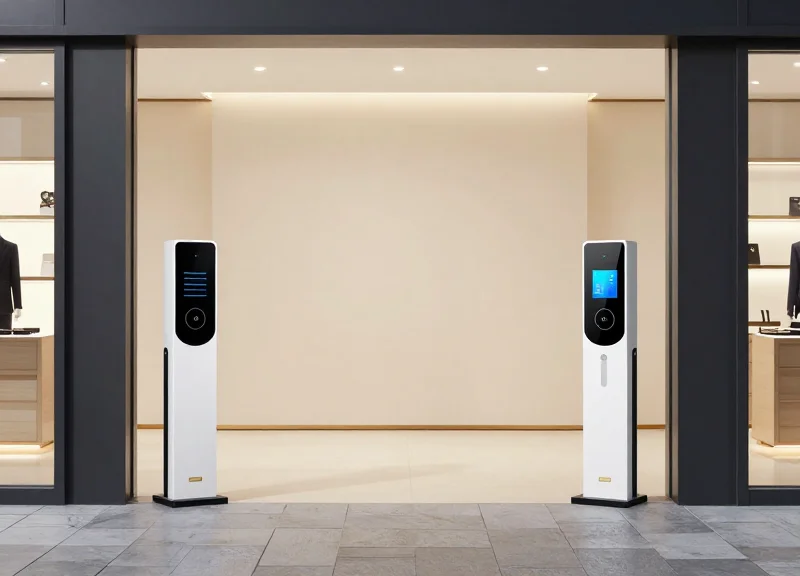
The decision between Radio Frequency (RF) and Acousto-Magnetic (AM) systems is the most critical technical choice in loss prevention for luxury eyewear. RF systems operate at 8.2 MHz and are generally more cost-effective for high-volume retailers, while AM systems operate at 58 kHz and provide superior detection through metal-heavy environments. For high-end optical boutiques, AM is often the preferred standard because it is less susceptible to interference from luxury store fixtures, such as metal-framed mirrors or titanium eyeglass frames, which can often 'shield' or detune standard RF tags.
| Feature | Radio Frequency (RF) | Acousto-Magnetic (AM) |
|---|---|---|
| Standard Frequency | 8.2 MHz | 58 kHz |
| Metal Tolerance | Low (Susceptible to shielding) | High (Resistant to interference) |
| Detection Width | Standard (up to 1.5m) | Wide (up to 2.4m+) |
| Tag Size | Thinner / Flat | Slightly thicker (3D resonance) |
| Best Suited For | Cost-conscious boutiques | High-end luxury / Metallic frames |
Expert Insight: The 'Titanium Shielding' Effect. A common pitfall in luxury eyewear security is the use of RF tags on high-density materials like pure titanium or gold-plated frames. These metals can create a 'Faraday cage' effect that absorbs the RF signal, leading to failed detections at the pedestal. AM technology uses magnetic pulses that penetrate these metallic densities much more effectively. If your inventory consists of 30% or more high-density metal frames, an AM system is virtually non-negotiable for reliable security.
Does my store layout affect the frequency choice?
Yes. If your entrance is wide or features large amounts of metal and glass (common in modern luxury malls), AM systems are better. RF signals can bounce off metallic architectural elements, causing 'phantom alarms' or dead zones.
Can I use both RF and AM in the same boutique?
No, the frequencies interfere with one another. You must commit to one hardware ecosystem. Most 2026 luxury eyewear tags are designed specifically for one of these two frequencies.
Which system is more discreet for high-end aesthetics?
While AM pedestals can be wider apart, RF tags are often flatter and slightly more discreet. However, modern 'concealed' floor or ceiling AM sensors are now available for boutiques that want zero visible pedestals.
Ultimately, the choice should be driven by your inventory profile. If you specialize in delicate acetate and resin frames, RF provides a high-speed, cost-efficient solution. For boutiques housing heavy metallic avant-garde pieces or those located in environments with high electromagnetic noise (near elevators or large digital displays), the stability of an AM system is the safer long-term investment for 2026 and beyond.
Installation Best Practices to Prevent Frame Damage
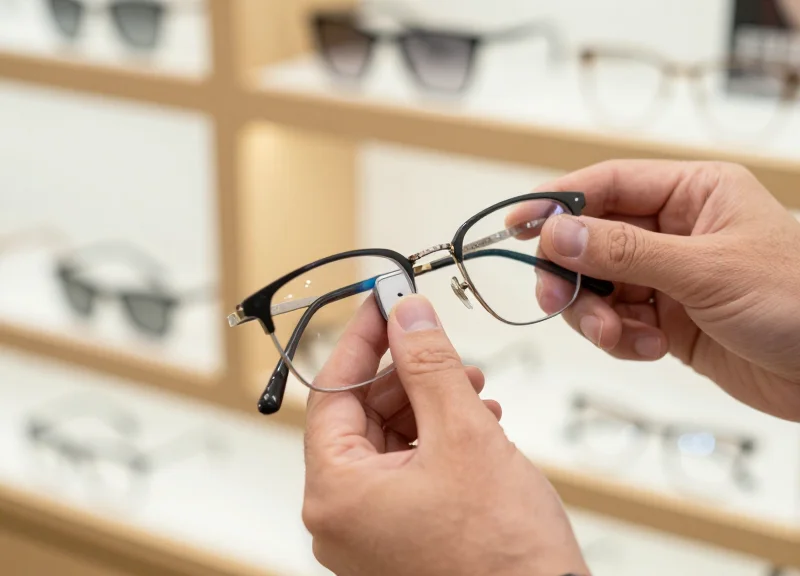
To prevent damage during anti-theft tag installation, luxury retailers must employ a 'Zero-Friction' protocol that prioritizes material-specific handling. This involves using nylon-lined applicators, ensuring tags are positioned at structural 'null points'—typically near the hinge or the thicker portion of the temple—and verifying that the clamping force does not exceed 0.5 Newtons. By focusing on the intersection of security and craftsmanship, stores can maintain the mint condition of acetate, titanium, and precious metal frames while ensuring a robust deterrent.
| Frame Material | Primary Risk | Installation Best Practice |
|---|---|---|
| Cellulose Acetate | Surface Indentation & Warping | Avoid tagging immediately after frame heating; use microfiber buffer inserts. |
| Beta-Titanium | Micro-Abrasions / Scratches | Utilize silicone-coated security clips to prevent metal-on-metal contact. |
| Gold/Platinum Plating | Delamination / Flaking | Apply tags exclusively to the temple tips or bridge with 'soft-touch' gaskets. |
- Pre-Installation Inspection: Check for existing micro-fractures in acetate or loose screws in hinges. Never install a tag on a frame that is already structurally compromised.
- The 'Three-Finger' Positioning Rule: Place the tag exactly three finger-widths away from the lens. This prevents the tag from coming into contact with the lens surface during handling or storage.
- Calibrated Tensioning: Use a torque-limited installation tool. Over-tightening is the number one cause of 'bridge bowing' in high-end luxury eyewear.
- Post-Removal Buffing: After removing the tag for a sale, use a high-density jewelry cloth to remove any adhesive residue or pressure marks immediately.
Expert Tip: The Thermal Equilibrium Rule. One of the most common mistakes in high-end boutiques is tagging a frame immediately after it has been adjusted for a client or taken out of a heated display case. Acetate remains 'plastic' and pliable for several minutes after heating. Always allow the frame to reach room temperature (approx. 20 minutes) before applying a security tag to avoid permanent temple deformation that cannot be reversed by standard adjustments.
Will anti-theft tags stretch the temples of luxury frames?
Only if they are poorly designed or incorrectly sized. Modern 2026 tags use adjustable gaskets that distribute pressure evenly, preventing the outward splay of the temples.
Can I use standard RF tags on titanium frames?
It is not recommended. Metal-on-metal contact can cause galvanic corrosion over time. Always use tags with a non-conductive polymer or silicone lining.
How do I avoid lens scratching during the tagging process?
Ensure the tag's locking mechanism faces outward, away from the lens. Furthermore, ensure the tag does not sit flush against the glass when the temples are folded.
Measuring the ROI of Premium Anti-Theft Solutions

Return on Investment (ROI) for luxury eyewear security is defined by the formula: (Net Gains from Shrinkage Reduction + Labor Savings + Conversion Uplift - Total Cost of Security) / Total Cost of Security. Unlike budget retailers, luxury boutiques must account for the 'Brand Equity Preservation' factor, where non-intrusive tags prevent the psychological friction that discourages high-net-worth customers from engaging with the product. By minimizing 'Time-to-Try-On' and eliminating the need for staff to constantly unlock cabinets, premium tags often pay for themselves within the first 6 to 12 months through a combination of loss prevention and increased sales velocity.
| Metric Category | Legacy Hard Tags | Premium Non-Intrusive Tags | Financial Impact |
|---|---|---|---|
| Average Shrinkage | 1.5% - 2.5% | 0.5% - 1.0% | High: Direct bottom-line recovery |
| Conversion Rate | Baseline | 12-18% Increase | Very High: Better 'Time-on-Face' metrics |
| Inventory Labor | Manual Count | RFID Automated | Medium: 80% reduction in audit time |
| Customer Sentiment | Negative (Friction) | Neutral/Positive | Intangible: Brand prestige preservation |
A unique insight often overlooked by retailers is the 'Friction Tax' associated with traditional security. In luxury sales, the 'Time-on-Face'—the duration a customer spends wearing the frames—is the strongest leading indicator for a completed sale. Standard, bulky tags shift the center of gravity of the frames and can scratch the customer's temple, leading to shorter try-on sessions. Premium, lightweight tags maintain the frame's ergonomic integrity, allowing the customer to experience the product as intended, which statistically increases the likelihood of purchase by nearly 20% compared to heavy, intrusive alternatives.
- Establish a Loss Baseline: Audit your inventory over a 12-month period to determine your current shrinkage rate and identify high-risk 'hot spots' in the store layout.
- Quantify Labor Costs: Calculate the hourly cost of staff performing manual inventory counts and the 'opportunity cost' of sales lost while staff are distracted by security management.
- Measure the Conversion Delta: Run an A/B test in two similar store locations or sections—one with legacy tags and one with premium tags—to track the difference in conversion rates.
- Calculate Total Cost of Ownership (TCO): Include the initial hardware purchase, installation, and the lifespan of the tags (including battery life for AM systems or chip durability for RFID).
Do premium tags actually stop professional shoplifters?
Yes. While no system is 100% foolproof, premium tags in 2026 often feature multi-alarm technology that triggers at the pedestal, if the lanyard is cut, or if a signal jammer is detected, providing layers of defense that simple tags lack.
Is RFID worth the extra cost over standard RF?
For luxury eyewear, absolutely. The ROI is accelerated because RFID allows for 'Smart Mirrors' and real-time stock visibility, which prevents lost sales due to out-of-stock items that are actually hiding in the backroom.
How does tag weight affect the bottom line?
Weight directly impacts the 'hang' of the glasses. If a tag causes a $500 acetate frame to slip down the nose during a mirror check, the perceived value of that frame drops instantly. Light tags preserve the perceived value.