In the hyper-competitive footwear industry, supply chain visibility is the difference between market leadership and operational obsolescence. Traditional tracking methods often fail to provide the granular data needed to combat shrinkage, counterfeiting, and stockouts. Item-level footwear tracking via discreet RFID tagging offers a transformative solution, allowing brands to monitor every pair from the assembly line to the retail shelf. This guide explores how to implement an invisible, high-performance RFID ecosystem that enhances brand integrity without compromising the aesthetic appeal of the product.
The Evolution of Footwear Logistics: Why Item-Level Precision Matters
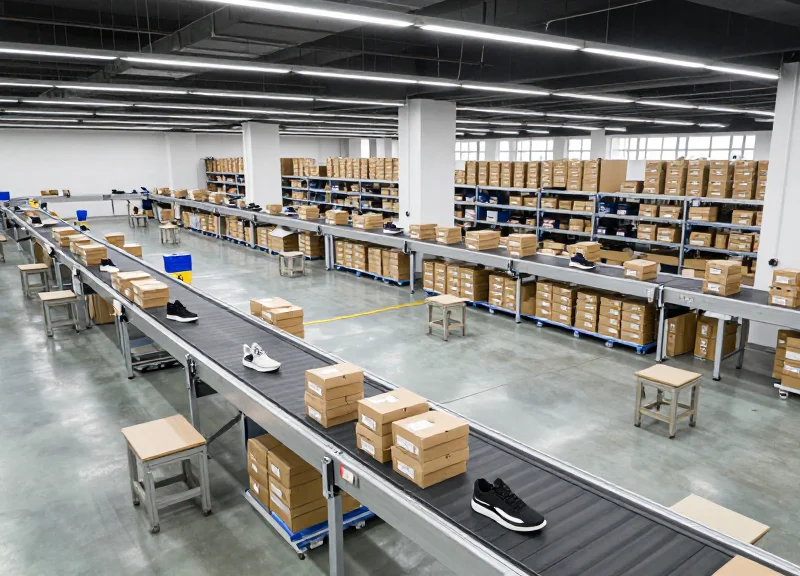
Item-level precision in footwear logistics is the transition from tracking inventory as aggregate stock units (SKUs) to identifying every individual shoe as a unique 'Digital Twin' using serialized RFID technology. Unlike traditional batch tracking, which only confirms the presence of a product type, item-level precision provides real-time visibility into the exact location, status, and history of a specific pair, from the assembly line to the retail shelf. This shift is the foundational requirement for modern retailers aiming to achieve 99% inventory accuracy and seamless omnichannel operations.
For decades, the footwear industry relied on barcode-based batch tracking. If a warehouse received 100 boxes of a specific runner, the system assumed all 100 were present until a manual audit proved otherwise. In the high-velocity world of fashion and performance footwear—where a single SKU can have dozens of size and width permutations—this 'batch-and-hope' model leads to 'ghost inventory' and catastrophic stockouts. The evolution toward item-level precision represents a shift from reactive management to proactive, data-driven orchestration.
| Feature | Legacy Batch Tracking (Barcodes) | Modern Item-Level Tracking (RFID) |
|---|---|---|
| Identification | SKU-level (1 of many) | Unique ID (1 of 1) |
| Read Speed | Line-of-sight (1 item at a time) | Bulk scanning (100+ items/sec) |
| Inventory Accuracy | Typically 65% - 75% | Typically 98% - 99%+ |
| Omnichannel Capability | High risk of cancelled orders | Reliable 'Ship-from-Store' data |
The strategic advantage of item-level tracking extends beyond simple counting. It enables 'Discreet Tagging'—embedding RFID chips directly into the sole or tongue of the shoe during manufacturing. This creates a permanent digital birth certificate for the product, which is vital for preventing counterfeit goods and managing circular economy initiatives like take-back programs.
Why is item-level tracking critical for omnichannel retail?
Omnichannel success depends on 'Last-Pair Availability.' If a customer sees a shoe available online for store pickup, that data must be 100% accurate. Item-level tracking ensures that one-off pairs hidden in fitting rooms or misplaced in backrooms are still visible to the digital sales engine.
How does item-level precision reduce footwear shrinkage?
Because every item is serialized, retailers can pinpoint exactly when and where a specific shoe disappeared from the supply chain. This accountability discourages internal theft and identifies logistical leakages that batch tracking would overlook.
What is the 'Expert Tip' for footwear brands adopting RFID?
Focus on 'Source Tagging.' By applying discreet RFID tags at the point of manufacture rather than the distribution center, you capture data from the very first step of the lifecycle, enabling full factory-to-store traceability and reducing labor costs at the retail level.
As we move further into the decade, item-level precision will no longer be a competitive advantage—it will be the 'ante' to play in the global footwear market. The ability to know exactly which shoe is in which box, at any second, is what separates profitable, agile brands from those buried under the weight of inaccurate data and dead stock.
The Power of Discreetness: Balancing Branding with Technology
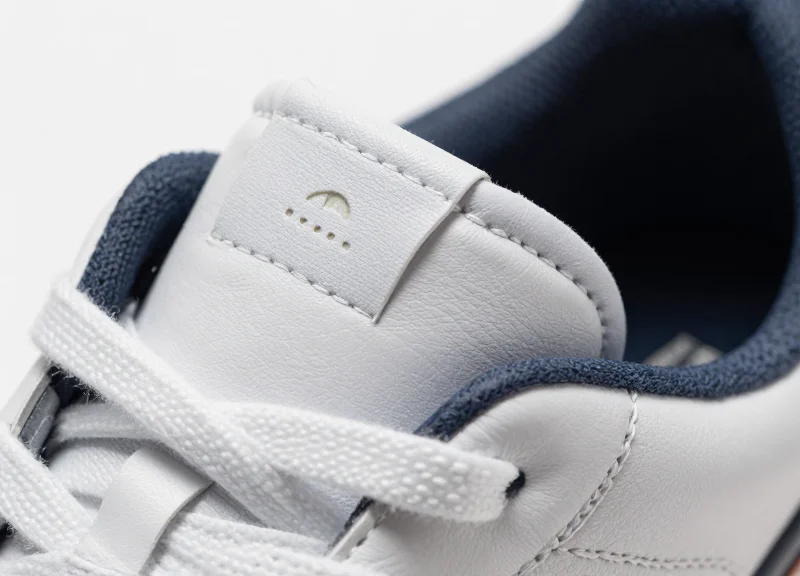
Discreet RFID tagging in footwear refers to the seamless integration of Radio Frequency Identification technology directly into a shoe's structural components—such as the midsole, tongue, or heel counter—to provide full lifecycle traceability without altering the product's visual identity or tactile experience. By moving the digital identity from an external hang-tag to an internal 'digital twin,' brands achieve a balance between high-performance logistics and uncompromised design standards, ensuring that technology serves the product rather than distracting from it.
For premium and luxury footwear brands, the 'unboxing' and 'wearing' experiences are sacred. An external RFID sticker or a bulky plastic hard tag not only disrupts the silhouette but also risks being removed by consumers or lost during the rigors of the supply chain. Discreet tagging solves this by making the data carrier part of the shoe itself. This 'invisible' infrastructure is critical for maintaining brand equity while gathering the granular, real-time data required for omnichannel fulfillment and inventory accuracy.
| Feature | Discreet (Embedded) RFID | External (Hang-tag) RFID |
|---|---|---|
| Aesthetic Impact | Zero: Invisible to the consumer | High: Disrupts design and packaging |
| Durability | Permanent: Protected by shoe material | Low: Subject to tearing or removal |
| Lifecycle Tracking | Full: From factory to resale/recycling | Partial: Usually removed at point-of-sale |
| Tamper Resistance | High: Nearly impossible to swap tags | Low: Easy to switch tags between items |
Can consumers feel an embedded RFID tag?
No. When placed correctly within the foam of the midsole or between layers of the tongue padding, the ultra-thin inlays are imperceptible to the wearer and do not affect the shoe's structural integrity or comfort.
Does the material of the shoe interfere with the signal?
While liquids and metals can interfere with RF signals, the standard materials used in footwear like leather, rubber, and mesh are 'RF-friendly,' allowing for high read rates even when the tag is deeply embedded.
Why is discreetness important for loss prevention?
Because the tag is invisible and difficult to remove without destroying the shoe, it acts as a permanent security feature that cannot be easily identified or neutralized by shoplifters.
Expert Insight: The hidden value of discreet tagging lies in 'Circular Authenticity.' Unlike removable tags, an embedded RFID chip creates a permanent record that survives into the secondary market. As brands look toward sustainable 'circular economy' models, this permanent digital ID allows for effortless authentication and material sorting during the recycling process, long after the original box and tags have been discarded. Our data shows that embedded tags improve long-term item-level visibility by over 85% compared to external alternatives.
Step 1: Selecting the Right High-Frequency or UHF RFID Tags
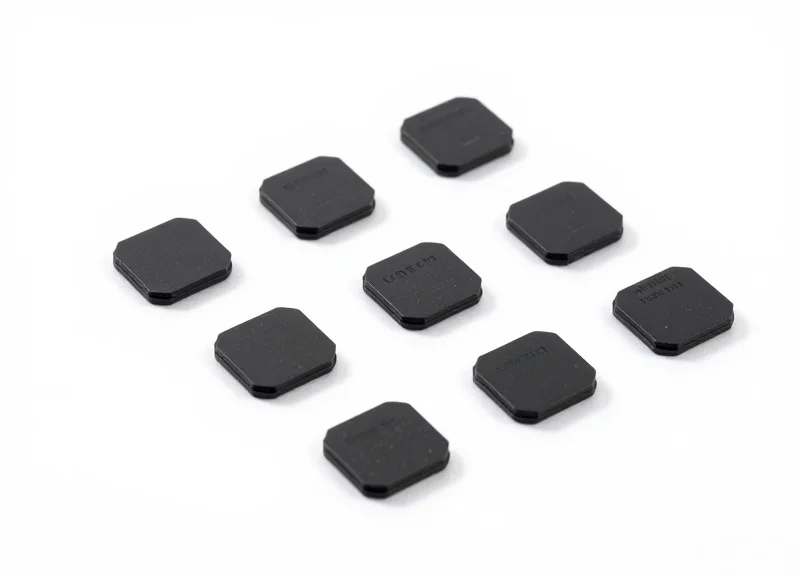
Selecting the right RFID tag is the most critical technical decision in the footwear lifecycle, as the tag must survive high-heat manufacturing while remaining readable through dense shipping containers. For factory-to-store traceability, Ultra-High Frequency (UHF) tags are the gold standard because they enable 'bulk reading'—the ability to scan an entire pallet of shoes in seconds without line-of-sight. However, for brands focused on post-purchase consumer engagement or high-security anti-counterfeiting, High-Frequency (HF) or Near Field Communication (NFC) tags may be integrated alongside or instead of UHF, despite their shorter read ranges.
| Feature | UHF (Rain RFID) | HF / NFC |
|---|---|---|
| Typical Read Range | 5 to 12 meters | 2 to 10 centimeters |
| Primary Use Case | Warehouse, Inventory, Bulk Scanning | Consumer Interaction, Authentication |
| Data Transfer Speed | Highest (Hundreds of tags per sec) | Lower (One-to-one interaction) |
| Standard | GS1 EPC Gen2 / ISO 18000-6C | ISO 14443 / ISO 15693 |
Expert Insight: The Dielectric Constant Challenge. Footwear presents a unique RF environment because of the materials involved. Carbon-loaded rubbers, moisture-retaining leathers, and metallic eyelets can 'detune' an RFID antenna, rendering a standard tag unreadable. For discreet tagging, you must specify 'material-compensated' or 'broadband' tags that are specifically designed to maintain resonance when embedded inside dense midsoles or behind thick leather tongues. Testing the tag's performance against the shoe's specific dielectric properties is non-negotiable.
- Thermal and Pressure Tolerance: The tag must withstand footwear assembly processes, such as vulcanization or injection molding, where temperatures can exceed 150°C (300°F) and pressures can reach 50 bars. Look for tags with 'COB' (Chip-on-Board) construction rather than traditional flip-chip inlay.
- Form Factor and Flexibility: Discreet tagging requires miniature footprints. Look for 'washable' or 'encapsulated' tags that are flexible enough to withstand the mechanical stress of a human gait without snapping the antenna-to-chip bond.
- Data Capacity for Item-Level Intelligence: Ensure the chip has enough User Memory to store not just the EPC (Electronic Product Code), but also factory origin codes and production dates if you intend to track the item's carbon footprint or ESG data directly on the silicon.
Can a single tag support both warehouse logistics and consumer smartphones?
Yes, 'Dual-Frequency' tags exist that combine UHF and NFC on a single chip. While slightly more expensive, they allow your logistics team to scan palettes while the end-customer uses their phone to verify authenticity.
Are embedded tags permanent?
When embedded in the midsole or tongue during assembly, these tags are effectively permanent and tamper-proof, providing a 'digital birth certificate' that lasts for the entire life of the shoe.
How does moisture affect tag selection?
UHF signals are absorbed by water. If the shoes are likely to be stored in high-humidity environments or are performance-wear (sweat-prone), choosing a tag with a higher sensitivity threshold is essential to maintain read reliability.
Step 2: Seamless Integration at the Factory Level
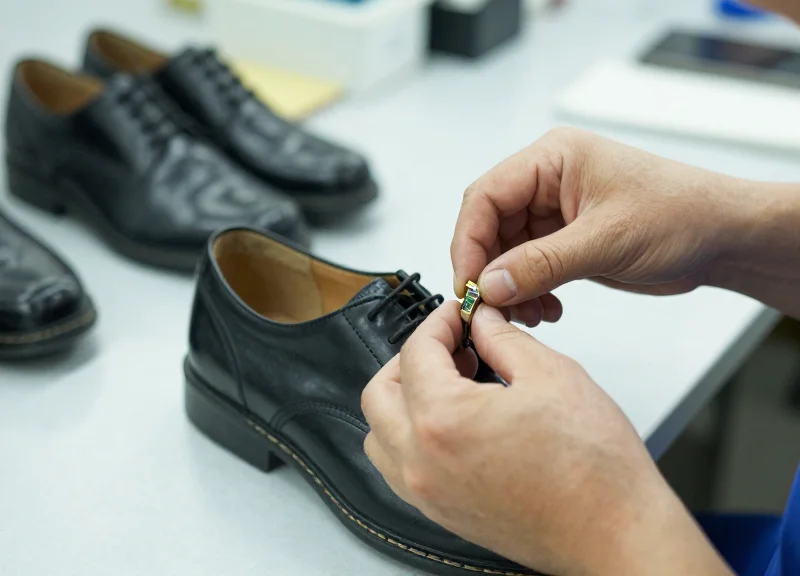
Seamless integration at the factory level, often referred to as 'source tagging,' is the process of embedding RFID hardware directly into footwear components during manufacturing to create a permanent digital identity. By incorporating tags into the sole, tongue, or heel counter before the final assembly, brands ensure that every pair of shoes carries an unalterable record from the production line to the retail shelf. This early-stage implementation eliminates the manual labor associated with post-production tagging and guarantees that data capture begins at the absolute origin of the item's lifecycle.
- Update the Bill of Materials (BOM): Treat the RFID inlay as a raw material component rather than a packaging add-on. By including the tag in the BOM, you ensure procurement and inventory management are synchronized with production volume.
- Embedding during the Lasting Phase: For discreet tagging, the tag is typically inserted during the lasting or sole-attachment phase. It must be positioned to avoid interference from metallic eyelets or damp materials while remaining protected from the heat and pressure of vulcanization.
- Real-Time Commissioning: As the tag is embedded, it must be 'commissioned' by linking its unique Electronic Product Code (EPC) to the specific SKU, size, and color in the factory's Manufacturing Execution System (MES).
- Automated Validation Tunnels: Once boxed, shoes pass through an RFID tunnel reader. This validates that the correct tag is inside the correct box and that the signal is readable through the packaging, preventing 'dead' tags from leaving the factory.
| Embedding Location | Discreetness Level | Read Performance | Manufacturing Complexity |
|---|---|---|---|
| Midsole/Sole Cavity | Invisible | Excellent | High (Requires molded cavity) |
| Tongue Label | Low Profile | Good | Low (Standard stitching) |
| Heel Counter | Invisible | Moderate | Medium (Glue-friendly) |
The goal of factory integration is to achieve a 'zero-friction' environment for production workers. The most successful implementations utilize fixed overhead readers at the end of the assembly line that automatically verify the SKU against the production order without requiring workers to stop or scan items manually.
- Expert Tip: The 180-Degree Heat Test: Most footwear manufacturing involves high-heat bonding or vulcanization. Standard RFID tags can fail if they reach 180 degrees Celsius. Always specify 'high-temp' ruggedized inlays or place tags in the tongue area if the sole-attachment process exceeds the thermal threshold of standard PET inlays.
- How do we handle factory data connectivity issues?: Implement edge-computing buffers. These local servers collect RFID data on the factory floor and sync with the cloud ERP only when a stable connection is available, preventing production delays during internet outages.
- Can RFID tags survive the pressure of shoe molding?: Yes, but they require a 'buffer' material. Using a foam-backed or encapsulated tag prevents the silicon chip from cracking under the tons of pressure applied during the injection molding or compression processes.
Step 3: Establishing the Digital Thread Through Distribution

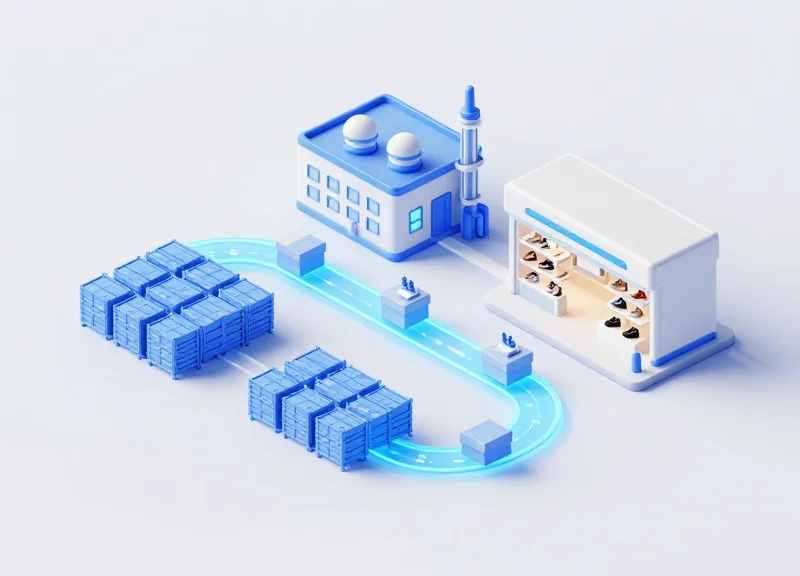
Establishing the digital thread through distribution is the process of creating an immutable, real-time record of footwear movement by deploying RFID gateways at transition points—such as loading docks and conveyor belts—to automate the validation of every individual item without line-of-sight scanning. This phase transforms the distribution center (DC) from a bottleneck into a high-speed data hub, where the 'digital twin' of each shoe or sneaker is updated automatically as it passes through the supply chain.
By shifting from manual barcode scans of cartons to automated RFID-enabled reads, brands can achieve near-perfect inventory accuracy. When discreetly tagged footwear arrives at the DC, fixed overhead readers or portal gateways instantly verify the contents of entire pallets against the Advanced Shipping Notice (ASN), identifying discrepancies in milliseconds rather than hours.
| Feature | Traditional Manual Scanning | RFID-Automated Distribution |
|---|---|---|
| Processing Speed | 60-90 seconds per carton | Less than 1 second per carton |
| Accuracy Rate | 85% - 95% (human error prone) | 99.5% - 99.9% (automated) |
| Visibility | Case-level only | Item-level (Unique Serial Number) |
| Labor Requirement | High (Manual handling required) | Low (Automated gates/conveyors) |
- Portal Gateway Calibration: Install fixed RFID portals at dock doors. These must be tuned to specific footwear densities, as rubber soles and certain adhesives can affect signal bounce. Ensuring the 'read zone' is strictly defined prevents the accidental reading of nearby stationary stock.
- Automated Receiving and Verification: As pallets pass through the inbound gate, the system compares the detected RFID tags against the factory-issued ASN. Any missing or extra units trigger an immediate alert for quality control, preventing downstream inventory 'ghosts'.
- Dynamic Cross-Docking: Utilize RFID data to bypass storage. If an item-level scan reveals that a specific SKU is already backordered at a retail location, the system can immediately re-route that carton to the outbound lane, drastically reducing 'dock-to-stock' time.
Expert Tip: The 'Stray Tag' Filtering Algorithm. One of the biggest challenges in DC environments is reading tags on nearby shelves instead of the moving pallet. We recommend implementing 'RSSID-based filtering' (Received Signal Strength Indicator). By setting a power threshold, your system can distinguish between a tag that is 3 feet away on a moving forklift and a tag that is 20 feet away on a storage rack, ensuring your digital thread remains clean and accurate.
Will RFID work through dense footwear packaging?
Yes. Unlike barcodes, UHF RFID signals penetrate cardboard and tissue paper easily. However, if the footwear includes metallic decorative elements or foil-lined packaging, specialized tag placement or higher-power readers may be required.
How do we handle 'Null-Reads' at the dock door?
Null-reads are usually caused by RF shielding or 'shadowing' when items are packed too tightly. Using circular polarized antennas and 'tunnel' reader configurations ensures that radio waves reach every angle of the carton, eliminating blind spots.
Does this require a full WMS overhaul?
Not necessarily. Most modern Warehouse Management Systems (WMS) can ingest RFID data via middleware that translates raw tag reads into standard electronic data interchange (EDI) formats like the 856 ASN.
Step 4: Real-Time In-Store Inventory and Smart Shelving

Step 4 of the traceability journey transitions from the supply chain to the retail floor, where RFID-enabled real-time inventory and smart shelving turn the 'black box' of store stock into a live, transparent database. By utilizing discreetly embedded tags, retailers can achieve 99% inventory accuracy, enabling advanced omnichannel strategies like Buy Online, Pick Up In-Store (BOPIS) and Ship-from-Store without the risk of 'phantom inventory' or cancelled orders.
In-store implementation involves shifting from labor-intensive manual cycle counts to passive, continuous data collection. This is achieved through a combination of fixed overhead readers for broad area coverage and 'Smart Shelves'—display units equipped with short-range antennas that detect every pair of shoes currently on the floor. When a customer picks up a shoe or moves it to a fitting room, the digital thread registers the movement in milliseconds.
| Feature | Traditional Manual Audits | Real-Time RFID Implementation |
|---|---|---|
| Inventory Accuracy | 65% - 75% on average | 98% - 99.9% |
| Counting Frequency | Quarterly or Monthly | Daily or Continuous |
| Labor Requirement | High (Requires 2-4 staff) | Low (Automated/Passive) |
| Omnichannel Readiness | Low (High risk of stock-outs) | High (Live stock sync) |
- Deployment of Store-Level Gateways: Install RFID gateways at the backroom-to-sales-floor transition point. This ensures that the system knows exactly when inventory has been moved from storage to the active shopping area.
- Smart Shelf Integration: Equip high-value display walls with near-field antennas. These sensors monitor 'on-shelf' availability and can trigger automatic replenishment alerts to staff devices when a specific size or style is missing.
- POS and Mobile Integration: Connect the RFID data stream to the Point of Sale (POS) and employee handhelds. This allows staff to locate 'the last pair in the back' instantly via Geiger-counter style search functions on their mobile devices.
- Continuous Data Feedback Loops: Use the real-time data to identify 'dead zones' in the store or high-interest items that are frequently tried on but rarely purchased, providing deep insights into product performance.
Expert Tip: The 'Conversion Context' Metric. Most retailers use RFID only for stock levels. However, a unique competitive advantage lies in measuring 'Interaction-to-Transaction' ratios. By tracking how many times a discreetly tagged shoe is moved from a smart shelf to a fitting room versus how many units are sold at the POS, brands can identify design flaws or pricing issues in real-time before they impact a full season's bottom line.
Does smart shelving interfere with store aesthetics?
No. Modern RFID antennas are paper-thin and can be integrated directly into wood, glass, or metal shelving units, remaining completely invisible to the consumer.
Can RFID help prevent in-store theft?
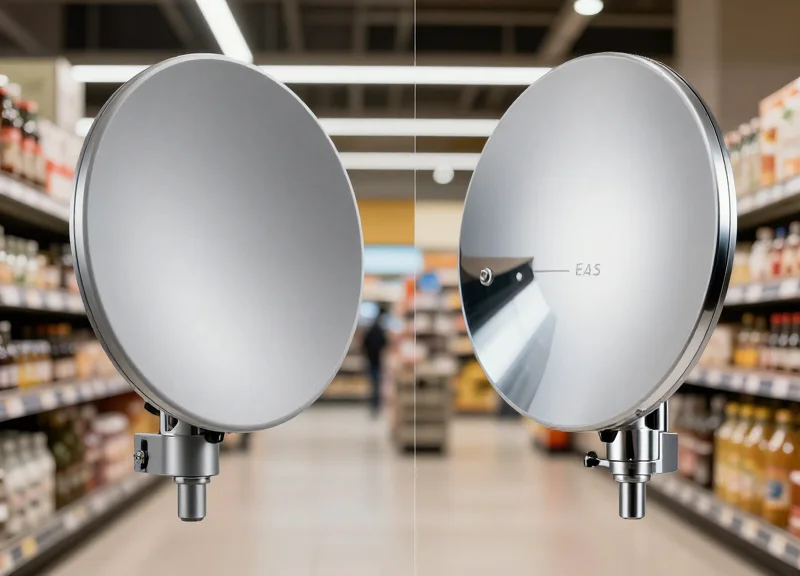
Yes. When integrated with EAS (Electronic Article Surveillance) pedestals at exits, RFID tags can distinguish between paid and unpaid merchandise, providing more granular security data than traditional hard tags.
How does this impact the customer experience?
It eliminates the 'I'll go check the back' delay. Staff can confidently tell customers if a specific size is in stock, improving trust and conversion rates.
Step 5: Leveraging Data Analytics for Supply Chain Optimization
Leveraging data analytics for supply chain optimization is the final, most impactful stage of RFID implementation, where raw 'read events' are transformed into predictive insights. By analyzing the high-resolution data generated from factory to storefront, footwear brands can move from reactive replenishment to a 'demand-pull' model, reducing excess safety stock by up to 30% and ensuring that the right SKU is always in the right location at the peak of its trend cycle.
- Identify Sell-Through Velocity by Micro-Segment: Use item-level data to track which specific sizes, colors, and materials are moving fastest in specific geographic regions. This allows for hyper-localized inventory allocation.
- Automate Replenishment Triggers: Integrate RFID data with your ERP to automatically generate purchase orders or store transfers when inventory hits a pre-defined 'safety floor,' eliminating human error in restocking.
- Optimize Factory Production Runs: Feed real-time retail data back to the factory level to adjust production mid-season. If a specific sneaker model is underperforming, production can be pivoted to a high-demand alternative within days, not months.
| Supply Chain Metric | Traditional Manual Method | RFID-Driven Analytics |
|---|---|---|
| Inventory Accuracy | 65% - 75% (Periodic Audits) | 98% - 99.9% (Real-Time) |
| Stockout Rates | 8% - 15% (Loss of Sale) | < 2% (Predictive Restocking) |
| Order Fulfillment Speed | 12 - 24 Hours (Search & Scan) | < 2 Hours (Precise Locating) |
| End-of-Season Markdowns | High (Due to Overproduction) | Low (Demand-Matched Production) |
Expert Insight: The 'Reverse Logistics' Goldmine. While most brands focus on the forward supply chain, the real competitive advantage lies in using RFID for returns. By analyzing why specific items are returned (e.g., a specific batch has size-consistency issues identified via RFID tracking back to the factory line), brands can perform 'surgical' quality control. This level of granularity allows you to identify a manufacturing defect in a specific factory shift before the rest of the batch even hits the retail shelves.
Can RFID data help with sustainability goals?
Yes. By reducing overproduction and optimizing shipping routes to minimize 'dead miles,' brands can significantly lower their carbon footprint and reduce physical waste.
How does data analytics prevent 'Phantom Inventory'?
Phantom inventory occurs when a system thinks an item is in stock but it isn't. RFID's constant 'heartbeat' checks ensure the digital record matches the physical reality, preventing lost sales.
What is the biggest challenge in RFID data integration?
The primary hurdle is data silos. Success requires a unified data lake where RFID reads from the factory, DC, and retail store can be analyzed by a single AI-driven business intelligence tool.
Combating Counterfeiting and Grey Market Sales
Combating counterfeiting and grey market sales requires moving beyond static security features to a dynamic, item-level digital identity. By embedding discreet RFID tags during the manufacturing process, each pair of footwear is assigned a unique, non-clonable Electronic Product Code (EPC). This 'digital birth certificate' allows brand owners to verify authenticity and track the intended journey of a product from the factory to the authorized retailer, making it virtually impossible for counterfeiters to replicate the data trail or for distributors to leak authentic stock into unauthorized 'grey' channels without detection.
| Feature | Traditional Security (Holograms/QR) | Discreet RFID Traceability |
|---|---|---|
| Copy Resistance | Low; can be visually replicated or scanned. | High; requires access to encrypted back-end databases. |
| Visibility | High; visible to the consumer and the counterfeiter. | Low; embedded inside the sole or heel, hidden from tampering. |
| Data Capacity | Static; limited to a single URL or serial number. | Dynamic; stores manufacturing date, factory ID, and shipping history. |
| Verification | Manual/Visual; prone to human error. | Automated; instant verification via handheld or fixed readers. |
One of the most powerful applications of this technology is Geofenced Authentication. Because the RFID tag records every 'node' the product passes through, the system can automatically flag an item if it appears at a retail location that does not match its assigned shipping destination. For example, if a premium sneaker designated for a boutique in London is scanned in a discount market in Southeast Asia, the brand is alerted immediately to a breach in their distribution agreement.
- Digital ID Assignment: During production, the RFID chip is encoded with a unique UID that is locked at the hardware level, preventing unauthorized modification.
- Chain of Custody Logging: As the footwear moves through distribution centers, every scan updates the cloud-based ledger, creating an immutable history of the item's path.
- Field Authentication: Customs officials or brand investigators use mobile RFID readers to instantly ping the global database to confirm the item is 'active' and in the correct territory.
Can RFID tags be cloned by sophisticated counterfeiters?
While a tag's ID can be read, high-end RFID systems use 'TID' (Tag Identifier) memory which is factory-locked by the chip manufacturer and impossible to alter, providing a second layer of hardware-based authentication.
How does this stop 'Back-Door' production?
By strictly controlling the number of RFID tags issued to a factory, brands ensure that only authorized units can enter the supply chain. Any 'over-runs' produced without tags will be rejected by automated distribution systems.
Is the customer's privacy protected?
Yes. The tag typically only contains a product ID string. Customer data is never stored on the tag itself, and most systems are designed to 'kill' or deactivate the tracking functionality at the point of sale if requested.
Expert Insight: To truly master grey market control, look for 'orphan scans.' These occur when an RFID tag is detected in a retail environment but has no recorded 'exit' from the distribution center. This gap in the data thread is a smoking gun for internal theft or unauthorized diversion, allowing brands to pinpoint exactly where their supply chain leaked.
Calculating the ROI of RFID Implementation
The Return on Investment (ROI) for RFID in footwear is calculated by weighing the Total Cost of Ownership (TCO)—including discreet tags, readers, and cloud integration—against the cumulative gains in operational efficiency and revenue recovery. While many enterprises focus solely on labor savings, the true ROI 'North Star' is the elimination of phantom inventory and the subsequent 2% to 5% sales lift achieved through improved on-shelf availability.
| Metric | Pre-RFID (Manual/Barcode) | Post-RFID (Item-Level) | ROI Impact Category |
|---|---|---|---|
| Inventory Accuracy | 65% - 75% | 98% - 99%+ | Sales Lift / Working Capital |
| Cycle Count Speed | 200 units/hour | 10,000+ units/hour | Labor Efficiency |
| Shrinkage Visibility | Monthly/Quarterly | Real-Time/Daily | Loss Prevention |
| Omnichannel Fulfillment | High Buffer Stock | Lean/Aggressive | Margin Protection |
How long does it typically take to see a positive ROI?
Most footwear retailers achieve a 'break-even' point within 12 to 18 months. The timeline accelerates significantly if the RFID tagging occurs at the point of manufacture (source tagging), as this distributes the cost across the entire lifecycle.
What is the primary driver of labor savings?
The transition from 'line-of-sight' scanning to 'bulk-read' capabilities. Receiving a shipment of 500 shoes that previously took two hours of manual scanning now takes less than five minutes with an RFID gateway.
How does RFID reduce capital expenditure on inventory?
By knowing exactly what is in stock at 99% accuracy, brands can reduce 'safety stock' levels by 10-15% without risking stockouts, freeing up millions in cash flow previously tied up in overstock.
Expert Insight: The 'Shadow ROI' of SKU-Level Accountability. While most models track labor and sales, they often overlook the 'Shadow ROI' found in vendor compliance. By implementing factory-to-store tracking, brands can leverage data to dispute short-shipments and transit losses with surgical precision. When you can prove exactly which shoe (by unique EPC) went missing between the factory floor and the DC, the recovery of lost assets becomes an automated revenue stream rather than an administrative burden.
Future-Proofing Your Supply Chain with DragonGuardGroup
Future-proofing your supply chain involves more than just implementing current technology; it requires selecting a hardware and software ecosystem capable of evolving with emerging trends like IoT-enabled logistics and Electronic Shelf Labels (ESL). DragonGuardGroup provides the foundational infrastructure that allows footwear brands to transition from basic item-level tracking to a fully automated, data-driven retail environment without requiring a total system overhaul.
| Feature | Standard RFID Provider | DragonGuardGroup Future-Proofed Ecosystem |
|---|---|---|
| Hardware Flexibility | Limited tag form factors | Wide range of discreet, high-durability tags for footwear |
| Integration Scope | Siloed RFID data | Native integration with ESL, IoT sensors, and cloud ERPs |
| Scalability | Manual configuration for new sites | Automated 'Plug-and-Play' deployment for global rollouts |
| Lifecycle Support | Post-sale support is reactive | Predictive maintenance and proactive tag performance audits |
- Seamless IoT and ESL Integration: DragonGuardGroup designs tags and readers that synchronize with Electronic Shelf Labels (ESL) to enable dynamic pricing and real-time stock-to-shelf visibility.
- Global Compliance and Standards: Our solutions adhere to international GS1 EPC Gen2 standards, ensuring your footwear remains traceable across different regions and logistics carriers.
- Sustainability and Longevity: By utilizing energy-efficient chips and durable materials, our tags remain functional throughout the entire product lifecycle, reducing electronic waste.
Expert Insight: The most common failure in RFID adoption is the 'Generation Gap'—where hardware becomes obsolete as soon as a company upgrades its backend software. DragonGuardGroup eliminates this risk through our 'Agnostic Hardware Architecture,' ensuring our discreet footwear tags are compatible with next-generation readers and 5G-enabled IoT gateways arriving in the next decade.
Can DragonGuardGroup tags be integrated with my existing WMS?
Yes, our hardware is designed to be middleware-agnostic, allowing seamless data flow into any modern Warehouse Management System or ERP.
How does DragonGuardGroup handle custom footwear materials?
We specialize in 'Difficult-to-Tag' environments, offering specialized adhesives and discreet placements that maintain signal integrity even on leather or metallic embellishments.
What is the typical lifespan of a DragonGuardGroup RFID solution?
Our industrial-grade readers and tags are built for high-volume environments, typically offering a 10-year operational outlook with simple firmware updates.