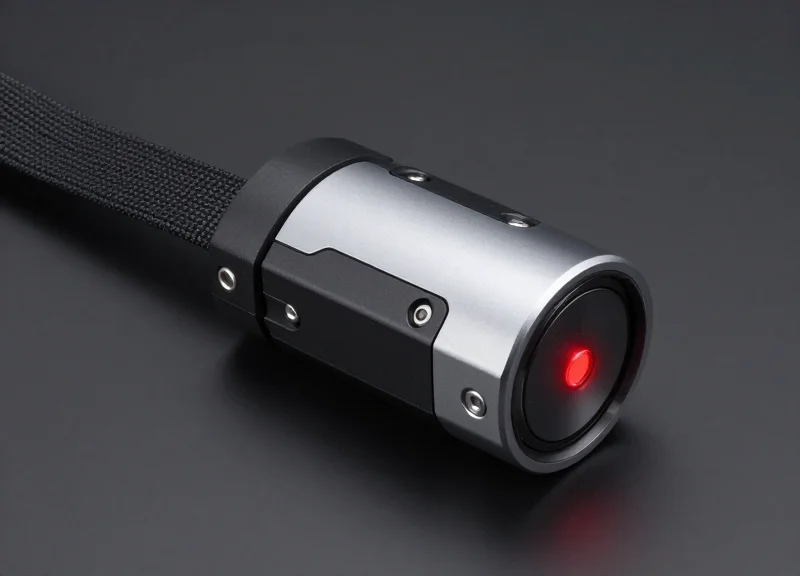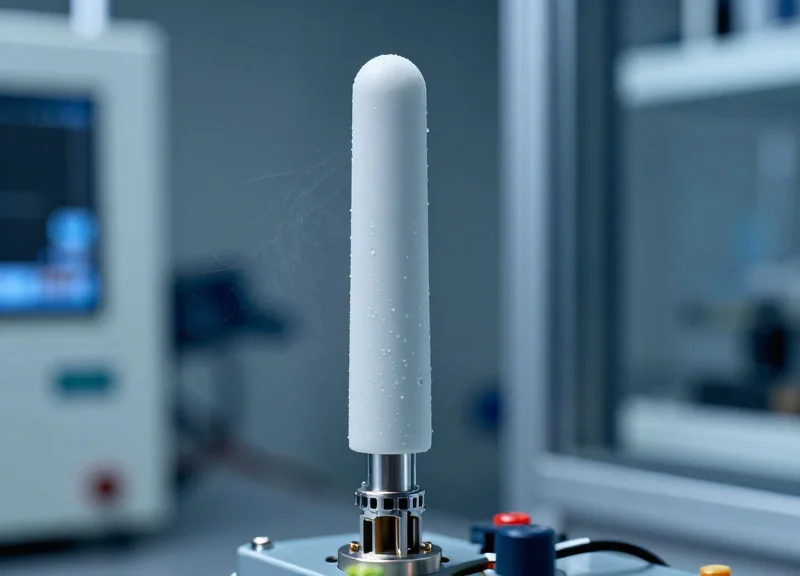
In the demanding landscapes of chemical processing, pharmaceutical manufacturing, and heavy industry, RFID technology serves as the critical nervous system for asset tracking and logistics. However, the presence of corrosive agents—ranging from acidic vapors to caustic cleaning solvents—poses a significant threat to hardware integrity. Engineering resilience into your RFID system is not just about choosing tough tags; it involves a comprehensive approach to antenna optimization that balances material science with electromagnetic precision. This guide explores the advanced strategies required to maintain signal integrity and hardware longevity in the face of chemical adversity.
Understanding the Impact of Chemicals on RFID Materials
Chemical exposure in industrial environments causes RFID antenna failure primarily through two mechanisms: oxidation and etching of the conductive trace. When standard antenna materials like copper or aluminum are exposed to corrosive agents—ranging from acidic cleaning solutions to salt spray—a chemical reaction occurs that converts the metallic surface into a non-conductive oxide or salt layer. This degradation increases the ohmic resistance of the antenna, which directly diminishes the energy available to power the microchip, eventually leading to a complete loss of read range.
| Material | Common Corrosive Agents | Degradation Mechanism | Impact on Performance |
|---|---|---|---|
| Copper | Acids, Chlorides, Ammonia | Rapid galvanic corrosion and oxidation | High: Massive impedance shift |
| Aluminum | Alkalis, Salt Spray, Strong Bases | Pitting and protective layer dissolution | Moderate: Structural brittleness |
| Silver Inks | Sulfur compounds, Chlorine | Silver sulfide formation (Tarnishing) | Low to Moderate: Contact resistance |
Expert Insight: It is a common misconception that an antenna must be physically 'broken' or disconnected to fail. Because RFID signals at UHF frequencies (860-960 MHz) are subject to the 'Skin Effect,' the electrical current travels almost exclusively on the outer surface of the conductor. Even microscopic surface corrosion—invisible to the naked eye—can increase the surface roughness and effective resistance. This causes a 'detuning' effect where the antenna's resonance no longer matches the chip's input impedance, resulting in a 50-80% drop in signal efficiency before any visible structural damage is apparent.
How do salts impact antenna longevity?
Salts act as electrolytes that accelerate galvanic corrosion. In maritime or food processing environments, salt ions facilitate the flow of current between different parts of the antenna assembly, leading to rapid material loss in the conductive trace.
Why is aluminum more susceptible to alkaline cleaners?
Aluminum is amphoteric, meaning it reacts aggressively with both acids and bases. High-pH industrial degreasers can dissolve the natural aluminum oxide layer, leading to rapid thinning of the antenna foil and subsequent failure.
Can protective coatings prevent all chemical damage?
While coatings like PET or epoxy provide a barrier, chemicals can still migrate through microscopic pores or along the edges of the tag. This is known as 'under-film corrosion,' where the conductive material degrades even while the outer plastic layer appears intact.
- Infiltration: Chemical vapors or liquids penetrate the tag's protective substrate or adhesive layers.
- Surface Reaction: The corrosive agent contacts the metal trace, initiating an electrochemical reaction (e.g., Cu + Cl → CuCl2).
- Impedance Shift: The conversion of metal to oxide increases resistance and alters the antenna's capacitance.
- Signal Attenuation: The antenna no longer captures enough electromagnetic energy to wake the RFID IC, causing the tag to go silent.
Selecting Chemical-Resistant Substrates for Antennas
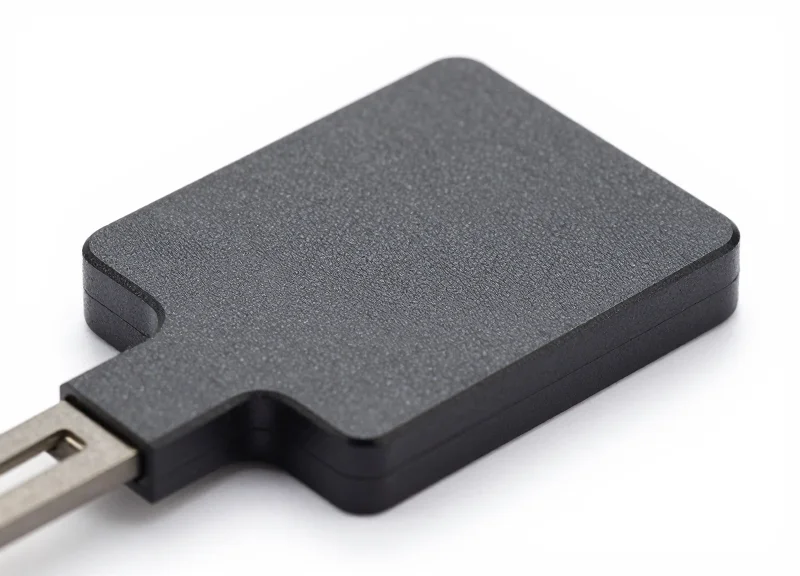
Selecting the right substrate is the first line of defense in RFID antenna design for corrosive environments. A chemical-resistant substrate must provide a stable dielectric environment while preventing structural swelling, delamination, or cracking when exposed to acids, bases, or solvents. The primary candidates for high-resilience applications are Ceramics (Alumina), Polytetrafluoroethylene (PTFE), and High-Performance Polymers (like PEEK), each offering a specific trade-off between mechanical toughness and electromagnetic transparency.
| Substrate Material | Chemical Resistance | Dielectric Constant (Dk) | Moisture Absorption | Best Use Case |
|---|---|---|---|---|
| Ceramic (Alumina) | Excellent (All Acids/Bases) | 9.0 - 10.2 | < 0.01% | Miniaturized tags in extreme heat/acid |
| PTFE (Teflon-based) | Superior (Universal) | 2.1 | < 0.02% | High-frequency/Long-range durability |
| PEEK / Polyimides | High (Good vs. Solvents) | 3.2 - 3.5 | 0.1 - 0.5% | Flexible or impact-heavy environments |
| Specialized FR-4 | Moderate (Requires Coating) | 4.4 | 0.10% | Cost-sensitive indoor industrial use |
Expert Insight: The 'Interface Creep' Risk. While the substrate itself may be chemically inert, the failure point in most RFID systems is the bond between the substrate and the conductive element. In Silicon Valley's high-reliability labs, we have found that even if a PTFE substrate survives, chemical vapors can 'creep' along the interface if the Coefficient of Thermal Expansion (CTE) between the metal and substrate is poorly matched. To prevent this, always specify substrates with a 'chemically activated surface' to ensure a hermetic-like bond that prevents microscopic capillary action from pulling corrosive agents under the antenna trace.
- Ceramic Substrates: Ceramics are virtually immune to chemical attack and offer the highest dielectric stability. They are ideal for 'on-metal' tags where small form factors are required, though their brittleness makes them unsuitable for high-vibration or impact zones.
- PTFE (Teflon) Composites: PTFE offers a near-universal chemical barrier and very low loss tangent. Because PTFE is naturally 'non-stick,' ensure you select glass-reinforced versions to maintain structural rigidity under thermal cycling in chemical baths.
- High-Performance Polymers (PEEK): Polyether ether ketone (PEEK) provides a middle ground. It is exceptionally tough and resistant to high-pressure washdowns and steam (autoclaving), making it the gold standard for medical and food-processing RFID applications.
Will chemical-resistant substrates detune the antenna?
Yes. Highly resistant materials like Ceramics have higher dielectric constants (Dk) than standard FR-4, which can shift the resonant frequency. Designers must tune the antenna geometry specifically for the chosen substrate's Dk.
Is a coating necessary if the substrate is chemical-resistant?
Usually, yes. While the substrate protects the 'back' of the antenna, the 'front' (the conductive traces) remains exposed unless a conformal coating or encapsulation (like Parylene-C) is applied over the entire assembly.
What is the most cost-effective material for acidic environments?
For moderate acidity, a high-quality Epoxy-resin (specialized FR-4) with an extra-thick solder mask can work, but for long-term immersion, PTFE-based laminates provide the best ROI by preventing premature failure.
The Role of Encapsulation and Conformal Coatings
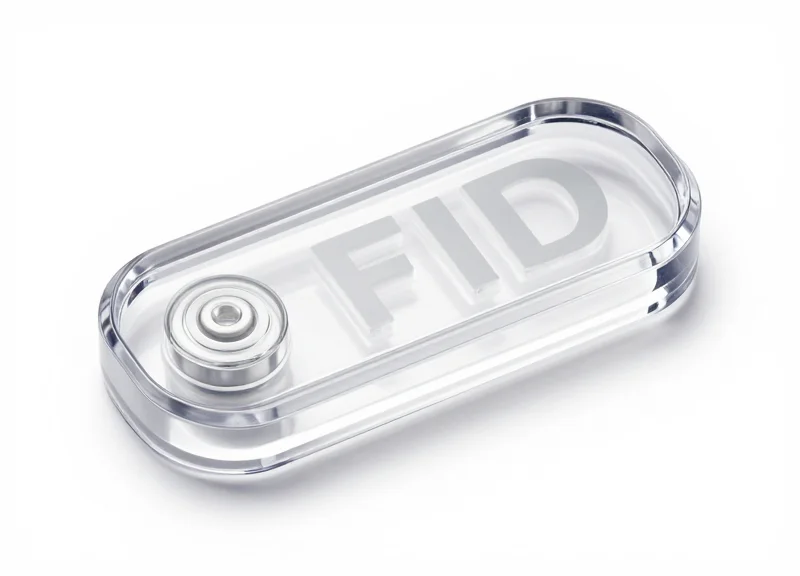
Encapsulation and conformal coatings serve as the primary defensive perimeter for RFID antennas, isolating sensitive conductive traces from corrosive fluids and vapors. The engineering challenge lies in balancing chemical impermeability with RF transparency; an ideal coating must block ionic contaminants without introducing significant parasitic capacitance or signal attenuation. For mission-critical applications in chemical processing or offshore environments, this protective layer ensures that the antenna's electrical impedance remains stable despite direct exposure to acids, bases, or industrial solvents.
| Material Type | Chemical Resistance | RF Impact (Dk/Df) | Application Method | Best Use Case |
|---|---|---|---|---|
| Parylene C | Exceptional (Acids/Bases) | Ultra-Low (2.9 / 0.013) | Vapor Deposition | High-precision UHF/HF tags |
| Epoxy Resin | High (Solvents/Impact) | Moderate (3.5 / 0.03) | Potting/Casting | Rugged industrial asset tracking |
| Silicone | Good (Moisture/Heat) | Low (2.7 / 0.002) | Spray/Dip | Flexible tags in high-temp zones |
| Acrylic | Moderate (Mild acids) | Variable (3.0 / 0.02) | Spray/Brush | Indoor, light-exposure sensors |
When selecting a coating, engineers must account for the Dielectric Loading Effect. Adding a protective layer increases the effective dielectric constant surrounding the antenna, which physically shifts the resonant frequency downward. Expert Tip: To compensate for this, designers should 'pre-tune' the antenna to a slightly higher frequency during the CAD phase, anticipating the downward shift caused by the encapsulation thickness. Failure to do so can result in a 10-15% reduction in read range even if the material is technically 'RF transparent.'
Does coating thickness affect RFID read range?
Yes. While a thicker coating provides a better chemical barrier, it increases dielectric loading and potential signal absorption. For UHF RFID, maintaining a uniform thickness (often < 50 microns for Parylene) is vital to avoid detuning the antenna resonance.
Why is Parylene preferred over Epoxy for precision RFID?
Parylene is applied via vapor-phase deposition, ensuring a pinhole-free, truly conformal layer that reaches under components. Unlike epoxy, it does not exert significant mechanical stress on the antenna traces during curing, preserving the integrity of thin-film conductors.
Can chemical exposure cause coatings to delaminate?
Yes, if the Coefficient of Thermal Expansion (CTE) of the coating does not match the substrate. If delamination occurs, chemical 'pockets' can form at the interface, leading to rapid, hidden corrosion of the antenna traces.
A unique insight often overlooked is the risk of Capillary Ingress at the interface points. Even the best coating will fail if the bond between the coating and the antenna substrate is not chemically optimized. Utilizing plasma surface activation before coating can increase surface energy, ensuring a covalent-like bond that prevents corrosive agents from 'wicking' underneath the protective layer at the edges or connector junctions.
Optimizing Antenna Design for Signal Integrity

Optimizing RFID antenna design for signal integrity in corrosive environments requires an engineering shift from static modeling to dynamic compensation. Signal integrity is maintained by neutralizing the 'dielectric loading effect'—where chemical films or moisture accumulation on the antenna surface shift the resonant frequency and mismatch the impedance. By utilizing wideband geometries and precision impedance matching networks, engineers can ensure consistent read ranges despite the fluctuating electrical properties of the surrounding chemical atmosphere.
In a chemically active environment, the conductive traces of an antenna are rarely in a state of pure vacuum or air. Instead, they are often coated with a layer of liquid or crystalline residue. These materials have a higher dielectric constant than air, which electrically lengthens the antenna, causing a downward frequency shift. To counteract this, the geometry must be 'de-tuned' at the point of manufacture to account for the expected dielectric shift during the product's operational lifecycle.
| Design Parameter | Standard Environment | Corrosive/Chemical Environment | Impact on Integrity |
|---|---|---|---|
| Antenna Geometry | Narrow-band dipole | Broadband Fractal/Bowtie | Fractals maintain resonance even with frequency shifts. |
| Polarization | Linear | Circular/Dual-Linear | Reduces signal fade caused by chemical-induced multipath. |
| Impedance Target | Fixed 50 Ohm | Complex Conjugate Over-match | Compensates for parasitic capacitance of chemical films. |
- Analyze Dielectric Loading: Measure the dielectric constant (εr) of the target chemicals and model their influence as a thin-film layer over the antenna substrate in EM simulation software.
- Implement Frequency Offsetting: Intentionally shift the native resonant frequency of the antenna 5-10% higher than the target (e.g., 915 MHz for a 902-928 MHz band) to allow the chemical buildup to 'pull' the resonance back into the center of the band.
- Optimize Matching Networks: Use discrete L-C matching networks or T-match structures that provide a wider bandwidth, reducing the Q-factor to make the system less sensitive to minor environmental changes.
Expert Tip: The 'Sacrificial Bandwidth' Strategy. In high-reliability chemical sensing, we often utilize a 'Low-Q' design philosophy. While a high Q-factor antenna provides a sharper peak and theoretically better range, it is incredibly fragile. A single drop of a corrosive agent like sulfuric acid can shift the resonance entirely out of bounds. By designing for a wider, flatter VSWR curve—effectively sacrificing peak gain for bandwidth—you create a 'Resilience Buffer' that keeps the tag readable even as the environment degrades the physical conductors.
How does chemical residue affect VSWR?
Residue acts as a parasitic capacitor, increasing the Voltage Standing Wave Ratio (VSWR), which reflects power back to the chip and reduces read range.
Can antenna geometry prevent chemical buildup?
While geometry cannot stop chemistry, 'rounded' or 'filleted' trace designs minimize high-field concentration points where chemical ions are more likely to cause localized arcing or accelerated oxidation.
Why is circular polarization preferred in these settings?
Chemical containers and industrial vats often create complex reflection environments; circular polarization is more robust against the polarization misalignment caused by these reflections.
Strategic Placement to Minimize Direct Chemical Contact
Strategic placement for RFID antennas in corrosive environments involves the deliberate orientation and physical shielding of the hardware to leverage gravity, airflow, and structural 'shadowing' to minimize contact with liquids and vapors. By positioning antennas away from splash zones and using the facility's existing geometry as a natural buffer, engineers can significantly reduce the rate of chemical degradation without compromising the RF read field.
- The 'Shadowing' Technique: Utilize structural beams or equipment chassis as a physical shield. Mount the antenna on the leeward side of the structure relative to chemical sprayers or wash-down nozzles.
- Gravity-Assisted Drainage: Avoid horizontal mounting where liquids can pool. Orient antennas at a slight downward tilt (15-30 degrees) to ensure that condensation or chemical droplets run off the face of the radome immediately.
- Stand-off Mounting: Use non-corrosive brackets to create a 2-4 inch gap between the antenna and walls. This prevents the 'wicking' effect where chemicals trapped against a flat surface cause accelerated crevice corrosion.
- Cable Management and Drip Loops: Always incorporate a drip loop in the RF cable before it enters the antenna connector. This ensures that gravity pulls liquid to the bottom of the loop and away from the sensitive connection point.
| Mounting Orientation | Corrosive Risk Level | Reasoning |
|---|---|---|
| Horizontal (Face Up) | Critical | Maximum accumulation of particulates and stagnant liquids. |
| Horizontal (Face Down) | Moderate | Shielded from direct spray, but highly susceptible to rising vapors. |
| Vertical (Side Mount) | Low | Promotes rapid runoff; minimizes the surface area exposed to falling mist. |
| Angled (15° Downward) | Lowest | Optimizes signal path while utilizing gravity for self-cleaning. |
Expert Insight: The 'Aero-Shed' Advantage. In environments with high chemical vapor concentrations, such as semiconductor fabs or plating lines, the air current is often more corrosive than the liquid itself. My unique recommendation is to install 'Vapor Deflectors'—simple, non-metallic aerodynamic fins—upstream of the antenna. These create a localized high-pressure zone that diverts the flow of corrosive air around the antenna, effectively creating a 'clean pocket' for the device to operate within, a technique often overlooked by standard installation guides.
Can I use metal shields to protect the antenna from chemicals?
Metal shields will interfere with the RF signal. Use chemically-resistant plastics like High-Density Polyethylene (HDPE) or PTFE (Teflon) as physical shrouds to block splashes while remaining RF-transparent.
How far should the antenna be from the chemical source?
Follow the Inverse Square Law for splash intensity. Doubling the distance from a pressurized chemical source can reduce the volume of liquid impact by up to 75%, significantly extending the life of protective coatings.
Does the orientation affect the read range?
Yes. While tilting the antenna for drainage, ensure the polarization (linear or circular) still aligns with the RFID tags. Always perform a site survey after adjusting the mounting angle to confirm coverage.
Environmental Sealing and IP Rating Standards
Environmental sealing for RFID antennas is governed by the Ingress Protection (IP) rating system, which defines an enclosure's ability to resist solid particles and liquids. In corrosive chemical environments, the standard IP67 rating is often insufficient. Engineers must target IP68, which signifies protection against continuous immersion in water under pressure, or IP69K, the highest standard designed for high-pressure, high-temperature washdown procedures common in pharmaceutical and food processing plants. However, a high IP rating only validates mechanical fit; it does not guarantee that the seals themselves will not degrade when exposed to specific caustic agents or solvents.
| IP Rating | Protection Level | Ideal Chemical Application |
|---|---|---|
| IP67 | Temporary immersion (30 min at 1m) | Occasional splashes; low-concentration detergents. |
| IP68 | Continuous immersion (User-defined depth) | Submerged chemical tanks or constant mist exposure. |
| IP69K | High-pressure/Steam jet cleaning (80-100 bar) | Aggressive CIP (Clean-in-Place) cycles with hot acids/bases. |
Expert Insight: The 'Gasket Gap' in IP Ratings. A common failure point in Silicon Valley industrial deployments is assuming an IP69K enclosure is 'chemical-proof.' IP ratings only test with water. In a corrosive environment, the O-ring material is your primary point of failure. While standard Nitrile (Buna-N) seals work for water, they often swell and fail in the presence of oils or fuels. For high-resilience applications, always specify Viton (FKM) for petroleum-based exposure or EPDM for polar solvents and steam, regardless of the enclosure's IP rating.
- Determine Exposure Profile: Identify the pH levels, temperature, and pressure of the chemical spray or immersion cycles the antenna will face.
- Select Enclosure Material: Match the IP rating with a housing material like 316L Stainless Steel or specialized UV-stabilized polycarbonates that resist chemical etching.
- Validate Connector Integrity: Use M12 or M8 circular connectors with gold-plated contacts and over-molded cables to prevent 'wicking,' where chemicals travel through the cable jacket into the electronics.
- Pressure Compensation: Integrate a GORE-Tex vent or similar breather to equalize pressure changes during temperature swings without allowing chemical ingress.
Does IP69K replace the need for chemical-resistant coatings?
No. IP69K protects against the force and entry of liquid, but the enclosure surface can still corrode. Coatings like Parylene are still needed if the enclosure material itself is susceptible to the chemical.
What is the most common cause of seal failure in RFID systems?
Compression set failure due to thermal cycling. When an antenna heats up and cools down in a chemical environment, the seals can lose their elasticity, allowing micro-ingress of corrosive vapors.
Can I use standard plastic enclosures for chemical washdowns?
Only if they are rated for the specific chemicals; many plastics become brittle or 'stress-crack' when exposed to industrial degreasers or alcohols.
Maintenance and Inspection Protocols for Harsh Environments
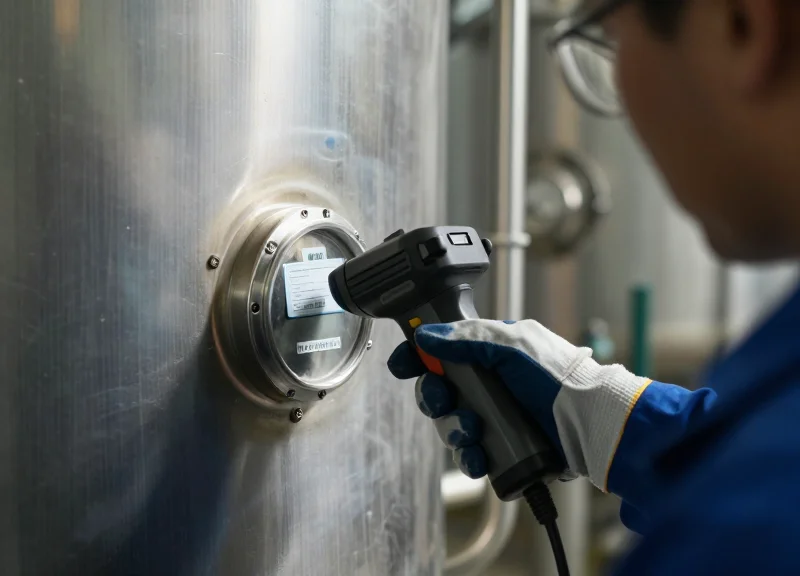
To ensure long-term engineering resilience, maintenance protocols for RFID systems in corrosive environments must transition from reactive repairs to predictive auditing. Because chemical fatigue often manifests as microscopic degradation before a total system failure occurs, a structured inspection regimen is the only way to prevent costly downtime. This involves monitoring the physical integrity of protective housings and the electromagnetic health of the RF link, ensuring that chemical residues or substrate swelling are not silently attenuating signals.
| Frequency | Inspection Type | Target Metric/Observation |
|---|---|---|
| Weekly | Visual Surface Scan | Discoloration, bubbling of coatings, or salt/residue buildup. |
| Monthly | Signal RSSI Audit | Comparison of current Receive Signal Strength Indicator against baseline. |
| Quarterly | Seal & Gasket Integrity | Physical check for brittleness or 'compression set' in IP-rated enclosures. |
| Bi-Annually | Full Read-Rate Stress Test | Testing the 'edge cases' of the read zone to identify range shrinkage. |
- Phase 1: Surface Decontamination: Carefully remove chemical residues using pH-neutral cleaning agents that do not react with the antenna's specific encapsulation material. Avoid abrasive scrubbing which can create micro-fissures.
- Phase 2: Visual Structural Analysis: Look for 'delamination' where the conformal coating meets the antenna substrate. In high-acid environments, even a pinhole leak can lead to internal copper oxidation.
- Phase 3: RSSI Fingerprinting: Measure the Signal Strength (RSSI) from a fixed distance. A steady decline over three months—even if the tag still reads—indicates chemical ingress into the dielectric layers.
- Phase 4: Connector Torque Verification: Ensure RF connectors remain tightened to specification; thermal cycling in chemical plants often loosens joints, allowing corrosive vapors to enter the cable assembly.
Expert Tip: The 'Dielectric Drift' Warning. One original indicator of chemical fatigue is not a dead antenna, but a shifted resonance frequency. If you notice that an antenna performs better when the environment is slightly damp or at a different temperature than usual, chemicals have likely permeated the antenna housing, changing its dielectric constant. Use a portable Vector Network Analyzer (VNA) to check the VSWR (Voltage Standing Wave Ratio) annually; a shift in the 'dip' of the graph is a definitive signature of internal chemical contamination before the antenna actually fails.
How do I clean antennas without damaging the RF transparent coating?
Use isopropyl alcohol (IPA) for organic residues or distilled water for salts, but always verify the coating's chemical resistance chart (e.g., PTFE vs. Polycarbonate) before application.
What is the most common sign of imminent failure?
A sudden increase in 'null spots' within the read zone, where tags that previously read consistently now require multiple passes or specific orientations.
Should I replace antennas preventatively?
In high-concentration corrosive zones (like sulfuric acid baths), we recommend a 24-month 'hot-swap' cycle regardless of performance to prevent catastrophic mid-shift failure.
Case Studies: RFID Success in Corrosive Industries

Success in deploying RFID within corrosive environments is defined by the transition from standard hardware to custom-engineered, hermetically sealed assemblies. By utilizing chemically inert substrates like PTFE (Teflon) or high-grade PEEK and neutralizing the 'detuning' effects caused by caustic residue, industries can achieve 99.9% read reliability. These case studies highlight how shifting from reactive maintenance to resilient engineering optimizes operational uptime in the world's harshest settings.
In the Oil and Gas sector, a major offshore refinery recently overhauled its asset tracking for drill pipes and subsea valves. Previously, standard UHF antennas failed within months due to Hydrogen Sulfide (H2S) exposure and saltwater oxidation of the internal junctions. The solution involved implementing antennas with specialized vacuum-sealed housings and 316L stainless steel elements. This shift resulted in a 400% increase in hardware lifespan and eliminated the signal dropout that previously plagued their inventory management system.
| Industry Sector | Chemical Stressor | Standard Hardware Result | Resilient Engineering Outcome |
|---|---|---|---|
| Oil & Gas | H2S & Salt Spray | Signal failure < 90 days | MTBF extended to > 3 years |
| Medical | Ethylene Oxide (EtO) | Housing delamination | 500+ sterilization cycles |
| Chemical Processing | Sulfuric Acid Vapors | Impedance mismatch/drift | Stable 12m read range |
In the medical field, high-volume sterilization centers utilize Ethylene Oxide (EtO) and vaporized hydrogen peroxide to disinfect surgical kits. These gases are highly penetrative and typically degrade standard antenna adhesives. A leading European hospital group replaced their tracking system with RFID tags featuring ceramic-core antennas and laser-welded enclosures. This engineering choice ensured 100% traceability for high-value instruments, surviving hundreds of cycles without the 15% annual failure rate they had previously accepted as a cost of doing business.
- Unique Expert Insight: The Dielectric Drift Factor: Silicon Valley Engineering Tip: Most failures in corrosive environments aren't 'dead' antennas but 'drifting' ones. Chemical films on the antenna surface change the local dielectric constant, shifting the resonant frequency away from the reader's range. To combat this, we recommend implementing 'RSSI Trend Analysis' in your middleware to flag antennas experiencing gradual signal degradation before they reach a total failure state.
Can standard IP67 antennas work in chemical plants?
Generally, no. While IP67 protects against water, it does not certify protection against chemical permeation or the corrosive degradation of the gasket materials themselves.
Which material is best for high-acid environments?
PTFE (Polytetrafluoroethylene) is the gold standard for acidic exposure due to its near-universal chemical inertness and stable dielectric properties.
Does ruggedization reduce the read range?
If properly tuned, no. While the housing adds thickness, engineering the antenna geometry to account for the housing's permittivity ensures the range remains optimal.
Future-Proofing Your RFID Infrastructure
Future-proofing your RFID infrastructure in chemically aggressive environments means moving beyond static protection to a philosophy of 'Adaptive Resilience.' While traditional engineering focuses on building thicker barriers, the next generation of RFID technology focuses on materials and software that can dynamically respond to environmental degradation. This involves integrating self-healing polymers that repair micro-fissures in real-time and utilizing Software-Defined Radio (SDR) principles to retune antennas as their electrical environment shifts due to chemical accumulation.
| Material/Technology | Resistance Type | Future Advantage |
|---|---|---|
| Self-Healing Polymers | Micro-crack Repair | Prevents chemical ingress automatically without manual intervention. |
| Liquid Crystal Polymers (LCP) | Extreme pH Tolerance | Provides near-zero moisture absorption and superior chemical stability. |
| AI-Driven Auto-Tuning | Dielectric Compensation | Firmware automatically adjusts antenna resonance to counteract chemical film interference. |
| Graphene-Based Inks | Oxidation Resistance | Eliminates the risk of copper-based corrosion in printed antenna elements. |
As a Silicon Valley veteran, my unique insight for this decade is the adoption of 'Chemical Digital Twins.' Before deploying hardware, leading-edge firms now use molecular-level simulations to model how specific chemical vapors will interact with antenna substrates over a 5-to-10-year lifecycle. This allows for 'Pre-emptive Tuning,' where the antenna is manufactured with a deliberate offset that only reaches peak performance after 18 months of exposure, effectively extending the hardware's peak ROI window.
- Conduct a Chemical Lifecycle Audit: Identify not just current cleaning agents, but potential future shifts toward more caustic green-chemistry alternatives.
- Deploy Multi-Band Hardware: Utilize antennas capable of operating across a wider frequency range to allow for frequency hopping if specific bands become noisy due to chemical interference.
- Implement Remote Diagnostic Monitoring: Use cloud-based analytics to track signal-to-noise ratio (SNR) trends, triggering maintenance before the antenna fails completely.
Can existing RFID systems be retrofitted for future-proofing?
Yes, primarily through firmware updates that enable smarter gain control and the application of secondary nanocoatings that provide chemical resistance without detuning the antenna.
Is the cost of self-healing materials justifiable?
In high-uptime environments like pharmaceutical manufacturing or oil refining, the cost is offset by the elimination of emergency maintenance shutdowns and extended hardware lifespans.
How does AI help in corrosive environments?
AI algorithms can distinguish between a physical blockage and chemical-induced signal attenuation, allowing for precise power adjustments rather than simple, inefficient signal boosting.