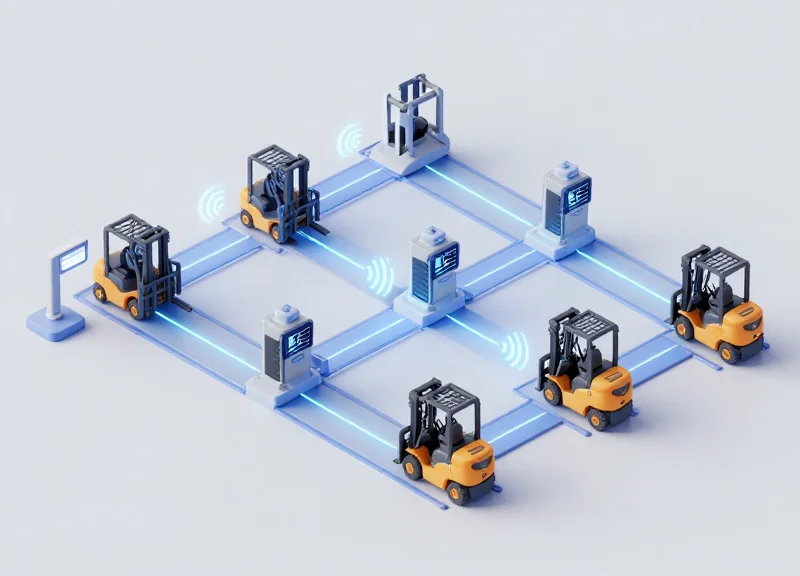
In the fast-paced world of modern logistics, RFID technology serves as the backbone of operational efficiency. However, in high-density warehouse environments where forklift lanes are tightly packed, 'cross-reading'—the accidental scanning of tags in adjacent lanes or racks—can lead to chaotic inventory data and costly operational errors. Achieving peak signal accuracy in these environments is a complex challenge that requires more than just high-end hardware; it demands a strategic approach to spatial configuration, signal management, and environmental tuning. This guide explores the professional techniques used to isolate RFID signals and ensure your warehouse data remains as precise as your logistics demand.
Defining the Problem: What is RFID Cross-Reading?
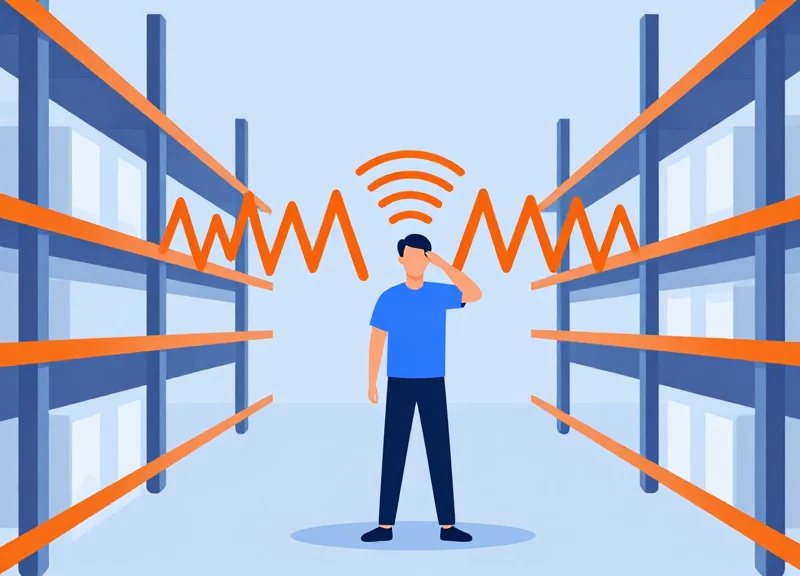
RFID cross-reading, also known as 'stray reads' or 'false positives,' is a technical failure where an RFID reader captures data from tags located outside its targeted interrogation zone. In the context of high-density forklift lanes, this typically happens when a reader mounted on a moving vehicle or a fixed portal accidentally triggers and reads tags in adjacent lanes, on neighboring shelves, or even on passing forklifts. This creates a data integrity crisis, as the system records inventory as 'processed' or 'moved' when it hasn't actually left its physical location.
To understand the mechanics, we must look at how Ultra-High Frequency (UHF) passive RFID works. The reader emits electromagnetic energy to wake up a tag. In a perfect environment, this energy is a controlled beam. However, in a crowded warehouse, that energy doesn't stop at the lane boundary; it propagates, reflects, and refracts, creating a 'bubble' of detection that is often much larger or more irregular than the operator intends.
| Feature | Intended Read | Cross-Read (The Problem) |
|---|---|---|
| Target Proximity | Direct line-of-sight or within defined zone | Outside defined zone (adjacent lanes/racks) |
| Data Accuracy | 100% reflection of physical movement | False positive; 'Ghost' inventory movement |
| Signal Path | Primary radiation lobe | Side lobes or multipath reflections |
| System Impact | Optimized workflow and visibility | Inventory reconciliation errors and shipping delays |
The Expert Insight: The 'Metal-Mirror' Effect. A common misconception is that cross-reading is solely a result of high signal power. In my 20 years of field engineering, I have observed that the primary culprit in forklift lanes is actually the 'Metal-Mirror' effect. Warehouses are essentially Faraday cages made of steel racking and moving metal vehicles. These surfaces act as RF mirrors, reflecting signals into 'hot spots' several lanes away. Even if you turn the power down, a signal can bounce off a forklift mast and hit a tag 30 feet away that was supposed to be shielded. Solving cross-reading requires managing these reflections, not just lowering the volume.
Why is cross-reading more common in forklift lanes?
Forklift lanes are high-traffic zones where multiple readers and thousands of tags converge in tight proximity. The motion of the forklift constantly changes the RF environment, making static shielding less effective.
What are the financial consequences of stray reads?
Beyond simple data errors, cross-reads lead to mis-shipments, 'lost' inventory that is actually on the shelf, and significant labor costs spent on manual reconciliation.
Can software alone fix cross-reading?
Software filtering (RSSI thresholds) helps, but it is rarely a silver bullet. A hardware-first approach focusing on antenna polarization and shielding is usually required for 99.9% accuracy.
The Physics of Interference in High-Density Lanes

In high-density forklift lanes, RFID interference is primarily caused by electromagnetic wave reflections and the multipath effect, where signals bounce off metal racking and concrete floors to reach tags in unintended areas. These reflections create a chaotic RF environment known as an 'echo chamber,' where the constructive and destructive interference of radio waves makes it difficult for a reader to isolate tags located in its direct line of sight from those in adjacent aisles.
When an RFID antenna emits a signal in a narrow lane, it doesn't just travel in a straight line. It interacts with every conductive surface it encounters. Because metal racking is highly reflective, it acts as a waveguide, channeling energy into 'null zones' or amplifying it in 'hot spots' through a process called multipath propagation. This phenomenon is exacerbated in high-density environments because the distance between the source (the forklift antenna) and the stray targets (tags in the next aisle) is often less than the signal's effective range.
| Physical Phenomenon | Cause in Warehouse | Impact on RFID Accuracy |
|---|---|---|
| Multipath Effect | Signals bouncing off metal racks/floors | Creates 'phantom' reads from distant tags |
| RF Leakage | Signals passing through gaps in racking | Triggers reads in adjacent forklift lanes |
| Faraday Shielding | Dense metal surrounding a tag | Prevents legitimate tags from being read |
| Signal Attenuation | Physical obstructions like pallets | Reduces the consistency of the read zone |
What is the Fresnel Zone in RFID?
The Fresnel Zone is an elliptical region around the line-of-sight path between the antenna and the tag. In narrow lanes, if this zone is encroached upon by metal racks, the signal can be deflected or phase-shifted, leading to read failures even if the path looks clear.
How does Backscatter affect cross-reading?
Passive RFID relies on backscatter, where the tag reflects energy back to the reader. In high-density lanes, the reader may receive backscattered signals from dozens of tags simultaneously, causing a collision that the reader's anti-collision algorithm must resolve, often slowing down processing speeds.
Why does polarization matter in these lanes?
Circularly polarized antennas are common in warehouses because they can read tags at various angles. However, in high-density lanes, this multi-directional energy is more likely to bounce off surrounding metal, increasing the risk of stray reads compared to linear polarization.
Expert Insight: Beware of the 'Power-Sensitivity Paradox.' In my experience, the instinctive reaction to a missed tag is to increase the reader's transmit power. However, in high-density lanes, increasing power often lowers the overall accuracy. This is because the higher power raises the 'noise floor' of the entire aisle, magnifying reflections and making the reader more sensitive to the unintended tags in adjacent racks. The solution is rarely more power; it is more precise energy management.
Strategic Antenna Configuration and Polarization
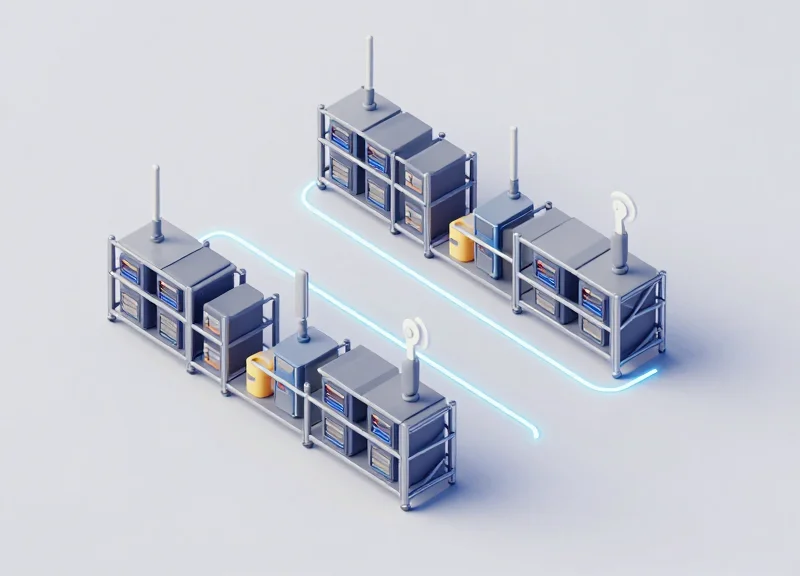
To prevent cross-reading in high-density forklift lanes, antenna configuration must shift from 'maximum coverage' to 'surgical precision.' Strategic configuration involves selecting the correct polarization—either linear or circular—and physically orienting the antenna boresight to truncate signal propagation. In a high-density environment, the goal is to create a controlled RF 'curtain' rather than a broad 'cloud,' ensuring that a forklift in Lane A does not inadvertently trigger a read from a pallet staged in Lane B.
| Feature | Linear Polarization | Circular Polarization |
|---|---|---|
| Signal Shape | Narrow and directional (Knife-like) | Broad and corkscrew-like |
| Orientation Sensitivity | High (Tag must align with antenna) | Low (Reads tags at any angle) |
| Spillover Risk | Low (Easiest to contain) | High (Bounces off metallic surfaces) |
| Ideal Use Case | High-density portals and narrow lanes | General warehouse receiving/bulk areas |
In forklift applications, Linear Polarization is often the superior choice for preventing cross-reads. Because the energy is concentrated in a single plane, you can 'slice' the read zone with high precision. However, this requires tags to be consistently applied to assets in a known orientation. If tag orientation varies, engineers should use Circular Polarization but must compensate by significantly reducing the Power (dBm) and utilizing shielding.
- The 15-Degree Down-Tilt Strategy: Avoid mounting antennas perfectly horizontal. By tilting the antenna 15 to 20 degrees toward the floor, the primary signal path terminates into the concrete rather than propagating across the warehouse floor into adjacent lanes.
- Boresight Alignment: Align the center of the antenna (the boresight) specifically at the height of the most common pallet tag location. This concentrates the highest 'Energy per Square Meter' exactly where needed, allowing you to lower overall gain.
- Side-Lobe Mitigation: Use antennas with a high front-to-back ratio to ensure that 'back-scatter' doesn't pick up tags located behind the antenna mounting structure.
Expert Insight: The 'RF Shadow' Technique. In Silicon Valley high-tech logistics, we often employ 'RF Shadowing' by placing parasitic elements or RF-absorbent foam directly behind and to the sides of the antenna. This prevents the Fresnel Zone from expanding into the 'dead space' between lanes, effectively creating a physical firewall for your data.
Should I use high-gain or low-gain antennas?
In high-density lanes, low-gain antennas (5-6 dBi) are generally better. They produce a smaller footprint that is easier to manage than the long-range beams of high-gain (9 dBi) antennas.
What is the role of the Ground Plane?
Concrete floors act as a ground plane and a reflector. Using a 'Down-Tilt' configuration uses the floor to absorb excess energy rather than letting it bounce into neighboring zones.
Power Level Calibration: The 'Less is More' Approach
In high-density RFID environments, the 'Less is More' approach refers to the strategic reduction of reader transmit power to create a localized, surgical read zone. While the instinct for many engineers is to maximize power (typically 30 dBm) to ensure no tag is missed, this 'floodlight' effect is the primary driver of cross-reading in narrow forklift lanes. By calibrating the power to the Lowest Viable Level (LVL), you ensure that signals attenuate before reaching the next aisle, thereby maintaining 99.9% accuracy without environmental 'noise' or stray data.
| Power Level (dBm) | Approximate Read Range (m) | Lane Suitability | Cross-Read Risk |
|---|---|---|---|
| 30 dBm | 10-12m | Outdoor/Open Yard | Critical - Not recommended for lanes |
| 24 dBm | 5-7m | Wide Warehouse Aisles | High - Likely to bleed through racking |
| 18 dBm | 2-3m | Standard Forklift Lanes | Low - Ideal for most rack-mounted setups |
| 12-15 dBm | < 1.5m | High-Precision Choke Points | Minimal - Confined to specific portal |
- Establish a Baseline: Place a test pallet with 'difficult' tags (metal-mount or liquid-content) at the furthest required read point within the lane.
- Incremental Power Up: Start the reader at 10 dBm. Gradually increase power in 1 dBm increments until the reader consistently identifies all tags on the pallet.
- Ghost-Tag Verification: Place a secondary pallet in the adjacent lane. If the reader detects these tags, decrease power by 0.5-1.0 dBm or adjust antenna tilt until the 'ghost' tags disappear while the target tags remain visible.
- Environmental Stress Test: Repeat the test with the forklift in motion to account for signal fluctuation caused by metal-to-metal reflections.
Expert Insight: The Power-RSSI Paradox. Many technicians ignore the Received Signal Strength Indicator (RSSI) when tuning power. My 'Golden Rule' for Silicon Valley logistics hubs is to implement an RSSI filter in tandem with power reduction. By setting a software-side threshold (e.g., -60 dBm), you effectively create a 'Digital Fence.' The reader might physically see a tag in the next lane at -75 dBm due to a reflection, but the software will discard it as out-of-bounds, providing a secondary layer of protection that power calibration alone cannot achieve.
Does lower power increase tag read latency?
No, power levels affect range, not the processing speed. As long as the tag receives enough energy to backscatter, the response time remains near-instantaneous.
Will environmental changes (like humidity) affect these settings?
Yes. High humidity can slightly attenuate UHF signals. It is best practice to calibrate power levels in 'worst-case' conditions or leave a 1-2 dBm 'headroom' above the absolute minimum.
Can I use different power levels for different antennas on the same reader?
Absolutely. If one antenna faces a wall and another faces an open aisle, you should tune them independently to optimize the specific geometry of that read zone.
Physical Shielding and RF Barriers
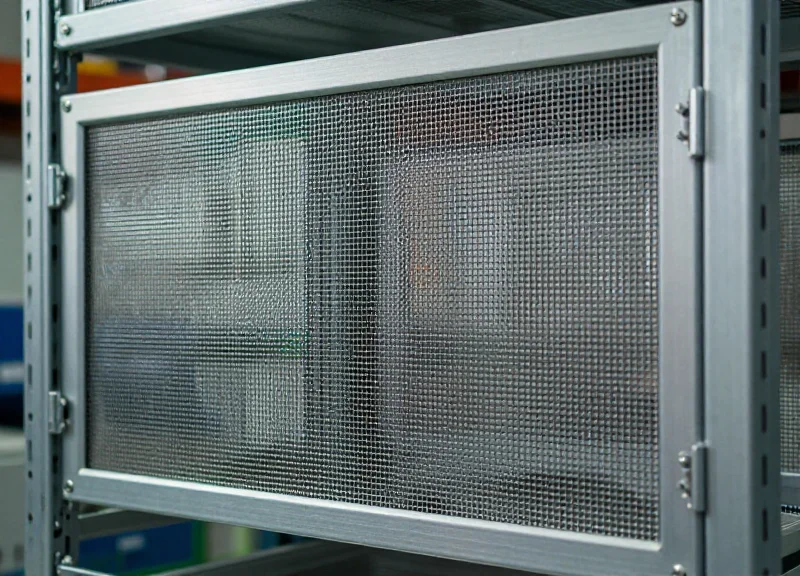
Physical shielding in RFID environments acts as a mechanical 'hard-stop' for radio frequency energy. Unlike software-based filtering or power calibration, shielding creates a definitive boundary that stray signals cannot cross. By deploying materials that either reflect or absorb RF waves—such as metal meshes, conductive fabrics, or carbon-impregnated foams—operators can effectively isolate high-density lanes. This creates a controlled electromagnetic environment where the RFID reader's energy is confined strictly to the intended read zone, virtually eliminating the possibility of a forklift in Lane A accidentally triggering a tag located in Lane B.
| Shielding Material | Primary Function | Ideal Application | Durability Level |
|---|---|---|---|
| Galvanized Steel Mesh | Reflection | Permanent aisle dividers | High (Industrial grade) |
| RF-Absorbent Foam | Absorption | Narrow lanes with heavy reflection | Moderate (Indoor only) |
| Conductive Fabric Curtains | Partial Reflection/Block | Flexible entry/exit points | Low to Moderate |
| Aluminum Foil Tapes | Reflection | Sealing gaps in existing structures | Low |
Expert Tip: Beware of the 'Waveguide Effect.' In many high-density warehouses, engineers mistakenly leave small gaps (6-12 inches) at the bottom or top of shielding partitions. Due to the physics of RF propagation, these gaps can accidentally act as waveguides, funneling and concentrating stray signals into the very areas you are trying to protect. To ensure 100% isolation, shielding must be continuous or overlap by at least one full wavelength of the frequency being used (approx. 13 inches for 915 MHz UHF).
- Identify Reflection Points: Map the metal surfaces in the lane (racking, beams, conveyors) that might bounce signals into adjacent lanes.
- Select Material Based on Path: Use reflective shielding (metal) to bounce signals back toward the center of the lane, or absorbent shielding to 'kill' the signal if it hits a wall.
- Install Overlapping Barriers: Ensure that barriers extend beyond the physical read zone to account for signal diffraction around edges.
- Validate with a 'Null Test': Place a tag on the opposite side of the barrier and attempt to read it at maximum power to verify the shield's effectiveness.
Does metal shielding cause more interference?
If placed incorrectly, yes. Metal reflects signals, which can cause multipath issues within the same lane. Using a mix of reflective metal and RF-absorbent material is often the best strategy.
How thick does a physical barrier need to be?
For UHF RFID, even a thin layer of conductive material (like 1mm aluminum) is sufficient to block the signal. The 'thickness' matters more for structural durability than for RF blocking.
Can I use standard warehouse fencing?
Standard chain-link fencing has holes that are too large to block UHF signals effectively. You need a mesh size significantly smaller than the wavelength (ideally less than 0.5 inches) or a solid conductive sheet.
Advanced RSSI Filtering and Software Logic
Advanced RSSI filtering is the digital gatekeeper of a high-performance RFID system, utilizing the Received Signal Strength Indicator value to determine the proximity of a tag based on its signal power, typically measured in dBm. By establishing a software-defined 'strength floor,' systems can automatically discard 'ghost reads'—low-energy signals originating from adjacent aisles or distant pallets—ensuring only tags within the forklift's immediate path are registered. This software layer acts as a critical secondary defense, cleaning up the data stream after hardware-level optimizations like antenna polarization and power calibration have been applied.
| Filtering Method | How It Works | Best Use Case |
|---|---|---|
| Static RSSI Threshold | Ignores all tags with a signal strength below a fixed dBm value (e.g., -60dBm). | Uniform environments with consistent pallet distances. |
| Dynamic Delta Filtering | Compares the current read strength to historical averages to identify outliers. | Variable load sizes or moving forklift applications. |
| Read-Count Weighting | Prioritizes tags with the highest number of successful 'hits' over a specific duration. | High-density storage where stray tags are only briefly visible. |
- Baseline Ambient Noise: Measure the average signal strength of 'background' tags when the forklift is stationary in the lane to identify the noise floor.
- Determine Target Peak Power: Perform test runs to identify the typical RSSI range (e.g., -40dBm to -50dBm) for tags directly in the forklift's pickup zone.
- Set the Filtering Buffer: Implement a software threshold approximately 5-10 dBm above the background noise but below the target peak power.
- Apply Temporal Smoothing: Use a rolling average window to prevent momentary signal spikes (reflections) from triggering a false positive read.
Expert Insight: The 'Differential Signal Analysis' Edge. In complex warehouse architectures, a single RSSI threshold is often insufficient because a tag in a neighboring lane might reflect off a metal pillar and appear stronger than it is. The most advanced systems use Differential Signal Analysis. This involves comparing the RSSI values of the same tag across multiple antennas mounted on the forklift. If the signal strength is nearly identical across all antennas, it is likely a reflection from a distance; if there is a sharp gradient favoring the primary forward-facing antenna, the tag is confirmed to be in the immediate path. This 'spatial logic' reduces cross-reading errors by an additional 15-20% compared to simple thresholds.
Can RSSI filtering alone stop all cross-reads?
No, it is a complementary tool. RSSI can fluctuate due to battery levels (for active tags), tag orientation, and humidity. It should always be used in conjunction with physical shielding and antenna tuning.
How does tag orientation affect software logic?
A tag turned 90 degrees may report a much weaker RSSI even if it is close. Software logic should include a 'minimum read count' requirement to ensure the reader has multiple opportunities to capture the tag at its peak signal.
What is the risk of setting a threshold too high?
If the RSSI threshold is too aggressive, you risk 'false negatives' where the system fails to read valid tags on the forklift, leading to gaps in inventory tracking and operational delays.
Directional Antenna Placement for Narrow Field-of-View
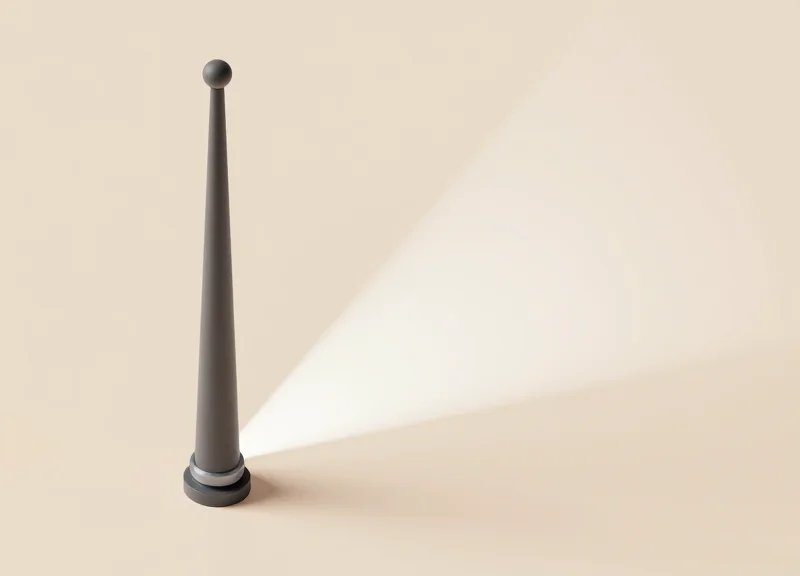
Directional antenna placement for narrow field-of-view (FOV) is the practice of mounting high-gain RFID antennas at specific heights and downward angles—typically between 30 and 45 degrees—to constrain the RF energy into a localized 'read cone.' By positioning the antenna as close to the target tag height as possible and utilizing the forklift's mast or frame as a natural backshield, operators can prevent signal 'overshoot' into adjacent high-density lanes, ensuring that only items directly on the forks or immediately in front of the vehicle are captured.
- Identify the 'Dead Zone' Offset: Mount antennas approximately 12-18 inches behind the leading edge of the forklift mast. This creates a mechanical shadow that prevents the antenna from seeing tags in the peripheral aisles as the forklift turns.
- Implement the Down-Tilt Protocol: Angle antennas downward toward the floor rather than parallel to it. This 'ground-shaping' technique ensures the signal dissipates against the concrete floor after passing through the target pallet, rather than traveling horizontally into the next rack.
- Axial Alignment: Align the antenna's boresight (the center of the beam) with the vertical center-line of the pallet load. Even a 5-degree horizontal deviation can cause the sidelobes of a high-gain antenna to trigger reads in the neighboring lane.
| Mounting Height (ft) | Down-Tilt Angle | Effective Read Depth | Spillover Risk |
|---|---|---|---|
| 3 - 4 ft | 45 Degrees | Short (4-6 ft) | Minimal / Optimized |
| 5 - 7 ft | 30 Degrees | Medium (8-12 ft) | Low |
| 8+ ft (Overhead) | 15 Degrees | Long (15+ ft) | High / Not Recommended |
Expert Tip: The 'Mast-as-Shield' Methodology. In twenty years of Silicon Valley industrial RF deployments, we've found that the most successful narrow-FOV setups don't just rely on antenna specs; they use the forklift's own steel chassis as a passive attenuator. By mounting the antenna slightly recessed within the forklift carriage, the metal uprights act as 'blinkers' (like on a horse), physically cutting off the side lobes of the radiation pattern. This mechanical collimation is often more effective at preventing cross-reads than software filtering alone.
Why not just use a low-gain antenna?
While low-gain antennas have smaller footprints, they often lack the 'punch' to penetrate dense liquid or metal-rich pallets. Using a high-gain directional antenna with physical tilt provides the best of both worlds: high penetration power and a controlled, narrow window.
Should I use one or two antennas on the forklift?
For high-density lanes, a single center-mounted antenna is preferred. Dual-antenna setups (one on each side of the mast) increase the horizontal FOV significantly, which typically leads to unwanted 'ghost' reads from the side racks.
Conducting a Professional RFID Site Survey
A professional RFID site survey serves as the critical 'pre-flight check' for high-density warehouse deployments. It involves a systematic analysis of the physical and electromagnetic landscape to identify potential interference sources and define precise read-zone boundaries. By utilizing spectrum analyzers and RSSI (Received Signal Strength Indicator) mapping, engineers can visualize how RF waves reflect off metal racking or leak into adjacent lanes, allowing for the calibration of hardware settings before a single anchor is permanently mounted. In the context of forklift lanes, this survey ensures that signal 'spillover' is identified and mitigated at the physics level, rather than relying solely on software filtering later.
- Baseline Noise Floor Analysis: Use a spectrum analyzer to detect existing RF noise from Wi-Fi access points, Bluetooth devices, or industrial machinery that may compete with the 902-928 MHz (US) or 865-868 MHz (EU) bands.
- Passive Heat Mapping: Establish a temporary antenna setup to map the signal strength (RSSI) across a grid. This identifies 'hot spots' where the signal is unexpectedly strong due to multipath reflections.
- Dynamic Load Simulation: Perform 'drive-through' tests with a forklift carrying various load types (metal, liquid, paper) to see how the payload itself affects signal attenuation and reflection.
- Adjacent Lane Interference Testing: Simulate simultaneous operations by placing tags in Lane B while a forklift operates in Lane A to verify that the power thresholds successfully prevent cross-reads.
| Testing Phase | Primary Goal | Key Metric |
|---|---|---|
| Static Mapping | Establish theoretical read zone | RSSI (dBm) |
| Dynamic Simulation | Account for forklift motion/velocity | Read Rate (%) |
| Cross-Talk Audit | Ensure isolation between lanes | False Positive Count |
| Stress Testing | System performance under high tag density | Inventory Latency (ms) |
Expert Tip: The 'Ghost Tag' Threshold Strategy. During your site survey, don't just look for successful reads; look for 'ghost tags'—tags located 10 to 15 feet outside the target zone that are still being picked up. Professional surveyors use a 'Delta-5' rule: ensure the RSSI of the target tag is at least 5-10 dBm higher than any adjacent lane tag. If the delta is narrower, you must implement physical shielding or reduce the antenna’s vertical beamwidth.
How often should a site survey be repeated?
A survey should be performed during initial deployment and repeated whenever there are significant structural changes, such as moving metal racking or adding high-power industrial equipment.
Can I perform a site survey with software alone?
No. While predictive software is a great starting point, physical 'on-the-ground' testing is required to account for real-world variables like humidity and specific metal alloy reflections.
Why is forklift speed important in a site survey?
High-speed forklifts reduce the 'dwell time' a tag spends in the RF field. A survey must determine the minimum power required to capture all tags at maximum operational speed without over-radiating the lane.
The Role of High-Quality Tags in Signal Accuracy
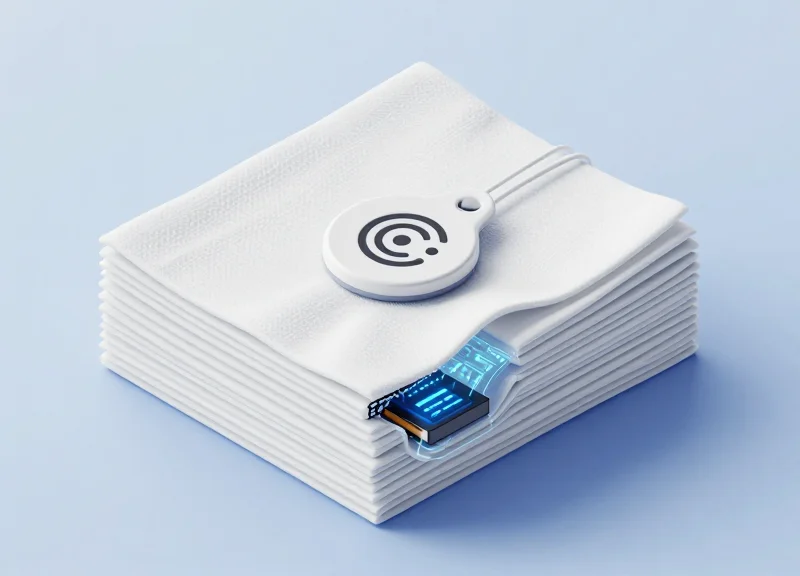
High-quality RFID tags serve as the foundation of signal accuracy in dense warehouse environments by offering precise sensitivity thresholds and consistent frequency responses. Unlike generic tags, premium industrial tags are engineered with superior Integrated Circuit (IC) designs and optimized inlays that ensure every tag in a batch behaves identically. In high-density forklift lanes, this predictability is critical; it allows engineers to set narrow power thresholds and RSSI filters with confidence, knowing that a tag will only respond when it is within the intended read zone rather than being 'over-excited' by stray signals from an adjacent lane.
| Feature | High-Quality Industrial Tags | Low-Cost Generic Tags |
|---|---|---|
| Sensitivity Variance | Minimal (+/- 0.5 dB) | High (+/- 3.0 dB or more) |
| Read Range Control | Highly predictable and repeatable | Erratic; prone to 'long-range' spikes |
| Material Interference | Tunable for metal/liquid environments | Poor performance near metal surfaces |
| Failure Rate | Ultra-low (Six Sigma standards) | Significant batch-to-batch failures |
Expert Insight: The 'Variance Penalty'. In my two decades of RFID deployment, the biggest killer of forklift lane accuracy isn't high power—it is tag variance. If your tags have a 3dB sensitivity swing, a low-quality tag located in Lane B might actually respond more strongly than a high-quality tag in Lane A. This variance makes software-based RSSI filtering virtually useless because the system cannot distinguish between a distant 'sensitive' tag and a nearby 'dull' tag. Investing in high-quality tags with tight tolerances is the only way to make your software logic effective.
- Select Purpose-Built Inlays: Choose inlays specifically designed for the pallet or asset material (e.g., on-metal tags for steel racks) to ensure the signal pattern remains tight and localized.
- Optimize Tag Orientation: Align the tag's polarization with the forklift antenna's polarization to maximize intentional reads while reducing sensitivity to cross-polarized 'ghost' signals from the side.
- Utilize Shielded Backing: For extreme high-density scenarios, use tags with specialized shielding that prevents them from being read from the 'back' or 'side' angles.
Can I use lower-power readers to compensate for cheap tags?
Generally, no. Lowering reader power with inconsistent tags often leads to missed reads (false negatives) in the primary lane because the 'duller' tags in your batch won't have enough energy to wake up.
How does tag placement affect cross-reading?
Placement is everything. Mounting tags in a recessed area or behind a structural member can act as a natural 'shroud,' narrowing the angle from which the tag can be activated.
Is the IC version important for forklift applications?
Yes. Newer IC generations (like Monza R6 or Impinj M700 series) have better Auto-Tune features that maintain consistent sensitivity even as environmental conditions change.