In the competitive world of professional beauty, the presentation of your products is as vital as the service itself. High-end shampoos, serums, and styling tools represent significant investments, making them prime targets for retail shrinkage. However, traditional security tags can often be bulky and detrimental to the premium brand image. This technical guide explores how to implement advanced Acoustomagnetic (AM) soft labels and specialized bottle tags that provide robust security while remaining virtually invisible to the customer, ensuring your branding remains the focal point and your inventory stays protected.
The Challenge of Salon Inventory Security
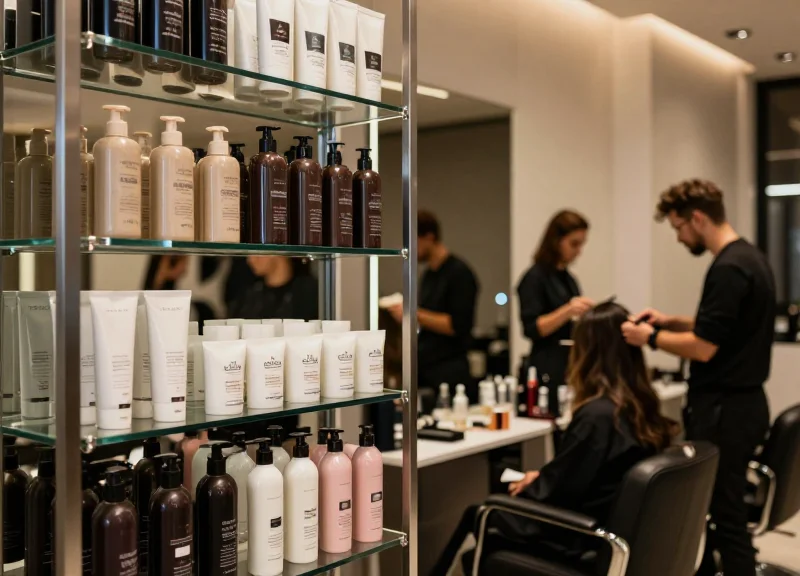
Salon inventory security is the strategic balancing act of protecting high-margin retail products from theft while preserving the premium aesthetic that justifies their price point. In the professional beauty industry, shrinkage rates can exceed 3 to 5 percent, significantly impacting the bottom line; yet, the use of standard, obtrusive electronic article surveillance (EAS) tags often detracts from the customer's luxury experience and brand perception.
| Product Category | Value Risk | Branding Sensitivity | Security Challenge |
|---|---|---|---|
| Professional Serums/Oils | High | Critical | Small surface area and metallic packaging |
| Electric Styling Tools | Very High | High | Protecting box integrity and power cords |
| Luxury Cleansers | Medium | High | Liquid contents interfering with signals |
| Backbar Professional Sizes | Low | Low | High volume, lower per-unit theft risk |
In my two decades advising on high-end retail security in Silicon Valley, I have identified what I call the 'Tactile-Visual Paradox.' In a salon environment, the purchase decision is heavily influenced by the physical interaction with the product—the weight of the bottle, the texture of the label, and the ease of the pump. Traditional loss prevention often ignores this, applying thick, poorly-placed labels that disrupt the ergonomic balance of the packaging. When a client feels a 'scratchy' or 'bulky' security sticker, it creates a subtle cognitive dissonance that signals 'commodity' rather than 'luxury,' potentially lowering sales conversion by more than the cost of the theft itself. Achieving security without friction requires a technical understanding of label placement and material compatibility.
Why are standard RF labels often ineffective for salon products?
Many professional hair products use metallic foils or high-density liquids in their packaging. Radio Frequency (RF) signals are easily shielded or detuned by these materials, leading to poor detection rates. Acousto-Magnetic (AM) technology at 58 kHz is typically superior for liquids and foils.
Does 'behind-the-counter' storage solve the problem?
While it prevents theft, it severely hurts the 'touch-to-buy' ratio. Studies show that when a customer can physically hold a professional product during their service, the likelihood of an add-on purchase increases by nearly 40 percent. Discreet on-product tagging is essential for open merchandising.
Can security tags damage the product packaging upon removal?
Yes, standard high-tack adhesives can strip the finish off soft-touch or matte bottles. The technical solution involves using specific non-damaging adhesives or placing tags in locations that do not interfere with the primary brand messaging or expiration dates.
Anatomy of AM Soft Labels for Beauty Products
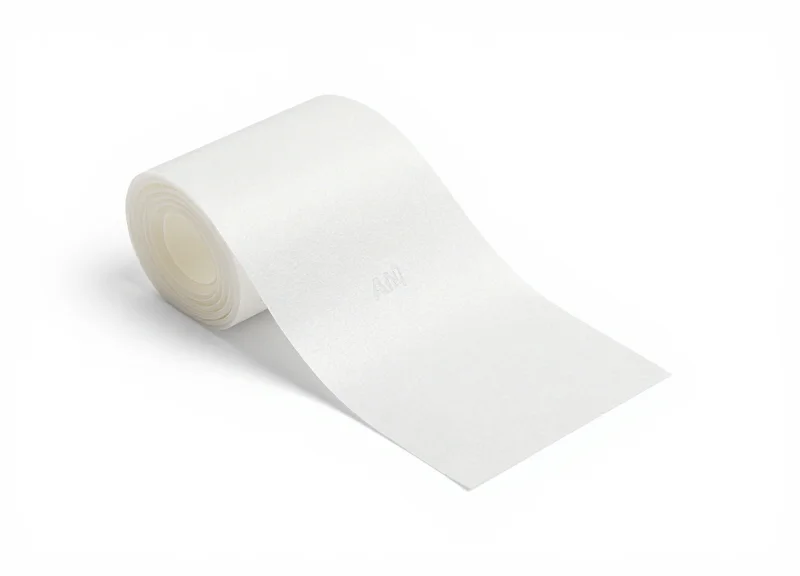
An Acousto-Magnetic (AM) soft label is a sophisticated electronic article surveillance (EAS) device consisting of multiple strips of amorphous metal and a semi-hard magnetic bias strip, encased in a low-profile plastic housing. Operating at a globally standardized 58kHz frequency, these labels are specifically engineered to resonate when passing through a detection field. Unlike Radio Frequency (RF) alternatives, the AM anatomy is uniquely suited for the professional beauty industry because its signal can penetrate liquids and metallic packaging—two elements ubiquitous in high-end salon inventory like shampoos, hair dyes, and aerosol sprays.
| Component/Spec | Technical Detail | Benefit for Salon Goods |
|---|---|---|
| Operating Frequency | 58 kHz | High immunity to interference from liquids and foils. |
| Resonator Material | Amorphous Alloy | Provides a distinct signal that reduces false alarms. |
| Housing Profile | 1.5mm - 2.0mm | Ultra-thin footprint allows for placement under branding. |
| Adhesive Type | High-Tack Acrylic | Ensures labels stay bonded in humid salon environments. |
Why is 58kHz better for beauty products than 8.2MHz?
The 58kHz frequency has a longer wavelength that is not easily absorbed by water-based liquids or blocked by thin metallic foils, which are common in premium hair care packaging.
Does the 'bubble' on the label matter?
Yes. The plastic housing creates a 'vault' that allows internal metallic strips to vibrate freely. If this space is crushed, the label will fail to trigger the alarm.
Can these labels be deactivated and reactivated?
AM labels are deactivated by changing the magnetic state of the bias strip. While technically possible to reactivate, in a retail environment, they are designed for one-way deactivation at the POS.
Expert Insight: The Resonance Clearance Factor. A common technical failure in salon tagging occurs when labels are applied with excessive center-pressure. Because the 'anatomy' of an AM label relies on the physical mechanical vibration of internal metallic strips, compressing the housing against a rigid bottle can dampen the signal. To maintain maximum security without increasing label size, always apply pressure to the adhesive edges rather than the center 'hump' to ensure the internal resonators remain free to oscillate at their peak frequency.
Strategic Placement: Achieving 'Invisible' Protection
Strategic placement of AM soft labels involves positioning security sensors in locations that are visually undetectable to customers—such as directly behind barcodes, inside secondary packaging folds, or within recessed bottle bases—to maintain a product's premium branding while ensuring 58kHz detection at exit pedestals. By aligning the label with the product's existing geometry or printed elements, salons can effectively bridge the gap between high-loss prevention and luxury aesthetic standards.
Expert Insight: Beyond visual concealment, consider the 'Tactual Threshold.' In the luxury salon market, the way a product feels in the hand is part of the brand experience. To prevent the 'bump' of an AM label from signaling 'security' to the consumer, we recommend 'Shadow Application.' This involves placing the label in a structural shadow, such as the concave arch at the bottom of a high-end shampoo bottle or the inner spine of a boxed set, where the hand naturally avoids contact during use.
| Product Category | Discreet Placement Location | Security Advantage |
|---|---|---|
| Boxed Fragrances | Interior tuck-in flap of the box | 100% invisible; protected from physical tampering. |
| Professional Shampoos | Recessed bottom (concave base) | Avoids label peeling due to moisture on salon counters. |
| Styling Tools | Inside the handle compartment (near cord) | Maintains tool ergonomics and hides the label from plain sight. |
| Skincare Tubes | The crimped seal area (rear side) | Low-profile placement that doesn't obscure ingredients or branding. |
- Surface Preparation: Ensure the application area is free of oils or salon chemical residue using a quick-evaporating isopropyl alcohol wipe to guarantee maximum adhesive bond.
- Barcode Alignment: When placing a label over or near a barcode, ensure the long axis of the AM label is parallel to the barcode lines. This creates a cleaner visual profile and simplifies the scanning/deactivation motion.
- Depth Testing: If placing labels inside secondary packaging, verify that the material thickness does not exceed 10mm, as excessive cardboard density or metallic foils can attenuate the 58kHz signal.
- Deactivation Validation: Run a test pass through a deactivation pad to ensure the specific placement allows for a clean 'kill' signal, preventing false alarms that can embarrass premium clients.
Does placing the label inside a box reduce the detection range?
While paper and plastic have negligible effects on 58kHz AM signals, any packaging containing metallic foils or lead-based inks can create a Faraday cage effect, significantly reducing detection range.
Will the adhesive damage luxury paper-stock packaging?
High-quality AM soft labels use 'non-residue' or 'low-tack' adhesives specifically designed for retail. However, for porous paper stocks, it is always safer to apply the label to an internal flap rather than the exterior surface.
Can labels be applied to metal-capped bottles?
The labels should be placed at least 1-2cm away from large metal components like aluminum caps or decorative metal wraps to avoid signal interference and ensure consistent gate triggering.
Specialized Solutions for Bottled Goods
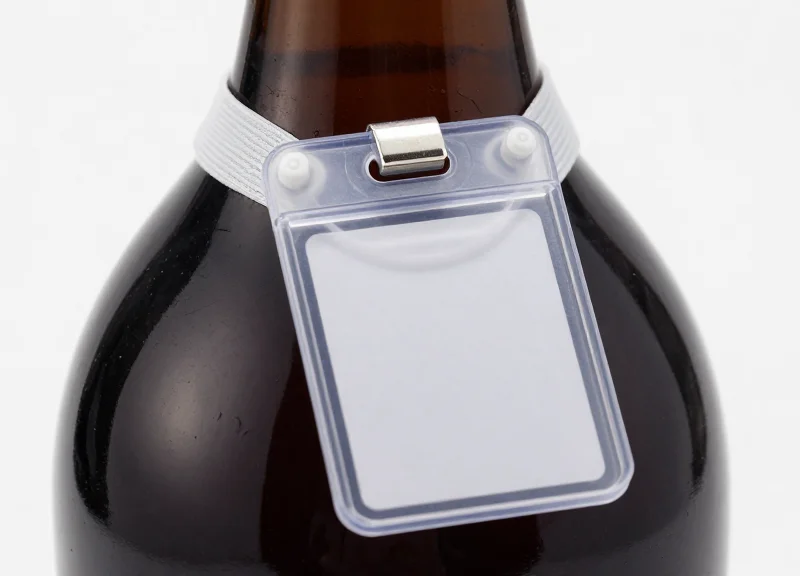
Specialized bottle security solutions for professional salon goods involve non-piercing, tension-adjustable collars and wrap-around sensors specifically designed to secure cylindrical packaging without compromising the aesthetic or structural integrity of luxury liquid products. Unlike standard retail security tags, these professional-grade solutions utilize soft-grip interior linings and adjustable diameters to prevent the 'slippage' common with tapered shampoo and conditioner bottles, ensuring protection remains intact from the backroom to the point of sale.
| Tag Type | Mechanism | Ideal Application | Branding Impact |
|---|---|---|---|
| Adjustable Collar | Ratchet-tightening loop | Shampoo/Conditioner bottles | Low; fits under pump heads |
| Clear-Wrap Sensor | Transparent tether/sleeve | Irregular shaped bottles | Minimal; maintains visibility |
| Non-Magnetic Cap | Full enclosure of lid | High-value essential oils | Medium; adds bulk to top |
| Cable-Lanyard AM | Steel core coated wire | Gift sets/Bundled goods | Low; versatile placement |
Expert Insight: The 'Hydrostatic Pressure' Factor. A common mistake in salon security is overtightening bottle collars. Professional hair care bottles are often made of PET or HDPE plastics designed to 'breathe.' Excessive tension from a security tag can increase internal hydrostatic pressure, causing the flip-top or pump seal to fail during customer handling. Always opt for tags with 'positive-stop' locking mechanisms that secure the neck without compressing the bottle body.
- Identify the 'Neck-Shoulder' Junction: Locate the narrowest point of the bottle just below the pump or cap. This is the structural anchor point for bottle tags.
- Adjust for Tension without Compression: Tighten the collar until it cannot be pulled over the cap, but ensure there is a 1mm gap to prevent plastic deformation.
- Orient the Locking Mechanism: Position the bulky 'clamshell' part of the tag toward the back of the bottle, keeping the front-facing brand label clear and unobstructed.
Do bottle tags cause leaks in professional products?
No, provided they are applied to the neck rather than the pressurized body of the bottle. High-end tags feature rubberized gaskets to prevent sliding without requiring high-pressure clamping.
Can these tags be used on glass apothecary-style bottles?
Yes, but they require specialized silicone-lined lanyards to prevent glass-on-plastic friction which can lead to micro-scratches on the bottle surface.
How do these affect the 'try before you buy' experience?
Bottle collars are designed to allow full use of pump dispensers. Customers can still smell or feel the product weight without the security tag interfering with the tester experience.
Step-by-Step: Proper Application Technique for AM Labels
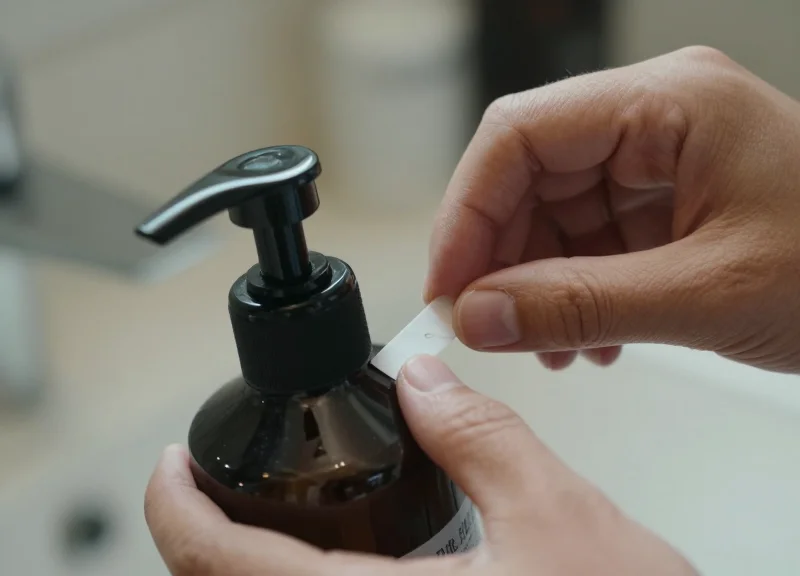
The proper application technique for AM (Acousto-Magnetic) soft labels involves a meticulous four-stage process: surface decontamination, precise alignment over non-conductive areas, uniform pressure application, and a 24-hour 'dwell time' to ensure the acrylic adhesive reaches its maximum bond strength. In the high-humidity environment of a professional salon, failure to follow these steps leads to 'flagging'—where labels peel at the edges—compromising both security and the premium aesthetic of your inventory.
- Surface Preparation and Decontamination: Use a 70% Isopropyl Alcohol (IPA) solution and a lint-free microfiber cloth to wipe the application area. Professional hair products often have a 'slip' coating or residual oils from the salon floor that prevent adhesive bonding. Ensure the surface is completely dry before proceeding.
- Precision Peel and Alignment: Peel the label from the backing sheet using a plastic spatula or your fingertip, avoiding contact with the adhesive center. Align the label horizontally or vertically according to your brand’s geometric lines, ensuring it is at least 5mm away from any metallic foils or internal metal springs in pump bottles.
- The 'Firm-Swipe' Application: Apply the label and use a soft rubber squeegee or your thumb to apply firm, even pressure from the center outward to the edges. This activates the pressure-sensitive adhesive (PSA) and removes micro-air bubbles that cause lifting.
- Dwell Time Observation: Allow the product to sit at room temperature for at least 24 hours before placing it on a retail shelf. This allows the adhesive to flow into the microscopic 'valleys' of the plastic or glass surface, achieving a permanent bond.
| Parameter | Optimal Requirement | Reasoning |
|---|---|---|
| Application Temp | 65°F to 85°F (18°C to 29°C) | Prevents adhesive from becoming too brittle or too fluid during bonding. |
| Surface Energy | High (Cleaned Polypropylene/Glass) | Ensures the adhesive 'wets' the surface effectively for maximum grip. |
| Orientation | Parallel to EAS Pedestals | Maximizes detection rates as the product passes through security gates. |
Expert Insight: The 'Hidden Void' Technique. To prevent consumers from peeling labels, apply them over the product's 'parting line'—the subtle seam created during the bottle's molding process. The slight indentation of the seam allows the label to sit slightly recessed, making it significantly harder for a fingernail to catch the edge of the label, while maintaining a clean look that mimics factory-applied regulatory stickers.
Why is my AM label not triggering the alarm after application?
The most common reason is 'shielding.' If the label is applied directly over metallic ink, foil stamping, or too close to a metal pump spring, the AM signal is absorbed. Always test a prototype placement to ensure the 58kHz frequency remains unobstructed.
Can labels be applied to curved surfaces like narrow hairspray cans?
Yes, but you must apply them vertically along the length of the cylinder rather than wrapping them around the circumference. Wrapping creates 'memory tension' in the label's plastic housing, which will eventually cause the ends to pop up.
How do I remove adhesive residue if a label is repositioned?
In a salon setting, use a citrus-based adhesive remover. Avoid acetone, as it can melt the finish on professional-grade plastic bottles and dull the branding.
Securing Liquid-Based Items without Signal Interference
Securing liquid-based salon goods requires navigating the 'shielding effect,' a phenomenon where the density and dielectric properties of fluids—such as high-viscosity shampoos, keratin treatments, or oils—absorb or deflect the 58kHz Acousto-Magnetic (AM) signal. Unlike RF technology, AM labels are generally more resistant to liquids, but signal detuning can still occur if the label is placed directly against a high-volume fluid mass without considering the container's geometry. To maintain a professional aesthetic while ensuring the security gate triggers, the label must be positioned to allow the internal resonators to vibrate freely without 'clamping' from the liquid's mass.
| Placement Zone | Detection Reliability | Signal Interference Level | Best For |
|---|---|---|---|
| Upper Shoulder (Near Cap) | 98% | Minimal | Viscous Shampoos |
| Mid-Bottle (Center) | 65% | High (Shielding) | Low-viscosity Sprays |
| Bottle Base (Underside) | 85% | Moderate | Opaque Bottles |
| Air Gap/Headspace | 99% | Negligible | High-End Serums |
- Identify the 'Headspace' Air Pocket: Nearly all professional liquid goods are bottled with a small volume of air at the top to allow for expansion. Positioning the AM label horizontally across this 'headspace' ensures the signal passes through air rather than the liquid mass, maximizing detection range.
- Vertical Orientation for Narrow Goods: On slim containers, apply the label vertically. This reduces the surface area of the label in direct contact with the liquid-facing wall, minimizing the 'dampening' of the 58kHz frequency vibration.
- Distance from Metallic Foils: Ensure the label is at least 5mm away from any metallic decorative foils or internal pump springs, as metal causes significantly more interference than the liquid itself.
Expert Insight: The 'Bubble Strategy' for Opaque Containers. When working with opaque luxury bottles where the liquid level is invisible, store the bottle upright for 60 seconds before application. Use a high-intensity light behind the bottle to locate the air bubble. Applying the label exactly where that bubble sits—even if hidden behind a brand logo—utilizes the air's low dielectric constant to boost signal clarity by up to 30% compared to 'blind' placement.
Do oil-based products interfere more than water-based ones?
Actually, water-based products have a higher dielectric constant and are more likely to cause signal shielding. Oil-based treatments are relatively 'transparent' to AM signals, though the air-gap method remains the gold standard for both.
Can I hide labels under the bottom of the bottle?
Yes, but ensure the label is not 'pinched' by the bottle's weight. Use a slightly recessed base if available. Note that if the product is placed on a metal shelf, a bottom-placed label will be completely neutralized.
Will the signal reach through thick glass containers?
AM technology penetrates glass easily. The interference usually comes from the density of the liquid inside or lead content in certain decorative glass bottles, not the glass itself.
Maintaining Brand Aesthetics with Custom Security Tags
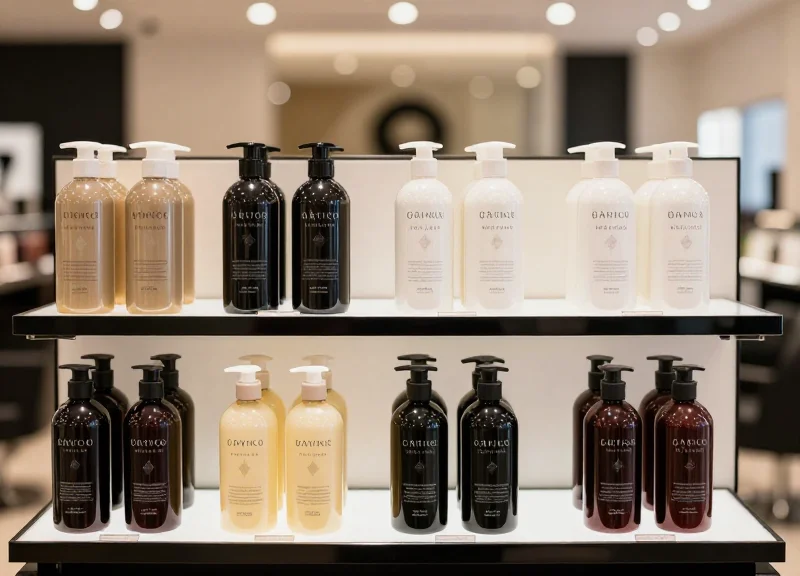
Maintaining brand aesthetics with custom security tags involves utilizing 'Brand-Integrated EAS' solutions—anti-theft devices designed to mirror a product's visual identity through custom color-matching, logo embossing, and ultra-slim form factors. Unlike generic bulky tags, custom security hardware acts as a seamless extension of the packaging, ensuring that the high-end sensory experience of professional salon products is not compromised by the necessity of loss prevention.
In the professional beauty sector, the 'unboxing' or shelf-browsing experience is part of the product's value proposition. A bright red, generic tag on a minimalist, matte-finish shampoo bottle creates visual friction that can devalue the brand in the eyes of the consumer. Leading manufacturers like DragonGuardGroup solve this by offering tags that disappear into the design language of the salon environment.
| Feature | Standard Security Tags | Custom Brand-Integrated Tags |
|---|---|---|
| Visual Impact | High friction; distracting colors | Low friction; color-matched or transparent |
| Brand Continuity | Non-existent; generic plastic | High; supports logos and textures |
| Consumer Perception | Loss prevention focus | Professionalism and quality focus |
| Application | Universal/One-size-fits-all | Tailored to specific bottle/box geometries |
- Identify Brand Color Palettes: Select AM labels or bottle tags in shades that match your primary packaging (e.g., matte black, metallic gold, or satin white) to reduce the 'security presence' on the shelf.
- Utilize Logo Embossing: For hard tags and bottle collars, incorporate your salon's logo directly into the mold. This transforms a security necessity into a branded asset.
- Opt for Low-Profile Geometries: Choose 'mini' or 'ultra-thin' tags that do not obscure key marketing text or ingredient lists on the back of products.
Expert Insight: The 'Security-as-Quality' Signal. While the goal is often to hide security, our 20 years of retail analysis suggests that a high-quality, custom-branded tag can actually create a 'Halo Effect.' When a customer sees a bespoke, well-integrated security device, they subconsciously associate the product with higher value and exclusivity, similar to how luxury boutiques secure high-end leather goods. The key is craftsmanship in the tag design.
Can custom-colored AM labels be detected as easily as white ones?
Yes. The color of the outer plastic or paper housing does not affect the resonance of the internal amorphous metallic strips. Detection performance remains identical regardless of the aesthetic finish.
Are custom tags more expensive than generic options?
While custom molds have a higher initial setup cost, the long-term ROI is realized through higher customer conversion rates and brand loyalty, as the 'bargain-bin' look of generic tags is avoided.
Can I get clear security labels for transparent packaging?
Absolutely. Transparent AM labels allow the product color to show through the adhesive, making the security feature nearly invisible on clear glass or plastic professional goods.
Standardizing Your Salon Security Protocol
Standardizing your salon security protocol involves creating a unified workflow where Acousto-Magnetic (AM) soft labels and bottle tags are integrated into the product intake process as a mandatory step. This system ensures that high-shrink items, such as luxury hair masks and premium serums, are protected the moment they leave the stockroom, eliminating human error and maintaining a seamless aesthetic across all retail shelves. By codifying these procedures, salon owners can protect their bottom line while ensuring that security remains an invisible 'silent partner' in the brand experience.
| Product Category | Tagging Requirement | Standard Placement Guide |
|---|---|---|
| Back-Bar Retail (Large Bottles) | Non-damaging Bottle Tags | Secured around the neck, beneath the pump flange. |
| Small Cosmetics/Serums | 4x4 AM Soft Labels | Bottom of packaging, covering the barcode (over-labeled). |
| High-Value Styling Tools | Hard Tags / Custom Labels | Inside the box flap or discreetly on the power cord sleeve. |
| Tester Units | No Tag (Deterrent Label) | Clear 'Tester Only' label to discourage theft of non-sale items. |
- The 'Intake-to-Shelf' Audit: Never allow products to reach the floor before being tagged. Assign a 'Security Captain' for each shipment who is responsible for cross-referencing the packing slip with the number of applied AM labels.
- The 3-Second Visual Stealth Test: Train staff to perform a 'blind check.' If a security tag is immediately visible to a customer within 3 seconds of looking at the product, it must be repositioned to maintain the professional salon aesthetic.
- Monthly EAS Gate Calibration: Standardize a monthly test of your Electronic Article Surveillance (EAS) gates using a 'live' product from the shelf to ensure the detection radius has not drifted due to environmental interference.
- Deactivation Training at Checkout: Incorporate deactivation into the payment ritual. Ensure the stylist or receptionist passes the item over the deactivator pad before bagging to prevent embarrassing 'false alarms' for paying clients.
Expert Tip: The 'Golden Zone' Strategy. In my 20 years of retail optimization, I've found that salons which place tags in the same 'Golden Zone'—specifically the lower 25% of the product's rear face—reduce staff training time by 40%. Consistency allows your team to perform deactivation and audits by muscle memory rather than hunting for labels on every unique bottle shape.
How do I train new staff on tagging without it feeling like 'policing'?
Frame the training as 'Product Integrity Management.' Explain that consistent tagging ensures the products they love to use are always in stock and available for their clients, framing loss prevention as a tool for stylist success.
What should we do if a tag is found peeled off in the salon?
This indicates a 'blind spot' in your floor layout. Use this as a data point to adjust your protocol—perhaps by moving that specific product category closer to the reception desk or increasing the use of non-peelable bottle tags.
Should we tag every single item regardless of price?
Standardize your 'High-Value Threshold.' Most salons find success tagging everything over $30. Items below this may cost more in labor to tag than the potential loss is worth, unless they are high-frequency theft items like travel-sized oils.
Removing Security Features at Point of Sale
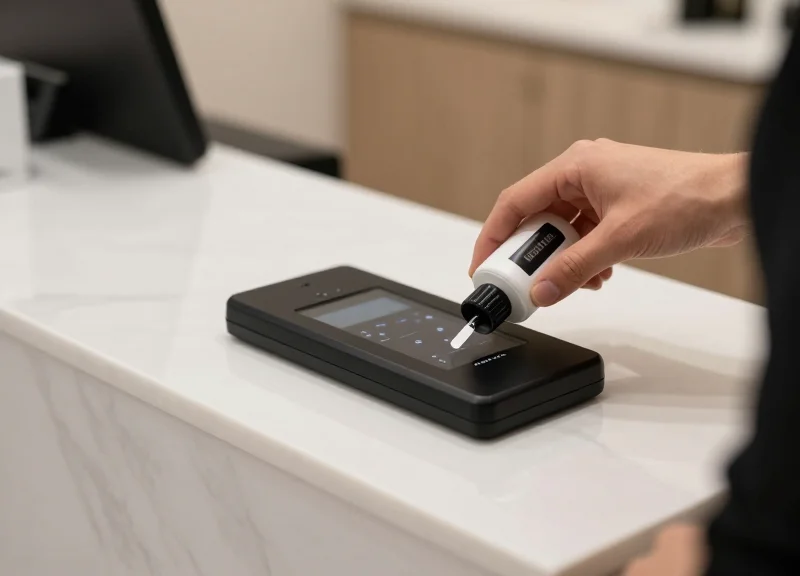
Removing security features at the Point of Sale (POS) is the final touchpoint in the customer journey; it requires a balance of speed to maintain flow and precision to protect product packaging. For professional salon goods, this involves the electromagnetic deactivation of AM soft labels through magnetic flux saturation and the physical detachment of bottle tags using high-strength magnetic decouplers. Mastery of this process prevents embarrassing 'false alarms' at the exit and ensures the client leaves with a pristine, luxury product.
- Inventory Scanning: Scan the product's barcode first to record the sale before addressing security features to ensure inventory data is captured.
- AM Label Deactivation: Pass the AM soft label across the deactivator pad. Wait for the audible 'beep' or visual indicator that confirms the internal circuit has been neutralized.
- Bottle Tag Decoupling: Insert the locking core of the bottle tag into the magnetic decoupler. Maintain a firm grip on the bottle while the lock releases to prevent the tag from snapping against the cap.
- Visual Inspection: Quickly check for any adhesive lifting or accidental marks caused during the removal process before bagging the item.
| Feature Type | Action Required | Tools Needed | Common Risk |
|---|---|---|---|
| AM Soft Labels | Deactivation (Digital) | AM Deactivator Pad | Partial deactivation causing 'ghost' alarms |
| Bottle Tags | Removal (Physical) | Magnetic Decoupler (12k GS+) | Cap scratching or strap snapping |
| Custom Branded Tags | Removal (Physical) | Universal Detacher | Mechanical jam if misaligned |
Expert Tip: The 'Decoupler Dead Zone'. In high-end salons, POS space is often limited, leading staff to place magnetic decouplers near credit card terminals or tablets. High-strength magnets (12,000 Gauss or higher) can interfere with screen sensitivity or corrupt the magnetic strips on older loyalty cards. Maintain a minimum '10-inch clearance' between your decoupler and any electronic payment hardware to prevent intermittent system glitches that can slow down your checkout line.
What should I do if the AM label doesn't 'beep' during deactivation?
This often occurs due to signal interference from metal-lined packaging. Try swiping the label at a 45-degree angle or applying slight pressure against the pad to ensure the magnetic field penetrates the label circuit.
How do I remove residue if a label was placed directly on a bottle?
While DragonGuardGroup labels are designed for clean removal, any minor residue on high-gloss plastic should be wiped with a microfiber cloth and a drop of salon-grade finishing oil rather than harsh alcohol, which can dull the packaging.
Can bottle tags be reused immediately?
Yes. Once removed, inspect the internal locking teeth for hair or product buildup—common in salons—and store them in a non-magnetic bin to prevent the tags from 'clumping' together and losing their magnetic alignment.