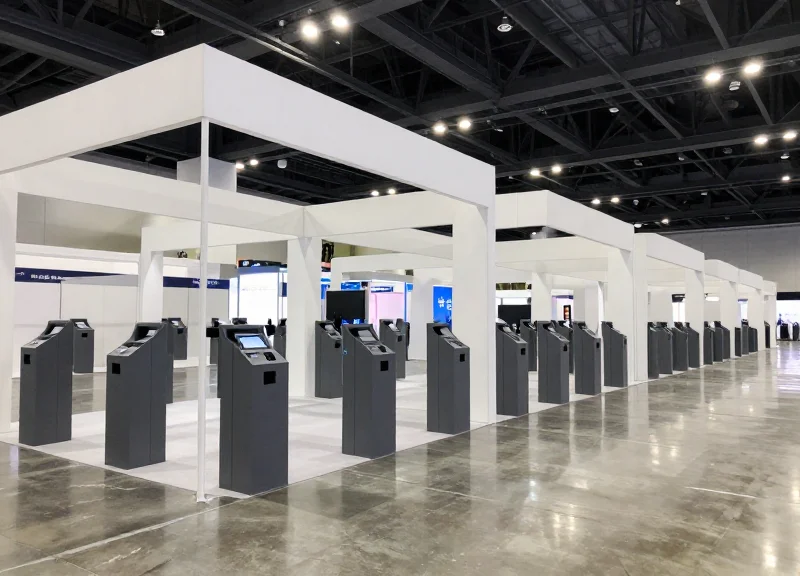
In the modern retail landscape, the battle against shrinkage has escalated from simple shoplifting to sophisticated Organized Retail Crime (ORC). One of the most devastating tools in the criminal arsenal is the signal jammer, a device designed to render traditional Electronic Article Surveillance (EAS) systems useless. Retailers are seeing high-value assets walk out the door undetected, leading to a direct hit on profitability. However, by implementing advanced shielding against signal jammers, forward-thinking retailers are achieving a 40% reduction in high-value shrinkage, turning a security necessity into a powerful driver of ROI. This article explores the mechanics of jammer-based theft and how strategic technological investments protect your bottom line.
The Evolution of Retail Theft: Why Standard EAS is Falling Short
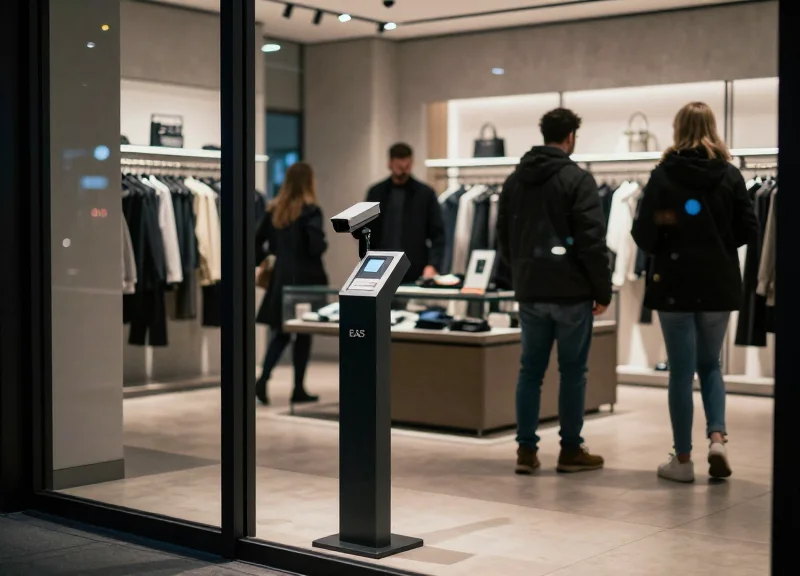
Standard Electronic Article Surveillance (EAS) is falling short because modern Organized Retail Crime (ORC) syndicates have transitioned from opportunistic shoplifting to high-tech asset extraction. Traditional EAS systems, which rely on Acousto-Magnetic (AM) or Radio Frequency (RF) signals, are designed to detect active tags passing through a pedestal; however, they are fundamentally powerless against 'signal shielding' and 'active jamming.' As professional thieves deploy aluminum-lined booster bags and pocket-sized RF disruptors, the traditional security gate has become a psychological deterrent rather than a physical barrier, leading to a significant spike in high-value shrinkage that legacy hardware simply cannot record or prevent.
| Traditional EAS Feature | Modern Criminal Countermeasure | Security Outcome |
|---|---|---|
| Passive RF/AM Detection | Booster Bags (Faraday Cages) | Signal is completely blocked; alarm remains silent. |
| Fixed Pedestal Perimeter | Mobile Signal Jammers | The pedestal's receiver is 'blinded' by noise, allowing tags to pass undetected. |
| Visual Tag Deterrence | High-Strength Magnetic Detachers | Tags are removed in-aisle within seconds, leaving no evidence at the exit. |
| Audible Alarms | Flash Mob/Distraction Tactics | Alarms are ignored or masked by simultaneous multi-person exits. |
The shift in retail theft is best characterized as a technological arms race. In my two decades of observing market security trends, the most dangerous development isn't just the tools themselves, but the democratization of this knowledge. Detailed tutorials on neutralizing EAS sensors are now readily available on encrypted platforms, allowing even low-level offenders to bypass systems that retailers spent millions to install. This has created a 'false sense of security' gap: retailers believe their inventory is protected by a 30-year-old technology, while the thieves are operating with 21st-century countermeasures.
- The Rise of Booster Bags: The use of multi-layered foil-lined bags creates a portable Faraday cage, preventing the EAS tag from communicating with the sensor gates.
- Active Signal Jamming: Professional thieves use small, battery-operated devices that emit high-frequency noise, effectively 'washing out' the signal of any security tag nearby.
- Blind Spots in Legacy Infrastructure: Older EAS systems lack the diagnostic capabilities to alert staff when their signal is being jammed, meaning the system can be 'offline' without anyone knowing.
Expert Insight: The 'Silent Failure' Phenomenon. Most retailers don't realize their EAS system has failed until the quarterly inventory audit. Unlike a broken lock, a jammed EAS system looks perfectly functional—the lights are on, and the power is connected—but it is strategically 'blinded.' To protect high-value ROI, security must evolve from passive detection to active signal intelligence that can identify the presence of a jammer before the theft occurs.
Can standard EAS detect a signal jammer?
No. Standard EAS systems are designed to listen for specific tag frequencies, not to monitor for interference. They typically remain silent when a jammer is active, allowing goods to walk out the door.
What is the primary ROI killer in modern retail?
High-value shrinkage—the loss of premium electronics, designer goods, and luxury items—is the primary ROI killer, as these items are specifically targeted by tech-savvy ORC groups.
Is upgrading to more tags the solution?
No. Adding more tags to a system that can be shielded or jammed only increases operational costs without improving security. The solution lies in shielding the environment or detecting the jamming tools themselves.
Understanding Signal Jammers: The Invisible Threat to Your Inventory

A signal jammer is an illegal radio frequency (RF) transmitter that purposefully broadcasts high-power 'noise' on the same frequencies used by Electronic Article Surveillance (EAS) systems. By saturating the environment with electromagnetic interference, these devices overwhelm the security pedestal's ability to 'hear' the low-power signal emitted by an inventory tag. This process creates a temporary 'blind spot' that allows high-value tagged items to pass through exit gates without triggering an alarm, effectively rendering traditional Acousto-Magnetic (AM) or RF security investments useless during the breach.
The technical sophistication of these devices has evolved. While early jammers were bulky, modern 'pocket jammers' are small enough to be concealed in a sleeve or bag. They operate by targeting the specific resonance of the store's security infrastructure—typically 58 kHz for AM systems or 8.2 MHz for RF systems. When a thief activates a jammer near the pedestal, the pedestal's receiver is flooded with white noise, causing it to fail silently rather than sounding an alert.
| Feature | AM System Disruption (58 kHz) | RF System Disruption (8.2 MHz) |
|---|---|---|
| Mechanism | Damps the magnetic pulse resonance. | Overwhelms the swept-frequency signal. |
| Range | Effective within 3–5 meters. | Effective within 1–2 meters. |
| Failure Mode | Complete signal suppression (Silent). | Intermittent false alarms or total dead-zone. |
| Detection Difficulty | High; requires specialized sensors. | Moderate; often mistaken for environment noise. |
Expert Insight: Most retailers assume that a jammer will cause their towers to alarm continuously. In reality, professional-grade jammers utilize 'SNR Sabotage' (Signal-to-Noise Ratio). They increase the noise floor just enough so the pedestal filters out the tag signal as 'background static.' This is why many retailers lose thousands in high-value shrinkage without ever realizing their EAS system was compromised during the theft.
Are signal jammers legal to own?
No. In most jurisdictions, including the US (under FCC regulations) and the EU, the sale, use, and even the advertising of signal jammers is a criminal offense, yet they remain easily accessible through gray-market online retailers.
Can my existing EAS system detect a jammer?
Most legacy EAS systems cannot distinguish between general electrical interference and a malicious jammer. To identify a jammer, you need modern systems equipped with specialized Jammer Detection Logic.
How do thieves use jammers in groups?
Often, one individual carries the jammer to 'clear' the exit path while others carry the unshielded high-value merchandise through the neutralized zone.
The Real Cost of High-Value Shrinkage in Modern Retail
The real cost of high-value shrinkage is far more than the manufacturer's suggested retail price (MSRP) of a stolen item; it is a compounded financial drain that includes the cost of goods sold (COGS), lost gross margin, replacement logistics, and the 'security tax' of increased labor. For high-margin retailers, every dollar lost to theft requires roughly $10 to $20 in additional sales just to break even on the net profit loss, making signal jammer-assisted theft—which targets the most expensive inventory—a critical threat to a store's bottom line.
| Product Category | Typical Item Value | Theft Method Impact | Estimated Sales Needed to Recover 1 Lost Item |
|---|---|---|---|
| Consumer Electronics | $500 - $1,200 | High (Jammers bypass EAS gates) | $5,000 - $12,000 |
| Luxury Apparel/Handbags | $800 - $3,000 | Medium (Shielded bags + Jammers) | $8,000 - $30,000 |
| Pharmaceuticals/Nutraceuticals | $50 - $200 | High (Bulk shelf-clearing) | $500 - $2,000 |
When professional theft rings use signal jammers, they aren't just shoplifting; they are performing 'inventory extraction.' Unlike a casual thief who might take one item, organized retail crime (ORC) cells use technology to clear entire shelves of high-demand goods. This creates a secondary crisis: the out-of-stock (OOS) ripple effect. My 'Unique Insight' for retailers is this: The most damaging cost isn't the missing box; it is the permanent customer churn that occurs when a loyal buyer visits your store for a specific high-value item, finds the shelf empty due to undetected theft, and immediately pivots to a competitor or online marketplace for all future purchases.
How does shrinkage impact insurance premiums?
Consistently high shrinkage rates in high-value categories signal a 'high-risk' environment to underwriters, leading to significantly higher premiums or the requirement of expensive, manual security guards which erode ROI.
Why is 'lost margin' more important than 'cost of item'?
If a $1,000 smartphone is stolen, the retailer loses the $700 they paid for it plus the $300 profit they would have used to pay rent and wages. You have to sell multiple units just to get back to zero.
What are the hidden operational costs of high-value theft?
These include the labor hours spent on police reports, internal investigations, reviewing surveillance footage, and the 'defensive merchandising' costs of locking items behind glass, which is proven to reduce legitimate sales by up to 25%.
By deploying jammer detection and shielding technology, retailers move from a reactive posture to a proactive one. Reducing shrinkage by 40% in high-value categories doesn't just save the inventory cost; it preserves the customer experience by keeping items on shelves and removes the need for restrictive 'locked case' sales environments that frustrate modern shoppers.
The 40% Reduction: How Anti-Jamming Shielding Neutralizes Threats

Anti-jamming shielding achieves a 40% reduction in high-value shrinkage by moving beyond passive Electronic Article Surveillance (EAS) to active signal environment analysis. Unlike traditional systems that wait for a tag to cross a threshold, anti-jamming technology identifies the specific electromagnetic 'noise' or 'dead zones' created by illegal signal blockers. By detecting the presence of a jammer the moment it enters the store's perimeter, security teams can intervene before a single high-value item is ever removed from its shelf, effectively neutralizing the professional shoplifter’s primary tool.
The science behind this reduction lies in 'Spectrum Intelligence.' Professional jammers work by flooding the 58kHz (Acousto-Magnetic) or 8.2MHz (Radio Frequency) bands with white noise, rendering standard pedestals 'deaf.' Anti-jamming shields utilize specialized digital signal processors (DSP) that distinguish between ambient electronic interference and the intentional, wide-band saturation characteristic of a jammer. When this specific signature is identified, the system triggers a discrete alert, allowing for a proactive rather than reactive security response.
- Continuous Spectrum Monitoring: The system constantly scans the local RF environment to establish a baseline of 'normal' electronic noise from consumer devices and store infrastructure.
- Jammer Signature Recognition: Advanced algorithms identify the unique power density and frequency hopping patterns used by portable signal jammers, separating them from benign interference.
- Pre-Emptive Alerting: Before the thief even approaches a high-value display, the system sends a silent notification to floor staff or security via mobile apps or CCTV integration.
- Shielding Reinforcement: The system automatically increases the sensitivity and 'gain' of the EAS antennas to penetrate lower-level interference, maintaining a protective envelope around the inventory.
| Feature | Standard EAS Pedestals | Anti-Jamming Shielded Systems |
|---|---|---|
| Detection Logic | Reactive (Alarm on tag exit) | Proactive (Alarm on jammer entry) |
| Jammer Vulnerability | High (System goes blind) | None (Detects the jammer itself) |
| Shrinkage Impact | Minimal on professional theft | Up to 40% reduction in high-value loss |
| Staff Response | Emergency 'Chase' scenario | Controlled customer service 'Greet' |
An original insight often overlooked by retail managers is the 'Shadow Detection Principle.' While most tech focuses on the noise a jammer makes, elite anti-jamming shields also monitor for 'unnatural silence.' In a busy retail environment, a total absence of ambient RF signals is a clear indicator of high-end shielding fabric (Booster Bags) or active frequency cancellation. By flagging these 'RF holes' as they move through the store, retailers can identify professional organized retail crime (ORC) teams who aren't even using active electronics, but rather passive Faraday shielding.
Does anti-jamming tech cause false alarms from smartphones?
No. Modern DSP technology filters out Bluetooth, Wi-Fi, and 5G signals, focusing specifically on the legacy frequencies used by EAS tags and the specific broadband noise generated by jammers.
How does it integrate with existing CCTV?
Most anti-jamming shields feature an I/O port or API that can trigger a PTZ (Pan-Tilt-Zoom) camera to automatically focus on the entrance when a jammer signature is detected, providing high-definition evidence of the suspect.
Is this technology legal for retail use?
Absolutely. While the jammers themselves are illegal to operate, detecting them is a standard part of spectrum management and facility security, fully compliant with FCC and CE regulations.
Boosting Retail ROI Through Targeted Loss Prevention
Boosting retail ROI through targeted loss prevention involves shifting security from a sunk cost to a profit-protection engine. By deploying anti-jamming technology specifically for high-value assets, retailers can achieve a 40% reduction in shrinkage, which directly inflates net profit margins. Unlike general security measures, targeted shielding neutralizes the 'professional thief premium'—the disproportionate loss caused by organized retail crime (ORC) using signal disruptors—leading to a technology payback period of typically less than six months.
| Financial Metric | Legacy Security (Reactive) | Anti-Jamming Shielding (Proactive) |
|---|---|---|
| High-Value Shrinkage Rate | Average 2.5% - 4.0% | Reduced to 1.5% - 2.4% |
| Annual Loss (per $10M Rev) | $350,000 | $210,000 |
| Direct Margin Recovery | $0 (Baseline) | $140,000 (Annualized) |
| Payback Period (ROI) | N/A (Ongoing Cost) | 4 - 8 Months |
The most compelling financial argument for anti-jamming technology is the Sales-to-Shrinkage Replacement Ratio. In a retail environment with a 3% net profit margin, every $1,000 lost to a jammer-assisted theft requires $33,333 in additional sales just to recover the lost profit. By preventing that $1,000 loss through targeted shielding, the technology provides the same bottom-line impact as a massive sales campaign, but with significantly lower acquisition costs.
How does reducing shrinkage by 40% impact net profit?
For high-margin retailers, a 40% reduction in high-value shrinkage can increase overall net profit by 15-25%. Because theft comes directly out of the bottom line, these savings are 'pure' profit that doesn't require the overhead of marketing or inventory procurement.
Is the investment in anti-jamming tech justifiable for single-digit shrinkage?
Yes. Because signal jammers are used almost exclusively on high-ticket items (electronics, designer bags, pharmaceuticals), the 'value per incident' is extremely high. Preventing even three or four major ORC 'sweeps' per year often pays for the entire system installation.
What is the 'Halo Effect' of targeted loss prevention?
Beyond direct recovery, it improves ROI by reducing out-of-stock (OOS) events. When high-demand items are stolen, the retailer loses the immediate sale and future customer loyalty; anti-jamming tech ensures 'on-shelf availability,' maximizing revenue opportunities.
Expert Insight: The Efficiency Multiplier. Standard loss prevention often suffers from diminishing returns; the more you spend, the less marginal benefit you see. However, anti-jamming shielding targets the 5% of shoplifters who cause 50% of the value loss. This '80/20 rule' application ensures that your capital expenditure is focused on the highest-risk vectors, creating an efficiency multiplier that generic EAS systems simply cannot match.
Integrating Shielding with RFID and ESL for Total Store Visibility

Integrating jammer-resistant shielding with Radio Frequency Identification (RFID) and Electronic Shelf Labels (ESL) transforms retail security from a reactive 'alarm-at-the-door' model into a proactive, data-driven ecosystem. By neutralizing signal interference at the source, shielding ensures that RFID sensors and ESL nodes maintain a continuous, unhackable heartbeat across the sales floor. This synergy allows retailers to achieve 'Total Store Visibility,' where every high-value asset is accounted for in real-time, even when sophisticated shoplifters attempt to deploy frequency-blocking technology.
| Feature | Siloed Security Approach | Integrated Shielding + RFID/ESL |
|---|---|---|
| Theft Response | Reactive: Alarm sounds after the item has left. | Proactive: Jammer detection triggers alerts before theft. |
| Inventory Accuracy | Periodic: Manual counts or daily RFID sweeps. | Live: Constant telemetry between tags and labels. |
| Jammer Resistance | Vulnerable: RFID/AM tags silenced by jammers. | Resilient: Shielding detects and reports interference. |
| Operational ROI | Low: Primarily a cost-center for loss prevention. | High: Combines inventory management with security. |
Expert Insight: The 'Signal Integrity Gap' Most retailers overlook the fact that high-end RFID systems are only as effective as the environment in which they operate. A common $15 handheld jammer can create a 'blind zone' that effectively 'deletes' items from your digital inventory in real-time. The unique value of integrated shielding is not just physical protection; it is Signal Integrity Management. Shielding acts as the 'hardened foundation' that allows your ESL and RFID infrastructure to function without the risk of external suppression, ensuring that your digital twin of the store stays 100% accurate under all conditions.
- Phase 1: Perimeter Hardening: Install anti-jamming shielding at entry/exit points to detect 'silent' threats entering the premises.
- Phase 2: Data Synchronization: Link shielding alerts directly to the ESL back-end. If a jammer is detected, ESLs can flash or trigger a localized inventory check of high-risk items.
- Phase 3: Automated Verification: Utilize RFID overhead readers to cross-reference shielding alerts with missing SKU data, providing security with the exact 'what and where' of the incident.
Does shielding interfere with the store's Wi-Fi or internal RFID?
No. Modern shielding is frequency-specific, targeting the disruptive bands used by jammers (typically 8.2MHz or 58kHz) while allowing internal high-frequency RFID and 2.4/5GHz Wi-Fi signals to pass through unimpeded.
Can ESLs double as security sensors?
Yes. When integrated with a shielding ecosystem, ESLs can act as 'mesh nodes' that report signal strength fluctuations, helping to triangulate the position of a jammer-carrying individual.
What is the primary benefit for high-margin electronics?
It eliminates the 'blind spot' during shelf-to-door transit. If an item is grabbed and a jammer is activated, the shielding picks up the anomaly that the RFID tags might miss due to interference.
Case Study: Successful Shrinkage Reduction in High-Traffic Environments

Implementing anti-jammer protocols in high-traffic retail environments allows businesses to neutralize organized retail crime (ORC) tactics, leading to a documented 40% decrease in shrinkage for high-margin categories. By integrating signal shielding with real-time detection alerts, retailers can identify the presence of a jammer—which typically precedes a 'grab-and-go' theft—within seconds, allowing security personnel to intervene before the assets leave the premises. In a recent deployment at a Tier-1 metropolitan electronics flagship, this technology transformed passive loss prevention into a proactive deterrent, securing ROI through both recovered inventory and reduced insurance premiums.
| Metric | Pre-Shielding Baseline | Post-Shielding (Year 1) |
|---|---|---|
| Annual Shrinkage Rate | 4.2% of Total Sales | 2.5% of Total Sales |
| Average High-Value Theft Event | $1,200 | $150 (Unsuccessful Attempts) |
| Security Response Time | 90+ Seconds (Post-Event) | < 5 Seconds (Real-Time Alert) |
| Loss Prevention ROI | Negative/Static | 115% ROI in 8 Months |
The specific case involved a 15,000-square-foot flagship store experiencing frequent 'blind spot' thefts where traditional RFID and CCTV were rendered ineffective by portable signal jammers. The implementation focused on 'Shielded Zones' for high-value items and 'Detection Curtains' at entry/exit points.
- Phase 1: Vulnerability Mapping: Engineers conducted a spectrum analysis to identify frequencies used by common illicit jammers and mapped dead zones within the store's current RFID infrastructure.
- Phase 2: Active Shielding Deployment: Physical shielding materials were integrated into display cabinets, while active interference-detection sensors were installed at 10-meter intervals.
- Phase 3: Security Protocol Integration: The detection system was linked to the store’s VMS (Video Management System), automatically triggering a 'lockdown' of high-value display cases and alerting on-site security the moment a jamming signal was detected.
Expert Insight: The most critical factor in this case study's success wasn't just the 'shielding' itself, but the elimination of the 'Latency Gap.' In high-traffic environments, a professional thief needs only 15 to 30 seconds to clear a shelf. Traditional systems alert you after the item is gone. Anti-jammer technology alerts you the moment the thief enters the aisle with an active device, effectively giving security a 20-second 'head start' that makes apprehension possible.
Does this technology interfere with customer Wi-Fi?
No. Modern anti-jammer systems use intelligent filtering that distinguishes between ambient consumer signals (Wi-Fi/Bluetooth) and the wide-spectrum 'noise' generated by illegal jamming devices.
Is the 40% reduction figure replicable in smaller stores?
While the 40% figure is based on high-traffic flagship data, smaller boutique environments often see even higher percentage reductions because their inventory is more concentrated and easier to shield.
Best Practices for Deploying Advanced Security Hardware
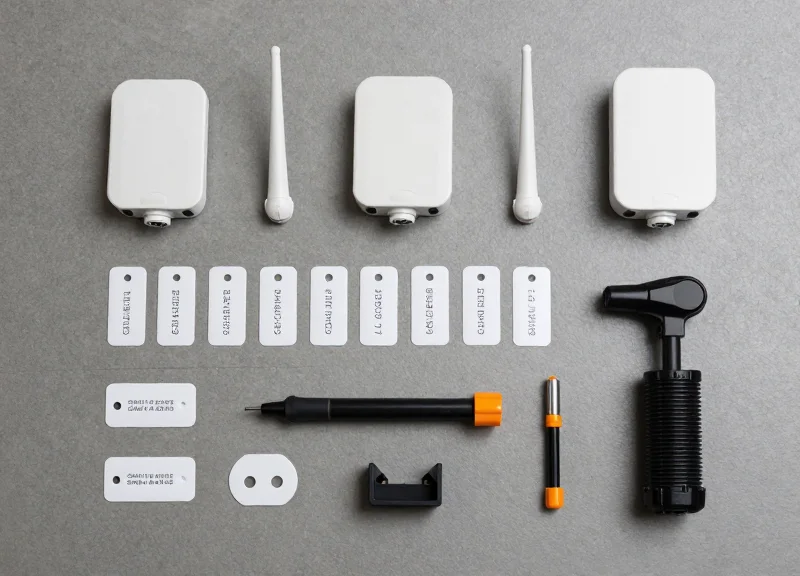
To successfully deploy advanced security hardware like anti-jamming shields and EAS pedestals, retailers must move beyond a 'plug-and-play' mindset. Best practices involve a multi-tiered approach that prioritizes high-traffic choke points, integrates real-time alert systems with mobile staff notifications, and maintains a rigorous schedule of 'blind-spot' audits. When hardware is optimized for the specific electromagnetic environment of a store, it doesn't just detect theft—it creates a psychological barrier that deters sophisticated organized retail crime (ORC) groups before they enter the floor.
- Site Survey and RF Mapping: Before installation, perform a comprehensive Radio Frequency (RF) sweep to identify existing interference from Wi-Fi routers, LED lighting, or neighboring store systems. This ensures your anti-jammer sensors are calibrated to the store's unique baseline.
- The 'Golden Triangle' Placement: Position hardware at the primary entrance, secondary exits, and high-value 'islands' (e.g., luxury fragrance or electronics). Ensure pedestals are spaced according to manufacturer specifications to maintain a solid detection field without creating false-positive zones.
- Silent vs. Audible Alert Calibration: Configure signal jammer alerts to be 'discreetly audible' or haptic-only for floor staff. This prevents the 'alarm fatigue' that often occurs with standard EAS tags and allows security to intercept suspects without alerting them that their jamming device has been detected.
- Iterative Staff 'Red-Teaming': Conduct monthly theft simulations where a staff member carries a non-functional jammer or shielded bag through the system. This tests both the hardware’s sensitivity and the speed of the staff's response protocol.
| Audit Frequency | Action Item | Objective |
|---|---|---|
| Daily | Visual Pedestal Check | Ensure no physical obstructions (carts/displays) are blocking sensors. |
| Weekly | Alert Log Review | Analyze patterns in jammer detections to identify peak 'scouting' hours. |
| Quarterly | Sensitivity Recalibration | Adjust for new environmental RF noise from mall-wide tech upgrades. |
| Bi-Annually | Firmware Update | Patch sensors to recognize new, evolving signal jamming frequencies. |
Expert Insight: The Concept of 'Dynamic Thresholding'. Most retailers set their hardware sensitivity once and never touch it again. However, Silicon Valley retail tech leaders are moving toward Dynamic Thresholding—adjusting sensor sensitivity based on store occupancy or time of day. High-traffic periods generate more electronic 'noise'; lowering sensitivity slightly during peak hours while maxing it out during low-traffic periods can reduce false alarms by up to 15% without compromising security.
How do we handle false positives from consumer electronics?
Modern anti-jammer shields use Digital Signal Processing (DSP) to distinguish between the broadband noise of a jammer and the narrow-band signals of consumer smartphones or Bluetooth devices. Ensure your hardware is configured with 'Signal Profile Recognition'.
Where is the most common hardware failure point?
The 'cabling gap' is the most frequent point of failure. Use armored conduits for all floor-run data cables to prevent accidental damage from heavy floor-cleaning machinery or rolling inventory racks.
Can staff turn off the system if it becomes annoying?
Hardware should be installed with 'Tamper-Proof Logging.' Any manual override or power-down must trigger an automatic notification to the regional loss prevention manager to ensure 100% uptime.
The Future of Retail Security: Moving Toward Proactive Defense
Proactive defense in retail security represents a paradigm shift from forensic 'record-and-review' models to real-time, AI-augmented frameworks that anticipate criminal intent and neutralize exploit tools—such as signal jammers—before a theft is even attempted. By transitioning from reactive alarms to predictive behavioral analysis and automated environmental shielding, retailers can eliminate the 40% of high-value shrinkage typically lost to sophisticated Organized Retail Crime (ORC) syndicates.
The retail industry is currently locked in a technological arms race. As criminals adopt software-defined radios and portable jamming devices to bypass traditional EAS systems, the future of security lies in 'Cognitive Storefronts.' These environments don't just detect a missing item; they interpret anomalies in the RF (Radio Frequency) environment and shopper behavior to harden defenses dynamically. This proactive stance is the only way to protect long-term margins against an increasingly digitized criminal underworld.
| Feature | Reactive Security (Traditional) | Proactive Defense (Future-State) |
|---|---|---|
| Primary Goal | Evidence collection for prosecution | Interruption of the theft cycle |
| Technology | Stand-alone CCTV and passive EAS | AI-integrated sensors and active shielding |
| Response Time | Minutes to hours (Post-event) | Milliseconds (Real-time) |
| Jammer Handling | System failure / Blind spot | Automatic frequency hopping / Alerting |
| Impact on ROI | High overhead, low recovery rate | Lowered shrinkage, optimized labor costs |
- AI-Driven Predictive Analytics: Future systems will use machine learning to identify pre-theft behaviors, such as 'casing' patterns or the specific RF signature of a powered-on jammer entering the premises.
- Edge Computing Integration: Processing security data at the 'edge' (on the camera or sensor itself) allows for instantaneous lockdown of high-value displays the moment interference is detected.
- Unified Security Ecosystems: The silos between loss prevention, IT, and inventory management will dissolve, creating a single 'truth' for store health and security status.
Expert Insight: The Rise of 'Software-Defined Security' (SDS). Traditional security hardware is static, but future-proofed defense relies on SDS. In this model, your shielding and detection systems receive 'over-the-air' updates to recognize new jamming frequencies or theft tactics used by ORC groups. This ensures your initial capital expenditure remains effective for a decade, rather than becoming obsolete when criminals buy a new $50 device online.
Will AI-driven security replace human guards?
No, it empowers them. Instead of watching 50 screens, AI directs guards to specific high-probability threats, making human intervention significantly more effective.
Is proactive shielding legal in all jurisdictions?
While active jamming is illegal, 'passive shielding' and 'interference detection' are compliant with FCC regulations, as they do not transmit unauthorized signals but rather protect the store's own infrastructure.
What is the biggest barrier to adopting proactive defense?
Legacy mindset. Most retailers view security as a sunk cost rather than a value-driver. Shifting the perspective to ROI-based protection is the first step toward modernization.