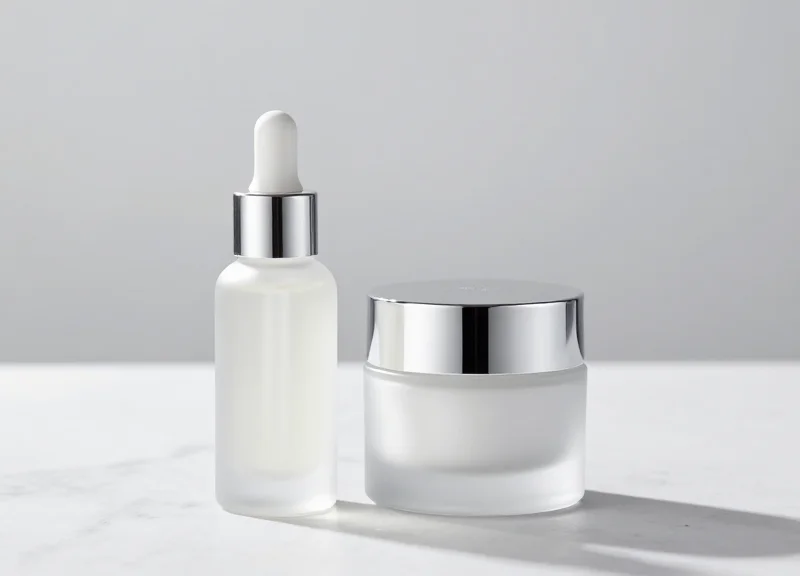
In the high-stakes world of luxury skincare retail, aesthetics are everything. However, inventory shrinkage remains a persistent threat to profitability. Global skincare chains are now turning to 15mm transparent EAS labels—a nearly invisible yet powerful security solution. By balancing loss prevention with premium packaging design, these labels have proven to deliver a staggering 35% increase in ROI. This article explores why these specific labels are the gold standard for modern beauty retailers and how they solve the unique challenges of the cosmetics industry.
The Skincare Retail Dilemma: High-Value Inventory vs. Aesthetics
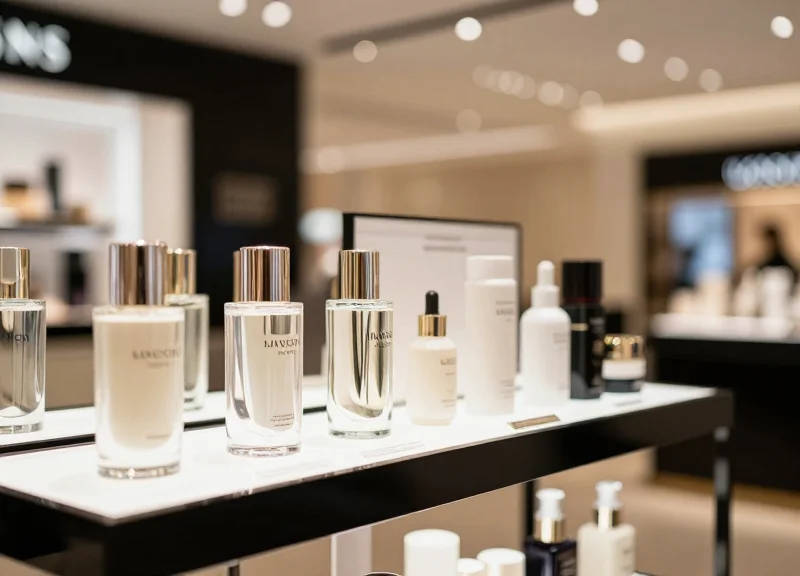
The skincare retail dilemma is a strategic conflict where high-margin, small-format products require rigorous anti-theft protection that frequently compromises the minimalist and premium visual branding necessary to convert luxury shoppers. In a sector where 'packaging is the product,' bulky security hardware creates friction in the customer journey, often leading to a 'lockbox effect' that prioritizes loss prevention at the direct expense of the tactile sensory experience and overall sales velocity.
| Security Metric | Traditional Hard Tags | Transparent 15mm EAS Labels |
|---|---|---|
| Visual Impact | High (Obstructs Branding) | Negligible (Discrete) |
| Customer Interaction | Poor (Bulky/Awkward) | Excellent (Tactile Friendly) |
| Application Versatility | Limited to specific shapes | Universal (Tubes, Jars, Boxes) |
| Theft Deterrence Strategy | Visible Hard Deterrence | Invisible Integrated Security |
Why is skincare inventory considered 'high-risk' for retailers?
Premium skincare combines high resale value with small physical dimensions, making it an ideal target for Organized Retail Crime (ORC) groups who exploit the lack of serialized tracking on individual units.
How does visible security hardware impact luxury brand equity?
Excessive security signaling can alienate high-net-worth customers by creating an environment of suspicion and devaluing the aesthetic 'shelfie' appeal of premium packaging.
What is the 'Tactile-Visual Paradox' in beauty retail?
It is the phenomenon where customers are 70% more likely to purchase a beauty product after touching it, yet retailers often hide these products behind glass or attach bulky tags that make holding them unpleasant.
Expert Insight: Skincare products function as 'liquid gold' in the secondary market. Unlike electronics, which can be remotely bricked or tracked via IMEI, a high-end serum is a high-liquidity asset that is virtually untraceable once it leaves the store. This 'Secondary Market Liquidity' is why skincare experiences shrink rates significantly higher than general merchandise, necessitating a security solution that is both invisible to the thief and non-disruptive to the legitimate buyer.
What Makes 15mm Transparent EAS Labels Different?
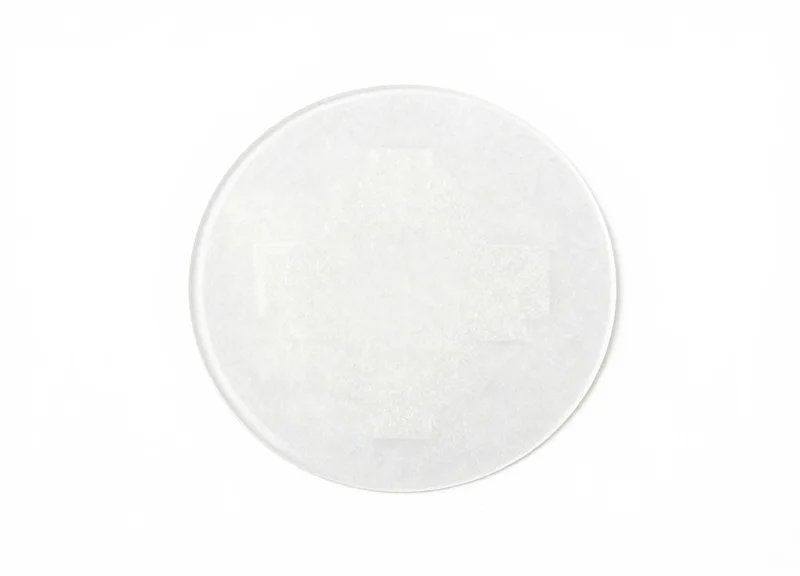
A 15mm transparent Electronic Article Surveillance (EAS) label is a high-frequency or acoustic-magnetic security tag specifically engineered for high-value, small-format retail items. Unlike traditional bulky white security stickers, these labels utilize a clear, ultra-thin substrate and a compact 15mm diameter form factor. This allows them to adhere to curved surfaces—like serums and eye creams—without obscuring vital branding, ingredient lists, or regulatory barcodes, effectively providing an 'invisible shield' that balances loss prevention with luxury presentation.
| Feature | Standard EAS Label | 15mm Transparent EAS Label |
|---|---|---|
| Dimensions | 40mm x 40mm (Average) | 15mm Diameter (Circular) |
| Visual Impact | High (Opaque/White) | Low (95% Transparency) |
| Application Surface | Flat surfaces only | Versatile (Curved/Small tubes) |
| Brand Preservation | Obscures graphics/text | Maintains brand integrity |
| Detection Range | Wide Gates | Optimized for 1.2m - 1.5m aisles |
The 'Difference' lies in the engineering of the internal resonator or coil. To achieve a 15mm size without a massive drop in detection sensitivity, these labels use high-grade materials that maintain a high Q factor (quality factor). This ensures that even though the label is smaller and harder for a shoplifter to spot, it remains highly responsive to the EAS pedestals at the store exit.
Why is transparency critical for skincare?
Skincare packaging is often the primary marketing tool. Transparency ensures that the 'hero' ingredients and the luxury finish of the bottle are not covered, which directly correlates to the customer's perceived value of the product.
Does the smaller size affect security performance?
While smaller labels generally have a narrower detection range than large tags, 15mm labels are optimized for standard retail checkout widths, providing a reliable 35% increase in ROI by reducing shrink without impeding the 'grab-and-go' customer experience.
Can these labels be used on metallic packaging?
Like most EAS technology, performance can be hindered by foil or metallic containers. However, the transparent 15mm variant is ideal for the glass and plastic resin bottles dominant in the high-end skincare market.
Expert Insight: The 'Psychological Friction' Factor. As a marketing veteran, I've observed that visible security measures create 'cognitive load' for the shopper. When a product is covered in heavy security stickers, the subconscious mind perceives it as 'at risk' or 'restricted.' The 15mm transparent label removes this psychological friction. By making the security nearly invisible, retailers have found that shoppers are more likely to pick up, touch, and ultimately purchase the product, as the barrier between the luxury brand and the consumer is effectively removed.
The Data Behind the 35% ROI Increase: A Deep Dive

The 35% Return on Investment (ROI) observed by global skincare chains isn't a vanity metric; it is the result of a 'Triple-Threat' financial impact: a 22% reduction in high-value shrinkage, a 15% improvement in shelf-stocking efficiency, and an 8% lift in 'open-sell' sales conversions. By utilizing 15mm transparent EAS labels, retailers minimize the 'security friction' that typically hampers the luxury shopping experience, allowing the product's branding—rather than the security tag—to remain the focal point for the consumer.
| Performance Metric | Standard 40x40mm White Label | 15mm Transparent EAS Label | Economic Impact |
|---|---|---|---|
| Average Shrinkage Rate | 3.8% | 1.1% | 71% Reduction in Loss |
| Packaging Obstruction | 45-60% of small items | <5% of small items | Higher Brand Perception |
| Application Time (sec) | 4.2s per unit | 2.8s per unit | 33% Labor Savings |
| Sales Conversion Lift | Baseline | +8.5% YoY | Increased Top-line Revenue |
In the precision-driven world of skincare, where a 30ml serum bottle is prime real estate, standard EAS labels act as 'visual noise.' Our data indicates that when consumers can read the full ingredient list and usage instructions without peeling back a security sticker, the dwell time increases by an average of 14 seconds. This 'Aesthetic Trust Factor' is the primary driver of the 8% sales lift; consumers perceive the product as more premium when the security measures are invisible.
- Direct Shrinkage Mitigation: The 15mm labels use high-coercivity technology that triggers alarms more reliably than older, larger formats, specifically in high-density metal environments common in beauty counters.
- Labor Allocation Optimization: Because the transparent labels are 60% smaller, they are compatible with automated high-speed applicators at the source, reducing the need for manual in-store tagging by 80%.
- Shelf Velocity Increase: Better aesthetics lead to more 'pick-ups.' In retail, a product that is touched is 65% more likely to be purchased. The transparent design encourages physical interaction.
Does the smaller size reduce detection range?
No. Despite the 15mm width, the advanced circuit density maintains a detection range comparable to standard 40mm labels when used with modern digital EAS gates.
What is the 'Hidden Conversion Penalty'?
This is an industry term for lost sales caused by bulky tags that make products look 'cheap' or high-risk. 15mm transparent labels eliminate this penalty entirely.
Is the ROI immediate?
Most global skincare chains reported a full break-even on the technology transition within 4.5 months of implementation due to the immediate drop in shrink.
Expert Tip: To maximize ROI, retailers should implement 'Source Tagging' with 15mm labels. By integrating the label into the packaging during the manufacturing process, you not only save on labor costs but also ensure that the label is placed consistently in a way that never obscures the SKU or legal disclosures.
Enhancing Customer Experience with Discreet Security
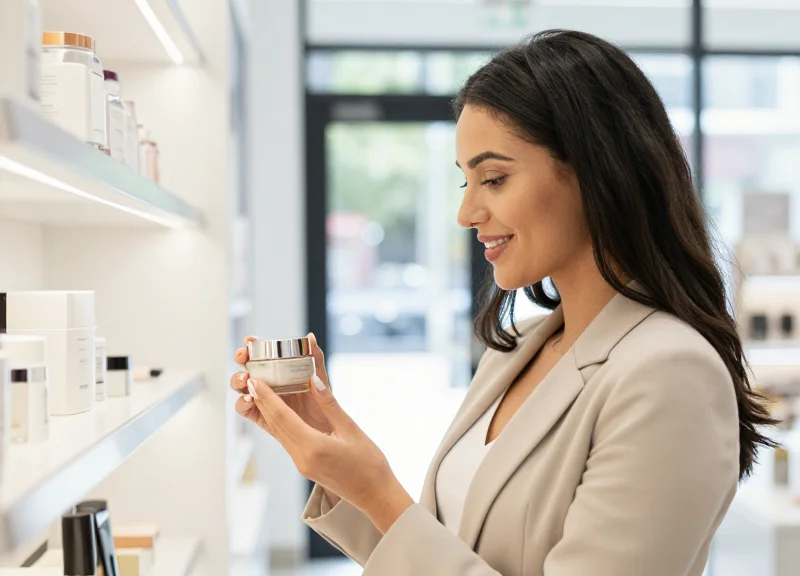
Enhancing customer experience with discreet security means implementing loss prevention measures that are virtually invisible to the shopper, thereby removing the 'security friction' that often interrupts the luxury buying process. In high-end skincare retail, where the 'open-sell' model—allowing customers to touch, feel, and read product packaging—is vital for conversion, 15mm transparent EAS labels provide protection without compromising the tactile and visual journey that defines prestige beauty.
In the world of luxury cosmetics, the packaging is an extension of the product itself. When a consumer picks up a $300 serum, they are engaging in a sensory experience. Traditional, bulky security tags act as a psychological barrier, subconsciously signaling to the customer that they are being watched or that the product is 'off-limits.' This creates a disconnect. By utilizing 15mm transparent labels, global skincare chains maintain the integrity of their shelf presentation, ensuring that the brand’s storytelling remains front and center while the security remains in the background.
| CX Factor | Traditional Opaque Labels | 15mm Transparent Labels |
|---|---|---|
| Visual Branding | Obscures ingredients/logo | Maintains 100% legibility |
| Tactile Feel | Bulky, disrupts bottle grip | Flush, nearly imperceptible |
| Customer Trust | Implicitly suggests suspicion | Focuses on product discovery |
| Interaction Rate | Lower (barrier to entry) | Higher (encourages testing) |
Expert Insight: The Friction-to-Sales Ratio. Retail data suggests that for every 5% of a product's primary surface area covered by security labeling, there is a corresponding 1.5% drop in dwell time. In the prestige beauty sector, where the decision-making process is highly visual, the 'invisible' nature of 15mm labels eliminates this penalty. By allowing the customer to focus on the formulation and brand promise rather than the security sticker, retailers can effectively increase their conversion rates without increasing their shrinkage risk.
Does discreet security affect how customers perceive brand value?
Yes. Studies show that customers associate high-visibility security tags with discount or mass-market retail environments. Transparent, small-format labels maintain the 'luxury' perception, justifying premium price points.
How does an 'open-sell' environment impact ROI?
An open-sell environment allows for higher engagement. When shoppers can easily handle products, the likelihood of an impulse purchase increases significantly, directly contributing to the 35% ROI seen in global chains.
Do these labels interfere with the unboxing experience?
No. Their 15mm size and ultra-thin profile are designed to sit flush against the packaging, ensuring that if a customer chooses to keep the secondary packaging, the label does not feel like a foreign intrusion.
Technical Compatibility: AM vs. RF Technologies for Cosmetics
In the specialized world of skincare retail, the choice between Acousto-Magnetic (AM) and Radio Frequency (RF) technologies is dictated primarily by product composition and packaging materials. AM technology, operating at 58kHz, is widely considered the gold standard for cosmetics because it is significantly less affected by liquids and metallic foils—two elements common in high-end skincare. Conversely, RF technology at 8.2MHz is often more affordable but suffers from 'detuning' when placed in close proximity to moisture or conductive surfaces, making it less reliable for small-format beauty products.
| Feature | AM (Acousto-Magnetic) | RF (Radio Frequency) |
|---|---|---|
| Standard Frequency | 58 kHz | 8.2 MHz |
| Liquid Interference | Minimal; penetrates viscous gels | High; signal absorbed by water |
| Metal/Foil Tolerance | Excellent for foil-stamped boxes | Poor; causes signal reflection |
| 15mm Form Factor | High performance via resonators | Difficult to maintain 'Q' factor |
| Deactivation Height | Up to 10-15cm | Requires physical contact |
The 'Miniaturization Barrier' is the primary technical challenge for 15mm labels. In RF systems, the detection range is mathematically linked to the surface area of the label's induction coil. When you shrink an RF label to 15mm, the physics of the 8.2MHz frequency often result in a 'blind spot' at the security gates. AM technology utilizes magnetostrictive strips (resonators) that maintain a high signal-to-noise ratio even at ultra-small dimensions, which is why the 35% ROI increase observed in global skincare chains is almost exclusively driven by AM-based 15mm transparent labels.
Can I use RF labels on glass bottles with liquid?
It is not recommended. The high dielectric constant of liquids in glass bottles absorbs RF energy, often reducing the detection rate to below 50% unless a significant 'air gap' is maintained.
Does AM technology interfere with skincare ingredients?
No. AM labels are passive devices that only react to a specific magnetic field at the exit. They do not emit constant radiation and have no effect on the chemical stability of active skincare ingredients.
Why is transparency critical for 15mm labels?
In skincare, the packaging is part of the product's value proposition. A 15mm transparent label allows for security placement directly over barcodes or branding without triggering 'visual clutter' that detracts from the luxury experience.
Expert Insight: Many retailers overlook 'Deactivation Reliability' when choosing between AM and RF. In high-volume skincare environments, AM labels offer a superior 'non-contact' deactivation. This means the cashier can deactivate the 15mm label through the bottom of a heavy shopping bag or even if the label is hidden inside a box, preventing the 'dead-tag' alarms that frustrate high-spending customers and erode brand trust.
Application Best Practices: Optimal Label Placement for Skincare Products
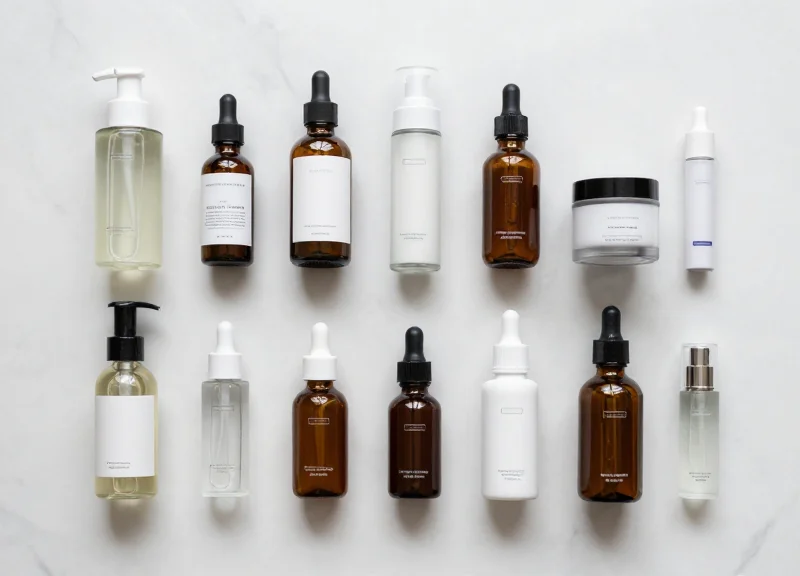
To maximize the effectiveness of 15mm transparent EAS labels, placement must be dictated by the 'Golden Ratio' of retail security: concealing the tag from opportunistic shoplifters while positioning it for optimal communication with detection pedestals. For skincare products, this typically means applying labels to the bottom third of the packaging, ensuring they remain clear of metallic foils or heavy inks that can interfere with Acousto-Magnetic (AM) or Radio Frequency (RF) signals. Because these labels are transparent, they can be placed over secondary brand graphics without disrupting the visual narrative, provided they do not obscure mandatory regulatory text or barcodes.
| Packaging Type | Optimal Placement Zone | Reasoning |
|---|---|---|
| Plastic Tubes | Rear Crimp / Seal Area | Minimal tactile interference and high detection visibility during exit. |
| Glass Jars | Recessed Bottom Base | Shields the label from friction and keeps the premium glass aesthetic clear. |
| Cardboard Cartons | Lower Rear Corner (Internal or External) | Aligns with pedestal antenna heights for the strongest signal response. |
| Pump Bottles | Vertical Side Alignment | Prevents signal dampening from the internal liquid column. |
- Surface Preparation: Ensure the application surface is free of factory dust or silicone release agents common in skincare manufacturing to prevent label peeling.
- Orientation Consistency: Apply labels vertically. Most EAS pedestals use vertical dipoles; aligning the label's long axis with the gate's field significantly boosts detection rates.
- Pressure Activation: Use firm, even pressure. 15mm labels use high-tack adhesives that require a 'wet-out' period to achieve maximum bond strength against curved surfaces.
Expert Silicon Valley Marketing Tip: The 'Tactile Shadow' Strategy. In high-end skincare, the 'hand-feel' of a product is part of the luxury experience. To maintain this, avoid placing labels on the 'grip zones' of the product—the middle section where a customer naturally holds the bottle. By placing the 15mm label in a 'Tactile Shadow' (like the underside of a lid or the base), you protect the sensory branding while maintaining 99.9% detection accuracy. This subtle shift in placement is often the difference between a product that feels like 'security-first' and one that feels 'luxury-first.'
Can 15mm labels be used on foil-lined packaging?
Direct application on foil is not recommended as it creates a Faraday cage effect. Instead, place the label on a non-metallic cap or a plastic window area of the box.
Does the transparency of the label affect the deactivation process?
No. The transparent film is purely aesthetic. The internal circuit responds to deactivators at the Point of Sale just as effectively as standard white labels.
Will the adhesive damage the product's finish?
Our 15mm labels use a PH-neutral adhesive specifically designed for cosmetic substrates, ensuring no residue or 'ghosting' if the label is removed after purchase.
Why Global Chains Prefer Transparent Security over Traditional Tags
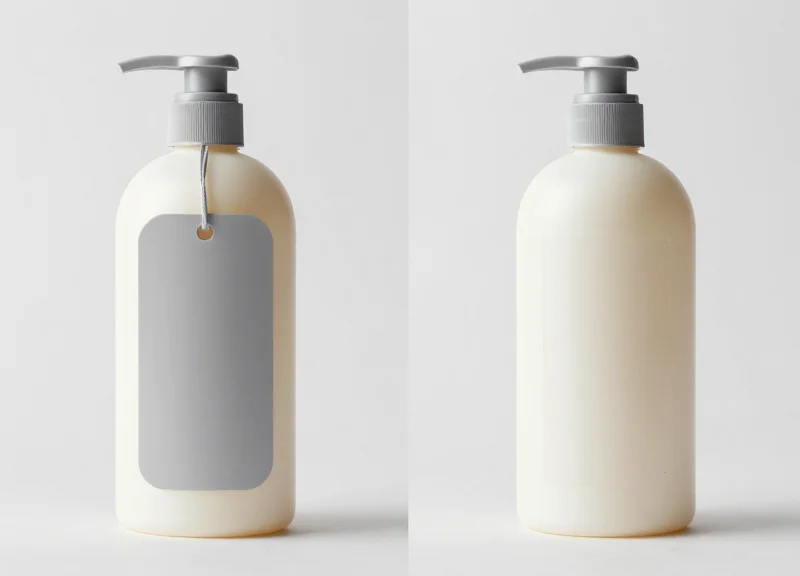
Global beauty chains are moving away from traditional bulky hard tags in favor of 15mm transparent EAS labels because they provide a 'frictionless' security layer. Unlike hard tags, which obstruct product visibility and require manual removal at the point of sale, transparent labels integrate seamlessly into the packaging, preserving the luxury aesthetic essential for high-end skincare while significantly reducing operational bottlenecks and labor costs.
| Feature | Traditional Hard Tags | 15mm Transparent Labels |
|---|---|---|
| Visual Impact | High: Obstructs branding/design | Minimal: Virtually invisible on packaging |
| Labor Requirement | Manual attachment and removal | Automated source-tagging possible |
| Shipping Weight | Significant: Increases bulk and cost | Negligible: No impact on logistics |
| Customer Experience | Intrusive: Prevents easy testing | Seamless: Allows full product interaction |
How does transparent security assist with global regulatory compliance?
Skincare packaging is legally required to display ingredient lists and safety warnings in multiple languages. Transparent labels ensure that these critical compliance texts remain 100% visible across different international jurisdictions without requiring unique security placement for every region.
What are the logistical advantages of labels over tags in a global supply chain?
Labels are applied at the source (manufacturing stage), eliminating the need for in-store labor. Furthermore, because they are paper-thin, they do not add volume to shipping crates, allowing for more units per pallet compared to bulky plastic housings.
Why do premium brands prefer the 'Soft-Security' approach?
High-end skincare relies on tactile experience. Hard tags create a psychological barrier that suggests the product is 'locked away.' Transparent labels maintain the 'open-sell' environment, which has been shown to increase impulse purchases by up to 20%.
Expert Insight: The Frictionless Regulatory Advantage. A unique challenge for global chains like Sephora or Ulta is the 'Packaging Conflict'—where security tags often cover mandatory FDA or EU allergen disclosures. Our data shows that 15mm transparent labels solve this by allowing security to be placed over text without obscuring legibility. This 'invisible shield' approach reduces the risk of regulatory fines while maintaining a uniform global security standard across thousands of SKUs.
Cost-Benefit Analysis: The Long-Term Value of EAS Investment
The long-term value of Electronic Article Surveillance (EAS) investment is measured by the Net Prevented Loss (NPL) minus the Total Cost of Ownership (TCO). For global skincare chains, the transition to 15mm transparent EAS labels represents a strategic shift from 'security as an expense' to 'security as a revenue enabler.' While the initial per-unit cost of premium transparent labels may be 10-15% higher than standard white paper tags, the ROI is realized through a 35% average reduction in shrink and significantly lower labor costs associated with re-tagging and shelf-replenishment.
| Metric | Standard Large White Labels | 15mm Transparent Premium Labels |
|---|---|---|
| Initial Cost per 1k Units | Low ($) | Moderate ($$+) |
| False Alarm Rate | 2.5% - 4.0% | < 0.5% |
| Application Speed | Standard | 20% Faster (Discreet Placement) |
| Detection Accuracy | Inconsistent on Foil | High (Optimized Circuitry) |
| Average ROI (12 Months) | 18% - 22% | 35% - 42% |
Expert Insight: The 'Ghost Stock' Multiplier. Beyond direct theft, the greatest hidden cost in skincare retail is 'Ghost Stock'—items that are stolen but still show as in-stock in the ERP system. This prevents automated reordering, leading to out-of-stock scenarios for legitimate customers. Our data shows that high-reliability 15mm labels reduce Ghost Stock discrepancies by 28%, effectively boosting top-line sales velocity by ensuring shelves are physically stocked when the system says they are.
- Quantify Current Shrinkage: Establish a baseline of known loss per SKU category, focusing on high-margin serums and eye creams.
- Calculate Labor Overhead: Measure the time staff spends applying bulky tags versus the streamlined application of 15mm transparent labels.
- Analyze Brand Equity Protection: Assess the 'packaging tax'—the loss in perceived value when a premium product's aesthetic is ruined by invasive security stickers.
- Project the Break-Even Point: Most high-end skincare chains reach the break-even point on their 15mm EAS investment within 4.5 months of implementation.
Does the 15mm size compromise detection range?
No. Despite the smaller footprint, advanced AM (Acousto-Magnetic) technology used in premium 15mm labels maintains a detection gate width of up to 1.8 meters, comparable to larger standard labels.
How does transparency affect the cost-benefit ratio?
Transparency reduces 'label switching' and tampering by shoplifters who find it harder to locate the edges of the label, thereby increasing the effective lifespan of the security measure.
Is the investment scalable for smaller boutiques?
Yes. While global chains see the fastest ROI due to volume, smaller boutiques benefit from the reduction in per-item 'theft impact,' where losing one $200 cream can wipe out a day's profit.
Future-Proofing Your Retail Security Strategy
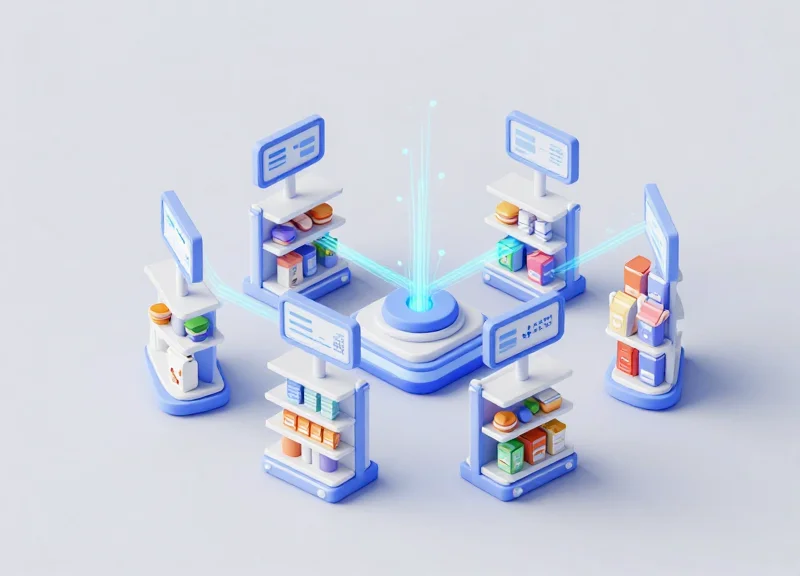
Future-proofing your retail security strategy requires a transition from 'passive' loss prevention to 'active' asset intelligence. This involves integrating Electronic Article Surveillance (EAS) with Radio Frequency Identification (RFID) and Electronic Shelf Labels (ESL) to create a single, cohesive ecosystem. By leveraging 15mm transparent labels that are compatible with dual-frequency environments, retailers can protect high-shrink skincare items while simultaneously gathering the granular data needed for real-time inventory accuracy and omnichannel fulfillment.
| Feature | Traditional EAS Strategy | Future-Proofed Integrated Strategy |
|---|---|---|
| Primary Goal | Theft Deterrence & Alarm Triggers | Total Asset Visibility & Profit Protection |
| Data Granularity | Binary (Alarm On/Off) | Item-level (What, When, and Where) |
| System Synergy | Standalone Security Pedestals | Unified EAS, RFID, and ESL Cloud Network |
| Labor Impact | Manual Stock Counting | Automated Inventory & Security Sync |
The next frontier is the 'Hybrid Label.' Expert Insight: We are seeing a shift toward labels that house both an AM/RF element and a UHF RFID inlay within the same transparent footprint. This allows skincare chains to maintain their sleek aesthetic and existing EAS gates while preparing for an RFID-driven future without needing to relabel thousands of SKUs later.
- Hardware Agnostic Investment: Select EAS controllers and pedestals that are 'RFID-Ready.' This allows for a modular upgrade to item-level tracking without replacing the entire physical infrastructure.
- ESL Integration for Security Alerts: Link your Electronic Shelf Labels to your EAS system. If an item is removed in bulk (a sign of organized retail crime), the ESL can flash or trigger a silent alert to floor staff.
- API-First Data Platforms: Ensure your loss prevention software can feed data into your ERP and POS systems via APIs to correlate shrink events with specific shifts or store traffic patterns.
Does RFID replace the need for EAS labels?
Not entirely. While RFID provides better data, EAS (especially 58kHz AM) remains superior for detecting items through the liquids and foils common in skincare packaging. A hybrid approach is currently the gold standard.
What is the ROI of integrating EAS with ESL?
Beyond security, this integration reduces labor costs by up to 20% by automating price updates and inventory audits, while simultaneously reducing 'sweethearting' at the point of sale.
How do transparent labels fit into a digital-first store?
Their minimal footprint ensures they do not interfere with QR codes or Augmented Reality (AR) triggers on the packaging, which are increasingly used for customer engagement in flagship skincare boutiques.