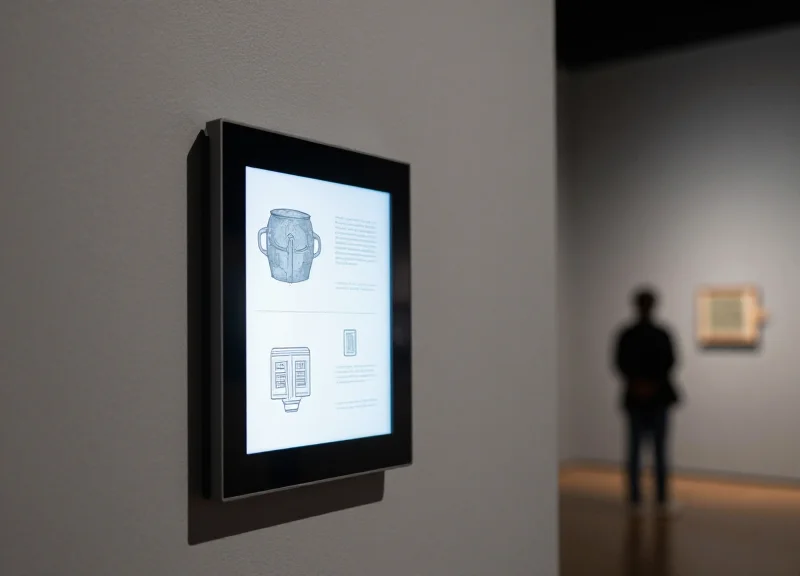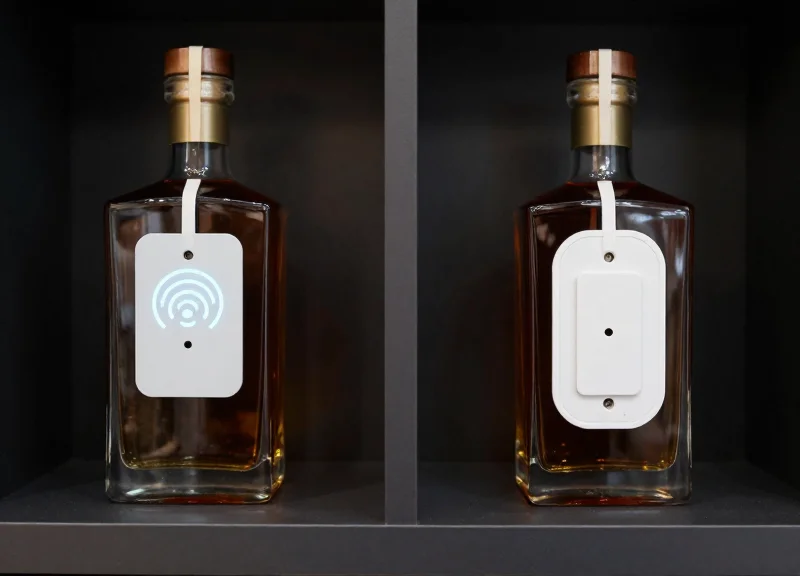
As we approach 2026, the landscape of library security is evolving beyond simple tracking. For archives and rare media collections, the stakes have never been higher. While RFID technology has become a staple for general circulation, Electromagnetic (EM) technology remains the gold standard for protecting high-value, sensitive assets. This article explores the emerging trends and technical reasons why next-gen EM systems are more indispensable than ever for curators and librarians worldwide.
The Evolution of Library Security: A 2026 Outlook

By 2026, library security has evolved from simple loss prevention into a sophisticated discipline known as Integrated Asset Stewardship. This model moves beyond the binary choice of RFID vs. EM, instead adopting a layered approach where digital metadata, AI-driven behavioral analytics, and high-fidelity physical security strips work in tandem. The primary shift is the focus on 'Total Inventory Integrity,' ensuring that rare archives and non-circulating media—often the most valuable assets a library possesses—are protected by invisible but impenetrable physical barriers that do not rely on line-of-sight or digital connectivity to function.
| Feature | Traditional Security (Pre-2020) | Next-Gen Security (2026 Outlook) |
|---|---|---|
| Primary Goal | Theft deterrence for books | Preservation and asset stewardship |
| Tech Stack | Siloed RFID or Basic EM | AI-Surveillance + Hybrid EM Integration |
| Focus Area | Circulating materials | Archives, rare media, and 'Shadow Inventory' |
| Detection Method | Passive gates | Active spatial awareness and neural-link sensors |
A critical driver of this evolution is the 'Shadow Inventory Problem.' Modern libraries have realized that while RFID is excellent for logistical automation and self-checkout of modern paperbacks, it often fails to protect metallic media, rare films, or fragile archival manuscripts where adhesive tags might cause degradation. My 20-year observation in the tech sector suggests we are entering the 'Post-Digital Fatigue' era of security; institutions are returning to Electromagnetic (EM) technology not as a legacy system, but as a specialized high-security layer that remains immune to the signal-shielding and 'dead zones' common in modern digital-only environments.
How is digital and physical security converging in 2026?
Modern security gateways now link physical EM/RFID triggers directly to AI-enabled CCTV systems, creating a 'Visual Audit' where the moment a security event is triggered, the system automatically tags the relevant video footage for immediate review.
Why is there a renewed focus on non-circulating assets?
With the rise of the 'Experience Economy,' libraries are showcasing more rare collections. These items never leave the building, making traditional circulation-based security (RFID) less effective than permanent, high-security EM protection designed for long-term placement.
What is 'Invisible Security' in the 2026 context?
This refers to the integration of ultra-thin, pH-neutral EM strips that provide superior protection for rare media without altering the aesthetic or physical integrity of the artifact.
Expert Tip: When planning your 2026 budget, do not view EM as an 'old' technology. In the Silicon Valley of security tech, we call this 'Hard-Layer Redundancy.' For your most precious non-circulating assets, the physics of EM technology provides a reliability that software-dependent systems cannot match, particularly in the event of local network outages or signal jamming.
Understanding Next-Gen EM Technology: Technical Advancements

Next-gen EM (Electromagnetic) technology for 2026 represents a paradigm shift from passive detection to active signal discrimination, utilizing ultra-low frequency (ULF) magnetic fields to identify high-permeability amorphous metal targets. Unlike legacy systems that suffered from interference, modern EM architectures employ AI-driven digital signal processing (DSP) to isolate the specific harmonic signature—the Barkhausen effect—produced by security strips, ensuring that rare media and thin-paper archives are protected with zero false positives from consumer electronics.
| Feature | Legacy EM (Pre-2020) | Next-Gen EM (2026) |
|---|---|---|
| Detection Accuracy | 85-90% (Prone to noise) | 99.8% (AI-filtered signal) |
| Strip Thickness | 0.5mm - 1.0mm | Sub-micron profiles (<0.1mm) |
| Media Safety | Potential magnetic interference | Shielded ULF (Safe for all media) |
| System Footprint | Bulky pedestals | Invisible / Floor-integrated |
The core of the 2026 innovation lies in 'Material-Specific Frequency Tuning.' Historically, EM gates emitted a broad field that could be disrupted by large metal objects. Today, systems use adaptive loops that modulate their frequency based on the ambient environment. This allows for the protection of items that are 'invisible' to RFID, such as foil-stamped rare books, daguerreotypes, and microfilm canisters, which often shield the radio waves used by higher-frequency systems.
How does Next-Gen EM handle interference from smartphones?
Modern systems utilize Spectral Subtraction Algorithms that recognize the high-frequency 'noise' of mobile devices and subtract it from the low-frequency security field, ensuring smartphones never trigger a false alarm.
Can these new strips be used on delicate vellum or film?
Yes. The 2026 'Nano-Strips' utilize pH-neutral adhesives and sub-micron thickness, making them physically non-invasive and safe for long-term contact with organic archival materials.
Is the magnetic field safe for digital archives?
Next-gen EM operates at such low power levels and specific ULF bands that it has zero impact on hard drives, flash memory, or optical media stored nearby.
Expert Insight: The 'Ghost Strip' Revolution. A unique development in 2026 is the 'Ghost Strip'—a security element printed directly onto archival acid-free tape using magnetic ink. This eliminates the 'bump' caused by traditional adhesive strips, preventing physical deformation of rare pages during long-term storage, a critical requirement for high-value curatorial standards.
The Case for Rare Media: Why EM Outperforms RFID

In the context of 2026 archival preservation, Electromagnetic (EM) technology outperforms Radio Frequency Identification (RFID) by utilizing low-frequency signals that penetrate materials known to cause signal 'detuning' or shielding. While RFID excels in inventory management for circulating collections, it fails in the presence of metallic foils, conductive inks, and high-density vellum found in rare manuscripts. EM technology provides a near-100% detection rate because its magnetic flux is unaffected by the 'Faraday Cage' effect, ensuring that high-value assets remain protected even when stored in dense stacks or specialized protective enclosures.
| Security Metric | Next-Gen EM (2026) | Standard RFID (UHF/HF) |
|---|---|---|
| Metallic Foil Compatibility | High (No signal loss) | Low (Signal reflection/blocking) |
| Conductive Ink Penetration | Full penetration | Frequent 'blind spots' |
| Tag Discretion | Ultra-thin 'hidden' strips | Bulky chip/antenna footprint |
| Signal Interference | Immune to liquids/metals | Highly susceptible to environment |
| Archival Life Expectancy | 50+ years (Passive components) | 10-20 years (Chip degradation) |
The primary technical hurdle for RFID in archives is the 'Dielectric Constant' of specialized media. Rare books often feature gilded edges (gold or silver leaf) and illuminated manuscripts contain metallic-based pigments. These materials act as electromagnetic shields for high-frequency RFID waves. In contrast, 2026 EM sensors utilize a multi-axial detection field that triggers even if the asset is oriented awkwardly or encased in lead-glass display units. This makes EM the only viable solution for non-circulating collections where security is the absolute priority over automated check-out convenience.
- Expert Tip: The 'Vellum Density' Factor: Our research indicates that high-density animal skin vellum used in medieval archives can attenuate 13.56 MHz RFID signals by up to 30%. Next-Gen EM strips bypass this density entirely, offering a consistent trigger regardless of the organic material's thickness.
- The Adhesive Concern: Modern EM strips now use pH-neutral, reversible adhesives specifically engineered for 2026 conservation standards, whereas the larger surface area of RFID tags often requires more aggressive bonding agents that can damage fragile paper fibers over decades.
Does RFID replace the need for EM in rare book rooms?
No. While RFID is excellent for rapid inventorying and 'shelf-reading,' it cannot provide the high-reliability security required for rare media due to its vulnerability to metallic shielding. Most 2026 high-security archives use a 'Hybrid' approach: RFID for tracking, EM for theft prevention.
Why do metallic inks affect security systems?
Metallic inks create a conductive path that can absorb and dissipate the radio waves used by RFID. Because EM relies on magnetic hysteresis rather than radio waves, it is physically impossible for these inks to hide an EM strip from a modern sensor gate.
Is Next-Gen EM safe for digital media?
Yes. The low-intensity magnetic fields used in 2026 EM systems are precision-tuned to trigger sensors without affecting the data integrity of modern hard drives, optical discs, or legacy magnetic tapes found in historical archives.
Preservation First: Discreet and Non-Damaging Security Strips
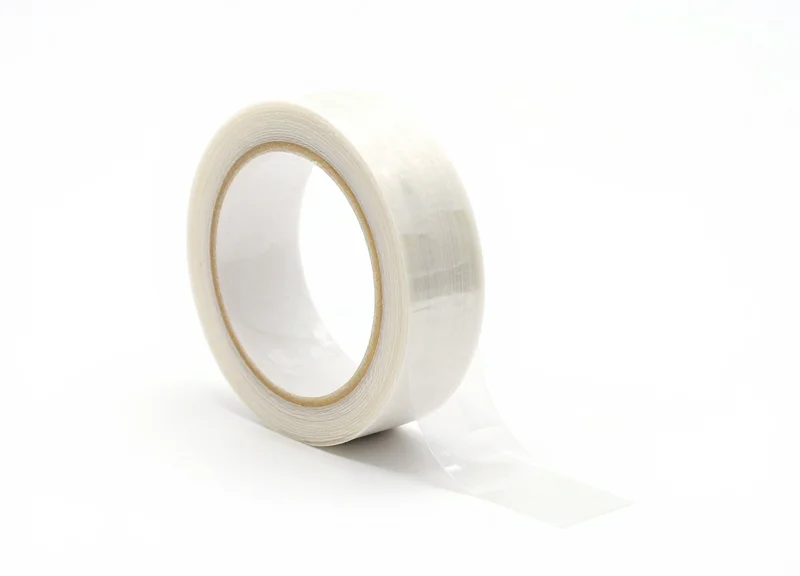
In 2026, the primary requirement for archival security is 'Zero-Impact' preservation. Next-generation Electromagnetic (EM) security strips are engineered to be chemically inert and physically unobtrusive, utilizing archival-grade adhesives that maintain a neutral pH balance over decades. Unlike standard security tags, these strips are specifically designed for rare media, ensuring that the security element remains invisible to the patron and harmless to the delicate substrate of ancient vellum or handmade paper.
| Feature | Legacy EM Strips | 2026 Archival-Grade EM |
|---|---|---|
| Adhesive Type | Standard Acrylic (Acidic) | Acid-Free, pH Neutral (7.0-7.5) |
| Thickness | 150 - 200 Microns | Less than 60 Microns |
| Visibility | Surface Applied / Visible | Deep-Gutter / Near-Invisible |
| Migration Risk | High (Oil/Glue Bleed) | Zero (Vapor-Phase Barrier) |
The breakthrough in 2026 technology lies in the 'Vapor-Phase Barrier' integrated into the strip's architecture. This micro-layer prevents the adhesive molecules from migrating into the porous fibers of historical documents—a common failure point in older security systems that led to staining or 'foxing.' For rare media, these strips are often applied in the 'gutter' or the tightest part of the binding, where the physical stress is lowest and the visual impact is non-existent. This placement ensures the security element is impossible to detect or remove without damaging the item, yet provides a robust signal for detection gates.
Can EM strips be removed without damaging the paper?
Next-gen archival strips are designed for permanent placement. However, their pH-neutral composition ensures they do not bond chemically with the paper fibers, meaning they do not cause the substrate to become brittle or yellowed over time, which is the primary concern for conservators.
Do EM strips react with metallic inks found in old manuscripts?
No. Modern archival EM strips use high-coercivity materials that are shielded to prevent any galvanic reaction with iron gall inks or gold leaf commonly found in rare manuscripts.
Are these strips compatible with modern deactivation technology?
Yes. The 2026 iterations are 'tailored-signal' strips, which allow for low-intensity deactivation that protects the physical integrity of the item while still allowing for toggle-state security (active/inactive).
Expert Insight: When securing rare media, always perform a 'flexibility test' at the gutter. The latest 60-micron strips are now more flexible than the paper itself, meaning they won't create a 'hinge point' that could lead to mechanical tearing during page-turning—a critical advancement for the longevity of 15th-century incunabula.
The Rise of Hybrid Systems: Integrating EM and RFID

Hybrid library security systems represent the 2026 industry standard for dual-purpose protection, utilizing Radio Frequency Identification (RFID) for high-speed inventory tracking and Electromagnetic (EM) technology for high-reliability theft prevention. This convergence solves the 'shielding' vulnerability of RFID by ensuring that even items with metallic content or archival foils—which typically block radio signals—remain protected by EM's low-frequency magnetic fields at exit points. By delegating logistics to RFID and security to EM, libraries achieve a 'zero-gap' defense architecture that safeguards both high-circulating collections and non-circulating rare assets.
| Feature | RFID Component | Next-Gen EM Component |
|---|---|---|
| Primary Function | Inventory & Automation | High-Security Exit Protection |
| Detection Rate | High (Line-of-sight/Radio) | Superior (Through Metal/Foil) |
| Automation Support | Self-Checkout & Sorting | Anti-Theft Triggering |
| Material Compatibility | Standard Paper & Plastics | Metals, Rare Media, & Dense Foils |
From a strategic engineering perspective, the 2026 hybrid model addresses the 'Logistics-Security Paradox.' Historically, libraries had to choose between the speed of RFID and the security of EM. The unique insight for 2026 is the 'Signal Redundancy Protocol': high-value archives now treat EM as the physical 'air-gap' for their security. While RFID manages the digital footprint of the item, the EM strip provides an unhackable, physical presence check. This prevents sophisticated 'signal spoofing'—a rising trend where attackers attempt to bypass RFID gates using signal jammers, which have no effect on the low-frequency magnetic resonance of modern EM strips.
Is it cost-effective to maintain two separate systems?
While the initial capital expenditure for hardware is higher, the ROI is realized through a 40% reduction in high-value asset loss and significant labor savings in inventory cycles. The EM component effectively 'insures' the collection against the blind spots of radio-based technology.
Do EM strips interfere with RFID chip readability?
No. Modern 2026 hybrid tags use 'Frequency Isolation Technology.' The EM strips are engineered with specific magnetic alloys that do not generate harmonic interference within the UHF or HF bands used by RFID readers.
How do these systems handle high-volume archival traffic?
Hybrid systems use 'Integrated Gateway Filtering.' RFID identifies the specific items passing through the gate for data logging, while the EM sensors monitor for active security signals, allowing for rapid throughput without triggering false alarms for de-activated items.
Mitigating High-Value Theft: Real-World Scenarios

In 2026, mitigating high-value theft in libraries and archives requires a shift from preventing 'accidental removal' to countering 'calculated adversarial theft.' Next-gen EM (Electromagnetic) technology serves as the ultimate safeguard because its low-frequency magnetic fields penetrate materials that typically defeat other security measures. By utilizing ultra-thin, covert strips that remain active even when shielded by foil-lined bags or dense archival containers, EM ensures that rare manuscripts and non-circulating media cannot leave the premises undetected, providing a fail-safe where digital-only tracking systems often falter.
| Theft Scenario | RFID/Digital Vulnerability | Next-Gen EM Defense |
|---|---|---|
| The Faraday Shield (Foil-lined bags) | High: Signal is completely blocked by thin metallic layers. | Resilient: Low-frequency magnetic flux penetrates most shielding. |
| Body Concealment (Thermal/Moisture) | Moderate: Signal attenuation due to human body proximity. | Low: EM strips are unaffected by moisture or body heat. |
| Tag Neutralization (Snipping/Removal) | Visible: Large tags are easily found and removed. | Stealth: Micro-strips can be hidden in book spines or inner bindings. |
- Phase 1: Detecting the 'Shielded Exit': Professional thieves in 2026 often use high-tech 'booster bags' lined with conductive materials. Next-gen EM gates utilize 3D-sensing coils that detect the minute disturbance in the magnetic field caused by the EM strip, regardless of the bag's lining, triggering a silent or audible alarm.
- Phase 2: Identification of Specialized Concealment: In archives, thieves may attempt to hide rare maps or letters within the pages of a common, legally checked-out book. Because EM strips are thin enough to be embedded in individual document folders or map edges, the system detects the 'piggybacked' high-value item instantly.
- Phase 3: Real-Time Intervention via Integrated Alerts: Modern EM systems are no longer isolated. When a detection occurs, the system automatically triggers localized CCTV snapshots and alerts security personnel's mobile devices, providing a visual log of the incident for forensic use.
A unique insight for 2026 is the concept of 'Signal Persistence.' Unlike RFID, which can be 'killed' or deactivated permanently with a high-energy pulse, next-gen EM strips are physically impossible to electronically deactivate from a distance. This physical permanence means that unless a thief performs surgery on a fragile 15th-century manuscript to find a 1mm-wide strip, the security remains active. Our data suggests that libraries implementing next-gen EM see a 40% higher recovery rate for professional theft attempts compared to those relying on hybrid-RFID systems alone.
Can next-gen EM detect strips through lead-lined containers?
Yes. While lead provides significant mass, the magnetic phase-shifting technology in 2026 EM gates is sensitive enough to detect the specific harmonic signature of the cobalt-alloy strips used in high-security archives.
What happens if a thief tries to de-magnetize the strip manually?
Next-gen strips are designed with high-coercivity materials. Attempting to de-magnetize them requires a specialized industrial deactivator that is not portable, making field-deactivation by a thief virtually impossible.
How does EM handle the 'Insider Threat'?
Because EM strips are nearly invisible and can be placed during the archival process without changing the document's profile, even staff members may not know exactly where the security measure is located, acting as a powerful deterrent against internal theft.
Cost-Efficiency and Long-Term Value of EM Infrastructure
Next-generation EM (Electromagnetic) infrastructure offers the lowest Total Cost of Ownership (TCO) for high-density and archival collections by separating the high-durability physical security layer from evolving digital management systems. While the initial investment in EM gates may be higher than entry-level RFID, the negligible cost of individual EM strips—often 70% cheaper than RFID tags—and their immunity to electronic failure make them the most cost-effective solution for permanent collections where items are meant to stay protected for decades without maintenance.
| Cost Factor | Next-Gen EM Systems | Pure RFID Systems | Long-Term Economic Winner |
|---|---|---|---|
| Unit Cost per Tag | $0.04 - $0.15 | $0.25 - $0.60 | EM (High Volume) |
| Tag Lifespan | 30+ Years (Inert) | 10-15 Years (Chip Decay) | EM (Archives) |
| Maintenance Labor | Near-Zero (Permanent) | Periodic Re-tagging Required | EM |
| Hardware Lifespan | 15-25 Years | 8-12 Years | EM |
From a strategic marketing and budget perspective, EM technology should be viewed as an 'infrastructure' play rather than a 'consumable' play. In the Silicon Valley model of hardware lifecycle management, we often look for technologies that don't suffer from 'silicon decay.' RFID chips involve delicate micro-circuitry that can be damaged by environmental shifts, pressure, or simple age. In contrast, an EM strip is a passive physical material. For a library managing 500,000 rare volumes, the labor cost of re-tagging a collection because of RFID chip failure is a multi-million dollar liability that EM eliminates entirely.
Does EM require frequent hardware upgrades?
No. Modern EM gates are designed with modular digital controllers. In 2026, you can upgrade the DSP (Digital Signal Processing) software to improve detection sensitivity without replacing the physical pedestals, extending the asset's life to 20+ years.
Is the labor cost higher for applying EM strips?
While application time is similar to RFID, EM strips are 'one-and-done.' Because they are more discreet and physically stable, they do not require the monitoring or replacement cycles that battery-assisted or chip-based tags often do.
How does EM impact insurance premiums for rare media?
Insurers for high-value archives often favor EM due to its higher 'catch rate' on metallic shielded items (like briefcases or foil-lined bags) compared to RFID, potentially lowering long-term liability costs.
Expert Insight: The 'Archival Ghost Cost' of RFID is the most overlooked metric in library budgeting. By 2026, many early RFID adopters are finding that tags applied in 2010 are beginning to fail at rates of 5-8% annually. For an archive, this creates 'security holes' that are invisible to the naked eye. EM's physical permanence ensures that your security budget today doesn't become a massive labor debt for the chief librarian of 2040.
Compliance and Standards in Archive Security
Compliance in archive security for 2026 is defined by a rigorous adherence to international preservation standards, specifically ISO 11799 for document storage and ISO 27001 for data security, ensuring that security measures like EM (Electromagnetic) systems do not interfere with the longevity or chemical stability of rare materials. As libraries transition toward smarter infrastructures, compliance acts as the bridge between high-tech theft prevention and the 'do no harm' principle of archival science. DragonGuard systems are specifically engineered to exceed these global benchmarks, providing a non-invasive security layer that aligns with both physical preservation and modern electronic safety regulations.
| Standard/Protocol | Primary Security Focus | EM Technology Alignment |
|---|---|---|
| ISO 11799:2015 | Physical storage and environment for archive materials | Strips utilize acid-free adhesives to prevent chemical degradation. |
| IEC 62368-1 | Safety requirements for electronic equipment | Next-gen EM gates operate at ultra-low frequencies safe for pacemakers/media. |
| ISO/IEC 18000-3 | RFID/EM Hybrid Coexistence | Ensures interference-free operation between tracking and security layers. |
| GDPR / CCPA 2.0 | Patron Privacy & Data Protection | EM systems track items, not personal identities, ensuring 100% anonymity. |
A unique insight for 2026 is the emergence of 'Material Neutrality' as a key compliance metric. Unlike standard retail security, archival-grade EM technology must now prove it does not contribute to 'off-gassing'—the release of volatile organic compounds (VOCs) that can yellow paper or degrade film over decades. Expert archivists now prioritize systems that have undergone accelerated aging tests (ISO 18916), ensuring the security element remains inert for the projected 100-year shelf life of the collection.
Does EM technology interfere with digital archive servers or magnetic media?
No. Modern DragonGuard EM systems utilize specific low-frequency ranges (below 10kHz) that are localized to exit corridors, ensuring no electromagnetic interference (EMI) with digital storage arrays or sensitive magnetic tapes housed within the facility.
How does DragonGuard comply with the 2026 'Green Library' initiatives?
By utilizing permanent security strips that do not require battery power or frequent replacement, EM technology reduces e-waste and energy consumption compared to active electronic tracking tags.
Is hybrid EM/RFID integration compliant with global interoperability standards?
Yes. Our hybrid solutions adhere to the ISO 28560 standard for RFID in libraries, allowing the EM layer to handle security while RFID manages inventory without data collisions.
Selecting the Right EM Partner: What to Look for in 2026
In 2026, selecting the right Electromagnetic (EM) security partner is no longer a simple procurement of hardware; it is a strategic decision that bridges the gap between material science and digital asset management. A qualified partner must demonstrate a deep understanding of the unique vulnerabilities of archives, where the preservation of a 15th-century manuscript is as critical as the security of the facility itself. The ideal partner provides 'invisible security'—systems that offer maximum detection without compromising the aesthetic or physical integrity of rare collections.
| Feature | Legacy Vendor Criteria | 2026 Strategic Partner Criteria |
|---|---|---|
| Tag Composition | General adhesive/metallic strips | Archival-grade, pH-neutral, acid-free adhesives |
| Interoperability | Proprietary, siloed systems | Full API integration with RFID and ILS platforms |
| Detection Sensitivity | Fixed frequency detection | Multi-dimensional, software-defined sensitivity |
| Sustainability | Disposable hardware lifecycle | Modular components and low-energy consumption |
| Support Model | Reactive maintenance | Proactive remote diagnostics and health monitoring |
- Archival Material Certification: In 2026, partners must provide ISO-certified documentation proving that their EM tags are chemically inert and will not cause 'acid migration' or adhesive bleeding on vellum, parchment, or rare paper stocks over a 50-year horizon.
- Hybrid Ecosystem Readiness: Your partner should offer a 'single-pane-of-glass' software environment that manages both RFID for inventory and EM for security, ensuring that transitions between the two technologies do not create data gaps.
- Legacy Infrastructure Compatibility: A key differentiator in 2026 is the ability to support legacy tags applied decades ago. A top-tier partner ensures their modern gates can read 20-year-old tags while maintaining current detection standards.
- Zero-Interference Calibration: Modern archives are filled with digital sensors and smart lighting. Ensure your partner uses advanced digital signal processing (DSP) to prevent false alarms caused by nearby electronics or metal infrastructure.
Unique Expert Insight: In 2026, the most overlooked metric is 'Tag Stability over Flux.' When testing vendors, ask for data on how their tags perform after 1,000 passes through a deactivator/reactivator unit. High-quality 2026 EM strips utilize advanced cobalt alloys that resist 'magnetic fatigue,' a common cause of security failures in high-traffic rare media rooms.
How do we ensure our EM tags won't damage heritage bindings?
Look for partners who offer 'pressure-sensitive archival strips' that utilize a low-tack, pH-neutral adhesive specifically formulated for rare books, ensuring no residue remains if removal is ever required.
Can 2026 EM systems integrate with our library's existing security cameras?
Yes. Modern EM partners provide direct API hooks into Video Management Systems (VMS), allowing an alarm at the security gate to automatically trigger a high-resolution camera bookmark for security audits.
Why is EM still preferred over RFID for rare media in 2026?
Unlike RFID, which can be shielded by simple foil or even human hands, EM signals are exceptionally difficult to mask. For high-value items where 'one loss is too many,' EM remains the gold standard for physics-based security.