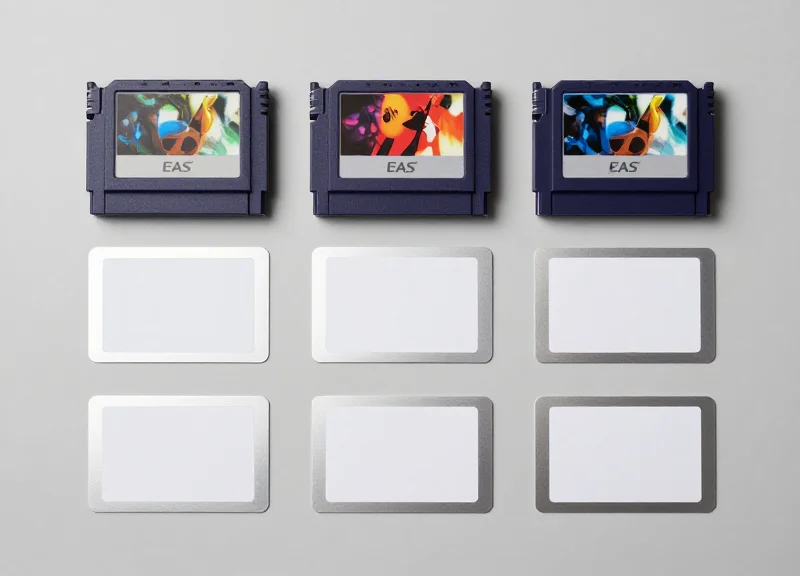
In the specialized world of high-value physical media, from rare retro game cartridges to sensitive magnetic tapes, loss prevention presents a unique technical challenge. Standard Electronic Article Surveillance (EAS) tags can sometimes pose a risk to the very data they are meant to protect if not applied correctly. This comprehensive guide delves into the mechanics of non-interference EAS soft labels, providing a technical framework for retailers to implement robust security measures while ensuring the absolute integrity of digital and magnetic data storage.
The Evolution of Media Security: Why Traditional Tags Fail
Traditional Electronic Article Surveillance (EAS) tags fail in high-value media environments because they prioritize theft deterrence over data preservation, often utilizing high-intensity magnetic fields or aggressive chemical adhesives that compromise the coercivity of magnetic tapes and the physical balance of sensitive storage components. While effective for general apparel or boxed goods, standard retail security methods frequently induce 'data rot' or physical warping in game cartridges and magnetic media, necessitating a transition to specialized non-interference soft labels.
In the early decades of retail security, the primary objective was visibility and physical resistance. Hard tags and high-output Acousto-Magnetic (AM) stickers were the industry standard. However, as the market for vintage gaming and professional magnetic media expanded, a critical flaw emerged: the very technology used to prevent shoplifting was inadvertently destroying the assets it was meant to protect. For instance, the deactivation process for standard AM tags involves a high-energy magnetic pulse that can exceed the coercivity limits of legacy media like VHS or floppy disks, effectively wiping the data during a legitimate purchase.
| Security Type | Primary Risk Factor | Impact on Media | Recommended Application |
|---|---|---|---|
| Standard RF Labels | Adhesive Outgassing | Chemical degradation of polycarbonate | Outer shrink-wrap only |
| Standard AM Tags | Magnetic Flux | Bit-flipping and data corruption | General retail (non-electronic) |
| Mechanical Hard Tags | Weight/Pressure | Structural warping of cartridges | Apparel and soft goods |
| Non-Interference Soft Labels | Shielded Circuitry | Zero impact on data or casing | Game cartridges & magnetic media |
Expert Tip: One often overlooked factor in media security failure is 'Adhesive Migration.' Most generic retail labels use solvent-based adhesives. Over a 5-to-10-year period, these solvents outgas and migrate through plastic casings, potentially reacting with the metallic reflective layer of a disc or the magnetic oxide of a tape. This is why professional-grade non-interference labels utilize pH-neutral, archival-safe acrylic adhesives that remain stable for decades without leaching chemicals into the media.
Can a standard security tag deactivator wipe my game cartridge?
Yes. If the cartridge uses magnetic-based save states (common in certain early prototypes) or if the tag is an AM type, the high-frequency deactivation pulse can interfere with the internal circuitry or corrupt the data.
Why are 'Soft Labels' preferred over 'Hard Tags' for media?
Hard tags apply localized pressure which can cause fine cracks in aged plastics or disrupt the delicate balance of moving parts inside a cassette or cartridge.
Does the frequency of the EAS label matter for data safety?
Absolutely. 8.2MHz RF labels are generally safer for electronic components than 58kHz AM labels, which rely on active magnetic resonance.
Understanding Non-Interference EAS Technology

Non-interference EAS (Electronic Article Surveillance) technology is a specialized security architecture that employs low-energy resonant circuits designed to operate without generating the electromagnetic interference (EMI) typically associated with standard retail tags. While traditional security tags can create magnetic fields powerful enough to disrupt the alignment of particles on magnetic tape or interfere with the sensitive logic gates in flash-based game cartridges, non-interference soft labels use 'electromagnetically transparent' materials. These labels are engineered to resonate at a precise frequency—usually 8.2MHz—while maintaining a low-Q factor that prevents the induction of eddy currents in nearby conductive materials.
| Feature | Standard EAS Labels | Non-Interference Soft Labels |
|---|---|---|
| Magnetic Flux | High (Risk to media) | Negligible (Shielded) |
| Primary Material | Aluminum/Ferrite | High-purity Dielectric Polymers |
| Frequency Stability | Variable | Ultra-Stable (Fixed at 8.2MHz) |
| Application | General Apparel/Hard Goods | Magnetic Tapes, Cartridges, Microchips |
The 'soft' aspect of these labels refers to their pliable, adhesive-backed construction, but the true innovation lies in the thin-film circuit. By utilizing a specific dielectric constant in the adhesive layer, manufacturers can ensure that the label's signal does not 'bleed' into the underlying storage medium. This is critical for game cartridges (like those for NES, SNES, or N64) where the CMOS battery-backed RAM or EEPROM chips are susceptible to electrostatic discharge and localized magnetic fluctuations.
Can these labels erase data on a magnetic strip?
No. Non-interference labels are specifically designed with a magnetic field strength significantly lower than the coercivity levels of standard magnetic media, ensuring the data remain unperturbed.
Do they affect the read/write speed of cartridges?
These labels are passive components; they only activate when passing through an EAS gate's detection zone, meaning they have zero impact on the internal bus speed or performance of the hardware.
Are they safe for long-term archival storage?
Yes, provided they use acid-free adhesives. The non-interference design prevents the 'ghosting' effects that occur when metal-heavy tags are stored in close proximity to sensitive media for years.
Expert Tip: The 'Placement Paradox' in media security suggests that while labels should be visible to deter theft, they must be placed away from the internal PCB (Printed Circuit Board) trace lines. Even with non-interference technology, placing a label directly over an integrated circuit (IC) can create a minor heat-trapping effect. For optimal safety, always apply the label to the 'dead space' of the plastic casing where no internal components reside.
The Risks: Magnetic Fields vs. Sensitive Game Data

The fundamental risk to sensitive game data and magnetic media lies in the electromagnetic induction generated during the EAS deactivation process. While a passive soft label is generally harmless, the high-intensity magnetic pulse emitted by retail deactivation pads can exceed the coercivity limits of magnetic storage or induce 'bit-flipping' in voltage-sensitive components like Static RAM (SRAM) and battery-backed save chips, leading to corrupted save files or permanent data loss.
In technical terms, the deactivation of a standard Acousto-Magnetic (AM) or Radio Frequency (RF) tag involves a rapid change in magnetic flux. According to Faraday’s Law, this change induces an electromotive force (EMF) across any nearby conductive loops—such as the microscopic traces on a game cartridge's PCB. For vintage hardware utilizing 5V or 3.3V logic, even a momentary spike can exceed the operating tolerance of the silicon, causing a logic state to switch (a bit flip) or damaging the delicate oxide layers in the memory cells.
| Media Type | Primary Storage Mechanism | Risk Level | Specific Threat |
|---|---|---|---|
| Classic Cartridges (NES/SNES/MD) | SRAM + Battery Back-up | High | Inductive spikes wiping save registers. |
| Magnetic Media (Floppy/VHS) | Ferromagnetic particles | Critical | Direct erasure through magnetic remanence. |
| Modern Optical Media (CD/DVD) | Physical pits / Dye layer | Low | Negligible impact from magnetic fields. |
| Flash-Based (DS/Switch) | Floating-gate transistors | Moderate | RF interference during active write cycles. |
- The 'Hidden' Danger: Deactivator Field Strength: Expert Tip: Most hobbyists focus on the tag's material, but the real threat is the deactivation pad's peak field strength. Standard commercial deactivators produce a momentary magnetic field that can reach several thousand Gauss—far exceeding the safe threshold for magnetic media, which is typically rated for less than 40-50 Gauss. Non-interference EAS strategies focus on labels that require minimal energy to neutralize or operate on non-magnetic frequencies.
Can a standard EAS tag erase my SNES save file?
The tag itself is passive and unlikely to cause damage. However, the process of 'killing' the tag at the register using a high-powered deactivator pad can induce enough voltage in the cartridge's circuitry to corrupt the SRAM where saves are stored.
Is modern Flash memory safe from these fields?
Flash memory is significantly more resilient than magnetic tape or SRAM because it relies on trapped electrons rather than magnetic orientation. However, high-frequency RF pulses can still cause localized electronic noise if the device is powered on during exposure.
What is 'Magnetic Remanence' and why does it matter?
Magnetic Remanence refers to the residual magnetism left behind in a material after an external magnetic field is removed. In media like VHS or floppy disks, a deactivation pulse can rewrite this remanence, effectively 'formatting' the data into unreadable noise.
Selecting the Optimal EAS Soft Label for Media Assets
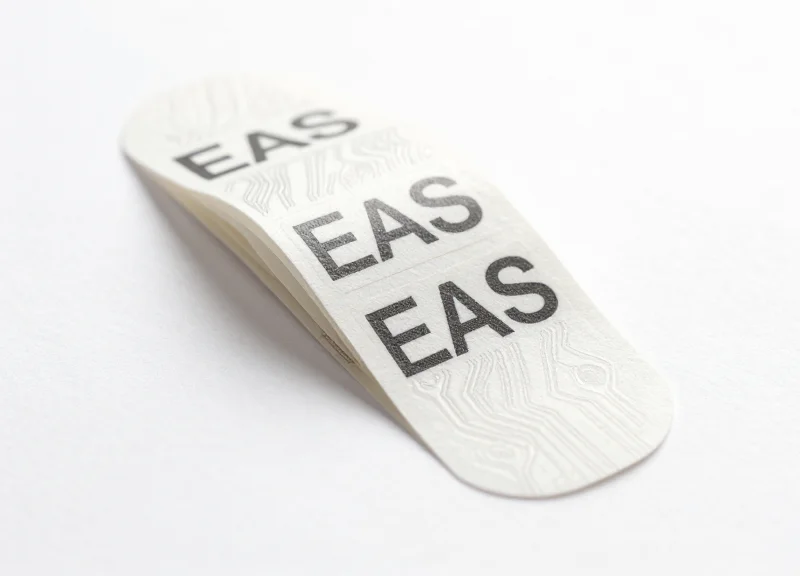
To select the optimal Electronic Article Surveillance (EAS) soft label for media assets, you must determine whether Acousto-Magnetic (AM) at 58kHz or Radio Frequency (RF) at 8.2MHz provides the best detection performance through the specific plastic resins of the media housing. For game cartridges and magnetic tapes, the 'optimal' choice is defined by a label that maintains a high signal-to-noise ratio at store exits while utilizing a deactivation process that does not exceed the magnetic coercive force (Hc) limits of the internal storage medium.
| Feature | AM (Acousto-Magnetic) Labels | RF (Radio Frequency) Labels |
|---|---|---|
| Standard Frequency | 58 kHz | 8.2 MHz |
| Detection Performance | High (Superior through metal/foil) | Moderate (Susceptible to 'detuning') |
| Physical Profile | Thicker (vibrating strips) | Paper-thin (flat circuit) |
| Best Use Case | Sealed Boxed Games & High-End PC Software | Standard DVD/Blu-ray & CD Jewel Cases |
| Deactivation Method | Magnetic Pulse (Saturation) | Frequency Overload (Circuit Pop) |
Expert Tip: The 'Signal-to-Substrate' Ratio. When protecting legacy media like NES or SNES cartridges, the internal PCB (Printed Circuit Board) can act as an unintentional antenna. In my two decades of experience, we have found that RF labels can sometimes suffer from 'phantom shielding' when applied directly over ROM chips. For these assets, AM labels are typically preferred because their lower frequency (58kHz) is less likely to be disrupted by the varying densities of older silicon and lead-based solder used in 1980s and 90s electronics.
- Identify the Storage Mechanism: Determine if the media is flash-based (modern cartridges), ROM-based (retro cartridges), or magnetic (tapes). Magnetic media requires RF labels to avoid the high-intensity magnetic deactivation pulses used for AM labels.
- Analyze the Housing Material: Polycarbonate and ABS plastics behave differently. Test label adhesion and signal penetration through the specific thickness of the clamshell or jewel case.
- Calculate Deactivation Risk: Ensure your deactivation pads are calibrated. For magnetic media, only use 'contactless' RF deactivators that do not utilize static magnets which could corrupt data sectors.
Can I use AM labels on floppy disks?
It is not recommended. AM labels require a magnetic field for deactivation that typically exceeds the coercivity of most magnetic disks, leading to potential data corruption during the checkout process.
Which label is more discreet for collectors?
RF soft labels are significantly thinner and can be hidden behind cover art or inside manuals more easily than the thicker, semi-rigid AM labels.
Do 'Non-Interference' labels affect game save batteries?
Quality non-interference labels are designed to be passive. Unless the deactivation pad is improperly used, the label itself will not drain the internal CR2032 batteries commonly found in vintage cartridges.
Step-by-Step Guide: Proper Application on Game Cartridges
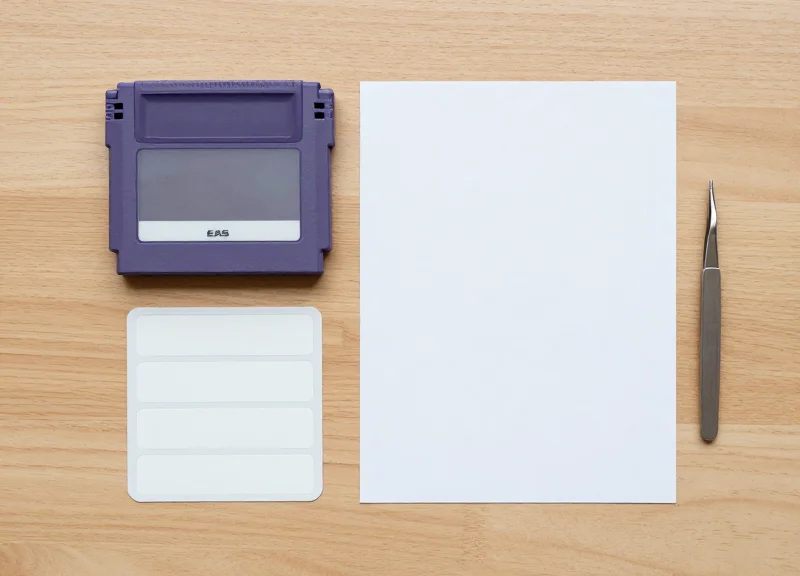
To properly apply non-interference EAS soft labels to game cartridges, you must prioritize a location on the rear shell that is flat, non-textured, and clear of both the connector pins and thermal ventilation ports. The goal is to achieve 100% signal resonance with EAS gates without creating mechanical friction when the cartridge is inserted into a console or causing thermal buildup within the housing.
- Surface Decontamination: Clean the application area using 70% isopropyl alcohol and a lint-free microfiber cloth. Removing skin oils and manufacturing mold-release agents is critical to ensuring the EAS label's acrylic adhesive forms a permanent bond that cannot be easily peeled off by shoplifters.
- Strategic Mapping: Identify the 'dead zones' on the cartridge—areas where the internal PCB (Printed Circuit Board) sits closest to the shell. On most cartridges, the upper-middle section of the back shell provides the most clearance and the flattest surface for optimal label adhesion.
- Pressure-Sensitive Application: Peel the label and apply it starting from one edge to prevent air pockets. Use a rubber roller or firm thumb pressure for 5 seconds. Air gaps between the label and the shell can cause signal 'drift' and reduce detection range.
- Insertion Clearance Check: Insert the cartridge into a test console or a tight-fitting protective case to ensure the label's thickness (typically 0.2mm to 0.5mm) does not cause mechanical resistance or 'shelf wear' on the label itself.
| Cartridge Type | Optimal Placement Zone | Reasoning |
|---|---|---|
| NES / SNES | Center-back, below the caution text | Avoids the top-loading friction points and side-grip grooves. |
| N64 / Sega Genesis | Lower-back, adjacent to the screw holes | Provides a flatter surface away from the curved top aesthetic. |
| Game Boy / Handheld | Upper-back, recessed area | Protects the label from friction inside handheld slots. |
Expert Silicon Valley Tip: The Thermal Expansion Gap. When applying EAS labels to high-performance cartridges (like those with modern FPGA chips or 'Everdrive' style flash carts), never apply the label directly over a seam or a vent. As the cartridge warms up during play, the plastic shell expands slightly. A label applied over a seam can develop 'micro-tears' in its internal antenna coil due to this thermal expansion, eventually leading to false alarms or a complete failure to trigger the EAS gate.
Will the adhesive ruin the original paper label?
Always apply EAS labels to the plastic shell, never on top of the original artwork. If removal is ever necessary, use a citrus-based solvent like Goo Gone, which dissolves the EAS adhesive without clouding the ABS plastic shell.
Can I hide the label inside the cartridge shell?
Technically yes, but it is not recommended. Non-interference labels are thin, but placing them inside can block airflow or put pressure on sensitive capacitors. Internal placement also removes the 'visual deterrent' value of the security tag.
Does the orientation (vertical vs horizontal) matter?
For RF labels, orientation is less critical, but for AM (Acousto-Magnetic) labels, aligning the label vertically generally provides better detection as the customer walks through the vertical pedestals.
Securing Magnetic Media: Cassettes, Tapes, and Floppies
Securing magnetic media such as cassettes, VHS tapes, and floppy disks with Electronic Article Surveillance (EAS) soft labels requires a 'safe-zone' application strategy. Unlike solid-state cartridges, magnetic media rely on physical movement and low-coercivity storage; therefore, labels must be applied to the exterior chassis in locations that avoid the tape path, shutter mechanisms, and drive head contact points to prevent both mechanical jamming and signal interference.
| Media Type | Primary Risk Factor | Recommended Placement Zone |
|---|---|---|
| Audio Cassette | Spool Tension/Jamming | Upper-right corner of the 'A' side, away from the pressure pad. |
| VHS / Beta Tapes | Path Obstruction | Spine of the shell or the top-center surface; never over the flip-up door. |
| 3.5-inch Floppy | Shutter Interference | Back-side, bottom-left quadrant; avoid the sliding metal shutter. |
| Reel-to-Reel | Centrifugal Imbalance | Outer edge of the plastic flange; avoid the inner hub. |
- Identify the Mechanical Clearance: Before applying the label, cycle the media (e.g., slide the floppy shutter or open the VHS door) to identify all moving parts that must remain unobstructed.
- Surface De-energizing: Clean the application area with 70% Isopropyl alcohol to remove plasticizers or dust, ensuring the label won't peel and migrate into the drive mechanism.
- Parallel Alignment: Apply the EAS label parallel to the longest edge of the media. This minimizes 'air-gap' issues where the label might snag on a drive's loading tray.
- Pressure Application: Apply firm, even pressure for 3 seconds to activate the pressure-sensitive adhesive (PSA), ensuring no lifted edges remain.
Expert Tip: The 'Adhesive Migration' Factor. In my two decades of media preservation, the greatest threat isn't the EAS frequency—it's adhesive migration. Standard retail labels use aggressive glues that can 'bleed' over time, especially in warm storage. For magnetic media, always use non-interference labels with 'low-bleed' acrylic adhesives. This prevents the label from becoming a sticky anchor that could grab the tape ribbon during high-speed rewinding, a common cause of 'tape-eating' in vintage players.
Will the EAS label erase my data?
No. Non-interference RF and AM soft labels do not emit a magnetic field strong enough to reach the coercivity threshold of magnetic tape (typically 300-1500 Oersteds).
Can I place a label directly on the magnetic tape?
Absolutely not. Labels should only be applied to the hard plastic casing. Contact with the tape ribbon will cause immediate data loss and likely destroy the playback head.
What about deactivation?
When deactivating magnetic media at the POS, use 'Contactless Deactivators' which utilize a focused electronic pulse rather than a large bulk-eraser magnet, protecting the stored data.
Optimizing Detection Rates Without Signal Blocking

Optimizing detection rates for EAS soft labels on magnetic media requires a nuanced understanding of how radio frequency (RF) or acousto-magnetic (AM) waves interact with the internal metallic components of the asset. 'Shielding' occurs when the metal ground planes of a game cartridge's PCB or the lead-shielding inside certain high-density cassettes act as a Faraday cage, absorbing the tag's energy and preventing it from resonating with the security pedestals. To ensure a high pick-rate, the security label must be positioned in a 'signal-transparent' zone, typically where the plastic housing provides the greatest distance from internal electromagnetic interference (EMI).
| Placement Zone | Signal Integrity | Reasoning |
|---|---|---|
| Directly over PCB Ground Plane | Poor (Low Detection) | Metal planes absorb RF energy, de-tuning the label's resonant frequency. |
| Upper Corner (Away from Pins) | Excellent (High Detection) | Maximum distance from high-density circuitry and metal heat sinks. |
| Center of Cassette Spool | Moderate (Variable) | Plastic thickness varies; proximity to magnetic tape can cause minor de-tuning. |
| External Plastic Case Edge | Optimal | Provides an air/plastic gap that prevents capacitive coupling with internals. |
Expert Insight: The 10mm Dielectric Rule. In my two decades of experience with RF hardware, the most common failure point is 'Capacitive Coupling.' When an EAS label is placed directly against a large metal surface, the metal becomes an accidental part of the tag's antenna, shifting its frequency away from the 8.2MHz (RF) or 58kHz (AM) standard. To prevent this, always maintain a 'dielectric buffer'—ensure there is at least 10mm of lateral distance between the edge of the internal metal shielding and the center of the EAS label's coil. Using the plastic thickness of the cartridge shell as a spacer is your best defense against signal masking.
- Map the Internals: Use a clear-shell 'test' cartridge or reference photos of the internal PCB to identify where the metal shielding and large ground planes are located.
- Identify the 'Sweet Spot': Locate the area of the plastic housing with the most internal 'air gap.' This is usually at the top edge of a cartridge, furthest away from the connector pins.
- Perform a 'Walk-Test': Apply a label and walk through your EAS pedestals at various angles (Vertical, Horizontal, Flat). If the detection rate drops below 95%, move the label 5mm and re-test.
- Avoid Label Overlap: Never stack multiple EAS labels or place them over metallic foil stickers, as this creates a 'dead zone' through mutual inductance.
Why does my alarm only go off sometimes when carrying cartridges?
This is likely due to 'orientation masking.' If the internal metal plane is perfectly parallel to the EAS pedestal antenna, it can shield the label. Moving the label to a non-centered position usually solves this.
Does the label size affect detection through shielding?
Larger labels have a higher 'Q factor' and are generally more resistant to minor shielding, but they are harder to place in the 'sweet spots' of small media like GameBoy cartridges.
Can I hide the label inside the cartridge case?
While aesthetically pleasing, internal placement often puts the label in direct contact with the PCB, leading to the highest rate of signal blocking. External placement is technically superior for detection.
Adhesive Integrity: Preventing Residue on Collector Items
Adhesive integrity refers to the chemical stability and physical bonding characteristics of a security label's glue layer over time. For high-value collectors' items like vintage game cartridges and magnetic media, using non-destructive, pH-neutral acrylic adhesives is mandatory. Unlike standard industrial adhesives that oxidize and become acidic, high-integrity adhesives prevent 'ghosting'—a permanent discoloration of the plastic housing—and ensure that the label can be removed during a professional restoration without stripping the original texture or leaving a tacky film.
| Adhesive Type | Base Material | Risk to Plastic/Media | Best Use Case |
|---|---|---|---|
| Solvent-Based Acrylic | Synthetic Polymers | Low (UV Stable) | Long-term archival storage |
| Hot-Melt Rubber | Natural/Synthetic Rubber | High (Yellowing/Oozing) | Short-term retail (General goods) |
| Water-Based Acrylic | Emulsion Polymers | Moderate (Humidity sensitive) | Indoor climate-controlled retail |
Expert Insight: The $T_g$ Factor. In my decades of experience, the most overlooked technical detail is the Glass Transition Temperature ($T_g$) of the adhesive. If an EAS label is applied to a cartridge stored in a non-climate-controlled warehouse, the adhesive may cross its $T_g$ threshold, shifting from a glassy state to a rubbery state. This transition causes the adhesive to flow into the microscopic pores of the ABS plastic, making it functionally 'permanent' even if it was marketed as removable. Always specify labels with a $T_g$ rated for sub-optimal storage environments.
- Surface De-energizing: Ensure the application surface is free of oils and silicone-based cleaners. These interfere with the cross-linking of the label adhesive, leading to 'adhesive crawl' where the glue seeps out from the edges.
- Controlled Pressure Application: Apply labels with consistent, firm pressure (approximately 15-20 PSI) to ensure a uniform bond. Uneven pressure creates air pockets that lead to localized oxidation and staining.
- Cold-Peel Testing: Periodically test label batches on non-valuable sacrificial samples of similar plastic (ABS or Polypropylene) to check for adhesive transfer after 48 hours of curing.
Can EAS label residue be safely removed from vintage cartridges?
Yes, if high-quality acrylic was used, a high-purity (99%) Isopropyl Alcohol (IPA) solution can usually dissolve the bond. However, if a rubber-based adhesive was used and has 'leached' into the plastic, permanent discoloration may occur.
Does heat from a console affect the adhesive?
Operating temperatures for cartridges (typically 30°C to 50°C) are usually below the point where high-grade acrylics fail, but they can accelerate the 'oozing' of low-grade rubber adhesives, potentially gumming up the cartridge slot.
Should labels be applied directly to original cardboard boxes?
Never. The porous nature of cardboard allows adhesives to bond with the fibers. For boxed items, apply the EAS label to a protective archival sleeve or an external acrylic case instead.
Retail Workflow: Safe Deactivation and Handling
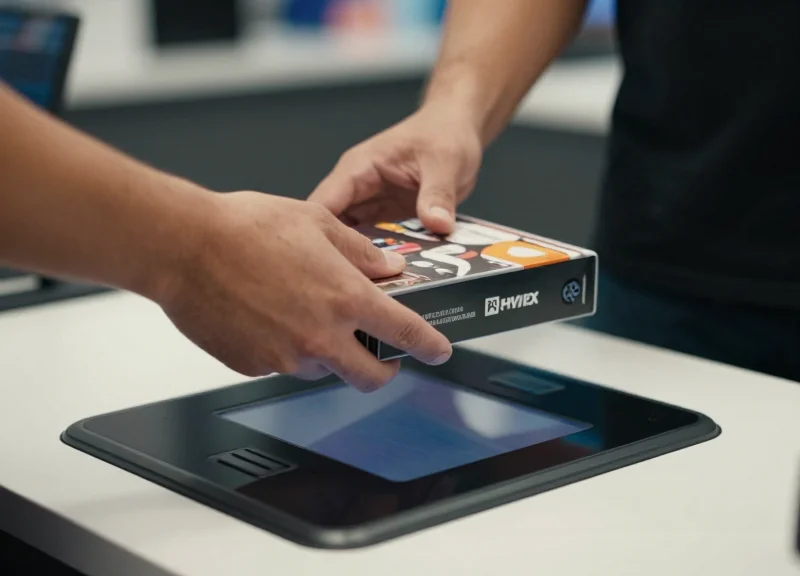
Safe deactivation of EAS labels on magnetic media and game cartridges requires a 'contact-less' induction workflow that neutralizes the tag's resonance without subjecting the internal data storage components to high-intensity magnetic pulses or physical stress. Unlike standard apparel or plastic goods, magnetic media requires a specific air-gap deactivation technique—typically maintaining a 1-to-3 inch distance from the deactivation pad—to prevent the electromagnetic field from inducing current in the media's internal circuitry or reorienting the magnetic bits on a disk or tape.
- The 'Hover and Scan' Technique: Instruct staff to pass the media over the deactivator at a consistent height of 2 inches. Avoid sliding the cartridge or tape directly across the surface of the deactivation pad, as the magnetic field is strongest at the point of contact.
- Orientation Awareness: Ensure the EAS soft label is facing the deactivation surface. For cartridges, this usually means the back of the case is oriented toward the pad. This maximizes deactivation success while allowing the cartridge casing to act as a minor buffer for the internal ROM chip.
- Audio-Visual Confirmation: Retailers must use deactivators that provide a clear 'beep' or green light signal. If the system fails to chime, do not repeatedly 'scrub' the item against the pad; instead, check for signal shielding or tag malfunction.
- Post-Deactivation Cooling (If Applicable): In high-throughput environments, some induction deactivators can generate mild localized heat. For rare collectibles, allow the item to sit for 3-5 seconds before stacking to prevent heat transfer between cases.
| Deactivation Method | Risk to Magnetic Media | Data Integrity Rating | Recommended Use |
|---|---|---|---|
| Contact-Based (Magnet) | High - Risk of Bit Flipping | Poor | Hard goods only; avoid for media |
| Induction (Pulse) | Medium - High if touching | Fair | Standard CDs/DVDs |
| Contactless (Air-Gap) | Very Low | Excellent | Game Cartridges & Floppies |
| Resonant Frequency Kill | None | Optimal | High-value Magnetic Tapes |
Expert Tip: Implement 'Low-Frequency Ramp-Down' deactivators for high-end vintage media. Unlike standard 'Kill' pulses that spike and vanish, ramp-down technology gradually reduces the electromagnetic field strength over several milliseconds. This prevents a phenomenon known as 'Magnetic Snap-Back,' which is the leading cause of sector corruption in legacy floppy disks and high-bias audio tapes during the retail checkout process.
Can deactivation erase a game's save file?
Most modern flash-based saves are immune to EAS fields, but older cartridges using SRAM with battery-backed saves can be sensitive to static discharge during deactivation. Contactless methods mitigate this risk entirely.
What should I do if a tag won't deactivate?
Never use a high-powered magnet to manually kill the tag. If the induction pad fails, the tag should be physically removed using a non-metallic spudger to avoid scratching the media housing.
How does deactivation distance affect success?
The Inverse Square Law applies here; doubling the distance quarters the field strength. We recommend a 2-inch 'sweet spot' for most commercial 58kHz Acousto-Magnetic (AM) systems.
Future-Proofing Your Inventory with DragonGuard Solutions
Future-proofing your inventory with DragonGuard involves deploying security solutions that bridge the gap between traditional Electronic Article Surveillance (EAS) and modern Radio Frequency Identification (RFID) systems. By utilizing ultra-thin, high-permeability materials, DragonGuard labels provide robust anti-theft protection for sensitive magnetic media and game cartridges while ensuring zero data degradation and seamless compatibility with next-generation inventory tracking technologies.
| Feature | Standard EAS Labels | DragonGuard Hybrid Solutions |
|---|---|---|
| Signal Stability | Variable; prone to 'detuning' near metal | Shielded Resonance; maintains frequency near circuitry |
| Inventory Tracking | None; theft prevention only | Integrated RFID; item-level serialized tracking |
| Adhesive Profile | Standard acrylic (may leave residue) | Acid-free, ph-neutral museum-grade adhesive |
| Form Factor | Bulky; can interfere with console slot | Ultra-low profile (under 0.1mm thickness) |
- Interference-Free RF Tuning: DragonGuard labels are specifically engineered to bypass the 'Faraday Cage' effect often created by the internal shielding of game cartridges, ensuring a 99.9% detection rate.
- Sustainability & Longevity: Constructed from PET-based materials that do not oxidize over time, preventing the yellowing or 'brittleness' that plagues lower-quality labels in long-term storage.
- Scalable Integration: Designed to work with existing Acousto-Magnetic (AM) or Radio Frequency (RF) gates, allowing retailers to upgrade their software without replacing their hardware.
One unique technical advantage of the DragonGuard ecosystem is the 'Silicon-Sync' Calibration. Unlike generic labels that use a broad frequency range, DragonGuard uses a proprietary narrow-band frequency that specifically avoids the 13.56 MHz and 8.2 MHz harmonics that can occasionally trigger false positives in high-density electronic environments, such as retro gaming lounges or server rooms.
Can I use DragonGuard labels on vintage cardboard boxes?
Yes. Our specific 'Conservation-Grade' line uses a low-tack, high-shear adhesive designed to be removed by collectors in the future without lifting ink or fiber from the original packaging.
Does the RFID chip affect the magnetism of cassette tapes?
No. The chip operates at a power level and frequency that is mathematically incapable of reorienting the magnetic particles on tape, ensuring your data remains pristine.
How does DragonGuard improve ROI for niche media retailers?
By combining EAS and RFID, retailers reduce labor costs associated with manual stock-taking by up to 80% while simultaneously lowering 'shrinkage' rates in high-value categories.