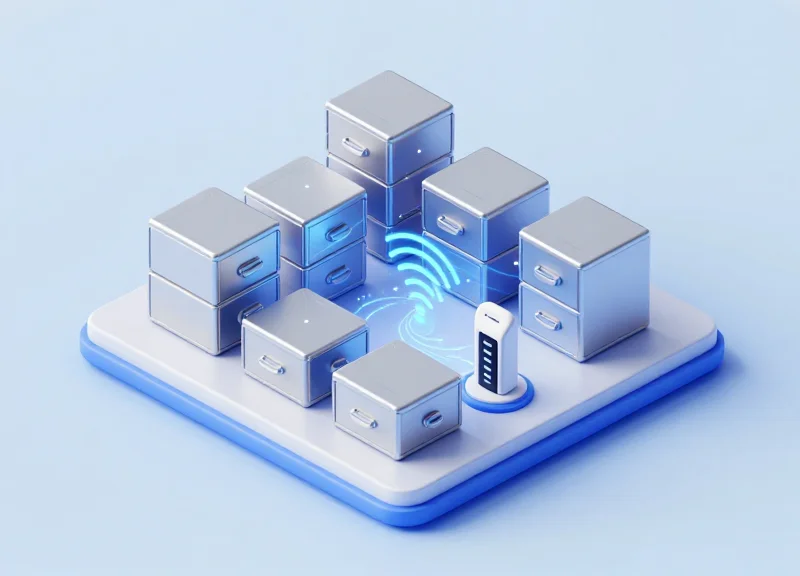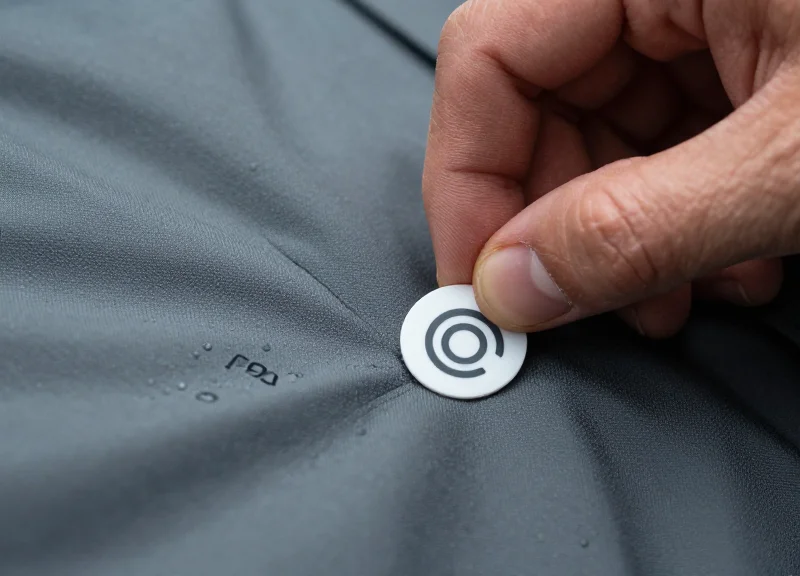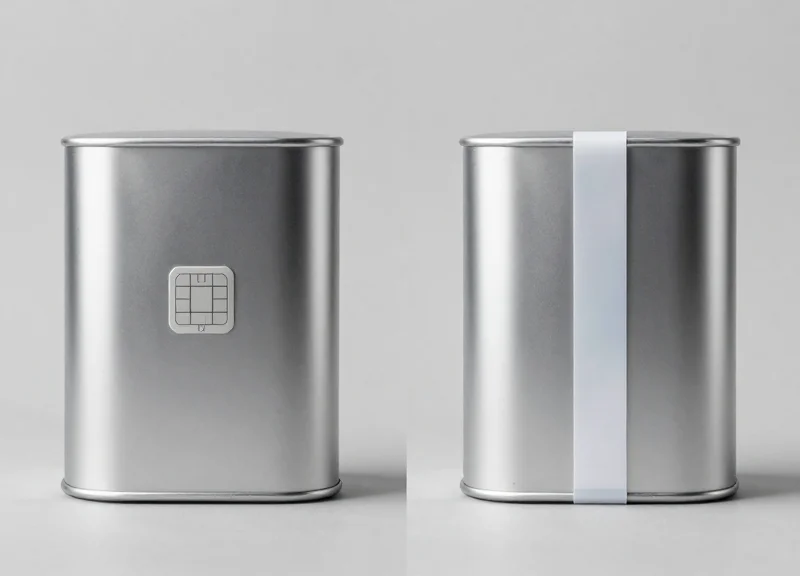
The retail landscape for luxury goods is undergoing a seismic shift. For decades, Electronic Article Surveillance (EAS) was the gold standard for protecting high-end luggage. However, as we look toward 2026, a new era of security is emerging. Driven by the need for real-time data and seamless customer experiences, RFID cloud-based systems are rapidly replacing traditional buzzers. This transition isn't just about stopping theft; it is about intelligent inventory management, global asset visibility, and creating a frictionless environment for high-value customers.
The Evolution of Retail Security: From EAS to RFID
The evolution of retail security represents a fundamental shift from reactive, binary alarms to proactive, data-driven intelligence. Traditional Electronic Article Surveillance (EAS) has dominated the market for decades, relying on simple 'on/off' signals to trigger an alarm at the storefront. However, as we approach 2026, the luxury luggage industry is rapidly abandoning these legacy systems in favor of Radio Frequency Identification (RFID). Unlike EAS, which only indicates that something is crossing a threshold, RFID provides unique item-level identification and real-time cloud connectivity, allowing retailers to track individual high-value assets across the entire global supply chain while eliminating the 'nuisance alarms' that dilute the premium customer experience.
| Feature | Traditional EAS (Legacy) | 2026 RFID Cloud Systems |
|---|---|---|
| Detection Level | Binary (Alarm/No Alarm) | Granular (Item SKU, Color, Serial Number) |
| Data Integration | None (Offline) | Real-time Cloud Sync & Analytics |
| Inventory Visibility | Manual Audits Required | 99.8% Automated Accuracy |
| Primary Role | Theft Deterrence Only | Loss Prevention + Inventory Management |
| False Alarm Rate | High (Tag Pollution) | Negligible (Serialized Validation) |
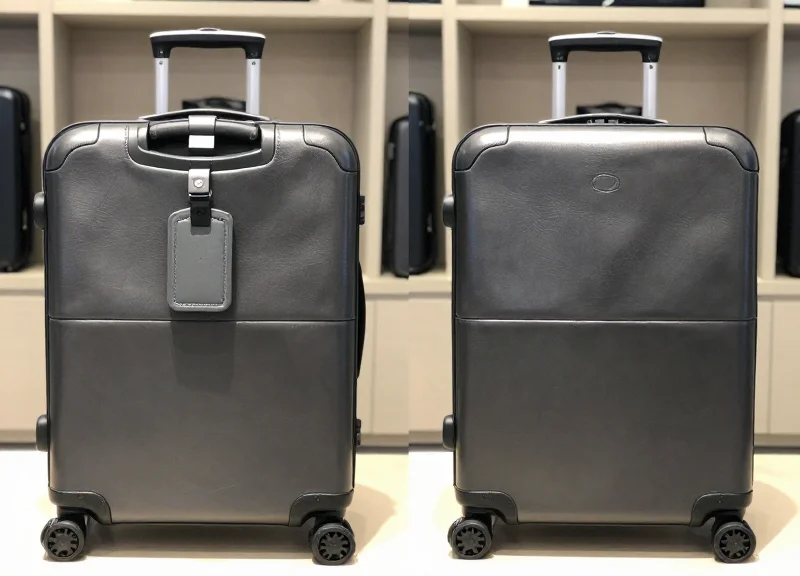
In the high-end luggage sector, the shift to RFID is driven by the physical nature of the product. Premium suitcases are significant investments, often featuring metallic components or complex internal structures that interfere with traditional acoustic-magnetic (AM) or radio-frequency (RF) EAS signals. RFID tags, particularly when integrated into the luggage lining or hardware during manufacturing, offer a discreet yet powerful security layer that doesn't compromise the aesthetic integrity of the product—a critical requirement for Silicon Valley's luxury flagship stores and global boutiques.
Why is EAS failing the modern luxury retailer?
EAS is a blind system. It cannot distinguish between a $5,000 trunk and a $50 accessory, nor can it tell a manager if a missing item was sold, misplaced in the backroom, or stolen. This lack of data creates 'Shadow Inventory'—stock that appears available but is physically missing.
How does RFID improve the 'Customer Journey'?
Traditional security gates create a 'fortress' atmosphere. RFID allows for 'invisible' security where sensors are embedded in ceilings or floors, removing the clunky pedestals and allowing the luxury aesthetic to remain front and center.
What is the role of the Cloud in 2026 security?
Cloud-based RFID systems aggregate data from multiple stores. If a specific luggage model is frequently targeted by organized retail crime (ORC) across different cities, the system identifies the pattern instantly, alerting loss prevention teams globally.
Expert Insight: The 'Ghost SKU' Phenomenon. In my 20 years of retail tech consulting, I have seen 'Ghost SKUs'—items that exist on the digital ledger but are physically absent—cost luxury brands up to 4% in annual revenue. The transition to RFID is not just a security upgrade; it is an accounting revolution. By 2026, the most successful brands will treat their security tags as 'data nodes.' This means a security event at the door doesn't just trigger a siren; it triggers an automatic inventory reconciliation, a re-order from the warehouse, and a notification to the regional security analyst, effectively turning a loss into an actionable data point.
The Limitations of Traditional EAS in Luxury Environments
Traditional Electronic Article Surveillance (EAS) systems—the ubiquitous plastic pedestals at shop entrances—are increasingly obsolete in high-end luggage retail. These systems function on a binary logic: a tag is either 'active' or 'deactivated.' While effective for low-margin fast fashion, EAS fails the luxury sector because it provides zero data on which specific item triggered an alarm, offers no visibility into inventory location within the store, and creates a hostile environment for high-net-worth clients who value discretion over loud, audible deterrents.
| Feature | Legacy EAS (AM/RF) | Luxury Market Requirement |
|---|---|---|
| Detection Granularity | Binary (Tag present/not present) | Item-level (SKU, Color, Serial Number) |
| Customer Experience | Disruptive audible alarms | Silent alerts to staff mobile devices |
| Data Integration | Standalone / Siloed | Cloud-synced with CRM and ERP |
| False Alarm Rate | High (Interference from electronics) | Near-zero through digital verification |
Beyond the technical shortcomings, there is the issue of 'Atmospheric Degradation.' In a boutique where a single piece of luggage can cost upwards of $5,000, the psychological impact of a false alarm—often triggered by 'tag pollution' from other stores—can permanently damage brand loyalty. Furthermore, professional thieves have mastered shielding techniques (such as foil-lined bags) that bypass traditional EAS frequencies entirely, making these systems more of a nuisance to legitimate customers than a barrier to sophisticated criminals.
What is 'Tag Pollution' and how does it hurt luxury sales?
Tag pollution occurs when a customer enters a store carrying an active tag from a previous purchase elsewhere. In luxury environments, this creates an embarrassing 'false positive' alarm that interrupts the concierge-style service and creates immediate friction.
Can legacy EAS systems track 'Sweethearting' or internal theft?
No. Traditional EAS only alerts at the exit gate. It cannot detect if an item is moved to an unauthorized area of the backroom or if a staff member fails to scan an item during a transaction, whereas 2026-standard RFID systems track the entire lifecycle of the product.
Why is the physical footprint of EAS a problem for high-end design?
Luxury luggage brands invest millions in store aesthetics. Bulky EAS pedestals often clash with minimalist or heritage-focused interior designs, whereas modern cloud-based RFID sensors can be hidden in ceilings or door frames.
Unique Industry Insight: The 'Invisible Shrink' phenomenon is the most dangerous limitation of EAS. Because EAS does not update your inventory management system in real-time, a luxury store may not realize a high-value suitcase is missing for weeks—until the next physical cycle count. This delay prevents security teams from reviewing CCTV footage in a timely manner, effectively granting shoplifters a 'getaway window' that modern cloud-based systems have successfully closed.
What Defines 2026 RFID Cloud-Based Systems?

A 2026 RFID Cloud-Based System is a decentralized security infrastructure where ultra-high-frequency (UHF) tags are permanently serialized and synchronized with a global cloud database in real-time. Unlike traditional security that relies on local gate alarms, these systems utilize a mesh of 'edge' readers and cloud-native software to track the precise identity, location, and status of high-end luggage throughout its entire retail lifecycle. This shift moves loss prevention from a reactive 'alarm at the door' model to a proactive, data-driven 'item-level custody' model.
| Feature | Legacy RFID (Pre-2024) | 2026 Cloud-Based Systems |
|---|---|---|
| Data Architecture | Local Server / On-Premise | Cloud-Native / SaaS |
| Tracking Granularity | Periodic Inventory Checks | Real-Time Movement Stream |
| Security Protocol | Clear-Text UID | Encrypted Digital Signature |
| System Response | Audible Alarm Only | Push Alerts & Instant Inventory Reconciliation |
- Interconnected Smart Tags: Tags now utilize 'Dynamic DNA' encoding, making them impossible to clone or spoof, ensuring that every premium suitcase has a unique, unalterable digital identity.
- Edge-to-Cloud Synchronization: Local readers process movement data at the 'edge' to filter noise, sending only relevant security events to the cloud for millisecond-latency alerts.
- Omnichannel Custody: Security follows the item beyond the store, allowing for authenticated returns and secondary market verification via the same cloud-based serial ID.
The Expert Perspective: The 'Digital Twin' Transition. A unique hallmark of 2026 systems is the creation of a 'Security Digital Twin' for every piece of luggage. This isn't just a serial number; it is a live ledger entry that records every time an item is moved from a backroom to a display shelf, or from a shelf to a fitting area. In the high-end luggage sector, this prevents 'sweethearting' and internal shrink by ensuring that no item can leave the ecosystem without a cloud-validated transaction, effectively making traditional EAS gates an optional backup rather than a primary defense.
Does a cloud-based system cause lag in security alerts?
No. By utilizing 5G-enabled edge computing, the local reader triggers the alert instantly while simultaneously updating the cloud ledger for administrative tracking.
What happens if the store's internet goes down?
2026 systems are designed with 'Offline-First' architecture, caching all movement data locally and syncing to the cloud the moment connectivity is restored, ensuring no security gaps.
Can these systems integrate with existing CCTV?
Yes. Most cloud-based RFID platforms now feature native APIs that automatically 'bookmark' video feeds when a tag moves into an unauthorized zone, providing visual evidence of theft instantly.
Intelligent Loss Prevention: Moving Beyond the 'Beep'
Intelligent loss prevention represents a fundamental shift from reactive, noise-based security to proactive, data-driven asset protection. Unlike traditional Electronic Article Surveillance (EAS) which merely triggers a generic alarm when any tag passes a gate, 2026 RFID cloud-based systems provide granular visibility into the 'what,' 'where,' and 'when' of inventory movement. By assigning a unique digital identity to every piece of high-end luggage, these systems allow retailers to distinguish between a customer moving a suitcase to a dressing room and a legitimate security threat, virtually eliminating the embarrassing 'false positives' that degrade the luxury shopping experience.
| Feature | Traditional EAS (The 'Beep') | 2026 Cloud-Based RFID |
|---|---|---|
| Identification | Binary (Tag present/absent) | Item-level (SKU, Color, Serial Number) |
| Location Awareness | Exit point only | Real-time store-wide trilateration |
| Accuracy | High false-alarm rate | 99.9% precision via cloud verification |
| Staff Response | Blind intervention | Informed action via mobile/wearable alerts |
The transition to 'Intelligent' prevention is driven by the Cloud's ability to process spatial telemetry. In a 2026 retail environment, the luggage doesn't just trigger an alarm at the door; the system tracks its velocity and trajectory toward the exit. If a $4,000 aluminum carry-on moves toward the door without a corresponding 'sold' status in the POS cloud, the system triggers a silent alert to floor staff long before the item reaches the sidewalk.
- Digital Twin Synchronization: Every physical suitcase is linked to a cloud-based digital twin that updates its status (Stock, Floor, Reserved, Sold) in milliseconds.
- Geofencing & Zone Logic: Retailers define 'High-Risk Zones' (e.g., near exits or loading docks) where the system increases polling frequency for high-value assets.
- Automated POS Reconciliation: The cloud system automatically clears an item for exit the moment the transaction is finalized, removing the need for physical tag detachers.
How does the system handle high-density crowds?
2026 RFID readers utilize advanced anti-collision algorithms and beam-forming technology to isolate and identify hundreds of tags per second, ensuring no item is 'hidden' in a crowd.
Does this replace security guards?
It augments them. Instead of standing at a door, security personnel become 'Intelligence Officers' who receive specific data—such as 'Black Onyx Trunk moving toward North Exit'—allowing for discreet, informed interventions.
What is the 'Two-Second Verification Loop'?
This is a unique 2026 protocol where the cloud performs a final check against the global sales ledger the instant an item nears a sensor, preventing 'alarm fatigue' caused by hardware glitches or human error.
Expert Tip: To maximize ROI, leverage your security data for 'Ghost Inventory' detection. By moving beyond the beep, you aren't just stopping theft; you are identifying exactly which items have been misplaced in backrooms or fitting areas, effectively turning your loss prevention system into a real-time inventory auditor.
The Data Advantage: Inventory Visibility and Analytics

By 2026, the primary differentiator in luxury retail will not be the security gate at the door, but the granularity of the data behind it. While traditional EAS provides a binary 'yes/no' alert, cloud-based RFID systems offer a continuous data stream that elevates inventory accuracy from a typical 65-70% to a precision-grade 99%. For high-end luggage retailers, this means every polycarbonate suitcase and leather weekend bag is accounted for in real-time, allowing the security infrastructure to double as a sophisticated business intelligence tool that eliminates 'blind spots' in the supply chain.
| Feature | Legacy EAS Systems | 2026 RFID Cloud Systems |
|---|---|---|
| Inventory Accuracy | Approx. 65% (Cycle count dependent) | 99%+ (Real-time automated) |
| Item Granularity | Category level (A tag is a tag) | Serialized (Unique ID per SKU) |
| Shrinkage Insight | Known loss only after audit | Instant identification of missing items |
| Replenishment | Reactive / Manual | Predictive / Automated via Cloud |
The true 'Silicon Valley' advantage in these systems lies in Predictive Stock Replenishment. In the high-end luggage sector, where floor space is premium and SKU variety is high, 'Out-of-Stock' (OOS) events are silent killers of revenue. Cloud-integrated RFID sensors track when a specific model—say, a limited-edition cabin carry-on—leaves the floor, whether via sale or theft. The system immediately cross-references this with warehouse stock and triggers a replenishment order automatically. This ensures the 'Last-Mile' of the customer journey is never compromised by an empty shelf, effectively turning your security investment into an inventory optimization engine.
How does RFID data reduce 'Phantom Stock'?
Phantom stock occurs when systems show an item is available, but it is actually missing or misplaced. RFID cloud systems perform continuous digital 'handshakes' with every item, flagging discrepancies immediately so retailers don't lose sales based on false data.
Can this data be integrated with existing ERP systems?
Yes. Modern 2026 platforms use RESTful APIs to feed real-time inventory levels directly into SAP, Oracle, or Microsoft Dynamics, ensuring that online availability matches physical store reality for omnichannel 'Buy Online, Pick Up In-Store' (BOPIS) accuracy.
Does the data help in identifying organized retail crime (ORC)?
Absolutely. By analyzing patterns of 'bulk movement'—where multiple units of a specific high-value SKU leave the shelf simultaneously—the analytics engine can trigger proactive alerts to security before the items even reach the exit.
Expert Insight: One of the most overlooked benefits of the 2026 RFID transition is 'Location Intelligence.' Unlike EAS, which only knows if an item is inside or outside, cloud-based RFID triangulates the movement of products within the store. This allows retailers to generate heat maps of product interaction. If a specific premium suitcase is frequently moved from its display but rarely sold, the data suggests a mismatch in pricing or floor placement, rather than a security flaw. This is 'Data Alchemy'—turning security pings into actionable merchandising insights that traditional loss prevention could never capture.
Enhancing the Customer Experience for High-End Shoppers

For the high-end shopper, luxury is defined as much by the environment as it is by the product. Traditional Electronic Article Surveillance (EAS) systems—characterized by bulky pedestals at store entrances and loud, jarring alarms—create an inherent friction that contradicts the ethos of a premium boutique. By shifting to 2026-standard RFID cloud-based systems, retailers can eliminate these physical and psychological barriers. These systems operate via overhead sensors and discreet localized antennas, allowing for an open-concept store layout that prioritizes aesthetic flow and customer dignity, effectively removing the 'security gate' bottleneck that often makes legitimate buyers feel like suspects.
| Customer Touchpoint | Traditional EAS Experience | 2026 RFID Cloud Experience |
|---|---|---|
| Store Entry/Exit | Narrowed by visible security pedestals; intimidating. | Open, unobstructed floor plans; welcoming and airy. |
| Staff Interaction | Interrupted by manual tag removal and deactivation. | Seamless; staff focus purely on the client relationship. |
| False Alarms | Publicly embarrassing; creates brand friction. | Near-zero; alerts are sent silently to staff mobile devices. |
| Checkout Speed | Slower; individual items must be scanned and detatched. | Instant; entire bags are read at once for rapid payment. |
One unique insight from the Silicon Valley retail-tech perspective is the concept of the 'Invisible Concierge.' In a cloud-integrated RFID environment, security data is not just a defensive tool; it is a proactive service trigger. When an RFID-tagged luxury luggage piece is moved toward an exit without a corresponding 'sold' status in the cloud, the system doesn't trigger a loud siren. Instead, it sends a high-priority notification to a sales associate's smartwatch. This allows the staff to approach the customer with a helpful 'May I assist you with that?' rather than a confrontational 'Stop.' This subtle shift preserves the customer's ego and the brand’s prestige, even in loss prevention scenarios.
How do invisible systems affect the 'fear of theft' for staff?
Invisible systems actually empower staff. Because the cloud provides real-time location data, associates can monitor high-value items via tablets without hovering over customers, creating a more relaxed but highly secure sales floor.
Does the lack of visible gates encourage shoplifting?
On the contrary, the 2026 RFID systems use 'intelligent surveillance' which tracks item movement patterns. Shoplifters find it harder to predict or circumvent invisible sensors than static, visible pedestals.
How does RFID improve the 'VIP' white-glove service?
RFID can identify specific products being tried on or looked at, allowing associates to pull up digital catalogs or complementary accessories instantly, personalizing the shopping journey to an unprecedented degree.
Ultimately, the transition to cloud-based RFID is an investment in 'Frictionless Luxury.' By removing the clunky hardware of the past, retailers allow the craftsmanship of high-end luggage to take center stage. This technological evolution ensures that the final memory a customer has of their purchase is the quality of the service, not the 'beep' of an alarm at the door.
Integrating Security with ESL and Omnichannel Retail

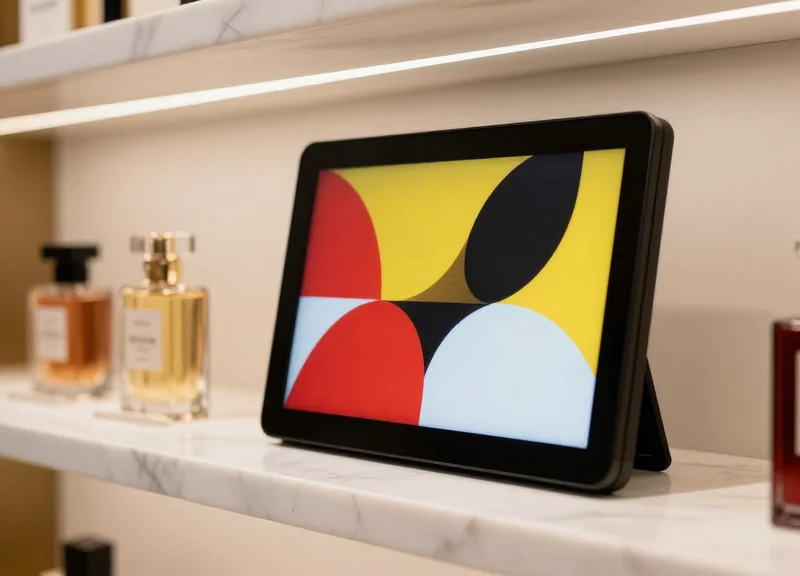
The integration of security with Electronic Shelf Labels (ESL) and omnichannel retail platforms transforms loss prevention from a reactive expense into a proactive data asset. By synchronizing 2026 RFID cloud-based systems with digital price tags, luxury retailers can verify that the specific high-end suitcase on a shelf matches its digital price, stock status, and security clearance in real-time. This unified ecosystem eliminates the gap between the physical product and its digital twin, ensuring that security alerts are triggered not just by unauthorized movement, but by data discrepancies across the sales floor and online inventory.
| Feature | Traditional Siloed Retail | 2026 Integrated RFID/ESL Ecosystem |
|---|---|---|
| Price Sync | Manual updates; high risk of tag switching. | Automatic sync between ESL, RFID, and Cloud. |
| Security Trigger | Hard tag removal or gate crossing. | Anomaly detection (e.g., item moved during price update). |
| Omnichannel Accuracy | Delayed stock updates; 70-80% accuracy. | Real-time visibility; 99% accuracy for BOPIS/SFS. |
| Customer Experience | Cluttered shelves with bulky security tags. | Sleek, invisible protection integrated with ESL aesthetics. |
In the 2026 landscape, the Electronic Shelf Label acts as more than a price display; it serves as a localized communication hub. When an RFID-tagged luxury bag is lifted, the nearest ESL can trigger localized security protocols or provide personalized content to the shopper. This synergy allows for 'Buy Online, Pick Up In-Store' (BOPIS) orders to be fulfilled with surgical precision, as the system knows exactly which unit is staged for pickup and ensures it is never flagged as a loss event during the handover process.
- Unified Data Stream: Consolidate RFID security pings and ESL price updates into a single cloud dashboard for total floor awareness.
- Contextual Security Alerts: Configure the system to ignore movement during authorized inventory reshuffling or online order picking.
- Dynamic Protection: Automatically increase security sensitivity on high-value items when the ESL indicates a recent price drop or high-demand status.
Expert Insight: The 'Halo Effect' of Integrated Systems. Silicon Valley retailers have discovered that by using ESLs to display 'Last 2 in Stock'—data pulled directly from the RFID cloud—they drive a 15% increase in conversion while simultaneously alerting staff to high-risk theft windows. This 'Halo Effect' leverages security data to drive sales, turning a loss prevention tool into a revenue generator.
Does ESL integration complicate security?
On the contrary, it simplifies it by providing a second layer of verification. The ESL confirms the item's presence and status, reducing the false alarm rate common in standalone EAS systems.
How does this support omnichannel shoppers?
It ensures that if a customer buys the last suitcase online, it is instantly 'locked' digitally on the sales floor. If someone tries to remove it before the staff can pick it, the cloud system flags it as an unauthorized removal of a sold item.
Is the hardware investment significantly higher?
While the initial outlay for RFID and ESL is higher than traditional tags, the ROI is realized through reduced labor costs, zero manual pricing errors, and a dramatic decrease in shrink.
ROI Analysis: The Financial Case for RFID Migration
The financial justification for migrating from Electronic Article Surveillance (EAS) to RFID cloud-based systems is no longer just about preventing theft; it is about capital efficiency. While legacy EAS is a sunk cost that provides a binary 'alarm or no alarm' response, 2026-grade RFID systems function as a revenue enablement engine. By automating inventory audits and providing real-time item-level visibility, retailers can expect to see a drastic reduction in Total Cost of Ownership (TCO) through the elimination of manual labor and the mitigation of 'phantom inventory'—a silent killer of luxury retail margins.
| Financial Metric | Legacy EAS Systems | 2026 RFID Cloud Systems | |||
|---|---|---|---|---|---|
| Inventory Labor Costs | High (Manual cycle counts) | Low (90% faster automated scans) | |||
| Shrinkage Reduction | 15-20% (Reactive) | 35-50%+ (Predictive/Real-time) | |||
| Inventory Accuracy | Approx. 65-75% | 99.5%+ | Sales Recovery | N/A | High (Reduces out-of-stock events) |
Expert Insight: The 'Velocity of Recovery' Perspective. In the Silicon Valley retail-tech ecosystem, we look at the 'Velocity of Recovery.' High-end luggage has a high per-unit carrying cost. When an item is stolen or misplaced in an EAS environment, it typically takes 30-90 days to realize the loss during a manual audit. With a cloud-based RFID system, that loss is identified within minutes. This allows for immediate insurance claims, stock replenishment, and police reporting, effectively compressing the capital recovery cycle from months to hours.
- Direct Labor Savings: Automating the check-in and inventory process reduces the 'man-hours' required for stock management by up to 80%, allowing staff to focus on high-touch sales.
- Omnichannel Fulfillment Efficiency: Accurate cloud data prevents 'canceled orders' in Buy Online Pick Up In-Store (BOPIS) models, which currently cost luxury retailers millions in lost reputation and shipping overhead.
- Hardware Consolidation: Cloud-based systems eliminate the need for expensive on-site servers and specialized maintenance teams, shifting expenses from unpredictable CapEx to stable, scalable OpEx.
Is the initial investment significantly higher than EAS?
While the upfront cost of tags and readers is higher, the integration with cloud architecture reduces the need for local IT infrastructure. Most brands see the 'break-even' point at 14 months due to labor reallocation.
How does RFID affect insurance premiums for luxury goods?
Many enterprise-level insurers are beginning to offer 'smart-store' discounts for retailers using item-level cloud tracking, as it significantly lowers the risk of untraceable bulk theft.
Can RFID tags be reused to save costs?
For high-end luggage, most brands use 'hard tags' that are removed at point-of-sale and recycled, bringing the per-transaction cost down to near-zero over the long term.
Overcoming Implementation Challenges in High-End Retail
Successfully implementing 2026 RFID cloud-based security systems requires a shift from hardware-centric thinking to a software-first approach. High-end retailers must navigate the complexities of signal interference from metallic luggage components, ensure seamless integration with legacy ERP systems, and manage the cultural shift within loss prevention teams. The key is a 'phased migration' strategy that introduces RFID tracking alongside existing EAS systems to validate data accuracy before a full decommissioning of legacy pedestals, ensuring zero operational downtime and maintaining the boutique's aesthetic integrity.
- Signal Audit and Environmental Calibration: Analyze the retail environment for 'dead zones' caused by high-density metals or architectural glass. High-end luggage often contains aluminum frames that can shield RF signals, requiring the placement of overhead or floor-concealed readers rather than traditional door gates.
- Data Synchronization (API-First Strategy): Connect the cloud-based security platform with your existing Point of Sale (POS) and Warehouse Management System (WMS). This ensures that once a high-value suitcase is sold, its security status is updated in the cloud in real-time, preventing false alarms.
- The 'Parallel Run' Pilot: Deploy RFID tags on a high-risk product category first. Run the cloud system in the background while the old EAS system is still active to compare detection rates and false positive frequency.
- Staff Transition and Training: Move staff roles from 'security monitors' to 'inventory analysts.' Train associates to use handheld RFID readers for rapid stock-takes, which naturally improves security by identifying missing items within minutes rather than weeks.
| Challenge | Legacy EAS Approach | 2026 RFID Cloud Solution |
|---|---|---|
| Signal Interference | Passive resonance; easily blocked by foil-lined bags. | Frequency hopping and specialized 'On-Metal' tags for aluminum frames. |
| Store Aesthetics | Bulky plastic pedestals at every entrance. | Concealed under-floor or ceiling-mounted 'invisible' sensors. |
| Integration | Standalone system with no data output. | RESTful APIs connecting security data to CRM and Omnichannel hubs. |
| Maintenance | On-site technician required for hardware tuning. | Remote diagnostics and over-the-air (OTA) firmware updates. |
Expert Insight: The Metal Shielding Paradox. A common failure in luggage retail is using standard RFID tags on aluminum-rimmed suitcases, which creates a 'Faraday Cage' effect, rendering the tag unreadable. Our 2026 recommendation is the use of 'Rivet-Integrated Tags.' These are security tags physically built into the suitcase's hardware during manufacturing. This ensures the tag is positioned optimally for signal bounce off the metal frame, turning a potential interference problem into a signal-strengthening advantage.
How do we handle customer privacy with cloud-based tags?
Modern systems utilize 'Kill-Command' or 'De-listing' protocols. Once a luggage item is purchased, the cloud ID is dissociated from the security database, ensuring the tag is dormant and cannot be tracked once it leaves the retail ecosystem.
Is the cost of retrofitting existing stock prohibitive?
While manual tagging of current inventory has a labor cost, the 99% reduction in manual cycle-count time typically yields a full ROI within 12 to 18 months.
Will 5G or Wi-Fi interference affect the cloud sensors?
No. 2026 systems operate on dedicated UHF bands (860-960 MHz) and use sophisticated digital filtering to ensure that store-wide Wi-Fi or 5G networks do not cause false alarms.