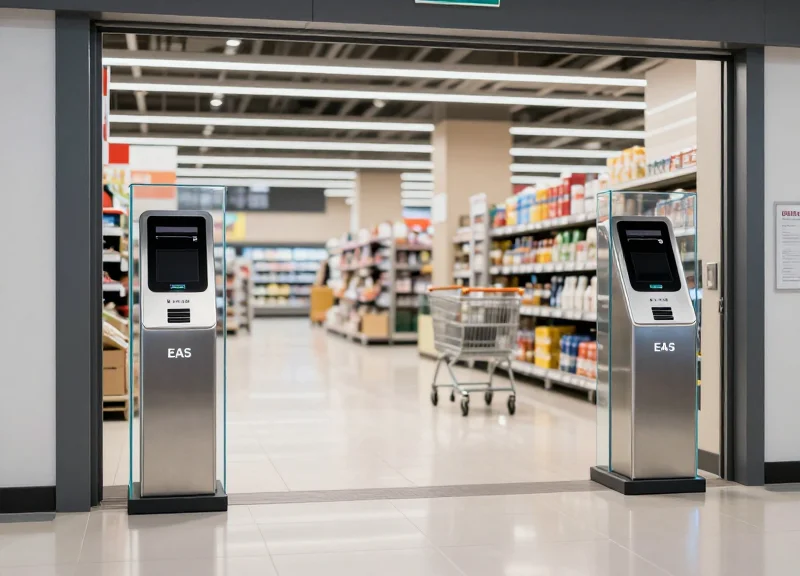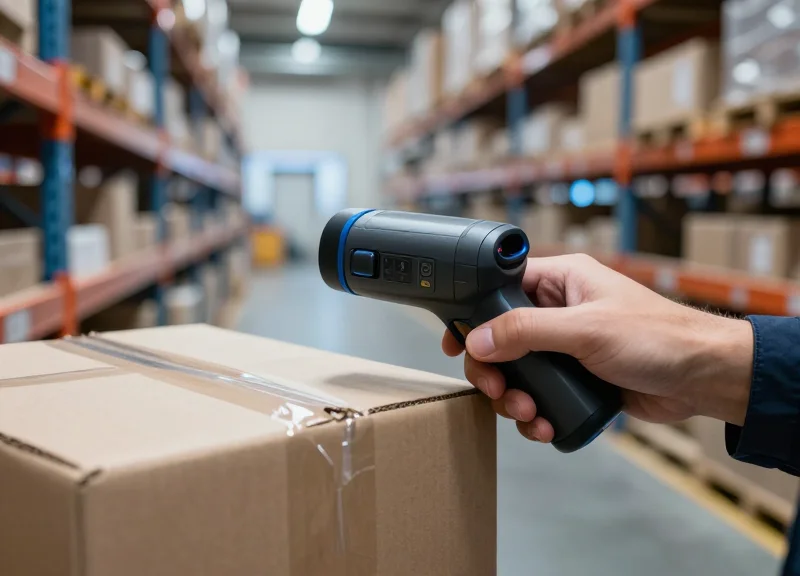
As we head toward 2026, the global shift toward a circular economy has evolved from a corporate sustainability goal into a critical operational mandate. While traditional barcoding has served the industry for decades, the complex demands of asset recovery—tracking, sanitizing, and redistributing reusable assets—are exposing its inherent limitations. Radio Frequency Identification (RFID) is emerging as the essential technological backbone, offering the automation and real-time visibility required to close the loop in modern supply chains. This article explores why forward-thinking enterprises are transitioning to RFID to drive superior efficiency and environmental compliance.
The Strategic Shift: From Linear to Circular Supply Chains by 2026

By 2026, the traditional linear supply chain—defined by the 'take-make-dispose' model—will be largely obsolete for enterprise organizations. In its place, the circular supply chain focuses on resource loops where products are tracked, recovered, and reintegrated into the production cycle. This shift is not merely an environmental preference but a regulatory requirement, as global mandates like the EU’s Ecodesign for Sustainable Products Regulation (ESPR) demand a level of item-level traceability that traditional logistics systems cannot provide without advanced digital identification technologies.
| Feature | Linear Model (Traditional) | Circular Model (2026 Outlook) |
|---|---|---|
| Material Flow | One-way: Extraction to Landfill | Closed-loop: Recovery and Reuse |
| Data Requirement | Batch-level (Shipment tracking) | Item-level (Unique Digital Twin) |
| Regulatory Pressure | Low/Compliance-based | High/Mandatory Disclosure |
| Primary Technology | 1D/2D Barcoding | RFID & IoT Sensors |
The transition to circularity is fueled by the 'Regulatory Cliff' of 2026. Governments are moving beyond voluntary ESG (Environmental, Social, and Governance) reporting to mandatory Digital Product Passports (DPP). These passports require every product to carry a permanent, accessible record of its origin, material composition, and repair history. While barcodes served the linear era well for simple checkout transactions, they fail in circularity because they require line-of-sight and manual intervention—bottlenecks that make large-scale asset recovery economically unfeasible.
Why is 2026 considered the tipping point for circular supply chains?
2026 marks the implementation deadline for several key global frameworks, including the full rollout of the EU’s Circular Economy Action Plan and intensified SEC climate disclosure rules in the US, making automated asset tracking a fiscal necessity.
What is the primary failure of barcoding in asset recovery?
Barcoding lacks the 'automated bulk-read' capability. In a recovery center processing thousands of returned items, manually scanning each barcode is too slow and error-prone to maintain the margins required for a profitable circular business model.
How does RFID bridge the gap to circularity?
RFID allows for non-line-of-sight identification of hundreds of items simultaneously, providing the high-speed data capture needed to sort, verify, and re-route used assets back into the supply chain at scale.
Expert Insight: The Information Entropy Gap. In twenty years of Silicon Valley supply chain evolution, the biggest hurdle I have seen is what I call 'Information Entropy.' In a linear system, data about a product dies the moment it reaches the consumer. In a circular economy, that data must survive the 'usage phase' to be useful for recovery. RFID is the only cost-effective technology that creates a persistent, serialized digital identity that remains 'alive' even when a product is inside a box, at the bottom of a bin, or deep within a warehouse, effectively defeating information entropy.
The Functional Ceiling: Why Barcoding Fails in Recovery Loops
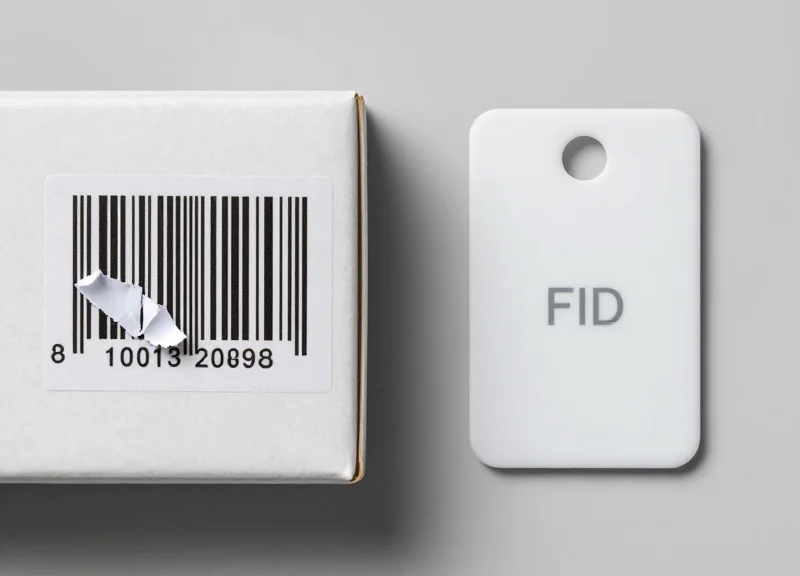
The 'Functional Ceiling' in asset recovery refers to the inherent operational limit where manual scanning efforts and barcode durability issues become more expensive than the value of the asset being recovered. While 1D and 2D barcodes served the linear 'take-make-waste' model effectively, they fail in circular loops because they require an unobstructed line-of-sight, manual intervention for every unit, and are prone to degradation during the aggressive cleaning and sterilization processes essential for reusable packaging and industrial assets.
In a high-velocity circular economy, the primary friction point is 'The Latency Tax'—the hidden cost of human operators physically locating and orienting labels to a scanner. In recovery centers processing thousands of returnable transport items (RTIs) daily, the cumulative seconds lost to manual scanning create a massive bottleneck that RFID eliminates through bulk, non-line-of-sight reading. Furthermore, as we look toward 2026, the data density required for 'Digital Product Passports' (DPPs) exceeds what standard barcodes can reliably provide in harsh industrial environments.
| Feature | Traditional Barcoding | RFID (UHF/RAIN) |
|---|---|---|
| Reading Requirement | Line-of-Sight (One-by-One) | Non-Line-of-Sight (Bulk/Mass) |
| Durability | Surface-level (Easily Scratched) | Embedded/Ruggedized (Protected) |
| Data Updateability | Static (Read-Only Once Printed) | Dynamic (Read/Write Capabilities) |
| Labor Intensity | High (Manual Orientation Required) | Low (Automated Gateways/Portals) |
Why does line-of-sight matter for circularity?
In recovery loops, assets are often returned in bulk, nested, or soiled. Barcodes require an operator to physically handle each item to find the label, whereas RFID can read hundreds of nested crates simultaneously from a distance, drastically reducing sorting time.
What is the 'Label Decay' problem in reuse cycles?
Circular assets often undergo high-heat washing or chemical sterilization. Standard adhesive barcodes peel or fade after 3-5 cycles, requiring costly re-labeling. Industrial RFID tags are designed to withstand hundreds of wash cycles without data loss.
How does barcoding limit real-time inventory visibility?
Because barcode scanning is a point-in-time manual event, there is often a significant delay between an asset arriving at a facility and it being scanned into the system. This 'dark period' leads to inventory inaccuracies that RFID solves with real-time portal tracking.
Expert Insight: From my twenty years in the field, I’ve observed that the 'break-even' point for RFID in circularity isn't just about the cost of the tag; it's about the 'Total Cost of Ownership' (TCO). For any asset intended to cycle more than 20 times, the labor cost of repeated barcode scanning and the risk of lost assets due to unreadable labels will always outweigh the initial investment in a ruggedized RFID solution. By 2026, the scalability of circular models will be defined by their ability to operate 'hands-off,' a milestone barcoding simply cannot achieve.
RFID: The High-Speed Engine of Asset Traceability

Radio Frequency Identification (RFID) serves as the high-speed engine of asset traceability by allowing for the instantaneous identification of hundreds of items simultaneously from a distance of several meters. Unlike traditional barcoding, RFID does not require a direct line-of-sight or individual manual handling. In the context of a circular economy, this means entire pallets of returned electronics, textiles, or industrial components can be processed in seconds rather than hours, providing the throughput necessary to make large-scale asset recovery financially viable by 2026.
| Feature | Legacy Barcoding | UHF RFID (2026 Standards) |
|---|---|---|
| Visibility Requirement | Direct Line-of-Sight | Non-Line-of-Sight (Near-Field/Far-Field) |
| Processing Speed | 1 item per 3-5 seconds | Up to 1,000 items per second |
| Scanning Method | Manual Point-and-Click | Automated Bulk/Tunnel Scanning |
| Data Accuracy | Prone to human error/missed tags | 99.9% read rates in optimized zones |
The true power of RFID in recovery loops lies in its 'Bulk Intake' capability. As we approach 2026, the volume of products returning to manufacturers for refurbishment is expected to triple. Barcoding creates a physical bottleneck at the loading dock; workers must unpack, orient, and scan every single item. RFID eliminates this friction. Automated RFID tunnels or overhead gantry readers can capture the unique IDs of every component inside a sealed crate as it moves off the truck. This transition from manual 'stop-and-scan' to 'flow-through' logistics is what allows companies to scale their circularity without a linear increase in labor costs.
How does RFID handle dirty or damaged returns?
Unlike barcode labels that must remain pristine and visible, RFID tags use radio waves that penetrate through dirt, grease, and even non-metallic packaging, ensuring high read rates for assets returning from harsh environments.
Can RFID track components inside a finished product?
Yes, this is known as 'nested traceability.' RFID can identify internal modular components without the need to disassemble the product first, significantly speeding up the initial triage phase of recovery.
What is the expected ROI for RFID in 2026 recovery loops?
Industry benchmarks suggest that by replacing manual barcode scanning with automated RFID intake, facilities see a 70-80% reduction in receiving labor and a 25% improvement in inventory accuracy.
Expert Insight: The 'Hidden Asset' Discovery. A unique advantage of RFID in the circular economy is the ability to perform 'blind audits' on incoming mixed-load shipments. In legacy systems, if a returned item is missing its barcode label, it effectively becomes an 'unidentified flying object' in the warehouse, often ending up in a landfill due to the high cost of manual identification. RFID tags, often embedded into the chassis of the product itself, survive the product lifecycle, ensuring that even 'anonymous' returns are instantly identified and routed to the correct recycling stream.
Enabling the Digital Product Passport (DPP)

The Digital Product Passport (DPP) is a regulatory mechanism that requires products to carry a digital identity containing data on their origin, composition, repairability, and disassembly options. As part of the EU’s Ecodesign for Sustainable Products Regulation (ESPR), the DPP is becoming a mandatory requirement for textiles, electronics, and batteries by 2026. While a simple QR code or barcode can technically link to a web URL, RFID technology provides the only scalable solution for high-volume recovery environments. RFID acts as the physical-to-digital anchor, allowing stakeholders to instantly access an asset's entire history without manual scanning, thereby ensuring that circularity isn't just a theoretical goal but a data-driven reality.
| DPP Requirement | Traditional Barcoding | RFID Technology |
|---|---|---|
| Bulk Data Capture | Inefficient; requires one-by-one manual scanning. | High-speed; hundreds of passports read in seconds. |
| Data Durability | Poor; labels can smudge, tear, or fade over years. | High; tags can be embedded inside the asset. |
| Lifecycle Updating | Static; requires a new label for state changes. | Dynamic; chip memory allows for local data updates. |
| Process Automation | Human-dependent; prone to manual entry errors. | Autonomous; compatible with automated sortation. |
To truly outperform competitors in the 2026 landscape, businesses must move beyond seeing the DPP as a compliance checkbox and view it as a 'living documentation' strategy. A unique advantage of RFID in this context is its ability to facilitate 'Edge Intelligence.' Unlike barcodes, which are passive pointers to a database, advanced RFID tags can store critical safety or handling instructions directly on the chip's user memory. This ensures that even in remote recycling facilities with intermittent internet connectivity, the asset can 'self-identify' its material composition and hazard levels, preventing cross-contamination in the recovery stream—a feat impossible with standard optical identifiers.
Why is the DPP specifically targeting 2026 for implementation?
The 2026 timeline aligns with the EU's Circular Economy Action Plan, which aims to reduce waste by ensuring that product information is available throughout the entire value chain to support repair and recycling.
Can RFID work with existing DPP software platforms?
Yes, RFID functions as the data carrier layer. Standardized protocols like EPCIS 2.0 allow RFID hardware to seamlessly feed real-time event data into DPP cloud architectures.
What happens if an RFID tag is damaged during the product's life?
Industrial-grade RFID tags are often embedded within the product housing or fabric, making them significantly more resilient than external barcode stickers. If one fails, many systems use a secondary QR code as a 'fallback' backup.
How does RFID improve the 'End-of-Life' stage of the DPP?
At end-of-life, automated recycling sorters use RFID to instantly categorize materials (e.g., separating 100% cotton from polyester blends), which maximizes the value of recovered assets.
Operational Efficiency: Reducing Human Error in Sorting and Cleaning
Operational efficiency in the circular economy hinges on the ability to process returned assets with zero friction. Unlike traditional barcoding, which requires a human operator to locate and scan every single tag—often leading to a 5-10% error rate due to fatigue or obscured labels—RFID-automated gates and workstations allow for 'bulk-intake.' By 2026, the industry standard will shift toward passive ultra-high frequency (UHF) RFID systems that can identify, categorize, and log hundreds of items per second as they pass through sorting tunnels, effectively removing the human element from the point of data entry.
- Automated Intake Tunnels: As assets enter the facility in bulk crates, RFID gates capture 100% of the serial numbers simultaneously, instantly updating the recovery ERP without manual intervention.
- Dynamic Sorting Logic: Software-defined sorting systems use RFID data to instantly route assets to specific refurbishment tracks—cleaning, repair, or recycling—based on their historical usage cycles.
- Survival Through Sanitation: Encapsulated RFID tags withstand the high-temperature industrial dishwashing and chemical sanitization required for circular assets, where paper-based barcodes would disintegrate.
| Feature | Traditional Barcoding | 2026 RFID Outlook |
|---|---|---|
| Scanning Method | Manual, line-of-sight required | Automated, bulk proximity scanning |
| Human Error Risk | High (missed scans, double counting) | Negligible (automated verification) |
| Throughput Speed | 15-30 items per minute | 600+ items per minute |
| Cleaning Durability | Poor (labels peel or fade) | Excellent (wash-proof encapsulation) |
A unique insight for 2026 is the emergence of 'Blind-Cleaning Validation.' In traditional setups, cleaning is a black box—managers assume an item is clean because it went through the machine. With RFID, we can integrate readers directly into the industrial washers. If an asset's tag isn't detected inside the wash cycle for the required duration, the system flags it as 'Unsafe for Reuse,' preventing contaminated assets from re-entering the supply chain—a level of granularity barcodes simply cannot provide.
Can RFID tags survive caustic cleaning chemicals?
Yes. Modern circular economy assets use IP69K-rated RFID tags encapsulated in epoxy or high-grade polymers, designed to withstand thousands of wash cycles and exposure to pH-aggressive detergents.
How does RFID reduce 'Ghost Assets'?
Ghost assets occur when items are lost during sorting. RFID provides real-time 'last-seen' location data, ensuring that every item checked into a facility is accounted for through every stage of refurbishment.
Does this require a complete facility overhaul?
Not necessarily. Most facilities implement 'Edge Gates' at entry and exit points first, then incrementally add RFID-enabled workstations to minimize upfront CAPEX while scaling ROI.
The ROI of Durability: Why RFID Tags Outlast Barcode Labels
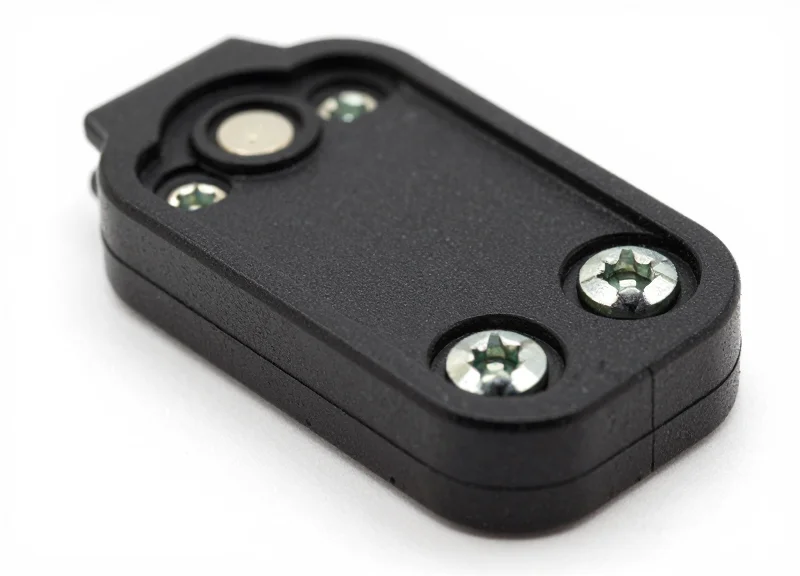
The fundamental difference in ROI between RFID and barcodes in asset recovery lies in the 'Cost per Use Cycle.' While a standard thermal barcode label may cost fractions of a cent, its fragile physical nature means it often fails after a single journey through a cleaning, shipping, or refurbishment cycle. In contrast, ruggedized RFID tags—specifically those encapsulated in high-impact polymers or integrated into the asset's chassis—are designed to survive 5 to 10 years of industrial abuse. By 2026, organizations focusing on circularity will prioritize the 'Survivability Threshold,' where the initial higher investment in RFID pays for itself by eliminating the constant labor and material waste associated with barcode replacement.
| Metric | Traditional Barcode Label | Ruggedized RFID Tag |
|---|---|---|
| Unit Cost (High Volume) | $0.01 - $0.05 | $0.40 - $1.20 |
| Lifespan (Cycles) | 1 - 3 (High Failure Rate) | 100 - 500+ |
| Replacement Labor Cost | High (Manual peeling/reprinting) | Negligible (Rare failures) |
| Failure Mode | Scratches, smudging, peeling | Physical destruction only |
| TCO (Over 100 Cycles) | $15.00 - $25.00 (Includes labor) | $0.80 - $1.50 |
A critical, often overlooked factor is the 'Label Attrition Tax.' When a barcode becomes unreadable due to abrasion or chemical exposure during asset cleaning, the recovery loop grinds to a halt. A human operator must manually identify the item, look up its record, and print a new label. This manual intervention can cost between $2.00 and $5.00 per occurrence in labor and overhead. RFID eliminates this friction; because the data is stored on a chip rather than as ink on a surface, the 'line-of-read' remains intact even if the tag is covered in grease, paint, or surface-level scratches.
- Environmental Resilience: Rugged RFID tags are often rated IP68 or higher, meaning they can withstand high-pressure steam cleaning and chemical baths common in reusable packaging loops that would destroy paper or synthetic barcodes.
- Data Integrity and Non-Volatile Memory: Unlike a barcode that only points to a database, RFID chips can store historical maintenance data locally, ensuring the asset's 'identity' is accessible even if the central network is temporarily unavailable.
- Sustainability Impact: Replacing thousands of disposable labels creates a significant waste stream. A single permanent RFID tag reduces the environmental footprint of the tracking system itself, aligning with the core goals of the circular economy.
Expert Insight: In my two decades of observing supply chain shifts, the most successful circular models look beyond the Bill of Materials (BOM) for the tag itself. They focus on the 'Systemic Uptime.' If your automated sorting gate has a 5% barcode read failure rate due to tag damage, you haven't saved money on cheap labels; you've effectively throttled your entire recovery facility's throughput by 5%.
Data-Driven Decision Making: Real-Time Inventory Accuracy
Real-time inventory accuracy via RFID is the practice of maintaining 99%+ visibility into asset locations and statuses without human intervention. In a circular economy, this data eliminates the 'visibility gap' found in traditional barcoding—where assets effectively 'disappear' between scans—allowing companies to shift from reactive buffer management to proactive, lean asset recovery. By capturing granular movement data, organizations can precisely forecast return cycles and drastically reduce the capital tied up in redundant safety stock.
| Metric | Traditional Barcoding (Reactive) | RFID-Enabled Circularity (Proactive) |
|---|---|---|
| Inventory Accuracy | 65% - 80% (Manual errors common) | 99.5%+ (Automated validation) |
| Safety Stock Levels | High (Buffer for uncertainty) | Minimal (Data-driven lean levels) |
| Asset Velocity Tracking | Snapshot only (Point-in-time) | Continuous (Real-time movement) |
| Forecasting Model | Historical averages | Predictive AI-driven analytics |
The greatest hidden cost in asset recovery is 'Buffer Bloat.' Because traditional barcoding requires manual line-of-sight scans, there is often a multi-day lag between an asset being returned and its availability being updated in the ERP system. To compensate for this 'dark period,' managers over-order new assets to ensure demand is met. RFID eliminates this by providing an instant 'available for refurbishment' status the moment an item passes through an automated gate. My expert tip: Focus on the 'Asset Latency' metric—the time an asset spends idle between use cycles. RFID typically reduces this latency by 30-40%, effectively increasing your existing fleet capacity without purchasing a single new unit.
- Automated Intake Capture: As assets enter the recovery facility, RFID readers log their arrival instantaneously, triggering automatic updates to inventory levels.
- Condition-Based Routing: Data linked to the RFID tag determines if the asset needs cleaning, repair, or immediate re-deployment based on its usage history.
- Predictive Return Modeling: By analyzing the 'dwell time' of assets at customer sites, systems can predict when batches of inventory will return for processing.
- Dynamic Re-Stocking: The system adjusts procurement of new assets in real-time based on the volume of recoverable assets currently in the pipeline.
How does RFID mitigate the 'Bullwhip Effect' in circular systems?
The Bullwhip Effect occurs when small fluctuations in demand cause massive swings in upstream inventory. RFID provides 'One Version of Truth' across the entire loop, preventing the panic-buying of new assets by showing exactly how many units are in the refurbishment pipeline.
Can real-time data improve asset lifespan?
Yes. RFID tracking allows for 'Precision Maintenance.' Instead of servicing assets on a fixed schedule, companies can use real-time data to service items based on actual usage cycles, preventing over-wear and extending the total number of rotations an asset can survive.
Is RFID data integrated into existing ERP/WMS?
Modern RFID middleware acts as a bridge, feeding clean, filtered data directly into systems like SAP or Oracle, ensuring that the financial ledger matches the physical reality of the warehouse floor.
Overcoming the Cost Barrier: The 2026 Market Dynamics
The transition from traditional barcoding to RFID in asset recovery is reaching a critical 'Profitability Pivot' in 2026. While barcodes were historically favored for their near-zero entry cost, they carry a heavy 'Labor Tax'—a recurring expense incurred every time a human operator must find, orient, and scan a label. In contrast, RFID costs have reached a historic low, with passive UHF tags dropping below the $0.04 threshold for high-volume circular loops. When factoring in the 20% increase in global warehouse labor rates projected for 2026, the Total Cost of Ownership (TCO) for RFID-enabled systems is now 15-25% lower than manual barcoding systems over a 36-month asset lifecycle.
| Cost Factor (2026 Projections) | Traditional Barcoding (Manual) | RFID (Automated) |
|---|---|---|
| Initial Tag/Label Cost | $0.005 - $0.02 | $0.04 - $0.12 (Ruggedized) |
| Processing Speed (Items/Hr) | 200 - 400 | 5,000 - 15,000 |
| Data Accuracy | 85% - 94% (Human Error) | 99.5% - 99.9% |
| Labor Cost per 10k Units | $1,800 - $2,500 | $80 - $150 |
| Equipment ROI Period | N/A (Sunk Cost) | 9 - 14 Months |
A unique market driver surfacing in 2026 is the 'Reverse Logistics Subsidy.' Silicon Valley tech leaders are now seeing a trend where the initial cost of the RFID tag is amortized across the product's primary sales life, making the data it provides during the recovery and refurbishment phase essentially 'free.' In a circular economy, this means the expensive hardware cost is absorbed by the retail side of the business, while the recovery side reaps the high-efficiency rewards without the capital expenditure burden.
How does the 'Labor Scarcity' of 2026 impact the RFID vs. Barcode debate?
With labor shortages in logistics persisting, the cost of a barcode scan is no longer just the hourly wage; it is the opportunity cost of having a human do a task that a machine can do 50x faster. RFID allows lean teams to manage massive recovery volumes that would be physically impossible with manual scanning.
Is the infrastructure cost for RFID readers still a barrier for SMEs?
No. The 2026 market has seen the rise of 'RFID-as-a-Service' (RAaaS), where companies pay a monthly fee for readers and software rather than a large upfront CAPEX. Additionally, modern smartphone integration with mid-range RFID readers has reduced the cost of entry by 60% compared to 2020 levels.
Can RFID tags survive the harsh cleaning processes of the circular economy?
Modern high-memory tags are now engineered with IP69K ratings, meaning they can survive high-pressure chemical washes and industrial heat-drying cycles. While a barcode would peel or fade, requiring costly re-labeling, an RFID tag remains functional for the entire multi-year lifecycle of the asset.
Ultimately, the 2026 market dynamics have shifted the conversation from 'Can we afford RFID?' to 'Can we afford the inefficiency of barcodes?' For organizations scaling circular models, the ability to automate the intake of thousands of returned assets simultaneously—without a single manual scan—is the difference between a profitable sustainability initiative and a logistical bottleneck.
Case Study: DragonGuardGroup Solutions in Reusable Packaging
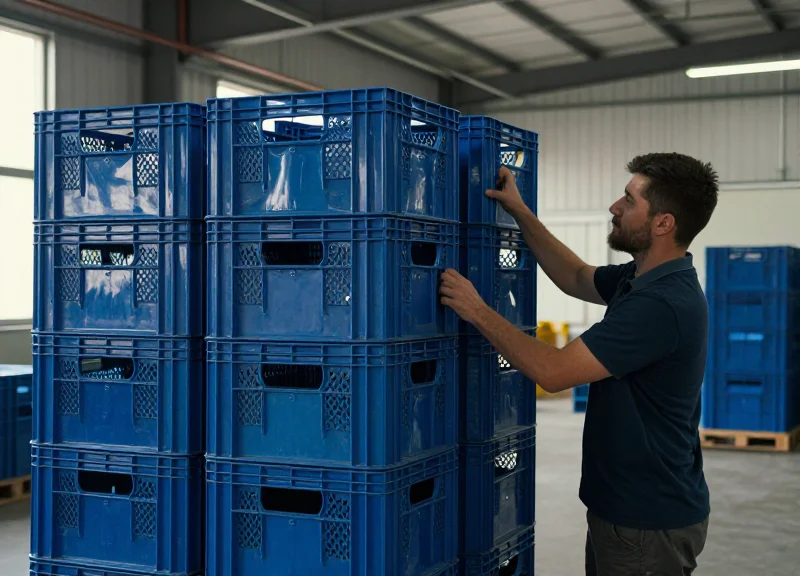
DragonGuardGroup’s implementation of integrated RFID solutions represents a paradigm shift in circular economy logistics, demonstrating that transitioning from manual barcodes to automated RFID can reduce asset loss by up to 95% while increasing operational throughput. By embedding ruggedized UHF RFID tags into reusable transport items (RTIs), organizations gain the ability to identify thousands of items simultaneously without line-of-sight, effectively eliminating the 'leakage' common in traditional returnable packaging programs.
| Metric | Legacy Barcode System | DragonGuardGroup RFID Solution |
|---|---|---|
| Scan Accuracy | 78-82% (Manual Error) | 99.8% (Automated Gates) |
| Processing Time (per pallet) | 5-8 Minutes | Less than 10 Seconds |
| Annual Asset Loss Rate | 12-15% | Less than 1.5% |
| Data Granularity | Last Known Check-point | Real-time Dwell & Cycle Time |
The core challenge for our logistics partner was the 'Black Hole' effect: assets leaving the distribution center and failing to return from retail endpoints. Barcodes were often obscured by shrink-wrap or damaged during transit, leading to incomplete data. DragonGuardGroup deployed a multi-layered hardware approach, including 'On-Metal' rugged tags and high-speed portal readers at bay doors, ensuring every asset was accounted for during departure and arrival without human intervention.
- Phase 1: Asset Tagging: Deployment of high-durability RFID tags designed to withstand high-pressure washing and chemical exposure common in food-grade crate cleaning.
- Phase 2: Infrastructure Integration: Installation of automated RFID tunnels at the entry/exit points of wash-hubs and distribution centers to capture bulk movements.
- Phase 3: Cloud-Based Analytics: Feeding real-time data into a centralized dashboard to track the 'Velocity of Rotation,' identifying bottleneck locations where assets were being hoarded.
Expert Insight: Beyond mere tracking, the unique value of the DragonGuardGroup approach lies in 'Predictive Asset Buffering.' By analyzing the cycle-time data from RFID, our system can predict where demand for reusable crates will surge 72 hours in advance. This allows companies to re-route assets before they are even requested, reducing the carbon footprint associated with emergency expedited shipping—a level of proactive management impossible with passive barcodes.
What was the primary driver for the ROI in this case?
The ROI was driven by the drastic reduction in 'Replacement CapEx.' Because the recovery rate spiked to 98%, the client avoided purchasing 100,000 new plastic crates annually to replace lost ones.
How did RFID handle the harsh cleaning environments?
DragonGuardGroup used encapsulated IP69K-rated tags that survived over 300 cycles of industrial cleaning, whereas barcode labels typically degrade after 5-10 cycles.
Could this scale to global operations?
Yes, by using GS1-compliant EPC Gen2 standards, the data captured at a local warehouse in Asia is instantly compatible with distribution centers in Europe or North America.