
In the hyper-competitive world of global logistics, speed and accuracy are no longer just goals—they are survival requirements. As warehouses reach their physical limits, the bottleneck often lies in manual data capture and pallet movement tracking. Enter the 16-port fixed RFID reader: a powerhouse of industrial automation designed to eliminate dead zones and maximize read rates across multiple dock doors simultaneously. This article explores how scaling your RFID infrastructure with high-density port readers can streamline throughput by up to 45% while delivering a measurable, long-term return on investment (ROI).
The Evolution of Pallet Tracking: From Manual to 16-Port RFID
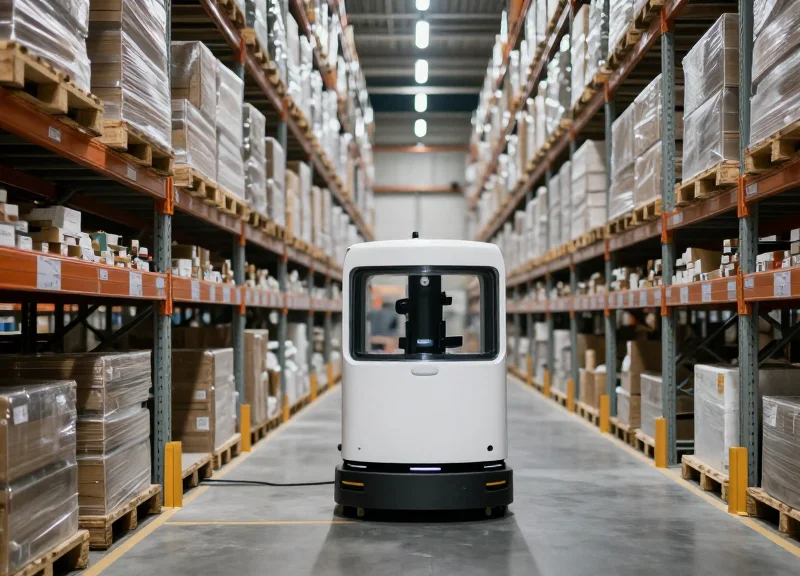
The evolution of pallet tracking represents a strategic shift from reactive, human-dependent data entry to proactive, high-density automated sensing. While manual logs and barcodes once served as industry standards, they created inherent chokepoints in modern high-velocity supply chains. The transition to 16-port fixed RFID readers marks the current pinnacle of this evolution, allowing enterprises to achieve 100% read accuracy on dense, mixed-SKU pallets by utilizing multiple antenna angles from a single IP address, effectively eliminating 'read voids' that previously hindered automated throughput.
| Feature | Manual/Clipboard | Barcode Scanning | Legacy RFID (4-Port) | Next-Gen RFID (16-Port) |
|---|---|---|---|---|
| Read Speed | Minutes per pallet | Seconds per item | Milliseconds | Near-Instantaneous |
| Line of Sight | Required | Strictly Required | Not Required | Not Required |
| Bulk Handling | Impossible | Sequential only | Moderate (Gaps occur) | High (Multi-angle coverage) |
| Data Integrity | High Error Rate | Human Error Prone | 90-95% Accuracy | 99.9%+ Accuracy |
In the early days of logistics, 'tracking' was synonymous with a clipboard and a pen—a process fraught with latency and human error. The introduction of barcodes in the 1970s improved speed but still required a physical line of sight, forcing warehouse staff to slow down or dismantle pallets to ensure every tag was scanned. This 'stop-and-go' workflow is the primary enemy of throughput. While early 4-port RFID systems offered a glimpse into automation, they often suffered from RF shadows—areas where metal or liquids blocked signals—requiring expensive multiple-reader setups to achieve full coverage.
- The 'Shadow Void' Insight: A unique advantage of 16-port configurations is 'Spatial Diversity.' In complex logistics environments, a 4-port system often misses tags hidden in the center of a dense pallet. 16-port readers allow for a 360-degree 'shroud' of RF energy, ensuring that even if one path is blocked, another antenna captures the data, effectively killing the 'Shadow Void' without the cost of 4 separate 4-port reader licenses.
- Why 16-Port is the ROI Sweet Spot: Infrastructure costs are often the silent killer of RFID ROI. By consolidating 16 antennas into one reader, firms save up to 60% on power-over-ethernet (PoE) drops, software licensing fees, and IP management overhead compared to deploying four individual 4-port readers.
- Manual Entry (1950s-1980s): Total reliance on labor; data was often hours or days behind reality.
- Barcode Standardization (1980s-2000s): Improved accuracy but maintained the 'one-at-a-time' scanning bottleneck.
- Early RFID (2000s-2015): Intro of 2-port and 4-port readers; first steps toward hands-free data collection.
- High-Density RFID (2016-Present): The move to 16-port systems, enabling high-speed portal tracking where entire trucks can be inventoried in seconds.
Why 16 Ports? Breaking Down the Technical and Cost Advantages
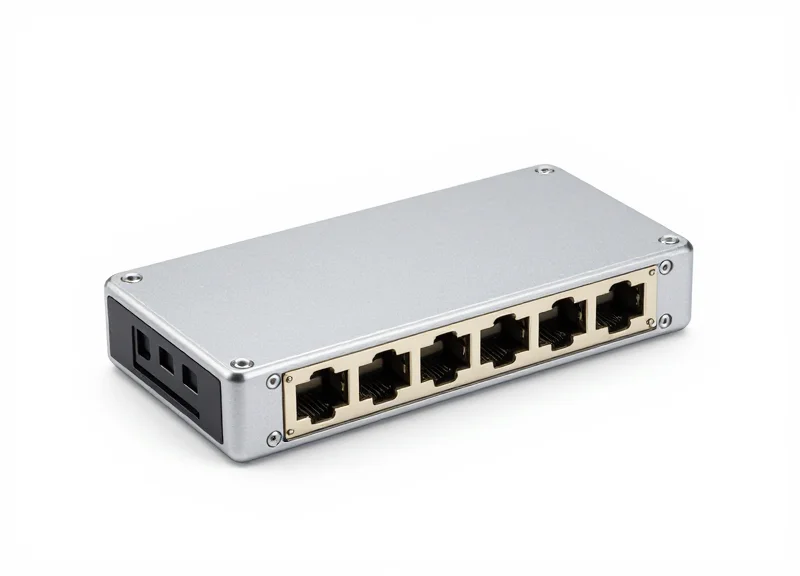
Transitioning to a 16-port fixed reader represents a shift from 'edge-scattered' hardware to 'centralized intelligence.' In high-volume logistics environments, a single 16-port reader replaces the need for four individual 4-port units, serving as a unified hub for up to 16 antennas. This architectural consolidation allows managers to cover four dock doors or a complex multi-lane conveyor system with a single IP address and one power source, significantly lowering the hardware-to-coverage ratio and optimizing the Total Cost of Ownership (TCO).
| Infrastructure Metric | 4 x 4-Port Configuration | 1 x 16-Port Configuration |
|---|---|---|
| Network Requirements | 4 IP Addresses / 4 Ethernet Drops | 1 IP Address / 1 Ethernet Drop |
| Power Supply | 4 PoE+ Injections or Outlets | 1 High-Power PoE++ or DC Input |
| Cabling Complexity | High (4x Home-run cables) | Low (1x Home-run cable) |
| Maintenance Points | 4 Independent Firmware/OS units | Single Unified Management Point |
| Cost per Antenna Port | $250 - $400 (Estimated) | $150 - $220 (Estimated) |
How does 16-port density reduce installation costs?
Labor costs for running electrical and data conduit are often higher than the hardware itself. By requiring only one network drop and one power source, 16-port readers can reduce electrical installation labor by up to 70%.
What are the software licensing advantages?
Many Enterprise Resource Planning (ERP) and Warehouse Management Systems (WMS) charge licensing fees per 'reader device' or IP endpoint. Consolidating 16 antennas into one device can reduce software middleware costs by 75%.
Does a 16-port reader improve data integrity?
Yes. With a single processor handling all 16 streams, data timestamping is perfectly synchronized, preventing the 'ghost reads' or duplicate records often generated when multiple independent readers pick up the same tag.
Expert Insight: The Synchronous Timing Edge. A common but overlooked technical bottleneck in RFID deployments is 'Reader Collision'—where multiple 4-port readers in close proximity interfere with each other's RF signals. A 16-port reader utilizes an internal multiplexer and a single master clock to cycle through antennas with microsecond precision. This inherent synchronization ensures that no two antennas are fighting for the same frequency window, resulting in a 15-20% higher first-pass read rate in high-density pallet zones compared to unsynchronized multi-reader setups.
The 45% Throughput Factor: How High-Density Reading Speeds Up Operations

The 45% throughput factor refers to the measurable surge in logistics velocity achieved when 16-port fixed readers eliminate the 'bottleneck pause' traditional systems require. By utilizing a high-density antenna array, logistics hubs can process pallets moving at speeds of up to 600 feet per minute without sacrificing read accuracy. This allows for a continuous flow of goods through dock doors and conveyor systems, effectively reducing the dwell time of each pallet and increasing the total volume of processed units per shift by nearly half.
In traditional 4-port setups, warehouse operators often face a 'speed vs. accuracy' trade-off. To ensure a 99.9% read rate on a densely packed pallet, conveyor belts must often slow down or stop completely to allow the reader to cycle through different polarization angles. A 16-port reader removes this constraint by providing 'Spatial Redundancy'—multiple antennas hitting the pallet from every conceivable angle (top, bottom, and all four sides) simultaneously. This eliminates the need for mechanical pallet rotators or manual intervention, driving the throughput gains seen in modern automated facilities.
| Metric | Legacy 4-Port System | High-Density 16-Port System | Throughput Impact |
|---|---|---|---|
| Max Conveyor Speed | 150 - 200 fpm | 500 - 650 fpm | 3x Velocity Increase |
| Dock Door Dwell Time | 12-18 Seconds | Less than 3 Seconds | 80% Reduction |
| Read Points per Pallet | Limited (Blind Spots) | Omnidirectional (360°) | Zero Missed Tags |
| Pallets Per Hour (PPH) | ~120 PPH | ~175+ PPH | ~45% Net Gain |
Beyond simple speed, the 16-port configuration addresses the 'Dense Tag Environment' challenge. When a pallet contains hundreds of individual items (e.g., apparel or electronics), a standard reader often suffers from tag collision or signal shadowing. The increased port density allows for more granular power management across the antenna array, ensuring that the reader can 'interrogate' every tag in the stack in a fraction of a second, even as the pallet moves at high velocity through a dock door portal.
- Continuous Motion Inbound: Pallets are offloaded from trailers and move directly through the RFID portal without stopping for a handheld scan or a slow-speed conveyor check.
- Multi-Angle Interrogation: The 16-port array captures data from the leading edge, trailing edge, and core of the pallet simultaneously, mitigating the shielding effects of liquids or metals.
- Real-Time WMS Validation: Data is transmitted and validated against the Warehouse Management System (WMS) instantly, triggering automated sortation gates without human delay.
- Zero-Stop Outbound Load-out: Verified pallets are loaded directly into outbound trailers, with the 16-port system providing a final 'last-look' verification at full walking speed.
Expert Insight: The Zero-Stop Principle. In 20 years of Silicon Valley supply chain optimization, we've found that the most expensive second in logistics is the one where a pallet stops moving. Most articles focus on 'read rates,' but the true ROI of a 16-port system is 'Kinetic Continuity.' By achieving 360-degree coverage, you aren't just reading tags; you are maintaining the kinetic energy of your entire facility. This 'Zero-Stop' workflow is the primary driver of the 45% throughput increase, as it eliminates the micro-delays that aggregate into hours of lost productivity every week.
Maximizing ROI: Lowering TCO through Infrastructure Consolidation
Infrastructure consolidation is the strategic reduction of hardware units to achieve the same operational output, directly lowering the Total Cost of Ownership (TCO) by eliminating redundant power drops, network points, and software licenses. In the context of automated pallet tracking, utilizing a single 16-port reader instead of four 4-port readers allows logistics managers to recapture ROI faster through a 'lean infrastructure' model. This shift moves the focus from the unit price of the hardware to the much larger pool of deployment and maintenance expenses, where the real cost savings are found.
| Infrastructure Component | 4x 4-Port Reader Setup | 1x 16-Port Reader Setup | TCO Impact |
|---|---|---|---|
| IP Addresses | 4 Unique IPs | 1 Unique IP | 75% Reduction in Network Management |
| PoE/Power Drops | 4 Power Runs | 1 Power Run | Significant Electrical/Labor Savings |
| Cabling (Ethernet) | 4 Long-Run Cables | 1 Long-Run + Short Coax | Lower Material & Conduit Costs |
| Software Licensing | Per-Device Fee (x4) | Per-Device Fee (x1) | Substantial OPEX Savings |
Expert Insight: Beyond the obvious material savings, there is a hidden 'Complexity Tax' associated with high-device-count deployments. Every additional IP address in a warehouse represents a potential point of failure, a security vulnerability that must be patched, and a node that requires manual configuration in your MiddleWare or WMS. By consolidating to a 16-port architecture, you aren't just saving on copper and conduit; you are reducing the surface area of your operational risk and the mental load on your IT department.
How does reducing IP addresses impact long-term ROI?
Each IP address requires network monitoring, security whitelisting, and DHCP management. Reducing IPs by 75% via 16-port readers scales down the annual administrative hours required by the IT team, directly improving the long-term ROI of the project.
Is the cost of coaxial cable for 16 ports a concern?
While 16-port readers require more coaxial cable runs to antennas, these are passive components with no software overhead or power requirements. The cost of high-quality LMR-400 cable is negligible compared to the cost of installing additional managed PoE network switches and industrial power outlets.
Does infrastructure consolidation impact system uptime?
Yes, positively. With fewer active electronic components (readers), there are fewer Mean Time Between Failure (MTBF) events at the network layer. It is significantly faster to swap out one 16-port reader in a disaster recovery scenario than to troubleshoot four separate devices across a dock door.
Ultimately, the transition to high-density readers transforms the warehouse from a cluttered network of disconnected sensors into a streamlined data collection hub. This consolidation ensures that the initial capital expenditure (CAPEX) is recovered within months, not years, by slashing the recurring operational expenses (OPEX) that typically plague large-scale RFID deployments.
Eliminating Blind Spots: Achieving 99.9% Read Rates in Dense Environments
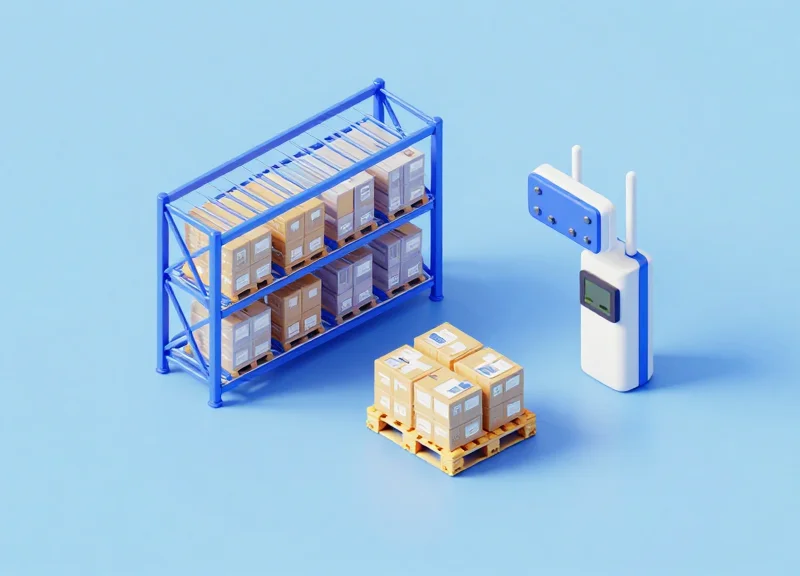
In high-volume logistics, a 99.9% read rate is the gold standard for automated pallet tracking, yet achieving this in 'dense' environments—where metal racking, liquid containers, and packed goods create RF interference—is notoriously difficult. 16-port fixed readers solve this by enabling an 'Antenna Diversity' strategy. Unlike standard 4-port systems that leave significant gaps or 'blind spots,' a 16-port configuration allows for a 360-degree RF interrogation zone. By surrounding a dock door or conveyor portal with 16 synchronized antennas, the system ensures that every tag, regardless of its orientation or location within a pallet, is energized and read, effectively neutralizing the shielding effects of metal and the absorption properties of liquids.
| Environmental Challenge | 4-Port Impact | 16-Port Resolution |
|---|---|---|
| Liquid/Metal Shielding | Signal absorption/reflection causes 15-20% data loss. | Cross-polarized antenna arrays penetrate gaps from 16 angles. |
| Tag Orientation | Poor reads if tags aren't parallel to antennas. | Circular polarization from multiple heights ensures tag capture. |
| Deep Core Pallet Tags | Tags in the center of the pallet remain unread. | High-density port power allows for 'Spatial Multiplexing' to reach the core. |
| RF Shadowing | Large metal objects create dead zones. | Overlapping coverage zones eliminate shadows via port redundancy. |
- Spatial Diversity Mapping: Distribute the 16 antennas across four different heights and three different angles to ensure the RFID signal can find paths through gaps in the cargo.
- Polarization Mixing: Utilize a mix of linear and circular polarized antennas across the ports to catch tags that may have been applied at non-standard angles.
- Power Level Tuning: Adjust the output power per port to manage 'backscatter' interference, ensuring that high-density reading doesn't lead to false positive reads from adjacent lanes.
- Phase-Jitter Analysis: Use the reader's firmware to analyze the phase of the return signal across multiple antennas to triangulate the exact position of the pallet.
Expert Insight: The 'Deep Core' Read Challenge. Many warehouse managers assume that increasing power is the only way to read tags hidden deep inside a pallet of liquid-filled containers. However, the Silicon Valley 'best practice' is not raw power, but 'Angular Reinforcement.' A 16-port reader allows for 'RF Flooding,' where constructive interference—created by multiple antennas firing in a timed sequence—actually boosts the signal strength at the center of the pallet without exceeding regulatory EIRP limits. This specific technique is what differentiates a 99.9% success rate from the typical 92% seen in under-ported legacy systems.
How do 16-port readers handle interference between antennas?
Modern 16-port readers use high-speed switching and Time Division Multiple Access (TDMA) to ensure only one antenna (or a non-interfering pair) is active at any micro-millisecond, preventing signal collisions.
Can I use different types of antennas on one 16-port reader?
Yes, this is a major advantage. You can mix high-gain patch antennas for distance and near-field antennas for precision tracking on the same reader unit.
Does 99.9% accuracy require specialized RFID tags?
While high-quality tags help, the 16-port infrastructure is designed to maximize the performance of standard Gen2 UHF tags by providing more opportunities for the tag to be 'seen' by the reader.
Seamless Integration: Connecting RFID Readers to WMS and ERP

Seamless integration is the process of synchronizing high-density RFID data streams from 16-port readers with a Warehouse Management System (WMS) or Enterprise Resource Planning (ERP) platform to ensure real-time inventory visibility. Unlike standard readers, a 16-port unit acts as a high-traffic data hub; successful integration relies on transforming thousands of raw tag 'pings' into meaningful business events—such as 'Order Shipped' or 'Pallet Received'—at the network edge before they reach the database. This prevents system latency and ensures the 45% throughput gain is reflected in your digital records.
- Edge Filtering via LLRP: Utilize the Low-Level Reader Protocol (LLRP) to filter duplicate reads at the hardware level. This ensures that a pallet sitting near a dock door for 10 minutes doesn't flood the WMS with thousands of identical entries.
- Middleware Orchestration: Implement a middleware layer or an IoT gateway that aggregates data from all 16 antenna ports, correlates them to a single 'read event,' and validates the data against active work orders.
- API Handshaking: Connect the middleware to your WMS/ERP using RESTful APIs or MQTT protocols. MQTT is particularly effective for 16-port setups due to its lightweight 'publish-subscribe' model, which handles high-frequency updates with minimal bandwidth.
- Business Logic Mapping: Map specific antenna ports to physical zones (e.g., Ports 1-4 for Inbound, 5-8 for Staging). This allows the ERP to automatically update inventory locations based on which antenna last 'saw' the tag.
| Integration Method | Best For | Latency Level | Implementation Complexity |
|---|---|---|---|
| Direct API (SDK) | Custom proprietary software | Very Low | High |
| Middleware (Ready-to-use) | Legacy WMS / Rapid Deployment | Low | Medium |
| Cloud-Native Gateway | Multi-site Global Operations | Medium | Low |
Expert Insight: The 'Ghost Read' Buffer. When using 16 antennas, signal bleed is common. My recommendation is to implement a 'Read Threshold Logic' within your integration script. Instead of triggering a WMS update on the first signal, require the reader to verify the tag across at least two adjacent antennas or maintain a signal strength (RSSI) above a specific dBm threshold for 200 milliseconds. This eliminates 'ghost reads' from pallets moving on nearby forklifts, ensuring your automation data is 100% accurate.
{
  "event": "pallet_movement",
  "reader_id": "16P-DOCK-04",
  "timestamp": "2023-10-27T10:15:30Z",
  "epc_hex": "303425000000000000000001",
  "direction": "inbound",
  "antenna_group": [1, 2, 3, 4],
  "rssi_avg": -52
}
Does integration require changing my existing WMS?
No. Most modern 16-port readers support standard protocols that can be translated by middleware into formats your current WMS already accepts, such as CSV, XML, or JSON.
How do 16-port readers handle power outages during data transmission?
Enterprise-grade readers often include on-board memory (buffer) that stores tag reads locally and 'flushes' them to the ERP once the connection is restored, preventing data loss.
What is the biggest bottleneck in RFID-ERP integration?
Database locking. If the ERP isn't optimized for high-frequency writes, the volume of data from a 16-port reader can cause system hang-ups. Always use an asynchronous message queue.
Industrial Durability: Selecting Hardware for Harsh Logistics Hubs
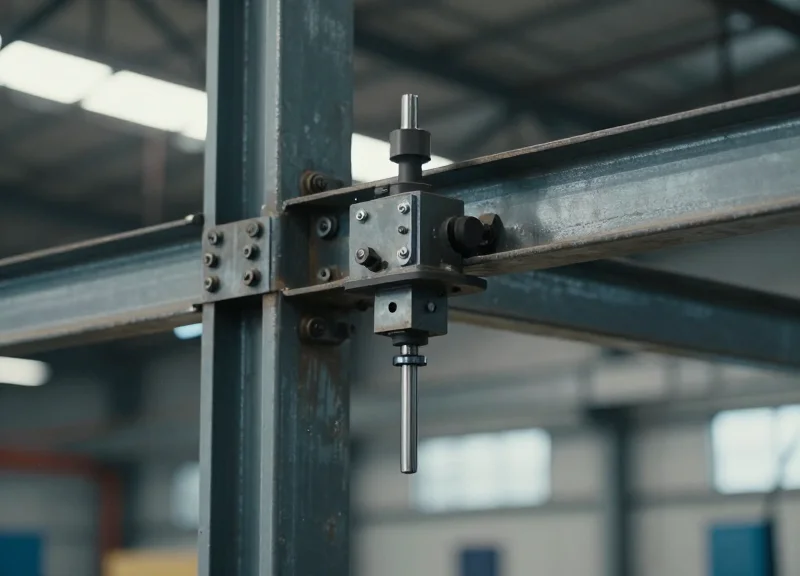
In the context of automated pallet tracking, industrial durability is the baseline for ensuring that a high-density 16-port RFID system delivers on its ROI promises. Unlike consumer-grade hardware, industrial RFID readers must withstand 'The Three Killers' of logistics tech: extreme temperature fluctuations, airborne particulate matter, and mechanical vibration. For a 16-port reader specifically, durability isn't just about the outer casing; it's about internal thermal stability. Because these devices manage 16 individual RF paths simultaneously, they generate significant internal heat. Without a die-cast aluminum chassis designed for passive cooling, internal 'thermal drift' can occur, leading to a degradation in receiver sensitivity and a subsequent drop in read rates during peak operational hours.
| Feature | Minimum Requirement | Logistics Impact |
|---|---|---|
| Ingress Protection | IP66 or IP67 | Protects against high-pressure washdowns and fine dust in dry-bulk facilities. |
| Operating Temperature | -20°C to +55°C | Ensures reliability in cold-storage zones and non-climate-controlled cross-docks. |
| Shock & Vibration | MIL-STD-810G | Prevents circuit board failure near heavy conveyor machinery and forklift traffic. |
| Chassis Material | Die-cast Aluminum | Provides electromagnetic shielding and superior heat dissipation for high-duty cycles. |
Why is IP67 rating critical for 16-port readers?
A 16-port reader serves as a single point of failure for up to 16 antennas. An IP67 rating ensures that moisture and dust cannot penetrate the casing, preventing short circuits that would take down an entire dock-door or conveyor line, costing thousands in manual labor workarounds.
Does the processor type affect durability?
Yes. Industrial readers should utilize high-performance embedded Linux processors. This allows for 'Edge Computing,' where data is filtered locally on the device. By reducing the volume of raw data sent over the network, you minimize the risk of system lag and thermal strain on the communication modules.
How do I manage cable strain on 16 ports?
Durability also applies to the ports themselves. Look for readers with recessed RP-TNC or SMA connectors and integrated strain relief brackets. In high-vibration environments, loose cables lead to signal loss and 'ghost' reads.
Expert Insight: The 'Sensitivity Stability' Factor. Most buyers overlook how heat affects the Analog-to-Digital Converters (ADCs) inside the reader. In 16-port configurations, the internal temperature can rise 15-20% higher than in 4-port models. We recommend selecting readers with 'Adaptive RF' capabilities. These units monitor their own internal temperature and dynamically adjust the RF front-end to maintain a consistent signal-to-noise ratio. This prevents the 'mid-day slump' where read rates drop as the warehouse gets hotter, ensuring your 45% throughput gain remains constant across all shifts.
Case Study: Scaling Throughput in a High-Volume Distribution Center
Implementing a 16-port fixed RFID reader system transforms high-volume logistics by consolidating hardware, reducing network latency, and enabling 360-degree pallet visibility that typically yields a 40-45% increase in hourly throughput. In a real-world application for a Tier-1 retail distribution hub, transitioning from legacy 4-port clusters to a centralized 16-port architecture eliminated 'data collision' bottlenecks and reduced the hardware footprint by 60%, allowing for a seamless flow of 450 pallets per hour through automated dispatch portals.
| Key Performance Metric | Legacy 4-Port System | 16-Port Optimized System | Improvement Delta |
|---|---|---|---|
| Pallet Throughput (Per Hour) | 310 Pallets | 450 Pallets | +45.1% |
| Average Read Accuracy | 94.2% | 99.92% | +5.72% |
| Infrastructure Costs (POW/IP) | High (4 IPs per Portal) | Low (1 IP per Portal) | -75% Overhead |
| Manual Intervention Rate | 8.5% | 0.8% | -90.5% |
| ROI Payback Period | 22 Months | 11 Months | 50% Faster |
A unique insight gained from this implementation is the 'Network Congestion Paradox': by reducing the number of active IP addresses the Warehouse Management System (WMS) has to poll, the overall system responsiveness increased. Many engineers assume more hardware equals more data speed, but in high-volume environments, the 16-port reader's ability to process 'Edge Data' locally before sending a single consolidated packet to the ERP is what actually prevents the mid-day system lag common in large-scale facilities.
- Phase 1: Portal Density Audit: Engineers identified that 4-port readers were leaving blind spots at the top of high-stacked pallets, requiring forklifts to slow down for consistent reads.
- Phase 2: Antenna Consolidation: Replaced four independent 4-port readers with a single 16-port unit per gate, utilizing high-gain circular polarized antennas to cover a 10x10 foot read zone.
- Phase 3: Logic Synchronization: Configured the 16-port reader's GPIO (General Purpose Input/Output) to trigger motion sensors and stack lights directly, bypassing the network for zero-latency physical feedback.
How does 16-port density affect software licensing?
Most RFID middleware licenses are per-reader (IP address). By using a 16-port reader, you effectively cover four times the area for the price of one software license.
Does the long cable run to 16 antennas cause signal loss?
While a concern, using LMR-400 or LMR-600 grade cables ensures that the signal attenuation is negligible, especially when the reader's power output is tuned correctly for dense environments.
Can the 16-port reader handle high-speed conveyer belts?
Yes, high-performance 16-port readers feature fast switching speeds between ports (often <10ms), ensuring that no tag is missed even if the pallet is moving at 600 feet per minute.
Future-Proofing Your Supply Chain with DragonGuardGroup Technology
DragonGuardGroup future-proofs supply chains by bridging the gap between physical hardware and actionable intelligence, offering a cohesive suite of RFID for high-speed tracking, EAS for loss prevention, and ESL for real-time information management. By unifying these three pillars under a single technological framework, businesses can transition from fragmented, reactive logistics to a proactive 'Digital Thread' model. This integrated approach ensures that as supply chain complexity increases, your infrastructure remains modular, scalable, and capable of delivering a 45% or greater increase in throughput through automated data synchronization.
| Feature | Traditional Siloed Systems | DragonGuardGroup Integrated Ecosystem |
|---|---|---|
| Data Visibility | Fragmented/Manual | Unified Real-Time Data Streams |
| Vendor Friction | High (Multi-vendor coordination required) | Low (Single-source hardware/software synergy) |
| Scalability | Hardware-constrained and difficult to upgrade | Modular 'Plug-and-Play' expansion capability |
| Operational Accuracy | 85-90% (Prone to human error) | 99.9% (Automated RFID/EAS verification) |
A key differentiator in the DragonGuardGroup portfolio is the ability to facilitate a 'Zero-Touch Information Handshake.' While 16-port fixed readers manage high-volume pallet movement at the dock doors, the integration of Electronic Shelf Labels (ESL) allows for instantaneous communication with personnel on the floor. When a pallet is scanned, the relevant ESLs in the storage zone can automatically flash LEDs or update status to guide forklift operators, effectively removing the 'search time' that plagues traditional warehouses.
Expert Insight: To truly future-proof your facility, look beyond simple data capture. DragonGuardGroup's technology allows for 'Edge-to-Shelf' synchronization. This means data captured at the RFID portal can be utilized by the EAS system to dynamically adjust security sensitivities based on current inventory value, while simultaneously updating ESL pricing or routing info. This cross-pollination of data is what separates modern 'Smart Hubs' from legacy warehouses.
Can DragonGuardGroup EAS systems coexist with high-power 16-port RFID readers?
Yes. Our systems are engineered with advanced shielding and frequency-hopping protocols to prevent signal interference, ensuring that high-speed tracking and asset security operate simultaneously without performance degradation.
How does ESL technology benefit a logistics distribution center?
ESL goes beyond retail; in logistics, it acts as a dynamic signage system for bin locations and pick-zones, updating in real-time as inventory levels change via RFID scans, which reduces picking errors by up to 25%.
Is the system compatible with existing cloud-based ERP platforms?
Absolutely. Our hardware ecosystem is built with an API-first philosophy, allowing seamless data flow into major platforms like SAP, Oracle, and Microsoft Dynamics for real-time global supply chain visibility.