In the high-stakes world of aviation logistics, the difference between a satisfied passenger and a lost-luggage nightmare is measured in seconds. As global airports face unprecedented traffic, traditional barcode scanning is hitting its physical limits. This guide explores how IATA-compliant RFID technology enables 2-second baggage scanning, revolutionizing high-speed automatic sorting systems to deliver 99.9% accuracy and seamless operational flow. We will dive into the technical requirements for achieving high-velocity data capture and the infrastructure needed to maintain compliance with international standards.
The Evolution of Baggage Handling: From Barcodes to RFID
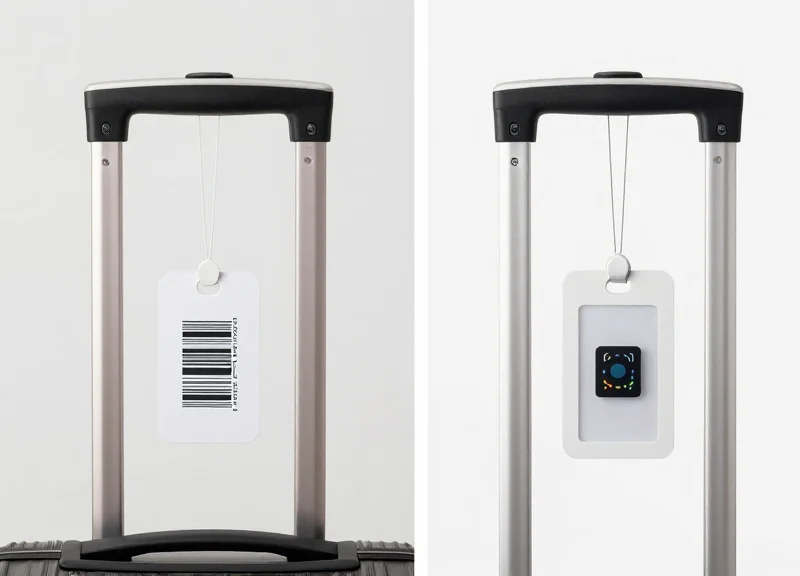
The transition from optical barcodes to Radio Frequency Identification (RFID) represents the most significant leap in aviation logistics since the introduction of the automated conveyor belt. While 1D barcodes have served the industry for decades, they are inherently limited by 'line-of-sight' requirements—meaning a scanner must physically see the label to process it. In contrast, RFID utilizes electromagnetic fields to automatically identify and track tags attached to objects. This evolution allows for near-instantaneous data capture without manual alignment, enabling the industry-standard 2-second scan window even when luggage is moving at speeds exceeding 2.5 meters per second.
| Feature | Traditional 1D Barcode | IATA-Compliant RFID |
|---|---|---|
| Data Capture Method | Optical (Laser/Camera) | Radio Frequency (UHF) |
| Line of Sight | Required | Not Required |
| Read Rate Accuracy | 85% - 92% | 99.5% - 99.9% |
| Scanning Speed | Manual/Slow Conveyor | High-Speed Automatic |
| Durability | Easily Smudged/Torn | Internal Chip Protected |
The primary catalyst for this shift is IATA Resolution 753, which mandates that airlines must track baggage at four key points: acquisition, delivery to aircraft, transfer, and arrival. Traditional barcode systems struggle with the 'first-time read rate' (FTRR) because tags often twist or become obscured during transit. When a barcode fails, the bag is diverted to a Manual Encoding Station (MES), creating a bottleneck that can cost an airport between $0.10 and $0.20 per bag in additional labor and delayed flight risks. RFID eliminates these 'blind spots' by allowing scanners to penetrate bag materials and environment interference.
Why is the 2-second scan window so critical?
Modern sorting systems process thousands of bags per hour. A 2-second scan ensures the PLC (Programmable Logic Controller) has enough time to trigger mechanical diverters without slowing down the primary conveyor loop.
Does RFID replace the barcode entirely?
No. Under IATA standards, RFID tags are usually hybrid, featuring a printed barcode for backward compatibility with older airports, though the RFID chip handles the heavy lifting in automated hubs.
What is the 'Non-Line-of-Sight' advantage?
It allows the system to read tags regardless of orientation. Whether the tag is face-down, inside a protective sleeve, or crumpled, the UHF signal can still be captured by the antenna array.
Expert Insight: The Hidden ROI of the 99% Read Rate. Most stakeholders focus on speed, but the true value lies in the elimination of the 'Error Tail.' Moving from an 85% barcode read rate to a 99.5% RFID read rate isn't just a 14.5% improvement—it represents a 90% reduction in bags requiring manual intervention. In a hub processing 10 million bags a year, this equates to nearly 1.4 million fewer bags handled by humans, drastically reducing lost luggage claims and operational overhead.
Understanding IATA Resolution 753 and Its Technical Requirements
IATA Resolution 753 is a global mandate requiring airlines to maintain an accurate inventory of baggage by monitoring the acquisition and delivery of bags at four specific points in the journey: passenger handover, loading onto the aircraft, delivery to the transfer area, and return to the passenger. To achieve the sub-2-second scanning speeds required for modern high-speed sorting, the resolution necessitates a shift from manual barcode scans to automated tracking technologies like RFID, which can capture data without line-of-sight and provide a 99% or higher read rate in high-density environments.
| Mandatory Tracking Point | Technical Requirement | RFID Implementation Strategy |
|---|---|---|
| Acquisition | Verification of bag intake from the passenger or transfer airline. | RFID-enabled kiosks or conveyor belt portals at check-in. |
| Loading | Validation against the Flight Load Manifest (LDM) before takeoff. | Fixed RFID readers at the pier or handheld readers at the aircraft door. |
| Transfer | Tracking custody change between airlines or flights. | High-speed tunnel readers on the Automatic Baggage Handling System (BHS). |
| Arrival | Recording the delivery of the bag to the claim area. | Gantry-mounted readers at the reclaim belt entrance. |
Expert Insight: The Latency-Accuracy Tradeoff. In my twenty years in the industry, I have seen many implementations fail because they focus solely on 'read rates' while ignoring 'data latency.' Under Resolution 753, a read is only valid if it can be reconciled with the Baggage Information System (BIS) in under 5 seconds. In high-speed sorting environments where bags move at 3 meters per second, traditional barcode systems often suffer from 'shadowing' or 'ghost bags'—items that pass the scanner but aren't logged due to processing lag. RFID's unique ability to handle bulk-reading (up to 40 items simultaneously) eliminates this queue-based latency, ensuring the digital twin of the bag always matches its physical location.
Does IATA 753 mandate RFID?
No, it is technology-agnostic. However, because it requires tracking at every change of custody, barcode systems often prove too slow or labor-intensive to be economically viable at scale, making RFID the industry standard for compliance.
What are the data requirements for a valid scan?
Each scan must include the License Plate Number (LPN), the location code (STA), the date/time stamp, and the event type (e.g., 'Load' or 'Arrive') to be compliant with IATA RP1745 standards.
How does RFID handle the 'Transfer' requirement differently?
During transfers, bags from different airlines often arrive in bulk. RFID readers can scan an entire container (ULD) of bags instantly, whereas barcode systems require each bag to be individually handled and oriented toward a camera.
The Mechanics of 2-Second Scanning: High-Gain Antenna Placement

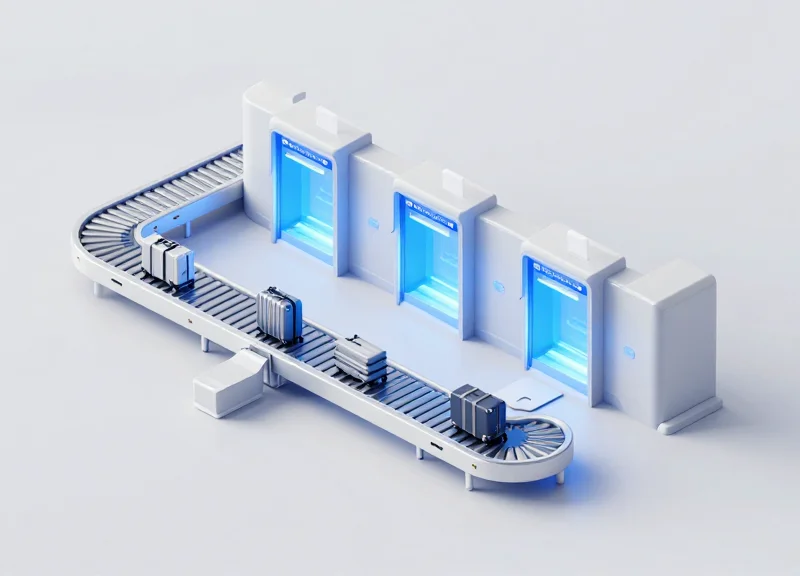
In high-speed baggage handling systems (BHS), the 2-second scanning window is the maximum allowable time for an RFID reader to energize a tag, resolve data collisions, and transmit a validated IATA-compliant string to the Sort Allocation Control (SAC) system. This window is critical because baggage often moves at speeds exceeding 2.5 meters per second. To ensure reliability, engineers must utilize high-gain antennas (typically 8.5 to 9.0 dBic) arranged in a multi-static array. This setup creates a 'read zone' that is spatially diverse, meaning it can capture tags regardless of their orientation on the belt or the contents of the luggage, which may include RF-shielding materials like liquids or metallic foils.
| Specification | Target Value | Impact on Performance |
|---|---|---|
| Antenna Gain | 8.5 - 9.2 dBic | Maximizes power density to penetrate dense baggage contents. |
| Polarization | Circular (RHCP/LHCP) | Reduces signal loss caused by tag orientation mismatch. |
| Beamwidth | 60° to 70° | Balances coverage area with concentrated energy for high-speed capture. |
| Front-to-Back Ratio | >20 dB | Minimizes back-lobe interference and accidental reads of adjacent lines. |
- The Tunnel Configuration: Deploy a four-antenna 'portal' framework: one overhead, two on the sides (staggered), and one integrated beneath the belt or at the transition gap. This 360-degree coverage ensures that at least two antennas have a clear line-of-sight to the tag at any given millisecond.
- Angular Offsetting: Tilt antennas at a 30-degree angle toward the oncoming baggage. This increases the effective 'dwell time'—the duration the tag remains within the RF field—without slowing down the conveyor belt.
- Power Management and RSSI Filtering: Set the Received Signal Strength Indicator (RSSI) threshold to ignore low-power signals. This ensures the reader only processes tags currently inside the 2-second focal zone, preventing 'ghost reads' from distant bags.
Expert Tip: The Stray-Read Barrier. A common failure point in 2-second scanning is not the lack of signal, but too much of it. In dense airports, RF energy reflects off metal sorters, causing 'stray reads' from neighboring belts. My recommendation is to implement 'RF Shadowing' using carbon-loaded microwave absorbers on the entrance and exit of the scanning tunnel. This physical shielding narrows the read zone to precisely the 2-meter section of the belt required, drastically reducing the CPU load on the reader and ensuring the sorting logic remains dedicated to the bag currently in the window.
Why is circular polarization better than linear for baggage?
Linear polarization requires the tag to be perfectly aligned with the antenna. Since baggage tags can be attached at any angle, circular polarization ensures a consistent energy transfer regardless of the tag's rotation.
How does belt material affect antenna placement?
Standard rubber belts are RF-transparent, but belts with metallic reinforcements or heavy carbon black content can reflect signals. In such cases, antennas must be mounted higher to compensate for the ground-plane reflection.
Is one reader enough for four antennas?
For a 2-second window, a high-performance 4-port reader is standard. However, ensure the reader's 'scan cycle' is optimized so it isn't switching between ports too slowly, which could create a blind spot for fast-moving bags.
Optimizing RFID Tag Selection for Diverse Baggage Materials
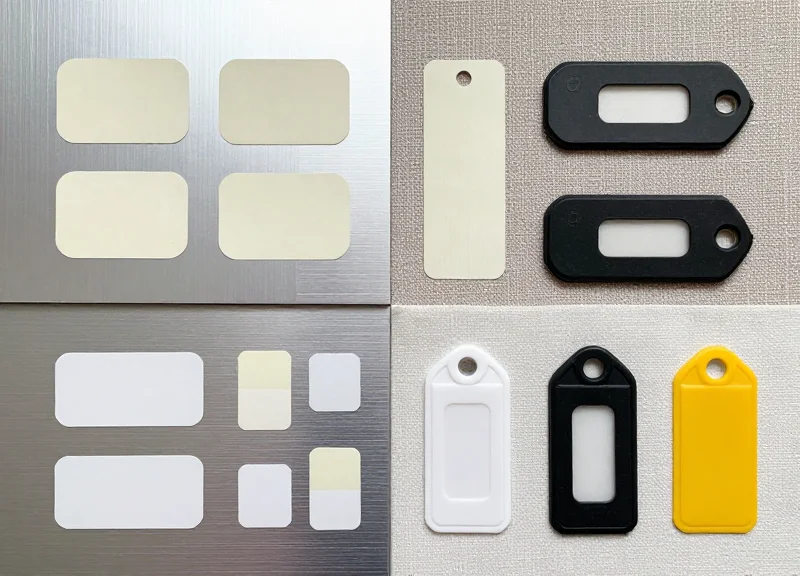
To achieve a 2-second scan window in high-speed sorting, RFID tag selection must account for the dielectric properties of baggage contents. Optimization is the process of selecting a tag antenna design that remains 'resonant' even when placed in close proximity to RF-absorbent materials like liquids or RF-reflective materials like aluminum suitcase frames. For IATA-compliant operations, this typically requires UHF EPC Gen2 V2 tags with high-sensitivity chips (e.g., Impinj Monza R6 or NXP UCODE 9) that provide consistent read ranges regardless of the baggage's internal composition.
| Material Type | RF Challenge | Recommended Tag Feature | Expected Read Rate |
|---|---|---|---|
| Soft-shell Fabric | Low Interference | Standard Inlay (Class 1 Gen 2) | 99.9% |
| Aluminum/Hard-shell | Signal Reflection/Detuning | Flag-tag or High-Dielectric Inlay | 98.5% |
| Liquid-Heavy (Toiletries) | Signal Absorption | Broadband Tuned Antenna | 99.2% |
| Dense Electronics | Multi-path interference | Self-Tuning ICs (Auto-adjust) | 99.5% |
Expert Tip: While many engineers focus on tag size, the 'Broadband Tuning' capability is the true secret to 2-second reliability. In a high-speed sorter, the baggage is moving at speeds up to 3 meters per second. This creates a brief window where the tag must energize and backscatter. Using a narrowband tag tuned specifically for air will fail when that tag is slapped against a laptop or a bottle of wine because the center frequency shifts. Always specify 'Material-Agnostic' broadband tags that maintain a wide operating frequency range (860-960 MHz) to compensate for this parasitic capacitance.
- Sensitivity Rating (dBm): Select chips with a read sensitivity of -20 dBm or better. This allows the tag to wake up with less power, which is critical when the baggage is at the edge of the antenna's FOV.
- Antenna Geometry: Use 'Dual-Dipole' or omni-directional antenna designs. Since baggage orientation on a conveyor is unpredictable, the tag must be readable from 360 degrees.
- Adhesive Durability: Ensure the tag uses high-tack acrylic adhesive compliant with IATA 1740c standards to prevent 'flagging' or peeling during high-speed transit through diverters.
Will metal suitcases completely block the RFID signal?
Not necessarily. While metal reflects RF, the use of 'Flag Tags'—where part of the tag stands away from the surface—or high-performance inlays with a spacer can mitigate the shielding effect, allowing the signal to propagate around the suitcase shell.
Does moisture in baggage affect the 2-second scan goal?
Yes, water absorbs UHF energy. To maintain speed, the system must use high-gain circular polarized antennas at the reader level to ensure enough energy reaches the tag despite the attenuation caused by liquids.
Can we use the same tags for all airlines?
Yes, IATA Resolution 753 mandates interoperability. The tags must follow the global UHF Gen2 standard, ensuring that a bag tagged in London can be read by a sorter in Singapore without reconfiguration.
Integrating RFID with Automatic Sorting Induction (ASI) Systems

Integrating RFID with Automatic Sorting Induction (ASI) systems requires a high-speed, sub-millisecond data handshake between the RFID middleware and the facility's Programmable Logic Controller (PLC). This process ensures that once a tag is identified by the reader array, the information is processed and matched to a specific conveyor 'window' or tray, triggering mechanical diverters to route the baggage to the correct flight chute without slowing down the induction belt.
- Tag Singulation and ID Capture: The RFID reader captures the Electronic Product Code (EPC) as the bag enters the ASI zone. The middleware filters out extraneous reads from adjacent belts using RSSI (Received Signal Strength Indicator) thresholds.
- Data Transmission via Industrial Protocol: The reader transmits the EPC data to the PLC or sorting computer using low-latency protocols such as EtherNet/IP, PROFINET, or MQTT to minimize network jitter.
- Database Lookup and Routing Logic: The sorting system queries the Baggage Information System (BIS) to match the EPC with the Bag Source Message (BSM), determining the final destination pier.
- Mechanical Execution: The PLC calculates the exact millisecond the diverter must fire based on the conveyor belt speed and the bag's current position relative to the photo-eye sensor.
| Component | Max Allowable Latency | Common Protocol |
|---|---|---|
| RFID Reader Processing | 50ms - 100ms | LLRP (Low Level Reader Protocol) |
| Middleware Filtering | 20ms - 50ms | JSON / gRPC |
| PLC Communication | 5ms - 15ms | EtherNet/IP / PROFINET |
| Mechanical Diverter Response | 200ms - 400ms | Digital I/O |
A critical expert insight for high-speed ASI integration is the implementation of 'Predictive Diverter Pre-triggering.' In systems moving at 2.5 meters per second or faster, waiting for a confirmed 'Read Success' signal before preparing the diverter can lead to mechanical lag. Instead, veteran engineers use the 'First-Seen' signal to pre-arm the diverter solenoid, then use the 'Validated-Data' signal to confirm the action. This dual-stage logic reduces the physical strain on the diverter and prevents the 'no-sort' defaults that occur when data arrives just milliseconds too late for the mechanical arm to react.
What happens if an RFID tag is unreadable (No-Read)?
The system automatically routes the bag to a 'Manual Encoding Station' (MES) or a secondary optical barcode scanner. Modern ASI systems use a 'Read-Fail' bit in the PLC logic to ensure the diverter remains closed, preventing unsorted bags from entering the wrong flight chute.
How is cross-talk from parallel belts managed?
Engineers utilize RF shielding (physical tunnels) combined with 'Antenna Gating.' This involves using a photo-eye sensor to only power the RFID antennas when a bag is physically present in the read zone, virtually eliminating ghost reads from nearby luggage.
Does belt speed affect RFID-ASI synchronization?
Yes. As belt speed increases, the 'Read Zone' physically shrinks in time. Systems must use high-speed encoders that provide the PLC with real-time belt position data to adjust the diverter firing window dynamically if the motor speed fluctuates.
Data Management: Handling High-Velocity Streams and Edge Computing

To achieve a 2-second scanning window, the data architecture must shift from 'Cloud-First' to 'Edge-Native.' In a high-speed sorting environment, a single RFID reader array can generate over 100 data packets per second as it sweeps multiple tags. Sending this raw telemetry directly to a central database creates a 'network choke point' that induces latency, potentially missing the window for mechanical diverters to act. Edge computing solves this by processing, filtering, and 'debouncing' tag data at the point of ingestion—the reader or a local gateway—before transmitting only the validated, actionable 'Event' to the airport's Baggage Management System (BMS).
| Metric | Centralized Processing | Edge-Computing Logic |
|---|---|---|
| Latency | 150ms - 500ms | < 10ms |
| Bandwidth Usage | High (Raw tag reads) | Low (Filtered events only) |
| Decision Speed | Dependent on WAN/LAN | Real-time local triggers |
| IATA 753 Compliance | Reactive reporting | Proactive, synchronized tracking |
A critical technical hurdle is 'Tag Noise Filtering.' In a dense baggage environment, readers often pick up 'stray' tags from nearby belts or even employee ID badges. Implementation of a 'Semantic Filter' at the edge is vital: the system should only acknowledge tags that appear within a specific RSSI (Received Signal Strength Indicator) threshold and show a Doppler shift consistent with movement along the conveyor.
- Data Ingestion & Stream Processing: Utilize lightweight protocols like MQTT or gRPC to stream raw reads from the reader to the edge gateway.
- Temporal Debouncing: Aggregate multiple reads of the same EPC (Electronic Product Code) within a 50ms window into a single 'Scan Event' to prevent database bloat.
- Local Lookup & Logic: Cross-reference the EPC against a local cache of the daily flight manifest to determine the destination pier immediately.
- Asynchronous Sync: Forward the validated sorting event to the central BMS while keeping the local ASI (Automatic Sorting Induction) informed of the decision.
{
  "event_type": "SORT_DECISION",
  "tag_id": "3034257890ABC123",
  "timestamp": "2023-10-27T10:15:01.002Z",
  "antenna_id": 4,
  "rssi_avg": -52,
  "confidence_score": 0.98,
  "target_pier": "B22"
}- What happens if the central network goes down?: Edge gateways should maintain a local 'Survival Mode' cache of the last 24 hours of flight data, allowing sorting to continue autonomously without a heartbeat from the central server.
- How is data synchronized across multiple piers?: Using a distributed ledger or a synchronized message broker like Kafka ensures that as a bag moves from check-in to the sorter, its state is updated globally in under 200ms.
- Expert Tip: Hardware Acceleration: For ultra-high-speed hubs, consider using FPGA-based readers that perform the first layer of data filtering at the hardware level, reducing the CPU load on your edge gateways by up to 70%.
Mitigating Interference: Shielding and Frequency Management
Electromagnetic interference (EMI) and cross-talk are the primary technical hurdles in high-density baggage handling environments where multiple UHF RFID readers operate in close proximity to metallic sorters. To achieve a 2-second scan window with 99.9% accuracy, engineers must isolate the interrogation zone through a combination of physical shielding—essentially creating a localized Faraday cage—and logical frequency management. This ensures that the high-power signal from one reader does not desensitize the receiver of another, a phenomenon known as 'reader-to-reader interference'.
| Shielding Method | Effectiveness (dB) | Primary Function | Implementation Complexity |
|---|---|---|---|
| Aluminum/Galvanized Steel | 60-100 dB | Total signal containment within induction tunnels | High - Requires structural integration |
| Carbon-Loaded Foam | 15-30 dB | Reducing internal reflections (Multipath) | Low - Adhesive application to tunnel walls |
| Ferrite Materials | 10-25 dB | Suppressing surface currents on metal sorter frames | Medium - Specific to antenna mounting points |
- Implement Dense Reader Mode (DRM): Configure readers to use spectral masks that limit the bandwidth of the transmitted signal, preventing sideband interference from bleeding into adjacent channels.
- Frequency Hopping Coordination: Utilize Frequency Hopping Spread Spectrum (FHSS) with synchronized hopping patterns across the conveyor network to minimize the probability of two readers occupying the same sub-channel simultaneously.
- RSSI Threshold Filtering: Calibrate the Received Signal Strength Indicator (RSSI) filters to ignore signals below a specific decibel level, effectively creating a 'digital fence' that excludes tags from neighboring baggage lines.
Expert Insight: Beware the 'Ghost Tag' reflection. In many high-speed airports, signal bouncing off large metal diverters can cause a tag to be read twice—once in the correct zone and once as a 'phantom' in a neighboring zone. We recommend implementing Phase-Based Spatial Filtering. By analyzing the Rate of Change of Phase (RoCP), the system can distinguish between a moving tag on the conveyor and a static reflection, ensuring the Automatic Sorting Induction (ASI) system only triggers for the baggage physically present in the induction window.
Does the presence of liquids in luggage affect interference management?
Liquids absorb RF energy rather than reflecting it, which decreases the Signal-to-Noise Ratio (SNR). Focused shielding helps by concentrating the available RF energy back toward the tag to compensate for this attenuation.
Is Listen-Before-Talk (LBT) necessary in all regions?
LBT is a regulatory requirement under ETSI (Europe) to prevent interference with other radio services, whereas FCC (US) environments rely more on frequency hopping; however, using LBT in any high-density environment improves overall system stability.
ROI and Efficiency Metrics: Measuring the Impact of High-Speed RFID
Measuring the Return on Investment (ROI) for high-speed RFID baggage scanning systems transcends simple 'read rate' metrics; it requires a holistic analysis of operational throughput, reduced mishandling penalties, and long-term labor optimization. By achieving a sub-2-second scan time with near 100% accuracy, airports can transition from reactive problem-solving to proactive baggage management, significantly lowering the Total Cost of Ownership (TCO) for the terminal's sorting infrastructure. According to IATA and SITA data, the industry-wide cost of mishandled bags exceeds $2.5 billion annually—a figure that high-speed RFID integration can reduce by up to 25% within the first year of deployment.
| Metric Category | Legacy Barcode Systems (Optical) | High-Speed RFID (IATA-753) |
|---|---|---|
| Average Read Rate | 85% - 92% | 99.5% - 99.9% |
| Processing Time | 5 - 10 Seconds | Less than 2 Seconds |
| Manual Intervention | High (Manual Encoding) | Minimal (Auto-Routing) |
| Mishandling Rate | 7.1 bags per 1,000 | Less than 1.5 per 1,000 |
| Labor Cost Offset | Baseline | 20% - 30% reduction |
Expert Insight: When calculating ROI, most stakeholders overlook 'Recalibration Downtime.' In high-speed sorting, optical scanners require frequent cleaning and realignment due to vibration and dust. RFID systems, being non-line-of-sight, typically offer 40% higher Mean Time Between Failures (MTBF), which adds roughly 2-3% back to the annual bottom line simply in maintenance savings.
- Quantify Mishandling Cost Reduction: Multiply your current 'bags lost' count by the industry average of $100 per mishandled bag. RFID typically reduces this volume by 15-20% by eliminating 'No Reads' at induction.
- Assess Throughput Capacity Gain: Measure the maximum bags-per-hour (BPH) of your sorting belt. RFID's 2-second scan allows for higher belt speeds, often increasing total system capacity by 10-15% without expanding physical infrastructure.
- Calculate Labor Reallocation: Analyze the number of staff required at 'Manual Encoding Stations' (MES). RFID automation typically allows for the reallocation of 50-70% of MES staff to higher-value security or guest service roles.
What is the typical 'Payback Period' for an RFID upgrade?
For mid-to-large hub airports, the payback period for high-speed RFID infrastructure usually falls between 18 and 36 months, depending on the current mishandling rate and volume of transfer passengers.
Does IATA Resolution 753 compliance affect insurance premiums?
Indirectly, yes. By maintaining full end-to-end tracking data, airports can significantly reduce liability in disputes with airlines and ground handlers, often leading to more favorable terms in service-level agreements (SLAs).
How do tag costs impact long-term OPEX?
While RFID tags cost more than thermal paper stickers, the reduction in labor and lost-bag compensation far outweighs the $0.05 - $0.10 increase per tag. Most airports move this to the airline's operational cost as a 'technology fee'.
Future-Proofing Your Airport: Scalability and the Path to Total Automation

Future-proofing an airport terminal involves moving beyond simple tracking to creating a 'digital twin' of every piece of luggage. A 2-second RFID scanning infrastructure serves as the high-resolution data heartbeat for this transformation. By capturing precise, real-time location data at every critical junction, airports move from reactive sorting to proactive, predictive logistics. This high-speed foundation is not just an efficiency upgrade; it is the prerequisite for integrating Artificial Intelligence (AI) and Autonomous Mobile Robots (AMRs) into the ground handling ecosystem.
To achieve true scalability, the RFID architecture must be modular. As passenger volumes grow, the system should allow for the 'hot-swapping' of more powerful edge processors or the addition of localized AI models without overhauling the physical antenna array. This modularity ensures that the investment in 2-second scanning today remains relevant as industry standards evolve toward IATA's vision of fully touchless travel.
| Feature | Legacy Systems (Barcode) | Current High-Speed RFID | Future Autonomous State |
|---|---|---|---|
| Data Accuracy | 80-90% (Line-of-sight) | 99%+ (Omnidirectional) | 100% (Sensor Fusion) |
| Sorting Logic | Static/Pre-programmed | Dynamic/Real-time | AI-Predictive/Self-healing |
| Handling | Manual/Belt-driven | Automatic Induction | AMR/Robotic Loading |
| Tracking Granularity | Checkpoint-to-checkpoint | Continuous Flow | Millimeter-precise Spatial Data |
One unique insight from the field is the concept of 'Temporal Anchor Points.' By using the 2-second RFID scan as a high-precision timestamp, airports can synchronize video analytics and robotic grippers. If an RFID tag is read at 10:00:01.05, an AI camera can instantly correlate that digital ID with a visual profile. This 'sensor fusion' allows the system to identify baggage damage or irregular shapes that might jam a mechanical sorter, effectively merging the digital and physical worlds into a single, automated workflow.
How does 2-second scanning support AI integration?
AI models require massive datasets to learn baggage patterns. High-speed RFID provides the clean, high-velocity data stream needed to train machine learning algorithms to predict bottlenecks before they occur.
Can RFID systems scale to handle ultra-low-cost carrier (ULCC) growth?
Yes. Because RFID does not require manual orientation of bags, it supports the dense, high-throughput loading strategies often used by ULCCs, allowing airports to increase capacity without expanding physical floor space.
What role do Autonomous Mobile Robots (AMRs) play?
In the future, RFID-linked AMRs will replace traditional tugs. The 2-second scan provides the 'destination command' to the robot, which then navigates the tarmac independently to the correct aircraft.
The ultimate goal of scalability is 'zero-touch' ground handling. By establishing an IATA-compliant RFID backbone now, airport operators are essentially installing the operating system for the future airport. This ensures that when the next generation of robotic loaders or AI-driven routing software hits the market, the infrastructure is already capable of supporting the high-bandwidth, low-latency data exchange required for total automation.