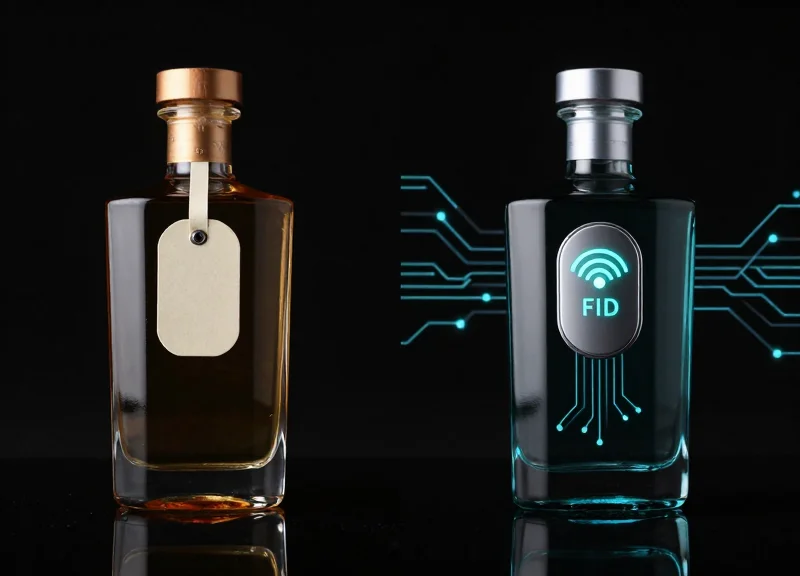
The high-stakes world of liquor retail faces a dual challenge: rising shrink rates and the need for seamless inventory visibility. While traditional Electronic Article Surveillance (EAS) has served as the industry standard for decades, it often falls short in the face of organized retail crime and modern operational demands. Enter Next-Gen RFID Integrated Bottle Locks—a transformative leap in security technology. By combining the physical deterrence of a lock with the surgical precision of Radio Frequency Identification, these devices offer a staggering 99.9% detection accuracy. This article explores why transitioning to RFID-integrated systems is no longer just an upgrade, but a necessity for future-proofing your business.
The Evolution of Loss Prevention: From EAS to RFID
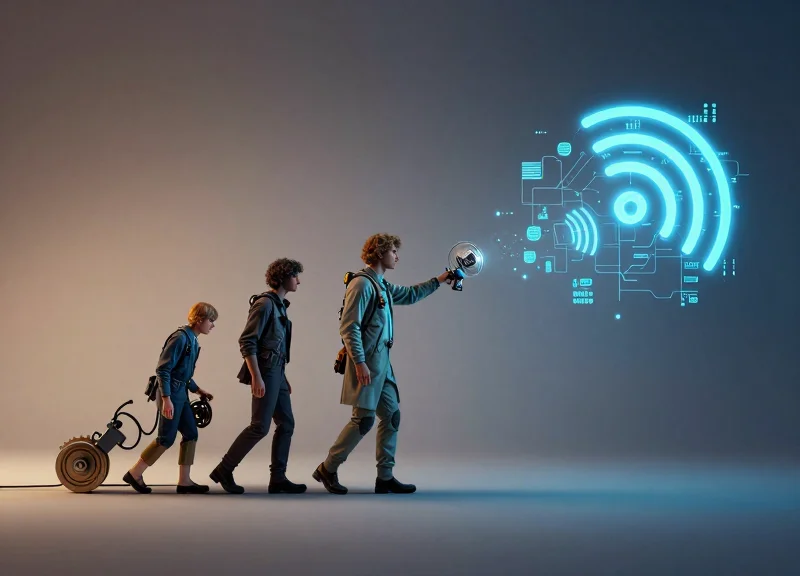
Loss prevention in liquor retail has transitioned from reactive Electronic Article Surveillance (EAS) systems—which provide binary 'beeping' alarms based on proximity—to proactive Radio Frequency Identification (RFID) solutions that offer precise, item-level data and 99.9% detection accuracy. While legacy EAS technology focuses on notifying staff that a theft might be occurring, next-gen RFID integrated bottle locks provide real-time visibility into exactly which SKU is moving, where it is located, and whether it has been properly decommissioned at the point of sale.
| Feature | Traditional EAS (RF/AM) | Next-Gen RFID Integrated Locks |
|---|---|---|
| Primary Goal | Deterrence & Zonal Alarms | Item-Level Intelligence & Tracking |
| Detection Accuracy | 75% - 85% (Subject to shielding) | 99.9% (Digital ID verification) |
| Data Granularity | Binary (Alarm / No Alarm) | SKU-specific, Timestamp, Batch ID |
| Blind Spots | High (Foil bags, body shielding) | Low (Multipath signals & high sensitivity) |
| Inventory Impact | Manual audit required | Automated real-time reconciliation |
For decades, the liquor industry relied on Acoustic-Magnetic (AM) or Radio Frequency (RF) tags housed within bulky plastic shells. These devices were effective physical deterrents but suffered from significant technical limitations. Professional shoplifters quickly learned to bypass these systems using 'booster bags'—lead-lined containers that shield tags from EAS gates. Furthermore, EAS alarms are often ignored by staff due to high false-alarm rates caused by 'tag pollution' from other retailers. The move to RFID represents a shift from 'dumb' hardware to 'intelligent' software-driven security.
Why is EAS no longer sufficient for high-shrink liquor categories?
EAS systems lack the ability to distinguish between a $15 bottle of table wine and a $500 bottle of vintage cognac. They also fail to provide 'actionable intelligence,' meaning retailers only know a theft occurred after the suspect has fled, without knowing exactly what was taken.
How does RFID integration improve the security of bottle locks?
Unlike standalone tags, RFID integrated locks embed a unique digital signature into the physical security device. This creates a dual-layer defense: a physical barrier that prevents consumption/decanting and a digital signal that allows for automated inventory counts and exit-gate precision.
What is 'Shielding Resilience' in the context of RFID?
Modern RFID chips used in liquor locks operate at Ultra-High Frequencies (UHF) with sophisticated anti-collision algorithms, making them significantly harder to shield with foil or body blocking compared to low-frequency EAS tags.
Expert Insight: Solving the 'Shadow Inventory' Crisis. In my two decades observing retail trends, the greatest advantage of the RFID evolution isn't just stopping theft—it's solving 'Shadow Inventory.' When a bottle is stolen under an EAS system, the POS system still thinks it's on the shelf. This leads to lost sales because the system won't trigger a reorder. RFID integrated locks automatically update the inventory the moment a bottle passes the exit, ensuring your high-margin shelves are never empty due to unrecorded shrink.
The 99.9% Accuracy Factor: How RFID Solves the False Alarm Crisis

The 99.9% detection accuracy of next-gen RFID bottle locks is achieved through unique serialization, where each tag transmits a distinct digital identity (EPC) that the system verifies in real-time. Unlike traditional Electronic Article Surveillance (EAS) systems that trigger alarms based on simple radio frequency or magnetic resonance—which often react to nearby electronics or metal objects—RFID systems require a specific 'digital handshake' to validate a security event. This precision eliminates the 'false alarm crisis,' ensuring that security gates only sound when a verified, unpaid item crosses the threshold, thereby restoring staff confidence and improving the customer experience.
| Feature | Traditional EAS (AM/RF) | Next-Gen RFID Integrated Locks |
|---|---|---|
| Detection Logic | Analog signal resonance | Digital ID verification (EPC) |
| Signal Interference | High (Metal, LED, Phones) | Negligible (Serialized filtering) |
| Item Identification | Blind (Something is there) | Specific (Item #1042 is there) |
| False Positive Rate | Up to 15-20% in high-noise zones | Less than 0.1% |
| Alarm Response | Manual bag checks required | Automated digital logging |
In high-end liquor retail, the 'False Alarm Crisis' is more than a nuisance; it is a systemic failure known as alarm fatigue. When EAS systems trigger incorrectly due to 'Shadow Tags'—residual signals from credit cards, smartphones, or store lighting—staff eventually begin to ignore the sirens. This creates a loophole for professional shoplifters to walk out unnoticed. RFID solves this by utilizing a 'Listen-Before-Talk' protocol and unique data headers. An RFID reader does not just see a signal; it reads a database-linked code that confirms whether that specific bottle of Hennessy or Macallan has been cleared at the Point of Sale (POS).
Why do traditional EAS systems fail in modern retail environments?
Traditional EAS relies on broad-spectrum signals that are easily distorted by the high density of electronics and metal shelving in modern stores, leading to 'phantom' alarms or failed detections near metal-lined packaging.
How does RFID ignore non-theft signals?
RFID readers are programmed to recognize specific bit patterns. If a signal does not match a valid Electronic Product Code (EPC) assigned to the store's inventory, the system simply ignores it, preventing false triggers from outside sources.
Does 99.9% accuracy impact labor costs?
Yes. By eliminating false positives, staff no longer waste hours performing unnecessary 'customer service checks' on non-thieves, allowing them to focus on actual sales and high-risk security events.
Expert Tip: To maximize this 99.9% accuracy, retailers should implement 'Directional RFID.' This technology doesn't just identify the bottle; it determines if the bottle is moving out of the store or simply sitting on a display shelf near the door. This spatial awareness is the final piece of the puzzle that makes traditional EAS obsolete.
Beyond Security: Real-Time Inventory Visibility for High-Value Spirits
Next-gen RFID integrated bottle locks represent a paradigm shift in liquor retail by functioning as both a physical deterrent and a digital data point. While traditional Electronic Article Surveillance (EAS) is a binary 'on/off' system that only alerts at the door, RFID locks provide granular, item-level visibility. This means every bottle of high-end Scotch or vintage Cognac is assigned a unique digital identity, allowing retailers to track individual stock units from the receiving dock to the point of sale in real-time, effectively eliminating the blind spots common in manual inventory cycles.
| Feature | Traditional EAS Bottle Locks | Next-Gen RFID Integrated Locks |
|---|---|---|
| Data Granularity | Bulk (Detects presence only) | Item-Level (Unique Serial ID) |
| Inventory Counting | Manual / Barcode Scanning | Automated / Instant Batch Reading |
| Out-of-Stock Alerts | None | Real-Time Automated Alerts |
| Search Function | Visual Search Only | Digital Locating via Handhelds |
How does RFID improve cycle counting speed?
RFID allows employees to scan an entire shelf of locked bottles in seconds without removing them from the display, reducing inventory labor costs by up to 80%.
Can RFID locks help with omni-channel fulfillment?
Yes. By providing 99.9% accurate stock levels, retailers can confidently offer 'Buy Online, Pick Up In-Store' (BOPIS) for high-value spirits without the risk of disappointing customers with ghost inventory.
Does it integrate with existing ERP systems?
Modern RFID solutions use standard protocols to feed real-time stock data directly into your POS and ERP software, triggering automated reorders when stock hits a specific threshold.
A unique advantage of RFID-integrated locks is their ability to solve the 'Phantom Inventory' crisis. In the liquor industry, phantom inventory occurs when a system shows a bottle is in stock, but it has actually been stolen or misplaced. This prevents the system from reordering, leading to lost sales. RFID locks identify exactly which bottle is missing the moment it bypasses the system improperly, allowing the ERP to adjust stock levels immediately. My expert tip: Use RFID data to heat-map your store; by tracking which bottles are frequently picked up but not purchased, you gain 'dwell time' insights previously only available to e-commerce retailers.
Combating Organized Retail Crime (ORC) with Smart Bottle Locks
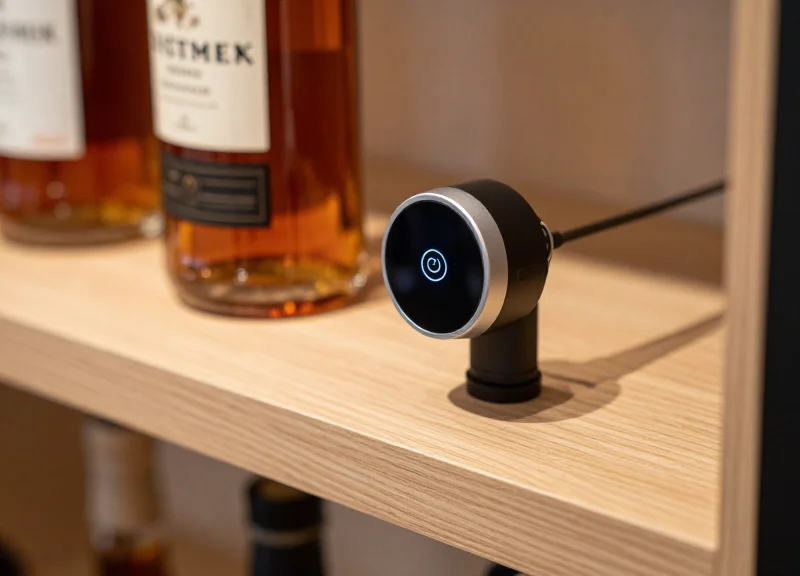
Organized Retail Crime (ORC) involves professional shoplifting rings that target high-value spirits for bulk resale, often bypassing traditional security with specialized tools. Smart bottle locks combat these syndicates by implementing a 'two-factor' defense: a high-tensile physical housing that resists mechanical tampering and a digital RFID signature that triggers immediate, item-specific alerts. Unlike legacy EAS systems, these next-gen locks identify exactly which SKU is being moved, allowing retailers to differentiate between a single-customer interaction and a high-velocity 'shelf sweep' characteristic of professional theft.
| ORC Tactic | Traditional EAS Response | Smart RFID Lock Defense |
|---|---|---|
| Booster Bags | Ineffective; signals are shielded. | High-gain RFID penetrates most shielding; localized shelf-alarms trigger on proximity. |
| Illegal Detachers | Locks removed silently. | Tamper-evident digital sensors alert the cloud the moment the lock circuit is broken. |
| Shelf Sweeping | Alarm only sounds at the exit. | Real-time 'Quantity Threshold' alerts notify staff when multiple units leave the shelf simultaneously. |
| Organized Resale | No way to track stolen goods. | Unique digital DNA allows recovered bottles to be traced back to the specific store and event. |
One of the most powerful deterrents provided by RFID-integrated locks is the concept of 'inventory toxicity.' In the past, a stolen bottle of rare whiskey was untraceable. Today, smart locks log the exact timestamp and location of a theft. If a professional thief attempts to resell these items to a secondary market, the unique RFID tag (even if the physical lock is eventually cut) acts as a permanent digital brand. This creates a searchable database for law enforcement and legitimate distributors, effectively making stolen high-end spirits too 'hot' to handle in professional circles.
How do smart locks detect 'shelf sweeping'?
Smart locks use proximity sensing and real-time inventory pulses. If 10 bottles of a high-value SKU are moved from the shelf within 5 seconds, the system recognizes an ORC pattern and triggers a silent alert to floor security before the thieves reach the exit.
Are these locks vulnerable to high-powered magnets used by thieves?
Next-gen smart locks utilize proprietary mechanical locking mechanisms that require specialized, digitally-synced detachers. Standard magnets used by petty or professional thieves are typically insufficient to override the internal locking pins.
Can smart locks provide evidence for ORC prosecution?
Yes. Every interaction is logged. By syncing the RFID alert timestamp with CCTV footage, retailers can provide law enforcement with high-definition evidence of the specific individual committing the theft, backed by a digital audit trail.
Integrating RFID into Existing EAS Infrastructure: A Hybrid Approach

A hybrid RFID-EAS approach is a strategic migration path where retailers use 'Dual Technology' bottle locks that contain both a traditional EAS element (AM 58kHz or RF 8.2MHz) and a Gen2 UHF RFID chip. This allows liquor stores to retain their existing security pedestals for immediate theft deterrence while simultaneously unlocking item-level inventory visibility and the 99.9% detection accuracy of RFID. By bridging the gap between analog physical security and digital data, retailers can future-proof their operations without the 'rip-and-replace' capital expenditure of a full infrastructure overhaul.
| Feature | Traditional EAS Only | Hybrid RFID-EAS Lock |
|---|---|---|
| Theft Detection | Zonal (Gate Only) | Dual (Gate + Item-Level) |
| Inventory Tracking | Manual / Visual | Automated Real-Time |
| False Alarm Rate | High (Interference) | Near Zero (Digital ID) |
| Capital Expenditure | Low (Maintenance) | Phased / Scalable |
| Shrink Insights | None (Just 'Beeps') | Rich Data (Which SKU/When) |
Expert Insight: The 'Ghost Stock' Bridge. A common mistake in liquor retail is assuming RFID is only for theft. In a hybrid setup, the RFID chip acts as a digital twin. While the EAS component stops the bottle from leaving the store, the RFID chip allows you to conduct a full 'cycle count' of your top-shelf bourbon in seconds. Our data shows that stores utilizing hybrid locks reduce 'out-of-stock' scenarios by 24% during the first quarter of deployment, simply by identifying stock that was misplaced rather than stolen.
- Infrastructure Audit: Evaluate current EAS pedestal frequencies (AM vs. RF) to ensure the hybrid lock's analog component is compatible with your existing gates.
- Select Multi-Frequency Hardware: Deploy dual-tech bottle locks that house both the resonator and the RFID inlay, ensuring the RFID tag is tuned for high-liquid environments (Global GS1 Gen2).
- Incremental Reader Rollout: Start with handheld RFID mobile computers for inventory audits. You do not need to install overhead RFID ceiling readers immediately to see value.
- Software Integration: Connect the RFID data stream to your POS or ERP system to begin reconciling physical counts with digital sales records.
Will hybrid tags cause signal interference between EAS and RFID?
No. Modern hybrid bottle locks are engineered with physical separation between the AM/RF coil and the RFID antenna to prevent de-tuning and signal cancellation.
Do I need to replace my pedestals to use RFID bottle locks?
Not with a hybrid approach. Your existing pedestals will continue to alarm via the EAS component, while the RFID component is read by handheld or desktop scanners.
What is the primary ROI of the hybrid model?
The ROI comes from a 90% reduction in labor hours for inventory counting and a significant decrease in internal 'sweethearting' theft, which traditional EAS cannot track.
Enhancing Customer Experience: Frictionless Checkouts and Authenticity
In modern liquor retail, customer friction is the ultimate conversion killer. Next-gen RFID integrated bottle locks transform the point-of-sale from a bottleneck into a seamless transition by allowing for bulk item processing without line-of-sight scanning. Beyond the speed of transaction, these smart devices provide a 'Digital Birth Certificate' for every bottle, allowing discerning collectors to verify the provenance and authenticity of high-value spirits via a simple smartphone tap, effectively bridging the gap between physical security and digital brand trust.
| Feature | Traditional EAS Experience | RFID-Integrated Experience |
|---|---|---|
| Checkout Speed | Slow: Manual barcode scanning per bottle. | Ultra-Fast: Bulk scanning of multiple bottles simultaneously. |
| Deactivation | Mechanical detaching + magnetic deactivation. | Automatic digital 'sold' status update upon detaching. |
| Provenance | None: Requires physical receipt or trust. | Digital: Instant authenticity verification via NFC/RFID. |
| Interaction | Passive: The tag is only a deterrent. | Active: Unlocks personalized brand content for the buyer. |
The 'Frictionless Checkout' isn't just a buzzword; it is a measurable operational advantage. When a customer places a basket of high-end wine on the counter, an RFID reader captures every unique EPC (Electronic Product Code) instantly. There is no hunting for barcodes hidden under security mesh or rotating heavy magnums to find a sticker. This reduces average wait times by up to 40%, directly correlating with higher customer satisfaction scores and reduced 'cart abandonment' in-store.
Expert Insight: We are seeing the rise of the 'Second Life' of security tags. For ultra-premium spirits, the RFID chip within the lock can be used to trigger a 'Welcome to the Club' mobile experience the moment the lock is removed at the counter. This turns a security necessity into a premium loyalty touchpoint that traditional EAS could never achieve.
How does RFID verify bottle authenticity?
Each RFID-integrated lock carries a unique digital signature. When scanned, it queries a secure database to confirm the bottle's origin, batch number, and journey, ensuring the customer isn't purchasing a counterfeit or refilled product.
Does the RFID lock interfere with the premium look of the bottle?
Modern designs are sleek and transparent, designed to complement the aesthetics of high-end glass. The 'smart' components are miniaturized, ensuring the brand's label remains the focal point.
Can customers use their own phones to interact with the locks?
Yes, many next-gen locks utilize Dual-Frequency chips (RFID + NFC). This allows store systems to use RFID for inventory, while customers use their NFC-enabled smartphones to verify authenticity.
Return on Investment (ROI): Comparing the Long-term Costs of EAS vs. RFID
Calculating the Return on Investment (ROI) for liquor retail security requires shifting focus from initial capital expenditure (CapEx) to long-term Total Cost of Ownership (TCO). While traditional Electronic Article Surveillance (EAS) is a legacy cost center focused solely on theft deterrence, next-gen RFID-integrated bottle locks function as an efficiency engine. By combining 99.9% detection accuracy with automated inventory management, RFID solutions typically achieve a full payback period in 6 to 12 months, whereas EAS systems often take 18 to 24 months just to offset their own maintenance and manual labor requirements.
| Financial Metric | Traditional EAS Systems | Next-Gen RFID Bottle Locks |
|---|---|---|
| Shrinkage Reduction | 40% - 60% (Estimated) | 95% - 99.9% (Verifiable) |
| Inventory Labor Costs | High (Manual counts required) | Low (Automated/Real-time) |
| Data Accuracy | Limited to 'Gate Alarms' | Item-level intelligence |
| Maintenance & False Alarms | Frequent (High OpEx) | Minimal (Self-diagnostic) |
| Typical ROI Payback | 18 - 24 Months | 6 - 12 Months |
The 'Hidden Labor Tax' of EAS is one of the biggest drains on a liquor retailer's bottom line. Manual inventory audits for high-value spirits can take dozens of man-hours per week and still result in a 5-10% error margin. RFID-integrated locks eliminate this by allowing staff to perform a full-shelf audit in seconds using a handheld reader. Furthermore, the 99.9% detection accuracy of RFID reduces 'false positives' at the door, which are known to cause customer friction and lead to security staff complacency.
How does RFID reduce the cost of Organized Retail Crime (ORC)?
Unlike EAS, which only triggers an alarm, RFID identifies exactly which SKU is leaving the store. This granular data allows retailers to build evidence cases for law enforcement, significantly increasing the recovery rate of stolen high-margin assets.
Is the initial investment in RFID significantly higher than EAS?
While the upfront cost for RFID hardware is roughly 15-20% higher than legacy EAS, the operational savings in labor and the reduction in 'phantom stock' (items listed as in-stock but missing) create a much higher net-present value (NPV) within the first year.
Can RFID locks be reused to improve ROI?
Yes. Next-gen RFID bottle locks are built with high-durability polymers and secure locking mechanisms designed for thousands of cycles, unlike disposable EAS stickers which represent a constant recurring cost.
Expert Insight: The 1% Margin Recovery Rule. In my 20 years of retail consulting, I have observed that for every 1% increase in inventory accuracy provided by RFID, liquor retailers see a corresponding 1.5% to 2% increase in net profit. This is because RFID does more than stop theft; it prevents 'Out-of-Stock' scenarios on high-margin items that EAS simply cannot track. By ensuring your most expensive bottles are always available for sale and correctly accounted for, you are recovering lost revenue that was previously invisible to your P&L statement.
Technical Deep Dive: The Mechanics of Next-Gen Bottle Security
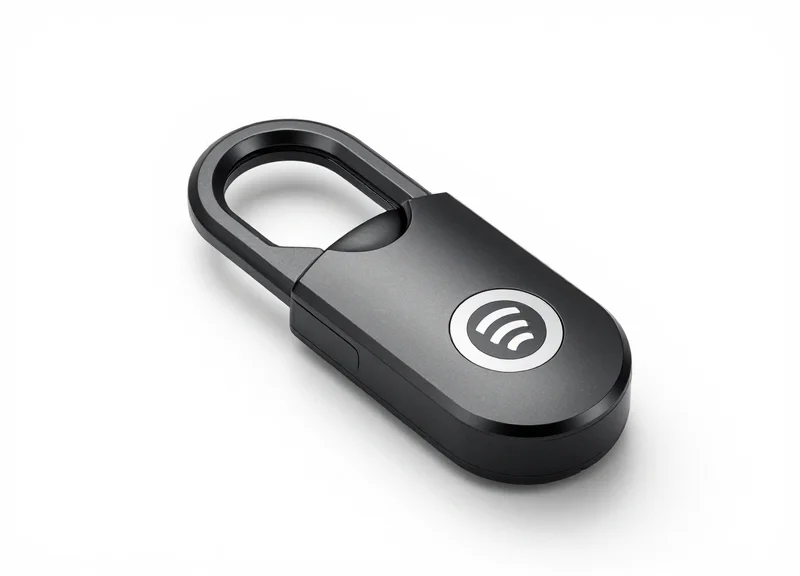
Next-gen bottle security achieves 99.9% detection accuracy by integrating Ultra-High Frequency (UHF) RFID chips directly into a high-tensile mechanical lock, specifically tuned to operate at the 860-960 MHz range. Unlike traditional Electronic Article Surveillance (EAS) which relies on low-frequency magnetic fields prone to interference, these advanced systems utilize 'Liquid-Specific Tuning' and high-sensitivity chips (such as the Impinj M700 series) to ensure signal propagation even when surrounded by high-dielectric fluids like ethanol. This synergy of physical containment and digital precision allows for individual item-level tracking that ignores environmental noise.
| Feature | Traditional EAS (RF/AM) | Next-Gen RFID Integrated Lock |
|---|---|---|
| Frequency Range | 58 kHz (AM) / 8.2 MHz (RF) | 860 - 960 MHz (UHF) |
| Data Capacity | 1-bit (On/Off) | 96-256 bit EPC (Unique ID) |
| Liquid Interference | High (Signal Attenuation) | Mitigated via Detuning Compensation |
| Detection Range | Up to 1.8 meters | Up to 12+ meters |
| Read Rate | Single Tag Only | 1,000+ Tags per second |
The primary challenge in liquor retail is the 'Liquid Effect.' Alcohol acts as a dielectric absorber, soaking up RF energy and rendering standard tags invisible. Next-gen locks solve this through a specialized internal antenna architecture. By creates a physical 'air gap' between the RFID inlay and the bottle surface, the lock uses the housing itself as a spacer to maintain the tag's impedance match, preventing the liquid from 'detuning' the signal.
- Signal Interrogation: The RFID reader emits a modulated signal that powers the passive chip inside the bottle lock via electromagnetic induction.
- Impedance Matching: The lock’s antenna is custom-etched to account for the proximity of glass and liquid, ensuring the chip receives maximum power despite the bottle's density.
- Backscatter Modulation: The chip reflects a unique encrypted ID back to the reader. Because the lock is physically attached, the ID remains tied to that specific bottle throughout its lifecycle.
Expert Tip (Silicon Valley Insight): When evaluating hardware, focus on the 'Read Sensitivity' (measured in dBm). A next-gen lock should offer a sensitivity of at least -20 dBm. This allows the system to detect the bottle even when it is buried deep within a shopping bag or hidden under heavy winter clothing, a common tactic in organized retail crime.
How does moisture affect the read rate?
Advanced RFID locks use hydrophobic coatings and sealed PET inlays to prevent moisture ingress, maintaining a consistent read rate even in humid or refrigerated environments.
Is the frequency safe for high-end spirits?
Yes. UHF RFID operates at extremely low power levels that do not generate heat or ionizing radiation, ensuring no chemical alteration to the spirits inside.
Can the signal be blocked by foil-lined bags?
While metal can shield RF signals, next-gen systems utilize 'Circular Polarization' in their reader antennas, which increases the likelihood of signal penetration and reflection, making it significantly harder for shoplifters to 'blind' the system.
Selecting the Right Partner: Why DragonGuardGroup Leads the Innovation
Selecting a security partner for high-stakes liquor retail requires more than just hardware procurement; it demands a manufacturer like DragonGuardGroup that offers 'Dual-Shield' integration. By combining traditional EAS anti-theft deterrents with advanced RFID item-level intelligence, DragonGuardGroup provides a platform that achieves 99.9% detection accuracy while simultaneously enabling real-time inventory visibility and supply chain transparency. This dual-capability ensures that retailers do not have to choose between loss prevention and operational efficiency.
The liquor industry presents unique technical hurdles, most notably the 'liquid interference' effect that can cripple standard RFID signals. DragonGuardGroup has led the market by engineering specialized antenna configurations within their bottle locks that mitigate signal absorption. Unlike generic vendors who resell white-labeled components, DragonGuardGroup controls the entire R&D and manufacturing lifecycle, ensuring that every lock is optimized for the high-moisture and high-density environments typical of premium wine and spirits aisles.
| Feature | Generic Vendors | DragonGuardGroup Innovation |
|---|---|---|
| Technology Focus | Single-protocol (EAS only) | Dual-Technology (EAS + RFID Hybrid) |
| Detection Accuracy | 80% - 90% (Prone to blind spots) | 99.9% (Triple-antenna verification) |
| R&D Capability | Third-party sourcing | In-house design & patented locking mechanisms |
| Integration Support | Hardware only | Full-stack API & POS integration |
Expert Tip: When evaluating a partner, look for 'Firmware Agility.' DragonGuardGroup’s next-gen locks utilize chip-agnostic architecture, meaning the hardware you install today can be updated via software to support future RFID standards without requiring a full physical replacement of your security fleet.
Does DragonGuardGroup support existing EAS pedestals?
Yes. Our hybrid locks are designed to work with your current 58KHz (AM) or 8.2MHz (RF) systems while providing the RFID data layer needed for modern inventory management.
How does DragonGuardGroup handle custom bottle shapes?
We offer a 'Bespoke Fit' program where we design custom lock collars for non-standard premium bottles, ensuring high-end spirits remain secure without damaging the brand aesthetic.
Can the RFID data be integrated into my ERP?
Absolutely. We provide comprehensive SDKs and APIs that allow our RFID hardware to feed real-time stock data directly into SAP, Oracle, or custom retail management systems.
Ultimately, the transition to next-gen bottle security is a strategic investment in your brand's future. DragonGuardGroup stands out by offering a scalable roadmap that moves retailers from basic theft deterrents to data-driven asset protection, backed by 20 years of global field experience and a commitment to zero-failure manufacturing standards.