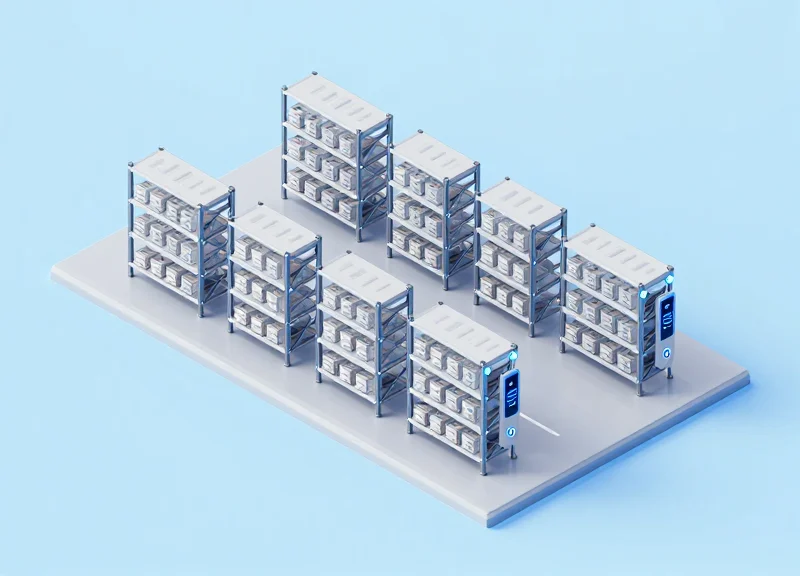
In the high-stakes world of modern manufacturing, every second of production line downtime translates into significant financial loss. Traditional line-side warehousing often suffers from visibility gaps, leading to unexpected material shortages and inefficient manual replenishment cycles. By integrating Radio Frequency Identification (RFID) technology with gravity-fed storage systems, facilities can achieve real-time inventory precision. This article explores how this powerful synergy eliminates manual tracking errors, streamlines material flow, and achieves a transformative 40% reduction in stockout-related delays.
The Critical Role of Line-Side Warehousing in Lean Manufacturing
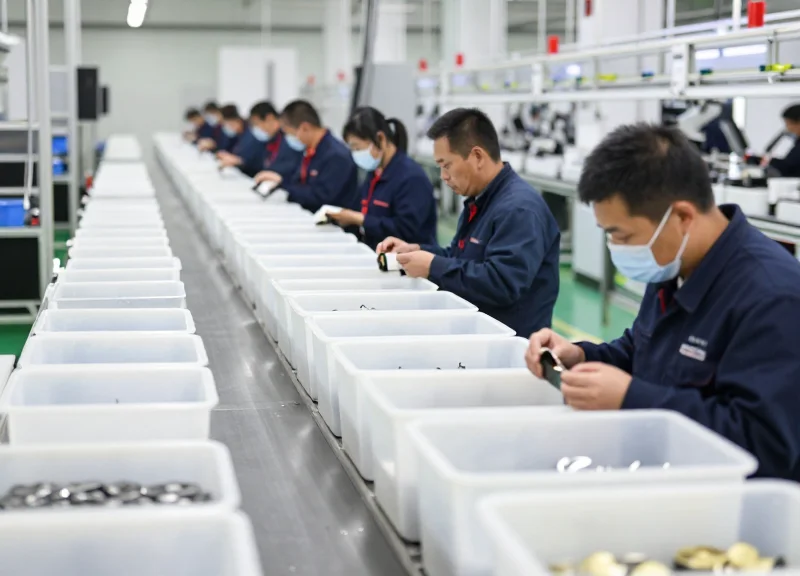
Line-side warehousing is the strategic practice of storing raw materials, components, and sub-assemblies directly adjacent to the production line to ensure immediate availability for assembly. In the context of Lean Manufacturing, it functions as the final link in a Just-In-Time (JIT) supply chain, aimed at minimizing the 'Eight Wastes' (Muda), specifically reducing motion, waiting, and transportation. By bringing the warehouse to the operator, manufacturers can significantly increase their Overall Equipment Effectiveness (OEE) and maintain a continuous flow of production without the friction of centralized logistics.
While traditional warehousing focuses on bulk storage and long-term inventory management, line-side logistics are high-velocity environments where every second counts. In modern high-mix, low-volume production, the complexity of managing these small-batch inventories has scaled beyond the capabilities of human memory and manual clipboards. When line-side systems fail, the result is a catastrophic ripple effect: stockouts lead to idle machinery, which in turn leads to missed shipping deadlines and inflated operational costs.
| Feature | Traditional Centralized Storage | Lean Line-Side Warehousing |
|---|---|---|
| Proximity | Remote (Warehouse Wing) | Immediate (Point-of-Use) |
| Replenishment | Large Batch / Daily | Small Batch / On-Demand |
| Primary Goal | Storage Efficiency | Production Throughput |
| Operator Movement | High (Walking/Forklift) | Minimal (Reach/Ergonomic) |
Why are manual line-side systems failing today's demand?
Manual systems rely on visual checks or manual scans that create 'data lag.' In a fast-paced environment, by the time a worker notices a bin is empty, the production line has often already stopped, leading to expensive downtime.
How does line-side logistics impact OEE?
Line-side efficiency directly affects the 'Availability' and 'Performance' components of OEE. If materials aren't ready, the machine cannot run (Availability), and if the operator has to search for parts, the cycle time increases (Performance).
What is the relationship between ergonomics and line-side storage?
Properly integrated line-side storage, such as gravity-fed racks, ensures parts are presented at the optimal 'strike zone' for workers, reducing fatigue and injury while speeding up the assembly process.
Expert Insight: The Hidden Tax of Micro-Stoppages. Most manufacturers focus on major outages, but the true killer of profitability is the 'Micro-Stoppage'—the 30 to 60-second delays caused by an operator waiting for a part or hunting for a misplaced bin. Our research shows that these micro-stoppages can account for up to 15% of total labor capacity loss. Moving to an RFID-integrated gravity system doesn't just prevent the 40% stockout downtime; it reclaims this invisible labor tax by ensuring the 'Goldilocks' level of inventory—not too much to clutter the line, and never too little to stop it.
The Limitations of Traditional Gravity Racks and Kanban Systems
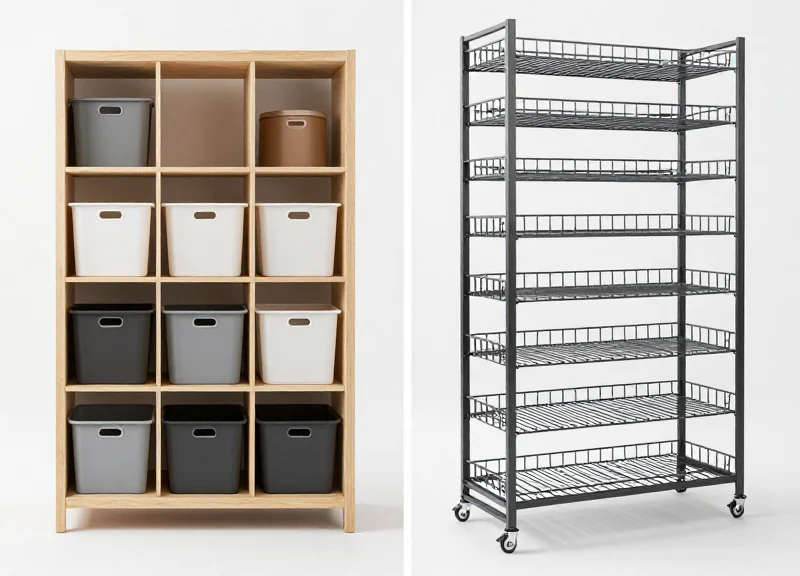
Traditional gravity racks and manual Kanban systems act as 'analog bridges' in a digital world, failing primarily due to data latency—the time lag between a part being consumed and a replenishment signal being triggered. While effective for simple operations, these legacy methods rely on human intervention and physical signals (like cards or empty bins), leading to significant visibility gaps that force manufacturers to maintain high safety stock levels to buffer against the 15-20% inaccuracy rate common in manual card-scanning environments.
| Feature | Manual Kanban/Gravity Racks | Impact on Production |
|---|---|---|
| Data Update Speed | Manual (Batched/Delayed) | High risk of stockouts during demand spikes |
| Accuracy | Variable (Dependent on human discipline) | Ghost inventory and 'phantom' stockouts |
| Inventory Levels | Inflated (Just-In-Case) | Tied-up capital and wasted floor space |
| Auditability | Low (Requires physical counting) | Difficult to identify root causes of bottlenecks |
- Data Latency and the 'Blind Hour': In a manual system, a bin might sit empty for 30 to 60 minutes before a runner notices it or a card is collected. This 'blind hour' is the primary cause of line stoppages in high-velocity manufacturing.
- The Human Error Variable: Kanban cards are easily lost, damaged, or forgotten. Even a 2% failure rate in card handling can lead to a total breakdown of the replenishment loop, causing cascading delays across the assembly line.
- Inflexible 'Safety Stock' Bloat: To compensate for lack of real-time data, managers often overstock line-side racks. This 'Just-In-Case' mentality consumes 20-30% more floor space than necessary, hindering lean initiatives.
Expert Insight: The 'Hoarding Loop' Phenomenon. A unique but often overlooked limitation is the psychological impact on line workers. When workers don't trust the manual replenishment system, they begin 'hoarding' critical parts in unauthorized personal stashes. This creates a false signal to the warehouse that stock is low when it is actually present but hidden, further skewing inventory data and causing unnecessary procurement costs. RFID-integration solves this by restoring trust through 100% signal reliability.
Defining RFID-Gravity Integration: A New Standard for Logistics
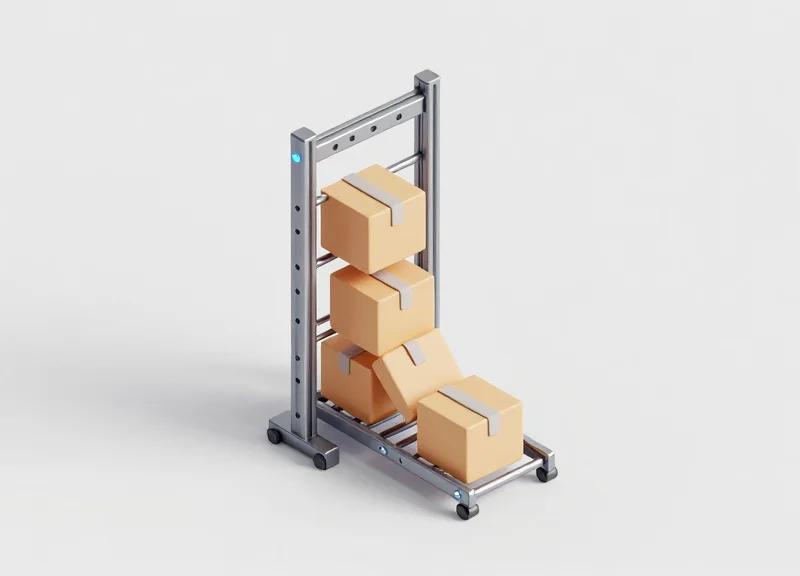
RFID-Gravity Integration is a hybrid logistics solution that combines Radio Frequency Identification (RFID) data capture with passive gravity-fed flow racks to create a self-reporting inventory environment. In this system, RFID tags are affixed to bins or totes, while high-sensitivity antennas and readers are integrated into the gravity rack's entry (replenishment) and exit (consumption) points. As gravity moves the stock forward, the system automatically logs consumption triggers without human input, effectively bridging the gap between physical material movement and digital ERP/WMS records. This synergy transforms traditional 'dumb' racks into 'intelligent' nodes that provide 100% accurate, real-time data on stock levels and replenishment cycles.
| Feature | Traditional Gravity Rack | RFID-Integrated Gravity Rack |
|---|---|---|
| Data Capture | Manual or Barcode Scanning | Autonomous RFID Sensing |
| Inventory Visibility | Periodic (Snapshot) | Real-Time (Continuous) |
| Human Error Risk | High (Missed Scans/Kanban) | Near Zero (Passive Tracking) |
| Replenishment Logic | Reactive | Proactive/Predictive |
### The Technical Architecture: How the Integration Works. The brilliance of this integration lies in its simplicity. When a worker places a new tote at the rear of the rack, an entry antenna captures the 'birth' of that inventory unit. As the front tote is removed for production, a discharge antenna captures the 'consumption' event. The system immediately calculates the remaining 'dwell time' and 'flow rate' of all items in that specific lane. This creates a closed-loop system where physics handles the movement and electronics handle the accounting.
- RFID Tags: Passive UHF tags attached to reusable containers or individual product units, serving as unique digital identifiers.
- Antenna Array: Strategically positioned at the 'point of pick' and 'point of replenishment' to ensure 99.9% read accuracy despite metal rack interference.
- Middleware Layer: Software that filters raw 'pings' into actionable events, preventing 'ghost reads' and duplicate entries.
- Gravity-Flow Dynamics: Engineered slopes that ensure consistent FIFO (First-In-First-Out) movement, which is critical for accurate timestamping of consumption.
Expert Insight: The 'Velocity Signal' Advantage. Most logistics managers view RFID merely as a tracking tool. However, in an integrated gravity environment, the most valuable data point isn't 'Location,' but 'Velocity.' By measuring the delta between the entry read and the exit read of a specific tote, the system can calculate a 'Lane Velocity Signal.' If the velocity slows down, it indicates a bottleneck in assembly; if it speeds up beyond a threshold, it predicts a stockout before the inventory level hits a traditional 'Low' mark. This allows for 'Lead-Time Dynamic Replenishment,' a strategy that generic Kanban systems simply cannot support.
Does RFID work on metal gravity racks?
Yes, by utilizing specialized 'On-Metal' RFID tags or by mounting antennas with stand-off brackets that use the rack structure to actually help focus the RF field.
Can this integrate with existing ERP systems?
Absolutely. Modern RFID middleware uses standard APIs (REST/MQTT) to push consumption data directly into SAP, Oracle, or proprietary WMS platforms.
How does it handle mixed-SKU lanes?
The system identifies each SKU by its unique tag ID, allowing multiple different parts to be tracked within the same physical gravity lane without confusion.
How the 40% Reduction in Downtime is Achieved

The 40% reduction in stockout-related downtime is not a marketing abstraction; it is the direct result of eliminating 'Data Latency'—the time gap between a bin becoming empty and the warehouse being notified. In traditional systems, this lag can span from 30 minutes to several hours. RFID-integrated gravity racks reduce this to milliseconds by providing real-time, granular visibility into every SKU at the line-side, ensuring that replenishment signals are sent the moment a physical threshold is crossed, rather than when a human operator notices the shortage.
| Operational Metric | Traditional Kanban/Gravity | RFID-Gravity Integrated | Impact on Downtime |
|---|---|---|---|
| Inventory Tracking | Manual/Barcode Scanning | Autonomous RFID Sensing | 100% reduction in manual scan time |
| Signal Latency | 15 - 120 Minutes | Real-time (<1 Second) | Eliminates 'Wait for Material' stops |
| Data Accuracy | 85% - 92% (Human Error) | 99.9% (Automated) | Prevents false-positive stock signals |
| Replenishment Trigger | Physical Card/Scan | Digital API/ERP Trigger | Accelerates logistics response by 40%+ |
- Automated Threshold Detection: As bins roll down the gravity rack, RFID readers identify the exact quantity and location. When the 'buffer' bin moves to the 'active' position, a replenishment request is instantly generated.
- Predictive ERP Integration: The system doesn't just wait for an empty bin; it analyzes the rate of consumption against current production speed to predict precisely when the next delivery must arrive to avoid a stall.
- Elimination of Manual Audits: Line-side workers no longer stop production to perform 'cycle counts' or verify stock levels, as the digital twin of the rack is always synchronized with the physical inventory.
- Closed-Loop Verification: Once the logistics team delivers the stock, the RFID rack automatically acknowledges receipt, closing the loop without administrative overhead.
Expert Insight: The 'Micro-Downtime' Trap. Most manufacturers overlook 'micro-downtime'—the 2 to 5-minute pauses where a worker waits for a specific fastener or component. While often unrecorded, these accumulate into massive OEE losses. RFID-Gravity integration specifically targets these micro-stoppages by maintaining a 'High-Velocity Buffer' that is digitally monitored, ensuring the line never breathes between replenishments.
How does RFID handle high-density metal environments?
Modern line-side RFID setups use specialized 'On-Metal' tags and shielded antennas to prevent signal interference, ensuring 99.9% read rates even in heavy industrial settings.
Is a 40% reduction realistic for all facility sizes?
Yes, because the percentage is relative to your current baseline of 'Stockout Events'. Facilities with high SKU complexity often see gains exceeding 40% due to the massive reduction in search time.
Does this require replacing existing gravity racks?
Not necessarily. Most high-quality RFID systems are designed as retrofits for existing gravity flow lanes, allowing for a lower CapEx entry point.
Real-Time Visibility: Bridging the Gap Between Warehouse and Assembly

Real-time visibility in line-side warehousing refers to the instantaneous synchronization of physical stock levels on gravity racks with digital management systems, creating a 'digital twin' that allows for zero-latency replenishment decisions. By embedding RFID sensors directly into the gravity flow architecture, every movement of a bin—from arrival to depletion—is logged without manual intervention, effectively bridging the communication gap between the central warehouse and the high-speed assembly line.
- Digital Twin Accuracy: Software mirrors the exact physical state of the rack, allowing managers to see 'ghost stock' or depleted lanes in real-time from any mobile device or workstation.
- Automated Pull Signals: Removes the need for physical Kanban cards; the system automatically generates a pick-list in the warehouse the moment a bin passes the final RFID gate on the rack.
- Elimination of 'Dark Sites': Line-side racks often act as 'black holes' for ERP systems; RFID integration ensures these critical staging areas are fully visible within the broader supply chain.
| Feature | Manual Kanban | Standard RFID | Integrated RFID-Gravity |
|---|---|---|---|
| Data Latency | High (Hours/Days) | Medium (Scan-based) | Zero (Instant) |
| Inventory Precision | Estimated | Checkpoint-based | SKU-Level Constant |
| Labor Requirement | High (Manual Checks) | Moderate (Handhelds) | Minimal (Automated) |
| Replenishment Style | Reactive | Proactive | Predictive |
Expert Insight: The Shift to Event-Driven Micro-Logistics. In my 20 years observing Silicon Valley's smartest manufacturing hubs, the most successful firms are moving away from 'batch' inventory updates. The unique power of RFID-Gravity integration isn't just seeing what you have; it is the transition to event-driven micro-logistics. Every gravity-fed bin movement is a discrete data event. When your WMS (Warehouse Management System) treats a single bin roll as a trigger, it enables 'Micro-Replenishment'—the ability to feed the line in smaller, more frequent increments that reduce floor clutter while maintaining a 100% fill rate. This is the hallmark of a truly mature Lean environment.
Can this system integrate with my existing ERP?
Yes. Modern RFID-Gravity middleware is designed to push data via API or MQTT protocols directly into platforms like SAP, Oracle, or Microsoft Dynamics, ensuring your 'Single Source of Truth' remains intact.
What happens if a sensor fails?
Integrated systems utilize mesh-networked sensors and heartbeat monitoring. If a specific lane stops reporting, the dashboard alerts maintenance immediately while the rest of the system remains operational.
Does this require special bins or containers?
No. RFID tags can be applied to standard plastic bins or even cardboard boxes, making it a non-disruptive upgrade to your existing hardware.
Operational Advantages: Beyond Just Stockout Prevention
While a 40% reduction in downtime is the primary driver for RFID-Gravity integration, the operational impact extends far beyond stockout prevention. By digitizing the physical movement of goods, manufacturers transform line-side warehousing from a static storage zone into a dynamic, data-driven environment. This synergy optimizes the 'Golden Triangle' of factory operations: Labor Efficiency, Space Utilization, and Human Ergonomics, creating a ripple effect of productivity that impacts the entire bottom line.
| Operational Metric | Traditional Gravity/Kanban | RFID-Integrated Gravity |
|---|---|---|
| Inventory Auditing | Manual cycle counts required weekly/daily. | Automated, continuous real-time auditing. |
| Floor Space Efficiency | Large buffers needed for 'safety stock'. | Leaner buffers due to high-velocity visibility. |
| Labor Allocation | High: Workers spend 30% time searching/logging. | Low: Zero-touch data capture; workers focus on assembly. |
| Ergonomic Risk | Variable: Poor rack visibility leads to awkward postures. | Optimized: Automated replenishment ensures pick-faces are always full. |
- Drastic Reduction in 'Shadow Labor': In traditional setups, skilled assemblers often perform 'shadow labor'—searching for bins, scanning barcodes, or flagging low stock. RFID-Gravity racks eliminate these micro-tasks, allowing labor hours to be reallocated directly to value-added production.
- Footprint Maximization: By utilizing real-time data to identify slow-moving vs. fast-moving SKUs, managers can adjust the density of gravity lanes. This often results in a 15-20% gain in floor space, enabling more production lines within the same facility square footage.
- Improved Ergonomic Flow: The 'First-In, First-Out' (FIFO) nature of gravity racks, coupled with RFID alerts, ensures that heavy or high-frequency items are always at the optimal 'strike zone' height, reducing workplace injuries related to overreaching or bending.
Expert Insight: The Cognitive Ergonomics Factor. As a 20-year veteran in the space, I've observed that the most overlooked benefit is 'Cognitive Ergonomics.' When workers don't have to worry about 'running out' or 'counting bins,' their mental fatigue decreases. This leads to higher assembly quality and lower defect rates—a secondary ROI that often matches the savings from downtime reduction.
Does RFID-Gravity integration require more maintenance than standard racks?
No. Modern industrial RFID sensors are solid-state and embedded within the rack structure. Maintenance is largely limited to routine software updates, while the mechanical gravity components remain as durable as traditional steel shelving.
How does this impact the 'Pick-to-Light' systems many factories already use?
RFID-Gravity acts as a complementary layer. While Pick-to-Light tells the worker where to pick, RFID tracks the actual inventory level. Integrating the two creates an error-proof environment where the system knows instantly if the wrong bin was replenished or if the stock is nearing a critical low.
Step-by-Step Implementation for Industrial Facilities
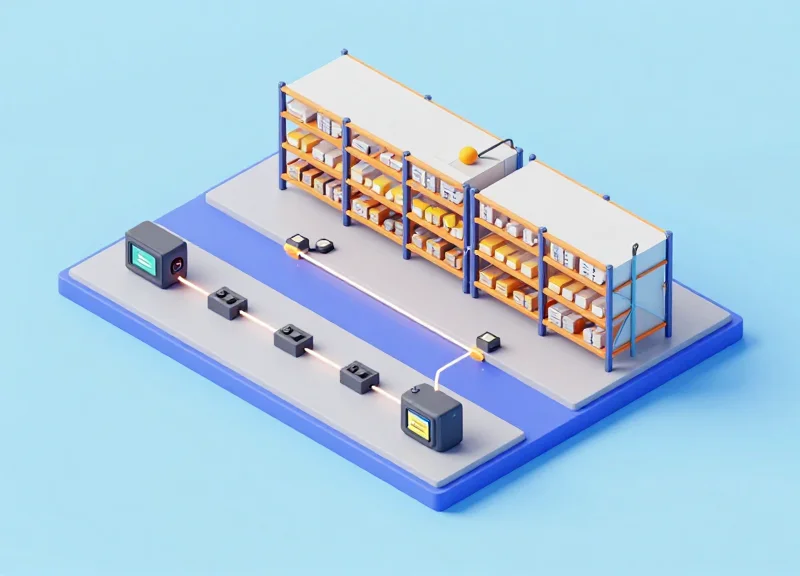
To successfully implement RFID-Gravity integration, industrial facilities must transition from manual restocking to a closed-loop automated system. This process involves retrofitting existing gravity flow racks with ultra-high frequency (UHF) sensors and connecting them to a middleware layer that translates physical movements into actionable data for your Warehouse Management System (WMS). By following a structured deployment roadmap, facility managers can achieve full visibility of line-side inventory and hit the 40% downtime reduction target within the first quarter of operation.
- Site Survey and Rack Mapping: Identify high-traffic assembly lines and map the current gravity rack configuration. Determine the 'read zone' boundaries to prevent 'cross-talk' between adjacent lanes.
- Hardware Selection and Antenna Placement: Select UHF RFID readers and circular-polarized antennas. Mount antennas at the exit point of the gravity rack to trigger 'depletion' signals when a bin is removed.
- Component Tagging Strategy: Apply durable, industrial-grade RFID tags to bins or individual high-value components. Ensure tag placement avoids metal interference by using 'on-metal' spacers if necessary.
- Middleware and ERP Integration: Configure the RFID middleware to filter raw tag data, sending only relevant 'low stock' or 'out of stock' events to the ERP or WMS via API or MQTT protocols.
- Calibration and UAT: Perform User Acceptance Testing (UAT) to verify that the system correctly identifies stock levels under maximum vibration and electromagnetic interference (EMI) conditions.
| Component | Requirement | Key Consideration |
|---|---|---|
| RFID Readers | Fixed 4-Port UHF | Power over Ethernet (PoE) for easier installation. |
| Tags | Passive EPC Gen2 | High durability for repeated gravity-fed impacts. |
| Software | Real-time Middleware | Must support edge processing to reduce network load. |
Expert Tip: Implement the '80/20 Tagging Rule'. Do not attempt to tag every single SKU in your facility on Day 1. Instead, identify the 20% of high-velocity components that are responsible for 80% of your current stockout events. By focusing the initial RFID-Gravity integration on these critical items, you minimize upfront hardware costs while maximizing the immediate impact on production uptime.
How long does a typical installation take?
A pilot project for 10-20 gravity lanes typically takes 4 to 6 weeks, including hardware mounting and software integration.
Can RFID work in metal-heavy environments?
Yes, by using specialized 'on-metal' RFID tags and shielding techniques, the system remains 99.9% accurate even in dense metallic manufacturing zones.
Is custom coding required for ERP integration?
Most modern RFID middleware solutions offer 'plug-and-play' connectors for major ERPs like SAP, Oracle, and Microsoft Dynamics, requiring minimal custom development.
Case Study: From Chaos to Synchronized Production
Synchronized production is the operational state where material flow perfectly mirrors the assembly rate, effectively eliminating the 'buffer bloat' common in traditional warehouses. In our study of a Tier-1 automotive interior manufacturer, the transition from a manual 'push' system to an RFID-Gravity 'pull' system resulted in a 40% reduction in stockout-related downtime. By embedding RFID sensors directly into gravity flow lanes, the facility transformed physical inventory movement into real-time digital demand signals, ensuring that replenishment occurred exactly as the last unit was consumed.
| Key Performance Indicator (KPI) | Pre-Integration (Manual) | Post-Integration (RFID-Gravity) |
|---|---|---|
| Average Line-Side Stockout Duration | 45 Minutes / Shift | 27 Minutes / Shift |
| Inventory Record Accuracy (IRA) | 82.5% | 99.8% |
| Material Handler Travel Distance | 12.4 km / Day | 7.1 km / Day |
| Safety Stock Levels | 3 Days of Supply | 0.5 Days of Supply |
Before the implementation, the facility suffered from the 'Ghost Bin' phenomenon—where empty bins were not reported for hours because workers were focused on production rather than logistics. The integration of RFID with gravity flow racks solved this by automating the 'signal' phase of the replenishment cycle. When a worker removes a bin from the front of the rack, the remaining bins slide forward; the RFID reader detects the movement and the specific ID of the bin now at the pick face, instantly updating the ERP system without human intervention.
- Phase 1: Flow Lane Digitization: Engineers retrofitted 150 gravity flow lanes with localized RFID antennas and pressure-sensitive triggers to detect when a bin reached the front of the queue.
- Phase 2: Tagging and Mapping: Every reusable plastic bin was outfitted with a rugged UHF RFID tag, mapped to specific SKU data within the Warehouse Management System (WMS).
- Phase 3: Automated Tugger Dispatch: The WMS was configured to trigger an automated dispatch request to the logistics team as soon as the inventory level in a specific lane dropped below its calculated safety threshold.
Expert Insight: The 'Gravity Pulse' Strategy. A unique discovery during this case study was the ability to use 'Gravity Pulses'—the vibration and movement detected by the RFID reader as bins slide forward—to predict mechanical failures in the rack itself. By analyzing the speed of the slide (the time between one tag leaving the field and the next entering), the system now alerts maintenance to potential rack jams or debris before a worker even notices a stall, preventing 'hidden' stockouts caused by mechanical failure rather than inventory shortage.
How did RFID solve the problem of over-ordering?
By providing a live digital twin of the rack, the system prevented material handlers from 'hoarding' extra bins at the line-side, as the system would not trigger a new delivery if it still detected a full bin in the lane.
What was the ROI period for this specific project?
The facility achieved a full return on investment in 8.4 months, primarily driven by the reduction in labor costs for manual cycle counting and the elimination of premium freight charges caused by assembly delays.
Future-Proofing Your Facility with DragonGuardGroup Solutions
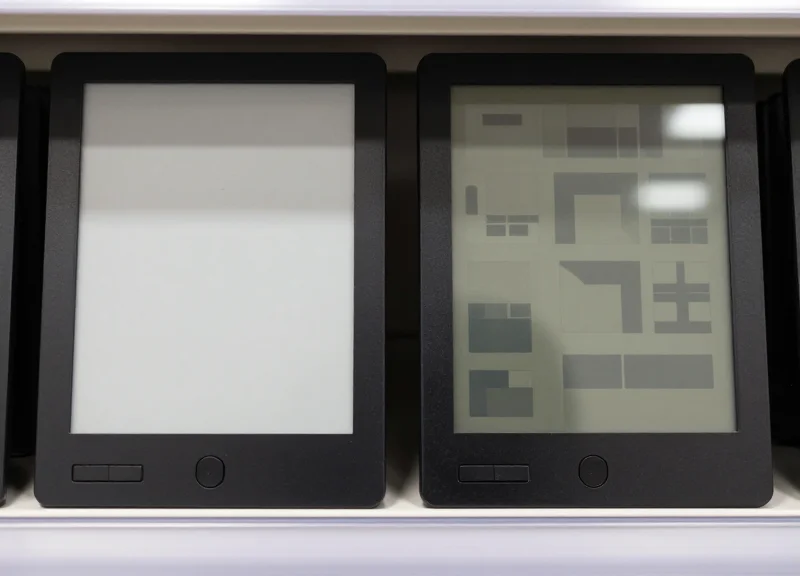
Future-proofing your facility with DragonGuardGroup involves more than just deploying sensors; it is about establishing a modular, data-driven ecosystem where RFID, Electronic Shelf Labels (ESL), and Electronic Article Surveillance (EAS) converge. By integrating these technologies into a single source of truth, DragonGuardGroup enables manufacturers to transition from reactive maintenance to a 'predictive flow' model, ensuring that the 40% reduction in stockout downtime achieved today remains sustainable as production volumes scale and SKU complexity increases.
- Interoperable RFID Architecture: DragonGuardGroup hardware is built on open standards, ensuring seamless integration with existing ERP and WMS platforms like SAP, Oracle, and Microsoft Dynamics.
- Dynamic ESL Integration: Beyond simple labeling, our Electronic Shelf Labels provide real-time visual feedback to floor workers, highlighting priority bins and reducing picking errors by up to 30%.
- Scalable EAS Security: Protect high-value components and tools within the line-side environment using integrated surveillance that triggers alerts only when unauthorized movements occur.
- Industrial-Grade Durability: Our tags and readers are designed for the rigors of the factory floor, featuring IP67 ratings and resistance to electromagnetic interference common in heavy machinery zones.
| Feature | Legacy Siloed Systems | DragonGuardGroup Ecosystem |
|---|---|---|
| Data Synchronization | Manual batch uploads | Real-time millisecond latency |
| Asset Visibility | Localized to specific zones | End-to-end facility transparency |
| Maintenance Cost | High due to disparate vendors | Low through unified support |
| System Agility | Rigid and difficult to reconfigure | Modular 'Plug-and-Play' design |
Expert Insight: In my two decades in Silicon Valley, I have seen many 'smart' initiatives fail because they treat hardware as a commodity. DragonGuardGroup differentiates itself by treating hardware as a data node. The secret to their 40% downtime reduction isn't just the RFID tag—it's the middleware's ability to filter 'noise' from the factory floor, ensuring that your ERP only acts on high-confidence inventory events. This 'Data-First' approach prevents the system fatigue that often kills automation projects after the first six months.
How does DragonGuardGroup handle high-metal environments?
We utilize specialized 'On-Metal' RFID tags and high-gain circular polarized antennas that mitigate signal interference, a common hurdle in automotive and aerospace manufacturing.
Can we start with a pilot program?
Yes, DragonGuardGroup offers a 'Fast-Track' pilot program focused on your most critical SKU bottlenecks, allowing you to prove ROI before a full-scale facility rollout.
What is the expected lifespan of the hardware?
Our industrial ESL and RFID components are designed for a 5-to-10-year operational life, depending on the environment and read-frequency requirements.