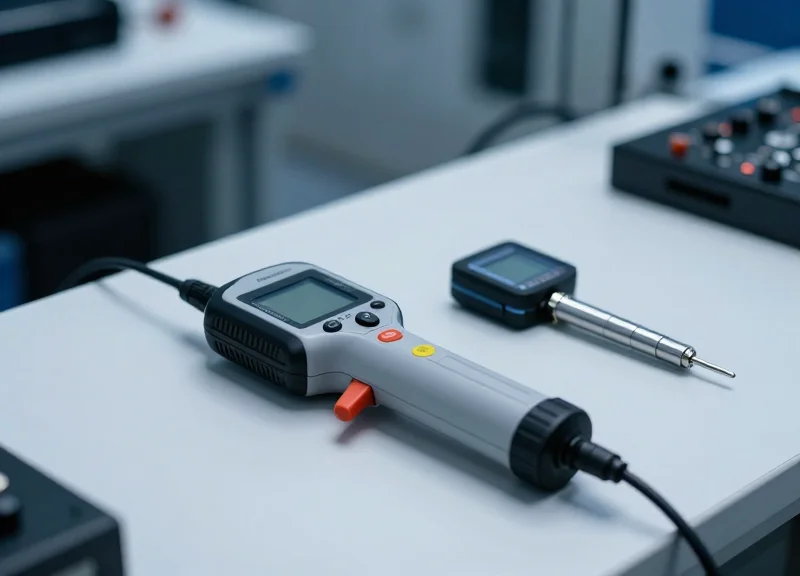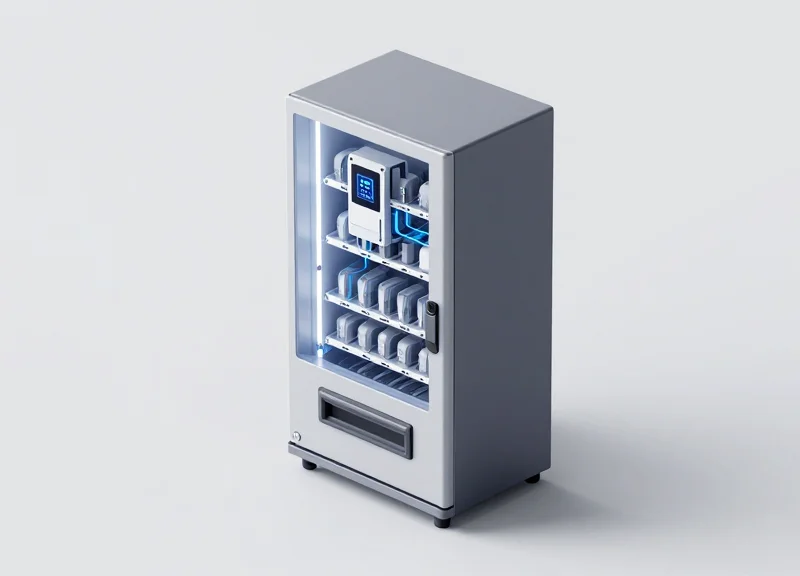
In the rapidly evolving landscape of automated retail and inventory management, the choice of an RFID OEM module is the cornerstone of system reliability. Whether you are designing high-security smart tool cabinets or frictionless vending machines, the brain of your hardware—the embedded RFID reader—must balance power, precision, and physical constraints. This guide delves into the five non-negotiable factors that ensure your integration is not just functional, but market-leading, leveraging the expertise of DragonGuardGroup in EAS and RFID technologies.
Understanding the Role of RFID OEM Modules in Smart Retail
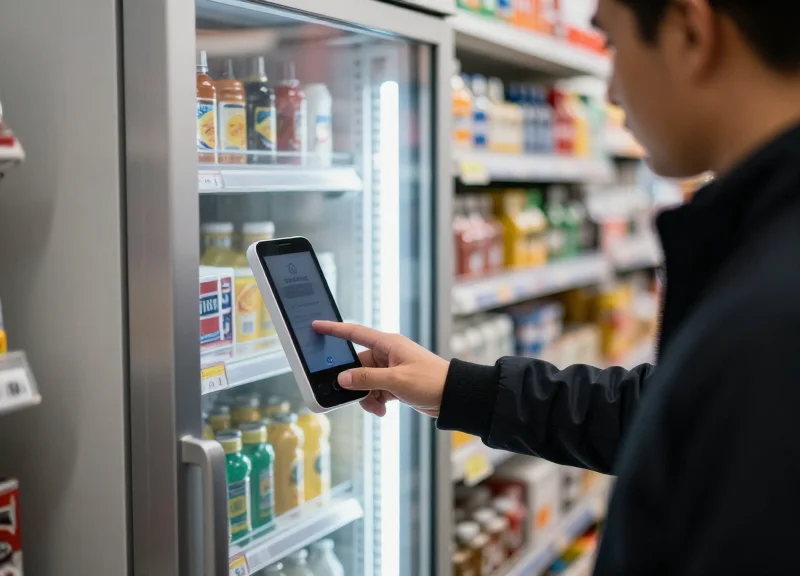
In the context of smart retail, an RFID OEM module is the core embedded engine that translates physical radio frequency signals into digital data, enabling cabinets and vending systems to track items without human intervention. These modules serve as the 'brains' of autonomous commerce hardware, providing the necessary sensitivity and processing power to monitor hundreds of items simultaneously while maintaining 99.9% inventory accuracy.
| Feature | Traditional Vending | RFID-Enabled Smart Cabinets |
|---|---|---|
| Product Recognition | Mechanical/Coil-based | Digital RFID Tag Sensing |
| Inventory Visibility | Restricted to 'Sold' data | Real-time, Item-level tracking |
| User Experience | Push-button selection | Grab-and-go (Open door) |
| Restocking Speed | Slow (Manual slot loading) | Instant (Bulk placement) |
- Inventory Audit Engine: The module continuously scans the internal environment to detect changes in stock, ensuring the system always knows what is present, what was removed, and what needs restocking.
- Transaction Trigger: By identifying which specific Electronic Product Code (EPC) leaves the cabinet, the module sends a signal to the payment gateway to charge the customer accurately for exactly what they took.
- Security & Loss Prevention: OEM modules can detect unauthorized movements or inventory discrepancies instantly, triggering alerts or locking doors to prevent shrinkage.
Expert Insight: Most engineers mistake an OEM module for a simple reader, but in high-density retail environments, it acts as a 'Data Filter.' A premium module does not just read tags; it uses sophisticated algorithms to eliminate 'phantom reads' or signals from tags outside the cabinet, which is the number one cause of billing errors in smart vending.
Why can't I just use a standard external RFID reader?
External readers are bulky and lack the compact form factor needed for seamless integration. OEM modules are designed to be embedded directly onto PCBs or within tight enclosures, offering lower power consumption and customizable GPIO interfaces for controlling cabinet locks and sensors.
How does an OEM module improve the customer experience?
It enables the 'Grab-and-Go' model. Because the module can scan the entire cabinet contents in milliseconds, customers can pick up multiple items and simply walk away, with the module handling the entire checkout process silently in the background.
What is the impact of the module on ROI?
By automating inventory and reducing manual audits, RFID OEM modules typically reduce labor costs by 30-40% and virtually eliminate stock-out situations that lead to lost sales.
Factor 1: Frequency Selection—UHF vs. HF/NFC for Cabinets
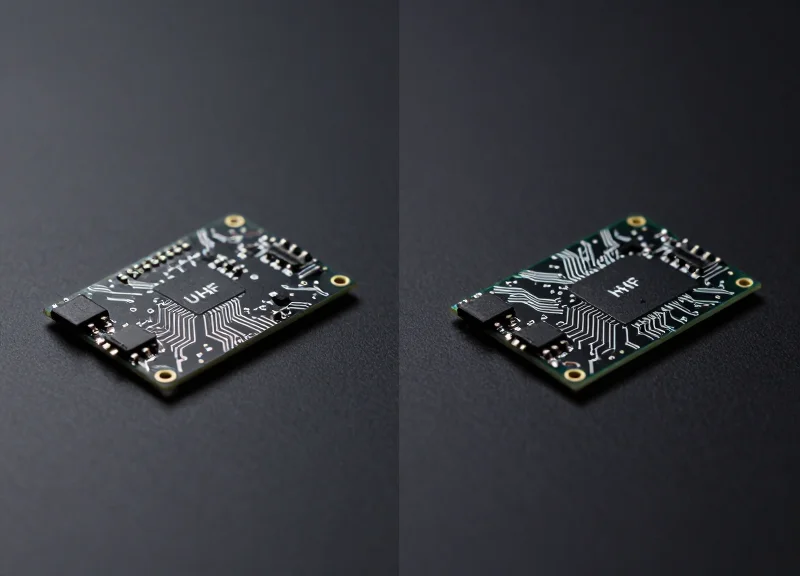
Choosing the correct frequency for your RFID OEM module is the most fundamental architectural decision in smart cabinet design, as it dictates both the user experience and the system's inventory accuracy. Generally, Ultra-High Frequency (UHF) modules are utilized for high-density, bulk-inventory tracking where scanning hundreds of items simultaneously is required, whereas High Frequency (HF/NFC) modules are preferred for secure, one-to-one interactions, such as user authentication or single-item vending transactions.
| Feature | UHF (860-960 MHz) | HF/NFC (13.56 MHz) |
|---|---|---|
| Read Range | Long (up to 10+ meters) | Short (typically < 10 cm) |
| Data Rate | Very High (Bulk Reading) | Moderate (Single Read) |
| Metal/Liquid Tolerance | Requires specialized tags | Generally better performance |
| Primary Use Case | Real-time Inventory/Stock-taking | Access Control / Payment / Tap |
Expert Insight: In the Silicon Valley hardware ecosystem, we often see a shift toward 'Hybrid Integration.' While a cabinet might use a UHF OEM module to maintain a live manifest of 500 surgical tools, it may also embed an NFC reader on the handle for secure technician login. A common mistake is trying to force UHF into a secure access role; because UHF waves can penetrate thin cabinet doors or reflect around corners, you risk accidentally 'unlocking' the cabinet from across the room if your power levels aren't perfectly tuned.
When to choose UHF OEM Modules?
Select UHF when your smart cabinet needs to detect the removal of any item among hundreds in real-time. This is ideal for medical supply rooms, high-value tool cribs, and retail apparel racks where stock-taking must happen without human intervention.
When to choose HF/NFC OEM Modules?
Select HF/NFC for vending systems where the user 'taps' to pay or when tracking a single, specific item with high security. NFC is also essential if you want users to interact with the cabinet using their smartphones as digital keys.
One critical technical nuance is the 'Multipath Effect' within metal enclosures. Inside a metal cabinet, UHF waves bounce off the walls, creating both 'dead zones' and 'hot spots.' To achieve 99.9% inventory accuracy, look for UHF OEM modules that support multiple antenna ports (4-port or 8-port) and use circular polarization to ensure tags are read regardless of their orientation relative to the reader.
Can UHF RFID read through metal cabinet doors?
No, radio waves cannot pass through solid metal. However, they can leak through gaps in the door seals or glass windows. For smart cabinets, we use this to our advantage by keeping the signal contained within the box.
Does liquid affect these frequencies differently?
Yes, water and liquids absorb UHF energy, which can drastically reduce read rates for items like saline bags or beverages. HF/NFC is significantly less affected by moisture, making it a safer bet for refrigerated vending.
Is it possible to use both in one system?
Absolutely. Many modern 'Grab-and-Go' systems use an NFC reader for the consumer interface and a UHF module for internal inventory tracking.
Factor 2: Form Factor and Hardware Integration Ease
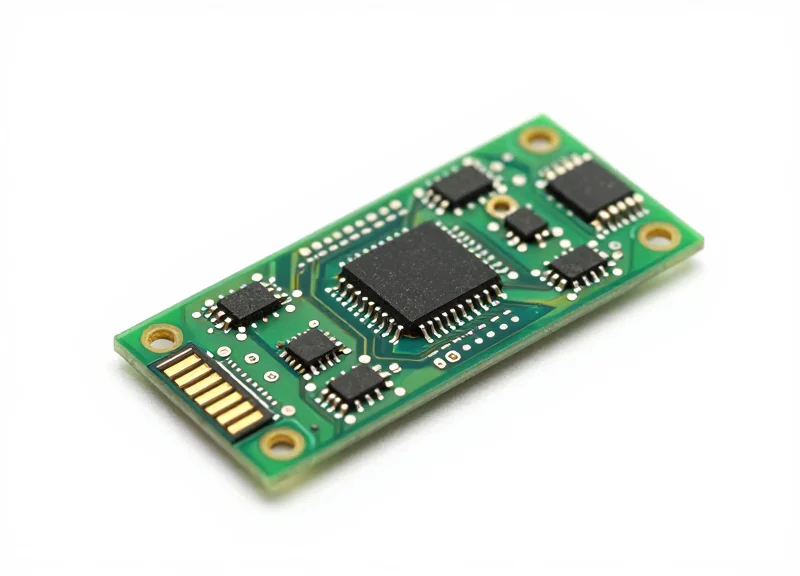
In the context of smart cabinets and vending machines, form factor and hardware integration ease refer to the physical footprint, mounting geometry, and electrical interface of an RFID OEM module. Because these systems are often packed with power supplies, cooling units, and inventory racks, the RFID module must be small enough to fit into 'dead zones' while remaining accessible for maintenance. A truly 'integratable' module minimizes the need for custom brackets or complex cable routing, reducing both the Bill of Materials (BOM) and the assembly time on the production line.
| Integration Style | Best Used For | Key Advantage | Integration Challenge |
|---|---|---|---|
| Surface Mount (SMT) | High-volume PCB production | Lowest unit cost and height profile | Requires specialized reflow soldering |
| Connectorized Module | Rapid prototyping & low volume | Plug-and-play via USB or RS232 | Bulkier footprint due to housing |
| Modular Solder-down | Industrial vending / Cabinets | Balance of compactness and stability | Requires specific carrier board design |
Hardware integration isn't just about size; it's about mechanical resilience. For vending systems located in high-traffic environments, the module must withstand constant vibrations and temperature fluctuations. Expert Tip: Always prioritize modules that feature dedicated mounting holes rather than relying on adhesive-only solutions. In my 20 years of hardware deployments, the most common field failure in smart cabinets isn't electronic; it is the physical shifting of the RFID module, which detaches the antenna cable or creates EMI (Electromagnetic Interference) issues against the metal chassis.
How does heat dissipation affect module placement?
High-power UHF RFID modules generate significant heat during continuous read cycles. Ensure the module is mounted to a metal frame that can act as a heat sink, or choose a form factor with an integrated thermal pad to prevent performance throttling.
Why are u.FL connectors preferred over SMA in OEM modules?
u.FL connectors offer a much smaller footprint, which is critical for slimline smart cabinet doors, though they are more fragile. SMA is better if the system requires frequent antenna swaps.
Can I mount the module directly to a metal surface?
Yes, but you must ensure the PCB design includes a ground plane that accounts for potential detuning. Many top-tier OEM modules include shielding cans to protect the RF circuitry from interference caused by the cabinet's metal structure.
- Assess Internal Clearance: Measure the maximum depth available in the cabinet's control box, accounting for cable bend radius (especially for rigid coax cables).
- Identify Power/Data Interfaces: Choose between TTL, RS232, or USB based on your main controller's available ports to avoid needing extra converters.
- Verify Mechanical Fastening: Select a module with M2 or M3 screw holes to ensure the module remains seated during machine vibration or door slams.
Factor 3: Protocol Support and Software Compatibility (SDK/API)
For smart cabinets and vending systems, protocol support and software compatibility act as the digital bridge between raw hardware signals and actionable inventory data. To ensure seamless integration, an RFID OEM module must support the EPCglobal Gen2 V2 (ISO 18000-6C) standard, which provides a universal language for tag-to-reader communication. Beyond the hardware protocol, the quality of the Software Development Kit (SDK) and Application Programming Interface (API) determines your Time-to-Market (TTM); a well-documented SDK allows developers to focus on the user interface and business logic rather than struggling with low-level register configurations.
| Feature | Standard Requirement | Impact on Integration |
|---|---|---|
| Air Interface Protocol | EPCglobal Gen2 / ISO 18000-6C | Ensures compatibility with 99% of retail and supply chain UHF tags. |
| OS Compatibility | Windows, Linux, Android | Crucial for vending kiosks running on diverse compute platforms. |
| SDK Languages | C#, Java, Python, C++ | Reduces the learning curve for your existing engineering team. |
| API Architecture | RESTful or MQTT preferred | Simplifies cloud synchronization for real-time inventory tracking. |
The Developer Experience: Why Documentation is King. In the Silicon Valley ecosystem, we often see hardware projects fail not because of the silicon, but because of poor software wrappers. An elite OEM module provider should offer 'plug-and-play' sample code and comprehensive documentation. This allows your team to perform basic functions—such as inventory loops, tag writing, and RSSI (Received Signal Strength Indicator) filtering—within hours of unboxing the hardware.
import rfid_library

# Initialize the OEM Module via Serial or USB
reader = rfid_library.Reader(port='/dev/ttyUSB0', baudrate=115200)

# Configure for Smart Cabinet: High Sensitivity for Bulk Reading
reader.set_power(27) # dBm
reader.set_antennas([1, 2, 3, 4])

# Start Inventory Loop
for tag in reader.scan(duration=500):
    print(f'Tag Detected: {tag.epc} | Signal Strength: {tag.rssi}dBm')
Expert Insight: Prioritize modules that offer a 'Virtual Sandbox' or Emulator. This is a unique feature often overlooked. It allows your software engineers to begin writing and testing the vending logic in a virtual environment before the physical hardware prototypes are even delivered. This parallel development track can shave 30-40% off your total project timeline.
Does the module support autonomous mode?
Autonomous mode allows the module to read and buffer data independently of the host controller, which is vital for vending systems that must remain responsive during high-traffic periods.
How are firmware updates handled?
Look for modules that support Over-the-Air (OTA) or simple field-level firmware updates to ensure your cabinets can adapt to new security protocols or tag technologies without a site visit.
Is there a standardized API across the product line?
Selecting a vendor with a unified API allows you to scale from a small snack vending machine to a large-scale industrial tool cabinet using different modules without rewriting your core software.
Factor 4: Managing Interference in Metallic Environments

Managing interference in metallic environments requires RFID OEM modules that support specialized antenna tuning, shielding, and adaptive power controls to mitigate signal reflection and electromagnetic detuning. In the context of smart cabinets and vending systems, metal surfaces act as both reflectors and absorbers of RF energy, which can create 'dead zones' or cause the RFID tags to become unreadable if the module is not engineered to handle high-reflection environments.
When an RFID OEM module is placed inside a steel cabinet, the metallic surroundings cause two primary issues: detuning of the antenna's resonant frequency and the multipath effect. Detuning shifts the impedance of the antenna, leading to power loss and reduced read range. The multipath effect occurs when radio waves bounce off metal walls, causing signals to arrive at the reader at different times, which can lead to destructive interference. To counter this, elite-grade modules incorporate sophisticated RF front-ends that can dynamically adjust to these environmental shifts.
| Interference Factor | Impact on Performance | Module-Level Solution |
|---|---|---|
| Electromagnetic Detuning | Reduced read range and power efficiency | Automatic Impedance Matching & Tuning |
| Multipath Reflections | False reads or signal cancellation | RSSI Filtering & Carrier Phase Analysis |
| Faraday Cage Effect | Signal containment/blocking | External Antenna Ports for Optimized Placement |
| RF Noise (Motors/Compressors) | Data corruption and signal-to-noise loss | On-board SAW Filters & Shielded Enclosures |
Expert Insight: Many engineers mistakenly increase the module's output power to 'punch through' metal interference. In a confined smart cabinet, this actually worsens the problem by increasing signal noise and reflections. The key is not more power, but Receiver Sensitivity (Rx Sensitivity). Look for modules with sensitivity ratings better than -80 dBm, which allows the module to 'hear' the weak backscattered signals from tags even amidst heavy metallic background noise.
- Choose Modules with External Antenna Support: Avoid modules with only integrated PCB antennas if the unit is buried deep in metal. Use MMCX or U.FL connectors to position antennas where they have the best line-of-sight to the inventory.
- Implement Circular Polarization: Select modules compatible with circular polarized antennas to reduce the sensitivity to tag orientation, which is critical when signals are bouncing off metal walls.
- Utilize RSSI Thresholding: Configure the module's software to filter out low-strength signals that are likely reflections or 'ghost reads' from outside the intended cabinet zone.
Can I use standard RFID tags on metal shelves?
No, standard inlay tags will fail when placed directly on metal. You must use 'on-metal' or 'metal-mount' tags which include a spacer or ferrite layer, and ensure your OEM module provides enough power to activate these specialized tags.
How does cabinet material affect the RFID module?
Stainless steel is highly reflective, while aluminum can be more absorptive at certain frequencies. Always calibrate your module's 'Listen Before Talk' (LBT) settings based on the specific alloy used in your cabinet frame.
Factor 5: Power Consumption and Thermal Management
Power consumption and thermal management for RFID OEM modules involve the strategic balance between the energy required for high-performance inventory scanning and the heat generated by the module's internal circuitry. In the context of smart cabinets and vending systems, effective management ensures that the module operates within safe temperature thresholds, preventing thermal throttling or permanent component damage while minimizing the strain on the system's overall power supply.
Unlike handheld scanners, smart cabinets often perform high-intensity, bulk-reading operations where the RFID module stays active for extended periods. When integrated into unventilated or metallic enclosures, even a low-wattage module can create a localized 'heat trap.' If the module's temperature rises too high, the internal RF power amplifier may lose efficiency, leading to dropped reads and eventual system instability. Choosing a module with multiple power-saving modes and efficient thermal dissipation is not just about energy costs; it is about 24/7 operational uptime.
| Operational Mode | Power Profile | Typical Use Case | Impact on Thermal Load |
|---|---|---|---|
| Deep Sleep | < 50mW | Idle/System Off | Negligible; allows cooling |
| Standby | 100mW - 500mW | Waiting for User Interaction | Low; constant but manageable |
| Active Scanning | 2W - 8W+ | Inventory Check / Vending | High; requires heat sinking |
- The 'Duty Cycle' Strategy: Expert Tip: To maintain stability in tight spaces, implement a duty cycle (e.g., 500ms on, 100ms off) rather than continuous wave (CW) transmission. This provides 'thermal breathing room' for the module without sacrificing inventory accuracy.
- Passive vs. Active Cooling: Most OEM modules rely on heat dissipation through their PCB mounting holes or integrated heat sinks. Ensure your cabinet design includes a thermal interface material (TIM) between the module and the metal chassis to turn the entire enclosure into a giant radiator.
- Power Supply Ripple: High-performance UHF modules are sensitive to voltage fluctuations. Use dedicated LDO regulators to ensure clean power, as heat increases internal resistance and makes the module more prone to noise.
One original perspective often overlooked by manufacturers is the 'Thermal Impact on Frequency Drift.' As a module heats up, the quartz crystals and oscillators can experience slight frequency shifts. In highly regulated regions with narrow frequency bands, a hot module might drift outside of its optimized channel, causing a 10-15% drop in read range. Prioritizing modules with high-grade Temperature Compensated Crystal Oscillators (TCXOs) can mitigate this hidden performance killer.
Does higher power output always mean more heat?
Generally, yes. However, modules with high-efficiency RF amplifiers (Class E or F) convert more electricity into signal and less into waste heat compared to older linear designs.
Can I monitor the module temperature remotely?
Premium OEM modules include an onboard digital temperature sensor accessible via the SDK. This allows the system to trigger an alert or a 'cool-down mode' before hardware failure occurs.
Is a fan necessary for smart cabinets?
In most cases, no. If the module is correctly coupled to a metal mounting plate, passive conduction is sufficient. Fans are only recommended if the ambient temperature inside the cabinet exceeds 50°C (122°F).
Evaluating Multi-Antenna Port Capabilities
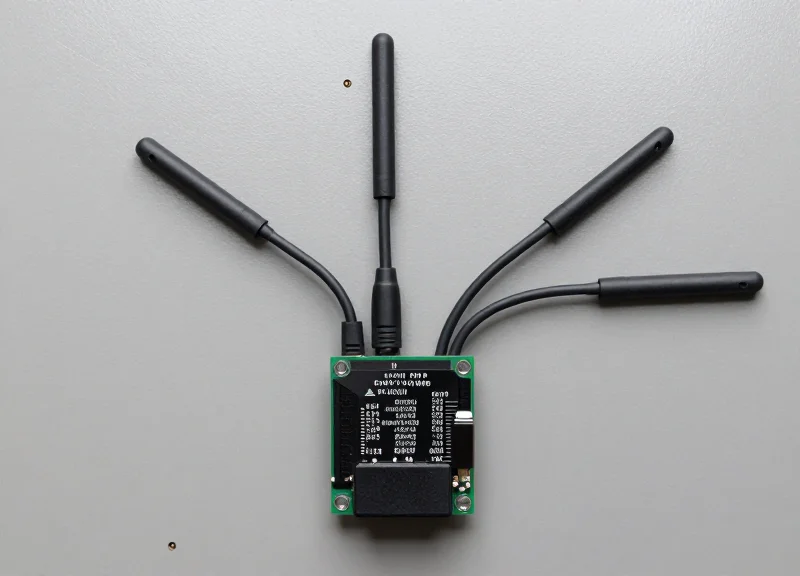
In smart cabinet and vending applications, multi-antenna port capabilities refer to the RFID module's ability to drive multiple distinct antennas from a single reader engine. This architecture is vital for achieving item-level visibility across multiple shelves or within metallic enclosures where signal propagation is physically limited. By strategically positioning antennas—such as one per shelf or at opposing angles—and utilizing a module that can rapidly cycle through them, developers can eliminate 'dead zones.' This ensures that every tagged item, regardless of its orientation or proximity to other products, is accounted for with near-100% accuracy.
| Port Configuration | Typical Application | Key Advantage | Technical Trade-off |
|---|---|---|---|
| Single Port | Small lockboxes or kiosks | Lowest cost and power footprint | High risk of signal blind spots |
| 4-Port Native | Standard 4-5 shelf vending units | High signal integrity and speed | Higher initial module cost |
| 8-Port to 32-Port (Mux) | Large industrial tool cribs | Maximum spatial coverage | Increased insertion loss and slower polling |
Expert Insight: The 'Switching Latency' Factor. From a Silicon Valley engineering perspective, the most overlooked metric isn't the port count—it is the switching speed. In high-velocity vending environments, the module must poll every antenna in milliseconds. If the module uses slow mechanical relays or has high firmware overhead during port transitions, you will experience 'tag lag,' where the system fails to register items during quick door-close events. Always specify solid-state switching with latencies under 50ms to ensure seamless real-time inventory updates.
What is the difference between native ports and multiplexed ports?
Native ports are integrated directly into the module's RF path, offering minimal signal degradation. Multiplexing uses an external board to split one port into many; while cost-effective for 16+ antennas, it introduces 'insertion loss' (typically 1-2 dB), which can reduce read range if not compensated for by the module's power output.
Does using more antenna ports increase power consumption?
The peak power consumption remains relatively constant because only one antenna is typically active at any given millisecond. However, the total duty cycle of the module increases, which may require better thermal management (heat sinking) to prevent the module from throttling during long inventory cycles.
How do I handle cable loss across multiple ports in a large cabinet?
Ensure your selected module supports independent power settings per port. This allows you to 'boost' the RF output for antennas at the end of long cable runs (e.g., the top shelf) while maintaining lower power for antennas closer to the module, preventing tag over-saturation.
Ensuring Long-term Reliability and Scalability
Long-term reliability in RFID OEM modules is the measure of a component's ability to maintain consistent read rates and operational stability under continuous load for 5 to 10 years. For smart cabinets and vending systems, scalability refers to the hardware's capacity to support expanding product ranges or increased transaction volumes through firmware updates and modular hardware architecture without requiring a complete system overhaul.
| Reliability Factor | Industrial Standard | Impact on Vending ROI |
|---|---|---|
| MTBF Rating | 100,000+ Hours | Reduces on-site technician visits and hardware replacement costs. |
| Temp Range | -20°C to +70°C | Ensures performance in refrigerated food cabinets or outdoor kiosks. |
| Supply Longevity | 5-7 Years | Prevents forced redesigns due to component obsolescence (EOL). |
| Firmware | OTA Support | Allows remote security patches and protocol updates via the cloud. |
A critical but often overlooked aspect of scalability is 'Silicon Alignment.' In Silicon Valley, we've seen that the most successful integrators choose OEM modules based on core chipsets (like Impinj E-series or NXP UCODE) that have a publicly committed 10-year longevity program. This ensures that even if a specific module form factor changes, the underlying software logic remains compatible across your entire fleet of machines.
How does 'Golden Sample' testing ensure reliability?
Before mass deployment, test your module against a 'Golden Sample'—a calibrated set of tags and products that represent your most difficult use cases. This establishes a baseline to monitor performance degradation over time.
Why is OTA (Over-the-Air) capability essential for scaling?
As new RFID tag types or global frequency regulations emerge, OTA updates allow you to upgrade a fleet of 1,000 vending machines instantly without manual hardware adjustments.
Can industrial-grade modules handle high-vibration environments?
Yes, look for modules with soldered components rather than socketed ones, and ensure they meet MIL-STD-810G vibration standards if they are installed in transportable vending units.
Expert Tip: To future-proof your system, prioritize modules that offer 'Dynamic Sensitivity Tuning' via API. As you scale from low-value snacks to high-value electronics, the ability to adjust the module's sensitivity via software—without changing the physical antenna placement—is the ultimate marker of a scalable system.
How DragonGuardGroup Elevates Your RFID Integration

DragonGuardGroup elevates RFID integration by bridging the gap between raw hardware procurement and successful field deployment through 'application-aware' engineering. By providing high-sensitivity OEM modules pre-validated for high-density metallic environments, DragonGuardGroup ensures that smart cabinet and vending machine manufacturers achieve 99.9% read accuracy while significantly reducing the development lifecycle for new automated retail solutions.
Navigating the complexities of RFID in smart retail requires more than just a functional module; it requires a partner that understands the nuances of electromagnetic interference, thermal constraints, and multi-protocol synchronization. DragonGuardGroup moves beyond the role of a standard component supplier by offering localized engineering support and hardware that is specifically optimized for the 'choke point' scenarios found in automated dispensing systems.
- Custom Firmware Optimization: We provide firmware-level adjustments to handle specific data filtering needs, allowing our modules to disregard 'stray' tags outside the cabinet while prioritizing item-level visibility within.
- RF Environment Simulation: DragonGuardGroup engineers assist partners in simulating the metallic reflections inside their specific cabinet designs, recommending the ideal antenna placement and module power settings.
- End-to-End Lifecycle Support: From the initial proof-of-concept (PoC) to large-scale deployment, our team provides the documentation, SDKs, and troubleshooting necessary to maintain operational uptime.
| Feature | Generic OEM Modules | DragonGuardGroup Specialized Modules |
|---|---|---|
| RF Sensitivity | Standard (-70dBm to -80dBm) | High Sensitivity (Up to -92dBm) for Dense Packing |
| Thermal Stability | Standard Grade (Frequent Throttling) | Industrial Grade with Advanced Heat Dissipation |
| Integration Support | Generic Datasheets Only | Dedicated RF Engineering and Integration Consulting |
| Metal Interference | Requires External Shielding Work | Internal Mitigation and Tuning for Metallic Structures |
Expert Insight: The Dynamic Sensitivity Scaling (DSS) Principle. One unique advantage DragonGuardGroup offers is our proprietary DSS approach. In vending systems, the RF environment changes as products are removed. Our modules can be programmed to dynamically adjust sensitivity based on the number of tags detected or the signal-to-noise ratio. This prevents 'ghost reads'—where the module accidentally reads a customer's personal RFID card or a nearby tag—while maintaining perfect inventory accuracy during a transaction.
Do your modules support global frequency standards?
Yes, our OEM modules are designed to be frequency-agile, supporting FCC (902-928 MHz), ETSI (865-868 MHz), and other regional standards to facilitate global vending machine exports.
How does DragonGuardGroup handle hardware longevity?
We utilize industrial-grade silicon with long-term availability roadmaps (5-10 years), ensuring that your cabinet designs do not require constant re-certification due to component EOL (End of Life).
Can you provide custom-sized antennas to match the modules?
Absolutely. We specialize in matching our modules with custom-tuned PCB or patch antennas specifically shaped for the unique geometry of vending shelves.